Translate

Thursday, 23 July 2026

British Chiefs of Staff Committee discussed in January 1942 possible Japanese attack on the Dutch East Indies

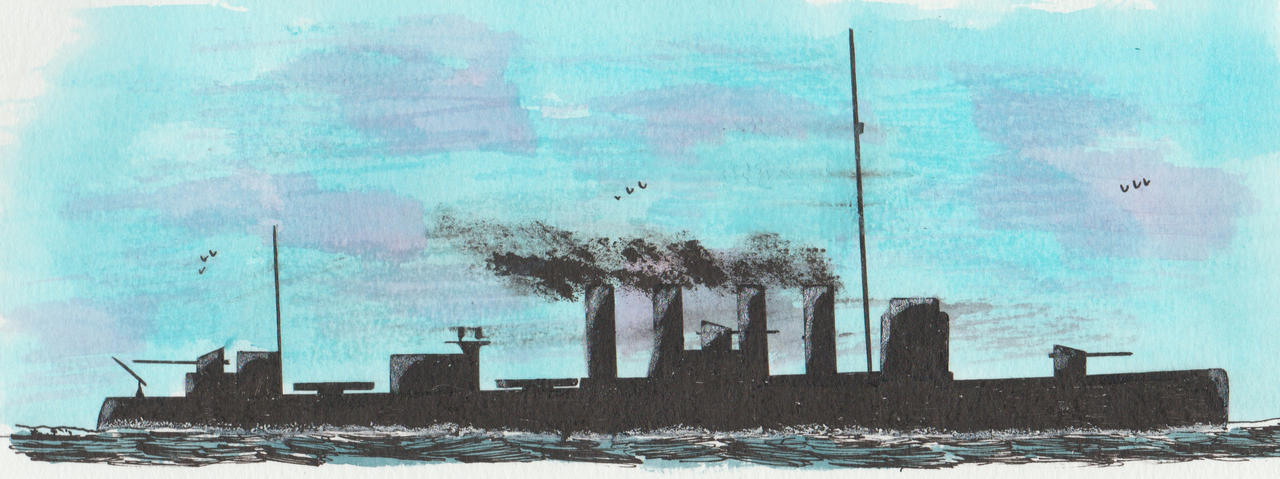
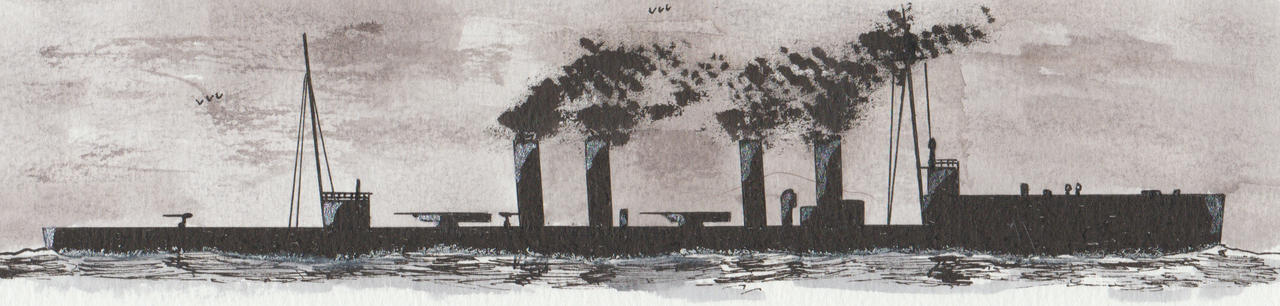
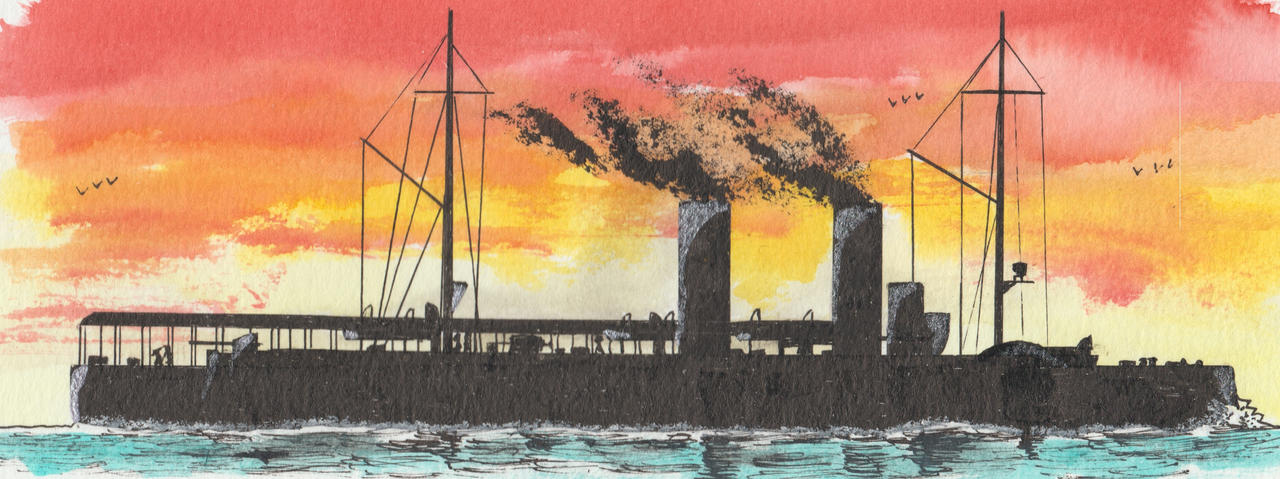
De Ruyter. Drawing by L. Müller, Onze Vloot April 1936

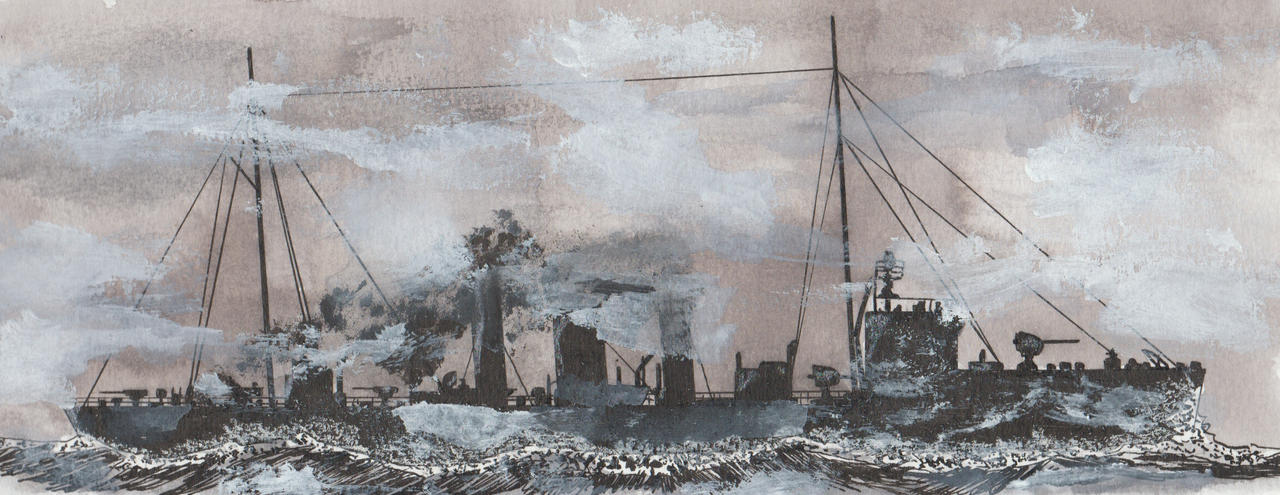
Java©Warshipsresearch.blogspot.com

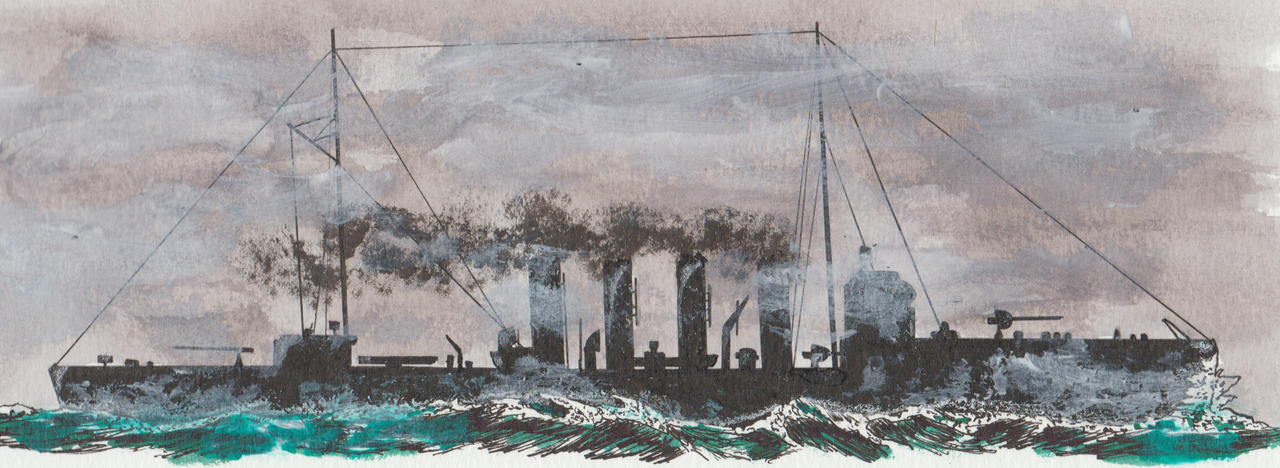
Tromp©Warshipsresearch.blogspot.com

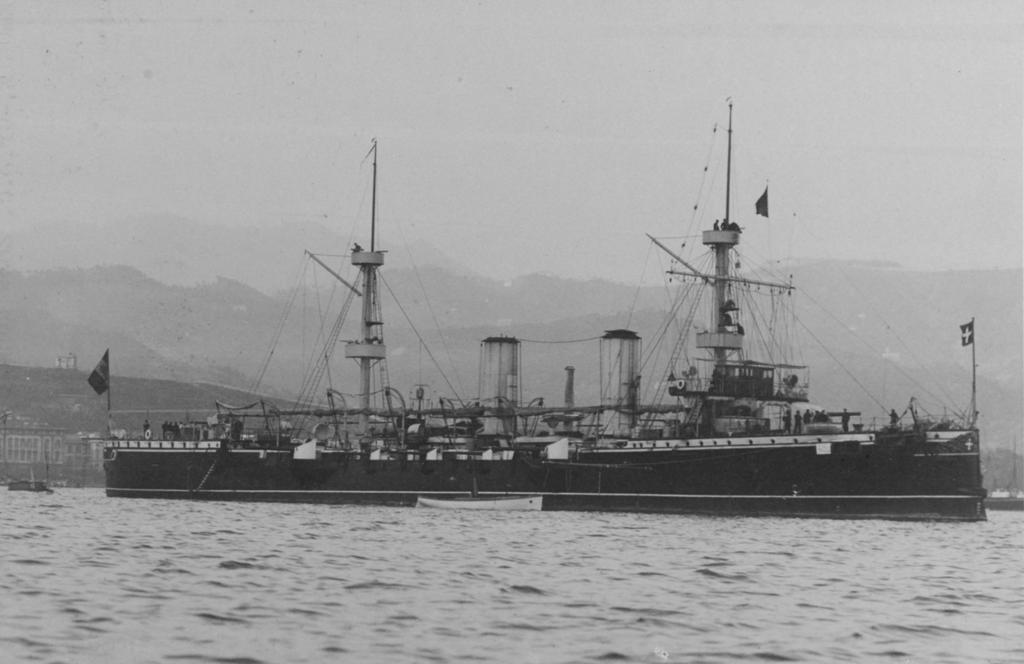
American USS Houston©Warshipsresearch.blogspot.com

British HMS Exeter©Warshipsresearch.blogspot.com

HMAS Hobart sister ship of Perth©Warshipsresearch.blogspot.com

In their meeting discussed the British Chiefs of Staff Committee a report dated 17th January 1942 of the Joint Intelligence Sub-Committe dealing with the possible attack by Japanese forces on the Dutch East Indies. Together with the United Kingdom, Australia and the USA were the Netherlands united in the ABDA Command.

According to that report:

“There are ample shipping facilities avaialbe for transporting the necessary forces for an attack on Southern Sumatra and Java. The naval escort required for such a force would have to be on a considerable scala as some Allied light forces are already based on the Netherlands East Indies and Singapore. Provision will also have to be made for minesweeping, and the maintenance required for the naval forces will be considerable if they encounter resolute resistance. As the battle area moves south Dutch submarines will doubtless be concentrated in the Java Seas and may be reinforced by American submarines.”

For an attack on Southern Sumatra and Java was estimated that a Japanese naval foces was needed consisting of “10 cruiser;  3-4 aircraft carriers, 30-40 destroyers; and necessary attendant small craft. These forces are now available in the area”.

“An attack on Java and Sumatra is likely to be supported, at any rate in the initial stages, by three or four aircraft carriers which would enable some 150 to 200 ship-borne aircraft to be operated.”

The Royal Netherlands Navy possessed at that moment over 3 light cruisers Hr.Ms. De Ruyter, Java and Tromp and further more destroyers, submarines and smaller vessels. Australian, American and British warships were added to the Allied naval force. An Allied Squadron commanded by the Dutch rear admiral Karel Doorman was destroyed in the Battle of the Java Sea and the next two days by Japanese forces. The Tromp heavily damaged in the Battle of Badung Strait already escaped to Australia but the Dutch cruisers Hr.Ms. Java and De Ruyter, the British HMS Exeter, American USS Houston and Australian HMAS Perth and a bunch of destroyers all sunk. The Dutch East Indies Army surrendered on 8 March 1942 announced the next day.

Source

The National Archives. CAB 79-17-20. War Cabinet. Chiefs of Staff Committee. Minutes of meeting held on Monday 19 January 1942 10:30 a.m. 

Dutch sailing vessel Aebelina 2009-

Harlingen, Netherlands 5 July 2026

Replica built by by Johan Prins, Workum, Netherlands in 2009 of the ferry Ebelina or Dorp Grouw dating from 1861. Ferry between Earrewald-Grou, province Friesland, Netherlands. Type skutsje. 

Italian sailing ship Francesco Raicla lost in 1917

According to a list of the Italian Department for transport over sea and by rail was she lost on 14 May due to unknown on the location near Riporto. Tonnage 180 tons.

Source

Bundesarchiv RM 20/728.

Japanese cargo ship (ex-Hokusho Maru 1936-1938) Hokusyo Maru 1938-1943

©Warshipsresearch.blogspot.com

Similar Hokuyo Maru (1936) and Hokusyo Maru (1936). Call sign JDYG. Owner in 1939 Kita Kisen K.K., Tokyo, Japan. Laid down by Uraga Dock Co. Ltd., Uraga, Japan on 16 October 1936, launched on 9 February 1937, completed on 19 June 1937, requisitioned by the navy on 19 April 1941 as general transport, converted into an auxiliary transport registered on 15 October 1941, conversion between 21 October-1 December 1941, torpedoed and sunk by the American submarine USS Narwhal (SS-167) off Nauru Island on 11 September 1943 and stricken on 1 November 1943. Gross tonnage 4,211 tons, under deck 3,550 tons, net tonnage 2,510 tons and as dimensions 359.3 x 49.1 x 28.9 x 12 (light)-16 (loaded) feet. Reciprocating propulsion, single screw, horsepower 350 nhp, coal bunker capacity 470 tons, range 6,000 nautical miles/13 knots and speed 13 (normal cruising)-16 (maximum) knots. 

German blockade runner Corteliazzo outward bound in 1942

Transport Number M. Name ship Corteliazzo. Company Lloyd Triestino/Hamburg-Amerika Linie, Hamburg, Germany. Date departure 23 November 1942. Harbour which was left Bordeaux, France. Destination Far East. Lost on 1 December 1942. Part of 2. Action “Pfastermundkoch”.

Source

Bundesarchiv RM 7/1419 Ausarbeitung "Wirtschaftsfahrten im Zweiten Weltkrieg" (Zusammenstellung der Fahrten von Blockadebrechern nach Ostasien, 1941-1945). 

Dutch sailing vessel Knar WR 12 1898-

Harlingen, Netherlands 5 July 2026

Built by U. Zwolsman, Workum, Netherlands in 1898. WR=Wieringen. 

Dutch Greenland commandeur Klaas Poot 1702-1706

Bookkeeper Cornelis Muusz Blauw, Uytgeest

1702

Whales 6 Barrels blubber 160 Quardelen whale oil

1703

Whales 6 Barrels blubber 250 Quardelen whale oil

1704

Whales 3 2/3 Barrels blubber 126 Quardelen whale oil

1705

Whales 9 Barrels blubber 340 Quardelen whale oil

1706

Whales 0 Barrels blubber 0 Quardelen whale oil

Source

Alphabetische naam-lyst van alle de Groenlandsche en Straat-Davidsche Commandeurs die sedert het jaar 1700 op Groenland en sedert het jaar 1719 op de Straat Davis etc. Gerret van Sant. Published by Johannes Enschede, Amsterdam 1770, with hand written notes until 1794.

Argentinean destroyer ARA Córdoba (D2) 1910-1956

Entre Rios, Corrientes-class. ©Warshipsresearch.blogspot.com

Design 32 knots ocean going destroyer©Warshipsresearch.blogspot.com

Part of La Plata-class preceded by Corrientes-class. Laid down in 1910, launched in January 1911, commissioned in March 1912, summer 1912 departed to Argentina and stricken on 10 January 1956. Argentina ordered 12 destroyers in 1910, 2 at Krupp and 2 at Schichau, Germany, 4 in England and 4 in France. The British built destroyers were in 1912 sold to Greece (Aetos-class) and the French built destroyers were taken over the French navy (Aventurier-class) when the First World War broke out.

Dimensions 85 (between perpendiculars)-90 (over all) x 9 (moulded) x 4,7 (depth sides)-5 (depth at centre) x 2,4 (draught forward normal)-2,3 (draught mean normal)-2,2 (draught aft normal), normal displacement 890 tons. Speed on trials 32 knots. Load on trials 200 tons. Draught full load 1,95 (foreward)-2.85 (mean)-2,75 (aft) metres, full load dispacement 1,110 tons. Two Germany Admiralty type turbines (centre) of 560 rpm and 5 German Admiralty Type boilers (1-oil, 4 coal fuelled). Total capacity of bunkers 290 tons+50 tons fuel oil bunker capacity. Estimated horsepower 19,000-20,000 hp. Range 3,000 miles of 1,852,3 metres/15 knots. Crew numbers 110 men. Four 21” Whitehead torpedo tubes and 150 kilo explosives with a speed of 41 knots at a range of 2,000 metres and 29 knots at 5,000 metres. Placed two fore end of ship and two little aft the middle part of the ship. Carried 8 torpedoes. Length forecastle 18 metres at 2.20 above the main deck. Armament 4-4” cal 50 Bethlehem guns, all on the centre line of the ship. Magazines have a capacity of 250 rounds of ammunition. Provided with wireless telegraphy for 200 kilometres range.

Source

Hiraga-archive. Description General data of Argentine destroyers built by F. Schichau.

British sailing transport Bride in the Crimean War on 28-10-1854

According to a list of the return of the disposition in the Black Sea on 28 October 1854 drawn up by Captain and Principal Agent of Transports P. Christie, “Melbourne”, Balaklava, Crimea: number transport 27, present position Balaklava, remarks commissariat stores.

The Crimean War found place between 16 October 1853-30 March 1856 between Ottoman Empire, France, United Kingdom and Sardinia at one side and Russia and Greece on the other side. The British Government chartered a large number of merchant ships for transporting troops and stores.

Source

Reports from Committees: eight volumes. 3-Part II. Army before Sebastopol. Session 12 December 854-14 August 1855. Vol. IX-Part II. 

Dutch fishing cutter Wouter WR 18 (1907)

Harlingen, Netherlands 5 July 2026

Ex-YE 170, YE6, UK112 and finally WR18. Used for the transport of ale. Built by T. Schepman, Kampen, Netherlands in 1907. 

American sailing sealing ship Bogota in 1829

Antarctic sealing ground southern oceans. Rigging brig. Returned home at Stonington in 1829 with 3,000 fur-seal and 15,000 hair-seal skins.

Source

Goode, George Brown. The fisheries and fishery industries of the United States. Section V. History and methods of the fisheries. Volume II, Washington, 1887. (1978).

Dutch raft Sterke Yerke IV 2021-

Harlingen, Netherlands 5 July 2026

Built in 2021. Especially for education dealing with the plastic soup. 

Construction status of the German kriegsfischkutter KFK 922 in 1944


©Warshipsresearch.blogspot.com

List of planning with deadlines for new construction of warships dated Berlin 22 May 1944. Built by Dutch shipyards, yet not divided. Date building ordered 4 December 1943. Date completion unknown but estimated 5 Kriegsfischkutters monthly.

Source

Deutsches Historisches Institut Moska. Records 500 findbuch 12453-file 152. 

Dutch inland sailing vessel (ex-Helena 1913-1920, Trekvogel 1920-1936), Speriamo 1936-?) Trekvogel around 1958-1960-

Harlingen, Netherlands 5 July 2026

Netherlands-flagged, MMSI 244190731 and call sign PH3308? Built by Gebr. De Boer, Lemmer, Netherlands with yard number 31 as a so-called Lemsteraak in 1912-1934 for account of W.H. Kalis, Dordrecht, Netherlands. Launched as the Helena on 22 June 1913. Restored since 1986. 

Portuguese galleon Nossa Senhora da Conceicao 1660

Mentioned in 1660, 24 guns.

Source

A. Marques Esparteira. Catalogo dos navios brigantinos (1640-1901). Lisboa, 1976.

Dutch sailing vessel De Drie Gebroeders WL.19 2008-

Harlingen, Netherlands 5 July 2026

Type Aek which was in North east Friesland a 2-mast schokker with straight bow.The WL 19 was built in 1871 by Scheepswerf Alkema, Makkum, Netherlands and lost in the disaster of 5 March 1883 in which 17 Dutch fishing vessels were lost and 83 fishermen drowned. So this vessel is an exact copy of the original completed in 2008. 

Dutch East Indiaman Kleverskercke or Cleverskerk 1660-

E.I.C.-chamber Zealand, on stocks by Cornelis Speldernieuw sr at E.I.C-yard at Middelburg, Netherlands 1660, launched on 29 March 1661, dimensions 118 x 26 x 12 feet.

Sources

Kort gevat Jaarboek van de Edele Geoctroyeerde oost-indische compagnie der vereenigde Nederlanden ter kamer van Zeeland. Middelburg, 1759.

Archive V.O.C. 1602-1811 inv.no. 11048. Kort gevat Jaarboek van de Edele Geoctroyeerde Oost-Indische Compagnie tec. Christiaan Sigismund Matthaeus, Jan Dane, Middelburg, 1759.

Tuesday, 21 July 2026

British light cruiser HMS Glasgow 1909-1927

Active-class scout cruisers. ©Warshipsresearch.blogspot.com

Bristol light cruiser. ©Warshipsresearch.blogspot.com

Arethusa-class light cruisers (1913). ©Warshipsresearch.blogspot.com

Hawkins-class heavy cruisers. ©Warshipsresearch.blogspot.com

Part of Town-class Bristol-sub class light cruiser preceded by Topaze- and Active-classes and succeeded by Hawkins- and Arethusa (1913)-classes. Ordered under the 1908-1909 Programme. Laid down by Fairfield Shipbuilding, Govan, Scotland on 25 March 1909, launched on 30 September 1909, commissioned on 19 September 1910 and sold to be broken up on 20 April 1927. 

England asked USA for more cruisers to strengthen the ABDA fleet in January 1942

USS Houston©Warshipsresearch.blogspot.com


USS Omaha-class light cruiser©Warshipsresearch.blogspot.com

Admiral of the Fleet Sir Dudley Pound (1) acting as First Sea Lord and Chief of Naval Staff suggested the Committee that regarded the remarks of the Commander-in-Chief, Eastern Fleet (2) to ask the United States to reinforce the ABDA area especially with 20.32cm/8” or large15.24cm/ 6” cruisers. The contents of the telegrams to be sent to the Chiefs of Staff in Washington D.C., USA and to general Wavell (4) were approved.

Notes

1. Alfred Dudley Pickman Rogers Pound (29 August 1877 Ventnor, Isle of Wight-21 October 1943 London, England), served between 1891-1943 in the Royal Navy. First Sea Lord 12 June 1939-15 October 1943. Between October 1940-March 1942 he was chairman of the Chiefs of Staff.

2. Sir Geoffrey Layton (20 April 1884 Liverpool, England-4 September 1962 Portsmouth, England), served between 1899-1947 in the Royal Navy. Commanded the China Station until 10 December 1941 but when was recalled as Commander-in-Chief, Eastern Fleet when HMS Prince of Wales and Repulse were sunk on the same day. March 1942 appointed in March 1942 as Commander-in-Chief, Ceylon and replaced by Sir James Somerville (17 July 1882 Weybridge, Surrey, England-19 March 1949 Dinder House, Somerset, England).

3. The American Asiatic Fleet was on 28 February 1941 renamed U.S. Asiatic Fleet, since 25 July 1939 commanded by admiral Thomas Charles Hart (12 June 1877 Davison, Michigan, USA-4 July 1971 Sharon, Connecticut, USA) who became on 15 January 1942 Commander ABDA Afloat. It consisted of destroyers, heavy cruiser USS Houston and Omaha-class light cruiser Marblehead and submarines.

4. Field marshal Archibald Percival Wavell (5 May 1883 Colchester, England-24 May 1950 Westminster, London, England). Appointed to Commander-in-Chief of ABDACOM (=American-British-Dutch-Australian Command) on 1 January 1942. The command was formed on 15 January.

Source

The National Archives. CAB 79-17-20. War Cabinet. Chiefs of Staff Committee. Minutes of meeting held on Monday 19 January 1942 10:30 a.m. 

American destroyer USS Rowan DD-405 1937-1943

Somers-class. ©Warshipsresearch.blogspot.com

Benham-class. ©Warshipsresearch.blogspot.com

Sims-class. ©Warshipsresearch.blogspot.com

Gridley-class. ©Warshipsresearch.blogspot.com

Bagley-class. ©Warshipsresearch.blogspot.com

Part of Benham-class (sometimes called as Ellet-class) preceded by Somers-class succeeded by Sims-class. Gibbs&Cox-design. Built between 1936-1939 were 10 vessels built with a limited 1,500 tons standard displacement according to the London Naval Treaty. With similar characteristiscs as the Gridley- and Bagley-classes. Hull number DD-405. Laid down by Norfolk Navy Yard on 25 June 1937, launched on 5 May 1938, commissioned on 23 September 1939 and torpedoed and sunk by a German S-boat on 11 September 1943 while underway from Paestum, Greece to Oran, French Algeria. 

Royal Navy lacking enough warships to escort Far East convoys in January 1942

Admiral of the Fleet Sir Dudley Pound (1) acting as First Sea Lord and Chief of Naval Staff informed the Committee that the Commander-in-Chief Mediterranean (2) supplied sailing dates of the convoys which were to leave the Mediterranean destined for the Far East. He feared for a possible delay of the departure of the first convoy if an adequate escort was lacking. The armoured brigade was part of the convoy and the War Cabinet accepted the risks if the convoy left without escort as far as Ceylon [nowadays Sri Lanka]. However the Australian formations which were to transported with the later convoys were to have priority in the way of escorts. Pound was to inform the involved Commanders-in-Chief.

Notes

1. Alfred Dudley Pickman Rogers Pound (29 August 1877 Ventnor, Isle of Wight-21 October 1943 London, England), served between 1891-1943 in the Royal Navy. First Sea Lord 12 June 1939-15 October 1943. Between October 1940-March 1942 he was chairman of the Chiefs of Staff.

2. That must be admiral Sir Andrew Browne Cummingham 7 January 1883 Rathmines, Ireland-12 June 1963 London, England) who was in April 1942 replaced by admiral Sir Henry D. Pridham-Wippell. Cummingham served in the Royal Navy between 1897-1946 with as end rank Admiral of the Fleet. As Commander-in-Chief, Mediterranean he hoisted his flag on 6 June 1939 on board of the battleship HMS Warspite after arriving the day before at Alexandria, Egypt. At that moment was his main issue to keep the convoys destined for Egypt and Malta safe.

Source

The National Archives. CAB 79-17-20. War Cabinet. Chiefs of Staff Committee. Minutes of meeting held on Monday 19 January 1942 10:30 a.m. 

Taiwanese frigate (ex-Japanese No. 67 1944-1947, Ying Kou 1947-?, Swe An ?-1955) Jui An 1955-1960s

Chang An©Warshipsresearch.blogspot.com

Part of the Kaibokan Type C ordered under the 1943-1944 Programme and 1944-9145 Programme and which were a reduced version of the Ukuru design. Jane’s edition 1959-1959 referred to these ships as escort corvettes type No. 1 (diesel propulsion). Launched in 1944, completed on 28 December 1944, surrendered in August 1945, used for repatration purposes, transferred to Nationalist China on 6 July 1947, renamed Ying Kou, renamed Swe An in ? and Jui An in 1955. Jane’s editon 1962-1963 last time mentioned. The website dealing with the type C reports Programme no. 2434

, Ship No. 67, laid down by Maizuru Naval Arsenal on 15 June 1944, launched on 15 September 1944, completed on 12 November 1944, decommissioned on 25 October 1945, surrendered to the Republic of China (+Nationalist China later Taiwan) on 6 July 1947, renamed Yinkan, renamed Rui’an (PF-73) in 1952 and decommissioned in 1963.

Sources

Fukui, Shizuo. Japanese naval vessels at the end of World War II

Jane’s Fighting Ships several editions of the 1950s-1960s

Jentschura, Hansgeorg, Dieter Jung and Peter Mickel.

Watts, A.J. and B.G. Gordon. The Imperial Japanese Navy.

Escort C Type date 22 June 2026 13:36 o’clock

General Wavell asked for landing craft to be used in the Far East in January 1942

The Chiefs of Staff Committee considered the telegram No. D. 3/2 dated 18 January sent by general Wavell (1) in which he asked for landing craft suitable for combined operations in the Far East. The Prime Minister asked in the meantime to get a report later the same day. The Committee instructed the Joint Planning Staff to consult the adviser on Combined Operations to advice as soon as possible what to do with the telegram.

Note

1. Field marshal Archibald Percival Wavell (5 May 1883 Colchester, England-24 May 1950 Westminster, London, England). Appointed to Commander-in-Chief of ABDACOM (=American-British-Dutch-Australian Command) on 1 January 1942. The command was formed on 15 January.

Source

The National Archives. CAB 79-17-20. War Cabinet. Chiefs of Staff Committee. Minutes of meeting held on Monday 19 January 1942 10:30 a.m. 

British sailing training ship TS Royalist 2014-

Harlingen, Netherlands 5 July 2026

United Kingdom-flagged, homeport Gosport, IMO 9717369, MMSI 235107983 and call sign 2HZW6. Brig. Built by Astilleros Gondan, Spain between 2014-2015. 

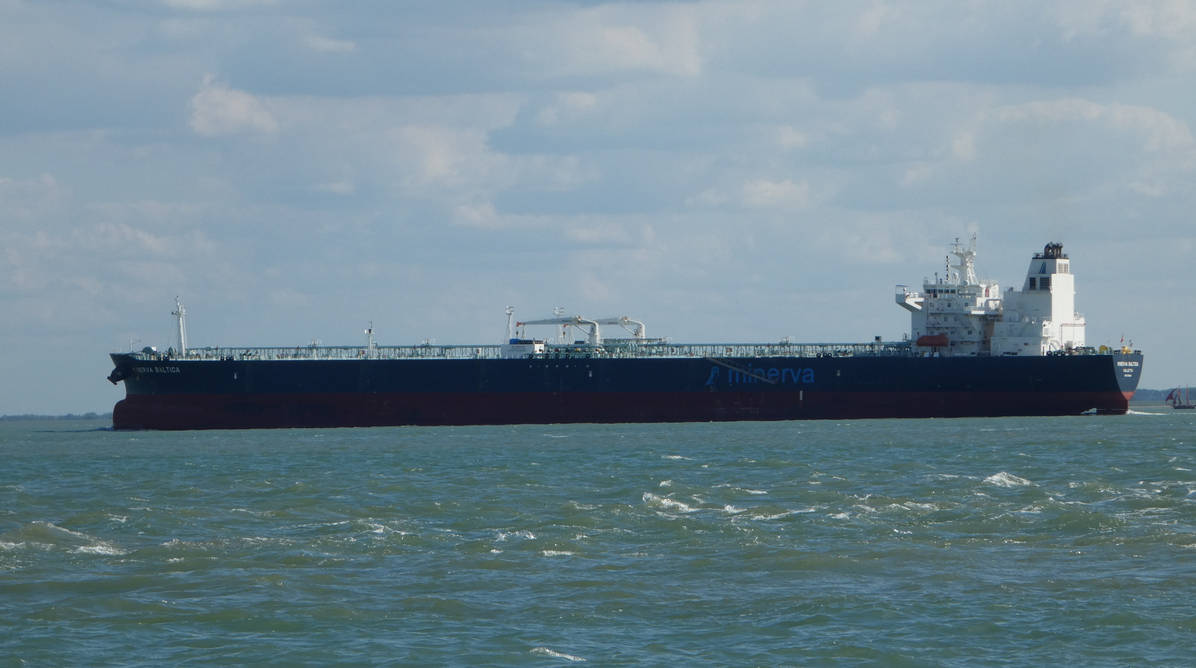
Italian sailing ship L’Indipendente lost in 1917

According to a list of the Italian Department for transport over sea and by rail was she lost on 13 May due to submarine attack on the location 18 miles Cap Gola. Tonnage 181 tons.
Source

Bundesarchiv RM 20/728.

Dutch inland cargo dektjalk (ex-Voorzorg 1915-1910, Volharding 1960-1963 and Johanna 1963-1982) Bruinvisch 1982-

Harlingen, Netherlands 5 July 2026

Netherlands-flagged, homeport Harlingen. Built by Gebroeders Draaisma, Franeker, in 1902. Frisian decked tjalk. 

German blockade runner Elsa Essberger outward bound in 1942

Transport Number R. Name ship Elsa Essberger. Company John T. Essberger, Hamburg, Germany. Date departure 6 November 1942. Harbour which was left Bordeaux, France. Destination Far East. Returned at Bordeaux with bomb damage. Part of 2. Action “Pfastermundkoch”.

Source

Bundesarchiv RM 7/1419 Ausarbeitung "Wirtschaftsfahrten im Zweiten Weltkrieg" (Zusammenstellung der Fahrten von Blockadebrechern nach Ostasien, 1941-1945). 

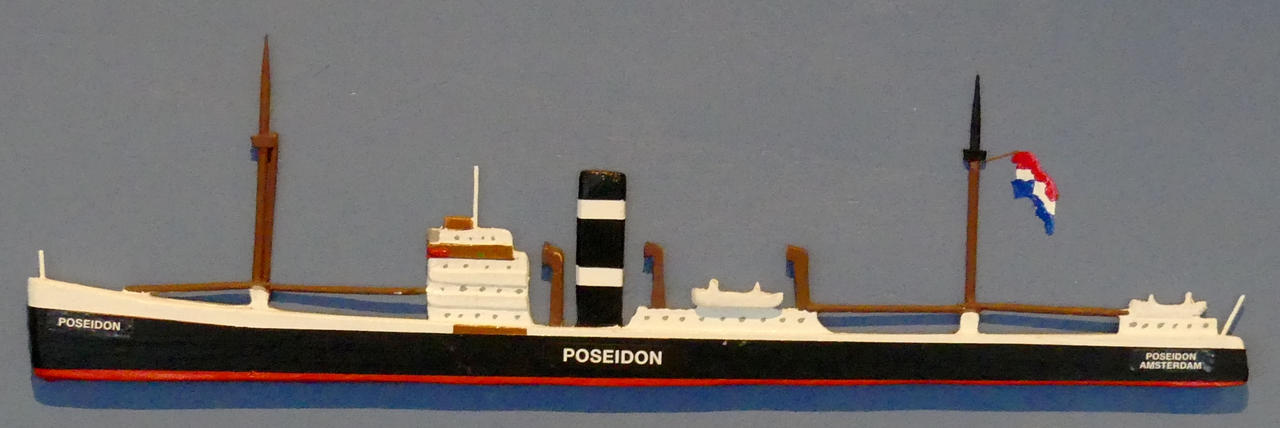
Dutch fishing vessel Poseidon HA.73 1988-

Harlingen, Netherlands 5 July 2026

IMO 8814641, MMSI 244916000 and call sign PGTX. Former cockle fishing vessel. Built in Friesland in 1988. 

Dutch Greenland commandeur Klaas Willemsz 1710-1713

Bookkeeper Dirk Claasz Muyser, Zaandam

1710

Whales 0 Barrels blubber 0 Quardelen whale oil

1711

Whales 4 Barrels blubber 180 Quardelen whale oil

1712

Whales 2 Barrels blubber 90 Quardelen whale oil

1713

Whales 1 Barrels blubber 60 Quardelen whale oil

Source

Alphabetische naam-lyst van alle de Groenlandsche en Straat-Davidsche Commandeurs die sedert het jaar 1700 op Groenland en sedert het jaar 1719 op de Straat Davis etc. Gerret van Sant. Published by Johannes Enschede, Amsterdam 1770, with hand written notes until 1794.

British sailing training vessel James Cook 1986-


Harlingen, Netherlands 5 July 2026

United Kingdom-flagged, homeport Newcastle, England. Ketch. Built in 1986. 

British sailing transport Cornwall in the Crimean War on 28-10-1854

According to a list of the return of the disposition in the Black Sea on 28 October 1854 drawn up by Captain and Principal Agent of Transports P. Christie, “Melbourne”, Balaklava, Crimea: number transport 25, present position Constantinople, Turkey, remarks under orders of rear admiral Boxer.

The Crimean War found place between 16 October 1853-30 March 1856 between Ottoman Empire, France, United Kingdom and Sardinia at one side and Russia and Greece on the other side. The British Government chartered a large number of merchant ships for transporting troops and stores.

Source

Reports from Committees: eight volumes. 3-Part II. Army before Sebastopol. Session 12 December 1854-14 August 1855. Vol. IX-Part II. 

Dutch inland support vessel BDS Surveyor

Harlingen, Netherlands 5 July 2026

Nederlands-flagged, homeport Harlingen, Netherland, MMSI 244770306, call sign PCPF/PH2416 and number 90-59-YK. 

American sailing sealing ship Alabama in 1829

Antarctic sealing ground south seas. Rigging brig. Returned home at Stonington in 1829 with 8,000 fur-seal and 15,000 hair-seal skins.

Source

Goode, George Brown. The fisheries and fishery industries of the United States. Section V. History and methods of the fisheries. Volume II, Washington, 1887. (1978).

Austrian gaff ketch Aglaia 1997-

Harlingen, Netherlands 5 July 2026

Austria-flagged, homeport Vienna, MMSI 203274200 and call sign OEX6140. Hull built at Stockholm, Sweden using a Norwegian rescue vessel-design, sold to somebody at Hamburg, Germany, uncompleted sold after 19 years and finally launched in 1997. 

Construction status of the German kriegsfischkutter KFK 921 in 1944

©Warshipsresearch.blogspot.com

List of planning with deadlines for new construction of warships dated Berlin 22 May 1944. Built by Dutch shipyards, yet not divided. Date building ordered 4 December 1943. Date completion unknown but estimated 5 Kriegsfischkutters monthly.

Source

Deutsches Historisches Institut Moska. Records 500 findbuch 12453-file 152. 

Polish sailing vessel Belfer 1998-

Harlingen, Netherlands 5 July 2026

Poland-flagged, MMSI 261071080 and call sign SPG4807. Built in 1998. Sloop rigged. 

Portuguese galleon Nossa Senhora da Conceicao 1655-1656

Mentioned between 1655-1656.

Source

A. Marques Esparteira. Catalogo dos navios brigantinos (1640-1901). Lisboa, 1976.

Dutch sailing vessel DX 11 2001-

Harlingen, Netherlands 5 July 2026

Lemster aak. Designed by Gbr. Langenberg, Nieuwebrug/Heerenveen in 2001 and built by KBS Jachtbouw, Koudekerk a/d Rijn, Netherlands. 

Dutch East Indiaman Nieuwenhove 1660-

Yacht, E.I.C.-chamber Zealand, on stocks by Cornelis Speldernieuw sr at E.I.C-yard at Middelburg, Netherlands 1660, launched on 8 September 1660, dimensions 126 x 29 x 12 feet.

Sources

Kort gevat Jaarboek van de Edele Geoctroyeerde oost-indische compagnie der vereenigde Nederlanden ter kamer van Zeeland. Middelburg, 1759.

Archive V.O.C. 1602-1811 inv.no. 11048. Kort gevat Jaarboek van de Edele Geoctroyeerde Oost-Indische Compagnie tec. Christiaan Sigismund Matthaeus, Jan Dane, Middelburg, 1759.

Monday, 20 July 2026

Russian fleet minesweeper (former Japanese W-23 1942-1947) T-29 1947-1948 (target ship TSl-28 1948-1955, PM-61 1955-1986)

©Warshipsresearch.blogspot.com

Japanese Ship No. 168. Part of the Japanese W-19 class (Project number 14B) preceded by No. 7-class. Laid down by Tokyo Ishikawajima Shipyard on 5 May 1942, launched on 13 January1943, completed on 31 March 1943, decomissioned on 30 November 1945, surrendered to the Soviet Union on 3 October 1947 but listed on 15 September 1947, commissioned on 3 October 1947, converted into target ship TsL-28 on 5 July 1948, converted into repair vessel PM-61 on 12 March 1955, stricken on 7 March 1986 and broken up. 

Italian sailing ship Rosalia Madre lost in 1917

According to a list of the Italian Department for transport over sea and by rail was she lost on 11 May due to submarine gun fire on the location 20 miles Faro Chioppa. Tonnage 95 tons.

Source

Bundesarchiv RM 20/728.