Translate

Showing posts with label Senegal. Show all posts

Monday, 14 September 2026

Dutch scholars corresponding in the 1950s with Dutch tanker Ondina which was a Second World War decorated survivor. She was involved in the destruction of the armed Japanese auxiliary cruiser Hokoku Maru

Een plakboek geeft zicht op het reilen en zeilen aan boord van het Nederlandse koopvaardijschip Ondina (1) in de jaren vijftig van de twintigste eeuw. Een schip dat in de Tweede Wereldoorlog zich op bijzondere wijze had onderscheiden.

In 2016 kwam het Gemeentearchief Vlissingen in het bezit van een plakalbum met daarin brieven, foto’s en prentbriefkaarten van bemanningsleden van de La Corona/Shell tanker Ondina. [1] De brieven schetsen het zeemansleven aan boord van een Nederlands koopvaardijschip in de jaren vijftig van de vorige eeuw, soms tot in de details.
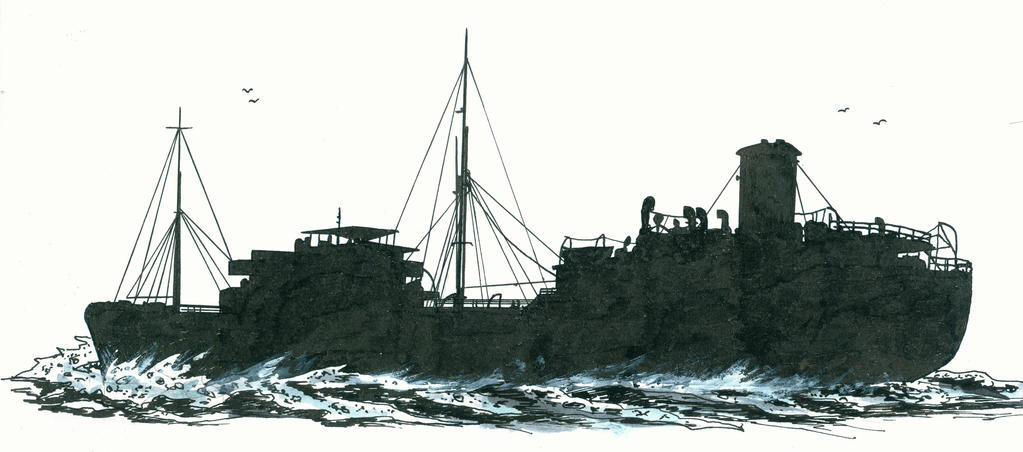
Nederlandse tanker Ordina©Warshipsresearch.blogspot.com

Adoptie van schepen door scholen

De in Schiedam gevestigde Nederlandse vereniging tot adoptie van schepen (NEVAS) streefde sinds 1946 ernaar dat scholen Nederlandse koopvaardijschepen adopteerden. De vereniging wilde de belangstelling van de jeugd voor de scheepvaartwereld bevorderen en de adoptie van een schip was hierbij een belangrijk middel. Naast een briefwisseling tussen leerlingen en bemanning kon over en weer cadeautjes worden gestuurd. Door de bemanning gekocht tijdens hun reizen en vanuit de school bijvoorbeeld met sinterklaas en kerst.

De Vlissingse RHBS adopteert de Ondina. Dat ging niet geheel vlekkeloos. In 1950 schreef haar kapitein P.J. Boudier dat vanwege allerlei omstandigheden de correspondentie is verwaarloosd. Het schip had gedurende langere tijd op de oost gevaren. Nu was het gerepareerd en met vele nieuwe officieren onderweg naar Curaçao. Dit was de gelegenheid, schreef Boudier, om zijn leven te verbeteren en te beginnen met een briefwisseling. Hij hoopte dat ook de leerlingen hier zin in hebben. Dat was inderdaad het geval. De correspondentie stokte later opnieuw maar werd toch weer opgepakt.

De laatst bewaarde brief van het schip dateert van 9 maart 1958. Kapitein C.J. van de Weijer bedankte voor de 87 brieven en het kerstpakket die eindelijk zijn aangekomen. Het schip werd in 1959 buiten dienst gesteld en vervolgens gesloopt.

Aan boord van de Ondina

De brieven zijn niet van humor ontbloot. Zo werd een ansichtkaart uit Dakar meegezonden waarop marktkooplui zijn afgebeeld met de woorden dat het gaat om de Afrikaanse versie van de patat-friteskraam staande aan de Vlissingse Vissershaven. De leerlingen kregen op elke vraag een serieus antwoord of het nu gaat om de medische zorg, de voeding of over de machinekamer.

De bemanning van de Ondina bestond deels uit Nederlandse officieren en deels uit Chinese matrozen en ander personeel. Je gaat niet dagelijks naar huis, zo schreef haar kapitein in 1957; het was gebruikelijk om 1 jaar aan boord te zijn en dan 2,5 maand verlof te krijgen.

In Terneuzen werd het gehele Chinese deel van de bemanning afgelost. Zij hadden toen bijna 2,5 jaar aan boord gewerkt! Het schip zelf begon haar leeftijd te voelen. Het voer tussen Dakar, Trinidad, Las Palmas, Curaçao en Gent heen en weer. Toch ging het weer naar het Verre Oosten toe en werden onder meer Yokohama, Nieuw Guinea en Singapore bezocht.
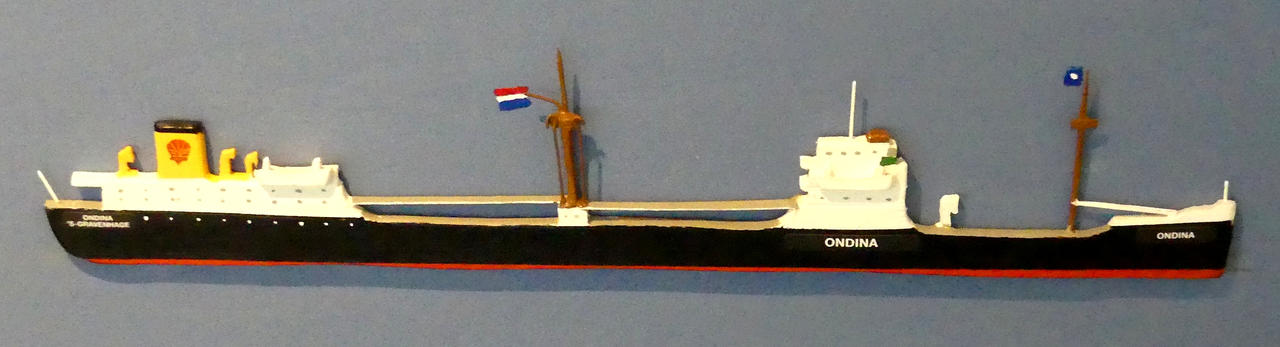
In het Chinees

Maar het was niet alleen de kapitein die schreef, ook bijvoorbeeld de marconist. Deze stuurde een briefje mee met daarop in het Chinees de cijfers 1-10 en vertelt en passant erbij dat dit ongeveer het enige Chinees is dat hij na 4 jaar heeft geleerd. Op zich is dat niet eens zo verwonderlijk want het dekpersoneel kwam uit Foochow, de bedienden uit Hainan en het machinekamerpersoneel uit Kanton, ieder met hun eigen dialect. Verder spraken de Chinezen vaak Maleis en pidgin Engels. Dat pidgin Engels wordt over de gehele wereld door zeelieden gesproken en de leerlingen kregen het advies het school-Engels te vergeten.

Dieren aan boord

Er waren ook dieren aan boord, sommigen gewild, andere verre van dat. Kapitein Boudier had twee honden genaamd Puck en Viezerik. Viezerik omdat zij als puppy altijd door de smerigheid heen kroop. De duiven van de eerste machinist waren weggevlogen in Maracaibo en nooit meer teruggekeerd. Ongewenste gasten zijn enige honderdduizenden kakkerlakken en verder ook wandluizen.

Onderscheiding voor de Ondina

De Ondina was niet een doorsnee tanker. Zij is het eerste Nederlandse koopvaardijschip dat een Koninklijke Vermelding bij Dagorder – op 9 november 1948 – zou krijgen. Dit is een Koninklijk Besluit verleend aan schepen van de Koninklijke Marine of onder Nederlandse vlag varende koopvaardijschepen die zich in de strijd na 10 mei 1940 een bijzondere daad heeft verricht. En dat heeft de Ondina!

In 1939 brak de Tweede Wereldoorlog uit, waarbij tussen 1940-1945 Nederland door Duitsland werd bezet. In het Verre Oosten brak de oorlog pas uit na de Japanse aanval op Pearl Harbor op 7 december 1941. Een dag later verklaarde ons land de oorlog aan Japan. Op dat moment is Nederlands-Indië (het huidige Indonesië) met de belangrijke oliebronnen nog steeds een Nederlandse kolonie. De Nederlandse koopvaardij moest op de hoede zijn voor Japanse schepen, niet alleen voor oorlogsschepen. Ook zogenaamde hulpkruisers vormden een wezenlijk gevaar. Een hulpkruiser is niet meer dan een snel varend koopvaardijschip met een (soms zware) bewapening.
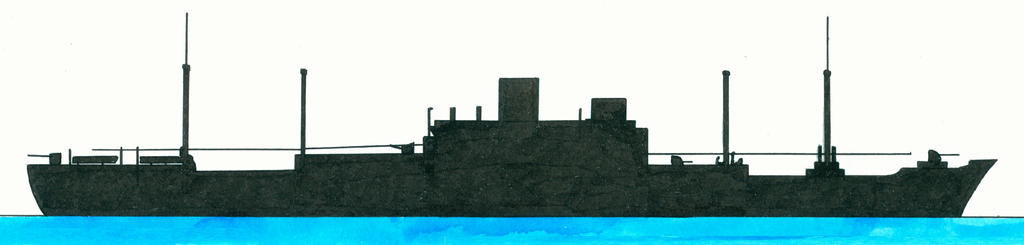
Japanse hulpkruiser, zoals Aikoku Maru and Hokoku Maru©Warshipsresearch.blogspot.com

Samen met haar escorte, de British-Indische mijnenveger H.M.I.S. Bengal, kwam midden op de Indische Oceaan de Ondina op 11 november 1942 in gevecht met de Japanse hulpkruisers Hokoku Maru en Aikoku Maru. [2] Het gevecht had een onverwachte afloop. Een (gelukkig?) schot met het 10,2cm kanon van de Ondina raakte de Hokoku Maru die vervolgens in de lucht vloog.

Nadat de munitie op was, werd de witte vlag gehesen en de Ondina door haar bemanning verlaten. De Aikoku Maru torpedeerde de Ondina en vertr0k, ervan uitgaande dat zij zinkende was. Bemanningsleden van de Ondina keerden echter terug en wisten met het zwaar beschadigde schip op 18 november Fremantle, Australië, te bereiken. Vijf opvarenden, waaronder haar kapitein Horsman, overleefden het gevecht niet. Op 16 juni 1945 kwam de Ondina als eerste tanker het inmiddels bevrijde Rotterdam binnenvaren.

Noten

Te water gelaten bij de Nederlandse Dok & Scheepsbouwmaatschappij te Amsterdam op 29 april 1939 en voltooid op 1 augustus 1939. Met een bruto tonnage of 9.070 tons waren haar afmetingen 130,49 x 16,62 x 6,40 meters. De Werkspoor 6-cilinder 2.800 pk diesel maakte een maximum snelheid van slechts 12 knopen mogelijk. Tijdens de oorlog was zij bewapend met 1-10,2cm kanon en een aantal machinegeweren.

The Hokoku Maru-klasse hulpkruisers bestond uit de Hokoku Maru, Aikoku Maru en Gokoku Maru (ex-Kokouk Maru), oorspronkelijk gebouwd als passagiersschepen voor de Osaka Mercantile Steamship Co. Ltd. maar in 1941-1942 toegevoegd aan de Japanse marine. Waterverplaatsing 7.529 tons en als afmetingen 160,8 x 20,1 x 12,5 meters. De Hokoku Maru had een snelheid van 21,1 knopen en een bewapening van 8-15cm kanons, 2-7,62cm kanons and 4-53,3cm torpedobuizen. De Aikoku Maru had een snelheid van 20,9 knopen  en een bewapening van 8-14cm kanons, 4-2,5cm anti vliegtuig kanons en 4-53,3cm torpedobuizen.

Saturday, 3 January 2026

Senegalese trawler (ex-Joao Folque 1988-2011) Commandant Birame Thiaw 2011-


Las Palmas de Gran Canaria, Spain 2 February 2017

Senegal-flagged, IMO 8719243, MMSI 663286000 and call sign 6WHK. Built by Construção Naval de Fibras (CONAFI), Vila Real de Santo Antonio, Portugal in 1988. 

Thursday, 1 May 2025

Polish cargo ship (ex-Henry Horn 1924-1934, Pine Court 1934-1937, Rio Pardo 1937-1939) Stalowa Wola 1939-1956

©Warshipsresearch.blogspot.com

Similar Morska Wola, Rio Branco, Rio Verde and Stalowa Wola. Call sign as Rio Pardo LJIX. Built by Friedrich Krupp, Germaniawerft AG, Kiel, Germany in 1924, sold to England in 1934, sold to Norway in 1936/1937 and in February 1939 to Poland, chartered by France at the outbreak of the war, escaped from Dakar, Senegal to England on 5 July 1940, and sunk on 19 March 1956. Gross tonnage 3,133 ton, under deck 2,732 tons, net tonnage 1,811 ton and as dimensions 306.7 x 47.7 x 23.5 feet. Oil-fuelled. 

Saturday, 15 March 2025

British steamship Eocene arrived with Polish gold on board in Turkey according to a letter of the German naval attaché dated 26 September 1939

In his letter dated Istanbul, Turkey 26 September 1939 No. 60g.Kdos reported the German naval attaché to the Oberkommando der Kriegsmarine at Berlint the British steamship Eocene as earlier reported [coming from Constanza, Romania] unloaded at Haidarpaşa 10 casks of gold of the Polish State Bank and from there further transported to Syria. She was still lying in the harbour.(1)

Note

1. On his weblog Zoltán Ginelli wrote on 21-08-2 12 the logpost How the Polish gold train got stuck in French Africa during WWII. From [French] Syria the gold went to [French] Lebanon, next stop at Dakar in Senegal and Fort Kayes, Mali and later back to Dakar and in 1944 handed over to Polish commission.

Source

Bundesarchiv. German Marineattaché for Turkey, Greece, Romania and Bulgaria 1939-1941. RM 12-II/459. 

Saturday, 14 December 2024

Spanish fishing vessel (ex-Oji Maru No. 21 1971-?, Coraca Mar No. 5 ?-1990, Coracamar No. 5 1990-1999, Puerto Madrun 1999-2000, Lua 2000-2004/2005, Borealis 2004/2005-2017) Gloria Figueroa 2017-

Las Palmas de Gran Canaria, Canary Islands, Spain 19 November 2024

Panama-flagged, MMSI 35764000 and call sign HO9545. As Borealis Senegal-flagged, homeport Dakar,IMO 7208948 and call sign CXEW. Uruguay-flagged 2005, Panama-flagged 2005-2011 and Belize-flagged in 2011. Built by Miho Shipyard, Shizuoka, Japan in 1971. 

Thursday, 28 November 2024

German steamship Hans Menzell acting as collier for Russian Fleet acccording to the Australian newspaper The Evening News dated Wednesday 7 December 1904

An item referred to a cable received on 6 December reporting that the British cabinet forbade the loading of a German collier at Cardif while she earlier supplied coal to the Baltic Fleet at Dakar, Senegal [then a French colony]. Considered by the cabinet as a Russian storeship. She is probably identical to the Menzell mentioned in a telegram the same day. The German steamship Hans Menzell (1)departed from Roath Basin, Cardiff on 13 September loaded with 3,200 tons of coal bound for Madeira, Portugal. Another German steamship Captain W. Menzell was then loading there and departed end same month to Las Palmas, Gran Canaria, Spain. German steamships like the Valencia, Milis, Bygia, Elisabeth, Ascanis, Pallas and Lydia loaded coal for West African harbours as Las Palmas and Teneriffe. Several ships were charted by the Hamburg-American Steamship Company to act as colliers for the Russian Baltic Fleet. German colliers supplied at Zanzibar the Russian Volunteer Fleet cruisers Petersburg and Smolensk with coal.(1)

Notes

1. Owner Hanseatische Dampfer Cie., manager Menzell&Co., launched by C.S. Swan&Hunter, Newcastle, England with yard number 103, Wallsend yard on 7 May 1888, completed in June 1888. Ex-Gellivara renamed Milos in 1898, renamed Hans Menzell in 1901, sunk in the North Atlantic underway from the USA to Danzig on 23 February 1911.

2. Russo-Japanese War 8 February 1904-5 September 1905

Sources

Trove.

Warshipsresearch.blogspot.com

Tuesday, 20 August 2024

Positions of French major warships at Dakar, Senegal unchanged according to the U.S. Joint Intelligence Committee Daily summary dated 11 May 1942

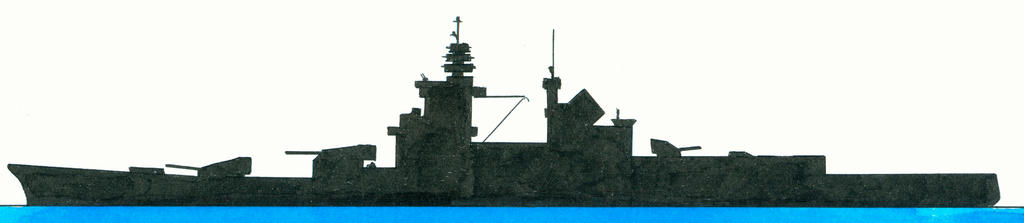
Richelieu-class. ©Warshipsresearch.blogspot.com
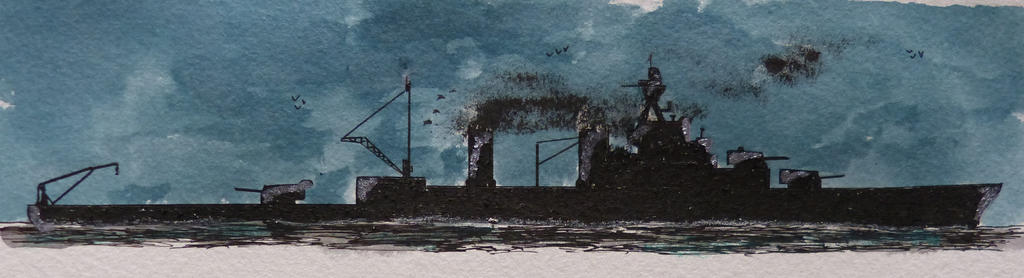
 La Galissonnière-class. ©Warshipsresearch.blogspot.com

An item reported that on 8 May no chances in the positions of the French major warships at Dakar, Senegal were sighted. There were lying the battleship Richelieu (1) and the two light cruisers Montcalm (2) and Georges Leygues (3).

Notes

1. Of the Richelieu-class as an answer on the Italian Littorio-class, preceded by Dunkerque-class and succeeded by the planned but not realized Alsace-class, laid down by Arsenal de Brest on 22 October 1935, launched on 17 January 1939, commissioned on 1 April 1940, decommissioned in 1967 and stricken in scrapped in 1968.

2. Laid down by Société Nouvelle des Forges et Chantiers de la Méditerranée, La Seyne-sur-Mer, France on 15 November 1933, launched on 26 October 1935, commissioned on 15 November 1937, decommmissioned on 1 May 1957, accommodation hulk since 1959, renamed Q457 on 31 December 1969 and broken up in 1970. Part of the La Galissonnière-class light cruiser preceded by Émile Bertin succeeded by planned De Grasse-class.

3. Laid down by At.&Ch. De St. Nazaire-Penhoet on 21 September 1933, launched on 24 March 1936, commissioned on 15 November 1937, decommissioned on 1 May 1957 and sold to be broken up in November 1959. Part of the La Galissonnière-class light cruiser preceded by Émile Bertin succeeded by planned De Grasse-class.

Source

Map Room Papers (Roosevelt Administration), 1942 - 1945. U.S. Joint Intelligence Committee. Daily summary No. 152 dated 11 May 1942

French warships executing gun exercisies at Dakar, Senegal according to the U.S. Joint Intelligence Committee Daily summary dated 17 May 1942

 La Galissonnière-class. ©Warshipsresearch.blogspot.com

An item reported that the French light cruisers George Leygues (1) and Montcalm(2) and the heavy destroyers Fantasque (3) and Malin (4) executed gun exercises on 12 May of Dakar.

Notes

1. Laid down by At.&Ch. De St. Nazaire-Penhoet on 21 September 1933, launched on 24 March 1936, commissioned on 15 November 1937, decommissioned on 1 May 1957 and sold to be broken up in November 1959. Part of the La Galissonnière-class light cruiser preceded by Émile Bertin succeeded by planned De Grasse-class.

2. Laid down by Société Nouvelle des Forges et Chantiers de la Méditerranée, La Seyne-sur-Mer, France on 15 November 1933, launched on 26 October 1935, commissioned on 15 November 1937, decommmissioned on 1 May 1957, accommodation hulk since 1959, renamed Q457 on 31 December 1969 and broken up in 1970. Part of the La Galissonnière-class light cruiser preceded by Émile Bertin succeeded by planned De Grasse-class.

3. Le Fantasque-class destroyer preceded by Vauquelin-class succeeded by Mogador-class, ordered under the naval programme of 1930, laid down by Arsenal de Lorient, France on 16 November 1931, launched on 15 March 1934, completed on 10 March 1936, reclassified as light cruiser on 28 September 1943, stricken in 1953 and broken up in 1958.

4. Le Fantasque-class destroyer preceded by Vauquelin-class succeeded by Mogador-class, ordered under the naval programme of 1930, laid down by Forges et Chantiers de la Méditerranée, La Seyne, France on 16 November 1931, launched on 17 August 1933, completed on 1 May 1936, reclassified as light cruiser on 28 September 1943, stricken on 3 February 1964 and broken up in 1977.

Source

Map Room Papers (Roosevelt Administration), 1942 - 1945. U.S. Joint Intelligence Committee. Daily summary No. 158 dated 17 May 1942

Monday, 12 August 2024

Vichy French forces at Dakar, Senegal prepared for action according to the U.S. Joint Intelligence Committee. Daily summary dated 14 December 1941

Original postcard
©Warshipsresearch.blogspot.com

An item referred to the US Consul Dakar reporting that the armed forces at Dakar, Senegal were prepared for immediate action.(1) Radio Dakar asked for protective measures after the ‘brutal’ sinking of a French merchant ship by a British submarine.(2)

Notes

1. The fast battleship Richelieu was lying with engine problems at Dakar. Part of Richelieu-class response on the Italian Littorio-class, preceded by Dunkerque class succeeded by planned Alsace-class, laid down by Arsenal de Brest on 22 October 1935, launched on 17 January 1939, commissioned on 1 April 1940, decommissioned in 1967 and stricken and broken up in 1968.

2. Between 23-25 September 1940 the Allies tried without success to conquer Dakar (Operation Menace)

Source

Map Room Papers (Roosevelt Administration) mr0422a. U.S. Joint Intelligence Committee. Daily summary No. 4 Dated 14 December 1941.

Sunday, 4 August 2024

German submarine activities in the Atlantic theatre according to the U.S. Joint Intelligence Committee. Daily summary dated 18 December 1941

An item referred to the State Consul Casablanca reporting that around 12 German submarines conducted operations from a base in the Spanish Canary Islands especially patrolling between Dakar, Senegal and Casablanca, French Morocco. Late reports already mentioned enemy submarine concentrations in the Gibraltar-Cape Verde area.

Source

Map Room Papers (Roosevelt Administration) mr0422a. U.S. Joint Intelligence Committee. Daily summary No. 8 dated 18 December 1941.

Monday, 24 June 2024

French heavy destroyer Audacieux underway to France according to the U.S. Joint Intelligence Committee. Daily summary dated 25 August 1942

An item reported that the damaged French heavy destroyer Audacieux before present at Dakar, Senegal seemed to enter the Mediterranean bound for Toulon, France.(1)

Note

1. Part of Le Fantasque-class preceded by Vauquelin-class succeeded by Mogador-class, ordered on 17 November 1930, launched on 15 March 1934,commissioned on 1 August 1935, completed on 27 November 1935, in service on 7 December 1935 and finally broken up in August 1947.

Source

Map Room Papers (Roosevelt Administration), 1942 - 1945. U.S. Joint Intelligence Committee. Daily summary No. 258 dated 25 August 1942.

Wednesday, 5 June 2024

French battleship Richelieu lying with engine problems at Dakar, Senegal according to the U.S. Joint Intelligence Committee. Daily summary dated 24 December 1941

Postcard

Warshipsresearch.blogspot.com

An item referred to naval personnel reporting that the main engines of the French battleship Richelieu lying at Dakar, Senegal since the attack in July 1940 were 5 centimeters out of line. There were  no facilities at Dakar available for repairing the damage. The forward guns could not fire due to the damaged control apparatus. The J.I.C. commented that this report confirmed earlier tidings. Temporary repairs should made a speed of 23 knots possible. In the meantime she could not be moved and was part of the fixed defence of Dakar.(1)

Note

1. Part of Richelieu-class response on the Italian Littorio-class, preceded by Dunkerque class succeeded by planned Alsace-class, laid down by Arsenal de Brest on 22 October 1935, launched on 17 January 1939, commissioned on 1 April 1940, decommissioned in 1967 and stricken and broken up in 1968.

Source

Map Room Papers (Roosevelt Administration), 1942 - 1945. U.S. Joint Intelligence Committee. Daily summary No. 14 dated December 1941.

Wednesday, 15 May 2024

Positions of Vichy French battleships and cruisers according to the U.S. Joint Intelligence Committee. Daily summary dated 7 April 1942

La Galissonnière-class. Warshipsresearch.blogspot.com

Richelieu-class. Warshipsresearch.blogspot.com

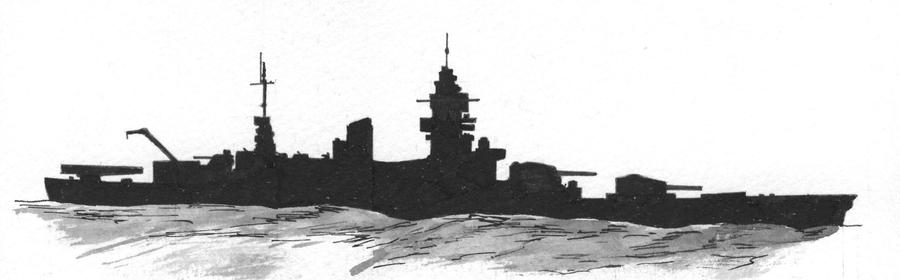
Dunkerque. Warshipsresearch.blogspot.com

An item reported that the Vichy French cruiser Gloire (1) (Summary No.115) left Dakar, Senegal going to the north on 30 March was on 4 April sighted at Casablanca, French Morocco. At Dakar was the battleship Richelieu (2) and at Toulon, France the battleship Strasbourg (3) lying.

Notes

1. Laid down by Forges et Chantiers de la Gironde on 13 November 1933, launched on 28 September 1935, commissioned on 15 November 1937 and scrapped in 1958. Part of the La Galissonnière-class light cruiser preceded by Émile Bertin succeeded by planned De Grasse-class.

2. Part of Richelieu-class response on the Italian Littorio-class, preceded by Dunkerque class succeeded by planned Alsace-class, laid down by Arsenal de Brest on 22 October 1935, launched on 17 January 1939, commissioned on 1 April 1940, decommissioned in 1967 and stricken and broken up in 1968.

3. Part of Dunkerque-class response on German Deutschland-class heavy cruisers/pocket battleships preceded by planned Lyon-class and realized Bretagne-class succeeded by Richelieu-class, laid down under 1934 Porgramme by Chantiers de Penhoët, Daint Nazaire, France on 24 November 1934, launched on 12 December 1936, commissioned on 15 September 1938, scuttled at Toulon, France on 27 November 1942 and sodl toe broken up in 1955.

Source

Map Room Papers (Roosevelt Administration), 1942 - 1945. U.S. Joint Intelligence Committee. Daily summary No. 118 dated 7 April 1942

Tuesday, 9 April 2024

Vichy French naval forces at Dakar intended to go home according to the U.S. Joint Intelligence Committee. Daily summary dated 4 April 1942

Richelieu-class. Warshipsreseacrh.blogspot.com

Strasbourg. Original postcard Chocolate La Estrella

La Galissonnière-class. Warshipsresearch.blogspot.com

An item referred to usually reliable sources reporting that the French battleship Richelieu (1) lying at Dakar, Senegal intended to France. She was still in a somewhat damaged condition and her serviceability was unknown. Vichy France denied that she would depart. The battleship Strasbourg (2) lying at Toulon, France was to go to Dakar, planned arrival on 5 April while the light cruisers Gloire (3), George Leygues (4) and Montcalm (5) would go from Dakar towards France. The first already left on 30 March going to the north. The others ships did not move and on 2 April was the Richelieu still lying at Dakar. The J.I.C. commented that the Allies would prevent the strenghtening of the French naval forces in the Mediterranean with the Richelieu coming to an European or North African harbour. A close eye was kept on the French ships.

Notes

1. Part of Richelieu-class response on the Italian Littorio-class, preceded by Dunkerque class succeeded by planned Alsace-class, laid down by Arsenal de Brest on 22 October 1935, launched on 17 January 1939, commissioned on 1 April 1940, decommissioned in 1967 and stricken and broken up in 1968.

2. Part of Dunkerque-class response on German Deutschland-class heavy cruisers/pocket battleships preceded by planned Lyon-class and realized Bretagne-class succeeded by Richelieu-class, laid down under 1934 Porgramme by Chantiers de Penhoët, Daint Nazaire, France on 24 November 1934, launched on 12 December 1936, commissioned on 15 September 1938, scuttled at Toulon, France on 27 November 1942 and sodl toe broken up in 1955.

3. Laid down by Forges et Chantiers de la Gironde on 13 November 1933, launched on 28 September 1935, commissioned on 15 November 1937 and scrapped in 1958. Part of the La Galissonnière-class light cruiser preceded by Émile Bertin succeeded by planned De Grasse-class.

4. Laid down by At.&Ch. De St. Nazaire-Penhot on 21 September 1933, launched on 24 March 1936, commissioned on 15 November 1937, decommissioned on 1 May 1957 and sold to be broken up in November 1959. Part of the La Galissonnière-class light cruiser preceded by Émile Bertin succeeded by planned De Grasse-class.

5. Laid down by Société Nouvelle des Forges et Chantiers de la Méditerranée, La Seyne-sur-Mer, France on 15 November 1933, launched on 26 October 1935, commissioned on 15 November 1937, decommmissioned on 1 May 1957, accommodation hulk since 1959, renamed Q457 on 31 December 1969 and broken up in 1970. Part of the La Galissonnière-class light cruiser preceded by Émile Bertin succeeded by planned De Grasse-class.

Source

Map Room Papers (Roosevelt Administration), 1942 - 1945. U.S. Joint Intelligence Committee. Daily summary No. 115 dated 4 April 1942

Tuesday, 19 March 2024

French warships George Leygues, Montcalm, Fantasque and Malin returned to Dakar, Senegal according to the U.S. Joint Intelligence Committee. Daily summary dated 20 April 1942

La Galissonnière-class cruisers George Leygues. Montcalm and Gloire

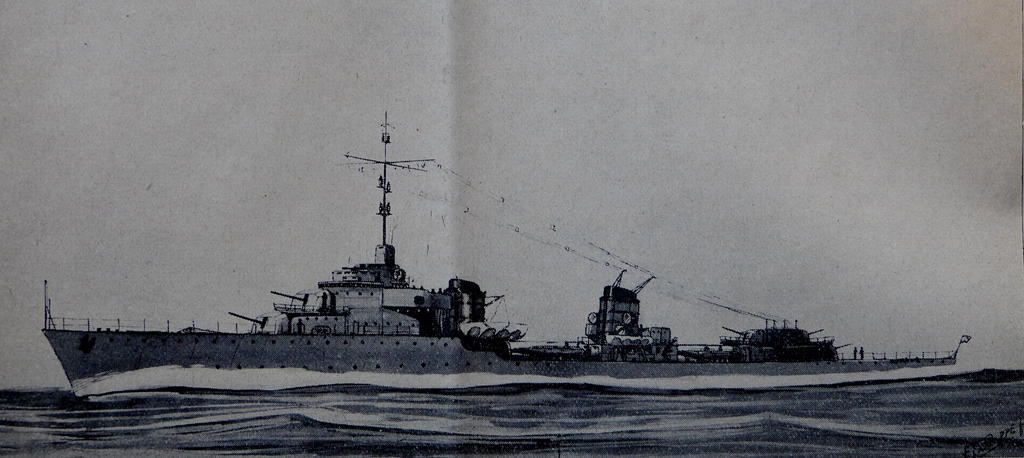
destroyer le Fantasque, source Dutch magazine Onze Vloot dated June 1936, p. 80

An item referred to the Summaries 129-130 reporting that the light cruisers George Leygues and Montcalm with the hevay destroyers Fantasque and Malin returned to Dakar, Senegal on 17 April.

Source

Map Room Papers (Roosevelt Administration), 1942 - 1945. U.S. Joint Intelligence Committee. Daily summary No. 131 dated 20 April 1942

Saturday, 16 March 2024

Movements of French warships lying at Dakar, Senegal according to the U.S. Joint Intelligence Committee. Daily summary dated 18 April 1942

Richelieu-class battleships

La Galissonnière-class cruisers George Leygues. Montcalm and Gloire

destroyer le Fantasque, source Dutch magazine Onze Vloot dated June 1936, p. 80

An item reported that the Vichy French light cruisers George Leygues and Montcalm together with the heavy destroyers Fantasque and Malin left Dakar, Senegal on 15 April and still not returned in the morning of the 17th and out of sight. The J.I.C. commented that the ships frequently went to sea for exercises out never out of sight. Perhaps their departure was for other reasons,Early April the light cruiser Gloire which was for some time at Dakar went to Casablanca, French Morocco and she was still there. The battleship Richelieu [summary dated 20 April stated Jean Bart] was on 17 April still at Dakar.

Source

Map Room Papers (Roosevelt Administration), 1942 - 1945. U.S. Joint Intelligence Committee. Daily summary No. 129 dated 18 April 1942 


Thursday, 14 March 2024

Vichy French warships still near Dakar, Senegal according to the U.S. Joint Intelligence Committee. Daily summary dated 19 April 1942

An item referred to summary No. 129 reporting that the Vichy French warships which left Dakar, Senegal were still in sight of Dakar.

Source

Map Room Papers (Roosevelt Administration), 1942 - 1945. U.S. Joint Intelligence Committee. Daily summary No. 130 dated 19 April 1942

Monday, 1 January 2024

French destroyer l’Audacieux bound for Toulon according to the U.S. Joint Intelligence Committee. Daily summary dated 6 August 1942

An item reported that the Vichy French heavy destroyer l’Audacieux lying at Dakar, Senegal of which was believed she was beyond repair,seemed to be repaired, seaworth and able to achive a speed of 20 knots bound via Casablance, French Morocco towards Toulon, France.(1)

Note

1. Le Fantasque-class destroyer preceded by Vauquelin-class succeeded by Mogador-class. Building ordered on 17 November 1930, laid down by Arsenal de Lorient, France on 16 November 1931, launched on 15 March 1934, completed on 27 November 1935, commissioned on 7 December 1935, sunk after a battle with an Australian cruiser on 23 September 1940, refloated on 11 March 1941, escaped to French Tunisia, captured by Germans on 8 December 1942, sunk on 7 Mar 1943 and refloated on 14 December 1943 and not worth to be repaired broken up in 1947.

Source

Map Room Papers (Roosevelt Administration), 1942 - 1945. U.S. Joint Intelligence Committee. Daily summary No.239 dated 6 August 1942.

Sunday, 27 August 2023

Soviet Union supporting Senegalese fishery according to the Commercial Fisheries Review dated January 1965 No. 1

An item reported that in 1964 a contract was signed between Senegal and the USSR in which the first country got a loan of 6,7 million US dollars against 2.5% annually to be repaid in Senegalese products within 12 years. With the loan and technical support was a tuna cannery to be established. During a period of 2 years Soviet technicians would operate the cannery while Senegalese technicians were trained in the Soviet Union. Further more would the latter deliver 10 tuna vessels. 

Thursday, 6 July 2023

French minister Sarraut visiting French African colonies according to the Weekly Intelligence Summary No. 19 for the week ending 27 August 1921

An item reported that the French minister for Colonies Mr. Sarraut (1) intended to make a voyage along the French African possessons. Around the end of September he would sail with a cruiser to Dakar visiting Senegal, French Guinea [since 1958 Guinea], French Ivory Coast, French Togoland [the French part became in 1960 the Republic of Togo nowadays Togolese Republic], French Dahomey [became in 1975 Republic of Dahomey, nowadays Republic of Benin] and the Cameroons [French part became independent in 1960, nowadays officially the Republic of Cameroon].

Note

1. Albert-Pierre Sarraut (28 July 1872-26 November 1962), Minster of the Colonies between 18 January 1920-29 March 1924.

Source

The National Archives, Kew Gardens, England CAB-24-127-74