Translate

Showing posts with label Burma. Show all posts

Friday, 18 September 2026

Large amount of ammunition shipped from French Indochina towards Burma according to the U.S. Joint Intelligence Committee. Daily summary dated 21 February 1942

An item reported that according to a Chinese source at Saigon, French Indochina 20,000 ton ammunition partly French property was shipped to be used [by the Japanese] in Burma.

Note

1. Japan invaded the northern part of French Indochina (Tonkin) between 22-26 September 1940. France was then already in German hands except for Vichy France., In July 1941 followed the southern part.

Source

Map Room Papers (Roosevelt Administration), 1942 - 1945. MR0423. U.S. Joint Intelligence Committee. Daily summary No. 73 dated 21 February 1942

Saturday, 28 March 2026

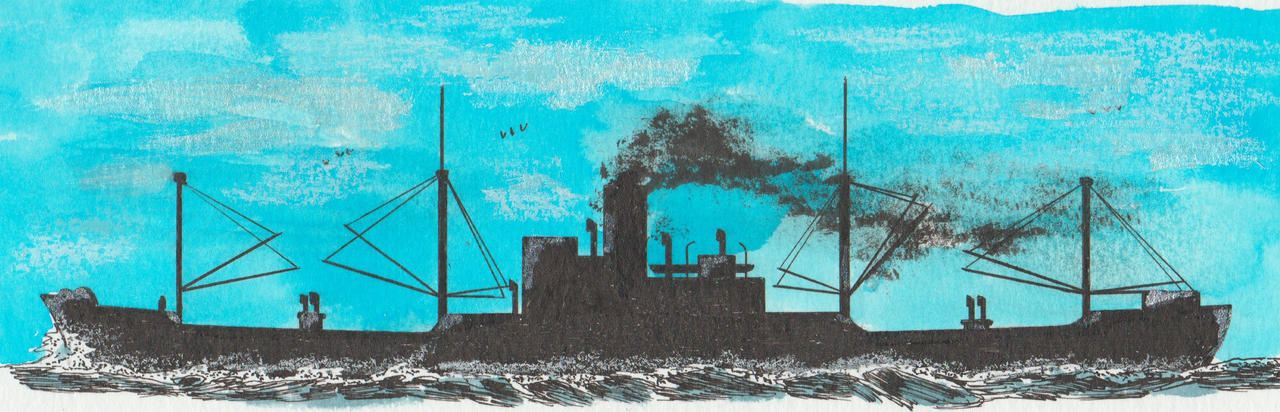
Japanese cargo ship Tat(s)uwa Maru 1937-1954

©Warshipsresearch.blogspot.com

Similar Tatuharu Maru, Tatuho Maru, Tatuyma Maru and Tatuwa Maru. Laid down  by Mitsubishi Jukogyo K.K., Kobe, Japanon 1 May 1937, launched on 22 September 1937, completed on 1 February 1938, requisitioned by the navy on 18 November 1940, auxiliary transport since 16 December 1940, sunk after striking a mine off Shimonoseki, Japan on 10 May 1945, stricken on 10 June 1945, salvaged in 1946, taken into service on 9 December 1949 and sunk underway from Maulmein, Burma to Kobe on 10 May 1954. Gross tonnage 6,355 tons, netto tonnage 3,792 tons and as dimensions 410.9 x 56.0 x 30.7 x 10 (light)-25.6 (loaded) feet. Steam turbine propulsion, horsepower 750 nhp/4,500 bhp, coal bunker capacity 800 tons, range 5,000 nautical miles/14 knots and speed 14 (normal cruising)-17 (maximum) knots. 

Sunday, 26 October 2025

Thai frigates preparing visit to India according to the Australia Station Intelligence Summary dated 1 March 1955

Sloop Mae Klong. ©Warshipsresearch.blogspot.com

An item reported that proposals were made for a training voyage in April 1955 by the Thai frigates Tachin, Prasae and Maeklong with totally 200 cadets on board in response on the succesful visit to Thailand by four Indian frigates in 1954. The planning was Singapore-Penang, Malaysia-Colombo, Ceylon-Bombay, India-Karachi, Pakistan-Calcutta, India-Madras, India-Trincomalee, Ceylon and Rangoon, Burma.

Source

Website Royal Australian Navy, Sea Power Centre.

Sunday, 24 August 2025

American ships lying at Rangoon, Burman unable to (un)load according to the U.S. Joint Intelligence Committee. Daily summary dated 30 December 1941

An item reported that American ships at Rangoon, Burma were unable to load and unload their cargoes while after the first air attack stevedores fled.

Source

Map Room Papers (Roosevelt Administration), 1942 - 1945. U.S. Joint Intelligence Committee. Daily summary No. 20 dated 30 December 1941

Friday, 25 April 2025

Hardly possible to (un)load ships at Rangoon, Burma according to the U.S. Joint Intelligence Committee. Daily summary dated 6 January 1942

An item referred to the State Department reporting that the situation in the harbour of Rangoon, Burma was still chaotic caused py panic among the people after the air attacks. Less than 50% of the normal number of stevedores were working. The three American ships lying in the harbour were just slowly unloaded even with the support of volunteers and military.

Source

Map Room Papers (Roosevelt Administration), 1942 - 1945. U.S. Joint Intelligence Committee. Daily summary No. 27 dated 6 January 1942 

Thursday, 13 March 2025

Japanese navy threatening direct access of Allies to Rangoon, Burma according to the U.S. Joint Intelligence Committee. Daily summary dated 22 January 1942

An item reported that three Japanese steamships were sighted 80 miles south of Moulmein, Burma. Japanese naval activity out of Tavoy threatened directly the Allied access to Rangoon, Burma.

Source

Map Room Papers (Roosevelt Administration), 1942 - 1945. U.S. Joint Intelligence Committee. Daily summary No. 43 dated 22 January 1942

Monday, 24 February 2025

Harbour of Rangoon, Burma closed according to the U.S. Joint Intelligence Committee. Daily summary dated 25 January 1942

An item reported that the harbour of Rangoon, Burma was closed since two ships were sunk off the mouths of the Irawaddy river by a Japanse submarine of surface raider. Five American ships lying in the harbour were waiting for an outward bound convoy. The J.I.C. commented that the Japanese now were able to maintain out of Tavoy a submarine blockade of the Gulf of Martaban.

Source

Map Room Papers (Roosevelt Administration), 1942 - 1945. U.S. Joint Intelligence Committee. Daily summary No. 46 dated 25 January 1942

Wednesday, 15 May 2024

British forces redrawing in Burma according to the U.S. Joint Intelligence Committee. Daily summary dated 9 April 1942

An item reported that by 6 April the British forces withdrawing from Allamyo and Thayetmo in the Toungoo area, Burma along both sides of the Irrawaddy supported by gunboats.

Source

Map Room Papers (Roosevelt Administration), 1942 - 1945. U.S. Joint Intelligence Committee. Daily summary No. 120 dated 9 April 1942

Sunday, 28 April 2024

Reinforcements for the Burma front sent over sea according to the U.S. Joint Intelligence Committee. Daily summary dated 21 April 1942

An item reported that reinforcements for the Burma front were continously sent over sea coming from Singapore and escorted by the navy.

Source

Map Room Papers (Roosevelt Administration), 1942 - 1945. U.S. Joint Intelligence Committee. Daily summary No. 132 dated 21 April 1942

Sunday, 7 April 2024

Strong Japanese naval force sighted off Akyab, Burma according to the U.S. Joint Intelligence Committee. Daily summary dated 2 April 1942

An item reported that aircraft sighted on 27 March off Akyab [nowadays Sittwe, Myanmar] a Japanese naval force including 2 heavy and 3 light cruisers, 5 destroyers, 4 troop transports and 2 supply ships. The J.I.C. warned for the reliability of this report.

Source

Map Room Papers (Roosevelt Administration), 1942 - 1945. U.S. Joint Intelligence Committee. Daily summary No. 113 dated 2 April 1942

Dock workers at Rangoon, Burma fled after Japanese air attack according to the U.S. Joint Intelligence Committee. Daily summary dated 2 April 1942

An item reported that it became necessary to send Chinese dock workers to Rangoon, Burma to unload the US lend-lease supplies from ships lying in the harbour because all native coolies fled from Rangoon shortly after the inital Japanese air attack.(1 The authorities were afraid that the same would happen of Calcutta was attacked.

Note

1. First Japanese attack on Rangoon was on 23 December 1941.

Source

Map Room Papers (Roosevelt Administration), 1942 - 1945. U.S. Joint Intelligence Committee. Daily summary No. 113 dated 2 April 1942

Tuesday, 26 March 2024

Strong Japanese naval force in Indian waters active according to the U.S. Joint Intelligence Committee. Daily summary dated 15 April 1942.

An item reported that on 6 April the Indian sloop Indus after she was bombed sunk of the coast of Burma. Since 3 April destroyed the Japanese at least 16 Allied merchant ships in the Indian waters. The Japanese aircraft carriers until recently active in the Bay of Bengal seemed to have gone to the eastward probably to replace their heavy aircraft losses. Despite contradictory and confusing information it was not believed that to date more as 3 battleships, 4 aircraft carriers, 5 heavy cruisers, 1 light cruiser, 1 destroyer squadron and 12 submarines executed offensive missions in the Bay of Bengal.

Source

Map Room Papers (Roosevelt Administration), 1942 - 1945. U.S. Joint Intelligence Committee. Daily summary No. 126 dated 15 April 1942. 

Thursday, 7 March 2024

American air attack on the harbour of Rangoon, Burman according to the U.S. Joint Intelligence Committee. Daily summary dated 18 April 1942

An item reported that during the night of 16-17 April US bombers attacked the Rangoon harbour scene. Heavy anti aircraft fire and intense searchlights prevented to observe what the results were.

Source

Map Room Papers (Roosevelt Administration), 1942 - 1945. U.S. Joint Intelligence Committee. Daily summary No. 129 dated 18 April 1942

Tuesday, 5 March 2024

Japanese passenger-cargo ship (ex-ss Alfred Nobel 1911-1934, ss Ortri 1934-1938) Nitimei Maru or Nichimei Maru 1938-1943


Call sign JMEM. Norway owned and flagged 1912-1938. Laid down by ArmstrongWhitworth&Co. Ld, Newcastle, England end 1911, launched on 14 August 1912. completed in September 1912, requisitioned by the army on 13 October 1941, became Army No. 436 and sunk after being damaged in an American air attack in the Gulf of Martaban on a distanceo  50 miles from Moulmein, Burma on 15 January 1943. Gross tonnage 4,704tons, net tonnage 3,145 tons, deadweight 9,060 tons and as dimensions 400.0 x 52.2 x 24.9 x 25 (loaded) feet. Coal bunker capacity 1,405 tons, range 10,000 miles/9.5 knots and speed 9.5 (normal cruising)-10.5 (maximum) knots. 

Tuesday, 24 October 2023

First newly built Burmese fast patrol vessel arrrived at Burman according to the Australia Station Intelligence Summary dated 1 September 1956

An item reported that recently the first newly built Burmese fast patrol vessel arrived at Rangoon. She was the first of the five ordered by Saunders Roe Ltd.(1). The negotiations for another 5 boats for 1.5 million pound sterling of rice failed.

Note

1. MTB/MGB Convertible Type ordered by the British Admiralty for Burma, all 5 completed between 1956-1957: T 201 (ex-PTS 101, launched on 24 March 1956), T 202 (ex-PTS 102), T 203 (ex-PTS 103), T 204 (ex-PTS 204) and T 205 (ex-PTS 205). Displacement 50-64 (full load) tons, dimensions 67 (between perpendiculars)-71 1/3 (over all) x 19.5 x 6 (maximum) feet, speed 42 knots, armament as gunboat 11.43cm/1-4.5”gun, 1-4cm anti aircraft gun and als torpedo boat 1x2-2cm anti aircraft gun, 4-53.34m/21” torpedo tubes.

Source

Website Royal Australian Navy, Sea Power Centre.

Saturday, 14 October 2023

Burma wanted more fast patrol boats according to the Australia Station Intelligence Summary dated 1 August 1956

An item reported that Burma wanted to pay for another 5 fast five patrol boats with £S 1.500.000 of rice. The representative of Saunders Roe Ltd. went back to England to consult his board with this proposal.(1)

Note

1. The negotations failed.

Source

Website Royal Australian Navy, Sea Power Centre.

Tuesday, 12 September 2023

United Kingdom sold minesweeper HMS Mariner to Burma according to the Australia Station Intelligence Summary dated 1 February 1957

An item referred to negotiations between the British Admiralty and the Burmese cabinet for handing over the HMS Mariner (1) for 82,000 pound sterling. In 1956 visited the First Sea Lord (2) Burma and offered an Algerine class ocean minesweeper for a greatly reduced price.

Notes

1. She became the Yan Myo Aung with Burma paying the reactivation costs at the H.M. Dockyard Sheerness, renamed 18 April 1958. Laid down as HMAS Kincardine by Port Arthur Shipyards, Ontario, Canada on 26 August 1943, launched on 9 May 1944 and completed on 23 May 1945. Finally laid up and broken up in 1982.

2. Louis Francis Albert Victor Nicholas Mountbatten (25 June 1900 Frogmore-27 August 1979 Mullaghmore, Ireland), First Sea Lord between 1955-1959.

Source

Website Royal Australian Navy, Sea Power Centre.

Motor torpedo boats built for Burma in England according to the Australia Station Intelligence Summary dated 1 February 1957

An item reported that in October 1956 the first of the five fast patrol boats of the Burmese navy was commissioned. She arrived from England in June. In the meantime it was needed to order new components since the electrical equipment was damaged by fire and fuel tanks started leaking.(1)

Note

1. Jane’s Fighting Ships 1958-1959 mentioned the motor torpedo boats T 201-205 (ex-PTS 101-105) of the MTB/MGB convertible type with a displacement of 50-64 (fulf load) tons. Built by Sanders Roe (Anglesea) Ltd. of aluminium and riveted skin. The T 201 was launched on 24 March 1956.

Source

Website Royal Australian Navy, Sea Power Centre.

Sunday, 6 August 2023

British light cruisers HMS Southampton, Comus and Caroline visiting Burma according to the Weekly Intelligence Summary No. 19 for the week ending 27 August 1921

C-class Caroline sub-class light cruisers

Town-class Chatham sub-class light cruisers

An item reported that the British light cruisers HMS Southampton (flagship) (1), Comus (2) and Caroline (3) planned to depart from Trincomalee on or about 10 September bound for Rangoon, Burman underway visiting Port Blair with the Caroline to visit Moulmein. The squadron would return to Ceylon on 7 October.

Notes

1. Part of Town-class Chatham sub-class light cruisers, succeeded by Arethusa-class, laid down by John Brown&Company, Clydebank shipyard, Scotland on 6 April 1911, launched on 16 May 1912, commissioned in November 1912 and sold to be broken up on 13 July 1926.

2. Part of the C-class light cruisers sub-class Caroline consisting of the Caroline, Carysfort, Cleopatra, Comus, Conquest and Cordelia, preceded by the Arethusa-class and succeeded by the Danae-class. Laid down by Swan Hunter, Wallsend-on-Tyne, England on 13 November 1913, launched on 16 December 1914, completed in May 1915, commissioned on 15 May 1915, decommissioned on December 1924, decommissioned in September 1925, decommissioned in December 1933 and sold to Thos W. Ward, Barrow-in-Furness, England be broken up on 28 July 1934

3. Part of C-class Caroline sub-class light cruisers, preceded by Arethusa-class, succeeded by Danae-class, laid down by Cammell Laird on 28 January 1914, launched on 29 September 1914, completed in December 1914, commissioned on 4 December 1914, for the last time decommissioned on 31 March 2011. Still existing as museum ship.

Source

The National Archives, Kew Gardens, England CAB-24-127-74

Friday, 30 June 2023

Japanese passenger-cargo ship Asakasan Maru 1937-1943

Laid down by Mitsui Shipbuilding Co. Ltd.,Tama, yard number 227 for by Mitsui Busan K.K. on 30 January 1937, launched on 27 June 1937, completed on 7 September 1937, requisitioned by the Imperial Japanese army on 5 October 1941, becmae the troop transport No. 840 and sunk by American aircraft on 27 February 1943 95 miles south east of Rangoon, Burma, Indian Ocean. Call signJTNL. Gross tonnage 8,702 tons, net tonnage 5,261 tons and dimensions 455.1 (between perpendiculars)-477 (over all) x 62.0 x 30. 4 x 12 (light)-21 (loaded) feet. Diesel propulsion with 230 nhp-7,600 bhp-8,500 ihp horsepower allowing with a single screw a speed of 16/95 rpm (normal cruising)-19 (maximum) knots and with 3,948 tons oil bunker capacity included deep tanks a range of 47,000 miles/6 knots.