
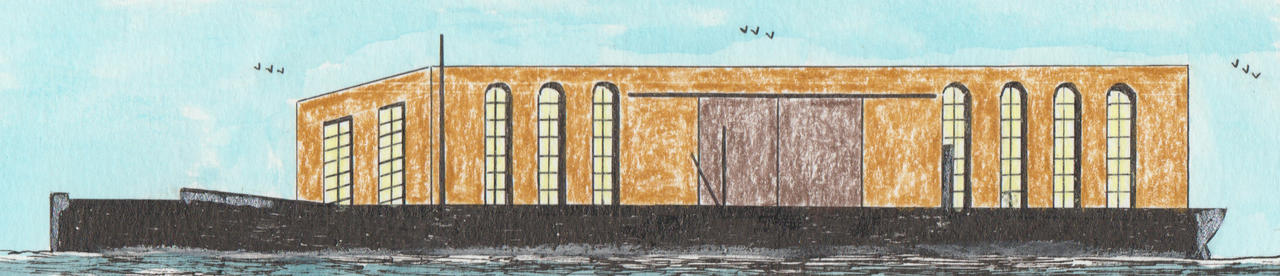
Design aircraft mother ship. ©Warshipsresearch.blogspot.com

USS Langley. ©Warshipsresearch.blogspot.com
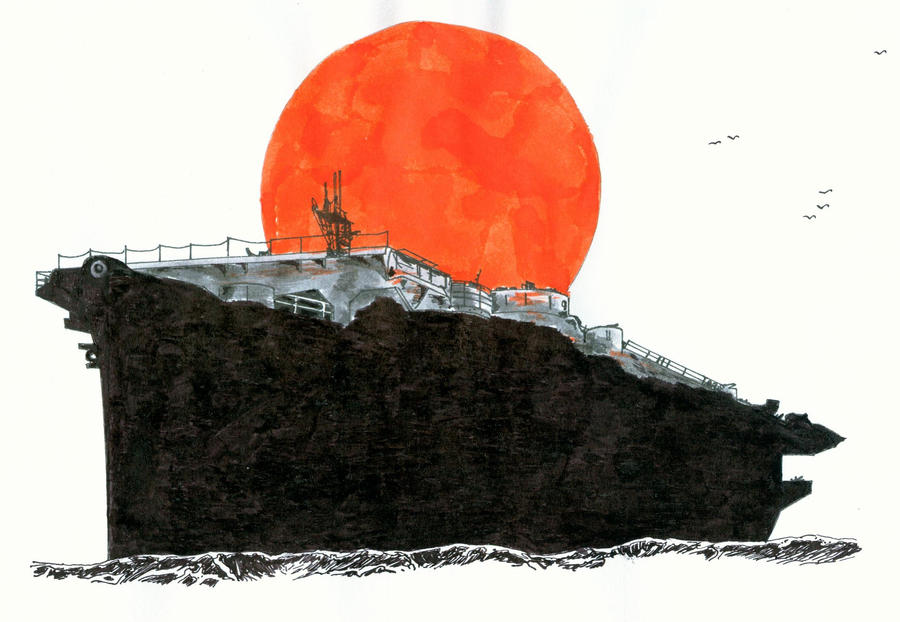
USS Bogue. Warshipsresearch.blogspot.com
Bogert published in 1917 his idea of an aircraft carrier of what in later years would become known as a flat-top.(1) See for instance the Congressional Record page A2332, Thursday 11 May 1944 dealing with the topic Flat Top Plane Carrier in which Bogert wrote to Congress member Matthew J. Merritt on 8 May wrote “by trying to secure proper recognition for me in Cogress as the inventor of the flat-top plane carrier and its use as escort to our cargo convoys across the Atlantic. I made the design and drawings of the first flat-top plane carrier way back in the spring of 1917, and I spent plenty of time in Washington trying to get the United States Navy to build one and have it escort the cargo convoys across the Atlantic. I insisted that destroyers were more or less helpless in their efforts to protect convoys, because no one on the deck of a destroyer of up at ist masthead could look diagonally through the water and locate a submarine lurking at periscope depth. This anyone up in the air vertically over the submarine could do. Therefore the only strategy worth while was a plane carrier accompanying each convoy and planes from its deck constantly circling the convoy. As soon as a lurking submarine was spotted, the loom of its hull showing up through the watre, the plane could drop a bomb at the exact spot where the destroyer or destroyers were to head for with their depth bombs. I was unsuccessful in 1917 and 1918, in spite of all my efforts to interest the Allies, and the Government refused to permit any steel being used to build any such vesssel. With the dawning of the armistice, submarine hunting became a dead issue. Nevertheless, the United States Navy, in 1923, 6 years after they had received my drawings, converted the collier Jupiter (2) to become their first flat-top plane carrier” and finally dealing with the Second World War with the immense losses of Allied and neutral shipping by the feared German submarines his comment was “Then the Navy adopted my strategy, and sent a baby flat-top plane carrier with each convoy, and the sinkings ceased. That was in the winter of 1942-1943.(3) I am still waiting for public recognition from Congress that my ideas and my ideas alone were responsible for winning the battle of the Atlantic.”
In his article “The submarine problem” he described the need of a unsinkable around 15,000 tons large mother ship with a broad uppeer deck free from all obstructionsof any kind no funnels, masts, cranes, deckhouses or whatever. She had just to suply a floating base with supplies, landing stage and a take off. Boats, cranes and wireless/signalling masts were stowed beblow the upper deck. Lacking superstructure the the pilot-house was inclined aft creating a take-off for the departing aircraft. The length of the upper deck was 560 feet with a beam of 50 feet equal to the inner hull with a totaal beam of 80 feet due to the cellular sides serving as torpedo protection. Possible was a decrease to 74 feet narrowing the cells by 18”. A cell was 30 feet long, 7.5 feet wide and 10 feet deep and accessible by manholes make it possible to pass completely around the ship and could be used for storage of grain or cargo. This version of his invention was a diesel driven vessel but Bogert thought that in the USA more likely a steam propulsion (geared turbines or triple expansion) would be selected lacking enough experts in the manufacture or handling of large diesel engines. When steam was used were folding smokestacks needed. Wireless masts and the derricks for hoisting the seaplanes on board were made to swing from a vertical to horizontal position and vice versa. In Europe especially Denmark or the Netherlands would a four-cycle diesel propulsion not be a problem with enough well-trained men available. The carrier was to be fitted out with take six seaplanes and was to be armed with at least four 5”or 6” quick firing guns in single mountings fore and aft.
Notes
1. Often considered to be the inventor of the flat top carrier. John Lawrence Bogert (27 October 1868 Flushing, Long Island, New York, USA-11 Augustus 1956 Southampton). Naval architect and marine engineer. He had been for decades editor of the Marine Journal. Graduated at the Columbia College. Held 40 patents on inventions.
2. Laid down by Mare Island navy Yard, USA as collier USS Jupiter (AC-3) on 18 October 1911, launched on 14 August 1912, commissioned on 7 April 1913, decommissioned on 24 March 1920, reclassified as the aircraft carrier Langley after a conversion at Navy Yard Norfolk on 21 April 1920, recommissioned on 20 March 1922, decommissioned on 25 October 1936, reclassified as a seaplane tender on 21 April 1937, recommissioned on 21 April 1937 and sunk by Japanese aircraft on 27 February 1942 near Tjilatjap, Dutch East Indies. As collier were her sister ships Cyclops, Proteus and Nereus. Displacement as Jupiter 19.360 tons and dimensions 165,2 x 19,9 x 8,4 metres or 542 x 65.5 x 27.8 feet.
3. The escort (aircraft) carrier is nicknamed jeep carrier or baby flattop by the US Navy and Wollworth Carrier by the British Navy and is in fact a downsized aircraft carrier.During the Second World War are 130 such carriers newly built or converted merchant ships. For example the Bogue-class carrier based on the hull of the Type C3 cargo ship.
Sources
Bogert, John. L. “The submarine problem”, in Pacific Marine Review, San Francisco, volume 14, August 1917, page 64-67. Preview p. 55-56.
Idem, Letter from John Lawrence Bogert to New York World, 17 October 1917. Deals with the unsinkable freight ship and submarine destroyer.
Castillo, Edmund L. Flat-tops: the story of aircraft carriers, 1969.
Friedman, Norman. U.S. Aircraft Carriers, revides Edition: An Illustrated Design History, 1983.
Layman, R.D. and Stephen McLaughlin. The Hybrid Warship: The Amalgamation of Big Guns and Aircraft, 1991. Used Scietntific American of 1917 as primarily source.
Moses, Edward C. Strategic Crossroads; tragic bany decisions [on building of "flat-top" plane carriers, 1953.
Polmar, Norman. Aircraft Carriers: A history of carrier aviation and its influence on World Events, Vol. I: 1909-1945, 2006.
Columbia Spectator, Vol. XCVII, No. 23, dated 27 October 1952.
Popular Science, October 1917. She launches seaplanes and she’s unsinkable.
United States of America. Congressional Record. Proceedings and debates of the 78th Congress. Second session. Appendix volume 90-part 9/ March 4, 1944 to June 12,1944 page A2332.


No comments:
Post a Comment