Translate

Showing posts with label Icebreakers. Show all posts

Friday, 31 July 2026

Russian Bolsheviks intending to sell old warships to the German Navy in April 1922?

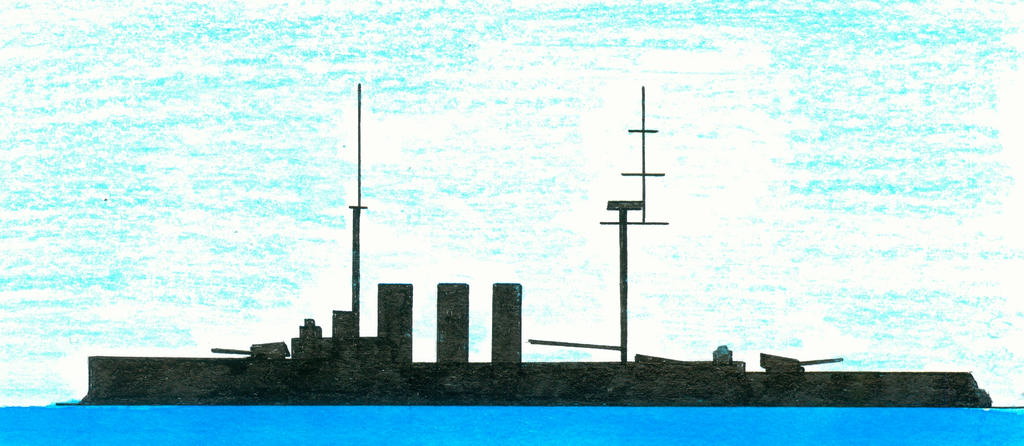
armoured cruiser Rurik (1905)©Warshipsresearch.blogspot.com
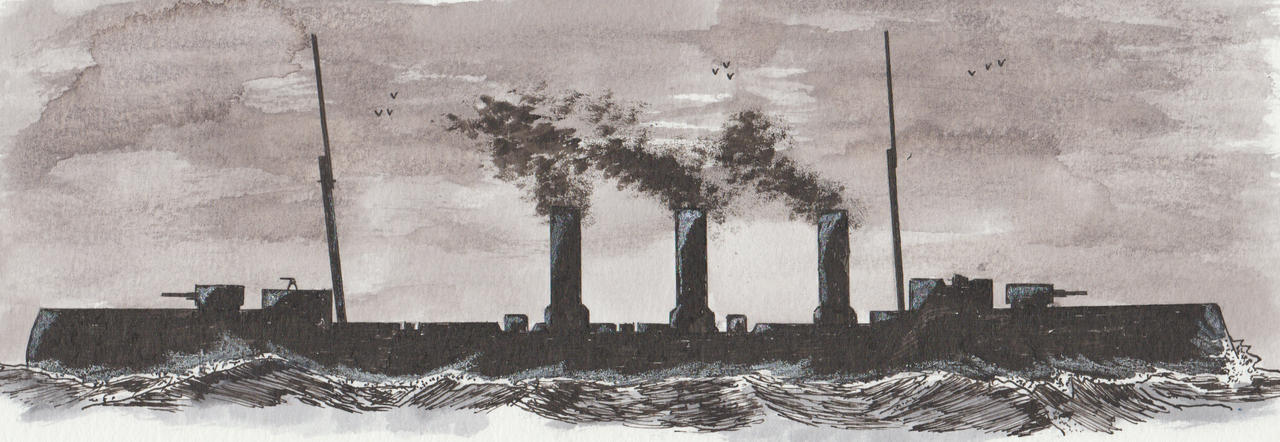
Bogatyr-class cruiser (1905)©Warshipsresearch.blogspot.com
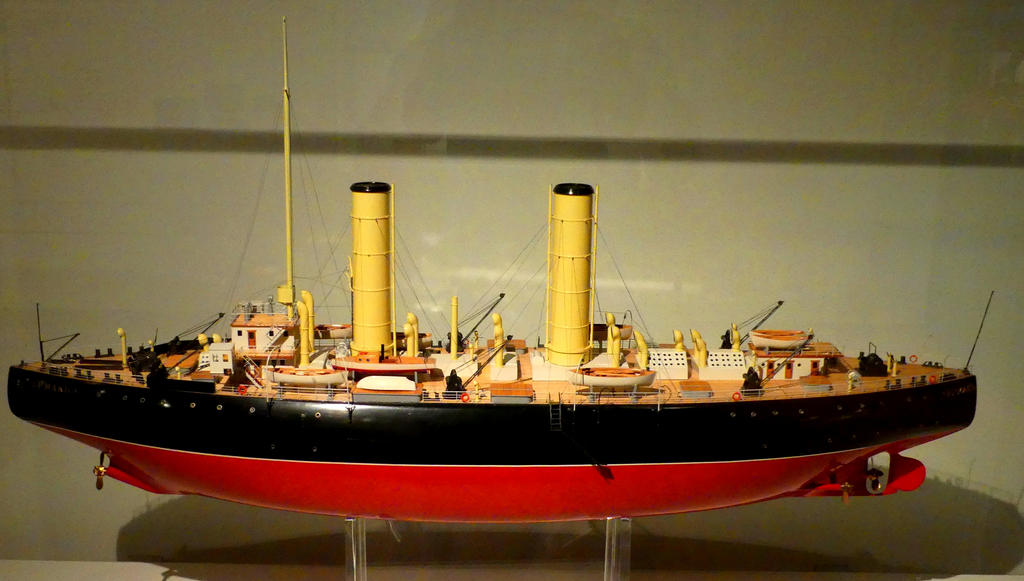
Model Maritiem Museum Hamburg, Germany

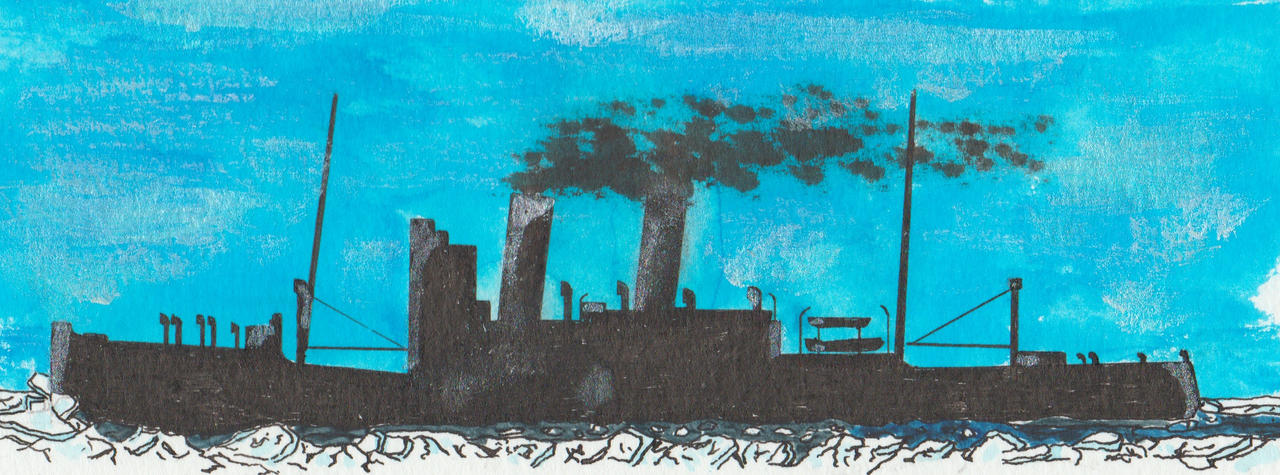
A report from the Military Observer at Riga, Latvia dated 25 April 1922 reported the possible sale of warships by the Russian Bolsheviks to Germany referring to an earlier report No. 2482. According to a reliable source were to be sold to representatives of the German navy under arrangement made by Koning all old ironclads excluded the Zarya Svobodi, all old cruisers excluded the Rurik and Bogatyr and all the destroyers of the former 8th Division which were boats of the French type. Koning arrived at Reval [Tallinn, Estonia] on board of the icebreaker Ermak [also called Yermak and Jermak] on 2 March leaving to Berlin on 8 March. If the conditions were approved, was the proposal to transfer the ships to German in early May.

Source

National Archive. Record Group 165: Records of the War Department General and Special Staffs Series: Security Classified Correspondence and Reports. File Unit. Russia: Navy - MID 2503-16 THRU 2503-265. Roll 1443.

Thursday, 30 July 2026

Russian naval officer Gasabov according to a report from the Military Observer at Riga, Latvia dated 22 July 1921

Model Maritiem Museum Hamburg, Germany

The information was received from the Latvian General Staff and considered to be reliable. In fact few was known dealing with the personnel of the Central Institutions except that the majority in authority were former naval officers already officers prior to the First World War. The descriptions of the officers were supplied by a former high officer of the Imperial Russian Navy which now stayed in Latvia. Former senior lieutenant. “Commander of the [icebreaker] Yermak (April 1921); has occupied this post 6 to 8 years; a very experienced icebreaker captain; was serving on that ship as far back as the time of admiral Makarov.”(1)

Note

1. Also called Ermak en Jermak. Laid down by Armstrong Whitworth, Low Walker Shipyard, Newcastle-on-Tyne, England with yard number 684 in 1897, launched on 17 October 1898, completed in 1899, decommissioned in 1963 and broken up in 1964. Displacement 8,730 tons and as dimensions 97.5 x 21.6 x 7.3 metres. Four shaft vertical expansion steam propulsion with 6 boilers and 9,000 hp a speed of 12 knots. Crew numbered 102 men.

Source

National Archive. Record Group 165: Records of the War Department General and Special Staffs Series: Security Classified Correspondence and Reports. File Unit. Russia: Navy - MID 2503-16 THRU 2503-265. Roll 1443.

Sunday, 12 July 2026

Russian diesel-electric icebreaker Murmansk 2012-


Great Belt Bridge, Denmark 8 July 2026

Facebook group Under Broen

Russia-flagged, IMO 9658666, MMSI 273386110 and cal sign UBVN. Ordered by Aectech Helsinki Shipyard, Finland on 18 December 2012, laid down with yard number 509 on 26 December 2012, launched on 25 March 2015, completed on 25 December 2015. Project 21900M.

Russian shallow draught river icebreaker Avraamiy Zavenyagin 1984-

Great Belt Bridge, Denmark 8 July 2026

Facebook group Under Broen

Russia-flagged, IMO 8027262, MMSI 273422960 and call sign UFED. Built in 1984 by Wärtsila Helsinki Shipyard, Finland. Design to operate in the Russian Arctic. Part of Kapitan Evdokimov-class. 

Saturday, 16 May 2026

Japanese ice breaker Aniwa Maru 1927-1945

©Warshipsresearch.blogspot.com

Call sign JZBB. Owner in 1939 Japanese Government Railways, Tokyo, Japan. Built by Kobe Steel Works Ld., Harima, Japan in 1927 and sunk in an American air attack off the coast of Aomori Prefecture on 10 August 1945. Was active in the Chikahu sea lane between Wakkanai, Hokkaido-Japanese occupied Sakhalin (Karafuto Prefecture). Gross tonnage 3,391 tons, under deck 2,654 tons, net tonnage 1,617 tons, deadweight 2,100 tons, displacement 5,234 tons and as dimensions 310 (between perpendiculars)-327 (over all) x 45.0 x 30.0 x 21 (loaded) feet. Reciprocating propulsion, 2 screws, horsepower 6,395 ihp, coal fuelled and speed 12 (normal cruising)-16 (maximum) knots. Nine watertight bulkheads. Most powerfull icebreaker in the Far East in the Interbellum and Second World War. Able to break through 10 feet thick ice. 

Friday, 24 April 2026

Russian icebreaking research vessel Akademik Fedorov 1987-


Facebook pager Under Broen

Great Belt Bridge 23 April 2026

Russia-flagged, homeport St. Petersburg, IMO 8519837, MMSI 273412710 and call sign UCKZ. Launched by Rauma-Repola, Rauna, Finland on 8 September 1987, maiden voyagr started on 24 October 1987. 

Thursday, 23 April 2026

German inland passenger vessel Hansa 2003-

Bremerhaven, Germany 19 April 2026

Germany-flagged, ENI 05306990, MMSI 211112160 and call sign DEPR. According to a brochure titled Salondampfer Hansa Das Restaurantschiff is the hull is of the former East German navy tug Hai completed after the Second World War using an uncompleted hull dating from the 1930s. Launched by VEB Edgar Andre as icebreaker Pu,a M-9-464 for account of Poland in 1954, order councelled and handed over to the Wasserstrassenhauptamt Magdeburg, Germany and received No. 2673. Modernized by VEB Schiffswerft at Rosslay, launched in 1959, as Hai (A13 later A11). commissioned in the East German Nay , modernized by VEB Peenewerft, Wolgast between 1977-1978, decommissioned on 3 August 1990, decided to be sold in 1991. Between 2000-2003 converted into the Hansa.

Sources

Breyer, Siegfried, Die Volksmarine in der DDR.

Schäfer , Knut and Peter Seemann. DDR-Marine 1949-1990.

Mehl, Hans, Knut Schäfer and Ulrich Israel. Vom Küstenschutzboot zum Raketenschiff.

Brochure Salondampfer Hansa Das Restaurantschiff

Navyworld dated 20 April 1990

Forum Marinearchiv dated 20 April 1990

German screw steam tug Welle 1914-

Bremerhafen, Germany 19 April 2026

Orderred at Atlas-Werke, Brem, Germany in July 1914, launched on 11 April 1915. Originally also to be used as icebreaker. Double screw steamship. Dimensions 37.36 x 7.20 x 2.80 metres. 

Monday, 16 February 2026

Condition of icebreakers of the Russian Baltic Fleet in 1922

Yermak. Hamburg Maritime Museum, Germany

The Commissioner of the United States at Riga, Latvia supplied the Secretary of State at Washington, USA on 23 February 1922 more details about the condition of Russian warships. The Ermak (2) and three smaller ones of the size of a large tug boat were used between Kronstadt and Petrograd and outside of the Kronstadt Bay. They were all in good condition and in working order. The Lenin (ex-Alexander) and Sviatagor were stationed at Reval, Estonia especially to support the Soviet shipping using Reval.

Note

1. Laid down by Armstrong Whitworth, Low Walker Shipyard, Newcastle-on-Tyne, England with yard number 684 in 1897, launched on 17 October 1898, completed in 1899, decommissioned in 1963 and broken up in 1964. Displacement 8,730 tons and as dimensions 97.5 x 21.6 x 7.3 metres. Four shaft vertical expansion steam propulsion with 6 boilers and 9,000 hp a speed of 12 knots. Crew numbered 102 men.

Source

Records of the Department of State Relating to Internal Affairs of Russia and the Soviet Union, 1910-29. Naval Affairs, Navy, Navy Vessels: 861.30 .(861.31 Naval Maneuvers; 851.32 Personnel); 861.33 Movements of Navy Vessels; 861.34 Equipment and Supplies): 861.39 - 861.345. Micro film 316 roll 92. 

Monday, 15 September 2025

US Navy icebreaker USS Atka bound for the Antarctic according to the Australia Station Intelligence Summary dated7 January 1955

An item reported that the US Navy icebreaker USS Atka was scheduled to leave Boston, USA on 1 December bound for the Antarctic and to gather information for the expedition planned in 1957. She would probably stay 10 weeks in the Antarctic.

Note

1. Laid down by Western Pipe and Steel Company, San Pedro, California, USA with yard number CG-98 as the Wind-class icebreaker USCGC Southwind on 20 July 1942, launched on 8 March 1943, commissioned on 15 July 1944, decommissioned on 23 March 1945, transferred to the USSR on 25 March 1945, renamed Admiral Makarov, returned on 28 December 1949, became the USS Atka, commissioned on 13 April 1950, decommissioned on 31 October 1966, returned to the USCG , renamed USCGC Southwind, decommisssioned on 31 May 1974 and sold to be broken up on 17 March 1976.

Source

Website Royal Australian Navy, Sea Power Centre.

Saturday, 6 September 2025

Soviet Union building nuclear rocket battleships according to the Australian newspaper Maitland Mercury dated Tuesday 28 March 1950

Russian rocket battleship. ©Warshipsresearch.blogspot.com

British battleship HMS King George V. ©Warshipsresearch.blogspot.com

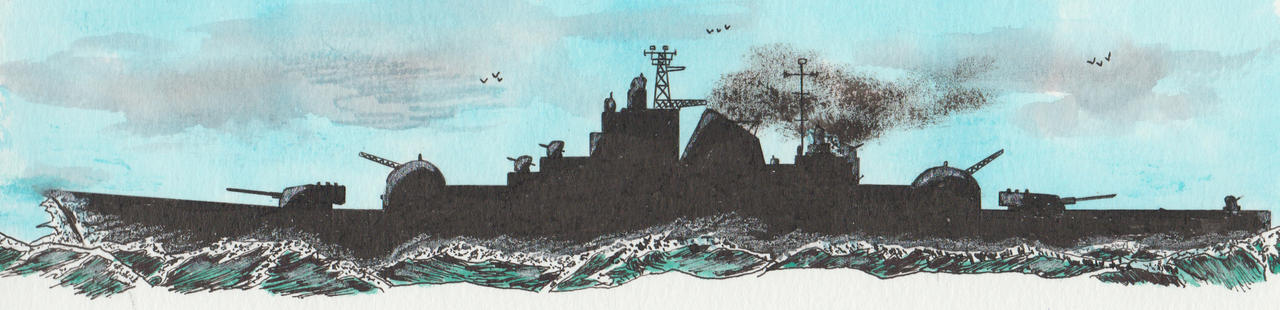
An item referred to the West German newspaper Montage Echo published in West Berlin reporting that the Soviet Union was building nuclear rocket battleships armed with 2 rocket-launching towers.(1) Their length would be 794 just slightly longer than the British 35,000 tons King George V battleships.(2) Sleek draft and low superstructure. Armed with triple guns turrets in front of the two rocket turrets, positioned fore and aft the superstructure and fitted out with the newest anti aircraft and anti submarine weapons. The guns were radio-controlled by there were no atomic weapons n board. The reporter wrote that it were just atomic launching platforms and the first was scheduled to be completed on short notice. Her name was to be Sovjetsky Sius. Earlier was claimed that recently two battleships were completed.

Notes

1. K-1000 class was just an imaginary ship. The Soviet icebreaker Lenin launched in 1957 was the first nuclear powered surface ship.

2. King George V-class preceded by Nelson-class succeeded by planned Lion-class and built HMS Vanguard, standard displacement between 37,316-40,642 tons and length 700.1 (between perpendiculars)-745.1 (over all) feet.

Source

Trove.nla.gov. au dated 9-1-2025

Friday, 8 August 2025

American medium icebreaker USCGC Storis (WAGB-21) (2010) 2024-

Juneau, Alaska, USA 26 August 2025

Building as an anchor handling tug annex supply vessel ordered in July 2009, laid down with yard number 247 by North American Shipbuilding Company, Larose, Louisiana, USA on 3 February 2010, launched on 1 November 2011, christened Aiviq on 24 March 2012, completed on 30 April 2012, homeport Galliano, Louisiana, call sign WDG2524, MMSI 367141000, sold to the USCG on 20 December 2024, maiden voyage on 4 June 2025, homeport Juneau, iMO 9579016.

Thursday, 10 July 2025

Russian icebreakers stationed in the White Sea during the winter1942-1943

American naval attaché at Moscow, Russia reported in February 1943 that during the winter of 1942-1943 the Russian icebreakers Mikoyna, Kaganovich, Lenin, Krassin, Litke en Sedov were stationed in the White Sea.

Source

National Archives USA. Record Group 38: Records of the Office of the Chief of Naval Operations. Series: Secret Naval Attaches Reports. Estimate of potential military strength (pt.). Summaries. Reports from London, Paris, Brussels, Rome and Berlin. Roll M975-001.

Sunday, 8 June 2025

Russian nuclear powered icebreaker Arktika 2016-


Great Belt Bridge, Denmark 8 June 2025

Facebook group Under Broen

Russia-flagged, IMO 9694725, MMSI 273210920 and call sign UCZC.. Laid down on 5 November 2013, launched by Baltic Shipyard, St. Petersburg, Russia with yard number 05706 on 16 June 2016, completed in December 2016 (contract dated) and commissioned on 21 October 2020. Owner Russian Government, manager Atomflot, Murmansk, Russia. Project 22220 preceded by Arktika- and Taymyr-classes succeeded by Project 10510.

Saturday, 17 May 2025

Russian harbour icebreaker Tralbasa/Tralbosa available in 1936

In a report dated 15 December 1936 dealing with the strength and composition of the Soviet fleet were the icebreakers mentioned available for the surface fleet. Homeport Murmansk. Built in 1932. Gross register tonnage 119 tons. Horsepower 450 hp. Speed 10,2 nautical miles. (1)

Note

1. Lloyds Register 1939-1940. Called a tug. Gross tonnage 119 tons, under deck 110 tons, net tonnage 35 tons and as dimensions 81.1 x 20.1 x 9.2 feet. Built by Aktien Gesellschaft Neptun, Rostock, Germany in 1932.

Source

Bundesarchiv Naval Attache Moscow RM-12-II-159

Friday, 9 May 2025

Russian harbour icebreaker Murman available in 1936

In a report dated 15 December 1936 dealing with the strength and composition of the Soviet fleet were the icebreakers mentioned available for the surface fleet. Homeport Murmansk. Built in 1921. Gross register tonnage 389 tons. Horsepower 750 hp. Speed 8 nautical miles. (1)

Note

1. Lloyds Register 1939-1940 and Marhisdata. Called a tug. Ex-Groningen. Built by Gebr. Volker A. Fzn., Sliedrecht, Netherlands with yard number 105 in 1920, delivered to N.V. Bureau Wijsmuller, Scheepvaart-, Transport&Zeesleepvaart Maatschappij, The Hague, Netherlands on 4 July 1921, since 18 September 1933 Russian owned as Murman, renamed No. 21 as part of the Russian navy on 1 August 1941, renamed M-3 on 19 June 1943. Call sign UOXY. Gross tonnage 389 tons, under deck 326 tons, net tonnage 71 tons and as dimensions 139.3 x 24.9 x 13.4 feet.

Source

Bundesarchiv Naval Attache Moscow RM-12-II-159

Wednesday, 7 May 2025

Russian harbour icebreaker Ljod available in 1936

In a report dated 15 December 1936 dealing with the strength and composition of the Soviet fleet were the icebreakers mentioned available for the surface fleet. Stationed in the Baltic. Homeport Leningrad. Built in 1904. Gross register tonnage 201 tons. Horsepower 645 hp. Speed 11 nautical miles.  

Source

Bundesarchiv Naval Attache Moscow RM-12-II-159

Sunday, 4 May 2025

Russian harbour icebreaker Aisberg available in 1936

In a report dated 15 December 1936 dealing with the strength and composition of the Soviet fleet were the icebreakers mentioned available for the surface fleet. Stationed in the Baltic. Homeport Leningrad. Built in 1934. Gross register tonnage 126 tons. Horsepower 475 hp. Speed 10,3 nautical miles.  

Source

Bundesarchiv Naval Attache Moscow RM-12-II-159

Russian icebreaker Murmansk 2016-


Great Belt Bridge, Denmark, 30 April 2025

Facebook Group Unter Broen

Russia-flagged, IMO 9658666, MMSI 273386110 and call sign UBVN2. Built by Vyborg Shipyard, Vyborg, Russia in 2016. Owner/manager Rosmorport, Moscow, Russia.

Monday, 21 April 2025

Russian icebreaker Akademik Fedorov 1987-

Great Belt Bridge, Denmark 20 April 2025. Underway from Cape Town, South Africa to St. Petersburg

Under Broen group Facebook

Russia-flagged, IMO 8519837, MMSI 273412710 and call sign UCKZ. Launched by Rauma-Repola, Rauma, Finland on 8 September 1987, maiden voyage started on 24 October 1987.