

Showing posts with label Marines. Show all posts
Showing posts with label Marines. Show all posts
Saturday, 24 January 2026


Thursday, 11 September 2025
Dutch navy strengthening security of Dutch New Guinea according to the Australia Station Intelligence Summary dated7 January 1955
An item reported that rear admiral Moorman (1) under secretary of the Royal Netherlands Navy in the Staten Generaal (Dutch Parliament) stated that the security of Dutch New Guinea (2) was to be strenghtened by increasing the Marine Corps, stationing an extra destroyer and replacing the Catalina flying boats by more modern aircraft.
Notes
1. Henricus Cornelis Willem Moorman (30 July 1899 Roermond, Netherlands-5 May 1971 The Hague, Netherlands). Under secretary for the navy between 1 May 1949-19 May 1959 and under secretary for war between 23 October 1950-2 September 1952. Ended his naval career in the rank of vice admiral.
2. Dutch New Guinea or Netherlands New Guinea was the western half of New Guinea until 1949 part of the Dutch East Indies and until 1962 an overseas territory handed over by the United Nations to Indonesia on 1 May 1963.
Source
Website Royal Australian Navy, Sea Power Centre.
Sunday, 25 May 2025
Japanese seized American ship President Harrison according to the U.S. Joint Intelligence Committee. Daily summary dated 8 January 1942
An item referred to the British Admiralty at London reporting that the Japanese seized on 8 December the American ship President Harrison in the Whangpoo River, Shanghai, China. Yje J.I.C. commented she was underway to North China to evacuate the US marines stationed at Tientsin and Peking.
Source
Map Room Papers (Roosevelt Administration), 1942 - 1945. U.S. Joint Intelligence Committee. Daily summary No. 29 dated 8 January 1942
Monday, 12 May 2025
Dutch landing platform dock (LPD) Zr.Ms. Rotterdam (L 800) 1998-
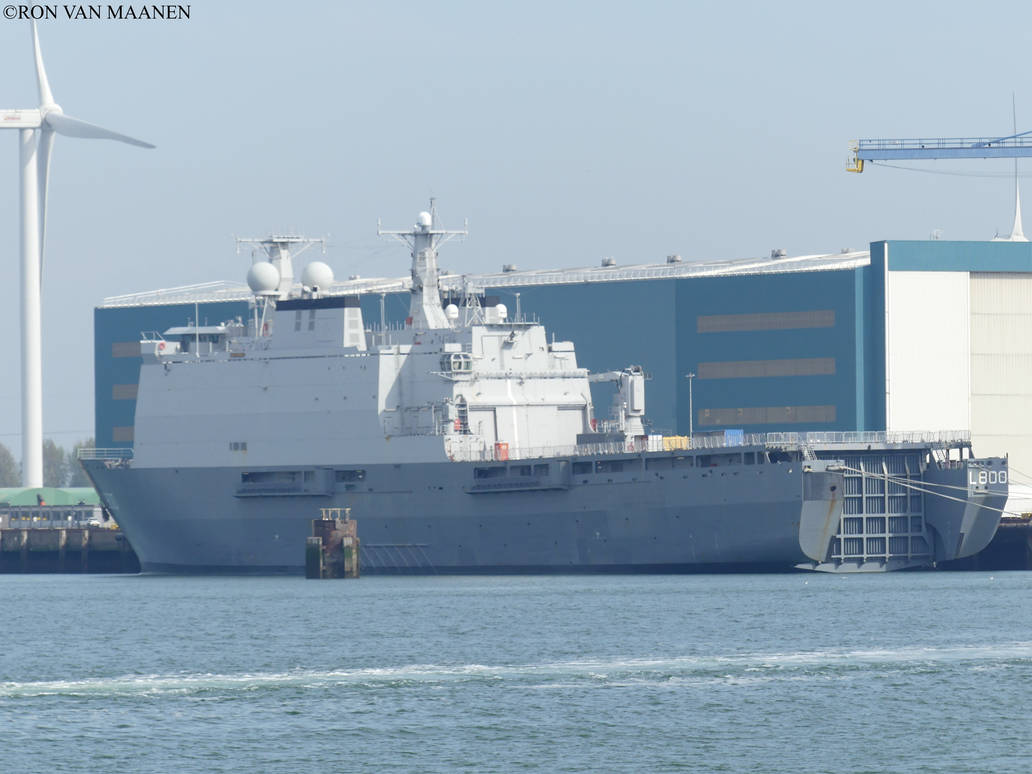
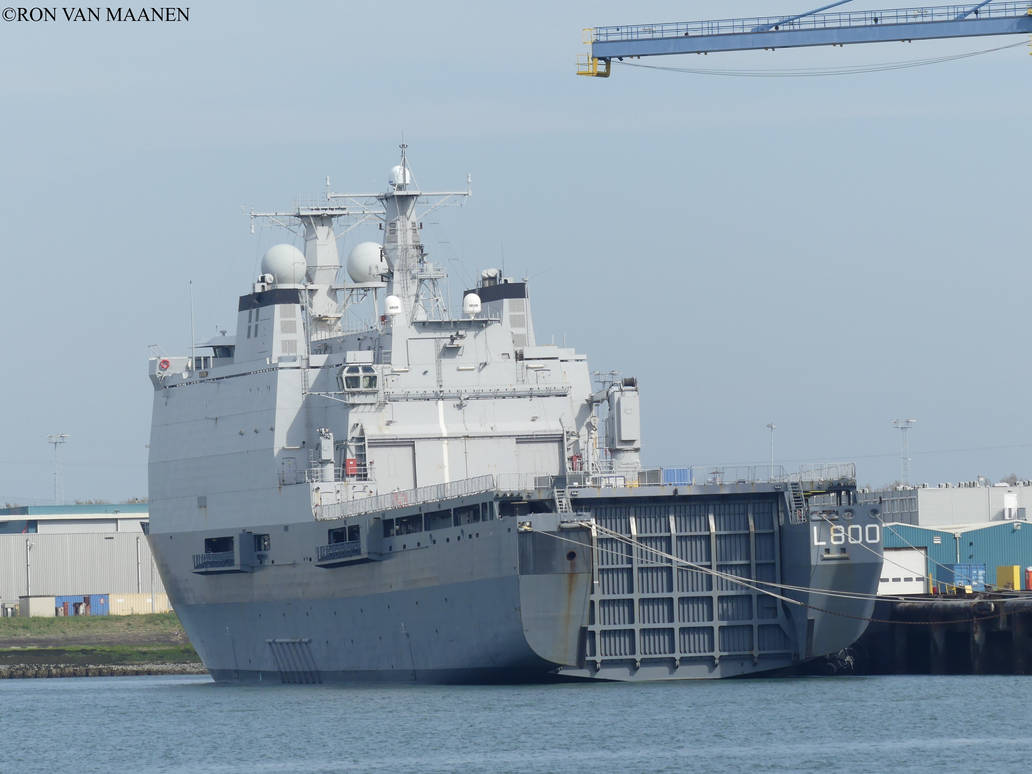
Schelde off Vlissingen, Netherlands 19-4-2025
Ordered on 25 April 1994, laid down by Koninklijke Schelde Groep, Vlissingen, Netherlands on 25 January 1998, launched on 22 February 1997 and commissioned on 18 April 1998. An amphibious transport or landing platform dock able to transport a complete battalion marines with equipment. Enforcer-design as a result of a Dutch Spanish project. MMSI 246700000.
Tuesday, 8 April 2025
USS Dewey YFD-1 floating dry dock in serviceable condition according to the U.S. Joint Intelligence Committee. Daily summary dated 11 January 1942
An item reported that American local naval and marine forces at Mariveles, Philippines were active in the defence of the Bataan Peninsula and Corregidor. The Dewey drydock was in serviceable condition.(1)
Note
1. USS Dewey YFD-1 floating dry dock laid down by Maryland Steel. Co., Sparrow Points, Maryland, USA in begun 1905, launched on 10 June 1905, towed to the Philippines in 1905-1906, scuttled at Mariveles on 8 April 1942, salvaged by the Japanese, towed to the Manila Bay and sunk by American aircraft on 12-13 November 1944.
Source
Map Room Papers (Roosevelt Administration), 1942 - 1945. U.S. Joint Intelligence Committee. Daily summary dated 11 January 1942 No. 32.
Thursday, 31 October 2024
The Polish navy in 1923
A note of the Heeres-Statistische Abteilung No. 3173 T.3.VI dated 29 October 1923 described the small Polish navy. It consisted of 2 small gunboats, 6 torpedo boats, 4 mine searching vessels,4 auxiliary ships, 1 training ship and 1 research vessel. There were 2 aircraft squadrons, 1 coast artillery regiment, 1 sea battalion and a river flotilla consisting of 4 monitors and around 30 armed motor boats. The naval harbour was Putzig [Puck] while efforts were made to convert Gdingen into the main harbour. The river flotilla was stationed at Thorn, Moldin and Pinsk. Personnel strength excluded the coast artillery and sea battalion was 235 officers and 2,090 men.
Source
Bundesarchiv RM 20-1645.
Tuesday, 18 June 2024
US Marines stationed in Brazil according to the U.S. Joint Intelligence Committee. Daily summary dated 21 December 1941
An item reported that 3 provisional US Marine companies each numbering 50 men including 4 officers arrived in Brazil and stationed at respectively Belem do Para, Natal and Recife. The J.I.C. commented that the men officially were classified as technicians with as additional task protecting US equipment and to cooperate primarly with the Brazilian air force and secondarily with the army. Their armament consisted of pistols, rifles and light machine guns was stored in boxes so nobody could object against armed foreign military entering Brazil.
Source
Map Room Papers (Roosevelt Administration), 1942 - 1945. U.S. Joint Intelligence Committee. Daily summary No. 11 dated 21 December 1941.
Friday, 12 January 2024
Characteristics for an American beach discharge lighter (BDL)in March 1961
Capable of receiving at sea wheeled and trackings from roll-on rolll-off ships. Speed 12 knots. Capacity 600 tons vehicular cargo and 1,000 toins general cargo. Accommodation for 204 vehicle carriers.
Source
Army forces in amphibious operations (the Army Landing Force). Department of the Army Field Manual FM 31-12. March 1961.
Monday, 8 January 2024
Characteristics for an American amphibious assault ship (LPH) in March 1961
Dimensions 592 x 105 x 20 feet. Speed 20 knots. Troop capacity 1,400. Aircraft 20 H-37 or 40 H-4 helicopters.
Source
Army forces in amphibious operations (the Army Landing Force). Department of the Army Field Manual FM 31-12. March 1961.
Characteristics for an American amphibious transport dock (LPD) in March 1961
Dimensions 510 x 84 x 18 feet. Speed 20 knots. Troop capacity 1,000. Cargo capacity 2,500 tons. Aircraft 6 H-37 or 12 H-34 helicopters(rotors folded). Well capacity 9-LCM6 or 1-LCU and 3-LCM6 or 4-LCM-8.
Source
Army forces in amphibious operations (the Army Landing Force). Department of the Army Field Manual FM 31-12. March 1961.
Friday, 5 January 2024
Characteristics for an American dock landing ship (LSD) in March 1961
Dimensions 458 x 72 x 18 feet. Speed 12 (cruising)-17 (maximum) knots. Troop capacity 200. Cargo capacity 3 LCU or 18 LCM_6 or 9-LCM-8 or 41 LVT or 47 DUKW. Capacaity may be increased by installation of mezzanine and upper decks above well deck to carry additional 51 LVT or 61 DUKW.
Source
Army forces in amphibious operations (the Army Landing Force). Department of the Army Field Manual FM 31-12. March 1961.
Characteristics for an American tank landing ship (LST) in March 1961
Dimensions 382 x 55 x 12 feet. Speed 10 (cruising)-15 (maximum) knots. Troop capacity 500. Cargo capacity 500 (beaching)-1,600/1,900 (at sea) long tons. Landing craft 4 LCVP. Largest equipment carried tank deck 20 medium tanks or 20 LVT or 29 DUKW; main deck around 25 vehicles under 25 ton.
Source
Army forces in amphibious operations (the Army Landing Force). Department of the Army Field Manual FM 31-12. March 1961.
Friday, 29 December 2023
Characteristics for an American medium landing ship (LSM) in March 1961
Dimensions 204 x 85 x 7 feet. Speed 12 (cruising)-13 (maximum) knots. Troop capacity 54 Cargo capacity 165 (beaching)-400 (at sea) long tons. Range 4,900 mils/12 knots. Largest equipment carried 5 medium tanks or 6 LVT or 9 DUKW.
Source
Army forces in amphibious operations (the Army Landing Force). Department of the Army Field Manual FM 31-12. March 1961.
Characteristics for an American attack cargo ship (AKA) in March 1961
Dimensions 563 x 76 x 24 feet. Speed 20 knots. Troop capacity 275. Cargo capacity 1,600 tons. Landing craft 8 LCM-6; 12 LCVP. Cargo booms 4-35, 2-10, 6-5 and 2-60 ton.
Source
Army forces in amphibious operations (the Army Landing Force). Department of the Army Field Manual FM 31-12. March 1961.
Thursday, 28 December 2023
Characteristics for an American attack transport (APA) in March 1961
Dimensions 563 x 76 x 24 feet. Speed 15 (cruising)-17 (maximum) knots. Troop capacity 1,500. Cargo capacity 500 tons. Landing craft 4 LCM6; 20 LCVP. Cargo booms 1-30 ton; 2-60 ton.
Source
Army forces in amphibious operations (the Army Landing Force). Department of the Army Field Manual FM 31-12. March 1961.
Characteristics for an American headquarters ship (AGC) in March 1961
Dimensions 459 x 63 x 24 feet. Speed (cruising)- (maximum) knots. Troop capacity 600 included embarked Navy staff (200 officers 370 EM). Landing craft 8 LCVP.
Source
Army forces in amphibious operations (the Army Landing Force). Department of the Army Field Manual FM 31-12. March 1961.
Sunday, 24 December 2023
Characteristics for an American barge, amphibious, resupply, cargo (BARC) in March 1961
Dimensions 61.9 x 27.9 x 17.6 feet. Cargo compartment 38 x 14 x 5.9 feet. Capacity rated 60 tons emergency 100 tons 125 fully equipped personnel. Can be transported in a LSD. Speed 7 (water)-15 (land) miles. Range 75 (water)-150 (land) miles.
Source
Army forces in amphibious operations (the Army Landing Force). Department of the Army Field Manual FM 31-12. March 1961.
Characteristics for an American lighter, amphibious, resupply cargo (LARC-5) in March 1961
Dimensions 35 x 9 x 9.3 feet Capacity 5 tons-25 troops with combat equipment. Weight 18,000 pounds (empty). Maximum speed 10 (water)-35 (land) miles. Range 75 (water)-270 (land) miles. Largest equipment carried 0.5cm gun with crew and ammunition.
Source
Army forces in amphibious operations (the Army Landing Force). Department of the Army Field Manual FM 31-12. March 1961.
Tuesday, 19 December 2023
Characteristics for an American truck, amhibious, 2.5 ton (DUKW) in March 1961
Dimensions 31 x 8.3 feet. Capacity 298 cubic feet cargo; 25 military or 2.5 tons cargo (may be increased under favorable sea and surf conditions. Speed 6 (water)-50 (land) miles. Range 32 (water)-400 (land) miles. Largest equipment carried 1-0.25 ton truck or 1-10.5cm howitzer or 12 litter patients,
Source
Army forces in amphibious operations (the Army Landing Force). Department of the Army Field Manual FM 31-12. March 1961.
Characteristics for an American armored amphibian (LVTH-6) in March 1961
Dimensions 10.9 x 29.7 x 11.8 feet. Weight 41 tons. Armament 1-10.5cm howitzer, 1-0.30” machine gun, 1-12.7mm/0.50” machine gun. Maximum speed 6.8 (water)-30 (land) miles. Range 45 (water)-190 (land) miles.
Source
Army forces in amphibious operations (the Army Landing Force). Department of the Army Field Manual FM 31-12. March 1961.
Subscribe to:
Posts (Atom)