Translate

Showing posts with label Maritime Museums. Show all posts

Monday, 5 January 2026

Bulgarian torpedo boats Khrabi, Strogi, Durzikiu and Smeli according to a C.I.A. report dated 13 November 1952

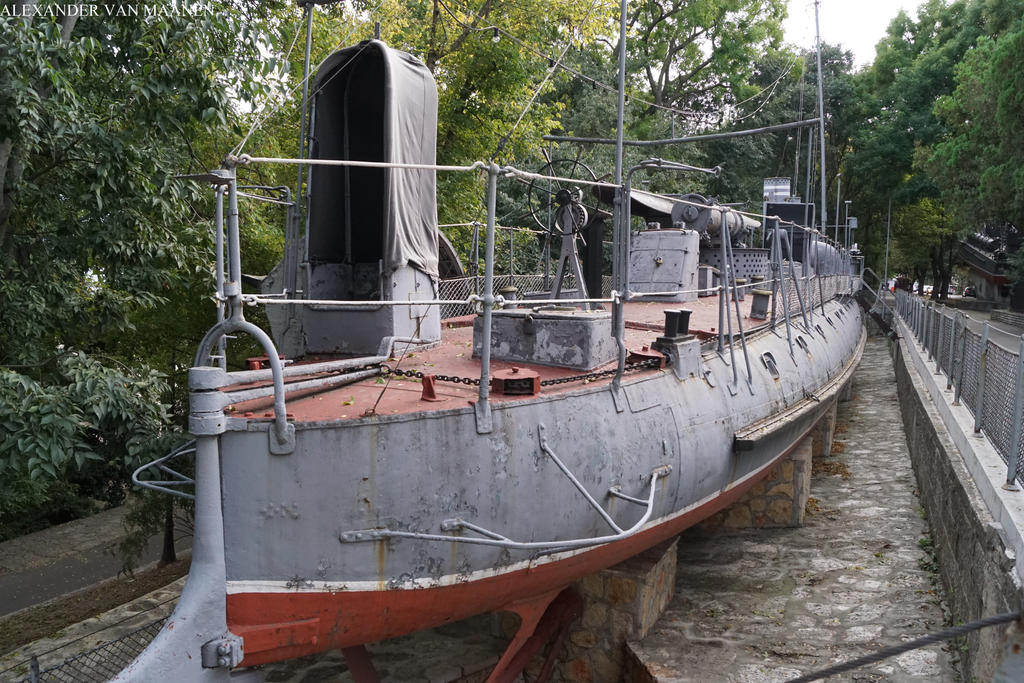
Museumship Drazki at Varna, in fact the hull of the Strogi and upper parts of the Drazki
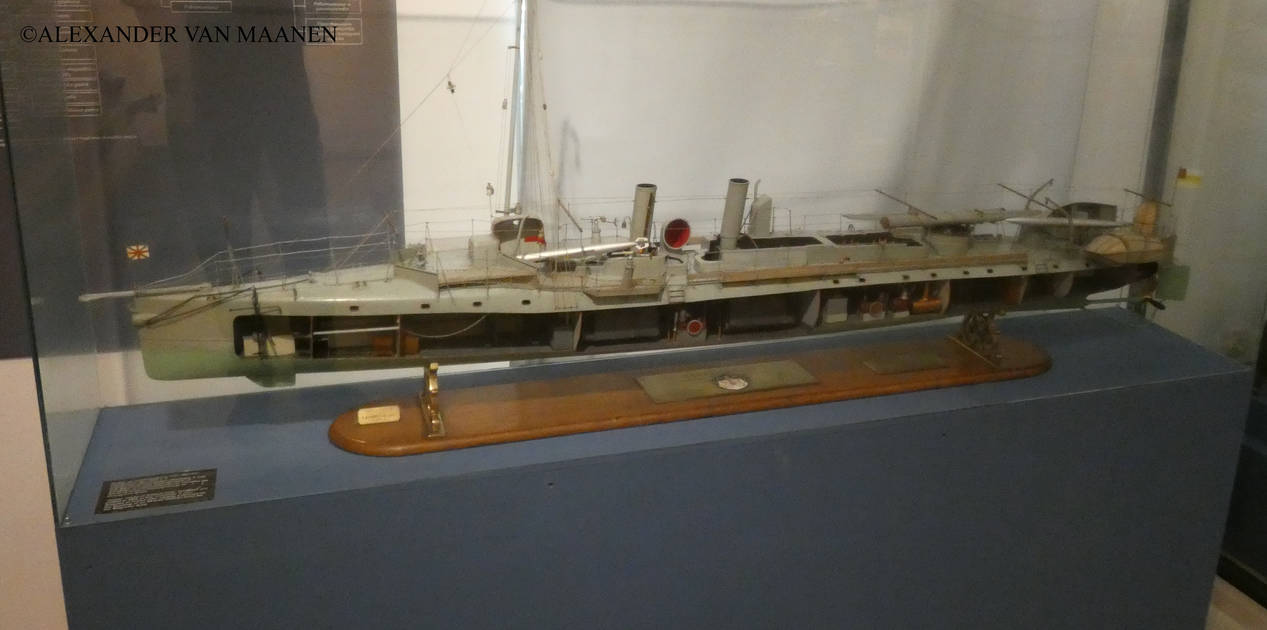
Model Maritime Museum, Varna, Bulgaria

An item reported that the torpedo boats were built in 1907 by Schneider, Chalôn on the Saône, France. Displacement 100 ton and as dimensions 39 x 4.1 x 2.6 metres. Armament consisted of 4-47mm gund, 2-34mm machine guns, 2-45cm torpedo tubes and 2 depth charge throwers. Reciprocal propulsion, with one screw and 2,000 hp horsepower a speed of 20 knots. Their crew numbered 23 men. Added was that the boats were fitted out with dredging devices and that the Smeli was damaged and to be destroyed.

Source

C.I.A. report no. CIA-RDP83-00415RO12700120006-1

Monday, 22 September 2025

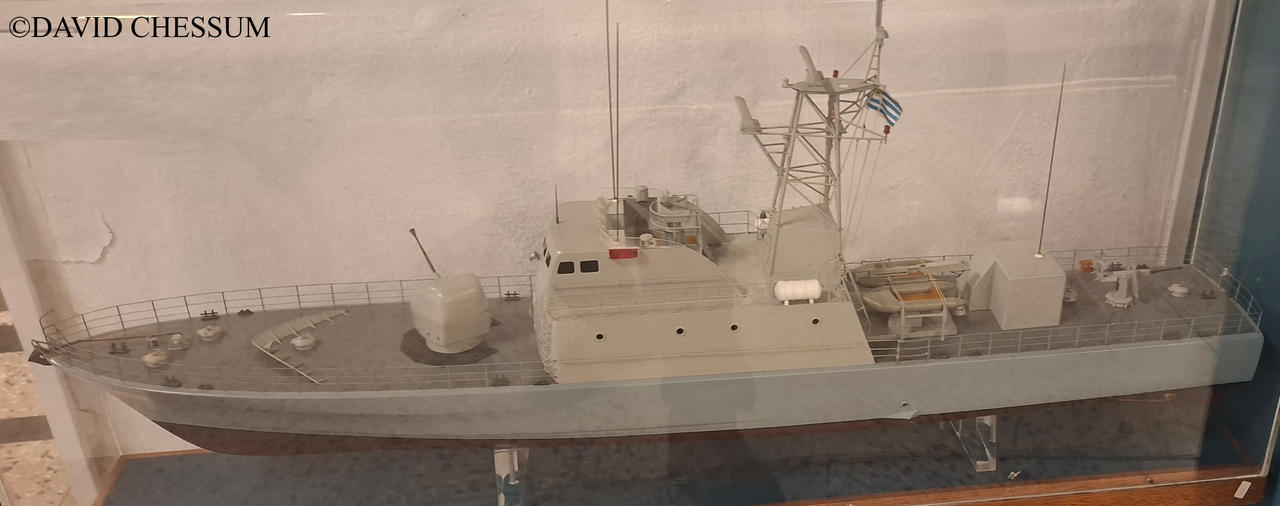
Uruguayan Vigilante-class patrol vessels 1979-2011

Model Museo Naval, Montevideo, Uruguay

Of the Vigilante-class consisting of the 15 de Novembre ROU 05 (laid down 6 February 1980, launched 16 October 1980 or 11 December 1980), 25 de Agosto ROU 0( laid down 6 December 1979, launched 11 December 1980 or 16 October 1980) and Comodore Coe ROU 07 (laid down 16 May 1980, launched 27 January 1980).

Built by CMN, Cherbourg, France, ordered in 1979 and commissioned on 25 March 1981.

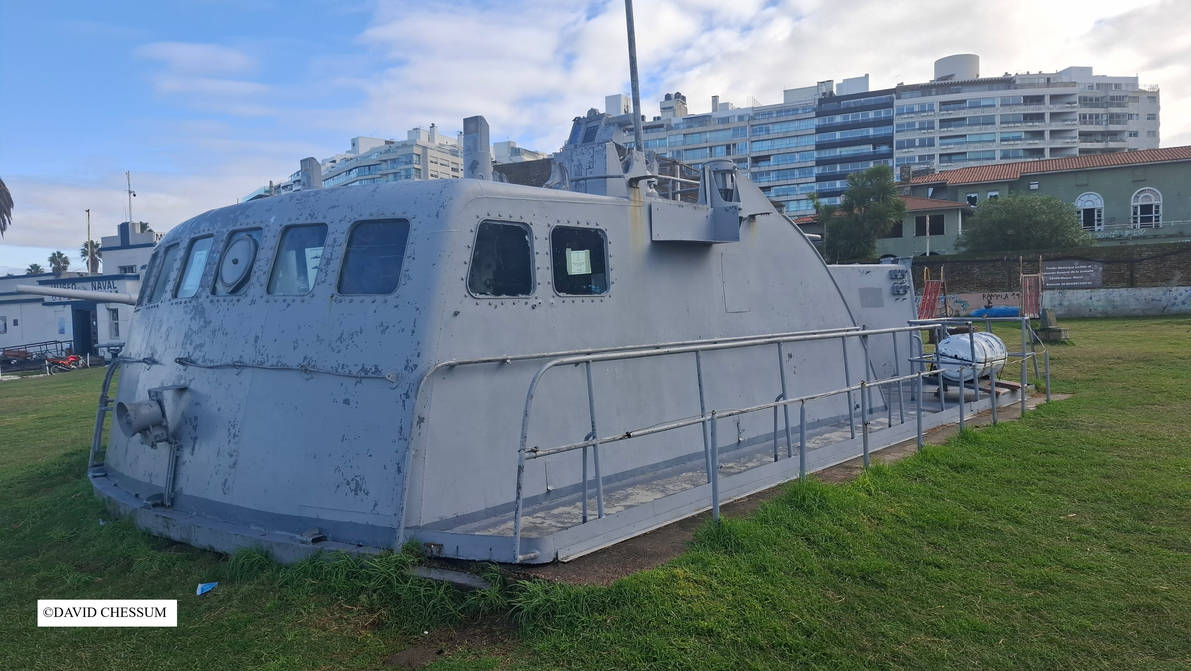
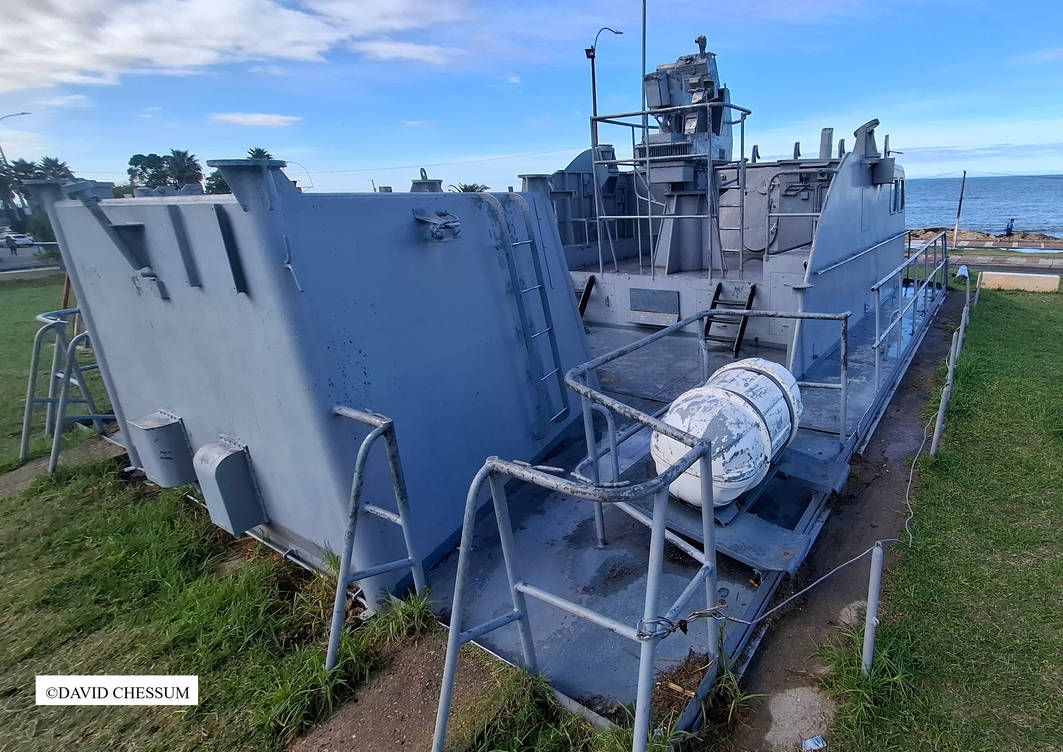
Superstructure of Uruguayan patrol boat Comodore Coe ROU 07 1981-2011


Museo Naval, Montevideo, Uruguay

Of the Vigilante-class consisting of the 15 de Novembre ROU 05 (laid down 6 February 1980, launched 16 October 1980 or 11 December 1980), 25 de Agosto ROU 0( laid down 6 December 1979, launched 11 December 1980 or 16 October 1980) and Comodore Coe ROU 07 (laid down 16 May 1980, launched 27 January 1980).

Built by CMN, Cherbourg, France, ordered in 1979 and commissioned on 25 March 1981.

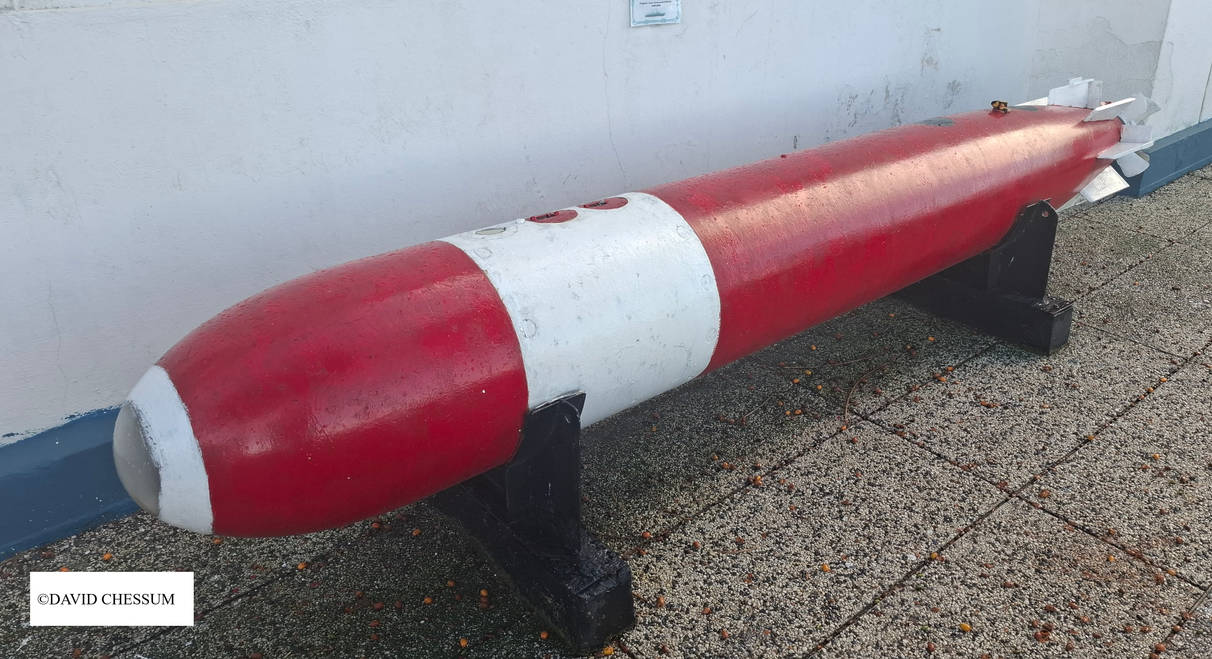
Uruguayan 55cm dummy torpedo 1990-2009

Museo Naval, Montevideo, Uruguay

Used on board of the French CommandantRivière-class frigates preceded by Le Normand-class succeeded by D'Estienne d'Orves-class. All built by Arsenal de Lorient, France.

Victor Schoelcher F725, laid down in October 1957, launched on 11 October 1958, commissioned on 15 October 1962, transfered to Uruguay on 19 December 1988, renamed General Artigas, refitted January 1989 and decommissioned on 27 april 2005. Pennant 2.

Amiral Charner F 727, laid down in November 1958, launched on 12 March 1960, commissioned on 14 December 1962, transferred to Uruguay on 28 January 1991, renamed Montevideo. Pennant 3.

Commandant Bourdais F 740, laid down in April 1959, launched on 15 April 1961, commissioned on 10 March 1963, transferred to Uruguay on 20 August 1990 and renamed Uruguay. Pennant 1. 

Sunday, 21 September 2025

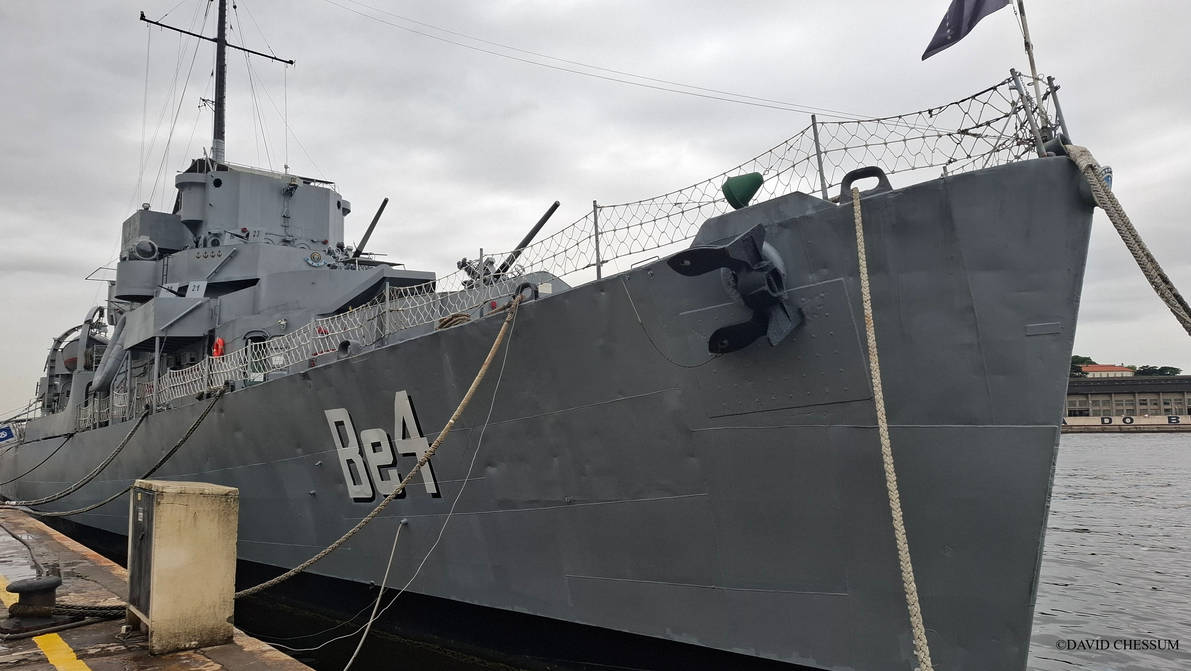
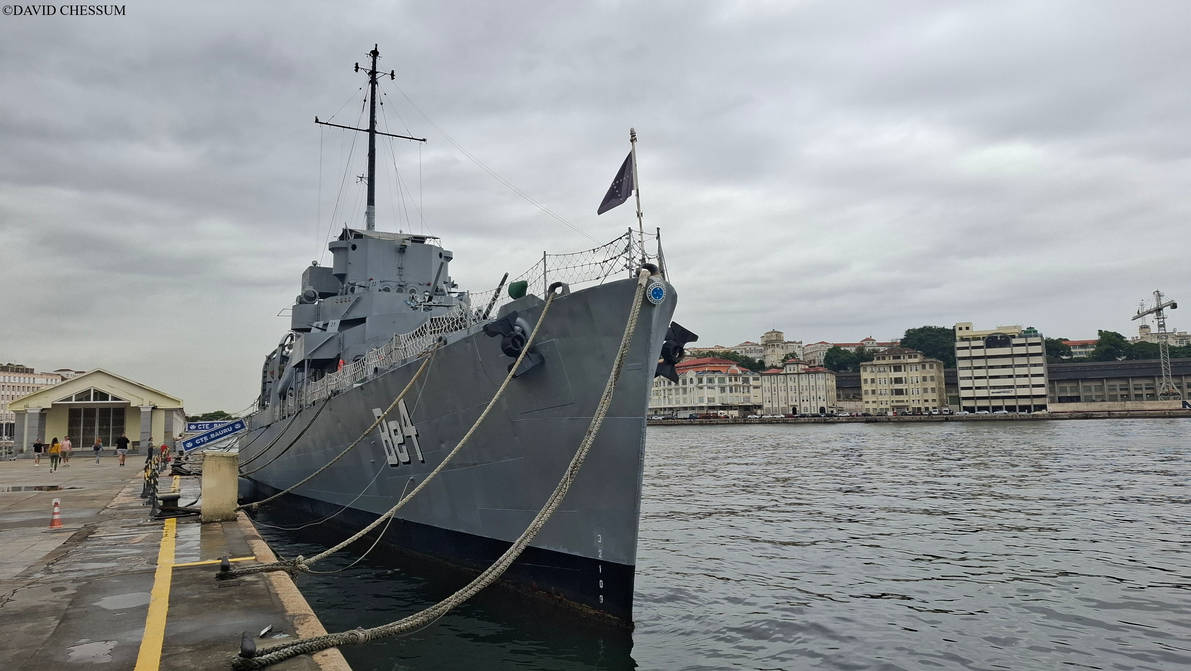
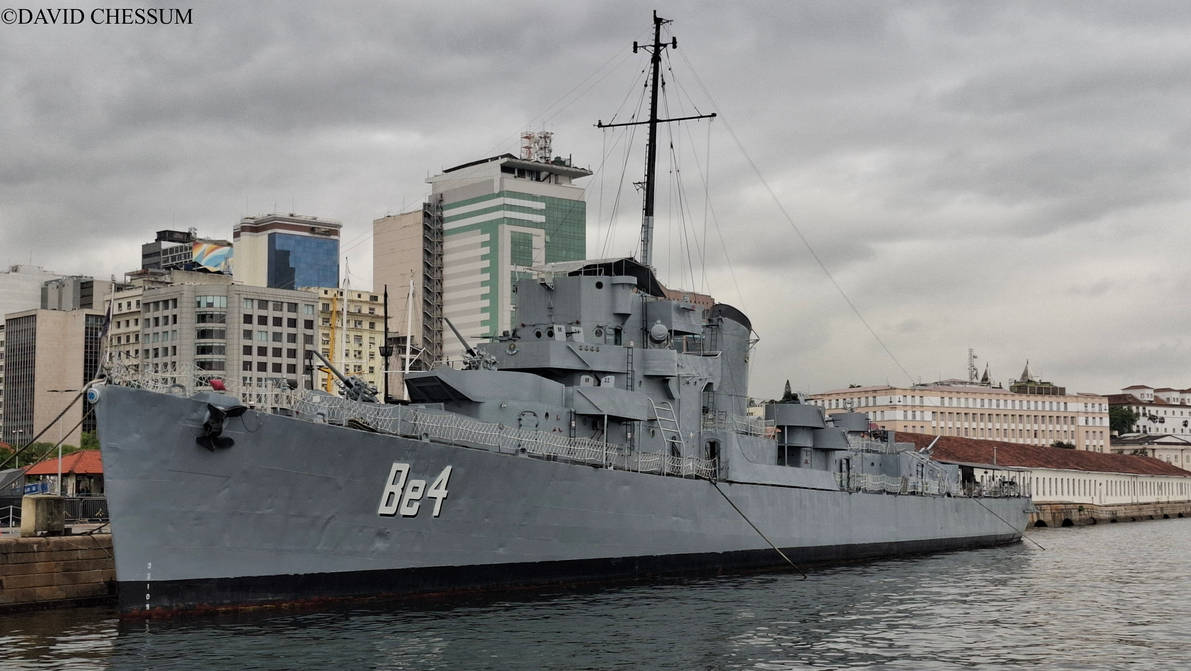
Brazilian destroyer escort Commandante Bauru Be-4 (1943) 1944-1982


Navy Cultural Centre Rio de Janeiro, April 2025

Laid down by Federal Shipbuilding and Drydock C0., Newark, New Jersey, USA on 17 May 1943, launched on 5 September 1943, commissioned as USS McAnn DE-179 on 11 October 1943, decommissioned on 15 August 1944, leased to Brazil on 15 August 1944, stricken by US Navy on 20 July 1953 and decommisioned in 1982. Part of Cannon-class destroyer escorts preceded by Buckley-class succeeded by Edall-class.

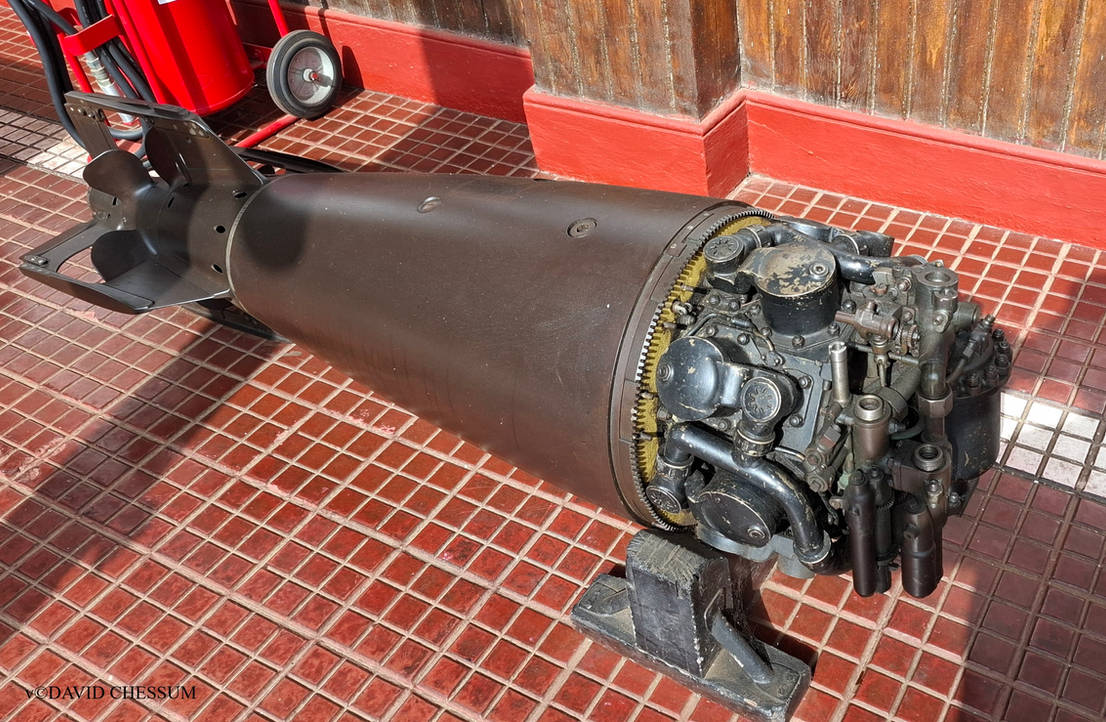
Propulsion section of a 53.3cm British torpedo Weymouth Mk VII 1960-1980

Museo Maritimo Nacional, Valparaiso, Chile, April 2025

Cargo 350 kilo TNT. Total length torpedo 7,2 metres. Maximum range 10 kilometres. Used by the Chilean navy on board of the torpedo boats Fresia, Quidora, Guacola and Tegualda built by Astillero Bazán, Cádiz, Spain in the 1960s, based on the Lürssen German FPB-36 Jaguar-class fast attack craft. 

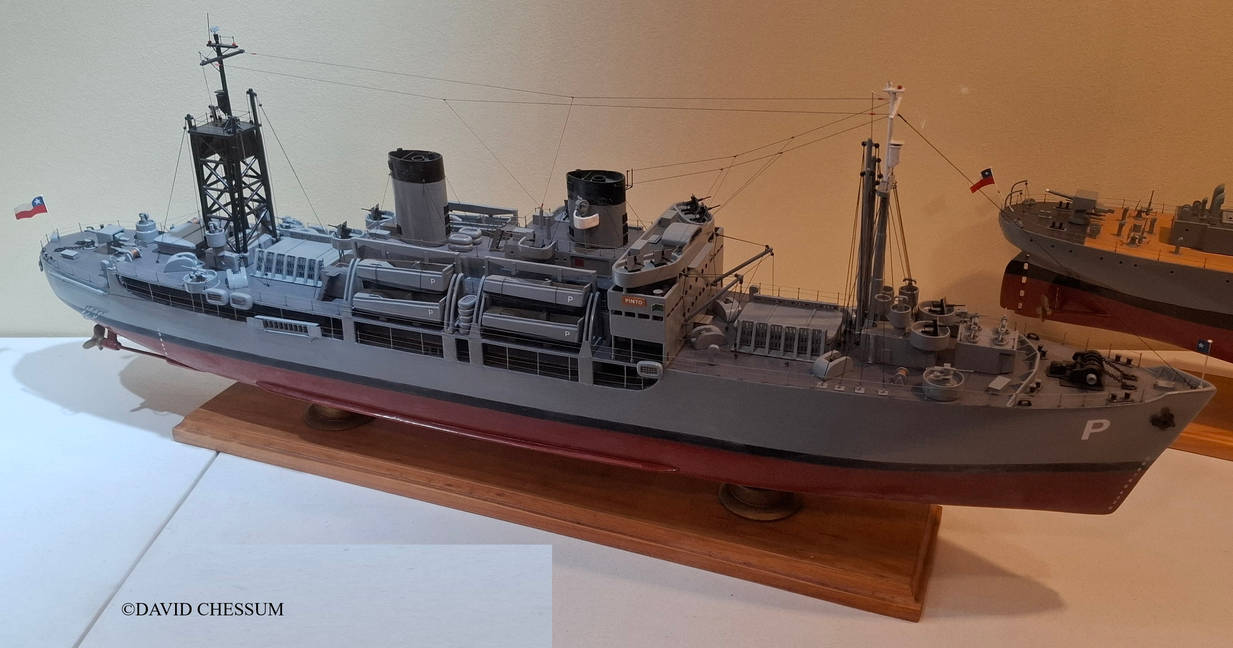
Chilean attack cargo ship AKA Presidente Pinto (1945) 1946-1974

Model by Carlos Danyau Cabezas Museo Maritimo Nacional, Valparaiso, Chile

Part of American Artemis-class type S4-SE2-BE1. Laid down by Walsh-Kaiser Company, Providence, Rhode Island, USA on 12 May 1945, launched on 6 July 1945, commissioned on 6 August 1945, decommissioned on 7 May 1946, stricken on 30 November 1946, sold to Chile on 9 December 1946, decommissioned in 1962, became an anchored berthed auxiliary vessel and probably broken up around 1974. On her hull was at the bow a large “P” painted in Chilean service.

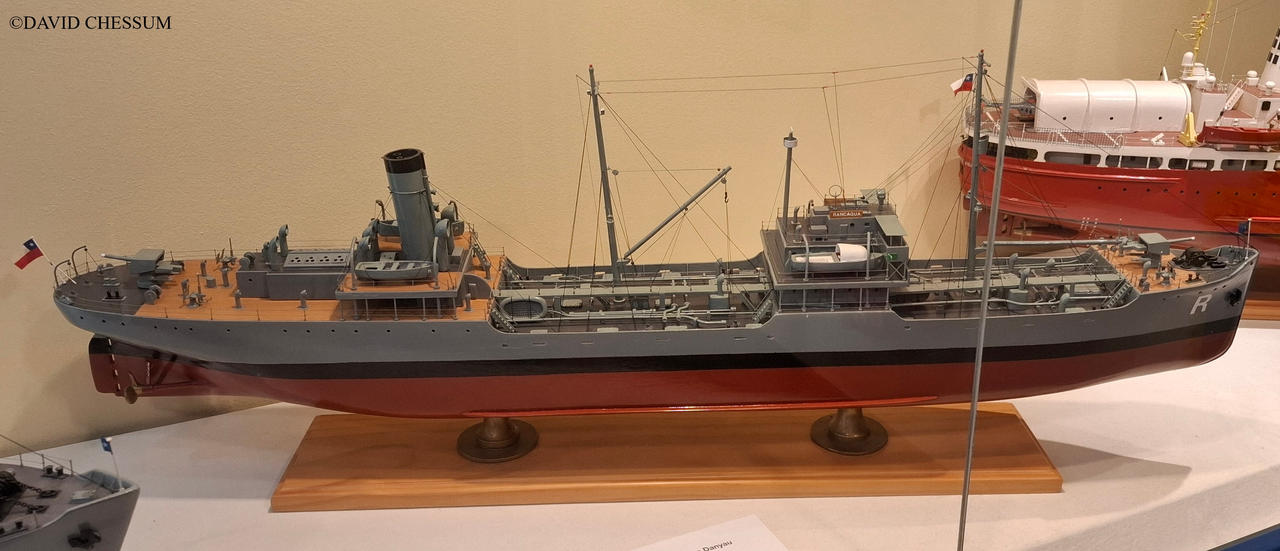
Chilean naval tanker Rancagua 1929-1964 (1989)

Model by Carlos Danyau Cabezas Museo Maritimo Nacional, Valparaiso, Chile, April 2025

Launched by Armstrong, Whitwort&CO. (Shipbuilders) ltd. on the Low Walker yard with yard number 1052on 19 November 1929, completed in February 1930, delivered to Chile, stricken in 1964, converted into a static tanker at Dawson Island, Tierra del Fuego in 1967 and sunk while ised as a target near Cabo Rowlet, Tierra del Fuego in November 1989. 

Saturday, 20 September 2025

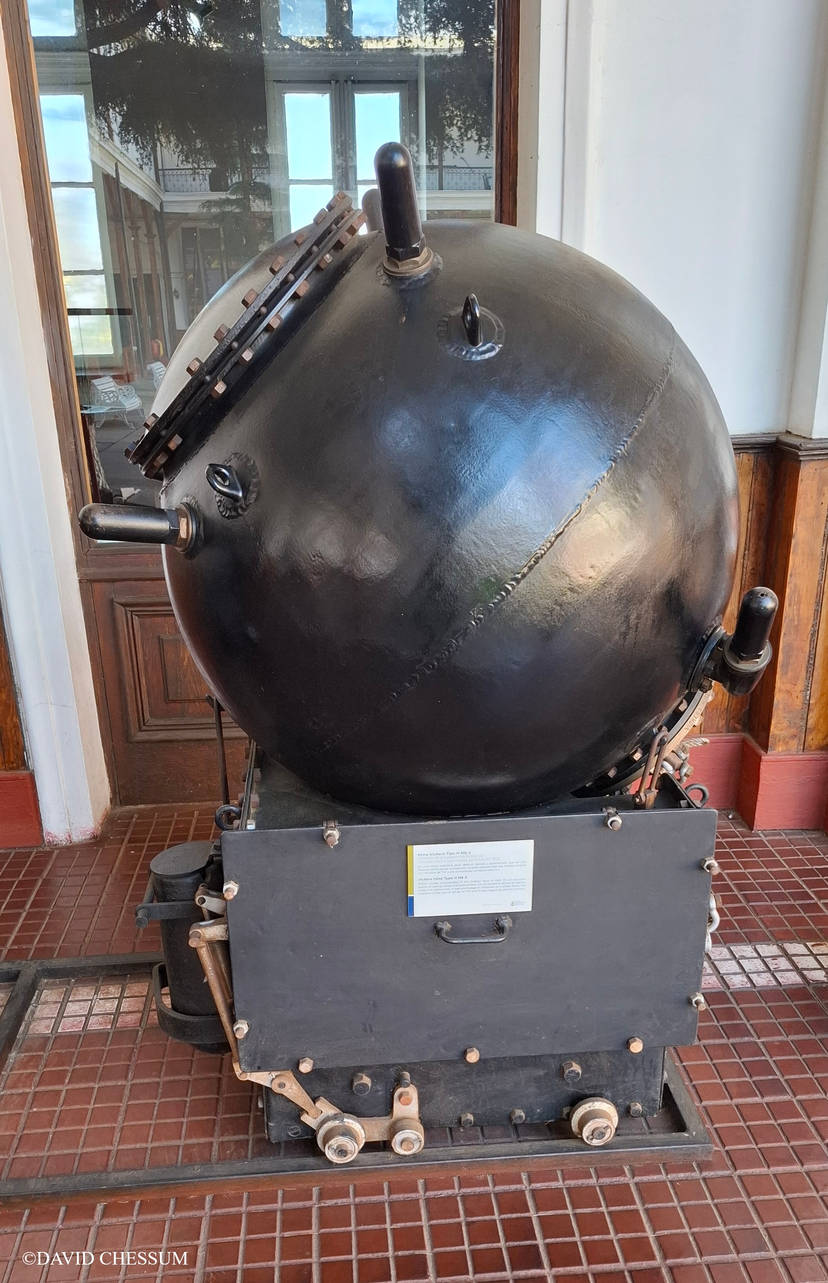
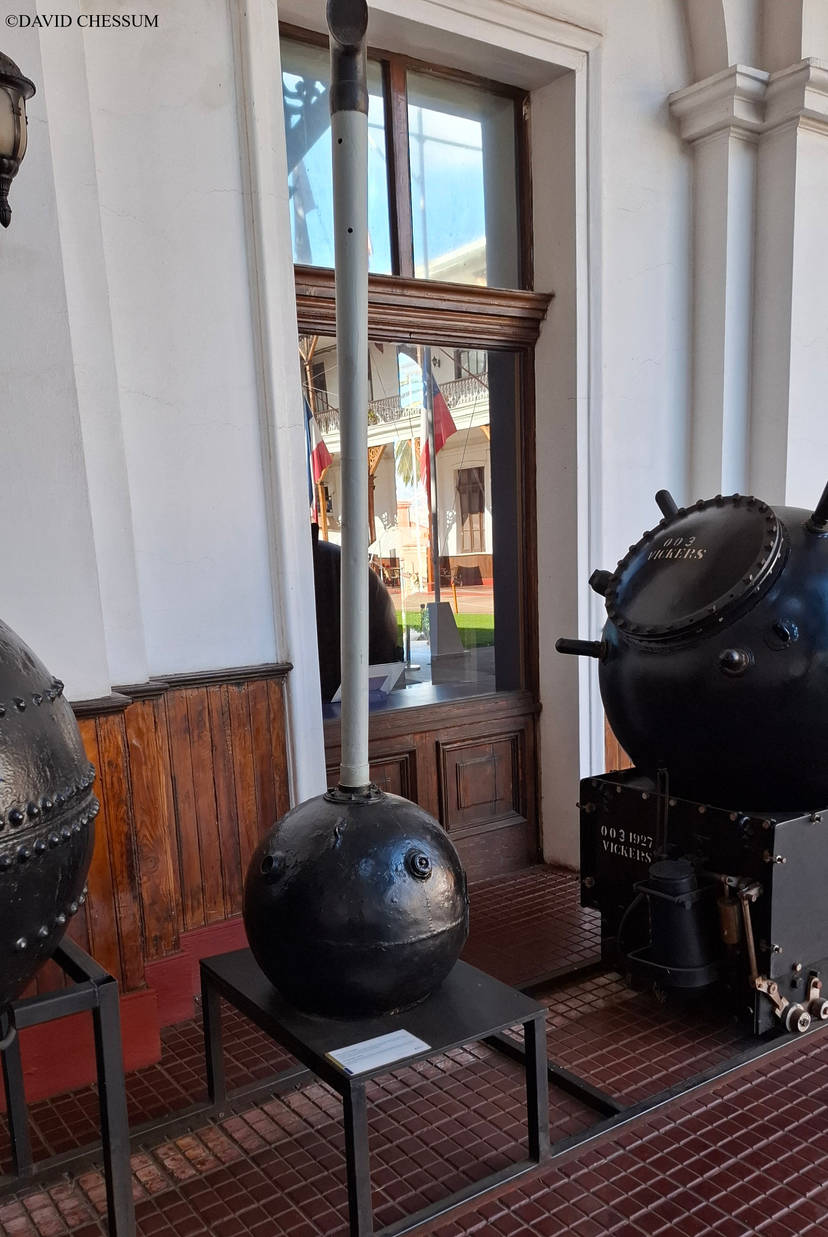
British Vickers naval mine H Mk II 1925-

Museo Maritimo Nacional, Valparaiso, Chile, April 2025

Since 1925 used by the Chilean navy. To be anchored in midwater by a sinker block and trigged when electric contact was made. Armed with 145 kilo TNT. 

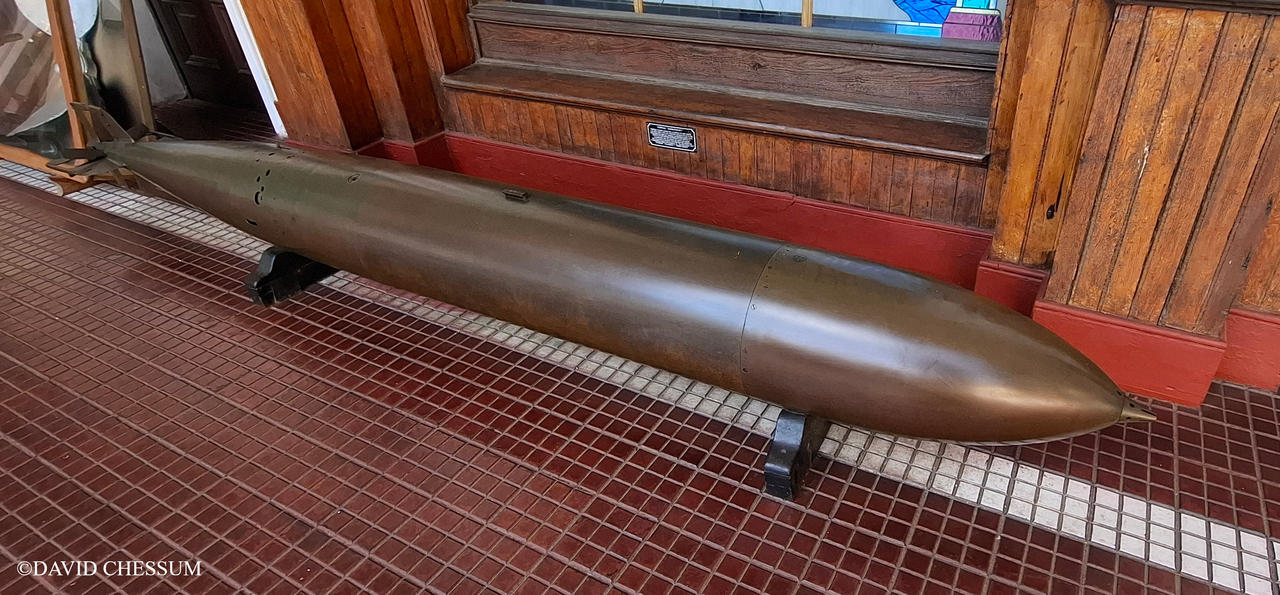
German self-propelled 45.7cm/18”Schwarzkopff torpedo 1890-1920

Museo Maritimo Nacional, Valparaiso, Chile, April 2025

Used by the Chilean navy between 1890-1920. Speed 22-25 knots. Used on board of cruisers, destroyers and torpedo boats like the Blanco Encalada, O’Higgins, Chacabuco and Munoz Gamero. Torpedo of the Whitehead concept but made of bronze by the German firm Eisengießerei und Maschinen-Fabrik von L. Schwartzkopff, which was later called Berliner Maschinenbau. Weight of the warheid was 44 pounds and filled with guncotton. 

Chilean naval mine disguised as periscope 1932

Museo Maritimo Nacional, Valparaiso, Chile, April 2025

Invention by the Chilean naval officer Alejandro Navarrete to suggest a periscope of the submarine inviting ships to ram her like common during the First World War nut instead becoming victim of a trap. 

Friday, 19 September 2025

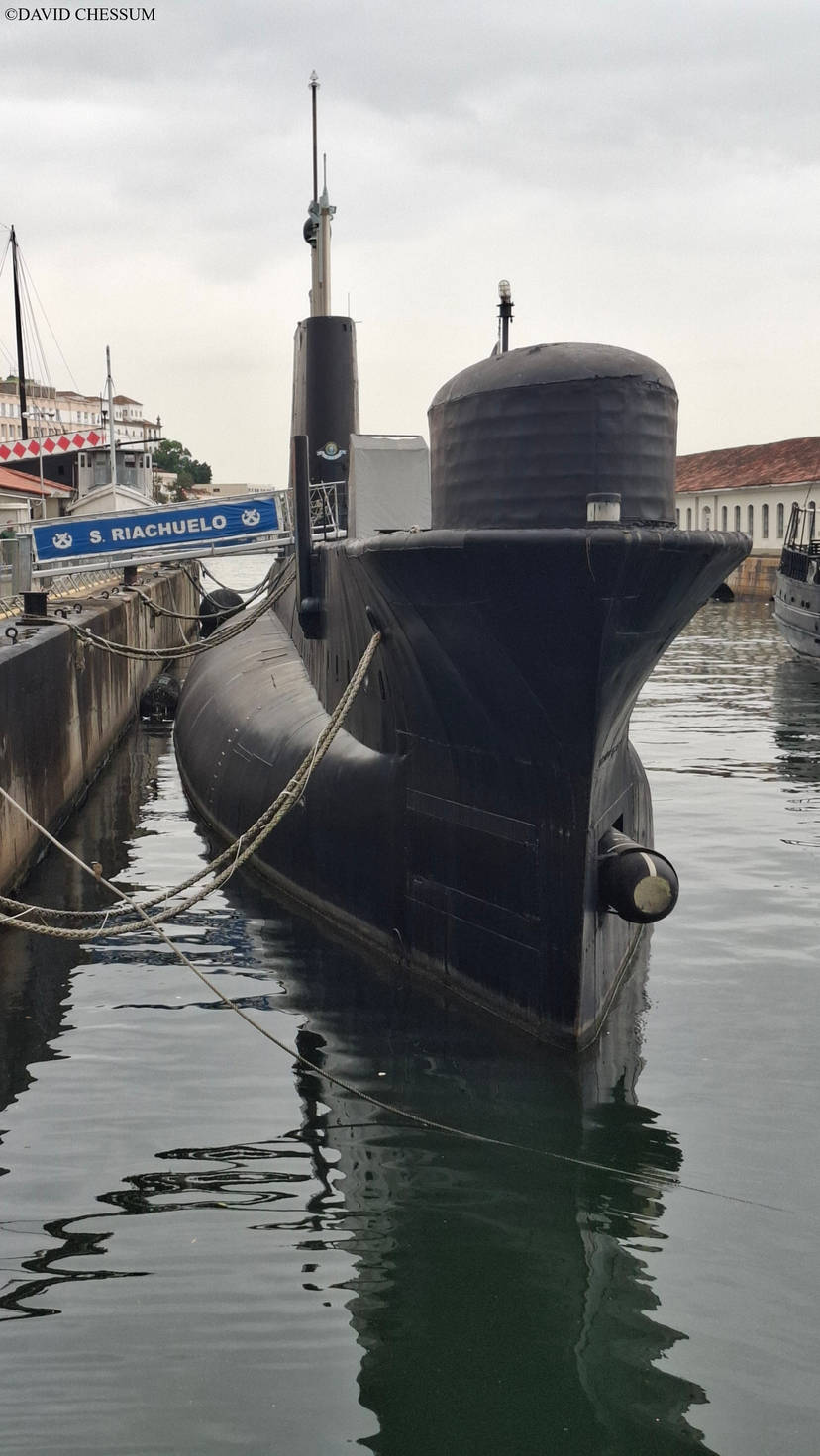
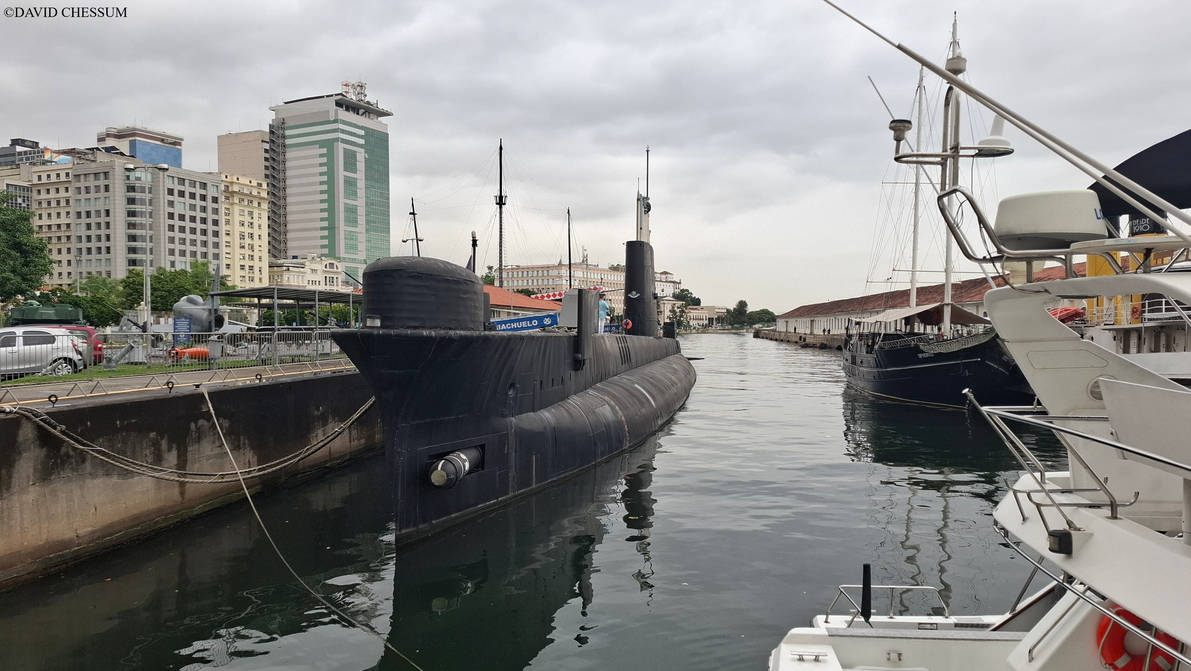
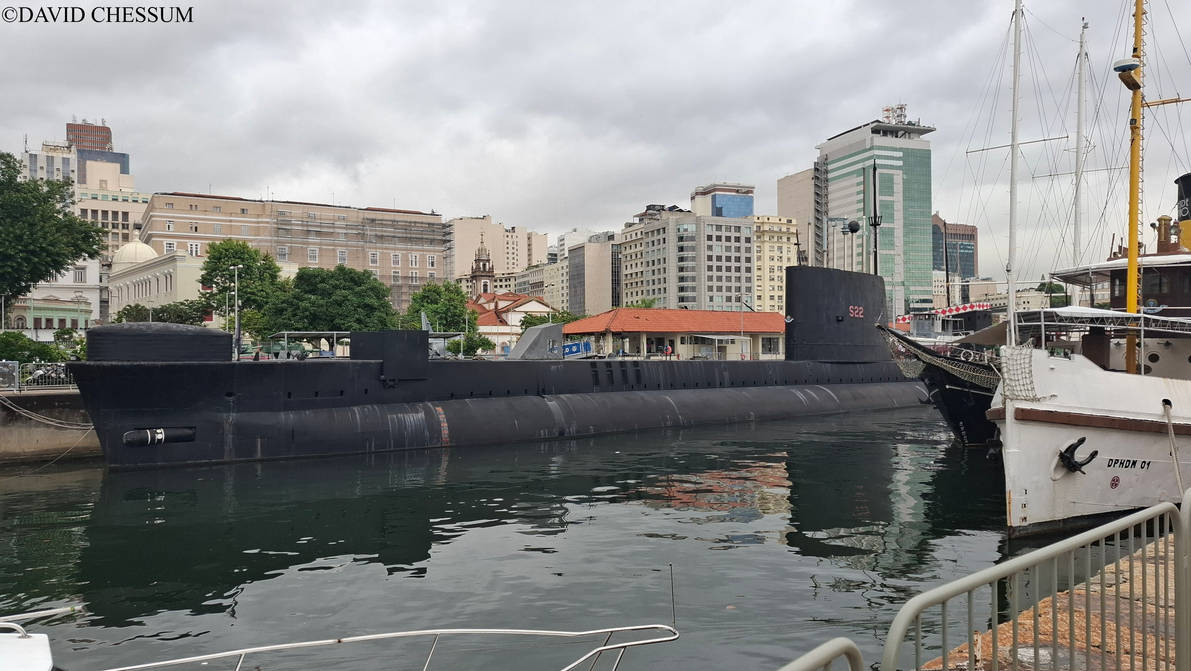
Brazilian electric-diesel submarine Riachuelo S22 1973-1997


Navy Cultural Centre, Rio de Janeiro April 2025

Ordered in 1972, laid down by Vickers Shipbuilding and Engineering, Barrow, England on 26 May 1973, launched on 6 September 1975, commissioned on 12 March 1977 and decommssioned in 1997. Part of Oberon-class preceded by Porpoise-class and succeeded by Upholder- and Collins classes. 

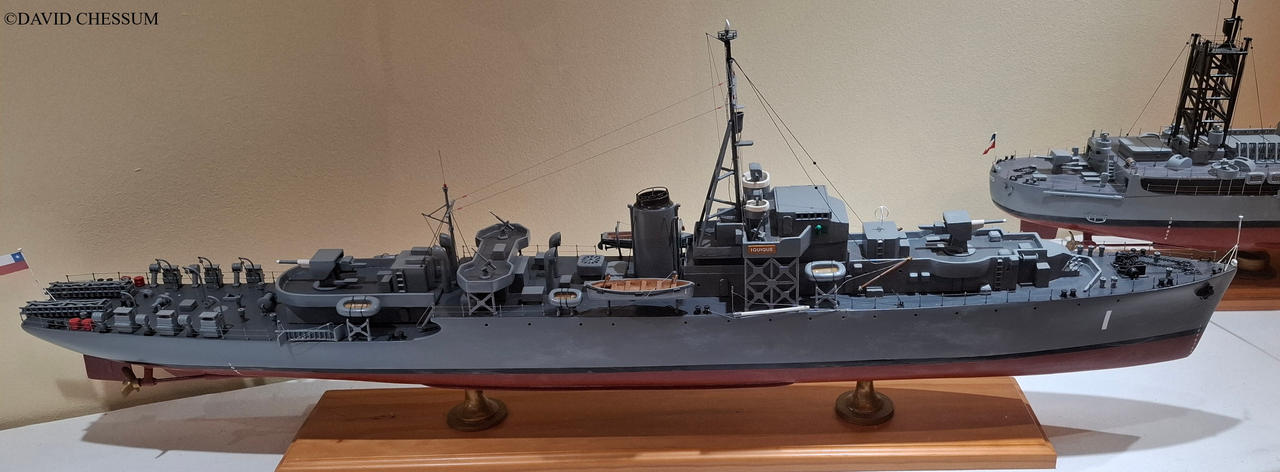
Chilean frigate FF Iquique (1943) 1946-1968

Model by Carlos Danyau Cabezas Museo Maritimo Nacional, Valparaiso, Chile, April 2025

Part of the River-class frigates. Ordered in October 1941, laid down by Morton Engineering&Dry Dock Co., Quebec City, Canada on 19 July 1943, launched on 12 November 1943, commissioned as the HMCS Joliette K 418 in the Royal Canadian Navy on 14 June 1944, decommissioned on 19 November 1945, acquired by Chile on 21 May 1946, decommissioned in 1966 and sold to be broken up in 1968. In Chilean service large “I”on the hull at the bow painted. 

Thursday, 18 September 2025

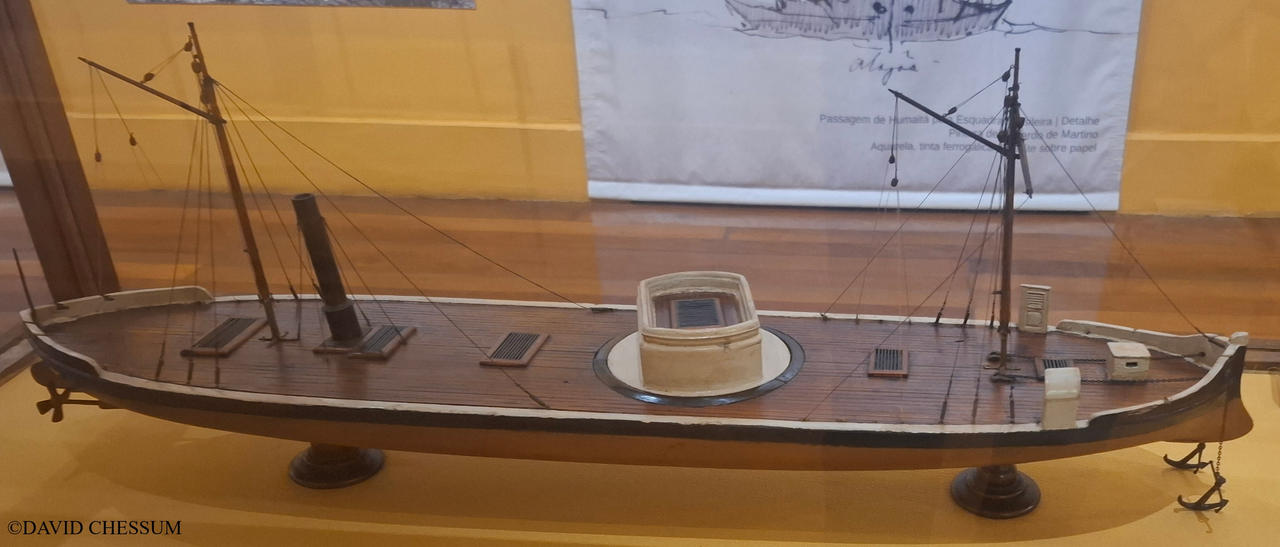
Brazilian monitor Alagoas 1866-1900

Model Museo Naval

Ordered in 1866, laid down by Arsenal de Marinha da Corte, Rio de Janeiro, Brazil on 8 December 1866, launched on 29 October 1867, completed in November 1867 and broken up in 1900. Part of Pará-class preceded by Silvado succeeded by Javary-class. 

Wednesday, 17 September 2025

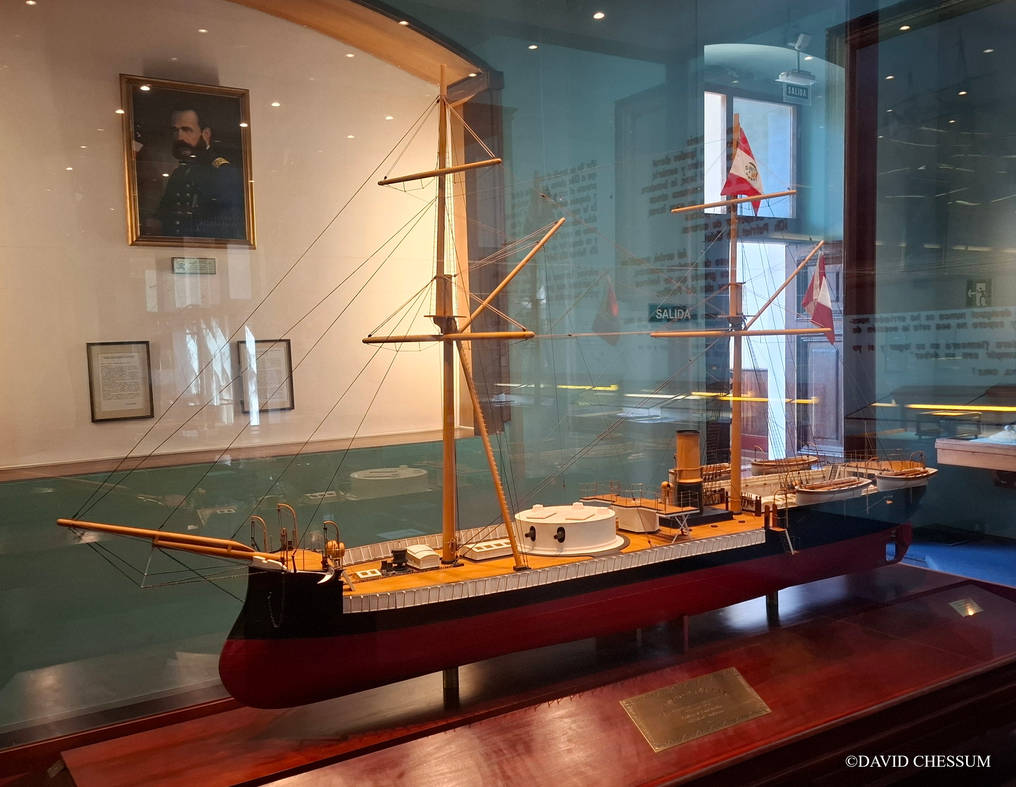
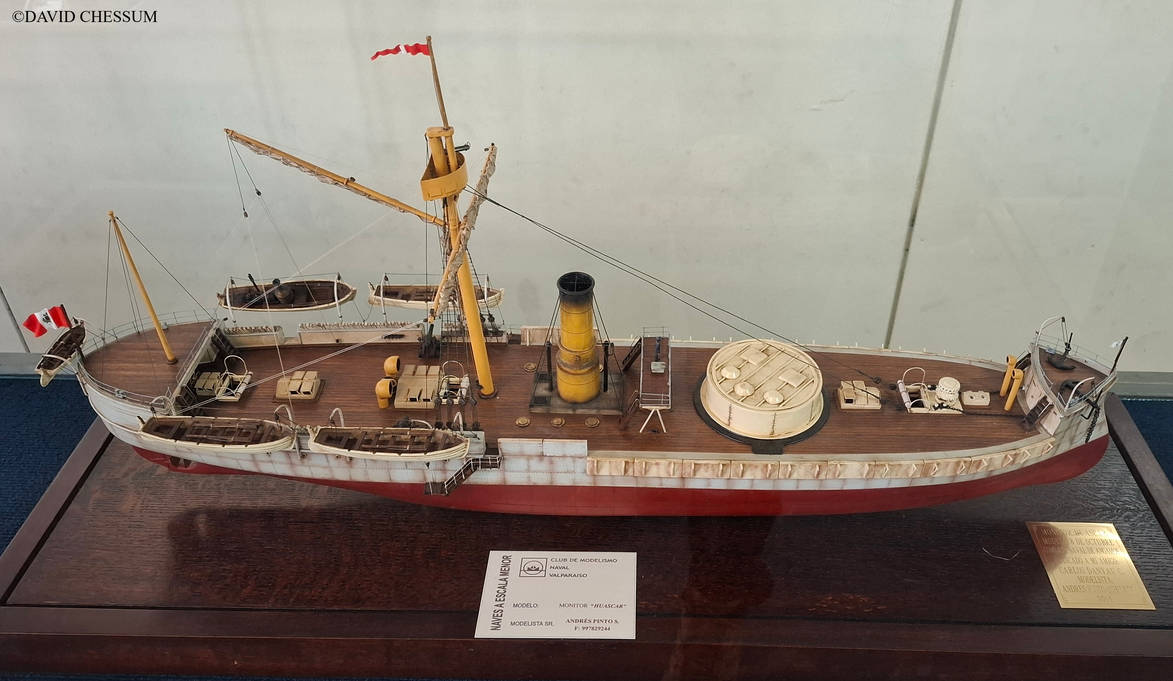
Chilean ironclad turret ship Huáscar 1865-


Model Museo Maritimo Nacional, Valparaiso, Chile

Ordered by the Peruvian government on 4 August 1864, launched by Laird Brothers, Birkenhead, England on 7 October 1865, commissioned on 8 November 1866, captured by Chile at the Battle of Angamos on 8 October 1879, modernized in 1885 and 1887, decommissioned in 1897, submarine tender between 1917-1930, reinstated in 1934 and now museum ship. 

Sunday, 14 September 2025

Chilean ironclad turret ship Huáscar 1865-


Museum ship at Talcahuano, Chile 20 April 2025

Ordered by the Peruvian government on 4 August 1864, launched by Laird Brothers, Birkenhead, England on 7 October 1865, commissioned on 8 November 1866, captured by Chile at the Battle of Angamos on 8 October 1879, modernized in 1885 and 1887, decommissioned in 1897, submarine tender between 1917-1930, reinstated in 1934 and now museum ship.

Argentinean sail training ship A.R.A. Presidente Sarmiento 1897-


Museum ship at Puerto Madero, Buenos Aires, Argentina 4 May 2025

Building ordered on 14 February 1896, launched by Laird Brothers, Birkenhead, England on 31 August 1897, delivered on 24 June 1898, retired as ocean going ship in 1938 and decommissioned in 1961.

Saturday, 13 September 2025

Model of a Swedish 19th Century ironclad


Sjöhistoriska museet O 08653

Scale 1:500. Made with the use of a drawing by Johan Gustaf. Wibom (1869-1951) in February 1942. Armament consisted of 13 guns. 

Wednesday, 10 September 2025

Happy Sky ships historic German Schnellboote to final berth


Article and photos republished with our thanks to Big Lift Shipping

This week, our Happy Sky successfully completed the transport of seven historic German Navy missile speedboats – Schnellboote, Type 143A Gepard class – from Kiel, Germany to Aliaga, Turkey. The vessels were loaded in early August and have now reached their final destination, where they will be dismantled.The seven boats, all identical and commissioned between 1983 and 1984, are part of a series of ten vessels that were decommissioned in 2015 and 2016. One of their sister ships, the ex-S71 Gepard, has been preserved and is on display at the naval museum in Wilhelmshaven, Germany since 2016. The vessels transported were the ex-S72 Puma, ex-S73 Hermelin, ex-S75 Zobel, ex-S76 Frettchen, ex-S78 Ozelot, ex-S79 Wiesel, and ex-S80 Hyäne. Each vessel weighs approximately 330 metric tonnes, measures 58 metres in length, 7.90 metres in width, and stands at an estimated height of 9.3 metres. Two of the boats were stowed in the hold, while the remaining five were secured on deck. In order to accommodate three boats next to each other the weather deck of the Happy Sky was extended by the use of the vessels’ tweendeck hatch covers. Each boat had a slightly different centre of gravity, influenced by its age and maintenance history.A wide range of equipment was mobilised for the operation, including A-frames, cut-to-shape dunnage, lifting beams, chains featuring  BigLift’s new speed lashing system, and heavy load platforms (HLPs) . Due to the limited and outdated technical data available, the rigging was selected with sufficient contingency, resulting in a heavier setup than usual. As of 1 September, all vessels have arrived at their final berth – never to sail again.

Second World War German pressure test tank for type XXI-submarine pressure hull-designs at the Germania Werft, Kiel, Germany

Type XXI-class ocean going diesel-electric submarines preceded by the VII-, IX- and XVIII-classes of which the latter was cancelled and to be succeeded by the not completed XXVI-class. The XXI-class was built between 1943-1945 at the shipyards of Blohm+Voss, AG Weser and Schichau-Werke. Designed as the first real submarine serving primarily under water. At the Maritime Museum, Bremerhaven is the last floating example preserved namely the U-2540.

“Looking aft, circa 1945. This type of submarine featured a dual-diameter pressure hull for side angled torpedo tubes. The model was not tested before the Second World War ended.”


“Port side view, circa 1945, showing "break" in pressure hull diameter to accommodate side-angled torpedo tubes. The model was not tested before the Second World War ended.

German submarine (ex-U2540 1944-1960) Wilhelm Bauer 1960-nowadays. 

Maritime Museum Bremerhaven, Germany