Translate

Showing posts with label Malawi. Show all posts

Sunday, 5 October 2025

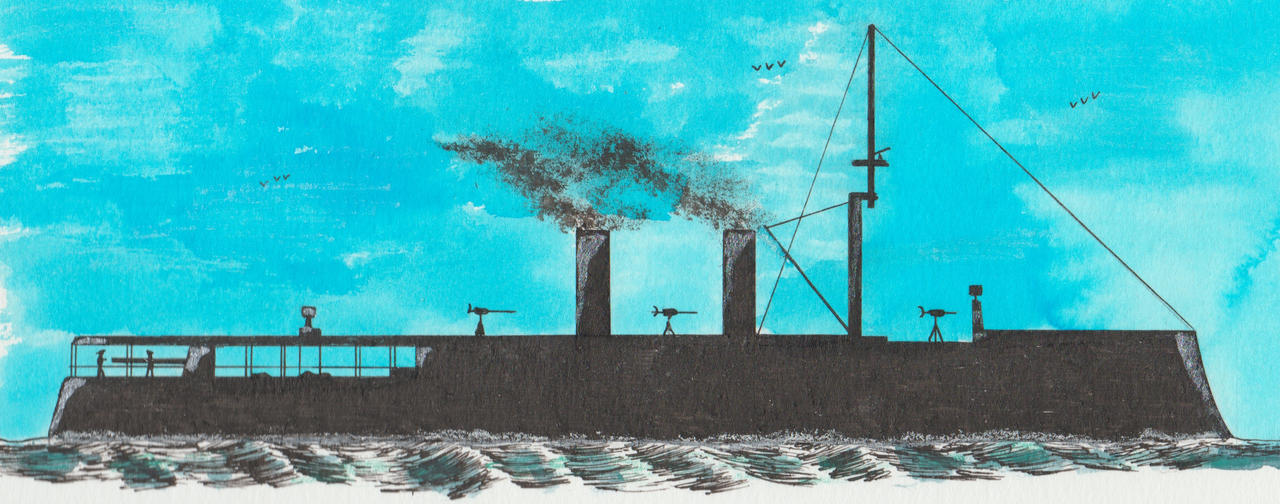
Portuguese gunboat Patria 1903-1931

©Warshipsresearch.blogspot.com

Built with the funds of the Great National Subscription after the 1890 British Ultimatum when Portugal claimed a large area between her colonies Mozambique and Angola covering most of Zimbabwe and Zambia and a large part of Malawi resulting in witdrawing Portuguese forces from areas which both countries claimed. Launched at Lisbon, Portugal on 27 June 1903, sent to the Macau Naval Station in 1908 and sold to China in 1931. 

Tuesday, 26 November 2024

British Central African screw steam gunboatAdventure (1892) in 1897

Steel built by Yarrow Poplar, England for the British Admiralty for service on Lake Nyassa [nowadays Lake Malawi] in 1892 but taken over by the Local Administration (1) in 1895. Dimensions 75 x 12.6 feet and a displacement of 35 tons. Horsepower 80 ihp. Speed 12 knots.

Note

1. Former Maravi which became the British Central Africa Protectorate, proclaimed in 1889, ratified in 1891, established in 1893, renamed Nyasaland on 6 July 1907, independent since 6 July 1964 and renamed Malawi.

Source

W. Laird Clowes. Naval Pocket-Book. Second year. London, 1897. 

Sunday, 24 November 2024

British Central African screw steam gunboat Pioneer (1892) in 1897

Steel built by Yarrow Poplar, England for the British Admiralty for service on Lake Nyassa [nowadays Lake Malawi] in 1892 but taken over by the Local Administration (1) in 1895. Dimensions 75 x 12.6 feet and a displacement of 35 tons. Horsepower 80 ihp. Speed 12 knots.

Note

1. Former Maravi which became the British Central Africa Protectorate, proclaimed in 1889, ratified in 1891, established in 1893, renamed Nyasaland on 6 July 1907, independent since 6 July 1964 and renamed Malawi.

Source

W. Laird Clowes. Naval Pocket-Book. Second year. London, 1897. 

Saturday, 23 November 2024

British Central African paddle steam gunboat Doye in 1897

Steel built for the British Admiralty for service on the Shiré but taken over by the Local Administration in 1895.(1) Dimensions 60 x 16 x 1.4 (mean draught) feet and displacement 20 tons. Horsepower 50 ihp. Speed 8 knots. Armament 1-2 barrels Nordenfeldt gun.

Note

1. Former Maravi which became the British Central Africa Protectorate, proclaimed in 1889, ratified in 1891, established in 1893, renamed Nyasaland on 6 July 1907, independent since 6 July 1964 and renamed Malawi.

Source

W. Laird Clowes. Naval Pocket-Book. Second year. London, 1897. 

Wednesday, 26 December 2018

British gunboat Guendolen launched according to the Dutch magazine Marineblad dated 1899-1900 no. 6

An item referred to the magazine le Yacht reporting at Fort Johnston, Lake Nyassa [nowadays Mangochi. Malawi] the British gunboat Guendolen was launched.(1)

Note
1. Also called ss Gwendolen and Gwendolyn. Part of the British naval force on Lake Nyassa active against the Germans. In the 1920s she was used as cargo annex passengers ship by the Nyasaland Goverment Marine Transport. Nyasaland was a British protectorate became in 1964 Malawi. 

Wednesday, 30 October 2013

The Portuguese naval shipbuilding program according to the Dutch newspaper Goessche Courant dated 15 February 1890

According to the newspaper Diario of Lisbon intended the Portuguese government to reorganise the navy and the army and to buy 4 cruisers and 4 torpedo boats. Another Dutch newspaper the Middelburgsche Courant of the same date confirmed this item. At that moment was the daily life in Portugal quite disturbed and king Carlos and his conservative government unpopular among the common people. The main reason for the new measures was the distension between Portugal and England caused by what happened in Africa.(1)

Note
1. The British Lord Salisbury demanded on 11 January 1890 that Portugal withdrew her troops from Mashina and Matabeleland (later known as Rhodesia and nowadays as Zimbabwe) and the Shire-Nyasa area (later known as Malawi) because there Portuguese and British interests collided. Portugal intended since several years to consolidate her colonial interests in Africa while claiming a stretch of land extending form the East side of Africa to the West side. England was in fact doing the same although in the North-South direction.