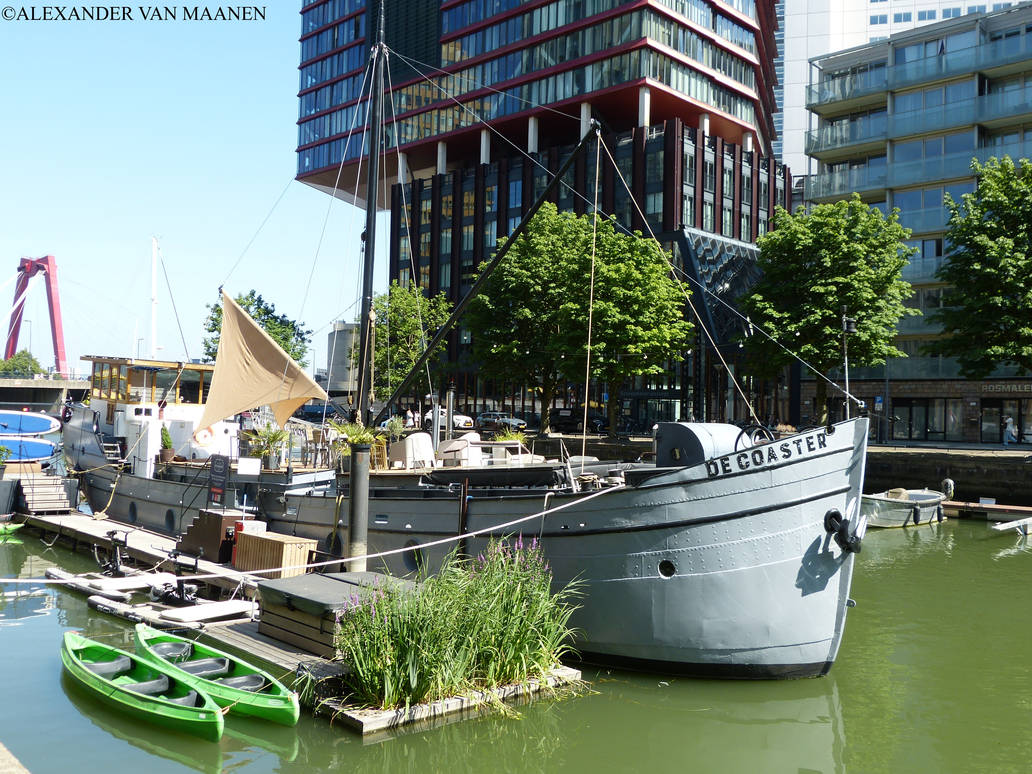
Rotterdam, Netherlands 11 July 2026
Active as cargo ship in the coastal trade (Sont) until the end of the 1970s, renovated in 2020 and became a hotel ship. Built by Coops&Nieborg, Hoogezand, Netherlands in 1909.

Rotterdam, Netherlands 11 July 2026
Active as cargo ship in the coastal trade (Sont) until the end of the 1970s, renovated in 2020 and became a hotel ship. Built by Coops&Nieborg, Hoogezand, Netherlands in 1909.
An item reported that the American Third Fleet and the British Pacific Fleet with 9 battleships and 20 aircraft carriers shelled on 9-10 Augustindustrial and military targets including Kamaishi on the island Honshu, Japan. Aircraft carrier-borne aircraft destroyed airfield and ground installations and setting docks at fire. In two days time were 792 Japanese aircraft on the bombed airfields damaged or destroyed and 35 ships sunk including a destroyer, 2 destroyer escorts, 3 submarine chasers and a large number of cargo ships, coasters and so on. None of the Allied warships was damaged. On 13 August started both fleets again with attacks now mainly aiming at military targets in the Tokyo area.
Source
The National Archives, Kew Gardens, England CAB-129-1-20. Weekly Résumé (No. 311) of the naval, military and air situation from 0700 9th August to 0700 16th August 1945.
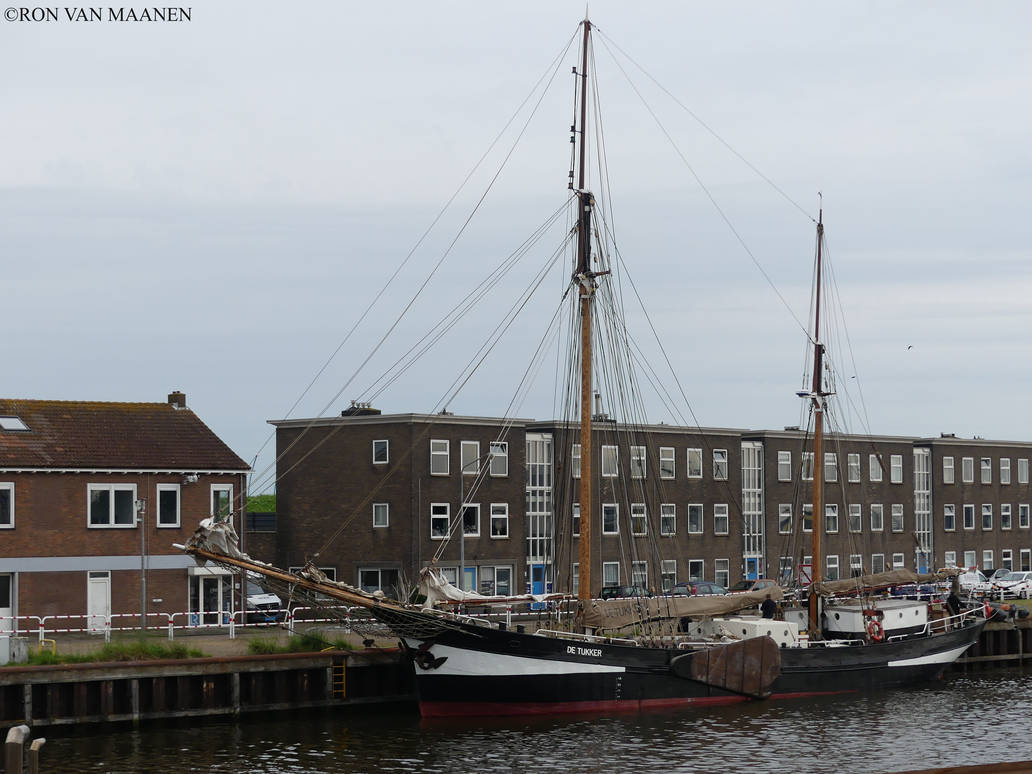
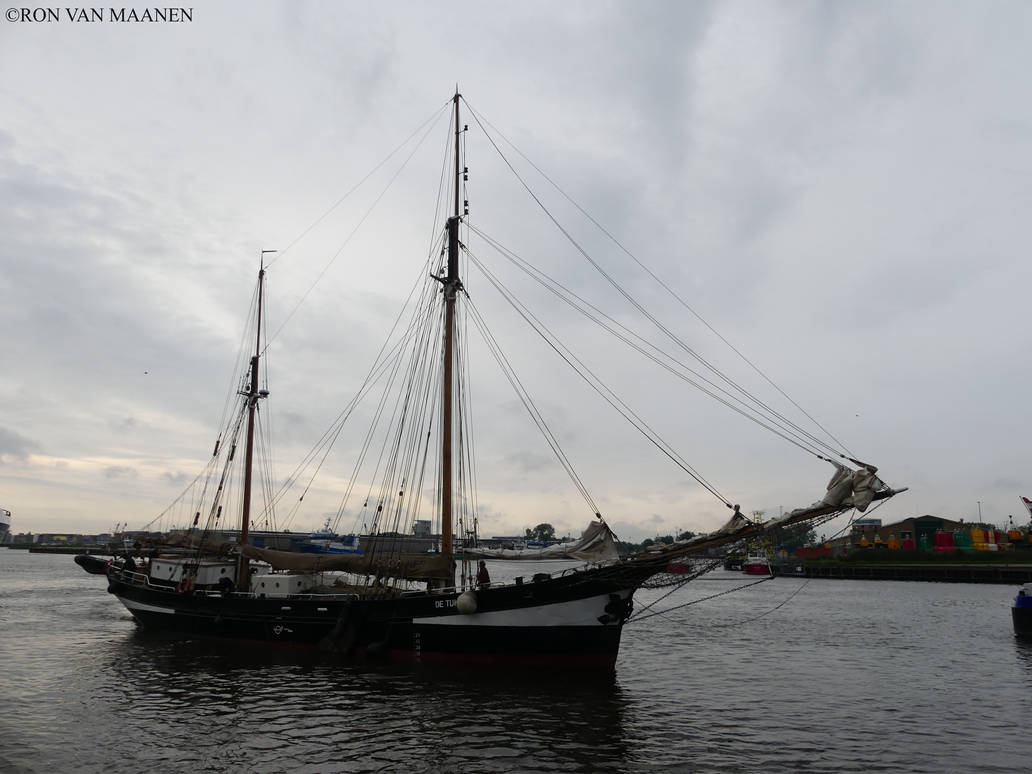
Vanatua-flagged, MMSI 57781000 and call sign YJXL4. Built as the coastal freighter Harle Tief at the Bodewes shipyard, Martenshoek, Netherlands in 1912. Sailing cargo vessel since 4 May 2024. In the 1980s converted into a sail training vessel, around 2022 by shipyard Talsma, Franeker, Netherlands converted into a sailing cargo ship. Schoeneraak.

Westerschelde, Vlissingen, Netherlands 24 May 2024
Netherlands-flagged, IMO 8134039, MMSI 244084000 and call sign PHXT. Built by Haarlemsche Scheepsbouw, Haarlem, Netherlands in 1954.


Netherlands-flagged, IMO 5135355 and call sign PIXJ. Launched by N.V. Noord-Nederlandsche Scheepswerven, Groningen, Netherlands with yard number 158 for account Kars Weters, Groningen, Netherlands in May 1937. Delivered on 13 July 1937. Handed over to the German supervised shipping company Nederlandsche Oost Reederij, Rotterdam, Netherlands in November 1942. Handed over to the Dutch government in May 1945. Renamed Iris (call sign PEXO),in April 1950, Ine (call sign PHYZ) in September 1955, in November 1956 Gre (call sign PEKE), in April 1969 Lota and Germany-flagged and in September 1997 sold to the Stichting Buitenmuseum Leuvehaven, Rotterdam, Netherland and renamed Zeemeeuw.
The Royal Netherlands Government on 24 October 1944 still located at London, England published a brief outline of a shipbuilding program which was to start immediately after the liberation. The described types were needed to serve in the Far East. The Netherlands had at there still a colony namely the Dutch East Indies nowadays Indonesia. On 7 May 1945 was a second outline published with more technical details. I combined both lists.
Dimensions 225.0 (over all) x 39.6 x 17.9 (hold) feet. 12 Passenger cabins. Single screw. With a deadweight of 1,800-1,835 tons and diesel 8,50 ahp-1,000hp/220 rpm propulsion allowing a speed of 10 knots. The Dutch department of Shipping and Fisheries ordered from Atlas-Polar 900 ahp/240 rpm type M47M engines of which 3 were completed, the others to be delivered with 5-12 months although already delayed due to a strike.Totally was around 6,000 tons steel needed for the hulls. The engines were to be ordered from Sulzer Brothers, Winterthur to be delivered within 6-10 months. The auxiliaries delivery hoped United Kingdom with support of the British Admiralty and Ministry of Production. The ships were similar to the in 1939 for account of the Koninklijke Paket Vaart (KPM) built (by Boele and Pot) built ships although the accommodation for the inland crewmembers was to be modernized. The yet not walsed steel was to be delivered from the United Kingdom in August-September.
Source
Zeeuws Archief, archive Kon.Mij. De Schelde (7214) not described part.
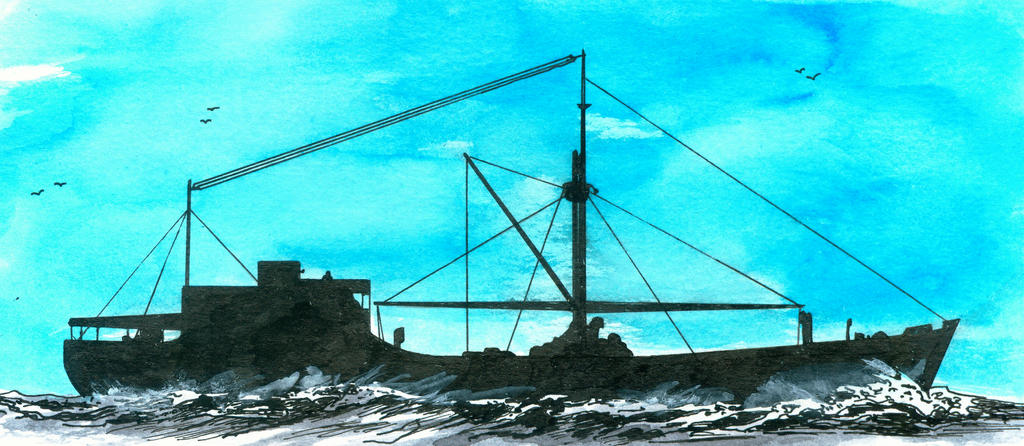
The Royal Netherlands Government on 24 October 1944 still located at London, England published a brief outline of a shipbuilding program which was to start immediately after the liberation. The described types were needed to serve in the Far East. The Netherlands had at there still a colony namey the Dutch East Indies nowadays Indonesia. On 7 May 1945 was a second outline published with more technical details. I combined both lists.
In 1944 was spoken about 20-600 ton deadweight casters with a diesel propulsion of 600 bhp/300 rpm horsepower allowing a speed of 9 knots. Totally was around 7,000 tons steel needed for the hulls. 12 Engines were ordered from Sulzer Brothers, Winterthur, Switzerland to be delivered within 6 months, the remaining engines delivery hoped United Kingdom with support of the British Admiralty and Ministry of Production. Als for delivery of the auxiliaries was this support needed.
In 1945 was spoken of 12 single screw vessels with as dimensions 187.5 (over all) x 29.9 x 17.0 (hold), deadweight 560 tons. Open shelter deck voor service in the Dutch East Indies and accommodation for 10 passengers. Horsepower 600-500300 opm resulting in 10 knots speed.The shipyard Kon.Mij. De Schelde at Vlissingen, Netherlands used the existing plans of the Dido built in 1937 for the KNSM for making the nearly completed drawings. The steel was ordered by the Department of Shipping and Fisheries in the UK, in the meantime already walshed and waiting to be tranported. The same department ordered from Sulzer 8-600 ahp 6TS29 and 4-500 ahp TS29 which were almost completed. Part of the auxiliaries was ordered in the UK, the remaining parts could be manufactured in the Netherlands. While there was an upmost need of such vessels in the Far East was requested to investigate to built part in the province Groningen. Bulkheads and butts of hull and decks welded.
Source
Zeeuws Archief, archive Kon.Mij. De Schelde (7214) not described part
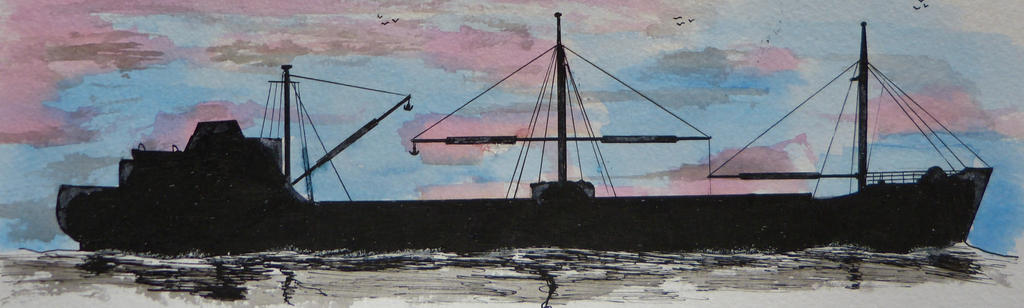
Launched by Ailsa Shipbuilding Company Ltd., Troon, Scotland for account of William Robertson Shipowners, Glasgow, Scotland on 27 March 1956, completed in June 1956, since 1978 Simri named and Italian owned and foundered on 24 December 1980. Bulk cargo and able to carry timber cargoes. Horsepower 2x75bhp/1.500 rpm and a speed of 12,5 (loaded with 2.100 ton coal trial)-14 (ballast trial) knots. Dimensions 252.0 (between perpendiculars)-267.9 (over all) x 38.6 (moulded) x 19.6 (depth moulded) x 17.0 feet, gross tonnage 1.596 tons, net tonnage 858 tons and deadweight 2.400 ton.


Netherlands-flagged, homeport Scheveningen, Netherlands, IMO 5127152, MMSI 245581000 and call sign PEDJ. Built by NC.V. Firma A. Apol Scheepswerf, Wirdum, Netherlands with yard number 173 as the coaster Geeststroom voor M.J. van Geest in 1954. Converted into a sport fishing vessel after 1973. Owned by Rederij Groen B.V., Scheveningen.


Netherlands-flagged, homeport Scheveningen, Netherlands, IMO 5127152, MMSI 245581000 and call sign PEDJ. Built by NC.V. Firma A. Apol Scheepswerf, Wirdum, Netherlands with yard number 173 as the coaster Geeststroom voor M.J. van Geest in 1954. Converted into a sport fishing vessel after 1973. Owned by Rederij Groen B.V., Scheveningen.


