Translate

Showing posts with label British India. Show all posts

Thursday, 10 September 2026

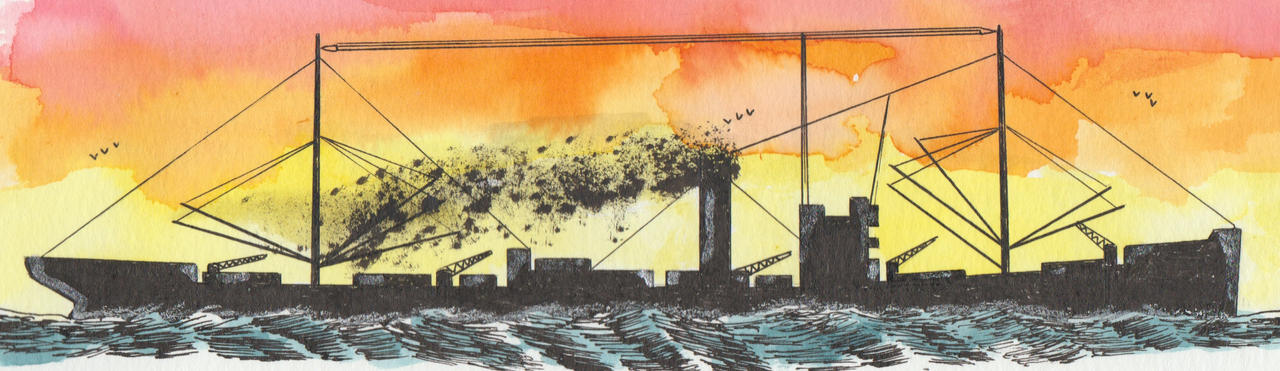
British transport Euphrates chartered at Bombay, British India for the British expedition to Ethiopia in 1868

The expedition carried out by the British Empire against the Ethiopian Empire or Abyssinia found place between 4 December 1867-13 May 1868. Purpose was to rescue imprisoned missionaries and government representatives and to punish the Ethiopian Empire. For that purpose was a large military force sent transported with a large number of merchant ships chartered in England and at Bombay.

Number transport B.1. Register tonnage 487 tons. Tonnage engine room 163 42/100 tons. Gross tonnage 650 42/100 tons. Horsepower 120 hp. Screw. Alled speed 9.5 knots Coal. Number of day’s coal that can be stowed in bunkers 14. Alleged consumption per diem tons: 18. Built of iron. Rates per ton per month if discharged at home 2:16:0. Number of months for which engaged 6. Day of entrance into pay 1-9-1867. Extra payment, if any, made on discharge none. Accommodation for officers:10. Accommodation non-commissioned officers and men 234 natives. Remarks 13-5-1868 in Annesley Bay, arrived on 3 March from Suez, Egypt with mails, having also on board 1 officer, 4 horses and 750 tons of water pipes, barley etc. Discharged at Bombay on 22 August 1868.

Master W. Deacon. Tonnage 650 tons. Dimensions 200.0 x 28.0 x 16.2 feet. Built at Glasgow, Scotland in July 1863, owners British India, S.N.C. Lim. and homeport Glasgow.

Sources

Trevenen, major J. and captain Henry M. Hozier. Record of the Expedition to Abyssinia compiled by order of the secretary of state for war, vol. I, 1870.

Lloyd’s Register 1868. 

Wednesday, 9 September 2026

Transport Great Victoria chartered at Bombay, British India for the British expedition to Ethiopia in 1868

The expedition carried out by the British Empire against the Ethiopian Empire or Abyssinia found place between 4 December 1867-13 May 1868. Purpose was to rescue imprisoned missionaries and government representatives and to punish the Ethiopian Empire. For that purpose was a large military force sent transported with a large number of merchant ships chartered in England and at Bombay.

Number transport B.0. Register tonnage 1,807 tons. Tonnage engine room 591 tons. Gross tonnage 2,398 tons. Horsepower 150. Screw. Alleged speed 7 knots . Coal. Number of day’s coal that can be stowed in bunkers 40. Alleged consumption per diem 22 tons. Built of iron. Rates per ton per month ofd30 days discharged at home 1:8:0. Number of months for which engaged 6. Day of entrance into pay 6-9-1867. Extra payment, if any, made on discharge: none. Accommodation officers: 12. Accommodation non-commissioned officers and men 432 Europeans or 529 natives. Remarks: 13-5-1868 in Annesley Bay , arrived 16-4-1868 from Suez, Egypt with mules,etc. and 1,000 tons of stores. Discharged at Bombay on 29 July 1868.

Sources

Trevenen, major J. and captain Henry M. Hozier. Record of the Expedition to Abyssinia compiled by order of the secretary of state for war, vol. I, 1870.

Lloyd’s Register 1868. 

Tuesday, 8 September 2026

British transports used in the Egyptian Campaign in 1882 carried their own unique registration number on the hull

All steamships employed by the British government as transports carried the Naval Reserve flag with a yellow anchor in the fly. They were numbered consecutively with their numbers painted on each bow and quarter. Steamships prepared in India for the Egyptian campaign had red figures on a white ground, the ones at England black figures on a white ground.

Source

Wadhams, U.S.N. lieutenant Albion V. "Transports. Egyptian campaign", Proceedings of the United States Naval Institute, volume VIII No. 4, p. 615. Annapolis, 1882. 

Saturday, 5 September 2026

British cargo ship Clan Oglivy sunk by enemy submarine torpedoed and sunk according to the War Cabinet Weekly Résumé No. 83 of the Naval, Military and Air Situation 27 March-3 April 1941

An item reported that on 20 March was torpedoed and sunk by an enemy submarine the British merchant ship Clan Oglivy, tonnage 5,802 tons , loaded with tea and general, underway from Chittagong British India [nowadays Bangladesh] to Glasgow, Scotland, part of convoy yes, on the position 182 miles north north west of St. Antonio, Cape Verde. What the fate was of her crew was yet unknown.

Source

National Archive UK. CAB-66-16-1. 

Tuesday, 18 August 2026

British merchant ship Policastria underway from British India to Italy according to the Kriegsnachrichten of the Chef des Admiralstabes der Marine dated Berlin 5 August 1917

An item reported the merchant ship Policastria loaded with grain, England-flagged, tonnage 4,594 tons, date departure 2 July from British India and bound for Italy.

Source

Bundesarchiv RM-40-622

British merchant ship Willesden underway from British India to Italy according to the Kriegsnachrichten of the Chef des Admiralstabes der Marine dated Berlin 5 August 1917

An item reported the merchant ship Willesden loaded with grain, England-flagged, tonnage 4,881 tons, date departure 2 July from British India and bound for Italy.

Source

Bundesarchiv RM-40-622

Wednesday, 12 August 2026

British merchant ship Daleham underway from British India to Italy according to the Kriegsnachrichten of the Chef des Admiralstabes der Marine dated Berlin 5 August 1917

An item reported the merchant ship Daleham, loaded with grain, England-flagged, tonnage 4,809 tons, date of departure 3 July, coming from British India and bound for Italy.

Source

Bundesarchiv RM-40-622

Monday, 11 May 2026

Italian merchant ship Veniero underway towards Italy according to the Kriegsnachrichten of the Chef des Admiralstabes der Marine dated Berlin 5 August 1917

An item reported the merchant ship Veniero loaded with grain, Italy-flagged, tonnage 5,162 tons, date departure 2 July from British India and bound via Suez for Genoa, Italy.

Source

Bundesarchiv RM-40-622

Sunday, 23 November 2025

New commanding officer for Royal Ceylon Navy according to the Australia Station Intelligence Summary dated 1 April 1955

An item reported that was decided to replace commodore P.M.B. Chavasse D.S.C. R.N. as Captain of the Navy by a Ceylonese officer.(1) Chavasse was to complete his tour of duty on 12 July. He was to be replaced by the 37 years old commander Royce de Mel (2) who was to be promoted to the rank of captain. De Mel was trained in the British Royal Navy and the Royal Indian Navy, promoted to lieutenant commander in 1944 and appointed to command the C.R.N.V.R, in 1946 and since October 1946 commander. Some years ago he followed an intensive couse in England.

Notes

1. Paul Morrison Bushe Chavasse (4 January 1908 County Waterford, Ireland-23 August 21994 Castletownshend, Ireland) 3rd Commander of the Royal Ceylon Navy between 15 June 1953-7 November 1955.

2. Gerard Royce Maxwell De Mel (10 June 1917 Colombo, British Ceylon-?), Captain of the Royal Ceylon Navy between 15 August 1955-15 November 1960/15 August 1961.

Source

Website Royal Australian Navy, Sea Power Centre.

Sunday, 4 May 2025

United Kingdom unable to reinforce defence of Singapore with aircraft according to the U.S. Joint Intelligence Committee. Daily summary dated 5 January 1942

An item referred to the Japanese military attache at Ankara, Turkey who informed his Italian an German colleagues that England won’t be able to reinforce Singapore with planes from India while they lost the control over the north-south communications and reinforcing while using aircraft carriers was impossible due to the threat of Japanese torpedo planes. The attache claimed that the pilots of the torpedo planes were all such fanatical that a loss of 50% in major endeavors was inspected.

Source

Map Room Papers (Roosevelt Administration), 1942 - 1945. U.S. Joint Intelligence Committee. Daily summary No. 26 dated 5 January 1942 

Sunday, 29 September 2024

Dutch cargo ship Moena 1922-1942

©Warshipsresearch.blogspot.com

Call sign PGAO. Laid down bySir Laing&Sons Ltd., Sunderland, England with yard number 684 on 5 December 1922, delivered in May 1923 to owner/manager N.V. Stoomvaart Maatschappij 'Nederland', Amsterdam, Netherlands and sunk and torpedoed by German submarine U-162 while underway from Bombay, India via Trinidad to the USA on 24 August 1942. Gross tonnage 9,286-9,373 tons, under deck 8,711 tons, net tonnage 5,730-5.788 tons , deadweight 13,590 tons, grain capacity 683,900 cubic feet, bale capacity 596,830 cubic feet and as dimensions 480.5 x 60.4 x 37.4 feet. knots. 

Tuesday, 26 March 2024

Strong Japanese naval force in Indian waters active according to the U.S. Joint Intelligence Committee. Daily summary dated 15 April 1942.

An item reported that on 6 April the Indian sloop Indus after she was bombed sunk of the coast of Burma. Since 3 April destroyed the Japanese at least 16 Allied merchant ships in the Indian waters. The Japanese aircraft carriers until recently active in the Bay of Bengal seemed to have gone to the eastward probably to replace their heavy aircraft losses. Despite contradictory and confusing information it was not believed that to date more as 3 battleships, 4 aircraft carriers, 5 heavy cruisers, 1 light cruiser, 1 destroyer squadron and 12 submarines executed offensive missions in the Bay of Bengal.

Source

Map Room Papers (Roosevelt Administration), 1942 - 1945. U.S. Joint Intelligence Committee. Daily summary No. 126 dated 15 April 1942. 

Monday, 18 March 2024

Japanese naval forces leaving Bay of Bengal according to the U.S. Joint Intelligence Committee. Daily summary dated 17 April 1942

An item reported that the center of Japanese offensive naval activity was leaving the Bay of Bengal. The departure of the aircraft carriers was first blamed to the losses of aircraft, but it became clear that 3 were to operate elswhere. Cruisers were also leaving but perhaps staying nearby. In the afternoon of 15 April sighted the R.A.F. a Japanese battleship (perhaps a cruiser) and a destroyer on a distance of around 100 miles south of Ceylon. According to British sources there were maximum 3 battleships, 2 aircraft carriers, 3 heavy cruisers, 3 quadrons of destroyers and 3 squadrons of submarines in Malayan waters. Despite the Japanese navy withdrew warships of the Bay of Bengal large numbers of merchant types entered the area. Allied merchant shipping from the Calcutta southward remained suspended due to Japanese naval forces in the vinity of Ceylon.

Source

Map Room Papers (Roosevelt Administration), 1942 - 1945. U.S. Joint Intelligence Committee. Daily summary No. 128 dated 17 April 1942

Saturday, 16 March 2024

Japanese warships leaving the Bay of Bengal according to the U.S. Joint Intelligence Committee. Daily summary dated 18 April 1942

An item reported that practically all Japanese naval units left the Bay of Bengal leaving maximum 2 aircraft carriers, light forces of destroyers and submarines and shore-based aircraft. The J.I.C. commented that probably Japan abanoned the plans for further attacking Ceylon and the east coast of India.

Source

Map Room Papers (Roosevelt Administration), 1942 - 1945. U.S. Joint Intelligence Committee. Daily summary No. 129 dated 18 April 1942

Sunday, 14 January 2024

British transport HMS Dalhousie visited Dutch East Indies in 1901

The Jaarboek van de Koninklijke Nederlandsche Zeemacht 1900-1901 reported that the British transport HMS Dalhousie visited Tandjong-Priok, Dutch East Indies between 24-26 April 1901.(1)

Note

1. Paddle steam troop transport launched by Caird&Company on 5 June 1886 for the Royal Indian Marine, between 20 August 1914-1919 in service of the British Royal Navy. 

Sunday, 22 October 2023

Japanese passenger ship (ex-Bangala 1902-1924) Taizan Maru 1924-1942

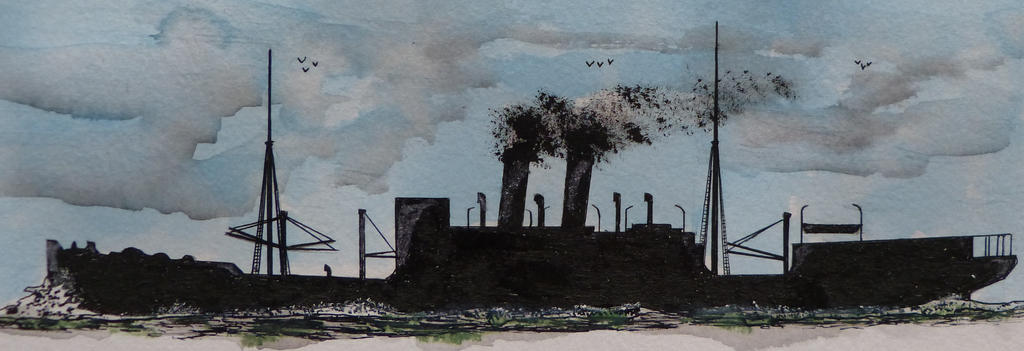
Launched by A.&J. Inglis, Glasgow, Scotland with yard number 272 for the British India Steam Navigation Company on 4 September 1902, completed on 28 November 1902, troop transport in 1914 and sunk in a collision in the Yellow Sea on 14 June 1944. Call sign JYWA. Gross tonnage 3,930 tons, under deck 3,141 tons, net tonnage 2,379 tons, deadweight 3,200 tons and as dimensions 373.0 x 45.2 x 26.5 x 25 (loaded) feet. Reciprocating propulsion, one screw. 899 nhp and speed 14 (normal cruising)-16 (maximum) knots. 

Thursday, 10 August 2023

British battle cruiser HMS Renown visiting the Middle and Far East according to the Weekly Intelligence Summary No. 19 for the week ending 20 August 1921

1944 appearance


1944 appearance

An item reported that British battle cruiser HMS Renown (1) with the Prince of Wales embarked would leave Portsmouth on 26 October, visiting Gibraltar on 29 October, Malta 1-3 November, Port Said, Egypt 5-6 November, Suez, Egypt 7-8 November, Aden, Yemen 12 November and Bombay, India 17 November. After finishing his tour the Prince of Wales would return to the Renown leaving Karachi around 17 March 1922 towards Japan visiting Ceylon, Singapore and possible Penang and Hong Kong.

Note

1. Part of Renown-class battle cruisers preceded by HMS Tiger succeeded by Courageous-class, building ordered on 30 December 1914, laid down by Fairfield, Govan, Scotland on 25 January 1915, launched on 4 March 1916, commissioned on 20 September 1916, stricken in 1948 and sold to be broken up on 19 March 1948.

Source

The National Archives, Kew Gardens, England CAB-24-127-57

Monday, 24 July 2023

Japanese cargo ship (ex-Inveran 1906-1918, Frankinver 1918-1921, Jalaveera 1921-1936, Toyokiho Maru No.. 2 1926-1938) Nisso Maru No. 2 1938-

Launched by Russell&Co., Kingston Yard, Port Glasgow, Scotland with yard number 568 on 16 November 1906 and completed in December 1906. Call sign IPB. Gross tonnage 4,342 ton, under deck 4,101 ton, net tonnage 3,306 ton, deadweigt 7,400 tons and as dimensions 385.0 x 49.8 x 18.4 x 9 (light)-24 (loaded) feet. Single screw, 410 nhp reciprocating allowing a speed of 9 (normal cruising)-10 (maximum) knots. With 1,000 ton coal bunker capacity a range of 8,400 miles/9 knots. Between 1920-1926 owned by Scinindia Steam Navigation Co. Ltd., Fort Bombay and managed by Ratanse Dharamse Morarji. Broken up in 1941?

Friday, 13 January 2023

American attack transport President Polk attacked by enemy submarine according to the U.S. Joint Intelligence Committee. Daily summary dated 3 March 1942


An item reported that an enemy submarine attacked without success the screw steamship President Polk around 300 miles south west of Bombay, India. The J.I.C. commented that was until the northern most attack in that area until then.(1)

Note

1. The President Jackson-class attack transport laid down as MCV Type C3-P&C hull 110 by Newport News Shipbuilding and Drydock Company, Newport News, Virginia, USA on 7 October 1940, launched on 28 June 1941, chartered by the US government as transport since 5 December 1941, requisitioned by the US Navy on 6 September 1943, converted into a troop ship (AP-103), decommissioned on 26 January 1946, stricken on 25 February 1946 and returned to APL and finally broken up at Taiwan in 1970.

Source

Map Room Papers (Roosevelt Administration), 1942 - 1945. U.S. Joint Intelligence Committee. Daily summary No. 83 dated 3 March 1942.

Wednesday, 28 December 2022

British battle cruiser HMS Renown bound for Indian Ocean according to the Weekly Intelligence Summary No. 43 dated 29 October 1921


HMS Renown
Danae-class light cruisers

Arabis-class©Warshipsresearch.blogspot.com

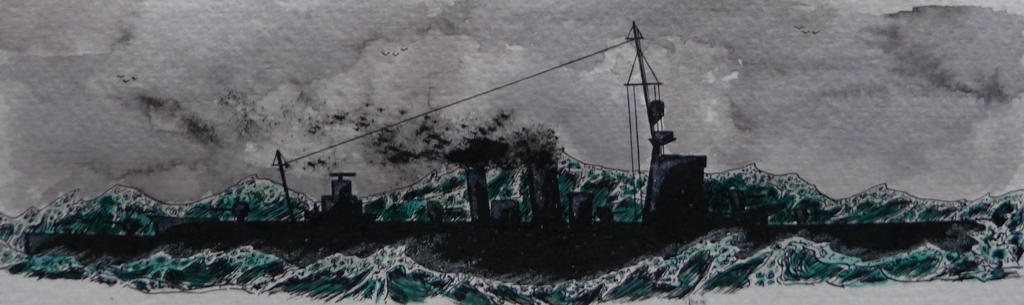
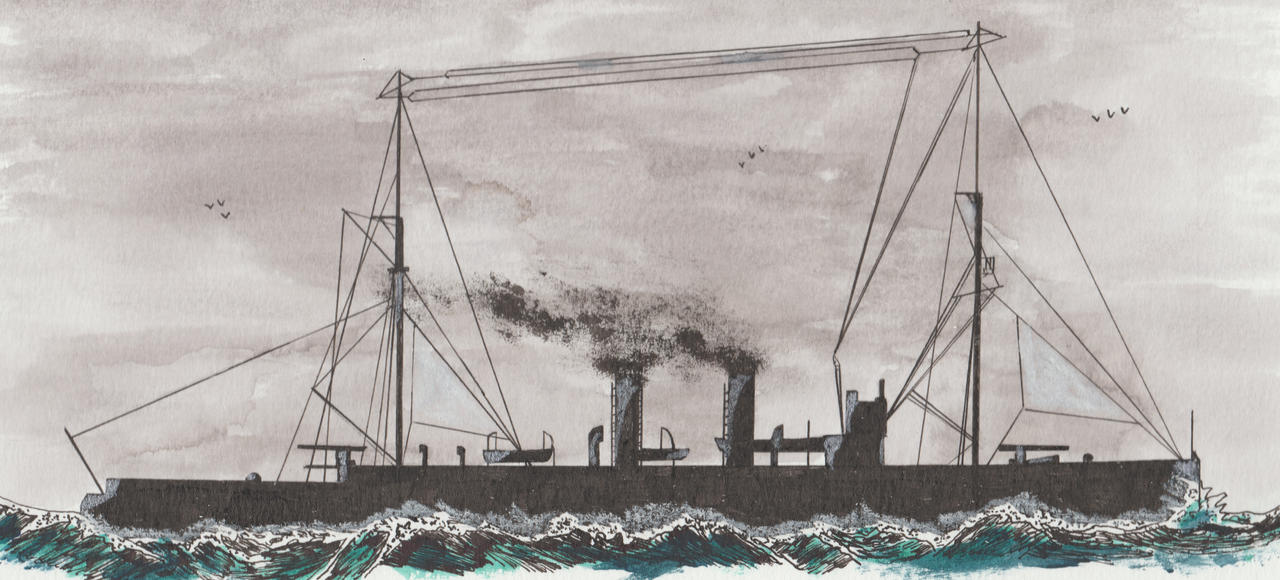
An item reported that the British battle cruiser HMS Renown (1) departed on 26 October Portsmouth, England for Gibraltar. She was escorted by the British cruiser HMS Dunedin. (2) An second item reported that her voyage in the Persian Gulf was changed for sake of Sir Percy Loraine who became H.M. Minister at Teheran, Persia. The new dated were departure from Bombay 25 November, Bunder Abbas 28-30 November, Bushire 1-5 December, Kuwait 5-10 December, Muscat 12-16 December and Bombay again 19 December. Loraine was to leave the ship at Bushire on 1 December and to continue his voyage with the British minesweeping sloop HMS Crocus to (3) Mohammerah and Basra.

Notes

1. Part of Renown-class battle cruisers preceded by HMS Tiger succeeded by Courageous-class, building ordered on 30 December 1914, laid down by Fairfield, Govan, Scotland on 25 January 1915, launched on 4 March 1916, commissioned on 20 September 1916, stricken in 1948 and sold to be broken up on 19 March 1948.

2. Part of Danae-class light cruisers, preceded by C-class, succeeded by Emerald-class, laid down by Armstrong Whitworth, Newcastle-on-Tyne, England on 5 November 1917, launched on 19 November 1918, commissioned on 13 September 1919 and sunk by the German submarine U-14 east of St, Paul’s Rocks, Brazil on 24 November 1941.

3. Part of Arabis-class minesweeping sloops, preceded by Azalea-class, succeded by Aubrietia-class, launched by Lobnitz and Company, Renfrew, Scotland on 24 December 1915 and sold at Bombay, India in July 1903.

Source

The National Archives, Kew Gardens, England CAB-24-129-57