Translate

Showing posts with label Torpedo cruisers. Show all posts

Saturday, 8 February 2025

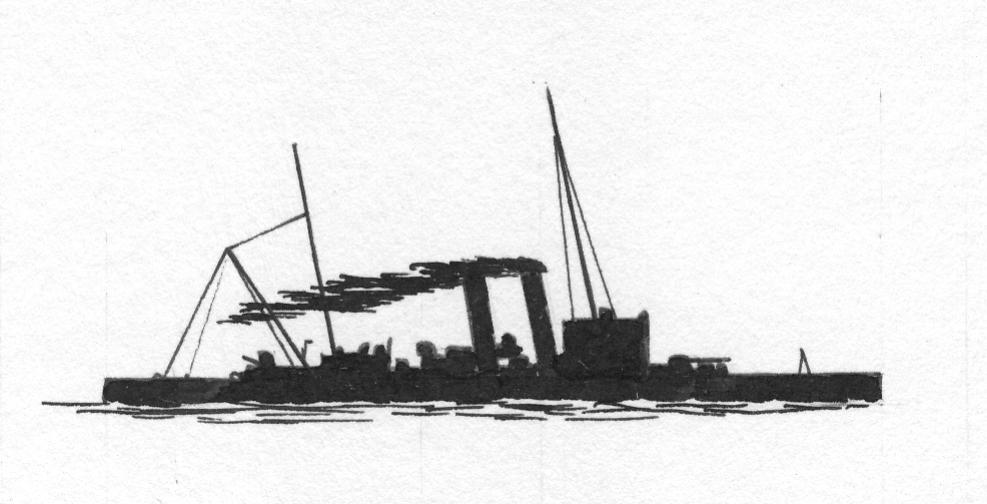
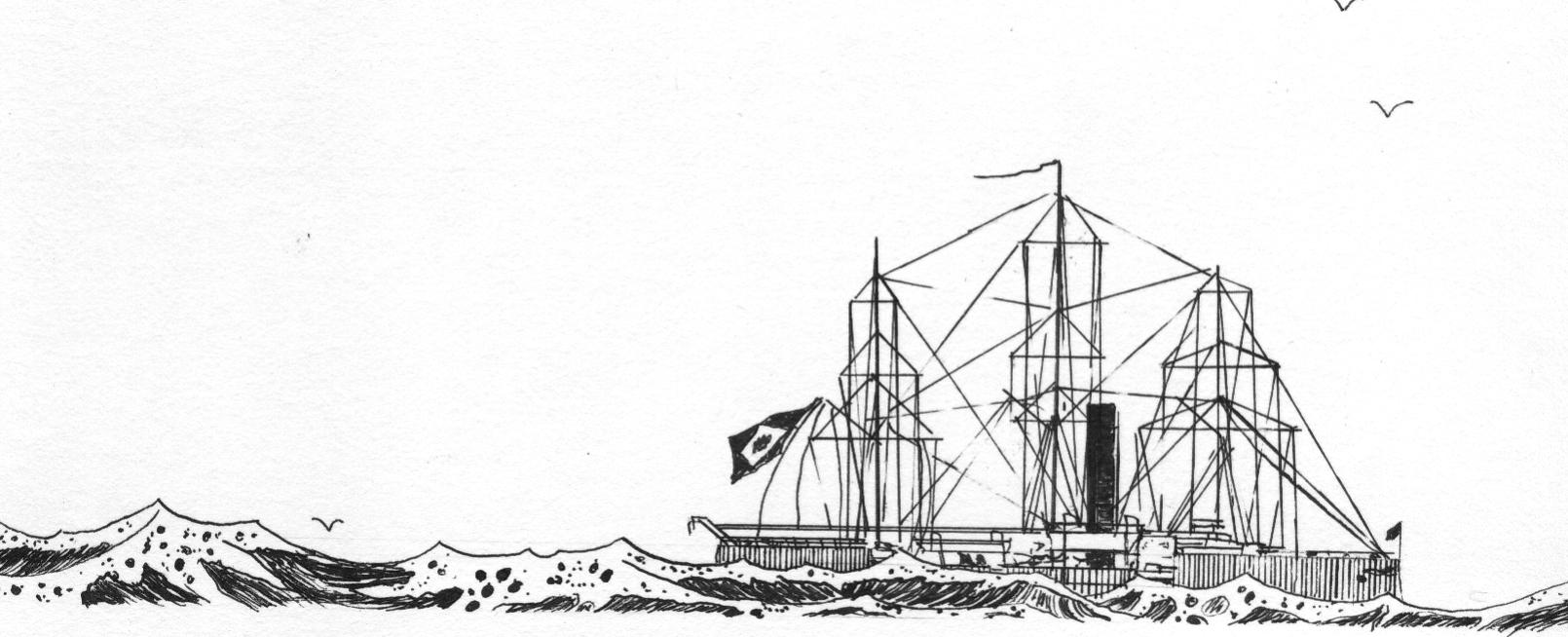
Swedish torpedo cruiser Claes Uggla 1899-1917

Sister ship Örnen©Warshipsresearch.blogspot.com

Of the Örnen-class torpedo cruisers, consisting of the Örnen, Claes Horn, Jacob Bagge, Psilander and Claes Uggla. Launched by Begrsund on 2 December 1899, commissioned on 28 November 1900, decommissioned on 30 August 1917 after she sunk on 22 June 1917.

Tuesday, 4 February 2025

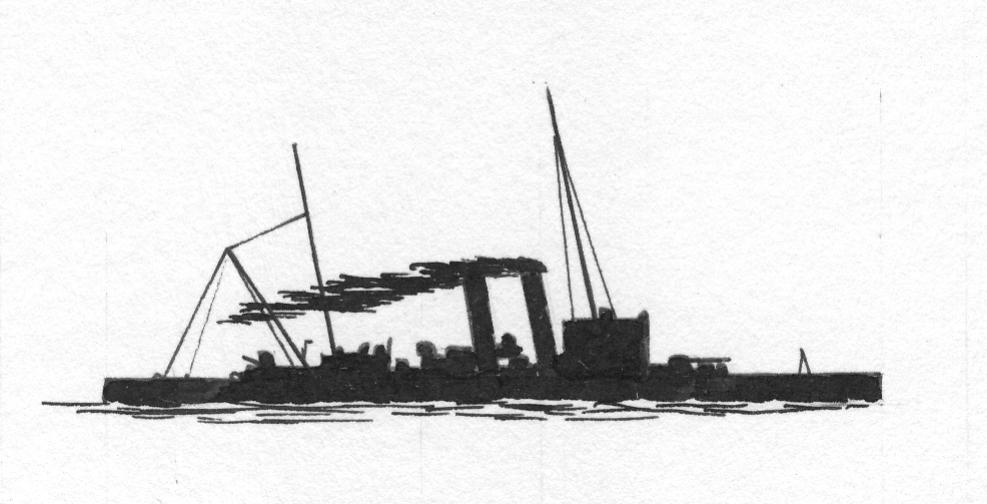
Swedish torpedo cruiser Psilander 1899-1939

Sister ship Örnen©Warshipsresearch.blogspot.com

Of the Örnen-class torpedo cruisers, consisting of the Örnen, Claes Horn, Jacob Bagge, Psilander and Claes Uggla. Launched by Finnboda on 25 November 1899, commissioned on 6 August 1900, decommissioned on 1 July 1937 and sunk as a tareget in 1939. 

Wednesday, 29 January 2025

Swedish torpedo cruiser Jacob Bagge 1896-1951

Jacob Bagge. ©Warshipsresearch.blogspot.com

Sister ship Örnen. ©Warshipsresearch.blogspot.com

Of the Örnen-class torpedo cruisers, consisting of the Örnen, Claes Horn, Jacob Bagge, Psilander and Claes Uggla. Launched by Kockums on 30 April 1896, commissioned on 23 November 1898, decommissioned on 13 June 1947 and broken up in 1951.

Sunday, 19 January 2025

Swedish torpedo cruiser Claes Horn 1898-1924

Sister ship Örnen©Warshipsresearch.blogspot.com

Of the Örnen-class torpedo cruisers, consisting of the Örnen, Claes Horn, Jacob Bagge, Psilander and Claes Uggla. Launched by Lindberg on 9 Feburary 1898, commissioned on 7 August 1898, decommissioned on 12 October and broken up in 1924. 

Saturday, 29 July 2023

British gunboat HMS Archer visited Tandjong-Priok, Dutch East Indies in 1900

The Jaarboek van de Koninklijke Nederlandsche Zeemacht 1900-1901 reported that the British gunboat HMS Archer (1) visited Tandjong-Priok, Dutch East Indies between 23-24 October 1900. The Dutch newspaper De Preanger-bode dated Saturday 27 October published an item dated Bandoeng 26 October reporting her arrival on Tuesday at Tandjong Priok for bunkering coal coming from Colombo, Ceylon and bound for Sydney. Commanded by captain lieutenant Rolleston.(2) 3rd Class cruiser, launched in 1885, armed with 6 guns, measurement 1,770 tons and with 2,200 hp a speed of 16.5 knots. The Bataviaasch nieuwbslad dated 26 October 1900 reported her departure to Sydney, Australia. Commanding officier J.P. Rolleston.

Notes

1. Part of the Archer-class torpedo cruisers, preceded by Scout-class, succeeded by Marathon-class, laid down with yard number 226 by J&G Thompson, Glasgow, Scotland on 2 March 1885, launched on 23 December 1885, completed in July 1887, commissioned on 11 December 1888 and sold to be broken up on 4 April 1905.

2. John Philip Rolleston (10 April 1859-23 December 1936, commanded the Archer between 30 August 1900-25 March 1904, retired on 7 March 1914, promoted to the rank of Admiral on 3 March 1924. 

Saturday, 8 October 2022

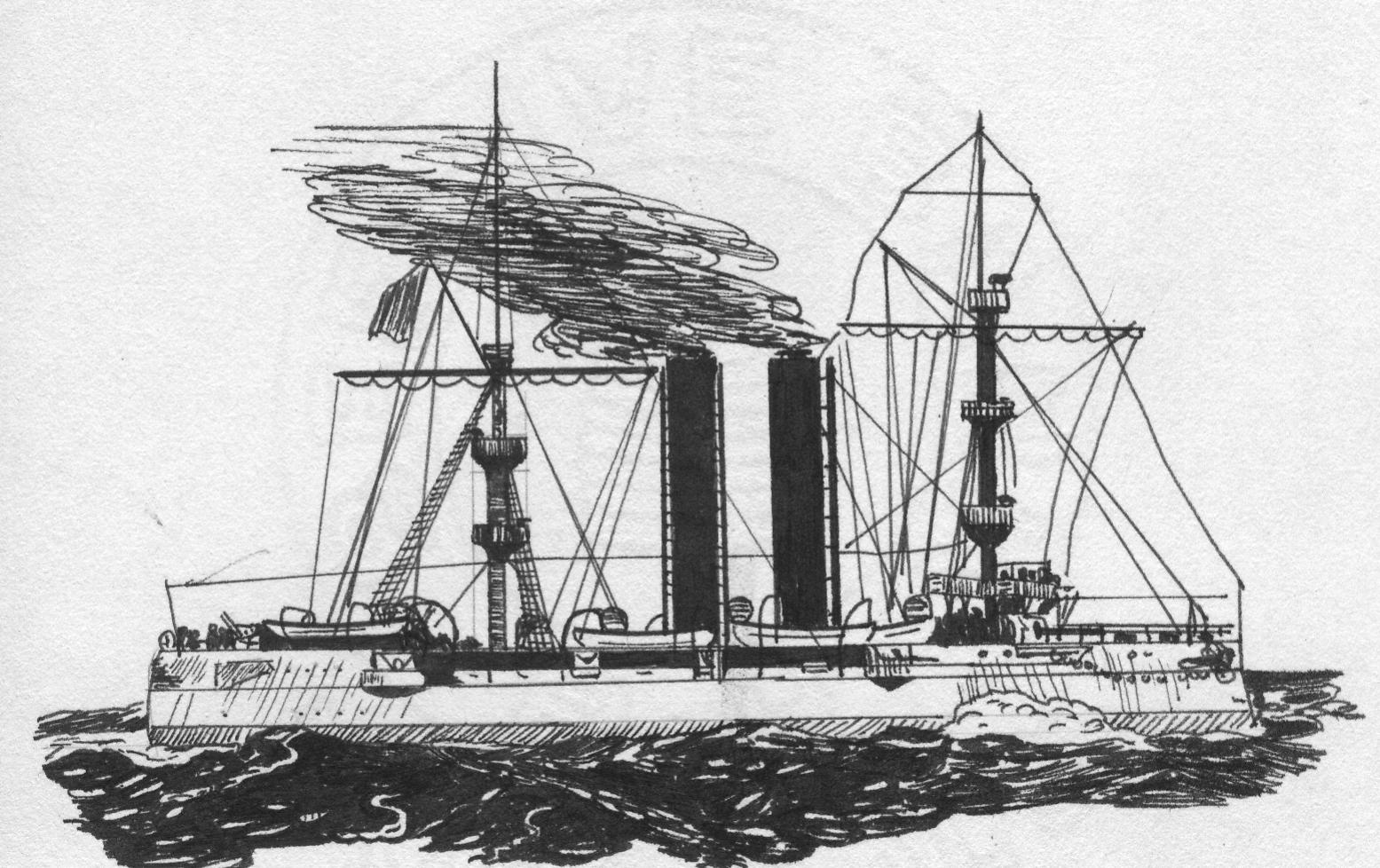
British torpedo cruiser HMS Scout 1884-1904

Impression using sketch Brassey

In 1880 was a torpedo cruiser projected but never realized. By March 1883 was again interest in such a cruiser when the French navy ordered by a British company engines for a fast torpedo ship. First Naval Lord (1879-1885) admiral sir Astley Cooper Key (18 January 1821 London, England-3 March 1888 Maidenhead, England) wanted a British answer and a month later presented Barnaby a sketch design and the Scout-class was to be built under the 1883-1884 Program. Part of Scout-class torpedo cruisers. Laid down by J&G Thomson, Glasgow, Scotland on 8 January 1884, launched on 8 January 1885 and sold in 1904. 

Armament 4-1.27cm/5” guns, 8-3pd quick firing guns, 2-0.45” 5-barreled Nordenfelt guns, 4 l. and 3 tubes for which 20 torpedoes were available. Displacement 1,580 tons and as dimensions 220.0 x 34.0 x 14.6 feet. Horsepower 3,200 ihp, speed 17.0 knots and range with 450 tons coal bunker capacity and speed 10 knots 6,900 nautical miles.

Sources

Friedman, N. British cruisers of the Victorian Era.

Brassey. The naval annual 1888-1889.

Warshipsresearch

Saturday, 24 September 2022

British torpedo cruiser HMS Fearless 1884-1905

Impression using sketch Brassey

In 1880 was a torpedo cruiser projected but never realized. By March 1883 was again interest in such a cruiser when the French navy ordered by a British company engines for a fast torpedo ship. First Naval Lord (1879-1885) admiral sir Astley Cooper Key (18 January 1821 London, Engand-3 March 1888 Maidenhead, England) wanted a British answer and a month later presented Barnaby a sketch design and the Scout-class was to be built under the 1883-1884 Program. Part of Scout-class torpedo cruisers. Laid down by Barrow on 22 September 1884, launched on 20 March 1886 and sold in 1905.

Displacement 1,580 tons and as dimensions 220.0 x 34.0 x 14.6 feet. Horsepower 3,200 ihp, speed 17.27 knots and a range of 6,900 nautical miles with 10 knots speed and 450 tons coal bunker capacity. Armament 4-1.27cm/5” guns, 8-3pd quick firing guns, 2-0.45” 5-barreled Nordenfelt guns, 4 l.carriages and 3 tubes for which 20 torpedoes were available. Original 3 triangular sails.

Sources

Friedman, N. British cruisers of the Victorian Era.

Brassey. The naval annual 1888-1889.

Saturday, 27 November 2021

Austro-Hungarian torpedo cruiser SMS Leopard visited the Dutch East Indies in 1900-1901

The Jaarboek van de Koninklijke Nederlandsche Zeemacht 1900-190 reported that the Austro-Hungarian torpedo cruiser Leopard (1) visited Tanjong-Priok, Ambon and Sabang, Dutch East Indies between respectively 25 November-3 December 1900, on 23 February 1901 and between 30-31 July 1901.

The Dutch newspaper Bataviaasch nieuwsblad dated 26 November 1900 reported her arrival coming from Palo. Commanding officer was F.[riedrich] Ritter Müller von Elblein.(2) De locomotief dated 6 December 1900 reported her departure from Batavia, Dutch East Indies towards Australia. The Rotterdamsch nieuwsblad dated 10 August 1900 reported that the Austrian government decided another two warships to the Far East caused by the problems in China but that the Leopard was not immediately available. The Deli courant dated 13 August 1901 reported that on 30 July 1901 the Leopard arrived at Sabang, Dutch East Indies, departing the next day to Madras, British Indies. In September 1901 visited she Sabang to bunker coal.

Notes

1. Succeeded by SMS Tiger. Building ordered on 8 September 1884, laid down by Armstrong, Mitchell&Co., Elswick, England with yard number 481 on 4 December 1884, launched on 10 September 1885, commissioned on 31 March 1886, training ship torpedo service in spring 1914, became a guard ship, handed over the Allies and broken up at Messina, Italy in 1920.

2. Linienschiffskapitän promoted to the rank of rear admiral since 17 November 1907. Also called Fritz.

Monday, 20 September 2021

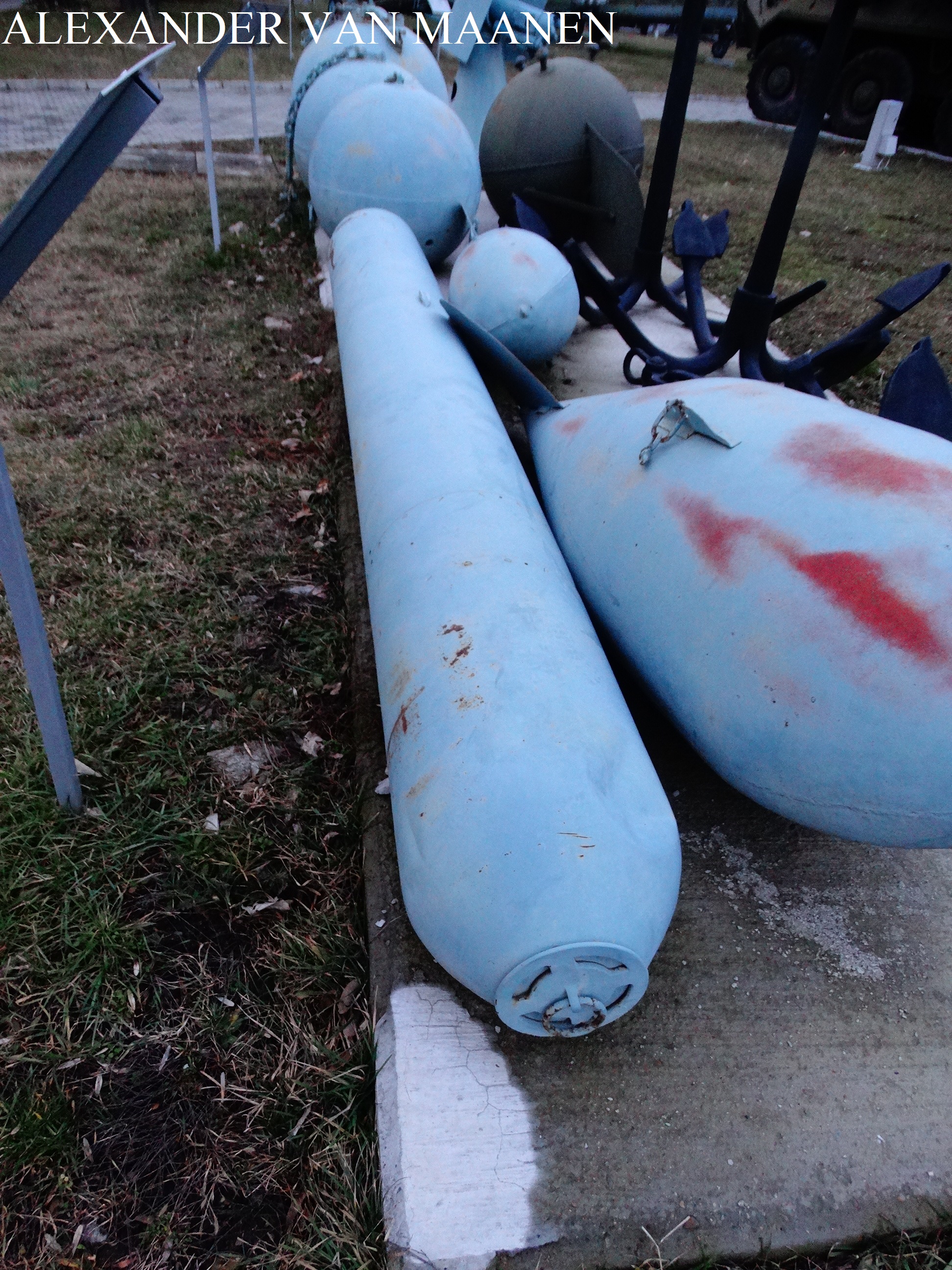
38cm/15” Whitehead training torpedo M 1876

Military Museum Sofia, Bulgaria

For training purposed and used in the Bulgarian navy since 1900. The Bulgarian cruiser Nadezhda (1) was between 1900-1912 fitted out with 5 of such torpedoes. Manufactured by the Whitehead plant at Fiume, Austro-Hungaria [nowadays Rijeka, Croatia]. Total weight 350 kilo, fillers weight 25 kg, length 5,73 metres, speed 18-20 knots, deviation to 60 centimetres and range 500 (effective)-1,2 kilometres.

Note
1. In fact a torpedo gunboat or torpedo cruiser, ordered in 1897, launched by Chantiers et Ateliers de la Gironde, Bordeaux, France on 10 September 1898, commissioned in October 1898, ran aground in 1912 but salvaged and repaired, disarmed in the First Balkan War due to the her worst condition, rearmed but again disarmed in 1915, brought to Sevastopol, Russia [nowadays Russia/Ukraine] for repairs on 16 September 1918, most of her crew sent back to Bulgaria, abandoned at Sevastopol in December 1918, used by the Russian White Caspian Sea forces until 1920, in Bolshevik hands since 1921 and finally broken up in the end of the 1920s. Displacement 715 tons and as dimensions 67 x 8,3 x 3,1 metres or 220 x 27 x 10 feet. Machinery consisted of 2 triple expansion steam engine and 4 boilers delivering 2.600-3.100 hp allowing a speed of 18 knots. Her crew numbered 97 men. Armament consisted of 2-10cm/3.9” naval guns, 2-6,5cm/2.55” naval guns, 2-4,7cm/1.85” naval guns and 2-3,81cm/15” torpedo tubes. 

Wednesday, 16 October 2019

Austrian torpedo cruiser SMS Panther visited Makasser, Dutch East Indies in 1905

An item reported that the Austrian cruiser SMS Panther (1) visited Makasser, Dutch East Indies between 23-25 November 1905.

Note
1. Torpedo cruiser of the Panther-class, preceded by the Lussin and succeeded by the Tiger. Laid down by Armstrong, Elswick, England on 29 October 1884, launched on 13 June 1885, completed on 31 December 1885 and broken up in 1920.

Source
Jaarboek van de Koninklijke Nederlandsche Zeemacht 1905-1906

Wednesday, 16 January 2019

Austrian-Hungarian torpedo cruiser Zenta launched according to the Dutch magazine Marineblad dated 1897-1898 No. 7

An item referred to the magazine le Yacht reporting that Pola [Pula, Croatia] the Austrian-Hungarian torpedo cruiser Zenta was launched on 18th August. She was built of Siemens-Marin steel. Modified Panther-design. Displacement 2.326 tons and as dimensions 96 x 11,7 x 4,25 metres. Two 3-cylinder engines and 8 Yarrow water tube boilers supplied 7.800 ihp allowing a speed of 20 miles. The armament consisted of 8-12cm /40 cal quick firing guns, 10-4,7cm quick firing gins, 2 machineguns and 2 torpedo tubes.(1)

Note
1. Laid down by Pola Naval Arsenal [nowadays Pula, Croatia] on 8 August 1896, launched on 18 August 1897, commissioned on 25 May 1899 and sunk during the Battle of Antivari off Bar, Montenegro on 16 August 1914 against an Anglo-French fleet. Of the Zenta-class. 

Tuesday, 8 January 2019

Swedish design of torpedo cruisers unchanged according to the magazine Mitteilungen aus dem Gebiete des Seewesens dated 1907 No. 11

An item reported that in September 1906 a commission with as chairman rear admiral C. Olsen was appointed which had to develop a blueprint for the Swedish navy in the coming years. In January was a shipbuilding program presented in which the demands for several types of warships specified.

In contrary to the designs for other warships was that of the temporary torpedo cruiser not changed. 

Monday, 31 December 2018

Swedish naval staff wanted to increase the fleet on large scale according to the magazine Mitteilungen aus dem Gebiete des Seewesens dated 1907 No. 2

An item reported that the Swedish admiralty staff proposed to increase the fleet between 1908-13 wih 4 armoured ships, 6 armoured gunboats, 4 torpedo cruisers, 20 destroyers, 24 torpedo boats 1st class and around 20 submarines to be able to maintain a fleet in the Kattegat after the union with Norway ended.(1) Further more was it desired to convert Göteborg into a naval base and found a small war harbour at the coast of Nordland and a naval station in the Aland islands where in the past Russia built defence works.

Note
1. The union dated from 14 January 1814 [Swedish king Charles III was also king of Norway since 4 November 1814] until 26 October 1905. 

Friday, 26 October 2018

Danish protected cruiser Valkyrien visited Tandjong-Priok, Dutch East Indies in April 1900

An item reported that the Danish cruiser 2nd class Valkyriën (1) visited Tandjong-Priok, Dutch East Indies between 19-24 April 1900.(2)

Notes
1. Laid down at the Navy Yard, Copenhagen, Denmark on 27 October 1886, launched on 8 September 1888, completed in 1890 and stricken in October 1923.
2. The newspaper De locomotief dated 24 April 1890 reported that the entire crew got free return tickets (valid until the 27th) for the railway between Tandjong-Priok and Batavia and already several crew members made use of it.

Source
Jaarboek van de Koninklijke Nederlandsche Zeemacht 1899-1900. 

British torpedo cruiser class HMS Mohawk visited Dutch East Indies in July 1900

An item reported that the British cruiser 3rd class HMS Mohawk (1) visited Ambon, Moluccas, Dutch East Indies on 15 July 1900.(2)

Notes
1. Archer-class torpedo cruiser, Laid down by J.&G. Thompson, Glasgow, Scotland on 2 March 1885, launched on 6 February 1896 and sold to be broken up at Cham, England on 4 April 1905.
2. The newspaper Soerabaijasch handelsblad dated 20 July 1900 reported that the British Asiatic squadron was strengthened by the aged gunboat HMS Lizard and cruisers Mohawk and Wallaroo.

Source
Jaarboek van de Koninklijke Nederlandsche Zeemacht 1899-1900. 

Monday, 23 April 2018

Swedish navy modernizing her fleet according to the magazine Mitteilungen aus dem Gebiete des Seewesens 1899 no. 1

Jacob Bagge

An item reported that the Swedish monitor Ericsson was rebuilt. The old turret was converted into a barbette turret with the 2-15cm guns protected by steel shields. Also the monitors 3rd class called armoured gunboats were rebuilt. The Berserk and Ulf were already completed with a main armament of 1-12cm quick firing gun. In the coming winter was the main armament of the remaining 3 vessels also to be replaced, The torpedo cruisers Jacob Bagge and Claes Horn were already launched, their sister ships Clas Uggla and Psilander were still lying on stocks. 

Tuesday, 10 April 2018

Russian torpedo cruiser designed at Warnemünde, Germany according to a CIA report dated 26 April 1948

An item reported that the Technisch-Wissenschaftlichen Bureau, Warnemünde, East Germany designed a torpedo cruiser which was to be built by the shipyards and of which just one fixed type was to exist. The projected shipyard had to build 25 ships in a year and to which 3 or 4 more shipyards were to be added 1 near Kerch, Black Sea coastline, one along the Baltic Sea coastline, 1 along the Arctic coastline and 1 in the Far East. Head of the bureau was the Russian lieutenant colonel Grigoriyev. The departments responsible for the production of machines and engines were managed by engineer Heine, who earlier worked at the Schichau shipyard at Elbing, Germany [nowadays Elblag, Poland].

The torpedo cruiser with a displacement of 3.000-3.500 tons was similar to the ones serving in the French and Italian navies. The main armament consisted of 2x2-5cm guns (fore and aft) and torpedo tubes. Fitted out with 2 turbines machinery for which the steam was delivered by two separate boiler departments each with 2 high pressure 70 atmosphere Wegner boilers (each 49th 4 centrifugal burners and a fuel consumption of 8 tons/hour) delivering 2x50.000hp [at 370 rpm] driving two screws making a speed of 40 knots possible. Length of the ship around 128 metres or 420 feet.

Source
The report was published on www.archive.org, document number CIA-RDP82-CIA-RDP82-00457R001200160004-0

Monday, 9 April 2018

Russian torpedo cruiser designed at Warnemünde, Germany according to a CIA report dated 15 January 1948

An item reported that the Technisch-Wissenschaftlichen Bureau, Warnemünde, Germany redesigned the designs of 6.000 ton German cruisers fitting out with a stronger armour resulting in what called a ‘gedeckte’ cruiser [protected cruiser?]. To be fitted out with turbines machinery while the Russian plants were not able to supply the wanted 2.400hp M.A.N. 22 engines. The ships were to be built by Russian shipyards while the bureau was just responsible for the designs.

Source
The report was published on www.archive.org, document number CIA-RDP82-00457R001200600003-3

Wednesday, 21 March 2018

The reorganisation of the Brazilian fleet according to the magazine Mitteilungen aus dem Gebiete des Seewesens dated 1914 No. 3

Mineas Gerais

Almirante Barrosso

Republica

An item referred to the Revista Maritime Brazileira reporting the reorganisation of the Brazilian fleet. She was now divided in 4 squadrons. The 1st squadron consisted of the battleship Minas Geraes and the S. Paulo and the scouts Rio Grande do Sul and Bahia. The 2md squadron consisted of the armoured ships Deodor and Floriana and the cruiser Republica. The 3rd squadron consisted of the cruiser Barrosso and the torpedo cruisers Tamoyo, Tymbira and Tupy. The 4th squadron consisted of the destroyers Amazonas, Para Piauhy, Rio Grande de Norte, Parahyba, Alapas, Sergipe, Parana, Santa Catharina and Matto Grossso and the steam tender Carlos Gomes. 

Thursday, 15 March 2018

Rebuilding the Russian navy according to the magazine Mitteilungen aus dem Gebiete des Seewesens dated 1905 no. 3

An item reported that for the rebuilding of the Russian navy a budget of 400 million crones was approved for realizing a 5 years program including 16 battleships, 18 cruisers, 150 torpedo cruisers, 10 mine steamships and 4 floating workshops.

A second item mentioned that the budget was to be spent within the next 10 years. Approved and to be delivered within 3-5 years was the building of 8 battleships of the Slava-type, 8 of the Andrej Pervozvanji type, 8 cruisers of the Bajan type, 6 of the improved Nowik type, 6 of the Bogatyr type, 50 torpedo cruisers of 500 ton, 100 such vessels of 150, 240 and 350 tons displacement, 10 torpedo depot ships of the Jenissei type and 4 workshops of the Kamcatka type.