Translate

Showing posts with label Alaska. Show all posts

Friday, 10 April 2026

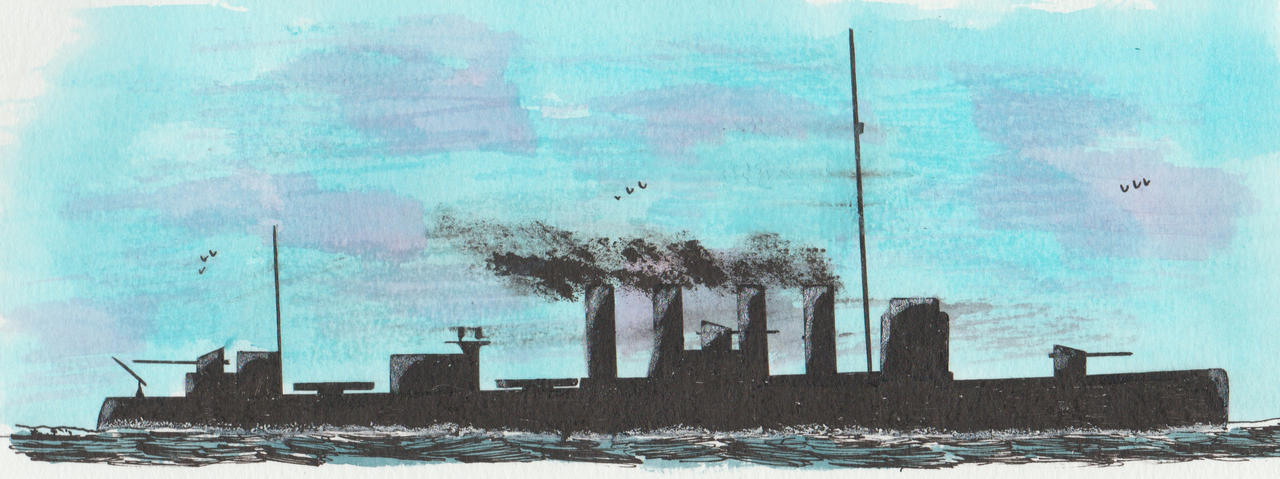
American destroyer USS Worden DD-352 1932-1944

Clemson-class type. Warshipsresearch.blogspot.com
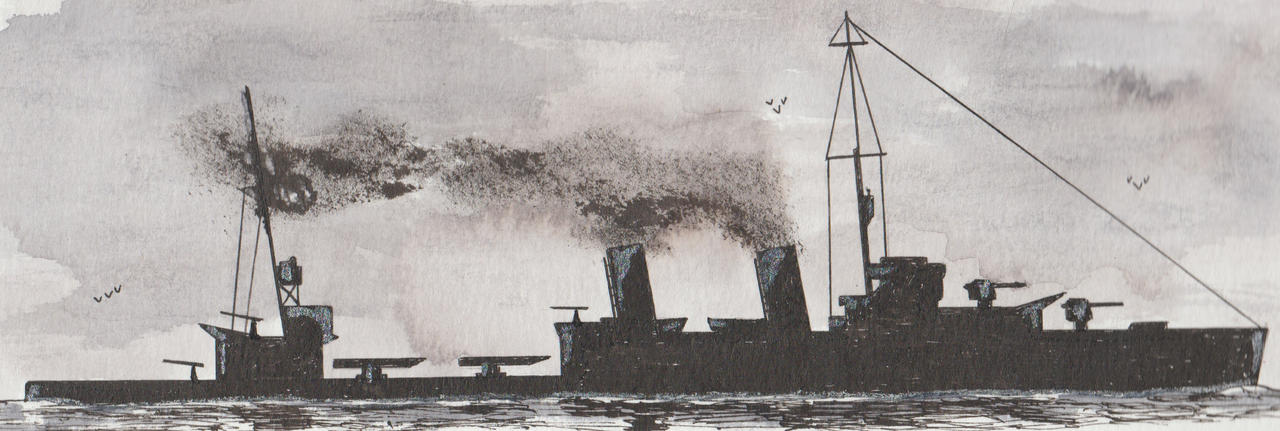
USS Aylwin, Farragut-class. Warshipsresearch.blogspot.com
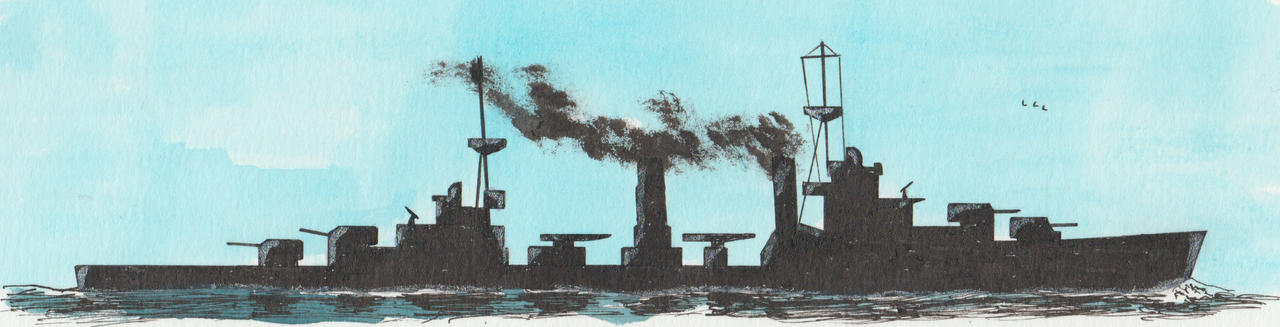
USS Porter, Porter-class. ©Warshipsresearch.blogspot.com

Part of Farragut-class preceded by Clemson-class succeeded by Porter-class. Together with the Portland-class authorized by the Congress on 29 April 1916 although without the necessary funding, causing a seriously delay in actual building. Laid down by Puget Sound Navy Yard, USA on 29 December 1932, launched on 27 October 1934, commissioned on 15 January 1935, grounded in Dutch Harbor, Alaska and sunk on 12 January 1943 and stricken on 22 December 1944.

Sunday, 16 November 2025

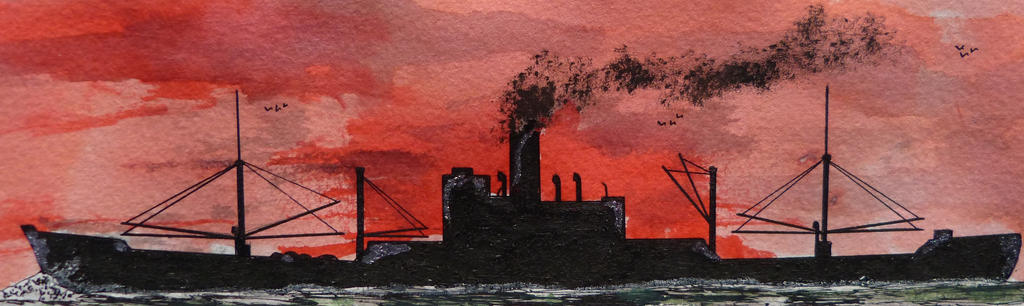
Finnish four-masted cargo barque (ex-l’Avenir 1908-1937) Admiral Karpfannger 1937-1938


Maritime Museum Hamburg, Germany

Ordered by the Association Maritime Belge by the Rickmers Shipyard in 1908 and named L’Avenir registered at Antwerp. Bought by the Finnish shipsowner Gustav Erikson in 1932, registered at Mariehamn, Aland, sold to the Hapag in 1937. Fitted out as training ship and renamed Admiral Karpfanger during a training voyage lost south of Cape Horn with last radio contact on 12 March 1938 at 6.05. Dimensions 84.80 (between perpendiculars) x 13.71x 7.7  metres. Gross tonnage 2,738 tons. Sail area 3,100 square metres. 

Thursday, 17 July 2025

Enemy ships in eastern Pacific and Alaskan area according to the U.S. Joint Intelligence Committee. Daily summary dated 31 December 1941

An item reported that persistent radio acivity seemed to indicate the presence of enemy ships in the eastern Pacific area and possible in the Alaskan area.

Source

Map Room Papers (Roosevelt Administration), 1942 - 1945. U.S. Joint Intelligence Committee. Daily summary No. 21 dated 31 December 1942

Monday, 7 July 2025

Dutch merchant ship Wilhelmina arrived at Dutch Harbor, Alaska according to the U.S. Joint Intelligence Committee. Daily summary dated 3 January 1942

An item reported the arrival of the Dutch merchant ship Wilhelmina loaded with coal arrived at Dutch Harbor, Alaska coming from Japan. The J.I.C. commented that the ship was under Japanese charter in the last months and apparently escaped.  

Source

Map Room Papers (Roosevelt Administration), 1942 - 1945. U.S. Joint Intelligence Committee. Daily summary No. 24 dated 3 January 1942 

Saturday, 21 September 2024

Enemy radio activity south of Kodiak according to the U.S. Joint Intelligence Committee. Daily summary dated 30 January 1942

An item reported that there was still enemy radio activity on a location 900 miles south of Kodiak, Alaska.

Source

Map Room Papers (Roosevelt Administration), 1942 - 1945. U.S. Joint Intelligence Committee. Daily summary No. 51 dated 30 January 1942 

Tuesday, 17 September 2024

Enemy submarine sighted in Unimak Pass, Alaska according to the U.S. Joint Intelligence Committee. Daily summary dated 30 January 1942

An item reported the sighting of an enemy submarine in Unimak Pass, Alaska on 28 January.

Source

Map Room Papers (Roosevelt Administration), 1942 - 1945. U.S. Joint Intelligence Committee. Daily summary No. 51 dated 30 January 1942 

Wednesday, 14 August 2024

Unidentified Japanese units in the Bering Sea sighted according to the U.S. Joint Intelligence Committee. Daily summary dated 12 December 1941

An item reported the sighting on 9 December of unidentified Japanese units in the Behring Sea on the position latitude 55-03 north longitude 170-15 west 200 miles north west of Dutch Harbor, Alaska. Aircraft searched without success.

Source

Map Room Papers (Roosevelt Administration) mr0422a. U.S. Joint Intelligence Committee. Daily summary No. 2 Dated 12 December 1941.

Monday, 1 April 2024

Number of Soviet fishing vessels off Alaska reduced in April 1966

The total number of Soviet fishing and support vessels off Alaska decreased considerably during April from about 200 reported in March 1966 to about 160. This total number is somewhat smaller than it was last year at the same time.

Source

Commercial Fisheries Review dated June 1966, p. 99.

Friday, 29 March 2024

Soviet fishery fleet partly transferred from the Gulf of Alaska to the Pacific Northwest in April 1966

The transfer of Soviet vessels to the fishery off the Pacific Northwest reduced the size of the Gulf of Alaska Pacific ocean perch trawling fleet to about 70 vessels in mid-April. By months end the Gulf fleet operating from Yakutat to Portlock Banks was again built up to about 100 vessels apparently by transfers from the disbanding Bristol Bay flounder fleet.

Source

Commercial Fisheries Review dated June 1966, p. 99. 

Tuesday, 26 March 2024

Japanese fishery in the Gulf of Alaska in 1966

At the end of April about 82 Japanese fishing vessels were operating off Alaska. Of the 11 factory trawlers licensed by the Japanese to fish in the Gulf of Alaska this year, 2 began operations southwest of Kodiak Island in late April. The first trawler which arrived was boarded by a U.S. Bureau of Commercial Fisheries biologist observer as of the International North Pacific Fisheries Commission ( INPEC) program to determine the effects of extensive trawling (primarily for ocean perch) upon Gulf of Alaska stocks of halibut and king crab.

Source

Commercial Fisheries Review dated June 1966, p. 98

Soviet king crab fishery in Eastern Bering Sea in April 1966

In early April three Zakharov-class factoryships accompanied by about 11 tangle nethandling trawlers entered the king crab fishery in the Eastern Bering Sea (Bristol Bay). Throughout the month the vessels concentrated on the traditional crab-fishing grounds north of Port Moller (mid-Alaska Peninsula) .

Source

Commercial Fisheries Review dated June 1966, p. 99. 

Thursday, 21 March 2024

Soviet shrimp fishery in the Gulf of Alaska in April 1966

The Soviet shrimp fleet in the Gulf of Alaska consisted of 12 medium freezer trawlers (SRTMs) operating on the shrimp grounds near Shumagin Islands. The fleet was supported by one refrigerated carrier. The flounder fleet in the outer Bristol Bay flats was being disbanded. Some of the participating vessels were transferred to the ocean perch fishing fleets, while others joined fisheries off Kamchatka. With the transfers to the Central Gulf of Alaska perch fleet, it is estimated that the remaining flounder fleet consists of 20 to 30 vessels.”

Source

Commercial Fisheries Review dated June 1966, p. 99. 

Friday, 1 March 2024

Japainese air attack on Nazan Bay failed according to the U.S. Joint Intelligence Committee. Daily summary dated 4 August 1942

An item reported that a Japanese bomber attacked on 3 August a US destroyer in the Nazan Bay, Atka Island, Alaska, probably without success but not all reports of the incident were available.

Source

Map Room Papers (Roosevelt Administration), 1942 - 1945. U.S. Joint Intelligence Committee. Daily summary No. 237 dated 4 August 1942.

Wednesday, 10 January 2024

Japanese cargo ship Cheribon Maru 1920-1942

Call sign JCWO. Laid down by Mitsubishi Zosen Kaisha Ld., Kobe, Japan on 17 May 1920, launched on 30 August 1920, completed on 7 Feburary 1921, requisitioned by the army and converted into a troop transport No. 938 on 11 November 1941, armed with anti aircraft guns, set on fire during an air attack at Holtz Bay harbor, Attu, Aleutians on 26 November 1942 and sunk next day. Gross tonnage 4,016 tons, under deck 3,476 tons, net tonnage 2,503 tons and as dimensions 345.0 x 50.0 x 26.7 x 7.5 (light)-24 (loaded) feet. Reciprocating propulsion, 342 nhp, 1,100 tons coal bunker capacity, range 9,800 nautical miles/13 knots and speed 10 (normal cruising)-1.5 (maximum) knots. 

Monday, 1 January 2024

Japanese submarines patrolling in the Aleutian area, Alaska according to the U.S. Joint Intelligence Committee. Daily summary dated 6 August 1942

An item reported that Japanese submarines seemed to patrol especially to the south of the Fox and Andreanof Island groups in the Aleutian area, Alaska.

Source

Map Room Papers (Roosevelt Administration), 1942 - 1945. U.S. Joint Intelligence Committee. Daily summary No.239 dated 6 August 1942.

USS army aircraft attacked patrolling Japanese flying boats in the Alaska areaaccording to the U.S. Joint Intelligence Committee. Daily summary dated 6 August 1942

An item reported that on 4 August USS army aircraft attacked two patrolling Japanese 4-engine flying boats in the Alaska area. One was set on fire and crashed around 10 miles southwest of Adak Island, the other disappearing uncontrolled in the clouds and seemed to have crashed around 15 miles southeast of Adak Island.

Source

Map Room Papers (Roosevelt Administration), 1942 - 1945. U.S. Joint Intelligence Committee. Daily summary No.239 dated 6 August 1942.

Tuesday, 12 December 2023

Japanese cargo ship Nissan Maru 1938-1942

Call sign JLZM. Laid down by Osaka Iron Works Ld., Innoshima on 30 June 1938, launche on 6 November 1938, completed on 15 January 1939, requisitioned by the Japanese navy on 9 September 1941, served as an auxiliary transport-collier-oiler and sunk damaged in an Allied air attack in Siska Harbor, Aleutian Islands, Alaska on 19 June 1942. Gross tonnage 6,534 tons, net tonnage 3,887 tons and as dimensions 424.1 x 57.4 x 34.4 x 9.6 (light)-27.6 loaded) feet. Steam turbine propulsion, 517 nhp and range 10,000 nautical miles/cruising speed (>12 knots). 

Tuesday, 5 September 2023

Dutch shipyard built North Korean fish factory ship Baek du san according to the Commercial Fisheries Review dated November 1967 No. 11

An item reported that the Dutch Verolme’s United Ship Yards sold in January 1965 a 7,200 gross tons ship the “Top van Witte Berg to North Korea. She had a 120 metric ton daily processing capacity and was used in the herring, flatfish and Alaska polock fisheries in the Sea of Okhotsk. The Dutch newspaper Trouw dated 30 August 1967 reported that the sale was in 1964 and calls her the fish factory Bach Dusan of the company Kmgamg Hypodong Trading Co. With a length of 130 metres was she in her time the largest of her kind. Het vrije volk dated Thursday 27 August 1964 reported her launching as Bäck Dusan [Top of the White Mountain] on next Saturday at Alblasserdam, Netherlands. The edition dated 22 January 1965 reported her arrival at Congjin, North Korea. Her measurement was 11,000 tons and she was now called Paik Doosan. The De Waarheid dated 2 February 1965 calls her again Bäck Dusan wiht a tonnage of 17,000 tons, dimenisons 129 x 17.60 metres, 6,000 hp diesel engine and 16 knots speed. Shipstamps.co.uk reports that she was laid down with yard number 687 and launched on 29 August as the Baek du san, in 2006 still existing? Vesselfinder.com reports IMO 6420355, Paek du san, dimensions 130 x 18 metres, gross tonnage 6,831 tons, deadweight 6,993 tons, since 2014 no longer in service, as Paik du san of Kmgang Hyopdong Tdg Co and since 1999 of Yangwha Fishery Station. 

Thursday, 24 August 2023

Japanese king crab factory ships active along the north side of the Alaska Peninsula according to the Commercial Fisheries Review dated November 1964 No. 11

An item reported that two Japanese king crab factory ships namely the Tokei Maru and the Tainichi Maru with 12 catcher vessels were in August active along the north side of the Alaska Peninsula betweeen Unimak Pass and Port Moller.

Thursday, 13 July 2023

Russian whaling barque Suomi visited Honolulu, Hawaii according to the newspaper The Polynesian dated 15 January 1853

An item reported the arrival at Honolulu, Hawaii on 6 January of the Russian whaling barque Suomi master Hashagen 13 days from Sitka, Alaska 1,500 barrels whale oil 25.000 lbs bone