Translate

Showing posts with label Sri Lanka. Show all posts

Friday, 25 September 2026

French aviso Aldebaran visit Sabang, Dutch East Indies in 1932

Aldebaran at Tandjong Priok and her commanding officer. 

Source De locomotief dated 3 December 1932
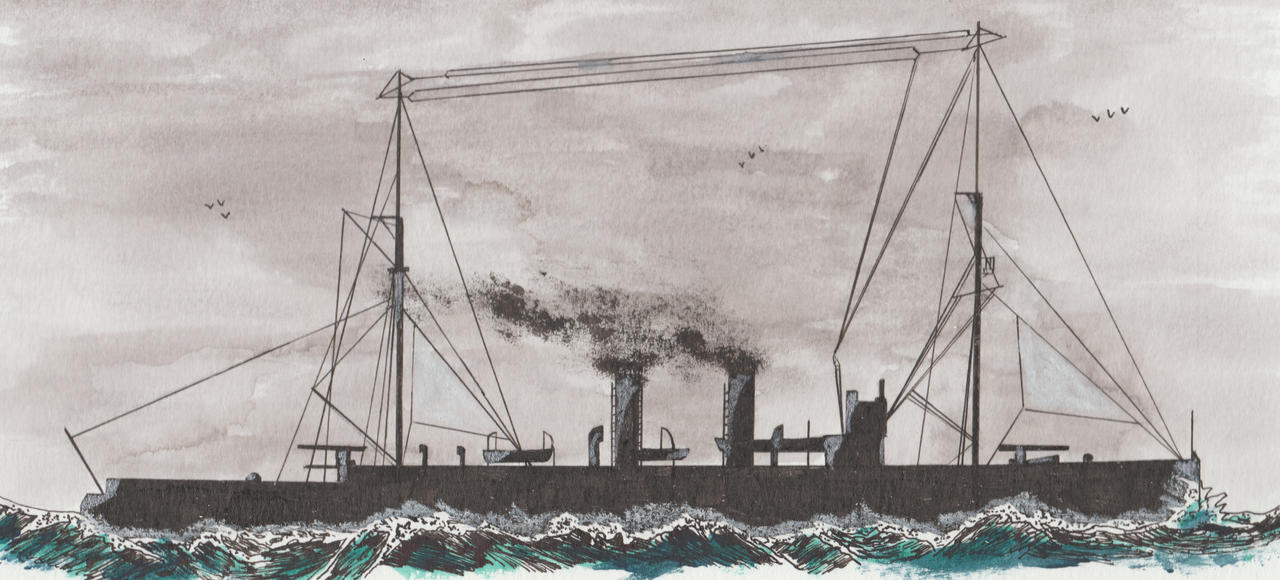
British Arabis-class minesweeping sloop©Warshipsresearch.blogspot.com

The Jaarboek van de Koninklijke Nederlandsche Zeemacht 1931-1932 reported that the French aviso Aldebaran (1)visited Sabang between 12-16 August 1932. In the following edition is nothing said about other visits the same year. Newspapers supplied also details about the November-December visits.

De Sumatra Post dated 30 September 1932 reported the arrival of the French gunboat Aldebaran in the afternoon of 29 September at Sabang. She left Colombo, Ceylon on 23 September towards Saigon, French Indochina to replace the gunboat Bell. Commanding officer is André le Pelletier. Probably she would stay 4 days at Alddebaran. Her crew numbered 3 officers and 103 men.

De Indische courant dated 1 October reported her arrival at Sabang on 28 September 16:00 o’clock. She was expected to arrive end August but waited at Colombo, Ceylon for better weather while the monson was heavy. On 3 October was planned to leave for Saigon, French Indochina.

De Indische courant dated 24 November reported an non-official visit to Batavia 27 November -1 December and to Ambon 6-10 December.

Soerabijasch handelsblad dated Tuesday 29 November reported hat she had been expected at Tandjong Priok on Sunday 27 November but this was changed into 1 December. Commanded by capitaine de frégate Pelletier.

De Locomotief dated Friday 2 December 1932 reported her arrival at Tandjong Priok on Thursday morning around 09:30 o’clock and berthing along the East buoys. After a visit of 4 days she would leave for Ambon. The edition dated 3rd reported that from Ambon she would leave for the French possessions in the Pacific. Her crew numbered 6 officers and 91 sailors.

Bataviasch nieuwsblad dated 6 December reported her departure on 5 December 12:45 O’clock towards Ambon. From there she would via Townsville, Australia go to her destination Tahiti.

Het nieuws van den dag voor Nederlandsch-Indië dated 22 December reported her arrival at Ambon (2) on 10 December and berthed along the small of Digoel-quay.

Notes

1. A British Arabis minesweeping sloop, ordered in January 1916. Launched by Barclay Curle and Company, Whiteinch, Scotland on 19 May 1916, delivered to France in 1916, commissioned on 3 July 1916, stricken at Saigon, French Indochina on 13 October 1934 and sold to be broken up on 15 January 1935.

2. At Ambon were wreaths laid on the French mass grave on the European graveyard. During the Crimean War (16 October 1853-20 March 1856) visited the French frigate Sybille commanded by Villeneuve Ambound underway towards Kamchatka to join the British-French fleet. By drinking poisoned drinking water broke out an epidemic and between November 1854-February 1855 died 73 crew members. Villeneuve afraid of lacking men asked the resident of Ambon for support especially for being towed as far as Poeloe Manipa. The resident refused while the Netherlands were neutral. Villeneuve protested at the French cabinet without success. The Sybille left at the end without any Dutch support. The 50 guns Poursuivante-class sailing frigate Sibylle laid down at Toulon in November 1829, launched on 7 November 1847, commissioned on 8 April 1851 and stricken on 13 May 1881. During the Crimean War she served in the Far East. 

Saturday, 19 September 2026

French submarines Pégase (1) and Monge visited Sabang, Ducth East Indies in 1937

The Jaarboek van de Koninklijke Nederlandsche Zeemacht 1936-1937 reported that the French Pégase and Monge visited Sabang, Dutch East Indies between 23-27 January 1937. The Dutch newspaper Deli courant dated Saturday 23 January referred to her correspondent at Sabang, who telegraphed that the same afternoon the French submarines Pégase (1) and Monge (2) were expected. They were to leave on Wednesday Poeloe Weh. For the crew members was as usual a program of activities for foreign warships arranged. Both were 1st class submarines with as dimensions 92 x 8 x 4.7 (draught) metres. Crew numbered 63 men. Armament 1-10cm gun, 3.7cm anti aircraft gun and 10-55cm torpedo tubes. Horsepower 6,000 hp, speed 18-21 (surfaced)-10 (submerged) miles and displacement 1,379 (surfaced)-1,968 (submerged) tons. The edition dated 30 January supplied more details. Both boats were berthed from Saturday 23 until Thursday 27 January alongside quay No. 4 near the office of the Stoomvaart Maatschappij “Nederland”in the Sabang Bay. They were welcomed by harbor master V.d. Burgh and head administrator of the Sabang Maatschappij L.C. Baron van Feltz. The same day paid French officers visits to the local authorities. On Tuesday was a football match with the local S.D.O. and in the evening were the etat majors invited on a dance evening in the society De Koepel. Both boats left Toulon, France on 16 December 1936 and went via Suez, Egypt, Djibouti, French Somaliland and Colombo, Ceylon to Sabang. The intention was to leave Thursday morning to Saigon, French Indochina where to be stationed for the time being.

Notes

1. Q156. Part of Redoutable-class or Classe 1,500 tons, designed as 1st class submarines or large submarine cruisers.

Laid down by Ateliers et Chantiers de la Loire, Saint-Nazaire, France on 29 September 1928, launched on 28 June 1930, commissioned on 19 June 1932, laid up at Saigon on 1 January 1943, decommissioned on 1 January 1944, hulked, grounded on a shoal in the mouth of the Bassac River in or after September 1145 stricken on 10 June 1950, removed from the shoal and broken up at Saigon.

2. Q144. Part of Redoutable-class or Classe 1,500 tons, designed as 1st class submarines or large submarine cruisers. Laid down by Société Nouvelle des Forge

Tuesday, 12 May 2026

Dutch cargo ship Poelau Bras 1928-1942

Exhibition Varen voor Vrijheid. Museum Katwijk

Poelau Tello-Poelau Bras. ©Warshipsresearch.blogspot.com

Originally to be named Poeloe Brani. Ordered on 24 May 1927, date contract 27 July 1927, laid down with yard number 1845 by Kon. Mij. De Schelde, Vlissingen, Netherlands on 26 September 1927, launched on 13 Aprilt 1929, trial while berthed 9 July 19299, trial on 17 July 1929, delivered to the Stoomvaart Maatschappij Nederland, Amsterdam, Netherlands and sunk by a Japanese air attack of the aircraft carrier Hiryu underway from the Wijnkoopsbaai, Java, Dutch East Indies towards Colombo, Ceylon on 7 March 1942.

Sunday, 1 March 2026

British minesweeper HMS Flying Fish K 370 1943-1951 and Ceylon HMCyS Vijaya 1951-1975

©Warshipsresearch.blogspot.com

Algerine-class minesweepers preceded by Bangor-class succeeded by Ton-class. Totally 110 built (United Kingdom 50, Canada 60). Laid down by Redfern Construction Company, Toronto, Canada with yard number 55 on 30 October 1943, launched on, 16 February 1944, completed on 14 October 1944, given to the Royal Ceylon Navy in 1949, commissioned as HMCyS Vijaya in 1951, part of the Sri Lanka Navy since 1972 and broken up in 1975. 

Monday, 23 February 2026

British minesweeper HMS Pickle J293 1943-1959 and Ceylon HMCyS Parakrama 1959-1964

©Warshipsresearch.blogspot.com

Algerine-class minesweepers preceded by Bangor-class succeeded by Ton-class. Totally 110 built (United Kingdom 50, Canada 60). Laid down by Harland&Wolff, Belfast, Northern Ireland on 11 January 1943, launched on 3 August 1943, completed on 15 October 1943, transferred to Ceylon in 1958, formally transfer on 6 April 1959 and broken up in 1964. 

Sunday, 23 November 2025

New commanding officer for Royal Ceylon Navy according to the Australia Station Intelligence Summary dated 1 April 1955

An item reported that was decided to replace commodore P.M.B. Chavasse D.S.C. R.N. as Captain of the Navy by a Ceylonese officer.(1) Chavasse was to complete his tour of duty on 12 July. He was to be replaced by the 37 years old commander Royce de Mel (2) who was to be promoted to the rank of captain. De Mel was trained in the British Royal Navy and the Royal Indian Navy, promoted to lieutenant commander in 1944 and appointed to command the C.R.N.V.R, in 1946 and since October 1946 commander. Some years ago he followed an intensive couse in England.

Notes

1. Paul Morrison Bushe Chavasse (4 January 1908 County Waterford, Ireland-23 August 21994 Castletownshend, Ireland) 3rd Commander of the Royal Ceylon Navy between 15 June 1953-7 November 1955.

2. Gerard Royce Maxwell De Mel (10 June 1917 Colombo, British Ceylon-?), Captain of the Royal Ceylon Navy between 15 August 1955-15 November 1960/15 August 1961.

Source

Website Royal Australian Navy, Sea Power Centre.

Sunday, 26 October 2025

Thai frigates preparing visit to India according to the Australia Station Intelligence Summary dated 1 March 1955

Sloop Mae Klong. ©Warshipsresearch.blogspot.com

An item reported that proposals were made for a training voyage in April 1955 by the Thai frigates Tachin, Prasae and Maeklong with totally 200 cadets on board in response on the succesful visit to Thailand by four Indian frigates in 1954. The planning was Singapore-Penang, Malaysia-Colombo, Ceylon-Bombay, India-Karachi, Pakistan-Calcutta, India-Madras, India-Trincomalee, Ceylon and Rangoon, Burma.

Source

Website Royal Australian Navy, Sea Power Centre.

Saturday, 11 October 2025

Siamese square rigged sailing ship Favorite in 1842

Siamese name Sayam p’I-p’op. English name Favorite. Barque. Built in 1842. Transported in 1851 the Thai ambassador to China and in 1852 the Thau Ambassador of religion to Ceylon. Tonnage 450 tons. Owner 1st King.

Source

Bradley, Dan Beach. Bangkok Calendar for the year of our Lord 1862. American Missionary Association, Bangkok, 1862.

Wednesday, 8 October 2025

Siamese square rigged sailing ship Success in 1836

Siamese name Chinda dooang kaao. English name Success. Barque. Built in 1836. Tonnage 400 tons. Armed with 22 guns.Transported in 1842 the Ambassador of Religion to Ceylon. Owner 1st King.

Source

Bradley, Dan Beach. Bangkok Calendar for the year of our Lord 1862. American Missionary Association, Bangkok, 1862.

Saturday, 13 September 2025

German survey vessel SMS Planet visited the Dutch East Indies in 1906

The Jaarboek van de Koninklijke Nederlandsche Zeemacht 1905-1906 reported that the German survey vessel SMS Planet visited Padang on 25 July 1906, Tandjong Priok between 3-7- August 1906, Makasser on 18 August 1906 and Amboina, Dutch East Indies on 29 August 1906. The Dutch newspaper Bataviaasch nieuwsblad dated 21 May reported that she left Kiel, Germany on 21 January for a scientific deep sea expedition in the South Seas. Via Capetown, South Africa, Madagascar, Mauritius, Ceylon, west coast of Sumatra towards Batavia and Macassar finally completing her voyage in September at Matopi. The De locomotief dated 4 October 1906 referred to a tiding dated Ambon 16 September that the German warship which should arrive on 6 August finally came on 29 August. It was however a big disappointment. Instead off one of the largest en newest German warships with a vip on board came a small survey vessel. The Sumatra-bode dated 25 July reported her arrival underway from Colombo, Ceylon to the South Seas, commanding officer captain lieutenant Lebahn. The Bataviaasch nieuwsblad dated 4 August reported her arrival coming from Emmahaven underway to the South Seas, armed with 5 guns and a crew numbering 8 officers and 85 men. The Soerabaijasch handelsblad dated 4 August reported that she was underway from Malacca to Batavia probably arriving on 4 August at Tandjong Priok. From there she planned to leave on 8 August via Celebes to New Guinea for surveying.(1)

Note

1. Launched at AG Weser, Bremen, Germany on 2 August 1905, commissioned on 16 November 1905 and scuttled off the island of Yap, Caroline Islands [Yap State, part of the Federate States of Micronesia] to prevent capture by the Japanese on 7 October 1914. German colonial empire included German New Guinea with protectorates, German Samoa and the Chinese Kiatschou Bay Leased Territoy. 

Saturday, 14 June 2025

Ceylon was to became a major base for British forces according to the U.S. Joint Intelligence Committee. Daily summary dated 10 January 1942

An item reported that considerable reinforcements were moved from India to Ceylon and on short notice was extra anti aircraft and anti submarine equipment to arrive at Ceylon. The J.I.C. commented that England apparently were Ceylon to use as a major base.

Source

Map Room Papers (Roosevelt Administration), 1942 - 1945. U.S. Joint Intelligence Committee. Daily summary dated 10 January 1942 No. 31

Friday, 30 May 2025

Portuguese galleon São José 1653-1654

Launched in 1653, broke the Dutch blockade of Colombo coming from Goa, homeward bound battled with the Dutch during 8 hours of Salcete, set in fire by her own crew with most crewmembers fled to the shore 1654, armament of 30 guns.

Sources

A. Marques Esparteira. Catalogo dos navios brigantinos (1640-1901). Lisboa, 1976.

Quirino da Fonseca. Os Portugueses no mar, vol 1, 1926

J.A. Ramos. The Portuguese Navy, The Belgian Shiplover 84.

G.D. Winius. The Fatal History of Portuguese Ceylon. 

Thursday, 29 May 2025

Portugese galleon São João Baptista 1642-1654

Also called Porto, São João, São João do Porto and São João Perola, built in 1642, run though the Dutch blockade of Ceylon in end March 1654, homeward bound battled she with the Dutch off Salcete in begin May and abandoned by her crew when she was hit by the Dutch fireship Zydeworm which was a former war yacht, measurement 700 tons, armament of 36 guns.

Sources

A. Marques Esparteira. Catalogo dos navios brigantinos (1640-1901). Lisboa, 1976.

Quirino da Fonseca. Os Portugueses no mar, vol 1, 1926

J.A. Ramos. The Portuguese Navy, The Belgian Shiplover 84.

G.D. Winius. The fatal history of Portuguese Ceylon. 

Tuesday, 18 March 2025

German naval auxiliary supply ship ms Dresden in 1939

Admiral Graf Spee. ©Warshipsresearch.blogspot.com

In a letter dated 13 April 1942 No. 1329 to the O.K.M./1 Abteilung Skl. was the so-called ‘Etappen’-organisation of the navy described. In the attachment were the blockade runners decribed used for this purpose. Ms. Dresden (1) naval auxiliary supply ship for the pocket battleship Admiral Graf Spee, left Coquimbo on 19 October 1939, arrived at Santos on 25 November 1939, no utilization by the latter. For auxiliary cruiser H.S.K. 16, left Santos on 28 March 1941, arrived at St. Jean de Luz on 29 May 1941 with 329 American prisoners of Zamzam and handed over to the RVM on 29 May 1941. 

Notes

1. Launched by Bremer Vulkan, Vegesack, Germany with yard number 735 for Norddeutscher Lloyd on 26 May 1937, commissioned on 7 July 1937, scuttled as blockship in the entrance to the Gironde, France on 25 August 1944, salvaged, in March 1946 as France-flagged Doba, used for transport of military and troops to French Indochina and grounded and lost off Ras Hafonne, Gulf of Aden underway from Ceylon to Djibouti/French Somaliland ([Republic of Djibouti since 1992) on 21 July 1950.

2. Of the Deutschland-class consisting of the Admiral Graf Spee, Deutschland (1940 renamed Admiral Lützow) and the Admiral Scheer. In the international press called pocket battleship with the idea outrunning each ship which was too powerful for her but able to destroy any other ship. Very suitable to serve as commercial raider. Building ordered as the Ersatz Braunschweig). Laid down on the Reichmarinewerft, Wilhelmshaven, Germany with yard number 125 on 1 October 1932, launched on 30 June 1934, commissioned on 6 January 1936, successful in destroying 50.089 gross tonnage of merchant ships, participated in the Battle of the Rio de La Plata on 13 December 1939 and finally scuttled to prevent capture on 17 December1939.

Source

Bundesarchiv RM 7/223 

Wednesday, 27 November 2024

British heavy cruisers Norfolk, Devonshire and York built under the 1926 Programme completed in 1930

HMS Dorsetshire. ©Warshipsresearch.blogspot.com

The three British cruisers allowed to be built under the 1926 Programme were completed. It were the ‘A’-cruisers of 10,000 tons HMS Norfolk (1) and Dorsetshire (2) and the 8,400 tons ‘B’’-cruiser York (3). The design of the 32.25 knots ‘A’ cruisers was similar to the County-class London sub-class design, both designs were of Sir William J. Berry (4) with the maximum Washington displacement of 10,000 tons and armed with 8-20.32cm/8” guns. Due to the London limitations of a maximum 15 cruisers with-8” guns, these were the last to be built of that kind up to 1936. Japanese and American cruisers had 1-2 8” guns more and just as fast.(5)

Notes

1. Pennant 78. Part of County-class Norfolk sub-class preceded by Hawkins-class succeeded by York-class. Laid down by Fairfield Shipbuilding&Engineering Co. Ltd., Govan, Scotland on 8 July 1927, launched on 12 December 1928, commissioned on 30 April/14 May 1930 and sold to be broken up on 3 January 1950.

2. Part of County-class Norfolk sub-class preceded by Hawkins-class succeeded by York-class. Laid down by Portsmouth Dockyard on 21 September 1927, launched on 22 January 1929, commissioned for trials on 24 June 1930, completed on 16 September 1930, commisssioned on 30 September 1930 and sunk in a Japanese air attack on the Indian Ocean bound for Colombo, Ceylon on 5 April 1942.

3. Pennant 90. Part of York-class heavy cruisers preceded by County-class. Ordered on 21 October 1926, laid down by Palmers Shipbuilding and Iron Company, Jarrow, England on 16 May 1927, launched on 17 July 1928, commissioned on 6 May 1930, sunk at Suda Bay, Crete, Greece by Italian explosive motor boats on 22 May 1941 and breaking up started on 3 March 1952.

4. Sir William John Berry KCB (1865 Dundee, Scotland-5 April 1937), Director of Naval Construction 1924-1930.

5. London Naval Treaty or Treaty for the Limitation and Reduction of Naval Armament signed on 22 April 1930 by the United Kingdom, USA, Japan, Italy and France with ratifications exchanged on 27 October 1930,to expire partially on 31 December 1936. Follow up of the Washington Naval Treaty signed on 6 February 1922.

Source

Brassey’s Naval and Shipping Annual 1931. London, England. 

Thursday, 5 September 2024

British and Australian destroyers battling with Japanese convoy escort according to the U.S. Joint Intelligence Committee. Daily summary dated 30 January 1942

The New York Public Library Digital Collections

A selection of Ships' Badges of His Majesty's Royal Navies. Gutta Percha&Rubber Limited, 1942

Japanese cruiser Sendai. ©Warshipsresearch.blogspot.com

An item reported that two British destroyers battled with two Japanese destroyers in the vicinity of Kendari, Dutch East Indies.(1,2,3) The British destroyer HMS Thanet was sunk just like a Japanese destroyer and the other damaged. The J.I.C. commented that the Japanese denied ther losses but confirming the sinking of the Thanet.

Notes

1. H29. HMS Thanet. Ordered in July 1917, laid down by Hawthorn Leslie&Company, Hebburn on 13 December 1917, launched on 5 November 1918, commissioned on 3 August 1919, sunk on 27 January 1942. Part of S-class destroyers or Modified Trenchant-class preceded by R and W-classes succeeded y Modified W-class.

2. HMAS Vampire. Building ordered in 1916, laid down as HMS Wallace by J. Samuel White&Co. Ltd., Cowes, Wight on 10 October 1916, launched on 21 May 1917, renamed Vampire in 1917, commissioned on 22 September 1917, decommissioned and handed over to Australia on 11 November 1933, between 31 January 1934-11 May 1938 decommissioned and sunk by Japanese aircraft on 9 April 1942 a day after leaving Trincomalee, Ceylon escorting HMS Hermes. Part of V-class flotilla leader preceded by S and Parker classes succeeded by Thornycroft type destroyer leader HMS Ambuscade and Amazon.

3. in fact they intercepted a Japanese convoy near Endau, Malaya escorted by the Japanese light cruiser Sendai, 6 destroyers and smaller units. There was none Japanese destroyer lost.

Source

Map Room Papers (Roosevelt Administration), 1942 - 1945. U.S. Joint Intelligence Committee. Daily summary No. 51 dated 30 January 1942 

Sunday, 1 September 2024

Enemy submarine shelled the north coast of Ceylon according to the U.S. Joint Intelligence Committee. Daily summary dated 30 January 1942

An item reported that on 28 January 1942 an enemy submarine shelled the north coast of Ceylon. The J.I.C.. commented that this was one of the two first indications of enemy submarine activities in that area.

Source

Map Room Papers (Roosevelt Administration), 1942 - 1945. U.S. Joint Intelligence Committee. Daily summary No. 51 dated 30 January 1942 

Saturday, 24 August 2024

British admiral sir John Fisher (1841-1920)

Maritime Museum Hamburg, Germany

HMS Deadnought. ©Warshipsresearch.blogspot.com

HMS Invincible. ©Warshipsresearch.blogspot.com

John Arbuthnot Fisher 1st Baron Fisher (25 January 1841 Ramboda, Ceylon-10 July 1920 London, England) nicknamed Jacky or Jackie. Served in the Royal Navy between 1854-1911 and 1914-1915 endeing in the rank Admiral of the Fleet. First Sea Lord between 1904-1910 and 1914-1915. Responsible for reforming the officer training and driving force behind the introduction of the fast all big-gun battleship the HMS Dreadnought and the battle cruiser (for instance HMS Invincible, Furious and the never realized HMS Incomparable), the rtransfer from coal to oil as fuel for the ships etc. 

Sunday, 4 August 2024

Merchant ships with cargo storage space routed to Colombo, Ceylon according to the U.S. Joint Intelligence Committee. Daily summary dated 22 December 1941

An item referred to a Navy Department tiding of 17 December reporting that “ships in the Indian Ocean in ballast or with space should be routed to Colombo, Ceylon for orders as strategic materials are available at ports in Indian Ocean.”

Source

Map Room Papers (Roosevelt Administration), 1942 - 1945. U.S. Joint Intelligence Committee. Daily summary No. 12 dated 22 December 1941.

Sunday, 9 June 2024

Allied merchant shipping threatened by Japanse according to the U.S. Joint Intelligence Committee. Daily summary dated 22 December 1941

An item referred to ALUSNA Singapore reporting that the danger for merchant ships was growing which affected the routing of American ships. England sent all her merchant ships alway and transported all rubber and tin to Colombo,Ceylon.

Source

Map Room Papers (Roosevelt Administration), 1942 - 1945. U.S. Joint Intelligence Committee. Daily summary No. 12 dated 22 December 1941.