Translate

Showing posts with label Air force. Show all posts

Monday, 7 September 2026

The Russian naval air force in 1929

The American Military Attaché major George E. Arneman at Riga, Latvia referred in his report dated 16 November 1929 No. 7319 to the notes he received from the French Naval Attaché at Riga. He had been three years stationed at Riga and specialised in the Russian Baltic Fleet, being satisfied with his sources considered his notes as reliable. Arneman had no reason to disagree.

An item reported that the Soviet Naval Air Force consisted of the 62nd and 66th detachments fitted out with seaplanes.

At Peterhof were on 1 January 1929 12 seaplanes, pursuit, M24 stationed

At Orienenbaum 16 seaplanes, scouts, Type Junkers W33 and W 34

At Grebnoy (island of Vasilievsky-Leningrad) 12 torpedo planes

On the Goutourievsky and Krestovsky islands (Leningrad) a squadron of the hydro-aviation school numbering 24 seaplanes, Junkers and Savoia

There should be at Archangel an observation squadron wit 24 seaplanes.

Source

National Archive. Record Group 165: Records of the War Department General and Special Staffs Series: Security Classified Correspondence and Reports. File Unit. Russia: Navy - MID 2503-16 THRU 2503-265. Roll 1443.

Sunday, 6 September 2026

The Russian Baltic air forces organisation in 1929

The American Military Attaché major George E. Arneman at Riga, Latvia referred in his report dated 16 November 1929 No. 7319 to the notes he received from the French Naval Attaché at Riga. He had been three years stationed at Riga and specialised in the Russian Baltic Fleet, being satisfied with his sources considered his notes as reliable. Arneman had no reason to disagree.

An item reported that for the Baltic a Chief of Naval Air Forces and a Chief of Land Air Forces were appointed and subordinate for operations to the Chief of Naval Forces respectively the Commander of the Leningrad Military District.

Source

National Archive. Record Group 165: Records of the War Department General and Special Staffs Series: Security Classified Correspondence and Reports. File Unit. Russia: Navy - MID 2503-16 THRU 2503-265. Roll 1443.
Saturday, 22 August 2026

British Fleet Air Arm attacked the harbor of Augusta, Italy according to the War Cabinet Weekly Résumé No. 45of the Naval, Military and Air Situation 4-12 July 1940

An item reported that in the afternoon of 10 July the British Fleet Air Arm attacked the harbor of Augusta, Italy but sighted none ships. In the vicinity however were a destroyer and a hulk with success destroyed.

Source

National Archive UK. CAB-66-9-42. 

Thursday, 9 April 2026

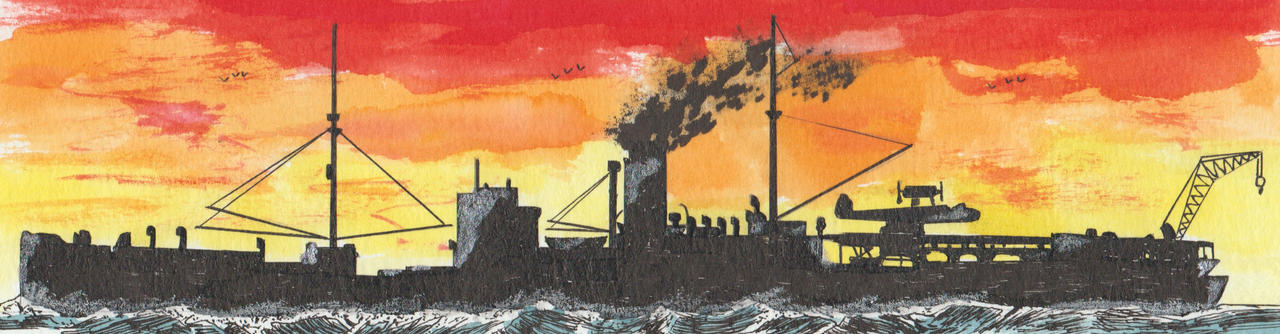
German Lufthansa catapult ship Schwabenland (1925) 1934-1939 (1946)

©Warshipsresearch.blogspot.com

In mid thirties possessed the German airline Lufthansa four mother ships from which planes were catapulted for the mail service between Europe (Azores) and the United States (New York). Two of the four ships were especially built for the Lufthansa. (1) Launched at the Deutsche Werke AG, Kiel, Germany 14 March 1925 as the freighter Schwarzenfels for account if the DDG Hansa and handed over to the company 16 July of the same year. Her dimensions were 148,8 x 18,4 x 8,49 metres and a measurement of 7,894 BRT. The 6-cylinder diesel engine supplied 3,600 hp allowing a speed of 12 knots with her two screws. As a freighter numbered her crew 45 men and was there accommodation available for maximum 10 passengers. Her sister ships were the Braunfels, Rotenfels, Altenfels, Neuenfels and Weissenfels. She was bought by the Lufthansa 28 February 1934 and fitted out at Bremen with a Heinkel K-7 catapult. Returning planes landed on the water surface and were with a 12 tons crane of Kampfnagel taken back on board again. She was rebuilt in 1939 again to be used on the German Antarctic Expedition 1939-1939 to search for a suitable whaler station. Her hull was strengthened considered the ice and she was fitted out with an auxiliary diesel. Her launching platform was shortened and strengthened. When the Second World War broke out she was seized by the German Luftwaffe 12 October 1939 to serve as a catapult ship for night flyers. Torpedoed by the British submarine HMS Terrapin on 24 March 1944 was she beached in the Flekkefjord and in May-June 1944 temporarily refloated and transported to Bergen where she was again damaged due to a British air attack 4 October of the same year. She was not complete repaired but since February 1945 used as a store ship for the Marineausrüstungstselle (M.A.S.T.) in the Oslofjord. After the war she was taken by the British Royal Navy and since January 1946 used as an accommodation ship at Sandvika, Oslofjord and finally loaded with 1.400 tons of poison, gas and  ammunition scuttled in the Skagerrrak. Call signs as the Schwarzenfels first QMBH and later DOFW and as the Schwabenland DOFW.

Friday, 13 March 2026

German pocket battleship active in defending Wilhelmshaven during British air attack according to a report of the American Naval Attaché at Berlin, Germany Nr. R562 dated 15 September 1939

Admiral Graf Spee. ©Warshipsresearch.blogspot.com

Admiral Scheer. Source Werft-Reederei-Hafen 15 April 1933

Diary note dated Tuesday 5 September 1939. An item reported that the German press wrote about the unsuccessful British air attack the day before on the German cities Wilhelmshaven (Jade), Bremerhaven (Weser) and Cuxhaven (Elbe). Just one British aircraft reached her destination to be shot down and falling in the harbour of Wilhelmshaven. The commander of the Ostfriesland coast stated that 10 aircraft were schot down of which 4 by a warship. The Propaganda Department called her Graf Spee and Scheer.

Source

National Archives. FDR Presidential Library&Museum Roosevelt PSFC000175. War diary Naval Attaché Berlin, volume 1 (1 September 1939-26 May 1940)

Wednesday, 11 March 2026

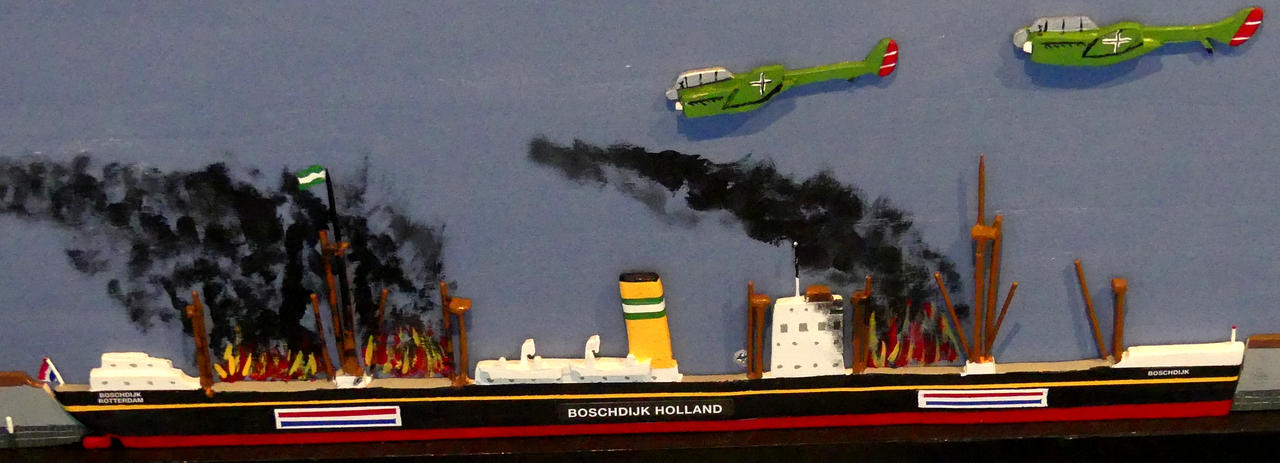
Dutch cargo steamship Boschdijk or Boschdyk 1922-Second World War

Exhibition Varen voor Vrijheid. Museum Katwijk

Launched by N.V. Industrieële Maatschappij 'De Noord', Alblasserdam, Netherlands with yard number 132 on 21 June 1922, delivered to owner/manager N.V. Nederlandsch-Amerikaansche Stoomvaart Maatschappij 'Holland-Amerika Lijn', Rotterdam, Netherlands on 19 October 1922. set afire durings the battle for the Maasbridges, Rotterdam and burned out on 11 May 1940, towed to Hendrik-Ido-Ambacht, Netherlands to be broken up by N.V. Holland Scheepswerf en Machinehandel on 16 July 1940, seized by the Germans in April 1942 and sunk in the Baltic when used by the Luftwaffe as target.

Monday, 9 March 2026

British bombers attacked the German cities/harbors Wilhelmshaven, Cuxhaven and Brunsbuttelkoog according to a report of the American Naval Attaché at Berlin, Germany Nr. R562 dated 15 September 1939

Admiral Graf Spee. ©Warshipsresearch.blogspot.com

Diary note dated Monday 4 September 1939. An item reported that around British bombers attacked around 18.00 the German cities/harbors Wilhelmshvaen, Cuxhaven and Brunsbuttelkoog claiming to have damaged two warships. Reports dealing with the numbers and losses of the aircraft varies. German officials first claimed that the German pocket battleship Graf Spee fended off. Later was her name scrapped. First was every damaged denied, later was admitted that wreckage of a shot British plane fell on the forecastle of the German light cruiser Emden although with minor damage.

Source

National Archives. FDR Presidential Library&Museum Roosevelt PSFC000175. War diary Naval Attaché Berlin, volume 1 (1 September 1939-26 May 1940)

Saturday, 17 January 2026

German minesweeping Junker searched for mines in the Kerch Strait according to the German War Diary of Admiral Black Sea dated 1 October 1942

An item reported that a German minesweeping Ju[nker] did a check-sweep of the coastal shipping route in the Kerch Strait, south of the Kerch Peninsula, Crimea and Mariupol, Ukraine without finding mines.

Source

German War Diary of Admiral, Black Sea 1 1 October-31 December 1942. Published by Department of the Navy. Washington, 1955. 

Friday, 9 January 2026

Italian submarine Bagnolini performed well during diving depth test according to the Dutch magazine Marineblad No. 4 dated April 1940

An item referred to the Le Yacht dated January 1940 reporting that the Italian submarine Bagnolini dived on her trial to a depth of more as 100 metres.(1)

Note

1. B1. Part of Liuzzi-class, launched by Tosi, Taranto, Italy on 28 October 1939, completed on 22 December 1939, converted into the German transport submarine UIT-22, departed on 26 January 1944 and sunk by the No. 262 RAF Consolidated PBY Catalinas off Cape of Good Hope, South Africa on 11 March 1944. 

Tuesday, 6 January 2026

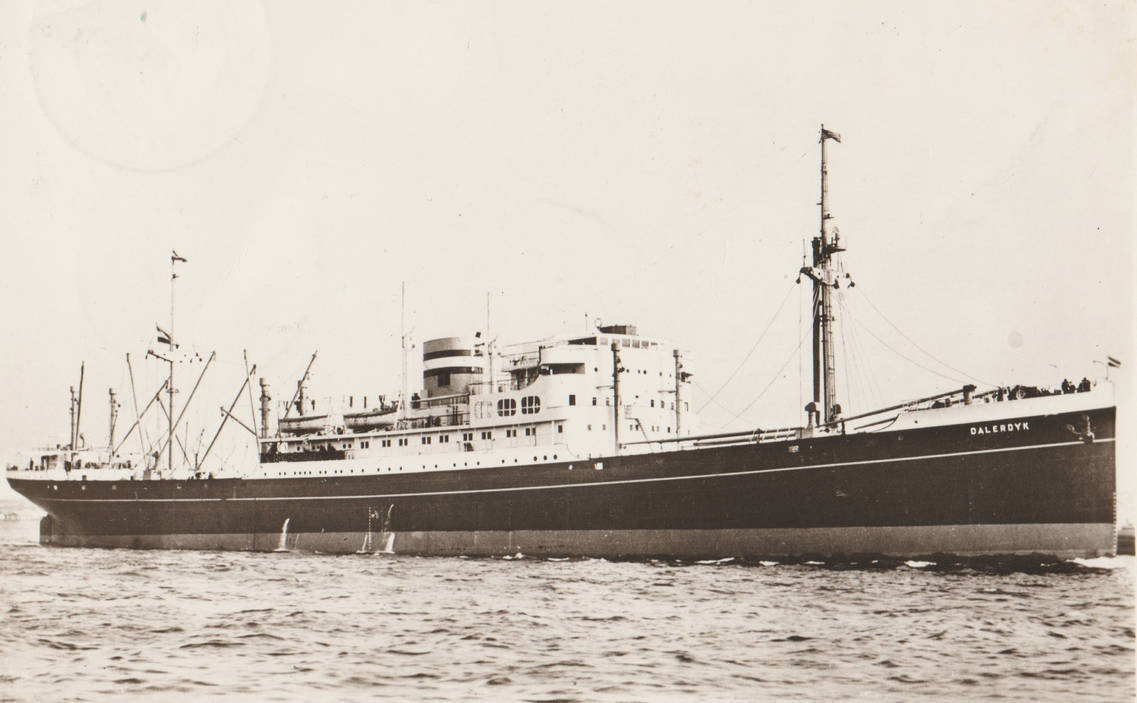
Dutch cargo-passenger ship (ex-Damsterdyk 1930-1940, RO 12 1940-1941, Mulhausen 1941-1949) Dalerdyk 1949-1963 (Presvia 1963)

Launched by N.V. Wilton’s Machinefabriek&Scheepswerf, Schiedam, Netherlands with yard number 322 on 17 May 1930, delivered as the Damsterdyk to owner/manager N.V. Nederlandsch-Amerikaansche Stoomvaart Maatschappij 'Holland-Amerika Lijn', Rotterdam, Netherland on 27 August 1930, seized by the German Kriegsmarine since 7 August 1940, manager Hamburg-Amerikanische Packetfahrt A.G., Hamburg, Germany since 9 July 1941, arget for the Luftwaffe in 1942, target for submarines in 1943, damaged during Allied air attack at Kiel, Germany on 5 April 1945. as Dalerdyk owner/manager N.V. Nederlandsch-Amerikaansche Stoomvaart Maatschappij 'Holland-Amerika Lijn', Rotterdam, Netherland since 5 January 1949, as Presvia owner/manager Belvientes Compañia Naviera S.A., Panama since 26 July 1963 and broken up in Japan in 1963. 

Sunday, 16 November 2025

British aircraft patrolling over German seaplane bases at Borkum and Sylt on 12 December 1939

An item reported the start of standing patrols over the German seaplane bases at Borkum and Sylt on 12 December 1939 where aircraft were stationed used for mine laying.(1)

Note

1. The website Abandoned Forgotten&Litte known airfield in Europe reported on 12-11-2025 that the Marineflugstation Borkum Seewas already atacked by Blenheims in the evening of 28 November 1939 followed by another two attacks the same year. On Sylt was the Seefliegerhorst Hörnum, attacked by British bombers in the evening of 19 March 1940.

Source

The National Archives, Kew Gardens, England CAB-66-4-13 Weekly Résumé (No. 15) of the naval, military and air situation from 0700 7 December to 0700 14 December 1939. 

Sunday, 9 November 2025

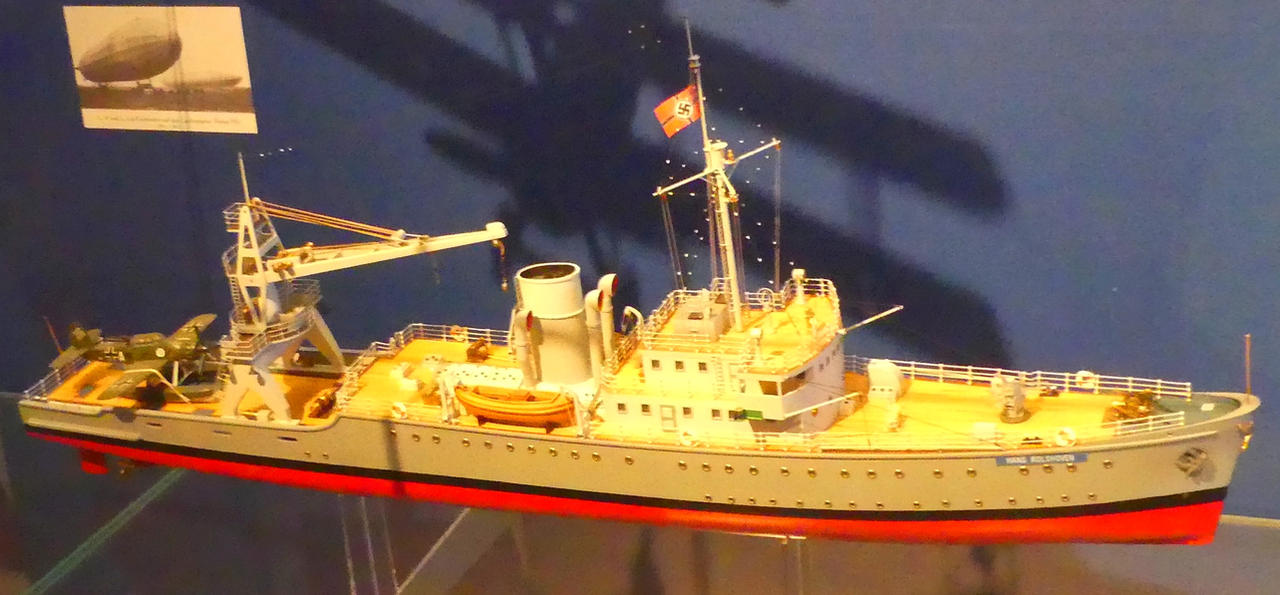
German seaplane tender Hans Rolshoven 1937-1951

Maritiem Museum Hamburg, Germany

Originally to be named Peter Strasser? (1) Flugsicherungsschiff IV. Part of Krischan-class. Launched by Norderwerft Köser&Meyer, Hamburg, Germany with yard number 697 on 20 February 1937, commissioned on 9 February 1938, sunk after striking a mine on 2 October 1942, salvaged on 26 July 1943, towed towards Sassnitz, during British air attack on 6 March 1945 hit and sunk, salvaged in 1949 and broken up between 1950-1951. Able to transport 3 floatplanes types He 60, Do 18, He 114 or Arado Ar 196. Belonged to the German Luftwaffe. For picking up and transporting float planes. Displacement 985 (standard)-1,168 (maximum) tons and as dimensions 73.1 (waterline)-762.2 (over all) x 10.6 x 3,5 metres. Crew numbered 63 men. Propulsion consisted of 4-12 cylinder 4 stroke MAN diesels delivering via 2 screws 8,800 hp allowing a speed of 21 knots. Original armament 3-3.7cm guns, 2-2cm machine guns since 1940 2-3.7cm guns and 4-2cm machine guns.

Note

1. This name is sometimes also used for the sistership of the aircraft carrier Graf Zeppelin. 

Wednesday, 5 November 2025

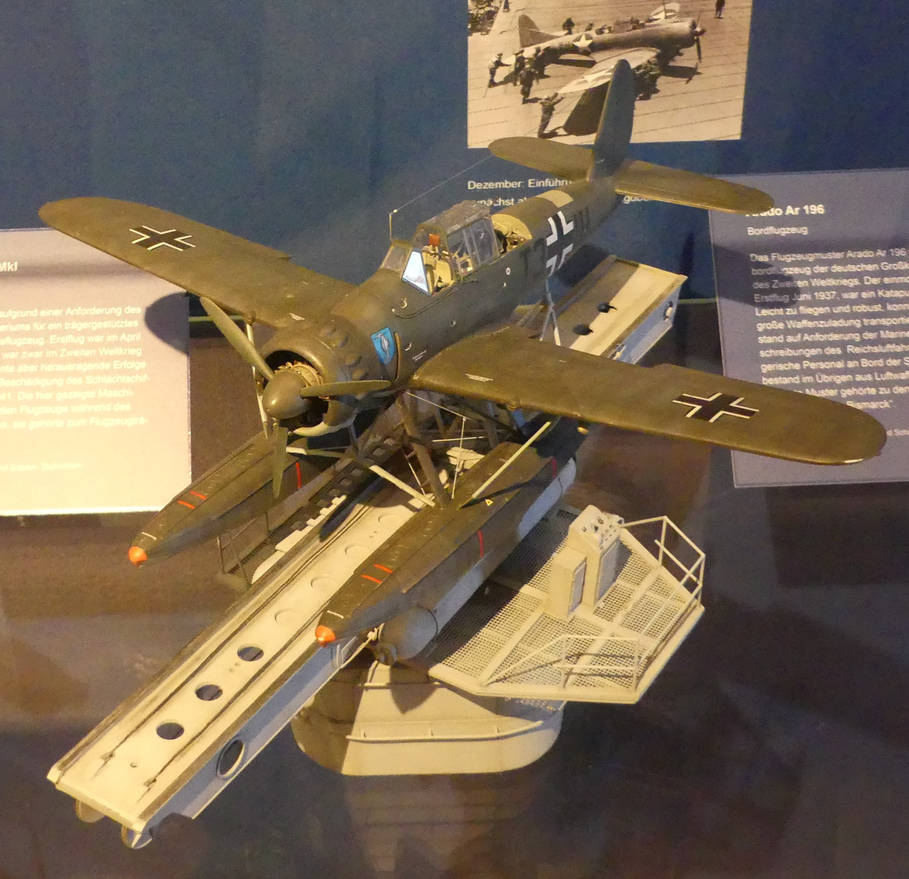
German shipboard reconnaissance floatplane Arado AR 196 1938-

Maritiem Museum Hamburg, Germany

Designed by Walter Blume for replacing the Heinkel He 60 biplane while the succesor He 114 was a failure. Totally 541 built between 1938-1944 and used by the German Kriegsmarine, Royal Norwegian Navy Air Service, Bulgarian and Finnish air forces and by the Soviet Border Guard until 1955. Two aircraft were active at Penang, Malaysia, which was in Japanese hands, in 1944 in Japanese livery painting with Luftwaffe pilots. 

Thursday, 23 October 2025

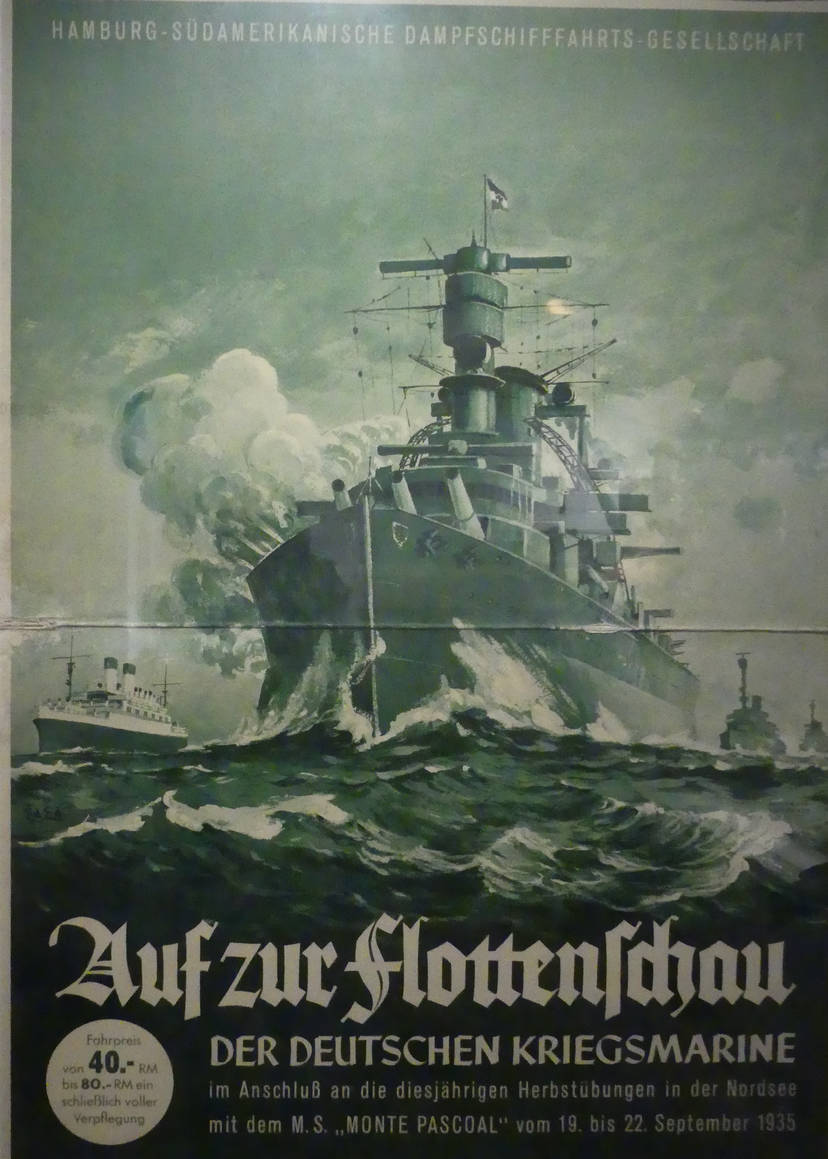
German pocket battleship Deutschland arrived in Spain according to the Dutch newspaper De Sumatra Post dated 27 February 1939

On to the Naval Review 1935. Maritime Museum Hamburg, Germany
Eduard Edler (1887-1969). Petermann gravure printing. V
isible the panzerschiffe known as a pocket battleship Deutschland.

An item dated Berlin, Germany 24th reported that the German battleship Deutschland arrived at El Ferrol, Spain and would stay there until 2 March.(1)

Note

1. Of the Deutschland-class panzerschiffe later classified as heavy cruisers preceded by the Admiral Hipper-class. Main armament 2x3-28cm/11”guns on fore and aft ship one turret. Laid down by Deutsche Werke, Kiel, Germany on 5 February 1929, launched on 19 May 131, commissioned as Deutschland on 1 April 1933, renamed Lützow in January 1940, sunk in April 1945 during a British RAF air attack, salvaged by Russian forces in 1947 and sunk while used as a target on 22 July 1947. 

Wednesday, 22 October 2025

Communist Chinese M.T.B.’s exercising with target according to the Australia Station Intelligence Summary dated 1 February 1955

An item reported that on 26 October 1954 six Communist Chinese M.T.B.’s and a target were sighted at the Yangtze Estuary, Shanghai, China underway to the sea. At the same time were five twin-jet aircraft seen but it was unknown if co-operating with the M.T.B.’s.

Source

Website Royal Australian Navy, Sea Power Centre.

Monday, 29 September 2025

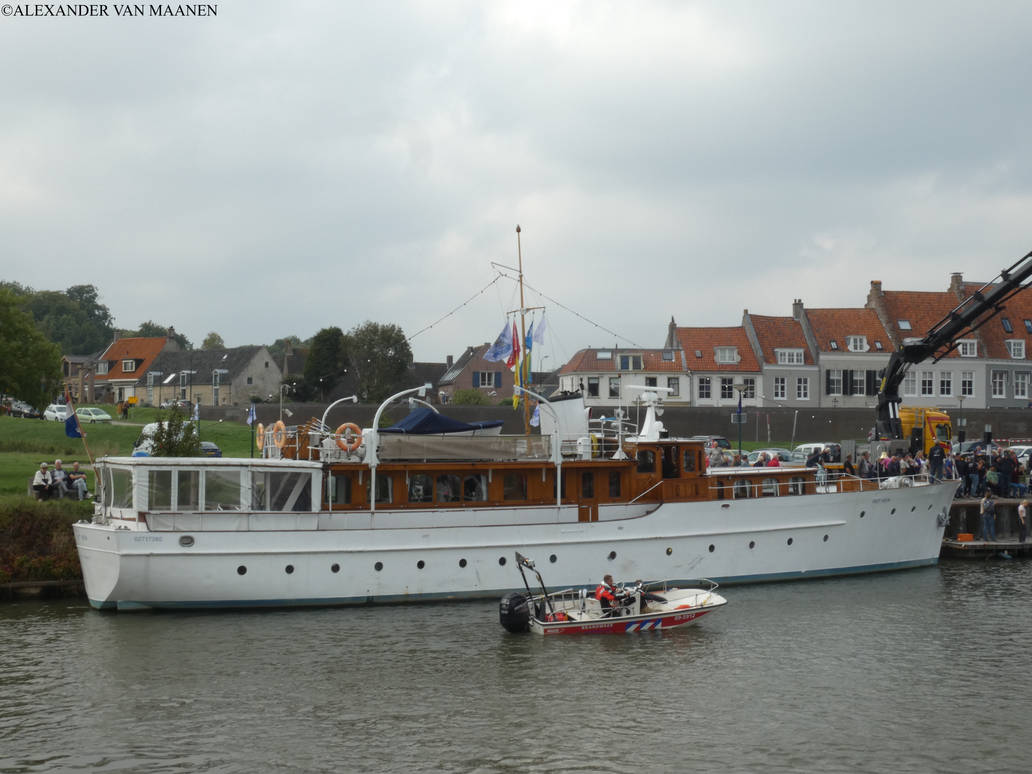
Former Dutch royal yacht Piet Hein 1937-

Wijk bij Duurstede, Netherlands 28 September 2025

Laid down by N.V. Amsterdamsche Scheepswerf G. de Vries Lentsch jr., Amsterdam, Netherlands on 25 March 1937, launched on 14 August 1937, delivered on 28 August 1937, national gift to queen Juliana and het spouse prince Bernhar, used as an armed command ship by the German Luftwaffe between August 1940-17 May 1945. 

Saturday, 27 September 2025

German so-called Siebel ferry Lahdenpohja, Lake Ladoga dated 13 August 1942

Sa-kuva JSdia173

Of the German naval detachment Einsatzstab Fähre Ost (EFO) which was operated by the German Luftwaffe. The detachment was active on Lake Ladoga supporting Axis troops in the siege of Leningrad, Russia.

Saturday, 12 July 2025

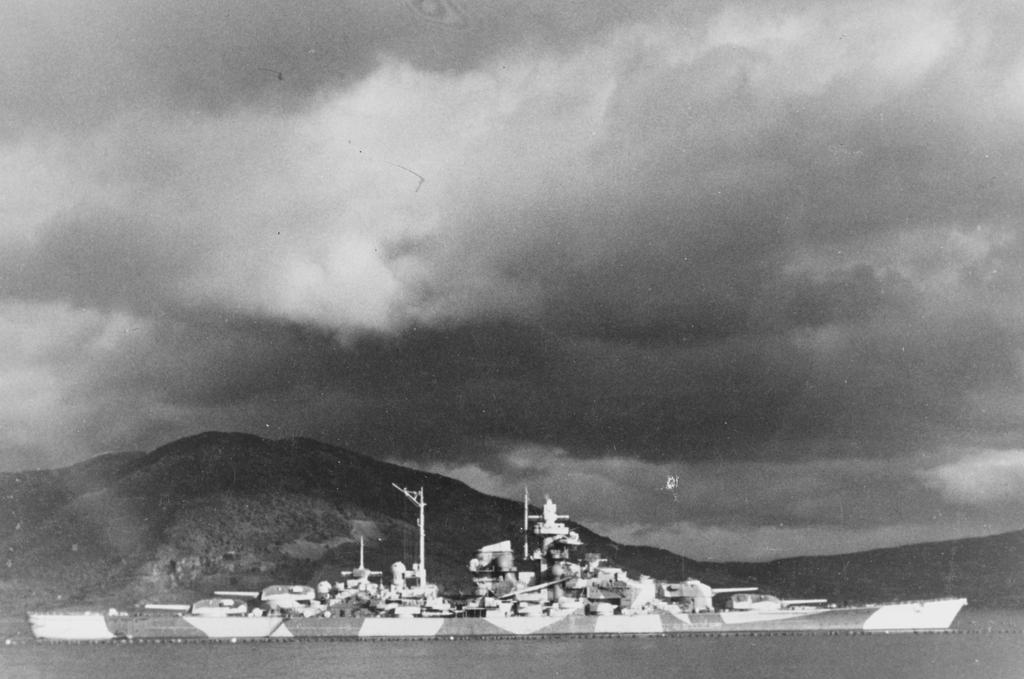
German battleship Tirpitz probably still in the Baltic according to the U.S. Joint Intelligence Committee. Daily summary dated 1 January 1942

An item reported that the British Admiralty had good reasons believing the German battleship Tirpitz was still in the Baltic.(1)

Note

1. Laid down by Kriegsmarinewerft Wilhelmshaven, Germany on 2 November 1936, launched on 1 April 1939, commissioned on 25 February 1941 and sunk by the Royal Air Force on 12 November 1944 at Tromsø, Norway, with her wreck broken up between 1948-1957. Of the Bismarck-class as answer on the French Richelieu-class battleships preceded by Scharnhorst-class succeeded by planned H-class.

Source

Map Room Papers (Roosevelt Administration), 1942 - 1945. U.S. Joint Intelligence Committee. Daily summary No. 22 dated 1 January 1942 

Monday, 7 July 2025

Japanese controlling all sea and air routes within the Philippines according to the U.S. Joint Intelligence Committee. Daily summary dated 3 January 1942

An item reported that the Japanese controlled all sea and air routes within the Philippines.

Source

Map Room Papers (Roosevelt Administration), 1942 - 1945. U.S. Joint Intelligence Committee. Daily summary No. 24 dated 3 January 1942 

Thursday, 19 June 2025

Australian Royal Airforce attacked Japanese bases in the Caroline Islands according to the U.S. Joint Intelligence Committee. Daily summary dated 4 January 1942

An item reported that the Australian Royal Airforce (R.A.A.F.) attacked Japanese bases in the Caroline Islands.

Source

Map Room Papers (Roosevelt Administration), 1942 - 1945. U.S. Joint Intelligence Committee. Daily summary No. 25 dated 4 January 1942