An item reported that according to reconnaissance on 18 August in the harbour of Stravos, Greece were sighted 4 monitors, 1 cruiser, 4 guard ships and 1 transport.
Source
Bundesarchiv RM-40-622

An item reported that according to reconnaissance on 18 August in the harbour of Stravos, Greece were sighted 4 monitors, 1 cruiser, 4 guard ships and 1 transport.
Source
Bundesarchiv RM-40-622
An item reported that at between 14-18 August the shipping traffic from Gibraltar to the west consisted 10 British steamships, 4 Norwegian steamships, 1 British steam transport, 2 Italian passenger ships, 3 armed steamships, 1 Portuguese steamship, 1 Brazilian steamship.
As part of a convoy: 1 British guard ship, 6 British steamships, 1 Greek steamship, 1 Norwegian steamship.
As part of a convoy: Russian torpedo boat Iskussny with 8 steamships.
-1 French steamship, 1 Italian steamship, 1 Italian sailing vessel.
Source
Bundesarchiv RM-40-622
An item reported the fenced and rail served Soviet Nikolayev Shipyard Northern 61 Kommuna 445 with as geographic coordinates 46.58.30 north and 32.00.40 east located in the north part of Nikolayev, Ukraine at both sides of the Ingul used for building of the Kashin-class DLG (1) and Sibir-class refrigerated transports.(2) The shipyard possessed 3 end-launch building slipways of which two were served by overhead bridge cranes and one by 3 cranes, a foundry, 5 quays for which 3 cranes were available , 1 floating dock, 2 floating cranes, a small marine railway and 2 fabrication, 8 shop and 55 support buildings.
Source
The report was published on www.archive.org, document number CIA-RDP78T04759A007300010035-9
Notes
1. Project 61/NATO name Kashin-class were anti-aircraft guided-missile destroyers first classified as guard ships built between 1959-1973, preceded by Kanin-class succeeded by Sovremenny-class. Design approved in 1957.
2. Served across the Sea of Japan, Sea of Ochotsk and the Bering Sea. Transport with a length of around 415 feet with 4 total cargo holds.
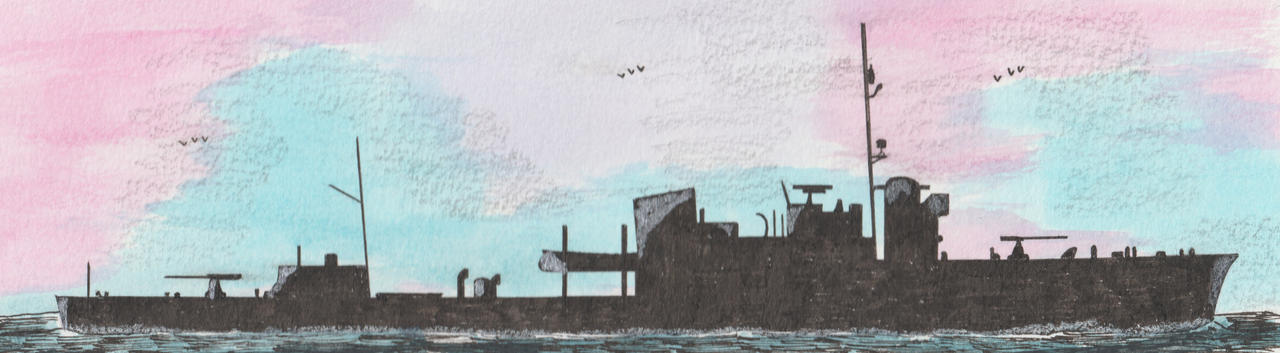
©Warshipsresearch.blogspot.com
Part of the Dzerzhinskiy or Kirov-class or Project 19,consisting of the Dzerzhinskiy and Kirov, operated by the NKVD (People's Commissariat of Internal Affairs) Border Guard. Designed by Ansaldo, Italy, laid down by Ansaldo, Sestri Ponente, Italy as PS.26 on 8 February 1933, launched on 16 September 1934, completed on 17 October 1934, renamed PSK-1 in February 1935, renamed Dzerzhinskiy on 26 March 1935, commissioned on 9 August 1945, renamed PS-28 on 18 May 1957, condemned on 11 June 1957, converted into a stationary staff ship since 27 June 1960 and stranded in 1961. Part of Pacific Fleet.
An item reported that according to the naval attache at Madrid on 4 August in Tanger, Morocco were stationed 4 guard vessels and British motor boats fitted out with radio telegraphy systems. At sea were British torpedo boats and steam fishing vessels. With good weather went the motor boats as far as Larache but always returning in the evening to Tanger.
Source
Bundesarchiv RM-40-622
©Warshipsresearch.blogspot.com
Part of the Dzerzhinskiy or Kirov-class or Project 19v, operated by the NKVD (People's Commissariat of Internal Affairs) Border Guard. Designed by Ansaldo, Italy, laid down by Ansaldo, Sestri Ponente, Italy as PS.08 on 8 February 1933, launched on 19 August 1933, completed on 27 October 1934, renamed PSK-2 in February 1935, renamed Kirov on 26 March 1935,completed on 9 August 1935, condemned on 23 September 1959, converted into the civilian hulk PKZ-89 and scrapped mid 1960s. Part of Pacific Fleet
An item reported that on 4 August in Gibraltar were lying 1 British warship type Foresight cruiser (1), 1 cable steamship, 2 minelayers, 2 guardships, 3 auxiliary cruiser-yachts, 15 merchant steamships and in the dry dock 1 Italian passenger steamship.
Note
1. The Forward-class scout cruisers consisting of the Foresight and Foreward preceded by Adventure-class succeeded by Pathfinder-class built between 1903-1905.
Source
Bundesarchiv RM-40-622
An item referring to a reliable agent reported that the South French coastline was guarded by a large number of sailing and motor guard vessels. At Marseille were 58 such vessels lying all armed with “hand bombs”. See further K.N. 55 II.c.
Source
Bundesarchiv RM-40-622
An item referring to a reliable agent reported that mit June the harbour of Saloniki was protected by a beam barrier against submarines. Regurlay was the harbour visited by an armed motor boat of the guard flotilla stationed in the Gulf of Naples.
Source
Bundesarchiv RM-40-622
An item reported the presence on 11 August at Gibraltar of 1 American steam collier, 3 minelayers, 2 auxiliary cruiser yachts, 3 guard vessels, 8 cargo ships and in the dock 1 Italian passenger steamship.
Source
Bundesarchiv RM-40-622
An item referred to an agent message reporting in the harbour of La Spezia, Italy a number of guard vessels and submarine chasers including two former Dutch steam tugs.
Source
Bundesarchiv RM-40-622
An item referring to a reliable agent reported that between 27-30 May between Cannes and Villefrance several warships were active: off Cannes 7 destroyers, off Villefrance 5 destroyers and 2 guard steamships before the harbour entrance.
Source
Bundesarchiv RM-40-622
In his letter No. 1330 dated Lisbon 29 September 1941 reported the German naval attaché in Portugal to the Oberkommando der Kriegsmarine at Berlin referring to an Italian source the arrival of the British guard vessel with pennant No. 99 at Ponte Delgada, São Miguel, Azores in the morning of 25 September for supplies.
Source
Bundesarchive. RM 11-17. German naval attaché in Portugal.
The Commissioner of the United States at Riga, Latvia wrote on 21 May 1924 to the Secretary of State at Washington that the Russian Caspian Flotilla consisted of 4 gunboats, 11 torpedo boats old type called Storezhevoi, 5 trawlers and 2 submarines. Further more were 4 guard boats transferred from Lake Ladoga via the Baltic. The staff of the flotilla moved from Baku to Petrovsk.
Source
Records of the Department of State Relating to Internal Affairs of Russia and the Soviet Union, 1910-29. Naval Affairs, Navy, Navy Vessels: 861.30 .(861.31 Naval Maneuvers; 851.32 Personnel); 861.33 Movements of Navy Vessels; 861.34 Equipment and Supplies): 861.39 - 861.345. Micro film 316 roll 92.
The Commissioner of the United States at Riga, Latvia wrote on 21 May 1924 to the Secretary of State at Washington that it was proposed to add some guard ships of the Russian Baltic Fleet to the Flotilla of the Far East. It were principally old torpedo boats and guardships serving on the Lake Ladoga if able to undertake the necessary sea voyage. Further more were 6 new gaurd ships to be built to be completed in 1926.
Source
Records of the Department of State Relating to Internal Affairs of Russia and the Soviet Union, 1910-29. Naval Affairs, Navy, Navy Vessels: 861.30 .(861.31 Naval Maneuvers; 851.32 Personnel); 861.33 Movements of Navy Vessels; 861.34 Equipment and Supplies): 861.39 - 861.345. Micro film 316 roll 92.
So-called uitlegger. Mentioned as belonging to the admirality of the Maze in 1747 commandeur J. Davise, voyage to Westerschelde and belonging to the admirality van Zeeland, in 1747 commandeur J. Davids, fitted out from Veere, lying off Tholen, 10 guns, 10 swivels, 63 men. Probably of the Admiralty of Zeeland.
Source
Warshipsresearch.blogspot.com
So-called uitlegger. Of the admiralty of the Maze, mentioned 1746, commandeur J. Gorter, voyage off the coast between Goeree and Scheveningen.
Source
Warshipsresearch.blogspot.com


Netherlands-flagged, IMO 7117400, MMSI 244692000 and call sign PFRI. Built by Foxhol Scheepswerf, Hoogezand, Netherlands in 1960.
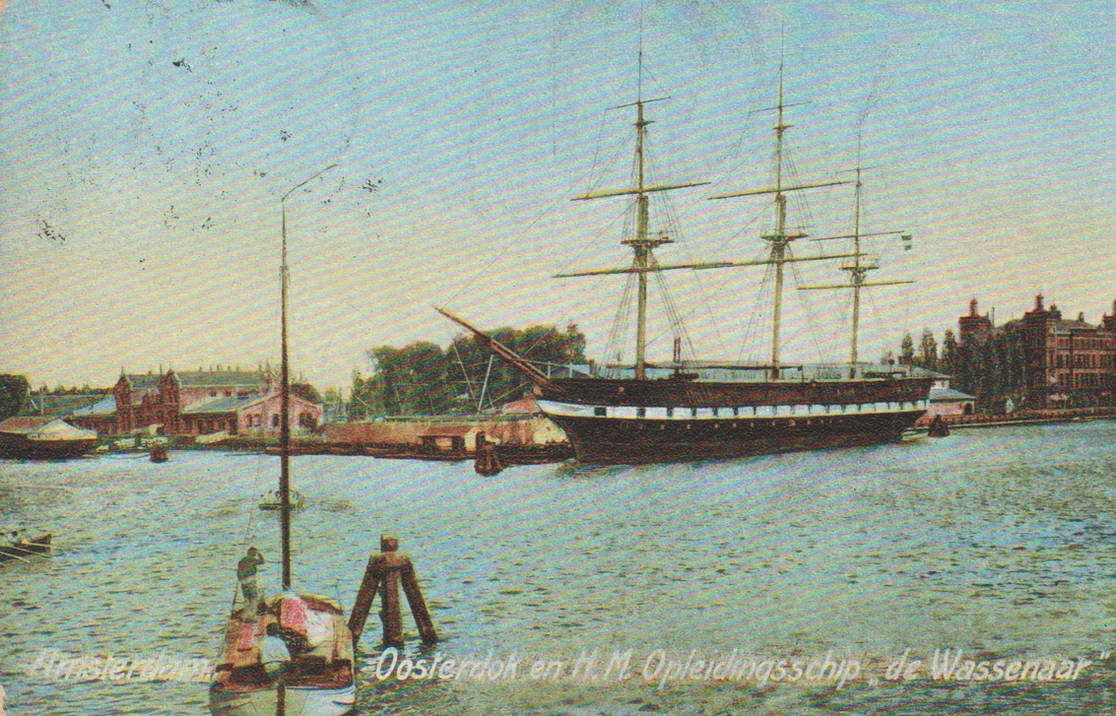
Call sign GQBE, wood-built, laid down at the navy yard at Amsterdam, Netherlands as the 74 gun ship of the line Piet Hein on 15 February 1833, disassembled 1850, laid down as a screw steam frigate designed by A.E. Tromp in 1853, launched as the Admiraal van Wassenaar on 6 September1856, commissioned on 16 July 1857, converted into a training ship at the navy yard of Amsterdam 1875, commissioned for training boys and ordinary seamwn 11 April 1876, until 1 January 1913 used as training and guard ship at Amsterdam and sold on 28 May at Amsterdam for ƒ 37.781,00 to be broken up, displacement 3.650 tons, dimensions 62,36 (between perpendiculars)-72,86 (over all) x 15,72 x 6,80 metres, horsepower 300 hp, speed maximum 10,67 miles, armament 8 (4 medium 30pd guns, 4-12cm guns, 1877: long 12pd guns)-45 guns and a crew numbering 450 men. On 1 October 1876 were 335 boys trained divided over 4 groups, the youngest (group 1) numbered 108 boys, groups no.2-4 respectively 103, 60 and 64.
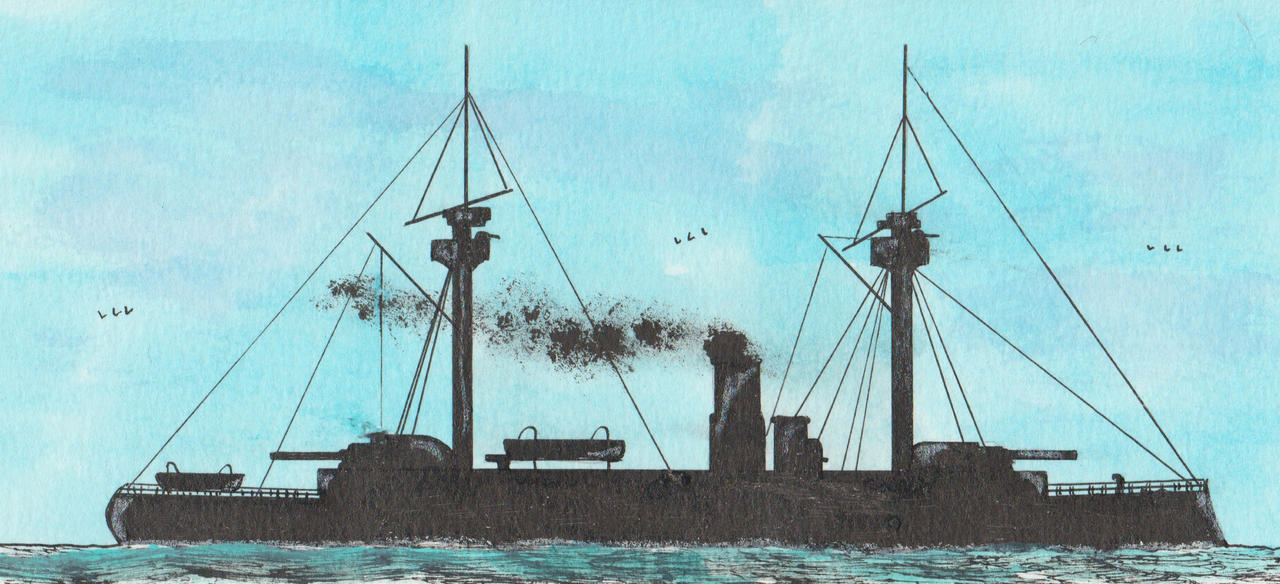
©Warshipsresearch.blogspot.com
Part of Terrible-class sometimes called Indomptable-class preceded by Vauban-class succeeded by Amiral Baudin-class. Laid down at Toulonon 16 August 1878, launched on 21 May 1885, commissioned on 1 August 1887, guard ship since 1902, stricken on 20 February 1911, hulked after 1911 and broken up in 1928.

