Translate

Showing posts with label Torpedo service. Show all posts

Tuesday, 7 May 2024

British engineer Robert Whitehead 1823-1905

Maritime Museum Hamburg, Germany

James, 3 January 1823 Bolton, England-14 November 1905 Shrivenham, England. Enigineer and draughtsman most famous for his self-popelled naval torpedo. His firm Whitehead&Co. was later sold to Vickers and Armstrong-Whitworth. At Fiume (nowadays Rijeka, Croatia) was a torpedoe and shipfactory established where submarines were built, partly with the aid of Dutch laborers. 

Sunday, 28 April 2024

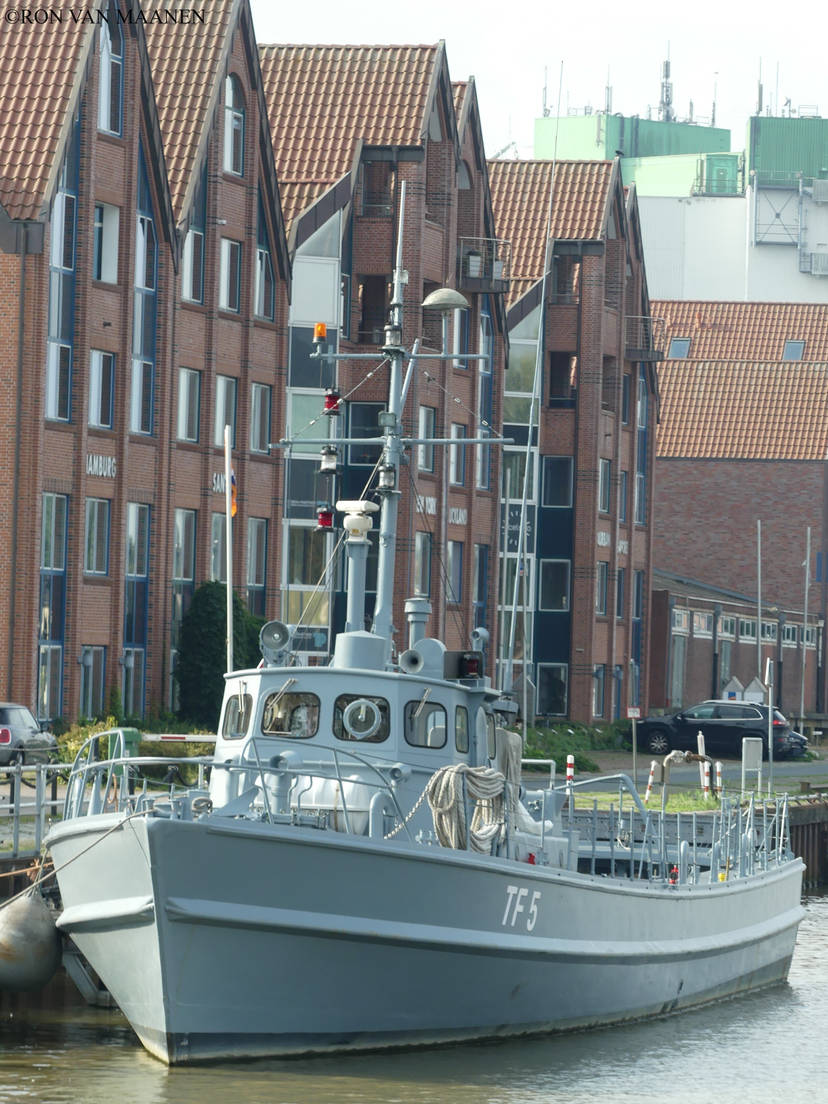
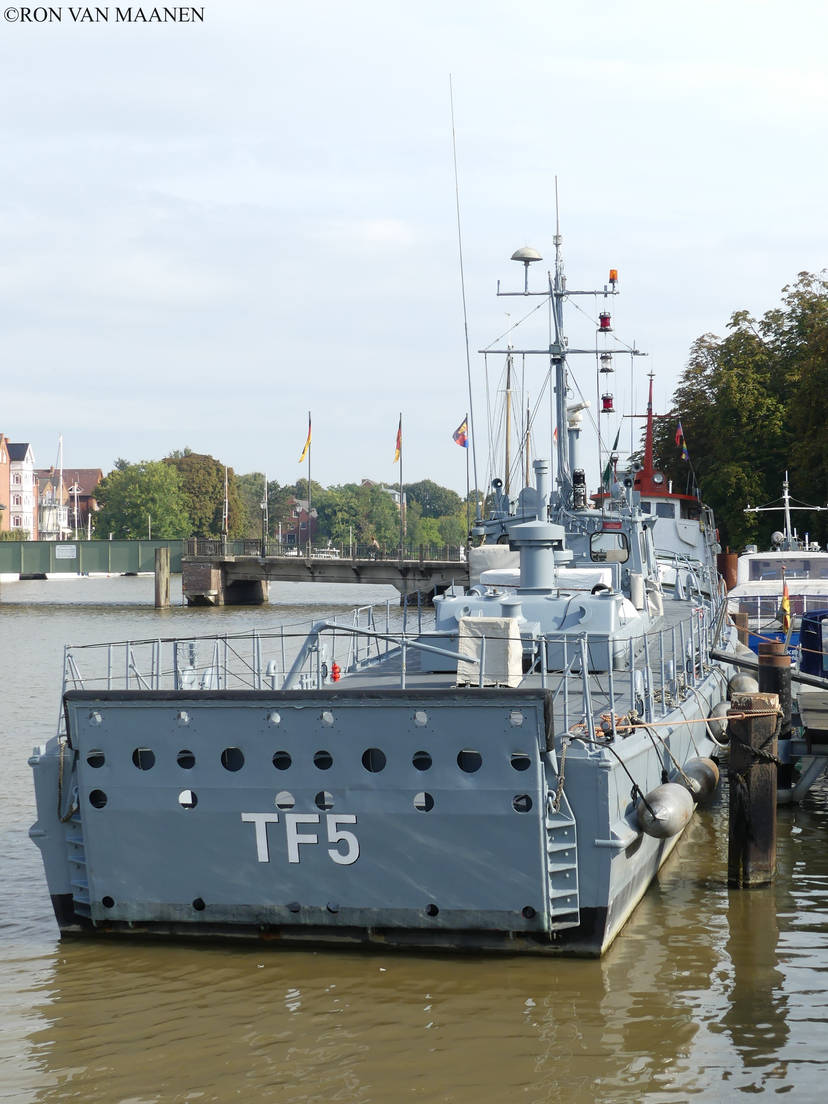
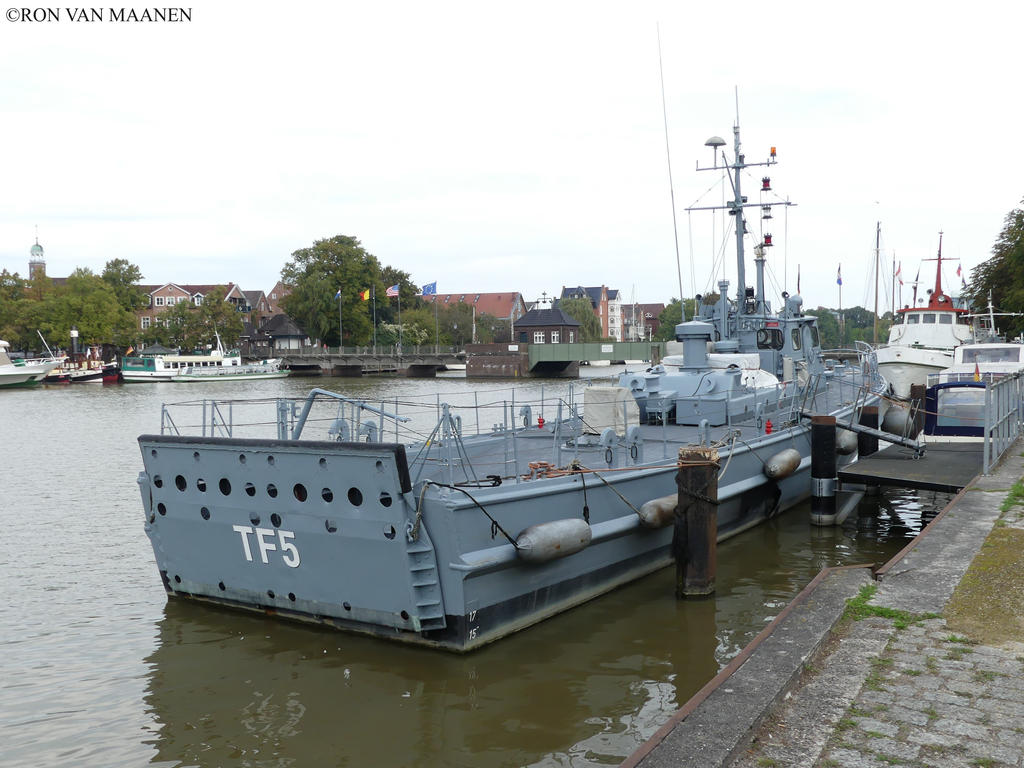
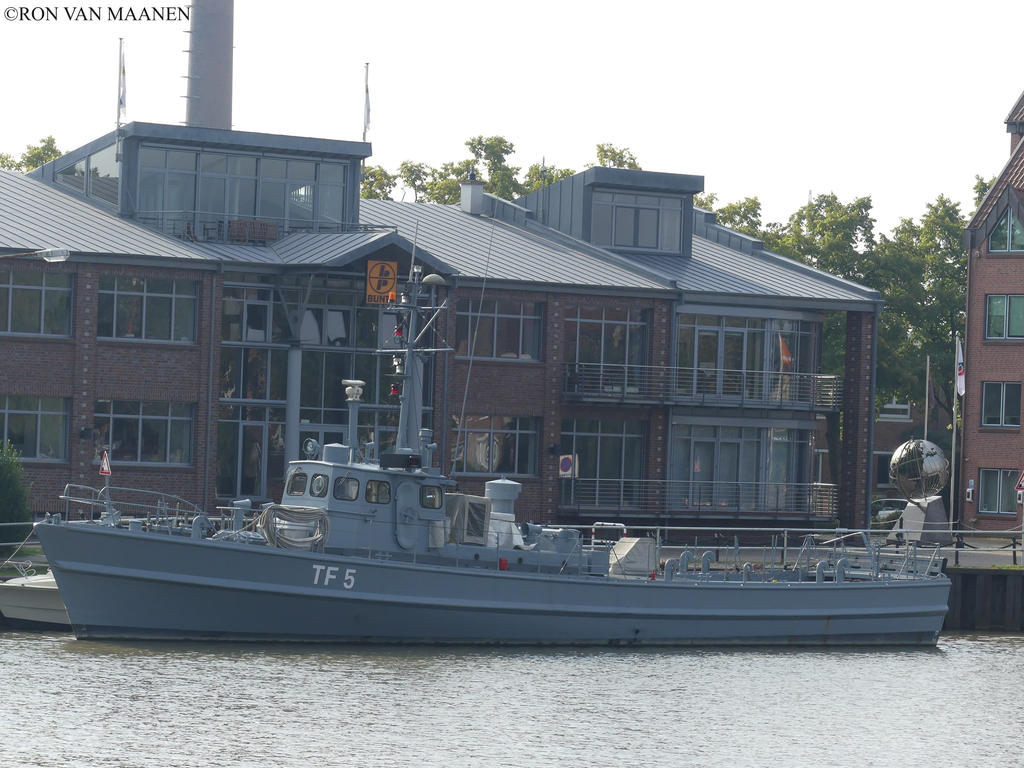
German torpedo recovery vessel TF 5 Y 855 1966-2009 (museum ship since)


Leer, Germany 17 September 2023

Of the 430-class preceded by 438-439 classes. Decommissioned on 15 JUly 2008 and sold in 2009. Launched by Schweers, Bardenfleth on 28 Feburary 1966. One 1,000hp 12-cylinder MWM diesel. Single screw. Maximum speed 19 knots. Fuel oil bunker capacity 6,000 litres. Displacement 58.33 tons and as dimensions 24 x 5.4 x 1.70 metres. 

Monday, 30 May 2022

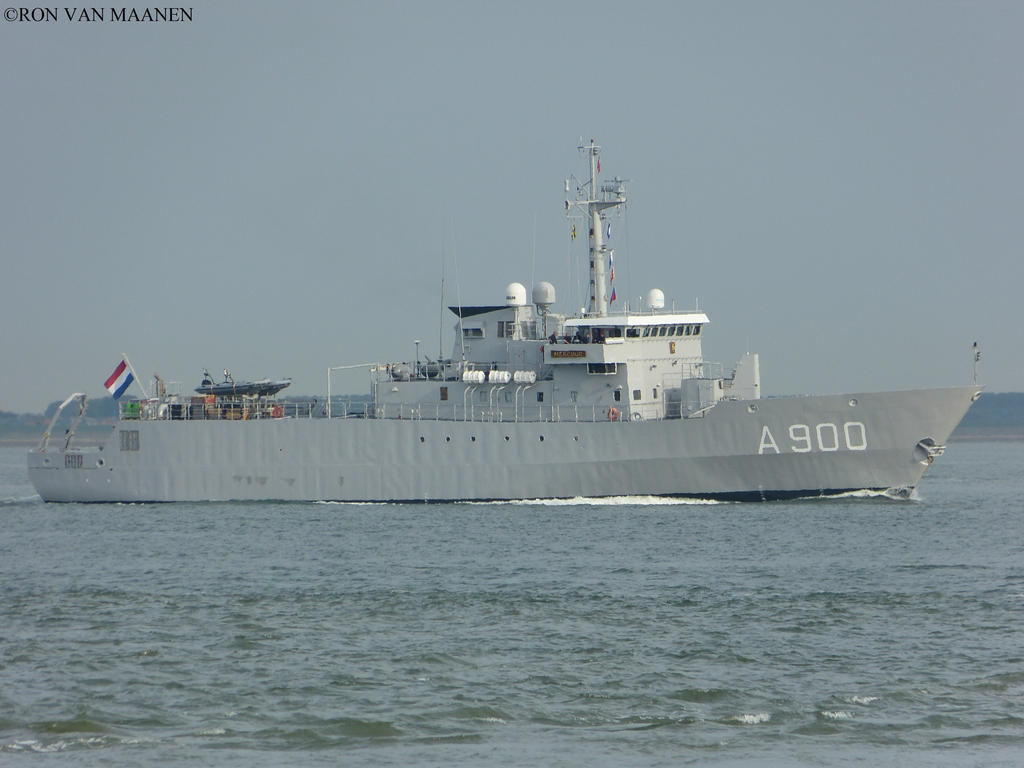
Dutch torpedo work ship Zr. Ms. Mercuur (A900) 1985-


Schelde off Vlissingen, Netherlands 22 May 2022

MMSI 245974000 and call sign PARE. Laid down at the shipyard of Damen Schelde Naval Shipbuilding, Vlissingen, Netherlands on 6 November 1985, launched on 25 October 1986 and commissioned on 21 August 1987. Displacement 1.200-1.500 (full load) tons and as dimensions 64,85 x 12,00 x 4,30 metres. Fitted out with two torpedo tubes for tests. In wartime she is to be fitted out with 2-2cm guns. Testing torpedoes used by the Royal Netherlands Navy.

Friday, 17 December 2021

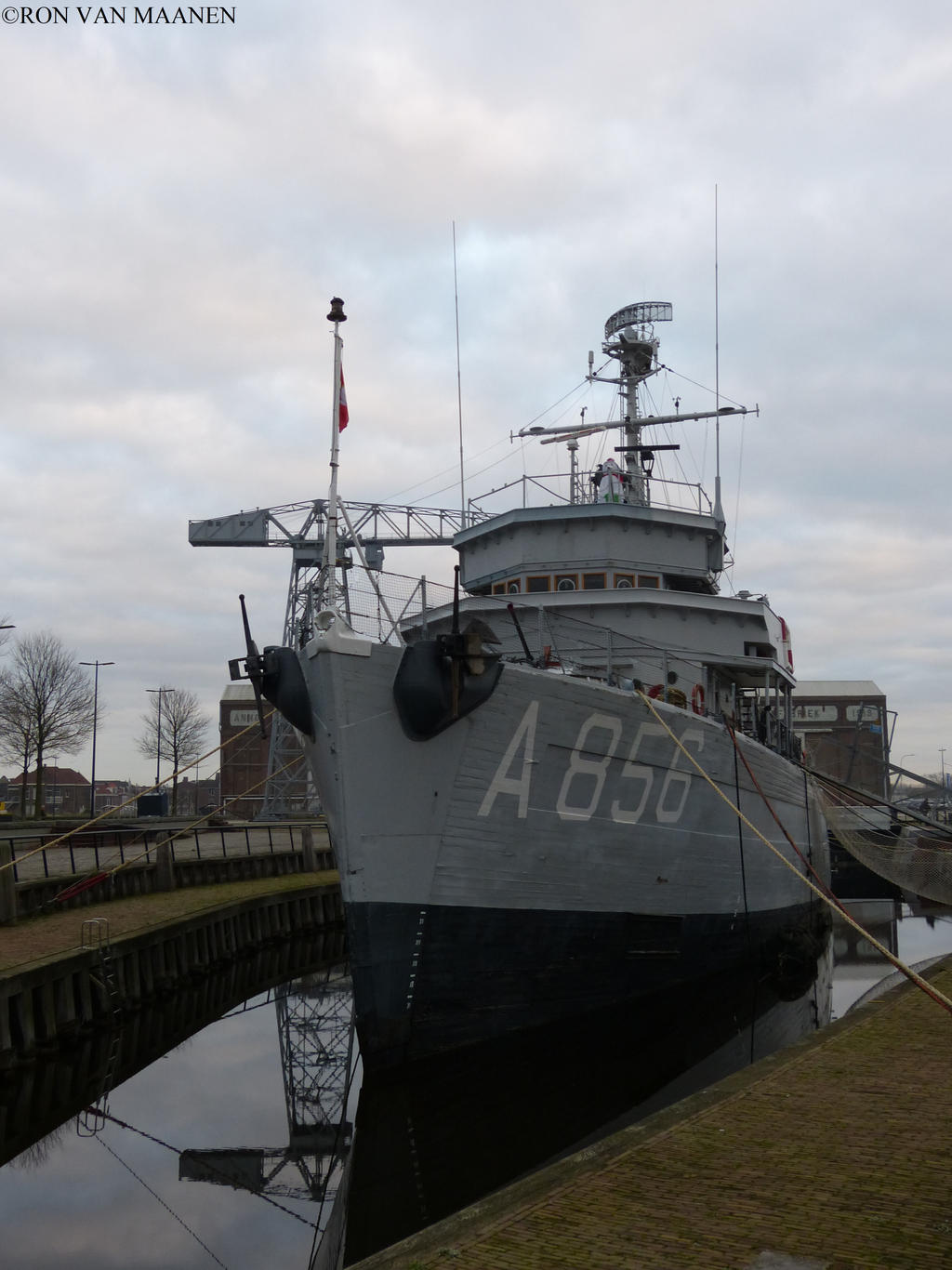
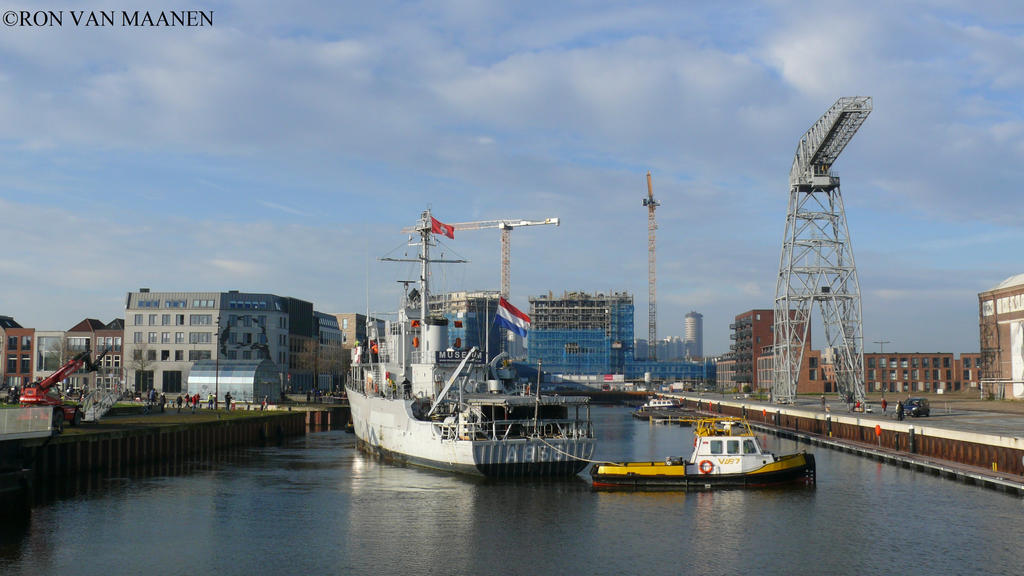
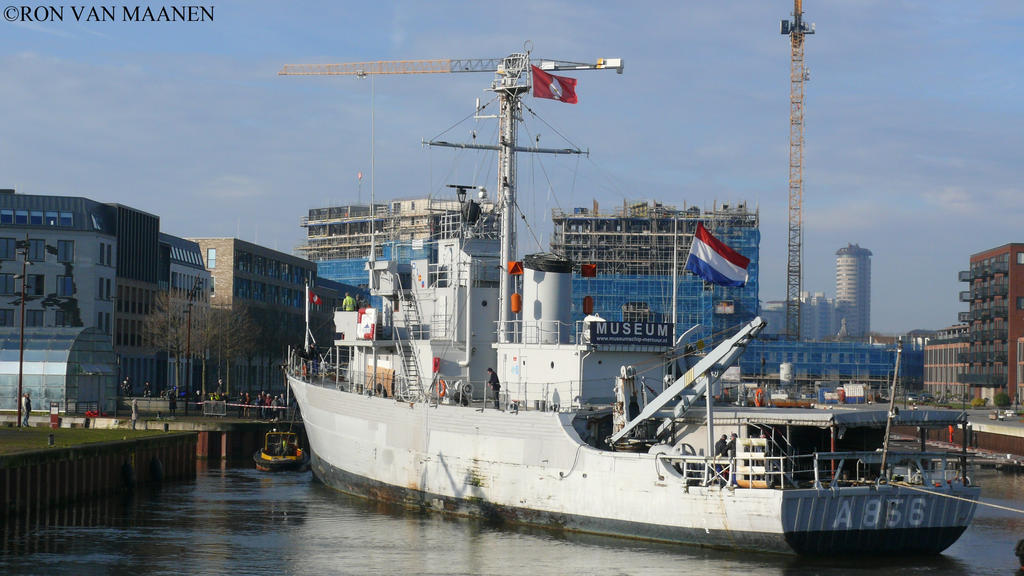
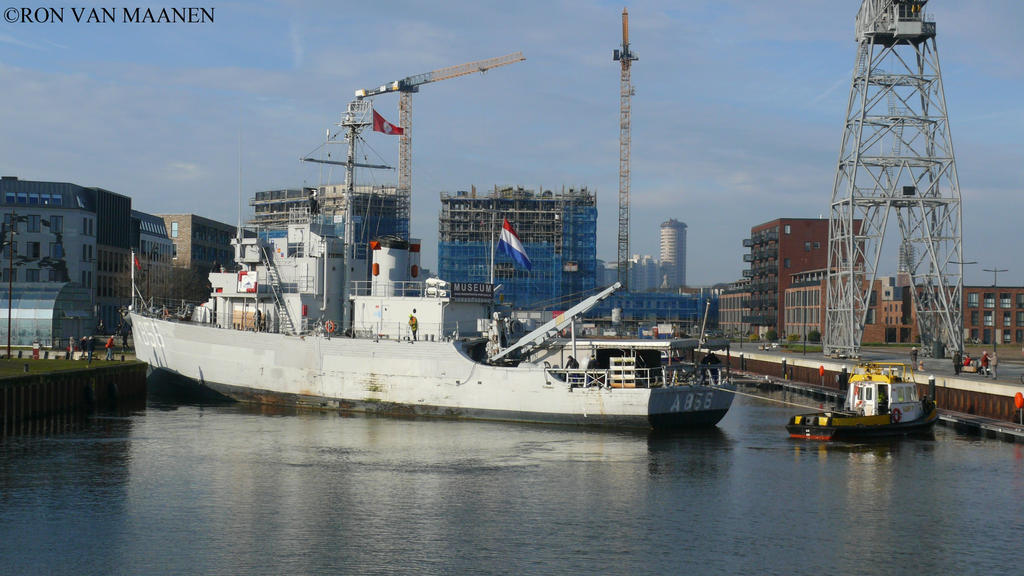
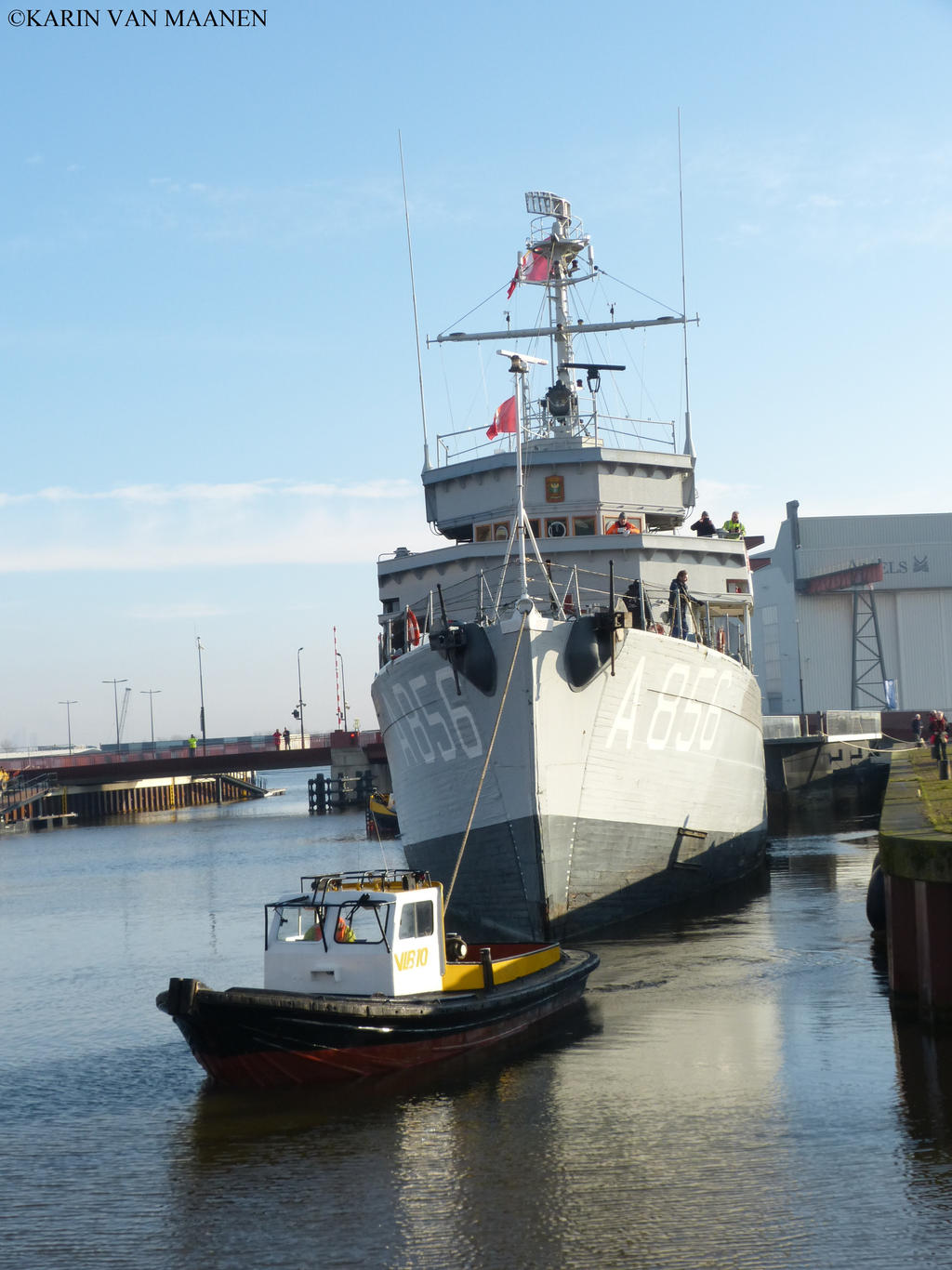
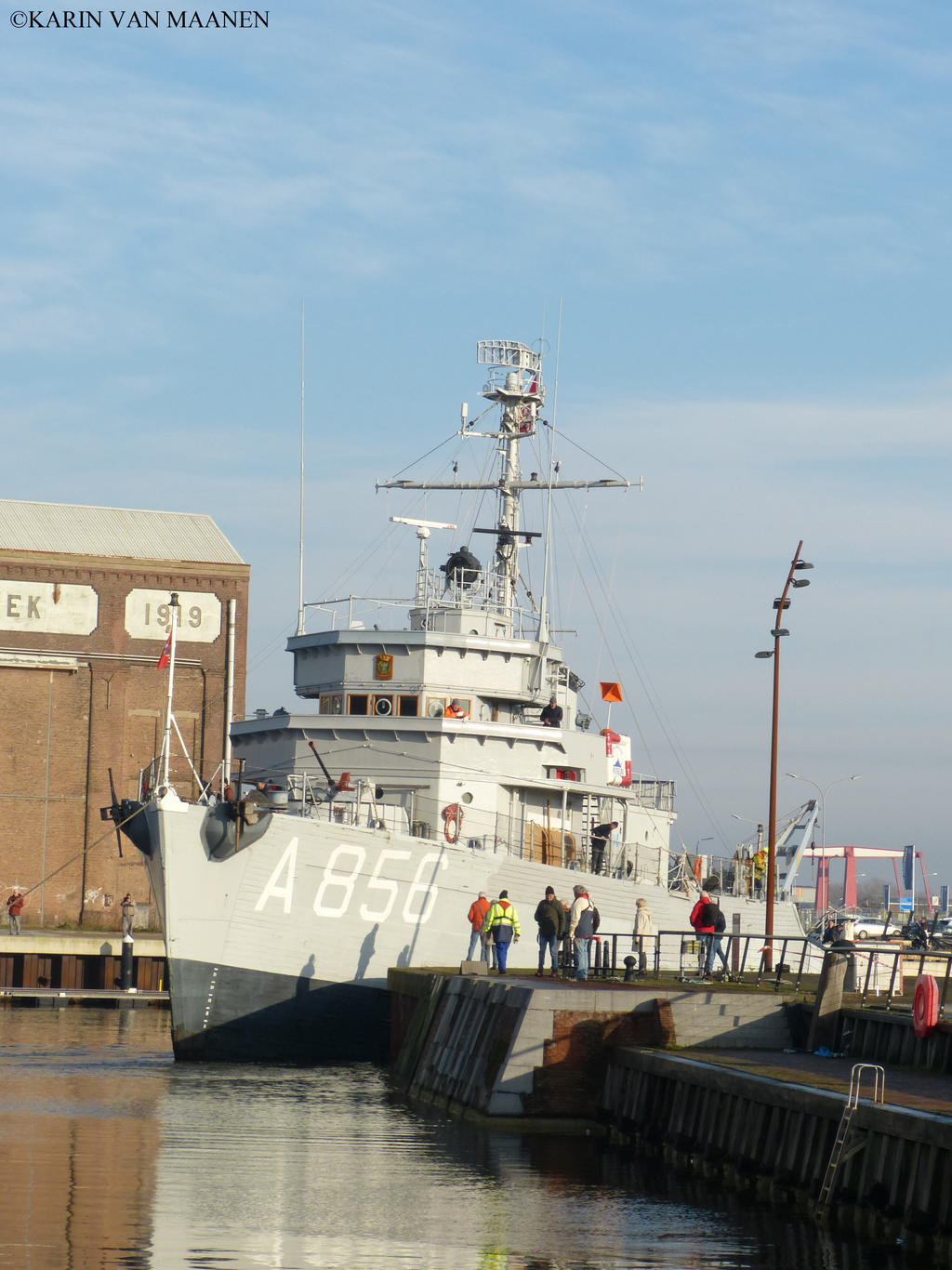
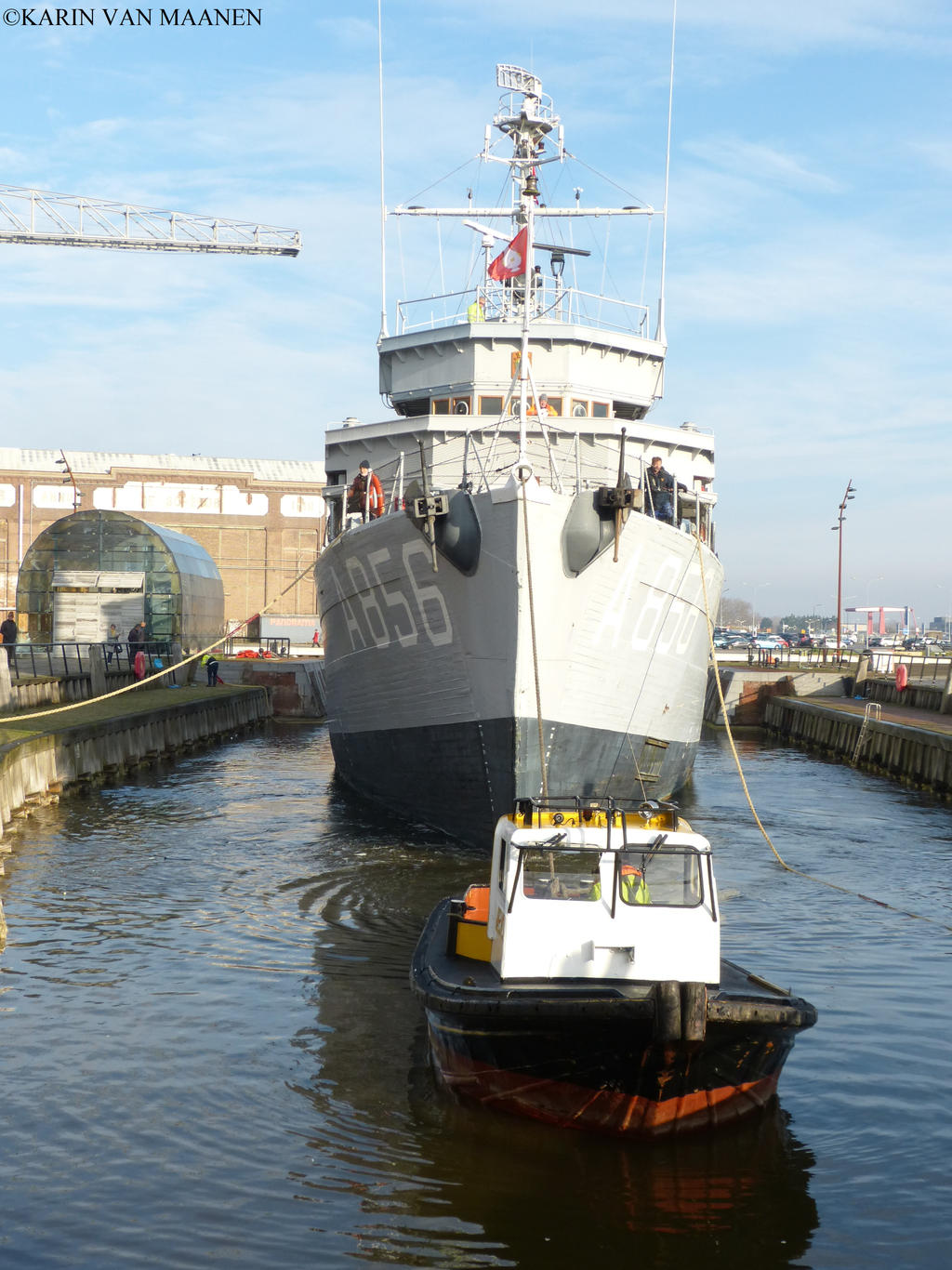
Dutch ocean going minesweeper Hr. Ms. Onverschrokken (1952-1970) and torpedo work ship Mercuur (A856) 1970-1987


Drydock Dok van Perry Dokhaven, Vlissingen, Netherlands 16 December 2021

Laid down at the shipyard of the Peterson Builders Incorporation, Sturgeon Bay, Wisconsin, USA on 19 February 1952, launched on 17 January 1953 and commissioned on 22 July 1953 as Hr. Ms. Onverschrokken (M886). She and her sister ships were built in the USA and handed over to the Netherlands according to the Mutual Defense Assistance Program. Since 1 January 1969 classified as headquarters-support ship for minesweepers squadrons. Since 1970 was she no longer used as a minesweeper and was in 1972 rebuilt as a torpedo work ship and at the same time renamed Mercuur. All torpedo works ships serving in the Royal Netherlands Navy since the 1880’s are named Mercuur. She assisted at torpedo launching tests executed by submarines by afterwards picking up the torpedo and taken at board preparing for the next test launching. Further more served she as target during torpedo tests. In 1987 replaced by the Mercuur (A900) built by Damen Schelde Naval Shipbuilding. Temporarily handed over to the Stichting Nautisch Kwartier Amsterdam, however given back to the Royal Netherlands Navy after some time. Then handed over to the Stichting Behoud Maritieme Monumenten and became a museum ship since 1992 at Scheveningen, Netherlands until December 2015 when she was towed back to Den Helder, Netherlands after she was given back to the Royal Netherlands Navy on 15 December. Her final fate was to be broken up there. The Stichting Maritiem Erfgoed Vlissingen succeeded in 2016 to persuade the Royal Netherlands Navy to save her for the time necessary to develop a business-plan as museum ship. On Saturday 16 December 2016 arrived she partly stripped in Vlissingen-Oost. There is the asbestos to be removed and started with the maintenance and conversion again into a museum ship. In the second half of 2017 towed to the town of Vlissingen. Displacement 790 tons and as dimensions 55,00 x 10,70 x 3,70 metres. Original diesel motors supplying 1.600 hp allowing via 2 screws a speed of 15,5 knots. Her crew numbered 67 men. The armament consisted of 1-4cm machine gun. 

Tuesday, 7 December 2021

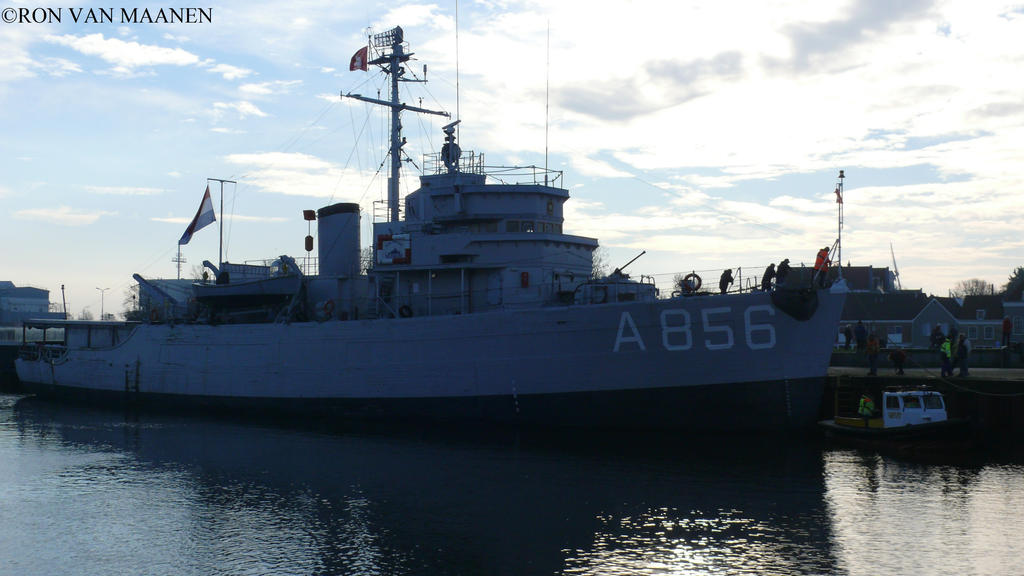
Dutch ocean going minesweeper Hr. Ms. Onverschrokken (1952-1970) and torpedo work ship Mercuur (A856) 1970-1987


Dokhaven and Dok van Perry, Vlissingen, Netherlands 6 December 2021

Laid down at the shipyard of the Peterson Builders Incorporation, Sturgeon Bay, Wisconsin, USA on 19 February 1952, launched on 17 January 1953 and commissioned on 22 July 1953 as Hr. Ms. Onverschrokken (M886). She and her sister ships were built in the USA and handed over to the Netherlands according to the Mutual Defense Assistance Program. Since 1 January 1969 classified as headquarters-support ship for minesweepers squadrons. Since 1970 was she no longer used as a minesweeper and was in 1972 rebuilt as a torpedo work ship and at the same time renamed Mercuur. All torpedo works ships serving in the Royal Netherlands Navy since the 1880’s are named Mercuur. She assisted at torpedo launching tests executed by submarines by afterwards picking up the torpedo and taken at board preparing for the next test launching. Further more served she as target during torpedo tests. In 1987 replaced by the Mercuur (A900) built by Damen Schelde Naval Shipbuilding. Temporarily handed over to the Stichting Nautisch Kwartier Amsterdam, however given back to the Royal Netherlands Navy after some time. Then handed over to the Stichting Behoud Maritieme Monumenten and became a museum ship since 1992 at Scheveningen, Netherlands until December 2015 when she was towed back to Den Helder, Netherlands after she was given back to the Royal Netherlands Navy on 15 December. Her final fate was to be broken up there. The Stichting Maritiem Erfgoed Vlissingen succeeded in 2016 to persuade the Royal Netherlands Navy to save her for the time necessary to develop a business-plan as museum ship. On Saturday 16 December 2016 arrived she partly stripped in Vlissingen-Oost. There is the asbestos to be removed and started with the maintenance and conversion again into a museum ship. In the second half of 2017 towed to the town of Vlissingen. Displacement 790 tons and as dimensions 55,00 x 10,70 x 3,70 metres. Original diesel motors supplying 1.600 hp allowing via 2 screws a speed of 15,5 knots. Her crew numbered 67 men. The armament consisted of 1-4cm machine gun.

Thursday, 10 June 2021

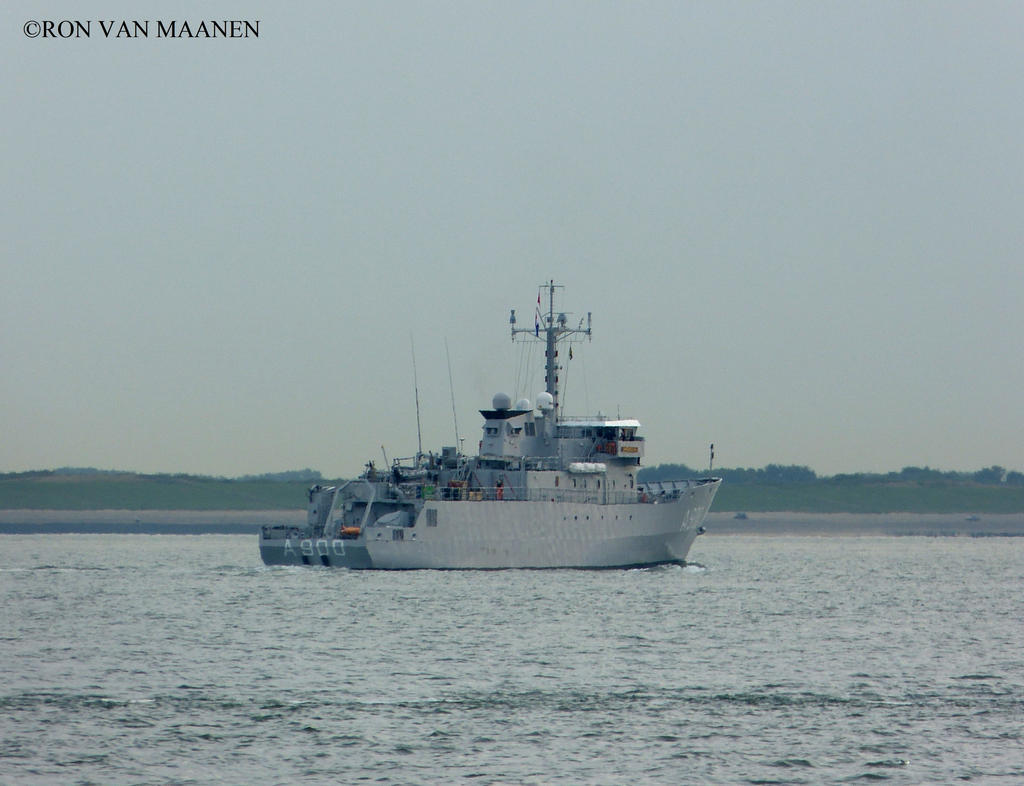
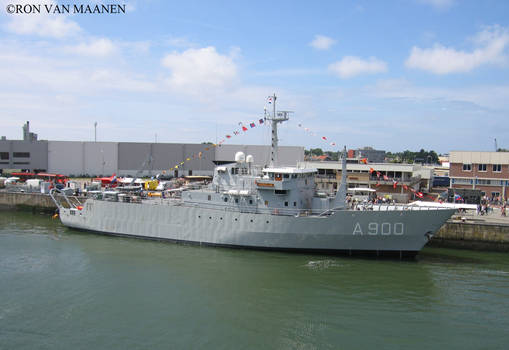
Dutch torpedo work ship Zr. Ms. Mercuur (A900) 1985-

Den Helder, Netherlands 4 July 2007

MMSI 245974000 and call sign PARE. Laid down at the shipyard of Damen Schelde Naval Shipbuilding, Vlissingen, Netherlands on 6 November 1985, launched on 25 October 1986 and commissioned on 21 August 1987. Displacement 1.200-1.500 (full load) tons and as dimensions 64,85 x 12,00 x 4,30 metres. Fitted out with two torpedo tubes for tests. In wartime she to be fitted out with 2-2cm guns. Testing torpedoes used by the Royal Netherlands Navy.

Monday, 21 December 2020

Dutch ocean going minesweeper Hr. Ms. Onverschrokken (1952-1970) and torpedo work ship Mercuur (A856) 1970-1987

Dokhaven, Vlissingen, Netherlands 16 December 2020

Laid down at the shipyard of the Peterson Builders Incorporation, Sturgeon Bay, Wisconsin, USA on 19 February 1952, launched on 17 January 1953 and commissioned on 22 July 1953 as Hr. Ms. Onverschrokken (M886). She and her sister ships were built in the USA and handed over to the Netherlands according to the Mutual Defense Assistance Program. Since 1 January 1969 classified as headquarters-support ship for minesweepers squadrons. Since 1970 was she no longer used as a minesweeper and was in 1972 rebuilt as a torpedo work ship and at the same time renamed Mercuur. All torpedo works ships serving in the Royal Netherlands Navy since the 1880’s are named Mercuur. She assisted at torpedo launching tests executed by submarines by afterwards picking up the torpedo and taken at board preparing for the next test launching. Further more served she as target during torpedo tests. In 1987 replaced by the Mercuur (A900) built by Damen Schelde Naval Shipbuilding. Temporarily handed over to the Stichting Nautisch Kwartier Amsterdam, however given back to the Royal Netherlands Navy after some time. Then handed over to the Stichting Behoud Maritieme Monumenten and became a museum ship since 1992 at Scheveningen, Netherlands until December 2015 when she was towed back to Den Helder, Netherlands after she was given back to the Royal Netherlands Navy on 15 December. Her final fate was to be broken up there. The Stichting Maritiem Erfgoed Vlissingen succeeded in 2016 to persuade the Royal Netherlands Navy to save her for the time necessary to develop a business-plan as museum ship. On Saturday 16 December 2016 arrived the partly stripped in Vlissingen-Oost. There is the asbestos to be removed and started with the maintenance and conversion again into a museum ship. In the second half of 2017 towed to the town of Vlissingen. Displacement 790 tons and as dimensions 55,00 x 10,70 x 3,70 metres. Original diesel motors supplying 1.600 hp allowing via 2 screws a speed of 15,5 knots. Her crew numbered 67 men. The armament consisted of 1-4cm machine gun.

Tuesday, 7 January 2020

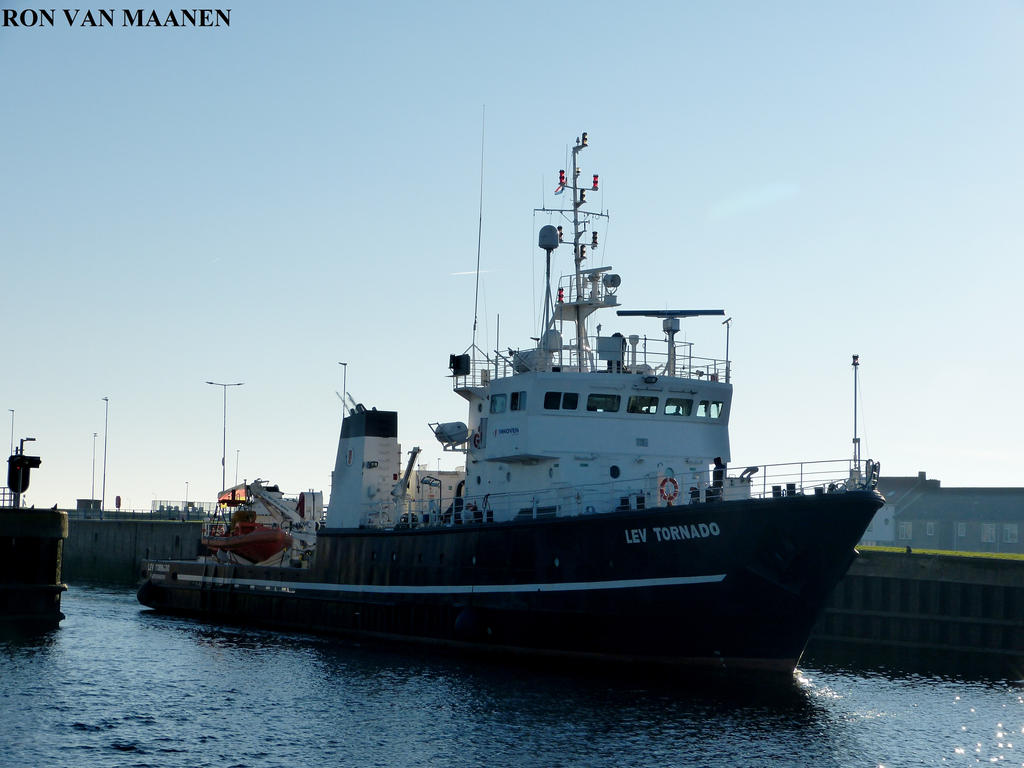
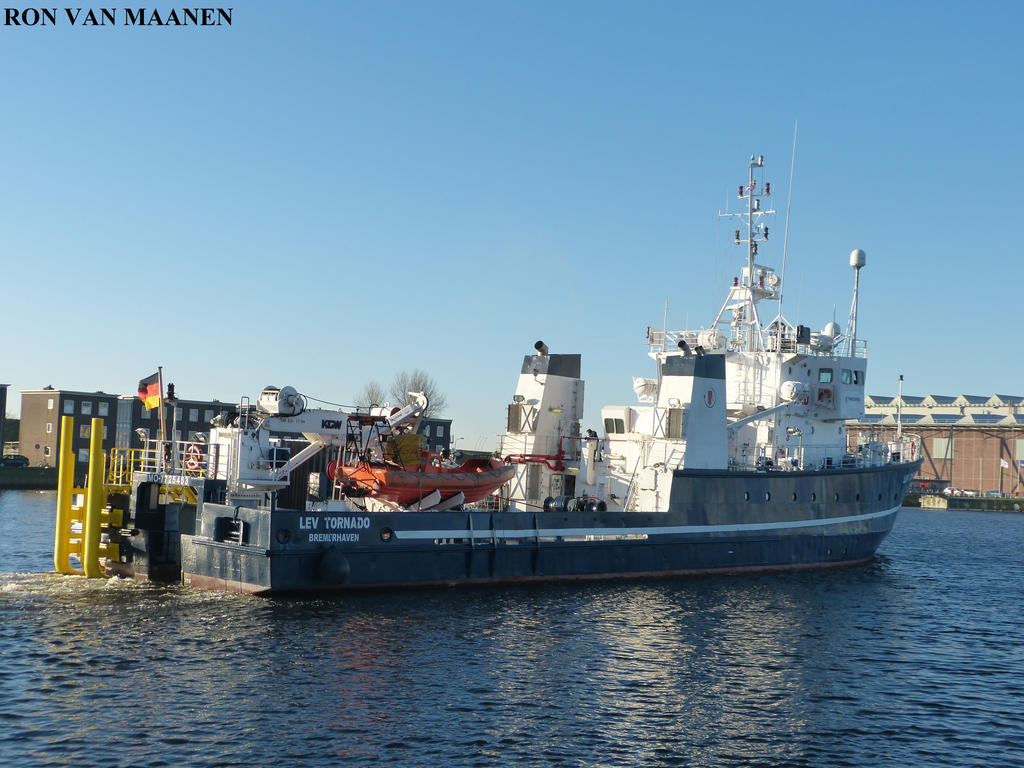
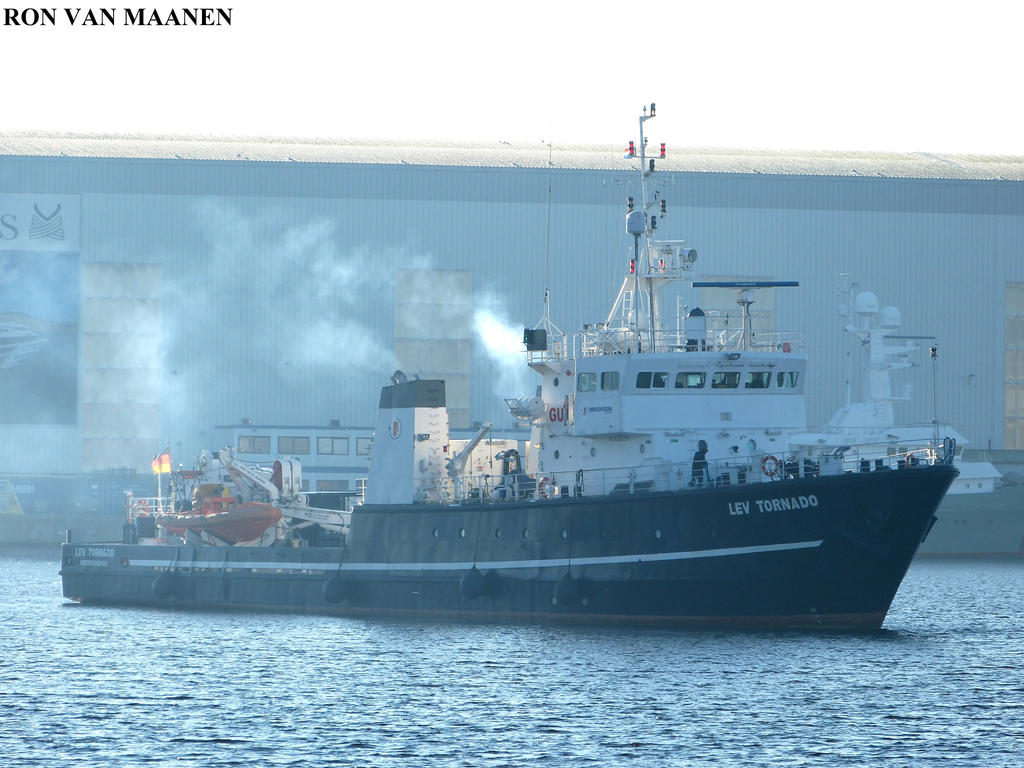
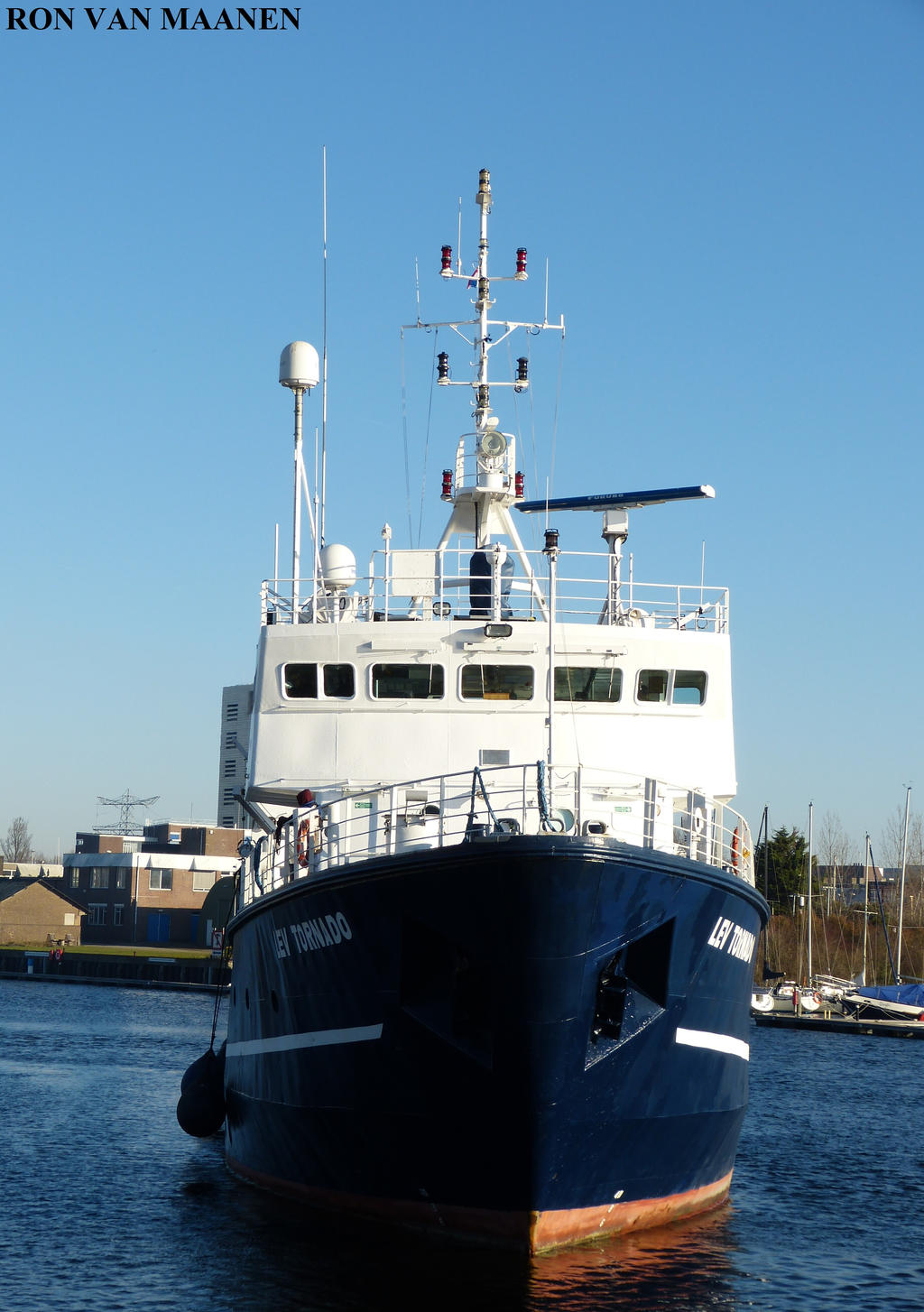
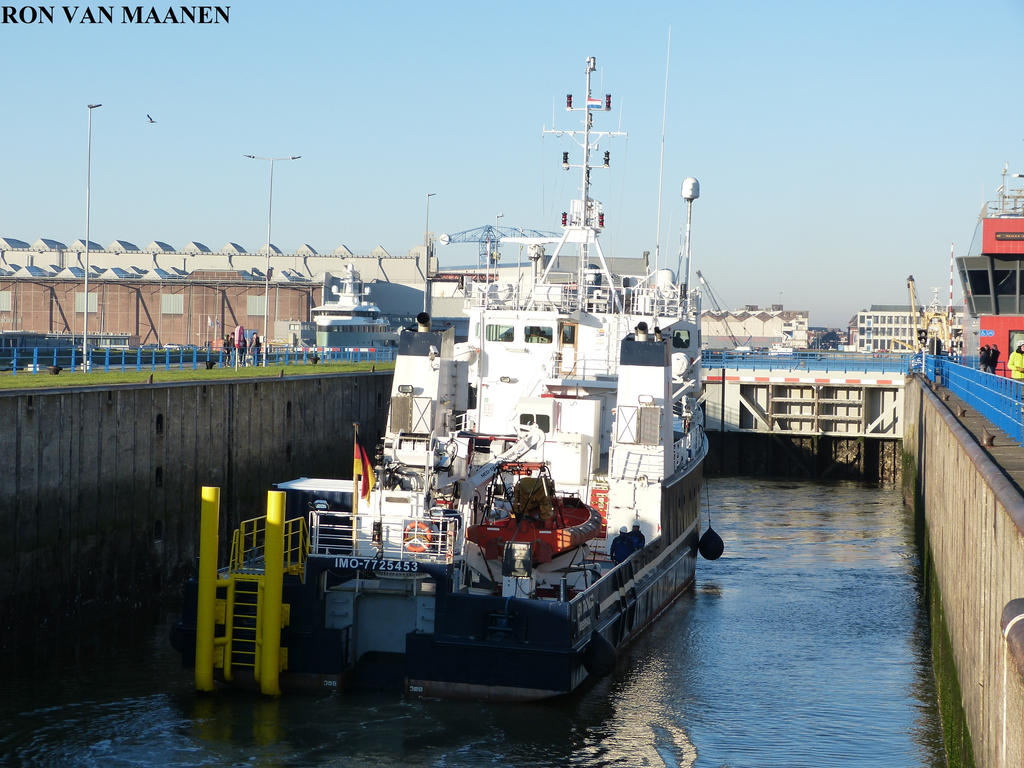
German salvage/rescue vessel (ex-RMAS Tornado 1977-2007, SD Tornado 2007-2011) Lev Tornado 2011-


Inner harbour Vlissingen, Netherlands 30 December 2019

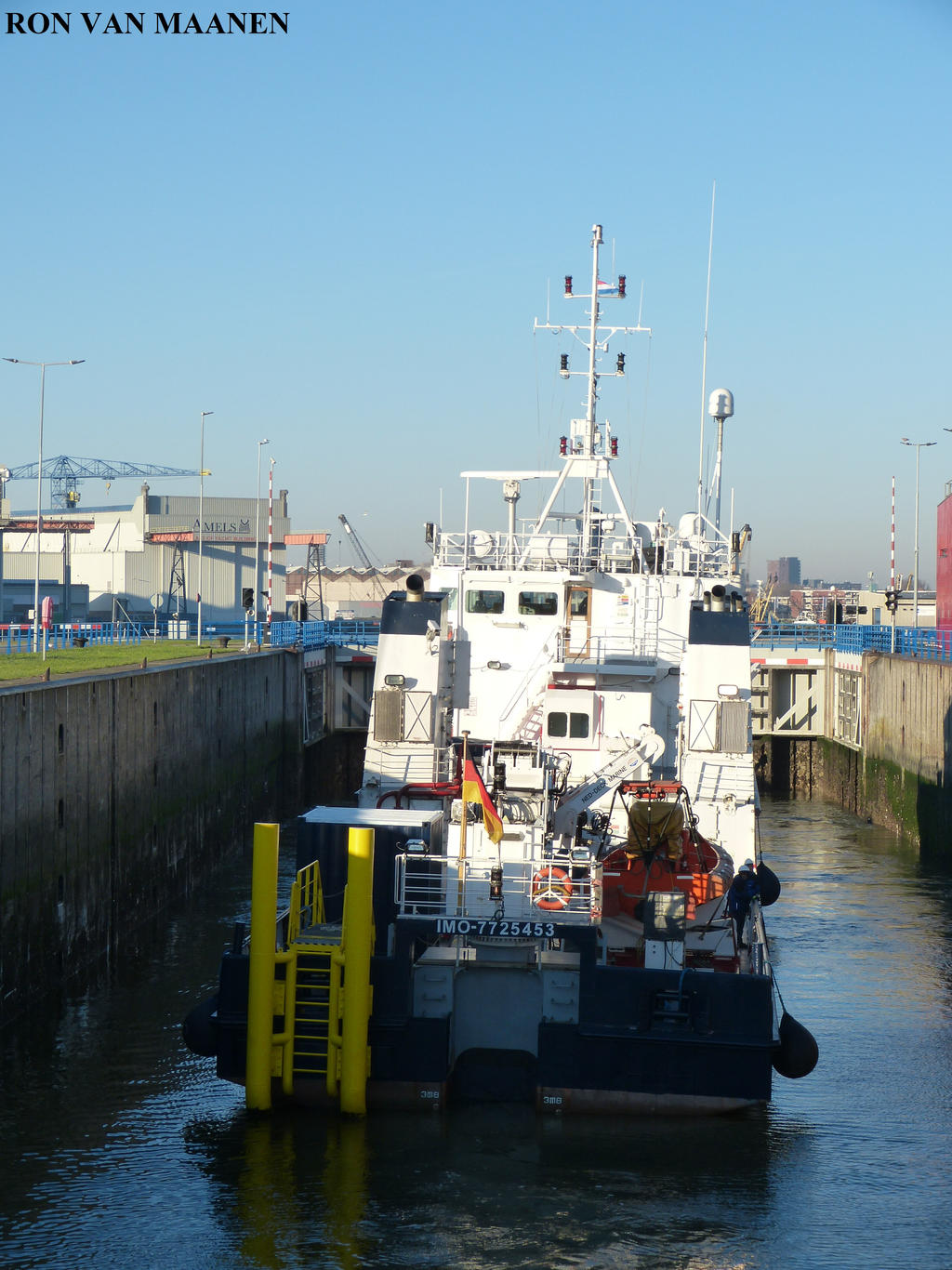
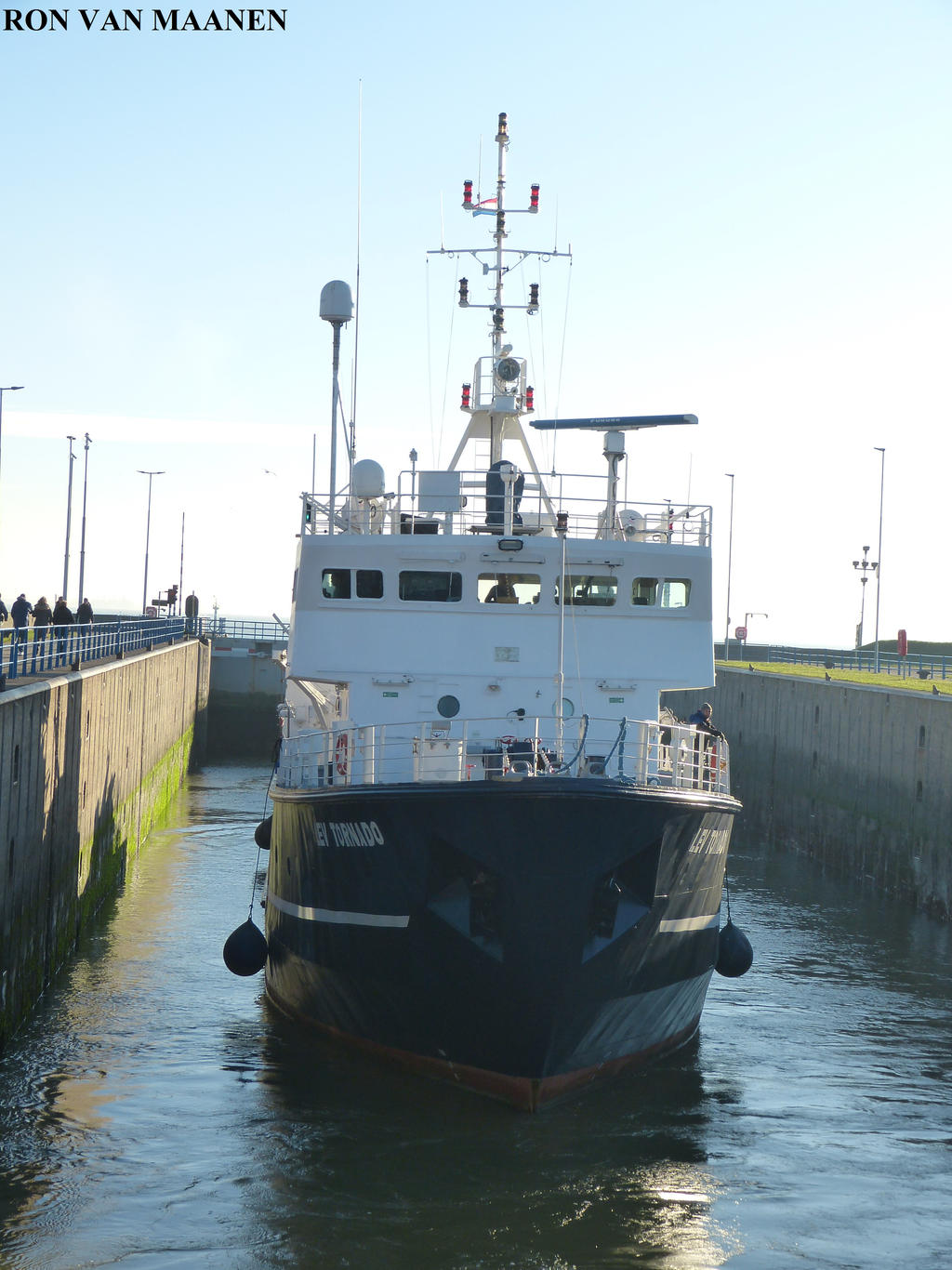
Germany-flagged, homeport Bremen, Germany, IMO 7725453, MMSI 211630370 and call sign DHVE2. Owned by Lev Tornado GmnH&Co. KG, Aurich and managed by Innoven Marine Service GmbH&Co. KG, Bremerhaven, Germany. Laid down by Russell Hall, Aberdeen, Scotland as the RMAS Tornado (A140) as part of the Tornado class torpedo retrievers on 2 November 1978, launched on 24 May 1979 and commissioned on 15 November 1979. Of the Torado-class consisted of the Tornado (A140), Torch (A141), Tormentor (A142) and Toreador (A143). Displacement 660-698 (full load) tons and as dimensions 40,0 (between perpendiculars)-47,47 (over all) x 8,53 x 3,0 metres. Crew numbered 17 men. Two screws, 2 diesels, horsepower 2.200hp, with 110 tons fuel bunker capacity a range of 3.000 nautical miles. Refitted between 2013-2014. As Lev Torpedo gross tonnage 550 tons, deadweight 163-174 tons, net tonnage 165 tons and as dimensions 47,50 (over all) x 9,15 (moulded) x 3,5 metres. Clear deck space around 200 square metres. Maximum speed 15 knots. Ex-RMAS Tornado renamed 2007 and SD Tornado (United Kingdom-flagged, MMSI 232002662, call sign GXUG) renamed 2011. 

German salvage/rescue vessel (ex-RMAS Tornado 1977-2007, SD Tornado 2007-2011) Lev Tornado 2011-


Inner harbour Vlissingen, Netherlands 30 December 2019

Germany-flagged, homeport Bremen, Germany, IMO 7725453, MMSI 211630370 and call sign DHVE2. Owned by Lev Tornado GmnH&Co. KG, Aurich and managed by Innoven Marine Service GmbH&Co. KG, Bremerhaven, Germany. Laid down by Russell Hall, Aberdeen, Scotland as the RMAS Tornado (A140) as part of the Tornado class torpedo retrievers on 2 November 1978, launched on 24 May 1979 and commissioned on 15 November 1979. Of the Torado-class consisted of the Tornado (A140), Torch (A141), Tormentor (A142) and Toreador (A143). Displacement 660-698 (full load) tons and as dimensions 40,0 (between perpendiculars)-47,47 (over all) x 8,53 x 3,0 metres. Crew numbered 17 men. Two screws, 2 diesels, horsepower 2.200hp, with 110 tons fuel bunker capacity a range of 3.000 nautical miles. Refitted between 2013-2014. As Lev Torpedo gross tonnage 550 tons, deadweight 163-174 tons, net tonnage 165 tons and as dimensions 47,50 (over all) x 9,15 (moulded) x 3,5 metres. Clear deck space around 200 square metres. Maximum speed 15 knots. Ex-RMAS Tornado renamed 2007 and SD Tornado (United Kingdom-flagged, MMSI 232002662, call sign GXUG) renamed 2011. 

Saturday, 19 May 2018

Former Dutch navy torpedo work ship Hr.Ms. Mercuur (A829) 1935-


Rotterdam, Netherlands 5 October 2013

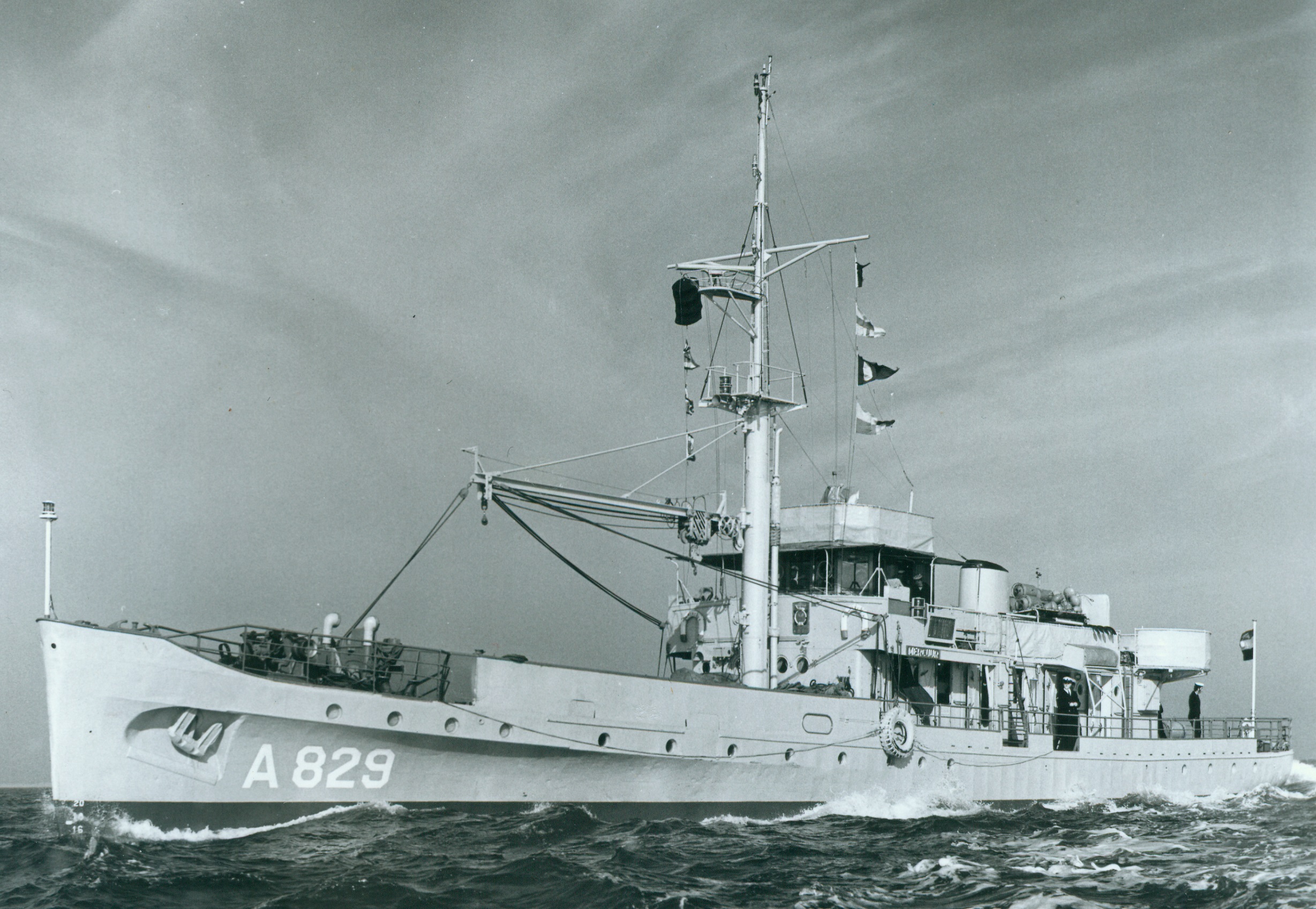
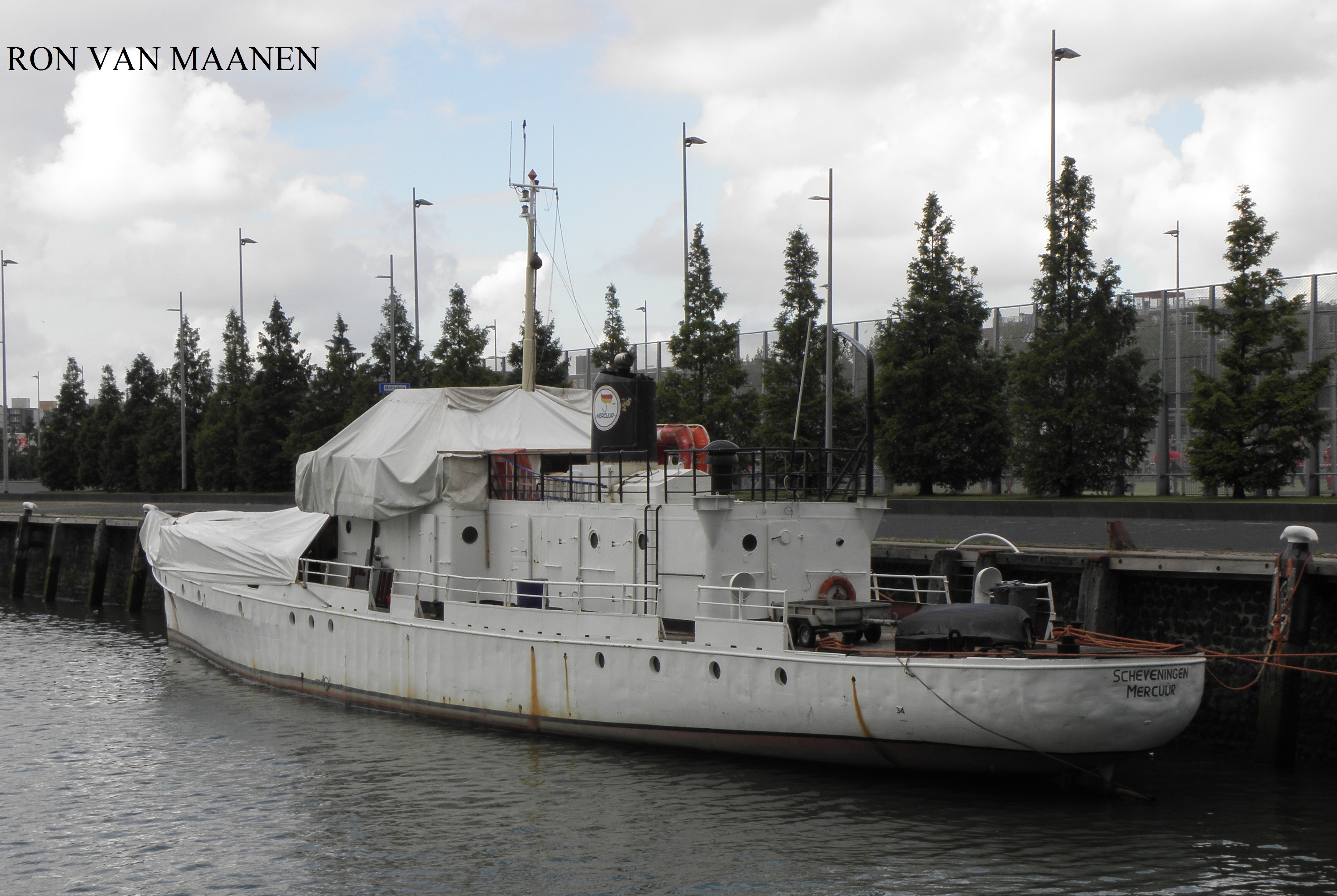
Ex-HI 1. Used for picking up exercise torpedoes and the necessarily first maintenance of the same torpedoes. Laid down on 12 July 1935 and launched on 26 February 1936 at the Navy Yard at Willemsoord, Netherlands, commissioned on 4 July 1936 in the Royal Netherlands Navy, captured during the German invasion in 1940 and taken into service as the Merkur, in May 1945 found back at Rotterdam and after repairs 1936 at the Navy Yard at Willemsoord, Netherlands, again commissioned in the Royal Netherlands Navy on 1 April 1948. In 1955-1958 temporarily fitted out with a proto type torpedo tube for the use of Mk20 torpedoes. After 1970 sold and renamed Maartje. In 2005 she retained her former name. The intention was to use her as a seagoing yacht with as homeport Scheveningen. With a tonnage of 265-282 (full load) were her dimensions 39,65-41,9 x 7,02 x 2,52 metres. Her speed was 12 knots. In naval service numbered her crew 31-35 men and was she armed with 2-12,7mm machine guns, since 1959 3-2cm machine guns.

The newspaper De Indische courant dated 27 February 1935 reported that she was financed with what was not consumed of the approved naval budget for new building. She was baptized by Mrs. R. Klaassen-Duifer, spouse of the commanding officer of the Hr.Ms. Schorpioen and the torpedo service.

Friday, 23 March 2018

Germany increasing her torpedo boat fleet according to the magazine Mitteilungen aus dem Gebiete des Seewesens dated 1913 No. 3

An item reported that as result of the decision of the German cabinet dated 13 January the strength of the German torpedo boat fleet was further enlarged with adding the 7th and 8th companies to the 2nd torpedo division at Wilhelmshaven, Germany making it possible to have 7 flotillas in service. If was the intentioned to haven in the future 3 torpedo divisions with 9 flotillas ready for service. 

Friday, 9 February 2018

Torpedo workshop at Fort Matila/Greenock, England was to be increased according to the Dutch newspaper Marineblad dated 1936 no. 2

An item referred to the Proceedings dated December 1935 reported that the torpedo workshop at Fort Matila/Greenock, England was to be increased. The new plant originally plant for the Argyll Motor Limited in 1905 situated 2 miles of Loch Lomond and 15 miles of the Loch Long torpedo test range. During the First World War was the accommodation as an ammunition plant and since 1928 by a Scottish silk plant. The workshops offered a space large enough for 1.000 labourers. 

Friday, 30 June 2017

The Dutch Torpedo service in the Dutch East Indies according to the Jaarboek van de Koninklijke Nederlandsche Zeemacht 1913-1914

The new torpedo boat harbour [at Surabaya, Dutch East Indies] was early October [1913] commissioned just like the mine magazine where also the combat charges were stored. At the island Kabing (Madura Strait) was a measured mile founded. The several prescribed steam trials for the torpedo boats were all executed with success. To prevent plague were the boats periodically treated with sulphur. A new kind of mines was now tested. In the period October 1913-October 1914 were 135 torpedoes launched included tests. Further more was exercised with guns and small arms. Due to the political circumstances was not fired with the guns under simulated battle conditions. The torpedo boats exercised in 1914 several times with the Dutch squadron including attacks.