Translate

Showing posts with label Q-ships. Show all posts

Monday, 24 January 2022

British Q-ship Tulip sunk by enemy submarine in 1917

In the British War Cabinet meeting of 2 May 1917 reported the First Sea Lord admiral Sir J.R. Jellicoe(1) that the Q-ship Tulip (2) was sunk by a submarine and that an officer and six other crew members were missing. He believed that the officer was taken prisoner of war.

Notes

1. John Rushworth Jellicoe, 1st Earl Jellicoe (5 December Southampton, England 1859-Kensington London, England 20 November 1935), served in the Royal Navy between 1872-1919 ending his career in the rank of Admiral of the Fleet, First Sea Lord between 30 November 1916 and 10 January 1918 and commanded the Grand Fleet at the Battle of Jutland in May 1916. Governor-General of New Zealand 27 September 1920-12 December 1924.

2. The Q-12, an Aubretia-class sloop, ordered in January 1916, launched by Richardson, Duck and Company, Thornaby-on-Tees on 15 July 1917, sunk by the German submarine SMS U-62 on the Atlantic Ocean on 30 April 1917.

Source

The National Archives, Kew Gardens, England, CAB 23-2-48

Sunday, 24 October 2021

Q-ships successful against enemy submarines according to the British War Cabinet meeting of 2 April 1917

In the meeting reported the First Sea Lord (1) that the the acting of so-called Q- ships and a Q-trawler in respectively 3 and 1 action against submarines were promising. The submarines damaged 2 British ships. (2) The Q-7 and Q-36 had been brought in. He pointed out that firing from a large distance was almost useless as experienced. Unless there was fired from a very short range had the enemy submarine a good chance to escape safely. Further more he reported the serious marine casualties caused by submarines and by raiders.  

Notes

1. John Rushworth Jellicoe, 1st Earl Jellicoe (5 December Southampton, England 1859-Kensington London, England 20 November 1935), served in the Royal Navy between 1872-1919 ending his career in the rank of Admiral of the Fleet, First Sea Lord between 30 November 1916 and 10 January 1918 and commanded the Grand Fleet at the Battle of Jutland in May 1916. Governor-General of New Zealand 27 September 1920-12 December 1924.

2. Vessels pretending to be harmless merchant ships but heavily armed to be used against submarines. The armament was concealed.

Source

The National Archives, Kew Gardens, England, CAB 23-2-28

Monday, 26 April 2021

Irish 3-mast schooner Cymric 1893-1944


National Maritime Museum of Ireland, Dublin, Ireland April 2019. Artist Kenneth King

Iron barquentine, in 1906 rerigged as schooner of 228 gross register tonnage, under deck 223 tons, net tonnage 114 tons and as dimensions 37 x 7.3 x 3.25 metres. Launched by William Thomas and Sons, Amlwch, Wales in March 1893. Became around 1919 property of Halls of Arklow, Ireland, Since 1906 used in the South America shipping out of Arklow, Ireland, in the First World War serving in the Royal British Navy as a q-ship. Lost at sea in February 1944 (last seen 24 February off Dublin) with the loss of 11 crew members.

Thursday, 10 December 2020

Several German submarines sunk of probably sunk in 1917

In the meeting of the British War Cabinet on Friday 25 May 1917 reported the First Sea Lord (1) that the special service ship Merops (2) sunk a German submarine with just two slightly wounded men of her own crew. A French submarine sunk a submarine of the enemy in the Mediterranean without specifying from which country. The HMS Glen (3) sunk with gunfire an enemy submarine and finally was an enemy submarine sunk by an “America” seaplane, although in both cases probably sunk.

Notes

1. John Jellicoe, 1st Earl Jellicoe (5 December Southampton, England 1859-Kensington London, England 20 November 1935), served in the Royal Navy between 1872-1919 ending his career in the rank of Admiral of the Fleet, First Sea Lord between 30 November 1916 and 10 January 1918 and commanded the Grand Fleet at the Battle of Jutland in May 1916. Governor-General of New Zealand 27 September 1920-12 December 1924.

2. The so-called Decoy or Q-ship Merope or Merops, a barquentine built of steel in 1892 as the Denmark-flagged Maracaibo, commissioned as q-ship on 2 February 1917 using different names as Bellmore, Ilma, Maracibo, Merope or Merops, Q28, Steady and Toofa. Since 11 February 1919 the merchant ship Bellmore.

3. ?

Source

The National Archives, Kew Gardens, England, CAB-23-2-65

Monday, 4 March 2019

French Q-ship Meg I 1916


A Q-ship also known as decoy vessel, special service ship or mystery ship was a heavily armed merchant ship of which the armament was not visible and especially used in anti submarine warfare. The fact that the armament was not visible was to attract a submarine to come to the surface and to attack her believing it was a helpless prey. The French Meg I was an armed whaler which was lent by France from the Royal British Navy.

Sunday, 11 March 2018

German coastal submarine SM UB-4 1914-1915

UB 1-17

UB 18-47

Based on an original so-called block sketch dated May 1917 handed over by the commissary of police at Vlissingen to the Dutch naval staff

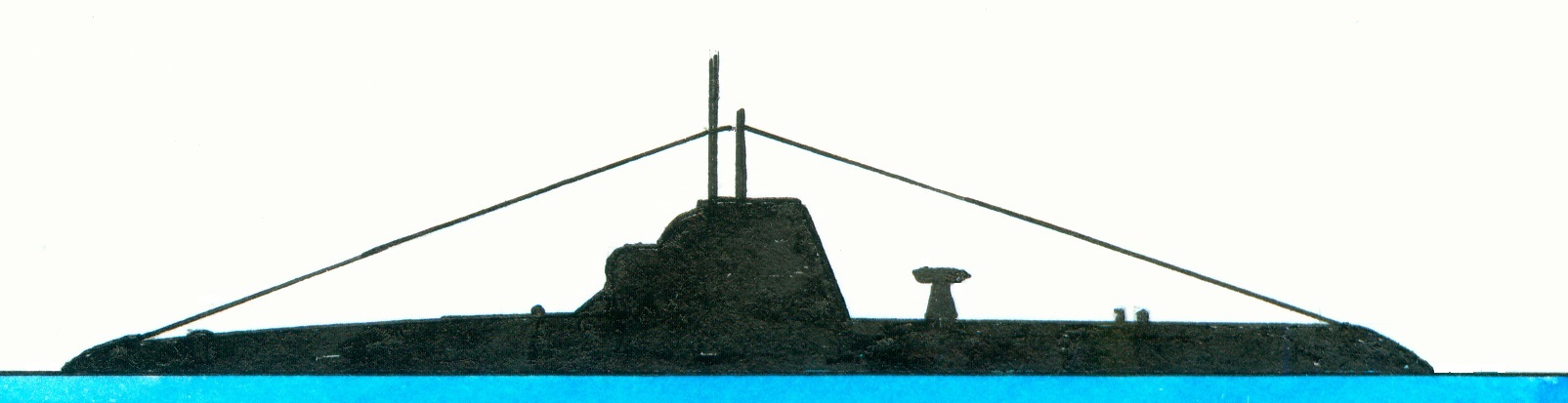
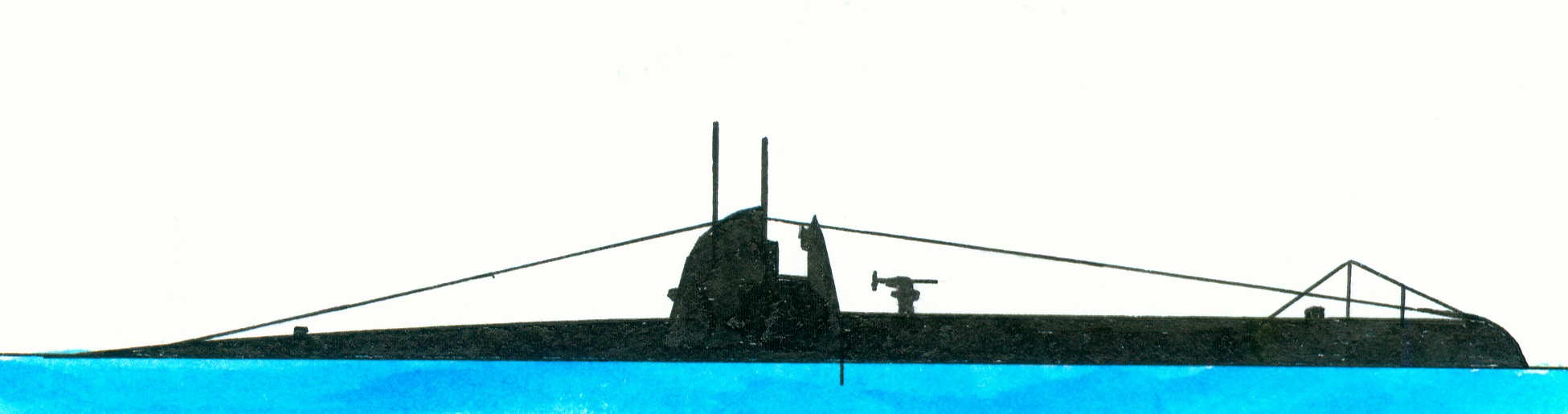
Submarines of this type served in the German (UB-1 class), Austro-Hungarian (U-10 class) and Bulgarian navies. Preceded by the UA and succeeded by the UB II class (SM UB-18-47). Building ordered on 15 November 1914, laid down by Germaniawerft, Kiel, Germany with yard number 242 on 3 November 1914, launched in March 1915, commissioned on 23 March 1915 and sunk by the British HMS Armed Smack Inverlyon (a so-called Q-ship) on the position 52° 43′ 0″ N, 2° 18′ 0″ E on 15 August 1915.

General technical class characteristics. Displacement 127 (surfaced)-142 (submerged) tons and as dimensions 23,62 (pressure hull)-27,88/28,10 (over all) x 3,15 x 7,30 (depth) x 3,03 (draught) metres or 77.6-91.6/92.2 x 10.4 x 23.11 x 9.11 feet.. The machinery consisted of 1 diesel engine and 1 electric motor driving one screw allowing a speed of 6,47 (surfaced)-5.5 (submerged) knots and a surfaced range of  1.860 nautical miles with a speed of 5 knots and submerged 45 nautical miles with 4,5 knots. Test depth 50 metres/160 feet and able to dive within 33 seconds. Their crew numbered 14 men. The armament consisted of 2-45cm/17.7” torpedo tubes in the bow for which 2 torpedoes were carried and 1-0,8cm/0.31” machinegun. 

Friday, 3 March 2017

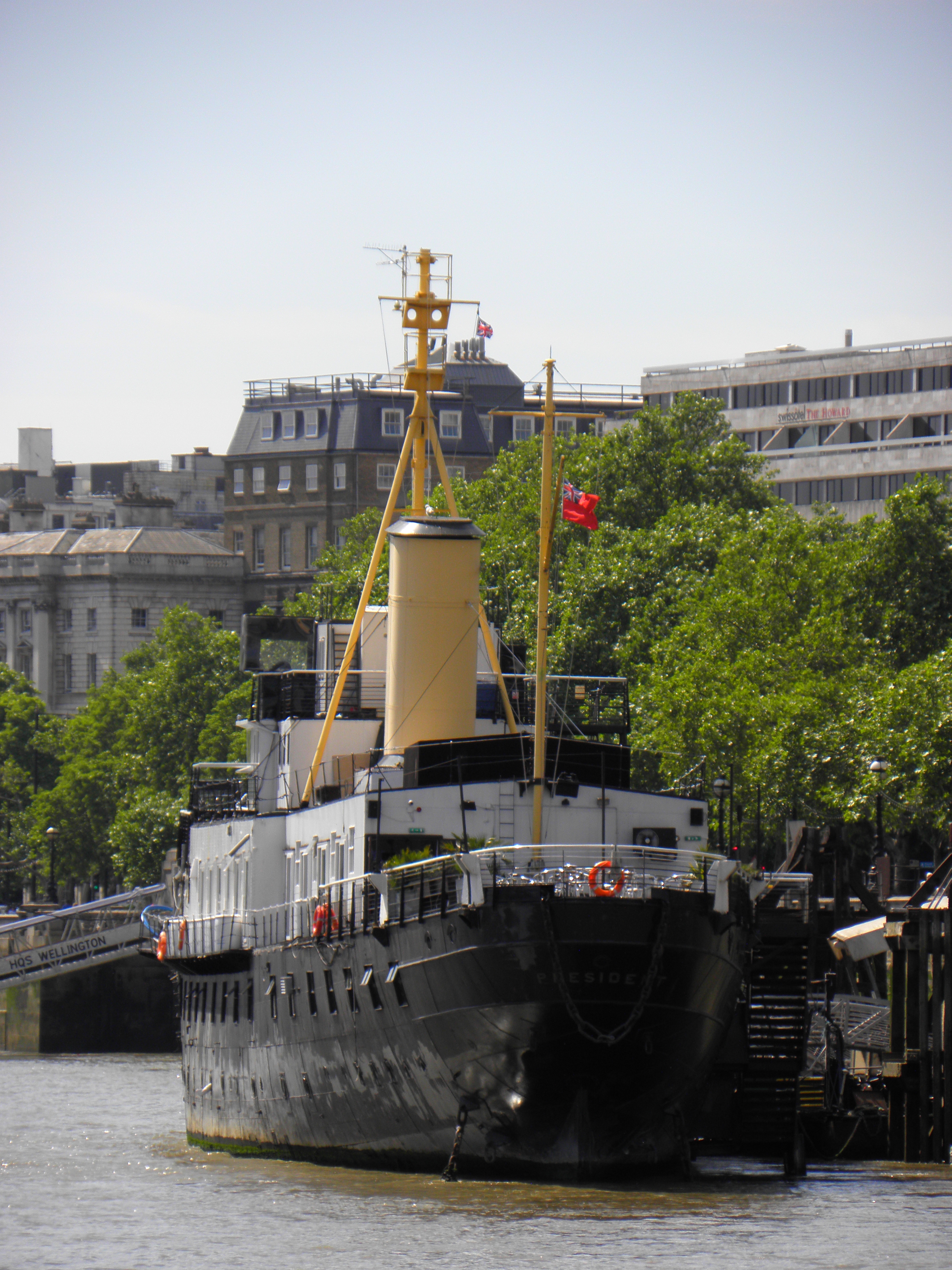
Gun courses for merchant officers started on British training ship HMS President according to the Dutch magazine Marineblad dated 1938 no. 5

Thames, London, England  22 June 2010

An item referred to Gasschutz und Luftschutz No. 10 dated Octobr 1937 reporting that on 29 August 1937 on board of the training ship President lying on the Thames, England the first course started to train merchant officers in using guns especially anti aircraft guns. The author of an article published in the Daily Telegraph dealing with this course said nothing about the issue of a ship armed with guns and gun trained crew still was to be considered as being a merchant ship.(1)

Note
1. The former anti submarine Q-ship HMS Saxfrage launched by Lobnitz&Company, Renfrew, Scotland with yard number 827 on 29 January 1918, renamed HMS President and moored on the Thames since July 1922. Became then a Royal Navy Reserve drill ship until she was sold in 1982. Still existing nowadays.