Translate

Showing posts with label Russia/Sovietunion/USSR. Show all posts

Thursday, 10 September 2026

Dutch floating music venue (ex-Pauline 1917-1918, Mijnenveger No. 4 1918-1940, Thor after 1993-2010) Cultuurschip Thor 2010-


Zwolle, Netherlands 4 September 2026

Laid down as tug for the Russian Empire by J.&A. van der Schaft, Papendrecht, Netherlands in December 1915, launched in August 1916, cancelled due to Russian Revolution, completed, sold to Wijsmuller in May 1917 and renamed Pauline. Bought by the Royal Dutch Navy in 1918, commissioned as Mijnenveger 4 (later called M 4) scuttled by own crew as block ship in het Zuiderkanaal, IJMuiden, Netherlands on 14 May 1940, salvaged on 22 July 1940 and repaired as rescue-salvage vessel, as ZRD 57 used by the Nederlandse Reddingsdienst since 1941, transferred to the Bergungsschoffe Verband and renamed BS9, after the Second War returned to the navy, commissioned as tug RS 23, renamed A847 training ship for sailors at Vlissingen, decommissioned in 1950, heating vessel Y8262, tank cleaning vessel since 1965, sold in 1993 and became private property, converted into a restaurant in 1994 and after 2010 into the Cultuurschip Thor. 

Wednesday, 9 September 2026

Design for a circular warship No. 3 by John Elder in 1868

©Warshipsresearch.blogspot.com

In the magazine The Artizan dated 1 July 1868 was a plate with figures and a small note published dealing with several designs for a ‘circular warship’ proposed by John Elder. He believed that such a ship with a widened beam could have a thicker and heavier armour and heavy guns compared with a ship of the common design and at the other hand a shallower draught and with a somewhat increased horsepower a comparable speed. The same year he read his paper Circular Ships of War, with immersed motive power for the United Service Institute in London, England. He executed experiments with his own construction and the common construction principles [the latter of a modern ironclad] including in all sorts of weather. It resulted in a draught around one-half of the draught of a common vessel allowing it to act in waters yet unaccessible. The power of rotation made it possible to act as a floating revolting turret or as a ram [like a gigantic circular saw).Diameter about 200 feet.

John Elder was a Scottish shipbuilder and marine engineer (8 March 1824 Glasgow, Scotland-17 September 1869 London, England). He worked for Randolph, Elder&Co., Glasgow, Scotland which became in 1886 the well known Fairfield Shipbuilding and Engineering Company.

The Russian rear admiral Andrei Alexandrovich Popov designed in 1869 the Charodeika-class monitor-class for the defence of the Dniepr-Bug Estuary and Kerch Strait. Popov used Elder’s ideas but by further widening the beam created a real circular ship and instead of a convex hull his design was flat-bottomed for a minimum draught. The armament was however not heavy enough and after several new designs was a design with a displacement of 6,151 tons, a diameter of 46.0 metres/151 feet and 4-27.9cm/11” guns approved. With too high building costs estimated was the design scaled down ending in the Novgorod laid down in 1871 with a displacement of 2,531 tons, a diameter of 30.8 metres/101 feet and 2-27.9cm/11” rifled muzzle guns.

Russian State Aviation Works No. 11 at Odessa, Ukraine in 1929

The American Military Attaché major George E. Arneman at Riga, Latvia referred in his report dated 16 November 1929 No. 7319 to the notes he received from the French Naval Attaché at Riga. He had been three years stationed at Riga and specialized in the Russian Baltic Fleet, being satisfied with his sources considered his notes as reliable. Arneman had no reason to disagree.

An item reported the Russian State Aviation Works No. 11 at Odessa, Ukraine which produced land based air craft and seaplanes. Between 1925-end 1928 were 14 Savoia,4 Gregorovich, 3 Isotta seaplanes and 8 hydro gliders with 120hp Ron engines produced. Responsible for repairing aircraft in the Black Sea (area). Personnel numbered 4 engineers and 500 laborers.

Source

National Archive. Record Group 165: Records of the War Department General and Special Staffs Series: Security Classified Correspondence and Reports. File Unit. Russia: Navy - MID 2503-16 THRU 2503-265. Roll 1443.

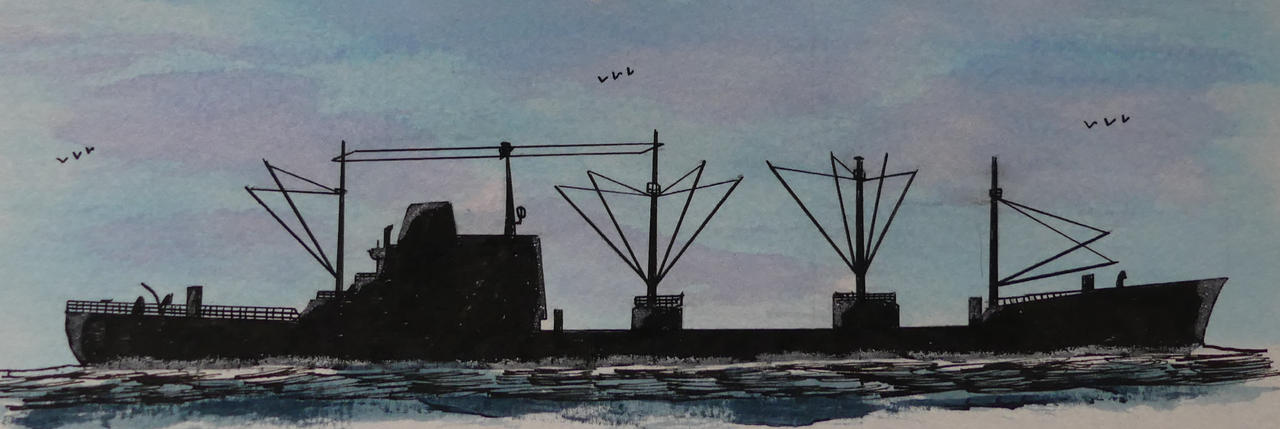
Russian nuclear cruise-missile submarine K-141 Kursk 1992-2000

Project 661Anchaer/NATO: Papa-class©Warshipsresearch.blogspot.com


Project 949A Antey/NATO: Oscar II-class©Warshipsresearch.blogspot.com

Part of Project 949A Antey called by the NATO Oscar II preceded by the Papa- and Charlie-classes and succeeded by the Yasen-class. Totally were 20 submarines of Project 949-949A planned of which six were cancelled (four were even never laid down). A fourth-generation follow-on was planned but never realized. In 2011 was a modernization announced under Project 949AM to be realized by the Rubin Design Bureau cooperating with the Zvedocja and Zvezda shipyards. Designed for attacking NATO carrier battle groups with her 24 P-700 Granit (the SS-N-19 Shipwreck) cruise missiles. During the modernization was replacement of the Granit cruise missiles planned by 72 3M-54 Kalibr or P-800 Oniks anti-ship cruise missiles. Laid down at Sevmash on 22 March 1992, launched on 16 May 1994, commissioned on 30 December 1994, lost on 12 August 2000, part of the Northern Fleet.

Sources

Breyer, S. and N. Polmar. Guide to the Soviet Navy, 2nd edition.

Jordan, J. Soviet submarines 1945 to the present.

Kouznetsov, N. La Marine sovietique en guerre 1941-1945.

Pavlov, A.S. Warships of the USSR and Russia 1945-1995.

Polmar N. and J. Noot. Submarines of the Russian and Soviet Navies 1718-1990.

Schulz-Troge, U. Die sowjetische Kriegsmarine.

Jane’s Fighting Ships several editions.

Warshipsresearch.blogspot.com

Oscar-class dated 11 April 2026 15:53 o’clock

Russian Ships Info dated 12 April 2026 19:46 o’clock. 

Tuesday, 8 September 2026

Russian nuclear cruise-missile submarine K-15- Tomsk 1991-

Project 661Anchaer/NATO: Papa-class©Warshipsresearch.blogspot.com


Project 949A Antey/NATO: Oscar II-class©Warshipsresearch.blogspot.com

Part of Project 949A Antey called by the NATO Oscar II preceded by the Papa- and Charlie-classes and succeeded by the Yasen-class. Totally were 20 submarines of Project 949-949A planned of which six were cancelled (four were even never laid down). A fourth-generation follow-on was planned but never realized. In 2011 was a modernisation announced under Project 949AM to be realized by the Rubin Design Bureau cooperating with the Zvedocja and Zvezda shipyards. Designed for attacking NATO carrier battle groups with her 24 P-700 Granit (the SS-N-19 Shipwreck) cruise missiles. During the modernization was replacement of the Granit cruise missiles planned by 72 3M-54 Kalibr or P-800 Oniks anti-ship cruise missiles. Laid down at Sevmash on 27 August 1991, launched on 20 July 1996, commissioned on 30 December 1996, overhaul finished in 2019, part of the Pacific Fleet.

Sources

Breyer, S. and N. Polmar. Guide to the Soviet Navy, 2nd edition.

Jordan, J. Soviet submarines 1945 to the present.

Kouznetsov, N. La Marine sovietique en guerre 1941-1945.

Pavlov, A.S. Warships of the USSR and Russia 1945-1995.

Polmar N. and J. Noot. Submarines of the Russian and Soviet Navies 1718-1990.

Schulz-Troge, U. Die sowjetische Kriegsmarine.

Jane’s Fighting Ships several editions.

Warshipsresearch.blogspot.com

Oscar-class dated 11 April 2026 15:53 o’clock

Russian Ships Info dated 12 April 2026 19:46 o’clock. 

The Russia air craft Factory No. 10 at Taganrog in 1929

The American Military Attaché major George E. Arneman at Riga, Latvia referred in his report dated 16 November 1929 No. 7319 to the notes he received from the French Naval Attaché at Riga. He had been three years stationed at Riga and specialised in the Russian Baltic Fleet, being satisfied with his sources considered his notes as reliable. Arneman had no reason to disagree.

An item reported the hydro-aeroplane Factory No. 10 at Taganrog which produced between 1924-end 1928 70 land based planes and of seaplanes 8-M20 with 185 hp BMW motor, 30-Isotta with 250 hp motors, 19-Savoaia 16 with 300 hp Fia motors and 31-Savoai 51 with 300hp Hispano motors. Personnel numbered 18 engineers, 9 chemists and 1,250 workmen.

Source

National Archive. Record Group 165: Records of the War Department General and Special Staffs Series: Security Classified Correspondence and Reports. File Unit. Russia: Navy - MID 2503-16 THRU 2503-265. Roll 1443.

Russian Imperial yacht Polar Star 1890-1960s (1970s)

Scientific American Supplement dated 1 December 1888

Ordered by the Russian emperor Alexander III on 20 May 1888, launched at the Baltic Shipyard on 19 May 1890, commissioned in March 1891, during the First World War lying at Petrograd before she in begun June 1917 was transferred to Helsingfors {Helsinki, Finland] , laid up in reserve in 1920, converted into a floating submarine base in the early 1930s, commissioned on 20 August 1936, reconverted into a floating ship in 1954, target ship for testing anti ship missiles in 1961 and the same year sunk in the Gulf of Riga when struck by a missile. Could be broken up in early 1970s.

Monday, 7 September 2026

Russian diesel-electric cruise-missile submarine K-78 1965-1991

Project 659/NATO Echo I-class in SSN configuration. ©Warshipsresearch.blogspot.com

Project 651/NATO Juliett-class. ©Warshipsresearch.blogspot.com

Part of Project 651 named by NATO Juliett-class preceded by Echo-class succeeded by Charlie-class. Designed in end 1950s by a team with as chairman Abram Samuilovich Kassatsier. Building planned of 35 boats but 19 were cancelled and 16 completed. Laid down by Krasnoye Sormovo Shipyard, Gorky on 25 July 1965, launched on 30 March 1967, commissioned on 1 November 1967, decommissioned in September 1991 to be broken up.

Sources

Breyer, S. and N. Polmar. Guide to the Soviet Navy, 2nd edition.

Jordan, J. Soviet submarines 1945 to the present.

Kouznetsov, N. La Marine sovietique en guerre 1941-1945.

Pavlov, A.S. Warships of the USSR and Russia 1945-1995.

Polmar N. and J. Noot. Submarines of the Russian and Soviet Navies 1718-1990.

Schulz-Troge, U. Die sowjetische Kriegsmarine.

Jane’s Fighting Ships several editions.

Warshipsresearch.blogspot.com

Russian Ships Info dated 12 April 2026 19:46 o’clock.

Juliett-class dated 5 May 2026 10:05 o’clock

The Russian naval air force in 1929

The American Military Attaché major George E. Arneman at Riga, Latvia referred in his report dated 16 November 1929 No. 7319 to the notes he received from the French Naval Attaché at Riga. He had been three years stationed at Riga and specialised in the Russian Baltic Fleet, being satisfied with his sources considered his notes as reliable. Arneman had no reason to disagree.

An item reported that the Soviet Naval Air Force consisted of the 62nd and 66th detachments fitted out with seaplanes.

At Peterhof were on 1 January 1929 12 seaplanes, pursuit, M24 stationed

At Orienenbaum 16 seaplanes, scouts, Type Junkers W33 and W 34

At Grebnoy (island of Vasilievsky-Leningrad) 12 torpedo planes

On the Goutourievsky and Krestovsky islands (Leningrad) a squadron of the hydro-aviation school numbering 24 seaplanes, Junkers and Savoia

There should be at Archangel an observation squadron wit 24 seaplanes.

Source

National Archive. Record Group 165: Records of the War Department General and Special Staffs Series: Security Classified Correspondence and Reports. File Unit. Russia: Navy - MID 2503-16 THRU 2503-265. Roll 1443.

British sailing transport Talavera in the Crimean War on 28 October 1854

According to a list of the return of the disposition in the Black Sea on 28 October 1854 drawn up by Captain and Principal Agent of Transports P. Christie, “Melbourne”, Balaklava, Crimea: number transport 98, present position Balaklava, remarks to receive wounded. The Crimean War found place between 16 October 1853-30 March 1856 between Ottoman Empire, France, United Kingdom and Sardinia at one side and Russia and Greece on the other side. The British Government chartered a large number of merchant ships for transporting troops and stores.

Source

Reports from Committees: eight volumes. 3-Part II. Army before Sebastopol. Session 12 December 1854-14 August 1855. Vol. IX-Part II. 

Sunday, 6 September 2026

Russian nuclear ballistic missile submarine Arkhangelsk TK-17 1985-

Project 667BDRM Delfin/ NATO Delta IV-class. ©Warshipsresearch.blogspot.com


Project 941 Akula-class/NATO Typhoon. ©Warshipsresearch.blogspot.com

Part of 941 Akula-class/NATO Typhoon preceded by Projects 667b Murena, 667B Murena-M, 667BDR Klamar and 667BDRM Delfin NATO named Delta I-V class succeeded by Projects 955 andd 955A respectively Borei-class and Borei-A class. Designed by Rubin, laid down by Sevmash on 24 February 1985, launched in August 1985, commissioned in December 1987, laid up in reserve since April 2004 and is to be dismantled. 

Sources

Breemer, Jan. Soviet submarines. Design, Development and Tactics, 1989

Breyer, S. and N. Polmar. Guide to the Soviet Navy, 2nd edition.

Jordan, J. Soviet submarines 1945 to the present.

Kouznetsov, N. La Marine sovietique en guerre 1941-1945.

Pavlov, A.S. Warships of the USSR and Russia 1945-1995.

Polmar N. and J. Noot. Submarines of the Russian and Soviet Navies 1718-1990.

Schulz-Troge, U. Die sowjetische Kriegsmarine.

Jane’s Fighting Ships several editions.

Warshipsresearch.blogspot.com

Russian Ships Info dated 12 April 2026 19:46 o’clock.

Typhoon-class dated 5 May 2026 15:20 o’clock

The Russian Baltic air forces organisation in 1929

The American Military Attaché major George E. Arneman at Riga, Latvia referred in his report dated 16 November 1929 No. 7319 to the notes he received from the French Naval Attaché at Riga. He had been three years stationed at Riga and specialised in the Russian Baltic Fleet, being satisfied with his sources considered his notes as reliable. Arneman had no reason to disagree.

An item reported that for the Baltic a Chief of Naval Air Forces and a Chief of Land Air Forces were appointed and subordinate for operations to the Chief of Naval Forces respectively the Commander of the Leningrad Military District.

Source

National Archive. Record Group 165: Records of the War Department General and Special Staffs Series: Security Classified Correspondence and Reports. File Unit. Russia: Navy - MID 2503-16 THRU 2503-265. Roll 1443.
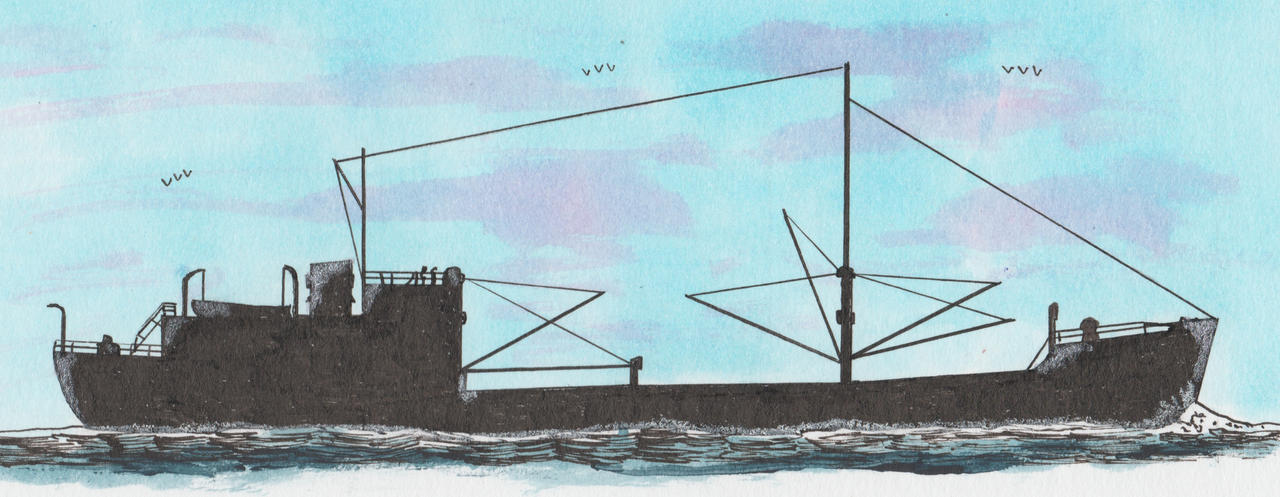
British sailing transport Escort in the Crimean War on 28 October 1854

According to a list of the return of the disposition in the Black Sea on 28 October 1854 drawn up by Captain and Principal Agent of Transports P. Christie, “Melbourne”, Balaklava, Crimea: number transport 97, present position Eupatoria, remarks waiting for orders.

The Crimean War found place between 16 October 1853-30 March 1856 between Ottoman Empire, France, United Kingdom and Sardinia at one side and Russia and Greece on the other side. The British Government chartered a large number of merchant ships for transporting troops and stores.

Source

Reports from Committees: eight volumes. 3-Part II. Army before Sebastopol. Session 12 December 1854-14 August 1855. Vol. IX-Part II. 

British sailing transport Deva in the Crimean War on 28 October 1854

According to a list of the return of the disposition in the Black Sea on 28 October 1854 drawn up by Captain and Principal Agent of Transports P. Christie, “Melbourne”, Balaklava, Crimea: number transport 96, present position Eupatoria, remarks waiting for orders.

The Crimean War found place between 16 October 1853-30 March 1856 between Ottoman Empire, France, United Kingdom and Sardinia at one side and Russia and Greece on the other side. The British Government chartered a large number of merchant ships for transporting troops and stores.

Source

Reports from Committees: eight volumes. 3-Part II. Army before Sebastopol. Session 12 December 1854-14 August 1855. Vol. IX-Part II.

Saturday, 5 September 2026

Russian diesel-electric cruise-missile submarine K-156 1960-1977 and B-156 1977-after 1991

Project 659/NATO Echo I-class in SSN configuration. ©Warshipsresearch.blogspot.com

Project 651/NATO Juliett-class. ©Warshipsresearch.blogspot.com

Part of Project 651 named by NATO Juliett-class preceded by Echo-class succeeded by Charlie-class. Designed in end 1950s by a team with as chairman Abram Samuilovich Kassatsier. Building planned of 35 boats but 19 were cancelled and 16 completed. Laid down by Baltic Shipyard, Leningrad, Russia on 16 November 1960, launched on 31 July 1962, commissioned on 10 December 1963, decommissioned in September 1991 to be broken up.

Sources

Breyer, S. and N. Polmar. Guide to the Soviet Navy, 2nd edition.

Jordan, J. Soviet submarines 1945 to the present.

Kouznetsov, N. La Marine sovietique en guerre 1941-1945.

Pavlov, A.S. Warships of the USSR and Russia 1945-1995.

Polmar N. and J. Noot. Submarines of the Russian and Soviet Navies 1718-1990.

Schulz-Troge, U. Die sowjetische Kriegsmarine.

Jane’s Fighting Ships several editions.

Warshipsresearch.blogspot.com

Russian Ships Info dated 12 April 2026 19:46 o’clock.

Juliett-class dated 5 May 2026 10:05 o’clock

Friday, 4 September 2026

Russian nuclear cruise-missile submarine Arkhangelsk K 525 1975-2005

Project 661Anchaer/NATO: Papa-class©Warshipsresearch.blogspot.com


Project 949A Antey/NATO: Oscar II-class©Warshipsresearch.blogspot.com

Part of the Project 661 Anchar/NATO: Papa class, preceded by Project 670 Skat/NATO: Charlie-class, succeeded by Project 949 Granit and 949A Antey/NATO: Oscar-I and II-classses. Laid down by Sevmash on 25 July 1975, launched on 3 May 1980, commissioned on 30 December 1980, in service on 24 January 1981, part of Northern Fleet, out of service in 1996 and broken up between January 2004-February 2005.

Sources

Breyer, S. and N. Polmar. Guide to the Soviet Navy, 2nd edition.

Jordan, J. Soviet submarines 1945 to the present.

Kouznetsov, N. La Marine sovietique en guerre 1941-1945.

Pavlov, A.S. Warships of the USSR and Russia 1945-1995.

Polmar N. and J. Noot. Submarines of the Russian and Soviet Navies 1718-1990.

Schulz-Troge, U. Die sowjetische Kriegsmarine.

Jane’s Fighting Ships several editions.

Warshipsresearch.blogspot.com

Oscar-class dated 11 April 2026 15:53 o’clock

Russian Ships Info dated 12 April 2026 19:46 o’clock. 

The Russian Baltic submarine fleet in 1927

The American Military Attaché Sweden wrote in his report dated 1 April 1927 No. 352 that all known facts indicated that the Soviet Union at least would have 20 submarines available in the Baltic which number would be doubled within two years. From Italy were 5 flotilla leaders for submarines with a displacement of 2,200 tons ordered. At the shipyards around Leningrad were 2 divisions of submarines under construction of which two were nearly completed waiting for their guns.

Source

National Archive. Record Group 165: Records of the War Department General and Special Staffs Series: Security Classified Correspondence and Reports. File Unit. Russia: Navy - MID 2503-16 THRU 2503-265. Roll 1443.
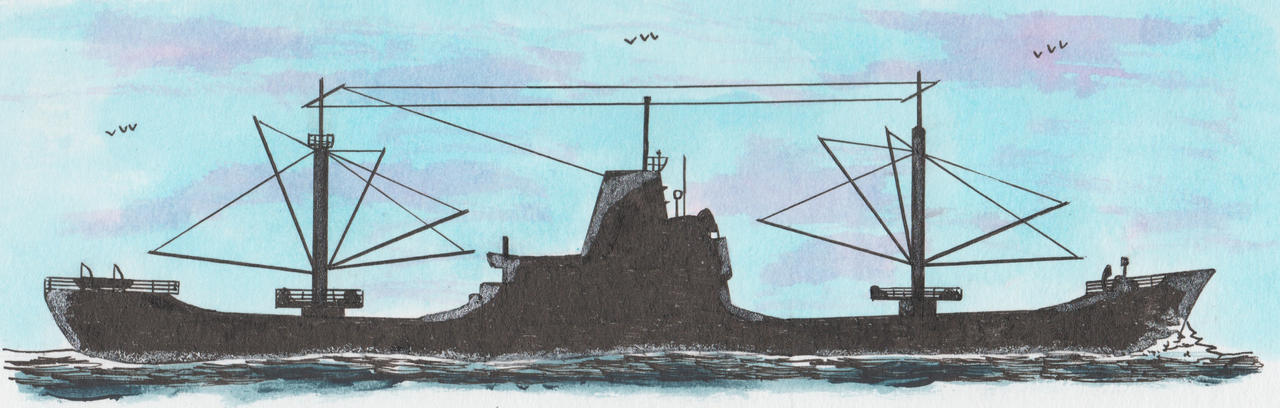
British sailing transport Libertas in the Crimean War on 28 October 1854

According to a list of the return of the disposition in the Black Sea on 28 October 1854 drawn up by Captain and Principal Agent of Transports P. Christie, “Melbourne”, Balaklava, Crimea: number transport 95, present position Constantinople, remarks under orders of rear-admiral Boxer.

The Crimean War found place between 16 October 1853-30 March 1856 between Ottoman Empire, France, United Kingdom and Sardinia at one side and Russia and Greece on the other side. The British Government chartered a large number of merchant ships for transporting troops and stores.

Source

Reports from Committees: eight volumes. 3-Part II. Army before Sebastopol. Session 12 December 1854-14 August 1855. Vol. IX-Part II. 

British sailing transport William Jackson in the Crimean War on 28 October 1854

According to a list of the return of the disposition in the Black Sea on 28 October 1854 drawn up by Captain and Principal Agent of Transports P. Christie, “Melbourne”, Balaklava, Crimea: number transport 93, present position Eupatoria, remarks waiting for orders.

The Crimean War found place between 16 October 1853-30 March 1856 between Ottoman Empire, France, United Kingdom and Sardinia at one side and Russia and Greece on the other side. The British Government chartered a large number of merchant ships for transporting troops and stores.

Source

Reports from Committees: eight volumes. 3-Part II. Army before Sebastopol. Session 12 December 1854-14 August 1855. Vol. IX-Part II. 

Thursday, 3 September 2026

Shipping traffic heading to the west of Gibraltar according to the Kriegsnachrichten of the Chef des Admiralstabes der Marine dated Berlin 21 August 1917

An item reported that at between 14-18 August the shipping traffic from Gibraltar to the west consisted 10 British steamships, 4 Norwegian steamships, 1 British steam transport, 2 Italian passenger ships, 3 armed steamships, 1 Portuguese steamship, 1 Brazilian steamship.

As part of a convoy: 1 British guard ship, 6 British steamships, 1 Greek steamship, 1 Norwegian steamship.

As part of a convoy: Russian torpedo boat Iskussny with 8 steamships.

-1 French steamship, 1 Italian steamship, 1 Italian sailing vessel.

Source

Bundesarchiv RM-40-622