Translate

Showing posts with label British Indies. Show all posts

Saturday, 16 April 2022

Japan building up a fleet for operations in the Indian ocean according to the U.S. Joint Intelligence Committee. Daily summary dated 20 March 1942

An item reported that since Java, Dutch East Indies was captured by Japanese forces was their next predicted step an offensive in the Indian Ocean especially against the Andaman Islands, British Indies. The newest intelligence pointed out a movement westwards across the Bay of Bengal with special interest in the Ceylon-Calcutta-Mysores areas. It was calculated that the Japanese were building up a fleet for the Indian ocean including 3-4 battleships, 4 aircraft carriers, 4 heavy and 3 light cruisers, 34 destroyers, 6 converted seaplanes and minimally 10 submarines. The J.I.C. commented that the number of submarine operations was increasing but regarded the great distances needed the Japanese ship-borne aircraft for supporting operations in the British Indies southeast area.

Source

Map Room Papers (Roosevelt Administration), 1942 - 1945. U.S. Joint Intelligence Committee. Daily summary No. 100 dated 20 March 1942

Monday, 28 February 2022

Japan preparing attack in the Bay of Bengal according to the U.S. Joint Intelligence Committee. Daily summary dated 16 March 1942

An item reported that the Japanese were preparing an advance in to the Bay of Bengal and that at Penang, Malaya air and light naval forces gathered.

Source

Map Room Papers (Roosevelt Administration), 1942 - 1945. U.S. Joint Intelligence Committee. Daily summary No. 96 dated 16 March 1942.

Friday, 25 February 2022

The armament of the Dutch merchant ship Brastagi in the Second World War

According to the list and supplements 1-2 on 13 September 1945 BDZ No. 673sent by the office of armament the Royal Netherlands Navy located at 41 East 42nd Street, New York 17, USA. There were no complete records available, so there were several sources used to compile the list. Sometimes the kind of guns gave indirect information regarding the origin such as 4”/BL and 12 pounder guns were British mostly supplied in the United Kingdom, Canada or Curacao. The 4.7” guns were old Japanese guns placed on some vessels in the begin of the war at Singapore and some 4” guns in the same period at Surabaya, Dutch East Indies. The trade in which the ship was used gave also an indication were the guns were supplied, for example involved in the Pacific trade means supplied at the West Coast.

Armed with 2-2cm guns supplied at Norfolk on 25 March 1942

Armed with 2-2cm guns supplied at New York.

Armed with 4-2cm guns supplied at San Francisco on 22 March 1943

Armed with 1-10,16cm/4” 50 Mk.9 gun

Armed with 3-7,62cm/3” 50 dual purpose guns.

Laid down with yard number 203 by the Kon.Mij. De Schelde, Vlissingen, Netherlands on 19 February 1936, launched on 2 February 1937, delivered on 6 April 1937, owner N.V. Rotterdamsche Lloyd and managed by Firma Wm Ruys&Zonen, both at Rotterdam, Netherlands converted into a troop transport, after the Second World War converted back into a cargo ship, on 31 October 1947 underway from Seattle, USA towards Calcutta, British Indies stranded on Caldeira, 60 miles of Mozambique, and finally declared a total loss on 25 November. Gross tonnage 9,246 tons, net tonnage 5,561 tons, deadweight 11,700 tons, grain capacity 633,00 cubic feet, bale capacity 557,000 cubic feet and as dimensions 147.34 x 19.14 x 11.55 metres.

Source

Archieven van hoofd handelsbescherming en diverse handelsbeschermingsofficieren 1941-1946 inv.no. 53 (Nationaal Archief, The Hague, Netherlands

Friday, 4 February 2022

Movements of Japanese submarines in Indian Ocean increasing according to the U.S. Joint Intelligence Committee. Daily summary dated 19 March 1942

An item reported that after a lull the Japanese submarines were again active in the Indian Ocean. Northeast of Madras, India was on 13 March a Norwegian merchant torpedoed and sunk. Further more were recently Japanese submarines seen off the east coast of India. The J.I.C. commented that the large number of reports dealing with the Japanese submarines based at Penang, Malaysia(1) suggesting more and more submarine activity in the future to be expected.

Note

1. The Japanese 8th Submarine Squadron was based at Swettenham Pier, George Town, Malaysia between 1942-1944. Furthermore was also the German Gruppe Monsun or Monsoon Group submarines stationed at Penang between 1943-1944 and were Italian submarines like the Marconi-class Luigi Torelli active in the Far East.

Source

Map Room Papers (Roosevelt Administration), 1942 - 1945. U.S. Joint Intelligence Committee. Daily summary No. 99 dated 19 March 1942

Tuesday, 1 February 2022

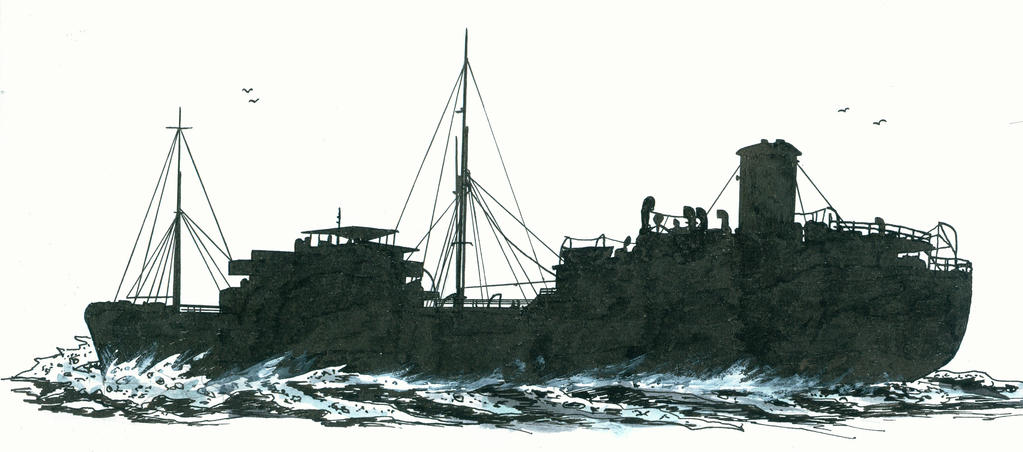
The armament of the Dutch merchant tanker Ondina in the Second World War

Ondina

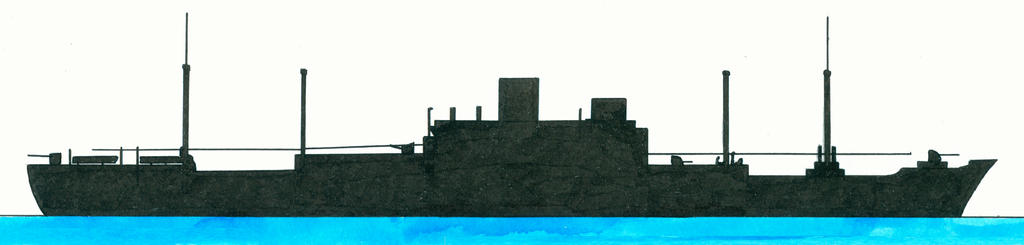
Hokoku Maru-Aikoku Maru

According to the list and supplements 1-2 on 13 September 1945 BDZ No. 673 sent by the office of armament the Royal Netherlands Navy located at 41 East 42nd Street, New York 17, USA. There were no complete records available, so there were several sources used to compile the list. Sometimes the kind of guns gave indirect information regarding the origin such as 4”/BL and 12 pounder guns were British mostly supplied in the United Kingdom, Canada or Curacao. The 4.7” guns were old Japanese guns placed on some vessels in the begin of the war at Singapore and some 4” guns in the same period at Surabaya, Dutch East Indies. The trade in which the ship was used gave also an indication were the guns were supplied, for example involved in the Pacific trade means supplied at the West Coast.

Launched at the Nederlandse Dok&Scheepsbouwmaatschappij, Amsterdam, Netherlands on 29 April 1939, completed on 1 August 1939, operated for La Corona, a subsidiary of the Royal Dutch Shell Company and finally broken up at Hong Kong in 1959. In the Second World War, fought together with her escort HMIS Bengal on 11 November 1942 a heroic battle against the Japanese auxiliary cruisers Hokoku Maru and Aikoku Maru. Against all odds both ships survived the battle in which the Hokoku Maru even was destroyed probably by a 10,2 cm shell of the Ondina. The Aikoku Maru torpedoed the Ondina and left the scene believing she was sinking. The crew of the Ondina which already had left their ship going of board of the lifeboats returned and managed to keep her floating returning safely to Fremantle, Australia. Five men of her crew were killed including her master. In 1945 was she the first Dutch tanker after the war entering the harbour of Rotterdam, Netherlands. De Dutch queen Juliana commemorated what she did by a so-called Royal Citation in a Day Order. Only Dutch warships or Netherlands-flagged merchant ships which performed extra ordinary well during the war could get such honour. Until she was broken up she continued her voyages in the Far East but also towards South America.

With a gross tonnage of 9.070 tons were her dimensions 130,49 x 16,62 x 6,40 metres or 428.1 x 54.5 x 21 feet. The single Werkspoor six-cylinder 2.800hp diesel allowed a maximum speed of just 12 knots. 

Armed with 2-2cm guns

Armed with 4-2cm guns supplied at Tampa, Florida, USA in May 1944

Armed with 1-10,16cm/4” quick firing gun

Source

Archieven van hoofd handelsbescherming en diverse handelsbeschermingsofficieren 1941-1946 inv.no. 53 (Nationaal Archief, The Hague, Netherlands.

Thursday, 13 January 2022

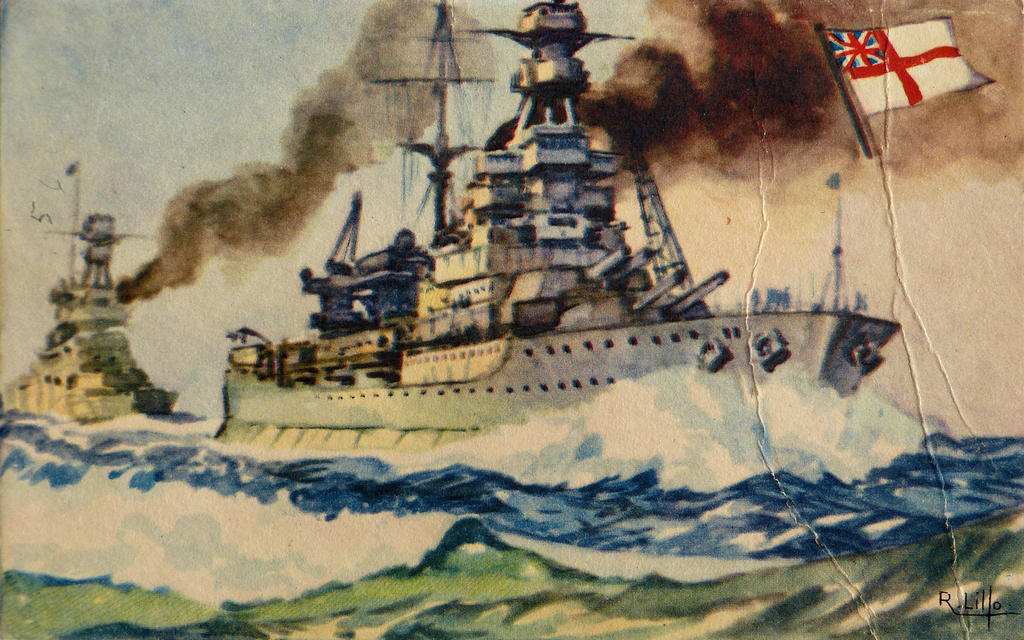
British battleship HMS Malaya bound for the Far East according to the Weekly Intelligence Summary Nr. 8 dated 28 August 1920


Queen Elizabeth-class

An item reported that while the visit by H.R.H. The Prince of Wales [the later king Edward VIII] to India was postponed the British battleship HMS Malaya (1) was ordered to escort the H.R.H. The Duke of Connaught [Prince Arthur William Patrick Albert, Duke of Connaught and Strathearn] to India before going to the Federated Malay States. She would depart Portsmouth, England on 23 November bound for Marseilles, France to pick up the duke, to leave from there on 2 December, arriving at Port Said, Egypt on 7 December, at Aden, Yemen on 15 December and finally at Bombay, India on 20 December. From there she was to leave on 22 December, visit the Malay States, entering Singapore around 31 December, leaving around 1 February bound for Madras, India to pick up the duke and continued her homeward bound voyage. The provisional program described in W.I.S. No. 7 was cancelled.(1)

Note

1. The 01. Part of the Queen Elizabeth-class, preceded by Iron Duke-class, succeeded by Revenge-class, ordered in 1913, laid down by Armstrong Whitworth, South Tyneside, England on 20 October 1913, launched on 18 March 1915, commissioned on 1 February 1916, decommissioned in 1 December 1944, stricken on 12 April 1948 and sold to be broken up on 20 February 1948.

Source

The National Archives CAB 24-111-18

Friday, 31 December 2021

Large Japanese fleet approaching Port Blair, Andaman Islands according to the U.S. Joint Intelligence Committee. Daily summary dated 25 March 1942

An item reported that on 23 March a Japanese naval force was seen while approaching Port Blair, Andaman Islands [India, northeastern Indian Ocean]. It consisted of 2 aircraft carriers, one cruiser, a destroyer leader or cruisers and a 5.00 tons transport. The J.I.C. commented that this invasion was already expected for a long time. The aircraft carriers were probably seaplane tenders.

Source

Map Room Papers (Roosevelt Administration), 1942 - 1945. U.S. Joint Intelligence Committee. Daily summary No. 105 dated 25 March 1942

Tuesday, 28 December 2021

British whaler Marquis Lanadown visited St. Helena according to the newspaper The Cape of Good Hope Gazette dated 13 January 1837

An item reported the arrival at St. Helena on 1 October 1836 of the whaler Marquis Lanadown master W.F. Plant coming from Timor, Dutch East Indies bound for London.(1)

Note

1. Launched by John Scott&Co., Fort Gloucester, Calcutta, British Indies on 30 March 1824, last mentioned in 1847. Tonnage 208-225-225 78/94 or 233 tons builder measurement and as dimensions 28.2 x 7.0 metres or 92.5 x 22.10 feet. Made 4 voyages as a southern whaler between 1829 and 1845. She returned home on 20 December 1836 loaded with 500 casks whale oil. 

Monday, 27 December 2021

Japanese invasion of the Andaman Islands according to the U.S. Joint Intelligence Committee. Daily summary dated 27 March 1942

An item referred to an estimation of the British War Offices (see also the daily summary No. 106 of 26 March) reporting that a Japanese infantry brigade probably reinforced by a strong naval landing party invaded the Andaman Islands [India, northeastern Indian Ocean] supported by a strong naval force consisting of 3 cruisers, 6 destroyers and 3 transports. It was possible that except for the Andaman or Nicobar Islands the real focus was Akyab. The J.I.C. commented that on 25 March a smaller force was reported.

Source

Map Room Papers (Roosevelt Administration), 1942 - 1945. U.S. Joint Intelligence Committee. Daily summary No. 107 dated 27 March 1942

Saturday, 27 November 2021

Austro-Hungarian torpedo cruiser SMS Leopard visited the Dutch East Indies in 1900-1901

The Jaarboek van de Koninklijke Nederlandsche Zeemacht 1900-190 reported that the Austro-Hungarian torpedo cruiser Leopard (1) visited Tanjong-Priok, Ambon and Sabang, Dutch East Indies between respectively 25 November-3 December 1900, on 23 February 1901 and between 30-31 July 1901.

The Dutch newspaper Bataviaasch nieuwsblad dated 26 November 1900 reported her arrival coming from Palo. Commanding officer was F.[riedrich] Ritter Müller von Elblein.(2) De locomotief dated 6 December 1900 reported her departure from Batavia, Dutch East Indies towards Australia. The Rotterdamsch nieuwsblad dated 10 August 1900 reported that the Austrian government decided another two warships to the Far East caused by the problems in China but that the Leopard was not immediately available. The Deli courant dated 13 August 1901 reported that on 30 July 1901 the Leopard arrived at Sabang, Dutch East Indies, departing the next day to Madras, British Indies. In September 1901 visited she Sabang to bunker coal.

Notes

1. Succeeded by SMS Tiger. Building ordered on 8 September 1884, laid down by Armstrong, Mitchell&Co., Elswick, England with yard number 481 on 4 December 1884, launched on 10 September 1885, commissioned on 31 March 1886, training ship torpedo service in spring 1914, became a guard ship, handed over the Allies and broken up at Messina, Italy in 1920.

2. Linienschiffskapitän promoted to the rank of rear admiral since 17 November 1907. Also called Fritz.

Sunday, 21 November 2021

Swedish armoured cruiser Fylgia visiting the British Indies according to the Secret Admiralty Weekly Intelligence Summary Nr. 42 for the week ending 22 October 1921

after the modernization

An item reported that the Swedish armoured cruiser Fylgia commanded by kommender-kapten Charles Leon de Camps (seniority 14 December 1917) would visit the British East India area in autumn-winter 1921-1922. Planned harbor visits were Gibraltar 12-16 November 1921, Aden [Jemen] 14-16 December 1921, Colombo [Ceylon] 27 December 1921-1 January 1922, Calcutta 8-15 January 1922, Bombay 26 January-4 February 1922, Karachi 8-12 February 1922 and Aden 20-22 February 1922.

Note

1. Laid down by Bergsunds Mekaniska Verkstad, Finnboda Slip, Sweden in October 1902, launched in 20 December 1906, extensive modernization between 1939-1940, decommissioned on 1 January 1953 and sold to be broken up in 1957.

Source

The National Archives CAB-24-129-42. Secret Admiralty Weekly Intelligence Summary Nr. 42 for the week ending 22 October 1921.

Monday, 1 November 2021

Japan establishing naval base at Port Blair, Andaman Islands according to the U.S. Joint Intelligence Committee. Daily summary dated 29 March 1942

An item reported that the Japanese forces were establishing a seaplane annex submarine base at Port Blair, Andaman Islands.(1)

Note

1. Andaman and Nicobar Islands are an union territory nowadays of India. 

Allied shipping in British Indies area threatened by Japanese forces according to the U.S. Joint Intelligence Committee. Daily summary dated 30 March 1942

An item reported that a four motored bomber attacked on 28 March a British merchant ship on a distance of 160 nautical miles south east of Calcutta, British Indies. The J.I.C. commented that the commander of the Japanese Combined Air Force (Navy) now based at Moulmein, Burma ordered an offensive apparently including attack Allied shipping by aircraft but probably also by submarines. Allied aircraft sighted a Japanese naval force including 4 cruisers, 5 destroyers, 4 transports and 2 supply ships off the Andaman Islands.

Source

Map Room Papers (Roosevelt Administration), 1942 - 1945. U.S. Joint Intelligence Committee. Daily summary No. 110 dated 30 March 1942.

Saturday, 30 October 2021

Bay of Bengal area attracted attention of Japanese naval aircraft according to the U.S. Joint Intelligence Committee. Daily summary dated 31 March 1942

An item reported that there were indications that Allied shipping in the harbour of Calcutta, British Indies would be the a potential target for attacks by Japanese naval aircraft now concentrating in the Bay of Bengal area.

Source

Map Room Papers (Roosevelt Administration), 1942 - 1945. U.S. Joint Intelligence Committee. Daily summary No. 111 dated 31 March 1942

Wednesday, 20 October 2021

Movements of the Dutch E.I.C. ships in the Dutch East Indies in March 1694

The National Archive of Indonesia published on her website tables of contents of the so-called Daghregisters (Daily accounts) of the Castle Batavia, HR no.'s 2512-2513. Unfortunately they are in Dutch. In those tables you can find for instance information about the ships arriving at and departing from Batavia (nowadays Djakarta). I extracted the movements of the ships and vessels owned by the E.I.C. The dates mentioned below in the text are the register dates. See also on this weblog the notes dealing with cargo capacities and individual ships.

Belois, fluyt, destined via Siam towards Japan 26 March 1694
Bije, frigate, arrived at Batavia coming from Ceylon 13 March 1694, destined towards Mallabaar 19 March 1694
Blauwenberg, yacht, arrived at Batavia coming from the West Coast of Sumatra 14 March 1694
Boswijk, yacht, ordered to fit out for war purposes 2 March 1694
Bovencaspel, fluyt, arrived at Batavia coming from Bengal 29 March 1694
Bronste, small fluyt, departed Batavia towards Ambon 12 March 1694
Casteel Batavia, ship, ordered to fit out for war purposes 2 March 1694
Clipvis, pantjalang, departed Batavia towards the Sunda Strait for patrolling for the coming ships 18 March 1694
Coning William, ship, ordered to fit out for war purposes 2 March 1694
Couverden, ship, decided to sent her towards Japara with 50 soldiers destined for Japara and another 40 for Cheribon 7 March 1694, departed Batavia via Cheribon towards Japara 10 March 1694
Craanvogel, departed Batavia towards Banda to serve in that territory 20 March 1694
Crab, pantjalang, departed Batavia towards the Sunda Strait for patrolling for the coming ships 18 March 1694
Eemland, yacht, news of her coming back from Mauritius due to heavy leaking 3 March 1684, arrived at Batavia 4 March 1684, presumably fire on board 5 March 1694
Faam, news of her departure from Ceylon towards the Netherlands 13 March 1694
Fortuijn, small yacht, destined for the so-called Vries baaij at the South side of Java with provisions for the Zillida 9 March 1694, departed Batavia 10 March 1694
Lapland, chialoup, arrived at Batavia coming from Palembang 3 March 1694
Nierop, fluyt, within some days towards Japara 7 March 1694, departed Batavia towards Japara 17 March 1694
Stantvastigheijt, small yacht, arrived at Batavia coming from Bantam with a cargo of pepper 10 March 1694, destined towards Mauritius and Madagascar to replaced the returned Eemlant 19 March 1695
Visserij, ship, ordered to fit out for war purposes 2 March 1694
Vliegende Vis, pantjalang mentioned 23 March 1694
Voetboog, news of her departure from Ceylon towards the Netherlands 13 March 1694
Woggelum, ship, chamber Hoorn, arrived at Batavia coming from the Netherlands with almost 80 dead men on the voyage 6 March 1694
Zeehaas, pantjalang, departed Batavia towards Cheribon 30 March 1694
Zillida, yacht, news of her coming from Ceylon in the Sunda Strait and forced to anchor in the so-called Vries baaij at the South side of Java 8 March 1694, news to her that within 1 or 2 days the Fortuijn was sent with victuals 9 March 1694, her captain Adam Slegt arrived at Batavia coming via Cheribon 25 March 1694

Thursday, 12 August 2021

The switchboard and radio facilities at the naval base Tandjong Priok, Dutch East Indies on 6 August 1946

In 1946 ordered the Dutch supreme commanding officer in the Far East by order no. 62 to investigate the harbours including shipyards in the Dutch East Indies and Netherlands New Guinea. In those so-called Sitraps (Situation reports) was information collected dealing with the available facilities, personnel and vessels/boats. The Dutch East Indies fell in Japanese hands in the Second World War when the Dutch forces surrendered on 8 March 1942 until Japan surrendered on her turn on 15 August 1945. On 17 August 1945 declared nationalistic leaders like Soekarno and Hadda the independence of what was called the Republic Indonesia. The result was a struggle for years before the Netherlands forced by international pressure accepted the Indonesian independence on 29 December 1949.

An item reported that the switchboards first were served by British Indies personnel by nowadays by Dutch personnel although without an improvement in efficiency. The whole telephone company however lacked on large scale material causing not or just provisionally renewing or repairs. The radio facilities in the harbour consisted of a 24 hours service on 500KCS for an open connection with the shipping. The station had as call sign PKC.

Source
Archive Dutch Marinestaf (1942) 1945-1948 inventory number 197, National Archive, The Hague.

Saturday, 7 August 2021

British cruiser HMS Ajax sent Jamaica to support local government according to the Dutch newspaper De Sumatra Post dated 25 May 1938

Leander-class

An item dated London, England 24th reported that the British cruiser HMS Ajax (1) would go from Bermuda to Kingston, Jamaica to support the local government. According to the latest tidings was a large crowd gathering for the main police office at Kingston where the two arrested Union leaders were locked up together with another 70 men arrested that same morning during the demonstration.

Note

1. Pennant 22. Of the Leander-class light cruisers consisting of the Leander, Orion, Neptune, Ajax, Achilles, Amphion, Apollo and Sydney). With the Leander and the Perth-Sydney-Hobart forming sub classes. Preceded by the Emerald class and succeeded by the Arethusa-class. Building ordered on 1 October 1932, laid down at Vickers Armstrong, Barrow-in-Furness, England on 7 February 1933, launched on 1 March 1934, commissioned on 12 April 1935, participated in the Battle of Rio de Plata against the German pocket battleship Admiral Graf Spee on 13 December 1939, decommissioned in February 1948, a sale to India was cancelled by Winston Churchill, after temporarily being grounded arrived she at Cashmore’s, Newport, England to be broken up on 18 November 1949

Friday, 2 July 2021

British cruiser HMS Porpoise visited the Dutch East Indies according to the Dutch newspaper De locomotief dated 15 February 1898

An item dated Batavia, Dutch East Indies 11th reported the departure of the British cruiser Porpoise captain Sturdee towards Sydney, Australia. (1) The Soerabaijsch handelsblad dated 16 February claimed that she was destined to the Thursday Islands [Thursay Island is part of the Torres Strait Island, Australia] under lieutenant 1st class F..C.D. Sturdee. The Bataviaasch nieuwsblad dated 9 February reported her arrival while on a voyage from Portsmouth via Gibraltar, Malta, Port Said, Aden and Colombo. She was bound for Thursday Island as reinforcement of the Australian squadron.

Note

Part of Archer-class torpedo cruisers or cruisers 3rd class, preceded by Scout-class, succeeded by Marathon-classs. Laid down by J.&G. Thomson, Glasgow, Scotland on 2 March 1885, launched on 7 May 1886, completed on 15 Feburary 1888 and sold at Bombay, India british ion 10 February 1905.

Tuesday, 15 June 2021

Portuguese naval movements according to the Dutch newspaper Middelburgsche Courant dated 5 July 1783

Lisbon, 8 June. After the tidings that in the Mediterranean several Algerian chebcqs were sighted feared the Portuguese court that they would pass the Strait and harass the Portuguese coast. The 64-gun ship of the line Nossa Senhora da bon Successo and the 44-gun frigate St. Joana Baptista were ordered to depart to open sea for cruising. On the roads were more ships available to leave at once of so ordered namely the 40-gun frigate Nossa Senhora do Nazere and the 38-gun frigate Cisne and a 80-gun ship of the line. The newspaper however suggested that such a force probably had other purpose for instance a squadron for Brazil or a towards the East Indies. They were fitted out for a long voyage considered the large amount of victuals on board. From Bengal arrived in the meantime two rich loaded ships and within some days three more ships were expected from Bengal, 7 from China and 3 from Malabar of which the cargoes mainly belonged to French and British trading houses.

Saturday, 22 May 2021

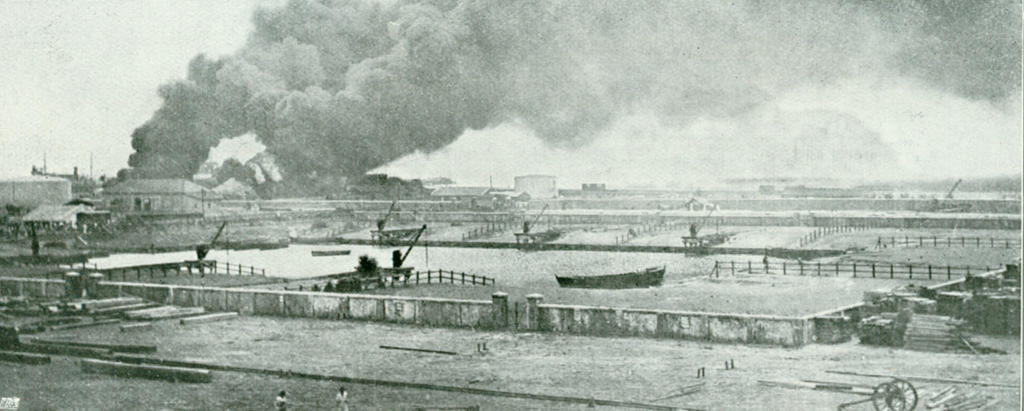
Burning oil tanks at Madras, India after attack by German light cruiser SMS Emden on 22 September 1914


Source Dutch magazine De Prins dated 14 November 1914


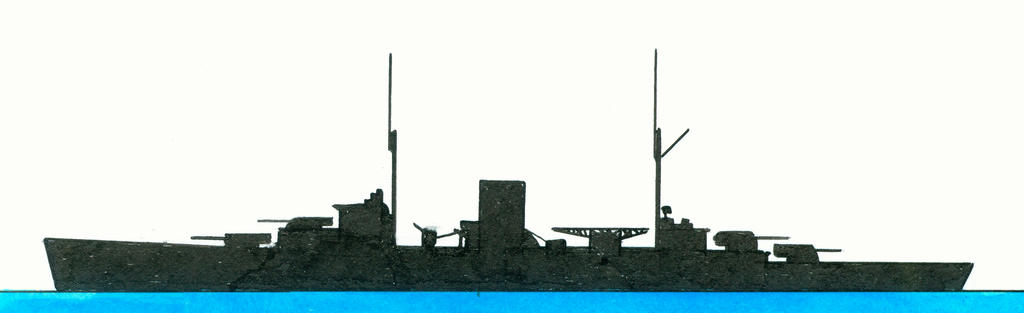
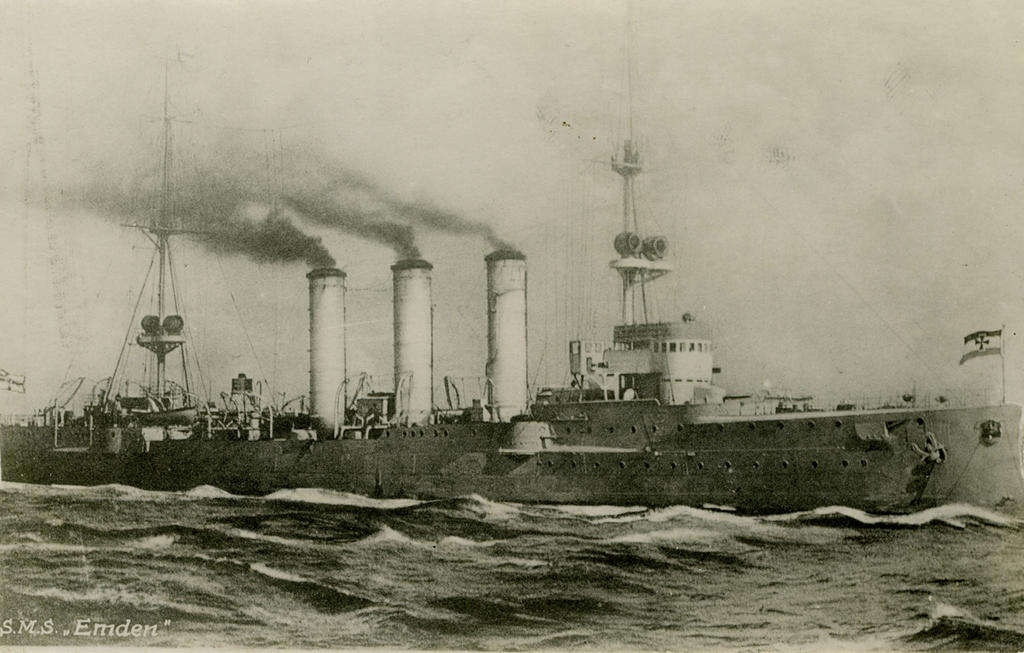
Part of the Dresden-class light cruisers consisting of the Dresden and Emden, both built under the 1905-1906 program, preceded by the Königsberg-class and succeeded by the Kolberg-class.

Building ordered as the Ersatz Pfeil on 6 April 1906, Laid down by the Kaiserliche Werft, Danzig, Germany on 1 November 1906, launched on 26 May 1908, commissioned on 10 July 1909, forced to leave the Dutch East Indies by the Dutch coastal defence ship Hr.Ms. Tromp when she wanted to bunker coals, she acted successful as a commerce raider, destroyed on 27 October at Penang the Russian cruiser Zhemchug and the French destroyer Mousquet, deliberately grounded off Direction Island, Cocos Islands to prevent she sunk after she was heavily damaged in a battle with the Australian cruiser HMAS Sydney on 9 November 1914, wreck torn apart by the tides and broken up in the early 1950s by a Japanese salvaging company.

Displacement 4.268 tons and as dimensions 118,3 (over all) x 13,5 x 5,53 metres or 388.1 x 44.3 x 18.2 feet. The machinery consisted of 2 triple expansion steam engines and 12 coal fired Marine-type water tube boilers supplying 13.315 ihp allowing a speed of 23,5 knots and with a speed of 12 knots and a coal bunker capacity of 860 tons coal was her range of 3,760 nautical miles. Her crew numbered 371 men (included 18 officers). The armour consisted of a 8cm/3.1” thick deck, 5cm/2.0” thick guns shields and with the conning tower protected by 10cm/3.9” thick armour. The armament consisted of 10x1-10,5cm/4”.1” L/40 quick firing guns, 8x1-5,2cm/2.0” L/55 quick firing guns and 2-45cm/17.7” torpedo tubes.