Translate

Showing posts with label Fiji. Show all posts

Sunday, 21 June 2026

Qantas flying-boat air service between Australia, French New Caledonia, New Hebrides and Fiji stopped according to the Australia Station Intelligence Summary dated 1 July 1955

An item reported that the Qantas flying-boat air service between Sydney, Australia and Noumea (French New Caledonia), New Hebrides (nowdays Republic of Vanatua) and Fiji was stopped on 1 June 1955. The service was taken over by two separate services. One while using Skymaster land-based aircraft started on 8 June with a fortnightly line to Noumea and another line every four weeks with as destination Nandi, Fiji. Within some months were airstrips at Vila and Espiritu Santo completed and the present service would be extended.(1)

Note

1. Qantas operated flying boats since the late 1930s first with Empire flying boats later Catalinas until the Second World War and after the war again.

Source

Website Royal Australian Navy, Sea Power Centre.

Tuesday, 24 March 2026

Republic of Fiji patrol vessel RFNS Timo 403 2024-

Royal Australian Navy 125 Anniversary International Fleet Review at Sydney, Australia March 2026

Clinton J Down Photography, Shellharbour, New South Wales, Australia

Thanks for allowing us to republish

Fiji-flagged, IMO 4736516, MMSI 520465000 and call sign 3DPX. Built by Austal Australia, Henderson Shipyard in 2024 as the 22nd Guardian-class patrol boat under the Pacific Maritime Security Program. 

Friday, 28 March 2025

Large number of Japanese warships gathered at Truk according to the U.S. Joint Intelligence Committee. Daily summary dated 13 January 1942

An item referred to a photographic reconnaissance of Truk pointing out the presence of a floating dock. There were 24 enemy vessels sighted including 1-8” cruiser, 14 destroyers, 4 seaplane carriers, 2 supply ships, 1 hospital ship and possible an aircraft carrier. The New Zealand government feared a Japanese attack on the Fiji Islands from ships concentrated in the eastern Marshalls.

Source

Map Room Papers (Roosevelt Administration), 1942 - 1945. U.S. Joint Intelligence Committee. Daily summary dated 13 January 1942 No. 34 

Saturday, 22 March 2025

Japanese naval force in Marshall Islands suitable for invading small islands according to the U.S. Joint Intelligence Committee. Daily summary dated 14 January 1942

An item referred to Australian sources reporting that the Japanese naval force in the Marshall Islands numbered 20 warships and 20 supply vessels. The force was just strong enough for invading small islands like Canton and Palmyra. British and New Zealand authorities believed that Samoa or Fiji was the target.

Source

Map Room Papers (Roosevelt Administration), 1942 - 1945. U.S. Joint Intelligence Committee. Daily summary dated 14 January 1942 No. 35. 

Wednesday, 5 March 2025

Japanese submarine attacked near Suva, Fiji Islands according to the U.S. Joint Intelligence Committee. Daily summary dated 17 January 1942

An item reported that an Allied auxiliary cruiser engaded a Japanese submarine near the entrance of Suva harbor, Fiji Islands.

Source

Map Room Papers (Roosevelt Administration), 1942 - 1945. U.S. Joint Intelligence Committee. Daily summary dated 17 January 1942 No. 38. 

Wednesday, 22 May 2024

Communication lines between Australia and the USA threatened according to the U.S. Joint Intelligence Committee. Daily summary dated 27 December 1941

An item referred to M/A London reporting that the Japanese had one division in the Marshall Islands available possible to operate against the Gilbert, Phoenix and Fiji Islands and to severe the direct communication lines between Australia and the USA.

Source

Map Room Papers (Roosevelt Administration), 1942 - 1945. U.S. Joint Intelligence Committee. Daily summary No. 17 dated 27 December 1941.

Saturday, 5 August 2023

British-Japanese tuna base at Levuka, Fiji Islands operational according to the Commercial Fisheries Review dated October 1964 No. 10

An item reported that the joint British-Japanese tuna base at Levuka, Fiji Islands started in begin August with 17 fishing vessels with the intention to expand eventually to a number of 26 vesssels. The base included 1-2,000 ton cold storage whare house, 1-60 ton freezing unit, 1-30 ton ice making plant and 1-600 ton ice storage. Yearly was 9,650 ton to be landed of which 6,750 ton for export and 2,900 ton for Japan. The quota for frozen export tune was 9,000 short tons. 

Wednesday, 2 August 2023

Japanese tuna fleets were active in the South Pacific according to the Commercial Fisheries Review dated September 1964 No. 9

An item reported that by end of June 196 two Japanese tuna fleets were active in the South Pacific and caught mainly albacore and yellowfin although the fishing was now slowing doen. The fleet with mothership Yugo Maru (5,040 gross tons) was early June active in the vicinity of the Fiji Islands with a daily average catch of around 5 metric tons/vessel, in late June reduced to 2.1-2.5 tons. The fleet with the mothership Nojima Maru (8,800 tons) was active in the fishing grounds south of Tahiti, average dail catch of close to 3 metric tons early June reduced tot 2.5 tons in late June. 

Wednesday, 19 July 2023

Construction of the joint Japanese-British tuna base at Levuka, Fiji Islands delayed according to the Commercial Fisheries Review dated July 1964 No. 7

An item reported that that the construction of the joint Japanese-British tuna base at Levuka, Fiji Islands was delayed with a month due to problems purchasing the needed materials. Instead of June was the base not to be fully operational until coming August. 

Saturday, 24 September 2022

German mine washed ashore of Matuku Island according to the U.S. Joint Intelligence Committee. Daily summary dated 20 August 1942

An item reported that the mine which washed ashore at Matuku Island, Fiji Group was definitely of German origin.

Source

Map Room Papers (Roosevelt Administration), 1942 - 1945. U.S. Joint Intelligence Committee. Daily summary No. 253 dated 20 August 1942.

Saturday, 16 April 2022

Japanese forces just invading islands northeast of Australia according to the U.S. Joint Intelligence Committee. Daily summary dated 21 March 1942

An item reported that during a Japanese air attack on 19 March the naval headquarters at Darwin, Australia were heavily damaged, fortunately with just a few casualties. It was believed that the Japanese force wanted to conqueror strategic points on islands northeast of Australia. Lacking a sufficient force it was not to be expected that wanted to invade the Fijis, New Caledonia or even Northeastern Australia.

Source

Map Room Papers (Roosevelt Administration), 1942 - 1945. U.S. Joint Intelligence Committee. Daily summary No. 101 dated 21 March 1942

Monday, 21 February 2022

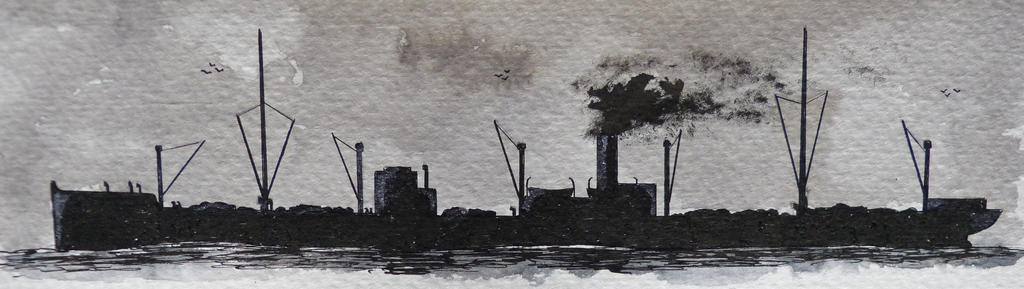
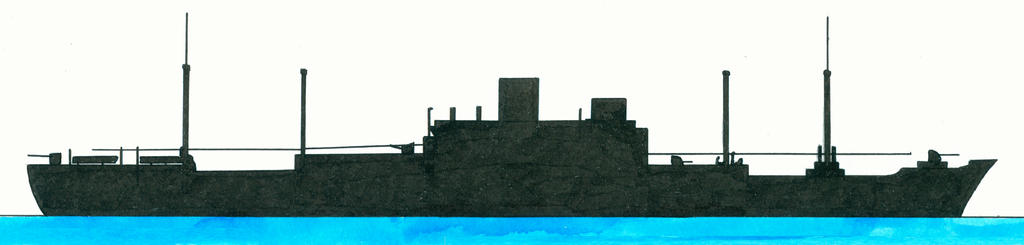
British motor cargo ship Hauraki 1921-1942 and Japanese transport Hoki Maru 1942-1944

Hauraki

Aikoku Maru-Hokoku Maru

Laid down by William Denny&Brothers Ltd., Dumbarton, Scotland for the Union SS Co. Of New Zealand in 1921, launched and baptized on 28 November 1921, completed on 13 May 1922, active on the shipping lines Australia-Fijis-Canada-Cook Islands, Australia-Fiji and Australia-USA, requisitioned by the British Ministry of War and became a transport, captured by the Japanese merchant cruisers Hokoku Maru and Aikoku Mari near Ceylon on 12 July 1942, renamed Hoki Maru in September 1942, served as auxiliary transport in the Imperial Japanese navy sunk in an American air attack off Truk on 17 February 1944 and stricken on 31 March 1945. Gross register tonnage 7,113 tons, under deck 6,489 tons, net tonnage 4,425 tons, 10,810 tons deadweight and as dimensions 450.8 x 58.2 x 31.4 x 28.6 (loaded) feet.

Speed 11 (normal)-13 (maximum) knots. Two screws. Diesel propulsion.

Monday, 22 November 2021

British minesweeping sloop HMS Veronica cruising in the South Atlantic Ocean according to the Secret Admiralty Weekly Intelligence Summary Nr. 42 for the week ending 22 October 1921

An item reported that British minesweeping sloop HMS Veronica was to visit Funafuti (Ellice Islands) between 18-21 October, Rotumah (Fiji Islands) between 22-24 October, Taviuni on 26 October, Ngau between 27-30 October, Suva between 31 October-3 November, Vanua Mbalavu between 4-6 November, Vavau between 7-9 November, Nukualofa between 11-15 November, Auckland between 21-23 November and Port Russell, Bay of Islands on 26 November.(1)

Note

1. Part of the Acacia-class minesweeping sloops, laid down by Dunlop Bremner&Company, Port Glasgow, Scotland in January 1915, launched on 27 May 1915, completed in August 1915 and sold to be broken up on 22 February 1935.

Source

The National Archives CAB-24-129-42. Secret Admiralty Weekly Intelligence Summary Nr. 42 for the week ending 22 October 1921.

Thursday, 8 July 2021

Establishing British coal bunker station in the Cook Islands proposed according to the Dutch newspaper De Sumatra Post dated 16 January 1903

An item reported that the British governor of Fiji proposed to found a coal bunker station on the island Soewarrow [Suwarrow, Cook Islands?] which would become of importance after the Panama Canal was completed. The islands was lying east of Samoa and north of the Cook Islands and was in the past property of the firm Henderson&Macfarlane, Auckland, New Zealand. The British consul of the Vriendschapseilanden [Tonga] Hamilton Hunter visited the island with the warship Forch for surveying purposes. The intention was to contract more as 700 British-Indies coolies for 3 year. They all would get an own piece of land for their subsistence until the station was completed.

Thursday, 30 March 2017

British radio station founded on Christmas Island according to the Dutch magazine Marineblad dated 1937 No. 3

An item referred to the magazine le Yacht dated 27 March 1937 reporting that the British flotilla vessel HMS Leith (1) left Fiji [Republic of Fiji] to found a radio station on Christmas Island [Australian external territory].

Note
1. Grimsby-class sloop, launched at Devonport Dockyard on 6 February 1933, launched on 9 September 1933, commissioned on 10 July 1934, decommissioned in June 1945, sold to become the merchant ship Byron on 25 November 1946, renamed Friendship in 1948, bought by the Royal Danish Navy on 1949, commissioned as the HMDS Galathea and sold to be broken up in 1955. 

Monday, 16 February 2015

Fiji patrol boat RFNS Kikau (202) 1995-

Commissioned on 27 May 1995. Built at the shipyard of Transfield-ASI (Australian Shipbuilding Industries), South Coogie, Australia. With a displacement of 165 tons (full load) and as dimensions 28,6 (waterline)-31,5 x 8,1 x 2,12 metres or 103‘ x 27‘ x 5,9‘. The armament consists of 1-2cm Oerlikon anti aircraft gun and 2x1-7,72mm machineguns. Her crew numbers 19 men. With a speed of 12 knots is her range 2.500 nautical miles. Speed maximum 20 knots. Fuel bunker capacity 20 tons. In police service. Like her sister ships was she built under the Australian Defence Corporation Program [Pacific Patrol Boat Program] ordered on 3 October 1985. Of the ASI 315 class also called Pacific or Pacific Forum-class.

Fiji patrol boat RFNS Kiro (203) 1995-

Commissioned on 14 October 1995. Built at the shipyard of Transfield-ASI (Australian Shipbuilding Industries), South Coogie, Australia. With a displacement of 165 tons (full load) and as dimensions 28,6 (waterline)-31,5 x 8,1 x 2,12 metres or 103‘ x 27‘ x 5,9‘. The armament consists of 1-2cm Oerlikon anti aircraft gun and 2x1-7,72mm machineguns. Her crew numbers 19 men. With a speed of 12 knots is her range 2.500 nautical miles. Speed maximum 20 knots. Fuel bunker capacity 20 tons. In police service. Like her sister ships was she built under the Australian Defence Corporation Program [Pacific Patrol Boat Program] ordered on 3 October 1985. Of the ASI 315 class also called Pacific or Pacific Forum-class.

Fiji patrol boat RFNS Kula (201) 1994-

Commissioned on 28 May 1994. Built at the shipyard of Transfield-ASI (Australian Shipbuilding Industries), South Coogie, Australia. With a displacement of 165 tons (full load) and as dimensions 28,6 (waterline)-31,5 x 8,1 x 2,12 metres or 103‘ x 27‘ x 5,9‘. The armament consists of 1-2cm Oerlikon anti aircraft gun and 2x1-7,72mm machineguns. Her crew numbers 19 men. With a speed of 12 knots is her range 2.500 nautical miles. Speed maximum 20 knots. Fuel bunker capacity 20 tons. In police service. Like her sister ships was she built under the Australian Defence Corporation Program [Pacific Patrol Boat Program] ordered on 3 October 1985. Of the ASI 315 class also called Pacific or Pacific Forum-class.