Translate

Showing posts with label Azores. Show all posts

Monday, 21 September 2026

Portuguese warship Sagres visited Tandjong Priok, Dutch East Indies in 1932


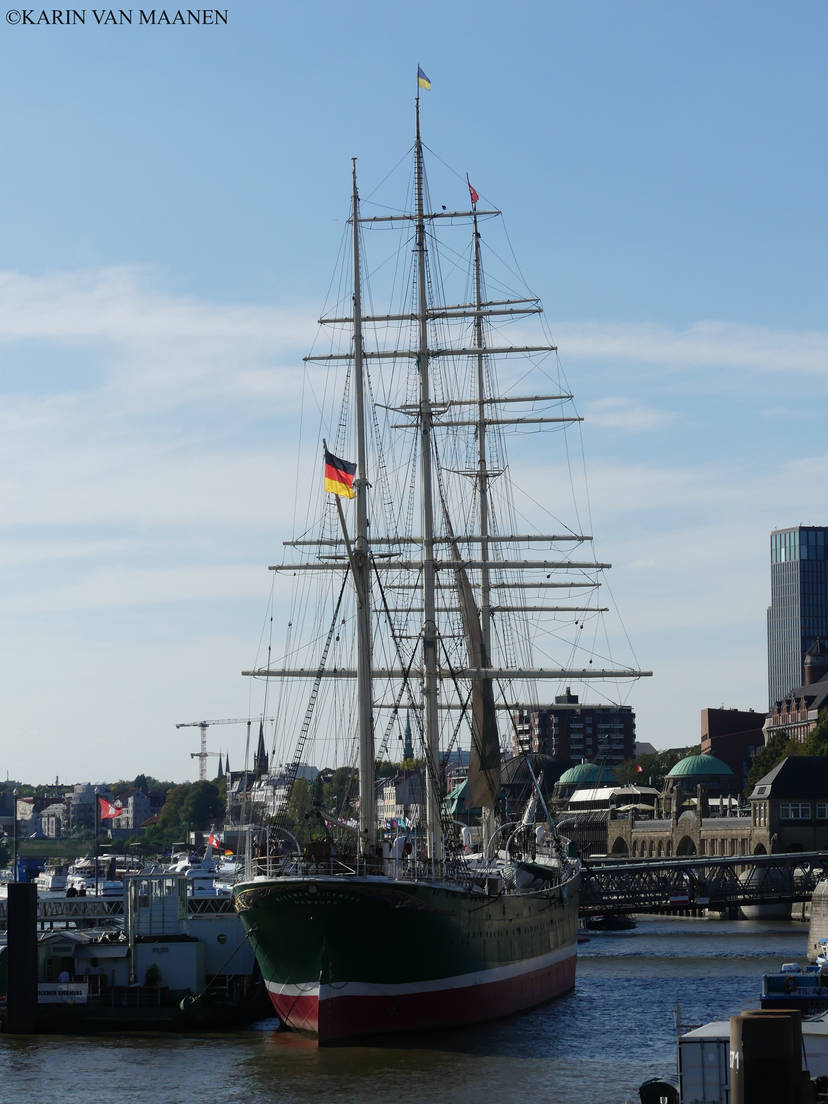
As Rickmer Rickmers at Hamburg, Germany 15 September 2023

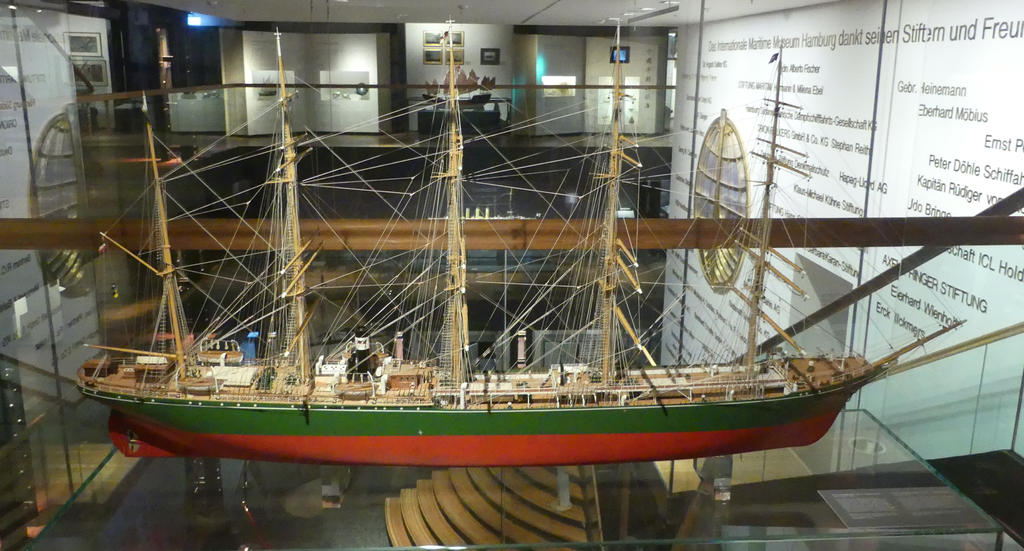
Maritime Museum Hamburg, Germany

The Jaarboek van de Koninklijke Nederlandsche Zeemacht 1931-1932 reported that the Portuguese troop transport Sagres visited Tandjong Priok, Dutch East Indies between 21-24 August 1932. The Dutch newspaper Het nieuws van den dag voor Nederlandsch-Indië dated 27 August 1932 reported her departure on 26 August towards Port Louis [Mauritius?]. Commanded by d’Oliveira. The edition dated 22 August reported her arrival on 21 August coming from Macau, commanded by Sohiveira.(1)

Note

1. Launched as Rickmer Rickmers by Rickmers Shipyard, Bremerhaven in August 1896, renamed Max in 1912, captured by Portuguese government at Horta, Azores in 1916, lent t the United Kingdom and renamed Flores, after the war returned to Portugal, commissioned in the Portuguese navy as NRP Sagres in 1924, renamed Santo André in 1962, hulked and sold in 1983 to the Verein Windjammer für Hamburg e.V., and retained original name as museumship.

Monday, 14 September 2026

British merchant ship Western Chief torpedoed and sunk according to the War Cabinet Weekly Résumé No. 83 of the Naval, Military and Air Situation 27 March-3 April 1941

An item reported that on 14 March was torpedoed and sunk by an enemy submarine the British merchant ship Western Chief, tonnage 5,759 tons , loaded with steel and general, underway from New York to Newport, part of convoy no, on the position 250 miles west north west of Rockall. Of the crew were 20 men landed on the Azores, the rest was killed. 

Source

National Archive UK. CAB-66-16-1. 

Friday, 15 May 2026

Portuguese training ship Sagres returned ta Lisbon, Portugal in August 1941

In his letter No. 1165 dated Lisbon 30 August 1941 reported the German naval attaché in Portugal to the Oberkommando der Kriegsmarine at Berlin the arrival of the Portuguese training ship Sagres at Lisbon in the late morning of 29 August returning from Ponta Delgada, Azores.

Source

Bundesarchive. RM 11-17. German naval attaché in Portugal. 

Friday, 8 May 2026

British destroyer HMS Nestor visited the Azores in September 1941

In his letter No. 1200dated Lisbon 5 September 1941 reported the German naval attaché in Portugal to the Oberkommando der Kriegsmarine at Berlin referring to an Italian source at Ponta Delgada that the British destroyer HMS Ebotor [misspelling] after loading 220 ton nafta on 2 September departed towards Freetown [Sierra Leone].(1)

Note

1. The British destroyer HMS Nestor G02. Part of N-class preceded by Tribal-class succeeded by L- and M-classes. Laid down by Fairfield Shipbuilding and Engineering Company Limited, Scotland in 1939, launched on 9 July 1940, commissioned on 3 February 1941 and scuttled on 16 June 1942 after being damaged in an air attack on 15 June 1942 while underway from Haifa towards Malta but the convoy changed course to Malta with the attack off Greece.

Source

Bundesarchive. RM 11-17. German naval attaché in Portugal. 

Thursday, 7 May 2026

Portuguese steamship Lourenço Marques with troops to the Azores in September 1941

In his letter No. 1213 dated Lisbon8 September 1941 reported the German naval attaché in Portugal to the Oberkommando der Kriegsmarine at Berlin referring to an Italian source that on 2 September with the steamship Lourenço Marques from Lisbon, Portugal towards Ponta Delgada, Azores around 1,600 men of the infantry regiments Nos. 7, 12 and 21 were shipped.

Source

Bundesarchive. RM 11-17. German naval attaché in Portugal. 

Tuesday, 5 May 2026

British guard vessel with pennant 99 visited Ponte Delgada, São Miguel, Azores in September 1941

In his letter No. 1330 dated Lisbon 29 September 1941 reported the German naval attaché in Portugal to the Oberkommando der Kriegsmarine at Berlin referring to an Italian source the arrival of the British guard vessel with pennant No. 99 at Ponte Delgada, São Miguel, Azores in the morning of 25 September for supplies.

Source

Bundesarchive. RM 11-17. German naval attaché in Portugal. 

Monday, 4 May 2026

British destroyer HMS Nestor visited Ponte Delgada, São Miguel, Azores in September 1941

In his letter No. 1267 dated Lisbon 18 September 1941 reported the German naval attaché in Portugal to the Oberkommando der Kriegsmarine at Berlin referring to an Australian service the arrival of the British destroyer HMS Nestor G02 (1) at Ponte Delgada, São Miguel, Azores on 2 September. After loading 220 ton oil she departed the same day to Freetown, Sierra Leone. An Italian source called her not correctly Ebotor.

1. The British destroyer HMS Nestor G02. Part of N-class preceded by Tribal-class succeeded by L- and M-classes. Laid down by Fairfield Shipbuilding and Engineering Company Limited, Scotland in 1939, launched on 9 July 1940, commissioned on 3 February 1941 and scuttled on 16 June 1942 after being damaged in an air attack on 15 June 1942 while underway from Haifa towards Malta but the convoy changed course to Malta with the attack off Greece.

Source

Bundesarchive. RM 11-17. German naval attaché in Portugal. 

Thursday, 9 April 2026

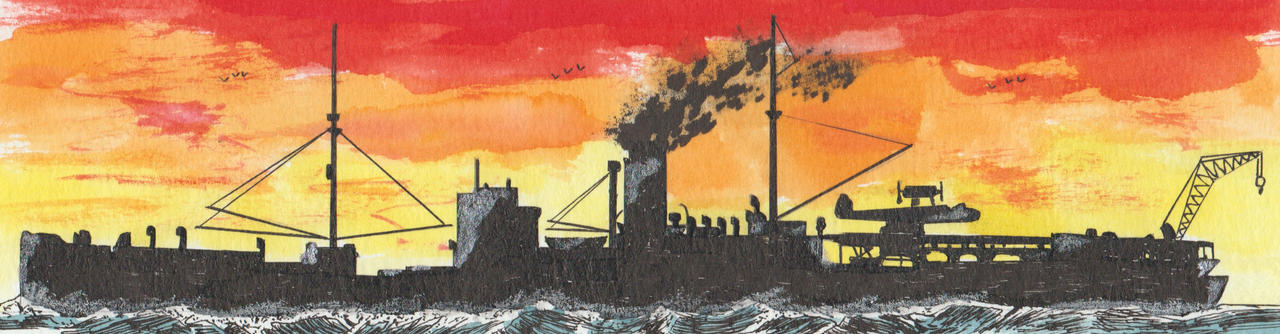
German Lufthansa catapult ship Schwabenland (1925) 1934-1939 (1946)

©Warshipsresearch.blogspot.com

In mid thirties possessed the German airline Lufthansa four mother ships from which planes were catapulted for the mail service between Europe (Azores) and the United States (New York). Two of the four ships were especially built for the Lufthansa. (1) Launched at the Deutsche Werke AG, Kiel, Germany 14 March 1925 as the freighter Schwarzenfels for account if the DDG Hansa and handed over to the company 16 July of the same year. Her dimensions were 148,8 x 18,4 x 8,49 metres and a measurement of 7,894 BRT. The 6-cylinder diesel engine supplied 3,600 hp allowing a speed of 12 knots with her two screws. As a freighter numbered her crew 45 men and was there accommodation available for maximum 10 passengers. Her sister ships were the Braunfels, Rotenfels, Altenfels, Neuenfels and Weissenfels. She was bought by the Lufthansa 28 February 1934 and fitted out at Bremen with a Heinkel K-7 catapult. Returning planes landed on the water surface and were with a 12 tons crane of Kampfnagel taken back on board again. She was rebuilt in 1939 again to be used on the German Antarctic Expedition 1939-1939 to search for a suitable whaler station. Her hull was strengthened considered the ice and she was fitted out with an auxiliary diesel. Her launching platform was shortened and strengthened. When the Second World War broke out she was seized by the German Luftwaffe 12 October 1939 to serve as a catapult ship for night flyers. Torpedoed by the British submarine HMS Terrapin on 24 March 1944 was she beached in the Flekkefjord and in May-June 1944 temporarily refloated and transported to Bergen where she was again damaged due to a British air attack 4 October of the same year. She was not complete repaired but since February 1945 used as a store ship for the Marineausrüstungstselle (M.A.S.T.) in the Oslofjord. After the war she was taken by the British Royal Navy and since January 1946 used as an accommodation ship at Sandvika, Oslofjord and finally loaded with 1.400 tons of poison, gas and  ammunition scuttled in the Skagerrrak. Call signs as the Schwarzenfels first QMBH and later DOFW and as the Schwabenland DOFW.

Monday, 30 March 2026

German blockaderunner Rudolf Albrecht in 1940

In a letter dated 13 April 1942 No. 1329 to the O.K.M./1 Abteilung Skl. was the so-called ‘Etappen’-organisation of the navy described. In the attachment were the blockade runners decribed used for this purpose. Motor tanker Rudolf Albrecht. Not loaded. Left Ponta Delgada, Azores on 8 May 1904. Arrived at Tenerife, Canary Islands, Spain on 17/18 May 1940. Transfer. Seized to be used as Etappen-V-Schiff.

Source

Bundesarchive RM 7-223.

Tuesday, 17 March 2026

German passenger ship Bremen probably at Murmansk, Russia according to a report of the American Naval Attaché at Berlin, Germany Nr. R562 dated 15 September 1939

Diary note dated Wednesday 6 September 1939. reported that the same day it became known that the Bremen of which her fate was unknown since leaving New York and falsely reported as captured on Sunday 5 September off Lisbon, Portugal in fact arrived at Murmansk, Russia at 09.00 o’clock this day.(1)

Source

The Dutch newspaper Algemeen Handelsblad dated 29 August 1939 published an item dated New York, USA 29 August reporting that the German passengership was ordered to leave New York towards Germany without passengers. She was not allowed to depart before the United States Customs Service searched the ships for spies and contraband. The Het volk dated 18 September 1939 referred to a not confirmed tiding that she entered the North Russian harbor Murmansk. The De Volkskrant dated 18 September reported that her position was uncertain. Tidings reported that she was near the Azores, lying in an Icelandic harbor, seized by the British or now was Italy-flagged, but the latest news was that she was lying in Murmansk. Laid down by Deutsche Schiff- und Maschinenbau, Bremen for the Norddeutscher Lloyd op de shipping line Bremerhaven-Southampton, England-Cherbourg, France-New York, USA on 18 June 1927, launched on 16 August 1928m completed on 5 July 1929, maiden voyage begun on 16 July 1929, left New York on 30 August 1939, underway painted grey and portholes and windows covered, arrived at Murmansk on 6 December, left on 10 December arriving at Bremerhaven on 13 December, heavily damaged by fire at Bremerhaven between 16-18 March 1941, broken up to the waterline, towed up the Weser and scuttled with explosives on 1 April 1946 at Nordenham.

Source

National Archives. FDR Presidential Library&Museum Roosevelt PSFC000175. War diary Naval Attaché Berlin, volume 1 (1 September 1939-26 May 1940)

Monday, 16 March 2026

Foreign naval attaches once a day informed at German Navy Department according to a report of the American Naval Attaché at Berlin, Germany Nr. R562 dated 15 September 1939

Diary note dated Wednesday 6 September 1939. An item reported that finally after days requesting and making arrangements the various foreign naval attaches in Berlin were allowed to visit the German Navy Department once a day to acquire the latest war news. 

Source

National Archives. FDR Presidential Library&Museum Roosevelt PSFC000175. War diary Naval Attaché Berlin, volume 1 (1 September 1939-26 May 1940)

Sunday, 8 March 2026

German blockade runner Germania in 1940-1942

In a letter dated 13 April 1942 No. 1329 to the O.K.M./1 Abteilung Skl. was the so-called ‘Etappen’-organisation of the navy described. In the attachment were the blockade runners decribed used for this purpose. Motor tanker Germania. Loaded with about 6,000 ton petrol. Left Ponta Delgada, Azores in the night of 17/18 November 1940. Arrived at Las Palmas on 28 November 1940. Transfer for fuel and unloaidng petrol. Loaded with petrol. Left Las Palmas, Canary Islands on 26 May 1940. Arrived at Tenerife on 27 May 1940, Transfer for unloading petrol at Cepsa. Left Teneriffe unloaded on 4 March 1942 towards Germany

Source

Bundesarchiv RM 7/223

Friday, 6 March 2026

German blockade runner Klaus Schoke in 1940

In a letter dated 13 April 1942 No. 1329 to the O.K.M./1 Abteilung Skl. was the so-called ‘Etappen’-organisation of the navy described. In the attachment were the blockade runners decribed used for this purpose. Klaus Schoke. Not loaded. Left Horta, Azores on 23 November 1940, arrived at Ponta Delgada for repairs on 25 November 1940 and left Ponta Delgada on 2 December 1940. Was to be transferred by OKW/Ausl. IV to Vigo, Spain. Halted by British warsship on 26 December 1940 and crew brought to England.(1)

Note

1. The Australian newspaper The Canberra Times dated Tuesday 17 December 1940 reported that she was underway towards Germany when halted on 6 December 1940. Her crew numbered 8 officers and 22 sailors.

Source

Bundesarchiv RM 7/223

Wednesday, 18 February 2026

Portuguese cruiser Republica visited New York and Boston, USA in 1912

©Warshipsresearch.blogspot.com

The Portuguese legation, Washington, USA wrote on 27 January 1912 that the Portuguese cruiser Republica would arriva at New York, USA on 31 January and would depart for the Azores on 5 February. The US Department of War wrote on 30 January to the Secretary of State that the usual courtesies were to be extended. The Portuguese legistation wrote on 31 January that the Republica after leaving New York on 6 January would visit Boston.

Source

Record Group 64: Records of the National Archives and Records Administration Series: Records of the Department of State Relating to Internal Affairs of Portugal. Military Affairs and the Army: 853.20 - 853.206/7 THRU Naval Affairs, Navy, Naval Vessels: Equipment and Supplies: 853.34 - 853.348. Microcopy 705 roll 13

Thursday, 22 January 2026

American USCGC cutter Ingham visited Portugal in September 1941

According to a letter dated Berlin 19 September 1941 from the Seekriegsleitung received by the German naval attaché in Portugal used the American coast guard cruiser Ingham a neutral Portuguese harbor as base for carrying out war tasks. The Portuguese government was to be made clear that this abuse by American forces of the Portuguese neutrality could cause problems. In a telegram dated 16 September was made clear that if the Ingham after presumable patrolling on the convoy route Gibraltar-England or Azores-England again Lisbon visited for fuel and victuals the Portuguese governement would be adressed up.(1)

Note

1. This must be the USCGC cutter Ingham, contract awarded on 30 January 1934, laid down by Philadelphia Navy Shipyard on 1 May 1935, launched on 3 June 1936, commissioned on 12 September 1936, decommissioned on 27 May 1988 and since then a museum ship.

Source

Bundesarchive. RM 11-17. German naval attaché in Portugal. 

Tuesday, 20 January 2026

British auxiliary cruiser Antewerp or City of Antwerp visited Ponte Delgada, São Miguel, Azores in October 1941

In his letter No. 1519 dated Lisbon 29 October 1941 reported the German naval attaché in Portugal to the Oberkommando der Kriegsmarine at Berlin the arrival of the British auxiliary cruiser Antewerp or City of Antwerp of 2,957 tons at Ponte Delgada, São Miguel, Azores in the morning of 25 October after the departure of the Malines and departed later to Gibraltar. 

Monday, 19 January 2026

British tug Brigant visited Ponte Delgada, São Miguel, Azores in October 1941

In his letter No. 1519 dated Lisbon 29 October 1941 reported the German naval attaché in Portugal to the Oberkommando der Kriegsmarine at Berlin the arrival of the British tug Brigant at Ponte Delgada, São Miguel, Azores on 26 October and after loading supplies immediately departed.(1)

Note

1. Similar  the British navy rescue tug HMS Brigand W83, launched by Fleming&Ferguson Ltd., Pisley, Scotland on 8 July 1937, commissioned in January 1838 and sold to be broken up at Italy on 23 September 1960?

Source

Bundesarchive. RM 11-17. German naval attaché in Portugal.

Wednesday, 14 January 2026

Portuguese sail training ship Sagres underway to the Azores in August 1941

In his letter No. 1023dated Lisbon 6 August 1941 reported the German naval attaché in Portugal to the Oberkommando der Kriegsmarine at Berlin the departure of the Portuguese sail training ship Sagres for a training cruise towards Funchal, Horta, Angra do Heroisme and Ponta Delgada, Azores.On board were members of the so-called State Youth (Mocidade Portuguesa) who were blessed by the bishop of Helenopolis before going on board. The Sagres arrived on 5 August at Funchal and was expected to be back at Lisbon on 31 August.

Source

Bundesarchive. RM 11-17. German naval attaché in Portugal. 

Thursday, 8 January 2026

Portuguese president Carmona visiting the Azores in July 1941

In his letter No. 888 dated Lisbon 16 July 1941 reported the German naval attaché in Portugal to the Oberkommando der Kriegsmarine at Berlin that the Carvalho Araujo which on board president Carmona (1) would depart on 23 July to the Azores. The escort consisted of the destroyers Dao and Lima and the aviso Afonso de Albuquerque. Carmona was accompanied by the minister of navy Commandante Bettencourt (2) with lieutenant Evaristo Gonçalves as adjutant and as naval adjutant of the president Fregattenkapitän Silva Monteiro (who was owner of the Ordens vom Deutschen Adler).

Notes

1. António Óscar de Fragoso Carmona (24 November 1869 Lisbon, Portugal – 18 April 1951 Lisbon, Portugal), president of Portugal 1926-1951.

2. Manuel Ortins Torres de Bettencourt (12 June 1982 Santa Cruz da Graciosa–8 July 1959 Cascais , Estoril).

Source

Bundesarchive. RM 11-17. German naval attaché in Portugal. 

Wednesday, 7 January 2026

Portuguese steamship Carvalho Araujo disembarked engineers and unloaded guns at Angra de Heroismo, Azore in 1941

In his letter No. 859 dated Lisbon 107 July 1941 reported the German naval attaché in Portugal to the Oberkommando der Kriegsmarine at Berlin that according to the German vice consul at Angra de Heroismo, Azores on 24 June the Portuguese steamship Carvalho Araujo disembarked 200 engineers and unloaded 6-10cm stationary guns.