An item reported that between 19-20 August headed to the west 2 British and 1 Greek steamship(s).
Source
Bundesarchiv RM-40-622

An item reported that between 19-20 August headed to the west 2 British and 1 Greek steamship(s).
Source
Bundesarchiv RM-40-622
An item reported that between 19-20 August headed to the east 1 American cruiser, 1 American steamship, 1 Spanish steamship. As part of a convoy 1 auxiliary cruiser, 2 steamships, 1 Greek and 1 Danish steamship.
Source
Bundesarchiv RM-40-622
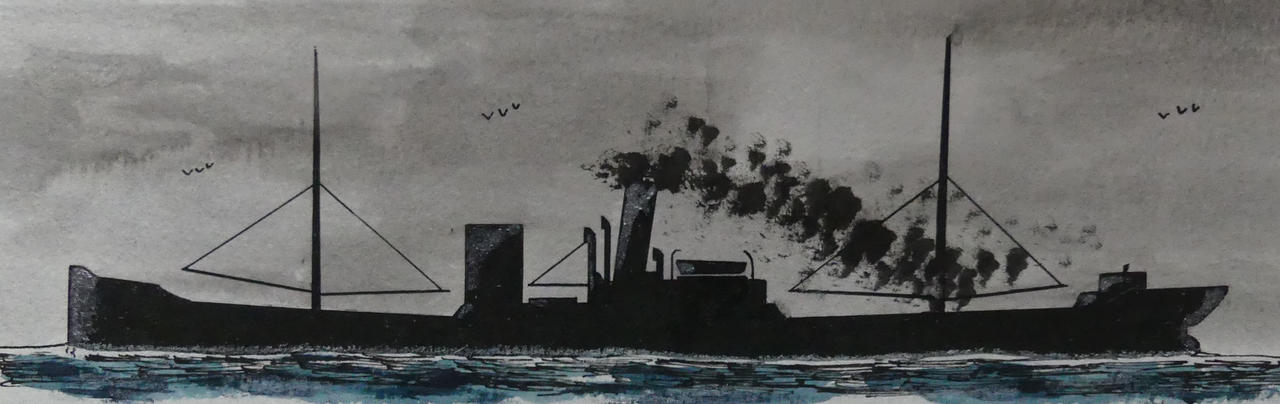
Toyokawa Maru©Warshipsresearch.blogspot.com
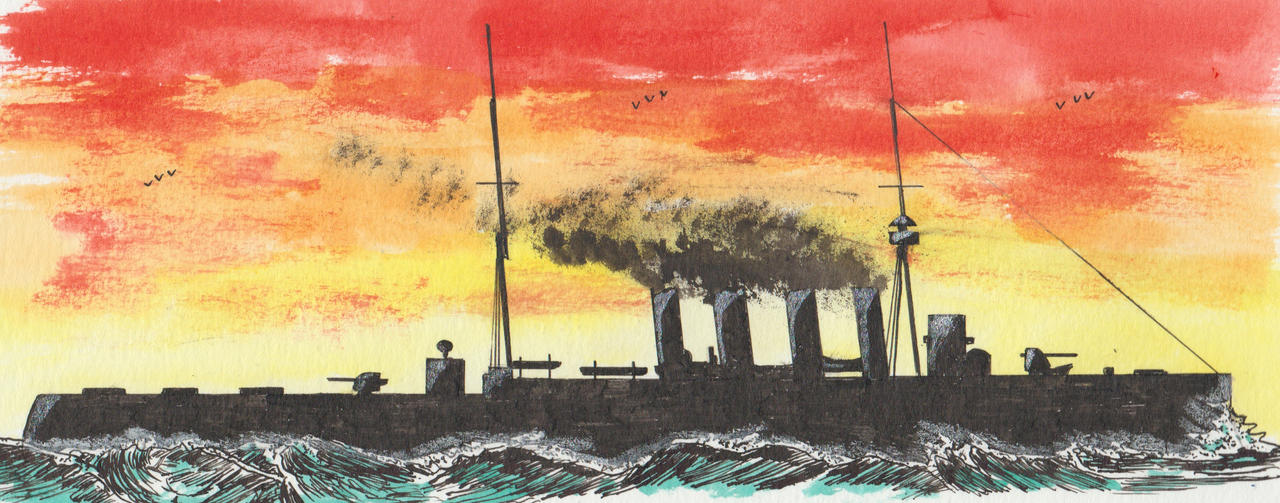
British Town-class Bristol sub-class cruser©Warshipsresearch.blogspot.com
Homeport Hutyu. Owner in 1939 Matsowa Kisen K.K. Built by Wood Skinner&Co. Ltd., Bill Quay, Newcastle-on-Tyne, England with yard number 173 for account of A/S Bangor, Kristiania, Norway in end 1910, seized by British light cruiser HMS Bristol in the Strait of Magellan off the Chilean Juan Fernandez Islands while she was loaded with coal and provision for the German light cruiser SMS Dresden (1) on 14 March 1915, registered at Port Stanley, Falkland Islands as the British Seattle, sold to the Government of South Africa (department of Harbors and Railways, Cape Town) in 1919, sold to Japan and renamed Toyokawa Maru in 1928, requisitioned by the army and became troop transport Allotted IJA No. 224 on 7 November 1941, released and returned to owners and the same day requisitioned by the navy on 28 January 1944 and after striking an aerial mine off Shimonoseki, Japan sunk on 5 July 1945.
Gross tonnage 5,124 tons, under deck 4,737 tons, net tonnage 3,707, deadweight 8,160 tons and as dimensions 385.0 x 54.0 x 27.8 x 8 (light)-25 (loaded) feet. Reciprocating propulsion, single screw, horsepower 516 ihp, coal bunker capacity 1,150 tons, range 0,000 nautical miles/10 knots and speed 10 (normal cruising)-12 (maximum) knots.
Note
1. Part of Dresden-class preceded by König-class succeeded by Kolberg-class. Laid down as Ersatz Comet by Blohm&Voss, Hamburg, Germany in 1906, launched on 5 October 1907, commissioned on 14 November 1908. Since the outbreak of the First World War active as commerce raider in the South American Atlantic waters, then joined the German East Asia Squadron commanded by Graf Maximum von Spee, survived as only German ship the Battle of the Falkland Islands and was finally scuttled off Robinson Crusoe Island (in the past called Más a Tierra) on 14 March 1915 after being attacked by the HMS Kent and Glasgow.
An item reported that according to an agent was the harbor of Genoa, Italy barricaded with nets and closed for passing ships between 19.00-08:00 o’clock. It was not allowed to enter the harbor by night. Other reports however stated still ships were arriving or leaving by darkness, apparently were the nets temporarily opened when ordered.
Source
Bundesarchiv RM-40-622
An item reported that reliable sources stated that from Barcelona continuously large amounts of old railway tracks and lead were shipped to Italy and canned goods to Saloniki, Greece.
Source
Bundesarchiv RM-40-622
An item reported that according to reliable sources on 27 July were lying in the harbor of Genoa, Italy 9 Italian, 3 British, 2 Danish, 3 Norwegian, 4 Spanish cargo ships, 1 American and 1 Italian steam tanker.
Source
Bundesarchiv RM-40-622

Kawakaze-class©Warshipsresearch.blogspot.com
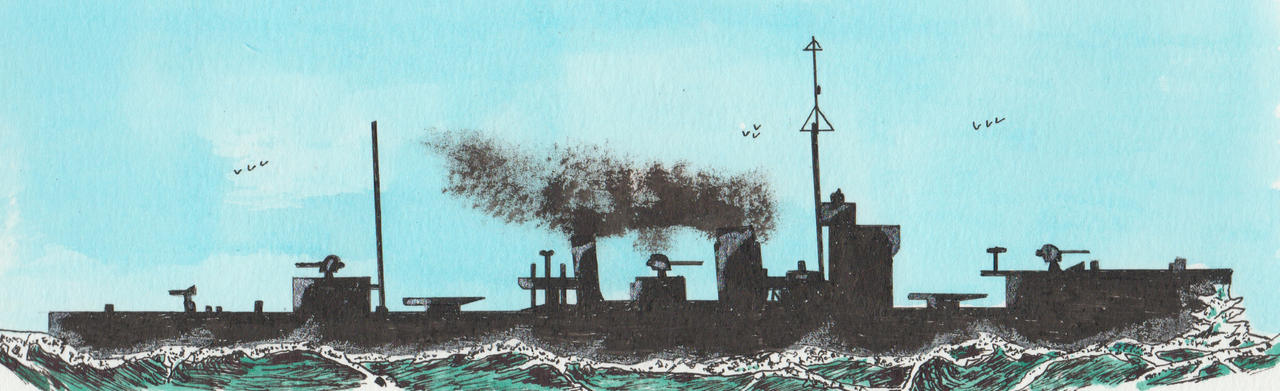
Momi-class©Warshipsresearch.blogspot.com
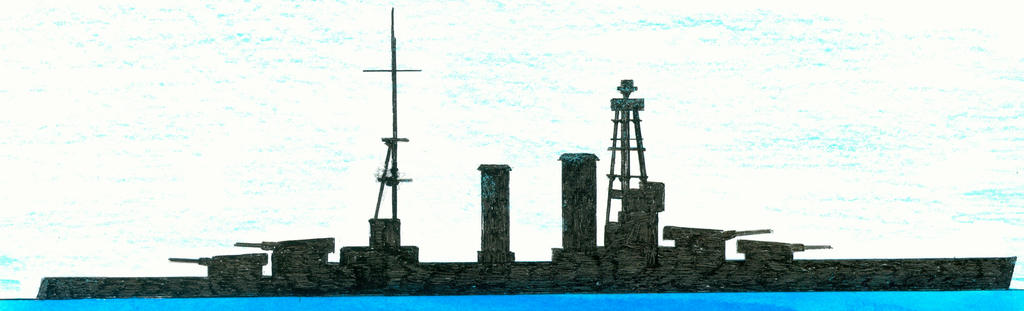
battleship Nagato©Warshipsresearch.blogspot.com
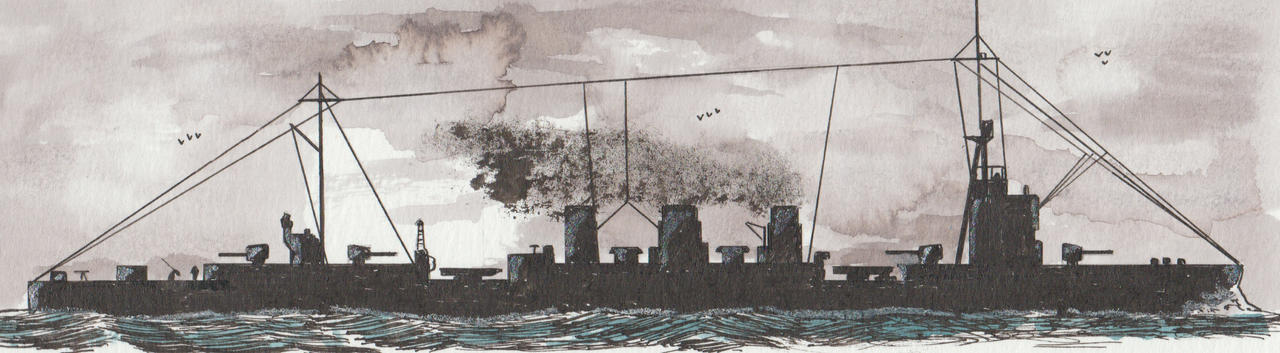
Tenryu-class cruisers©Warshipsresearch.blogspot.com
Part of Kawakaze-class consisting of the Kawkaze and Tanikaze preceded by Enoki-class succeeded by Momi-class. Built under the 8-4 Fleet Program Fiscal Year 1915 and able to escort the battleship Nagato and both Tenryu-class cruisers. Originally intended to be a follow-on version of the Isokaze-class design but nevertheless modified and afar more powerful. Launched by Maizuru Naval Arsenal on 20 July 1918, completed on 30 January 1919, decommissioned on 1 April 1935, hulked and renamed Hai Kan No. 19, reclassified as training ship for Kaiten manned torpedoes in 1944, scuttled as breakwater at Kure and broken up after 1945
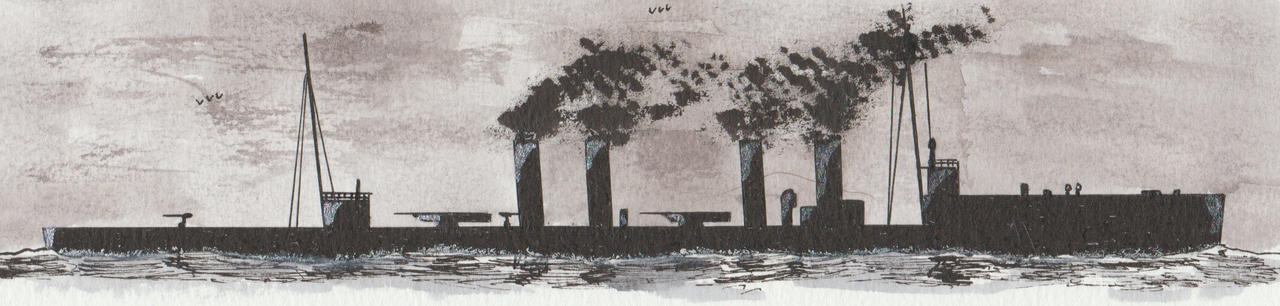
Flusser, Smith-class. ©Warshipsresearch.blogspot.com
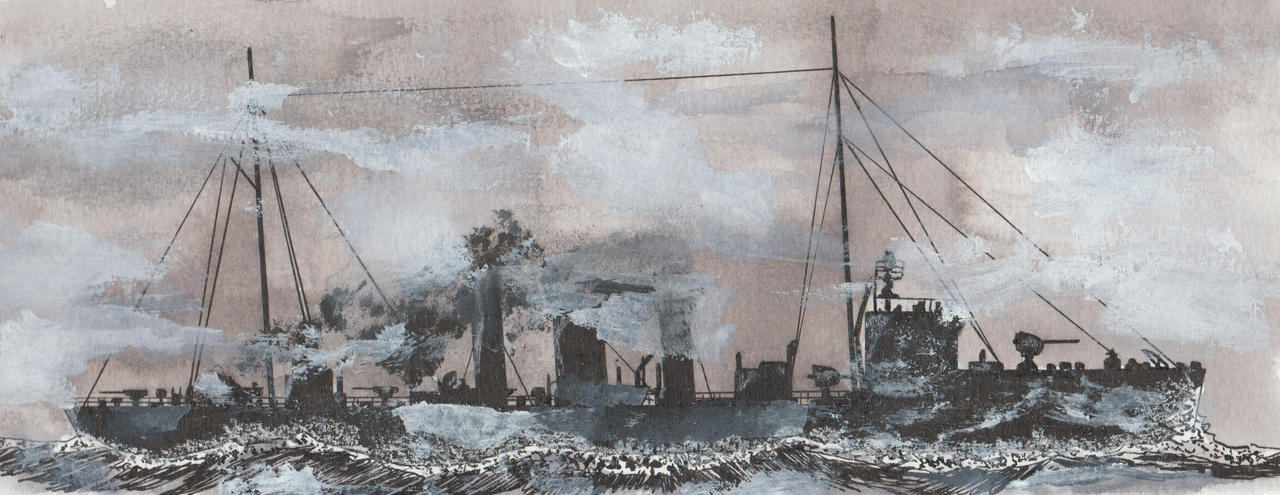
Roe, Paulding-class. ©Warshipsresearch.blogspot.com
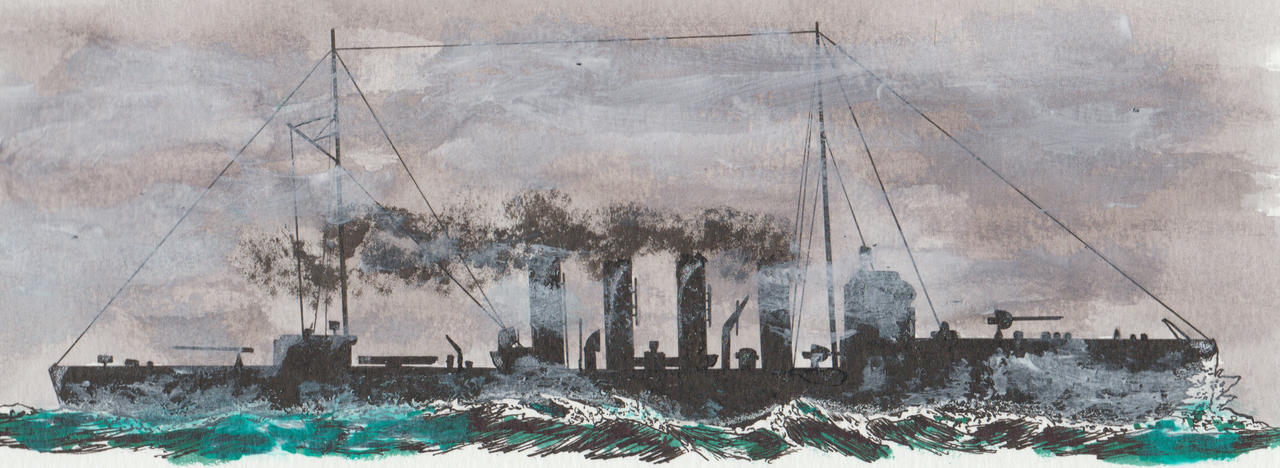
Duncan, Cassin-class. ©Warshipsresearch.blogspot.com
Part of Paulding-class (DD 22-42) preceded by Smith-class succeeded by Cassin-class. Some times DD 24-28, 30-31, 33 and 36 are considered as the Roe-class and DD 32,35 and 38-42 as Monaghan-class. Silhouettes differs while the DD 24-27, 30-32, 34, 36-37 and 40 possessed 3 instead of 4 funnels, with the middle funnel being larger with two boiler uptakes trunked together. The edition Jane’s Fighting Ships of World War I called the class instead of Paulding-class the Drayton-class which was unofficially also known as the Flivver Type. Laid down by Fore River Shipbuilding Company, Quincy, Massachusetts, USA on 17 July 1911, launched on 3 April 1912, commissioned on 6 December 1912, decommissioned on 12 December 1919, transferred to the US Coast Guard on 16 May 1924, commissioned as Henley CG-12 on 14 November 1924, decommissioned and returned to the navy on 30 January 1931, stricken on 5 July 1934 and sold Michael Flynn Inc., Brooklyn, New York, USA to be broken up on 22 August 1934.
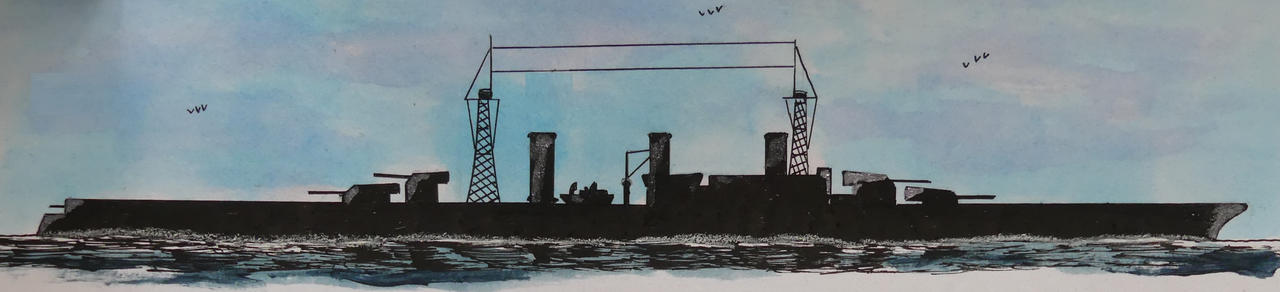
©Warshipsresearch.blogspot.com
Design requested by the Senate and handed over on 14 February 1917. Senator Benjamin R. Tillman (1) of South Carolina supported the call for a design of a battleship of maximum size still available to pass the Panama Canal and us existing facilities. Never realized. Displacement 70,000 tons and as dimensions 975 (waterline) x 103 (waterline) x 32.9 feet. Electric Drive propulsion, 18 boiler rooms, horsepower 65,000 ehp at 26.5 knots, tange 12,000 nautical miles/10 knots. Maximum speed 26.5 knots.
Armament 4x6-40.64cm/16”50 cal guns, 21-12.7cm/5”quick firing guns, 7.62mc/3”high powered anti aircraft guns and 4-53.34cm 21” submerged torpedo tubes.
Armor. Main side belt maximum withe 19’10 1/2”, depth below waterline 9 feet, thickness 13”-13”-9”. Barbettes heavy part 17”, light part 4”. Turrets thickness port 20”, sides 14.11”, top 6”, rear 10”.Conning tower thickness 18”, top 9”? Tower tube heavy part 18”, light part 6”. Uptake protection thickness 13-10-7”. Protective deck middle 5”, after 6 1/2”. Cost hull 17,200,000, machinery 7,700,000=total C.M. 24,900,000.
Total normal displacement 70,000 tons
Hull 33,613
Hull fittings including 800 ton for gyro stabilizers 3,000
Protection 17,796
Steam engineering 5,000
Reserve feed 900
Battery 2,850
Ammunition 2,000
Equipment 775
Outfit and 2/3 stores 1,050
Fuel oil, 2/3 full supply 3,000
Margin 16
Rest of details on sheet not copied.
Note
1. Benjamin Ryan Tillman (11 August 1847-3 July 1918), Democratic Party plotician, governor of South Carolina 1890-1894 and senator 1895-1918. See for instance: Construction of battleships. Remarks of Hon. Benjamin R. Tillman,... relative to the construction of 60,000-ton battleships; also copy of a Senate resolution instructing the Committee on Naval Affairs to make an investigation of the matter, together with an article entitled "Build the Limit," by Commander W.A. Moffett, United States Navy. Presented by Mr. Tillman. June 20, 1916.
Source
Naval History and Heritage Command. Bureau of Ships Spring Styles Book 1 1911-1925. S-584-107. Preliminary design 171.
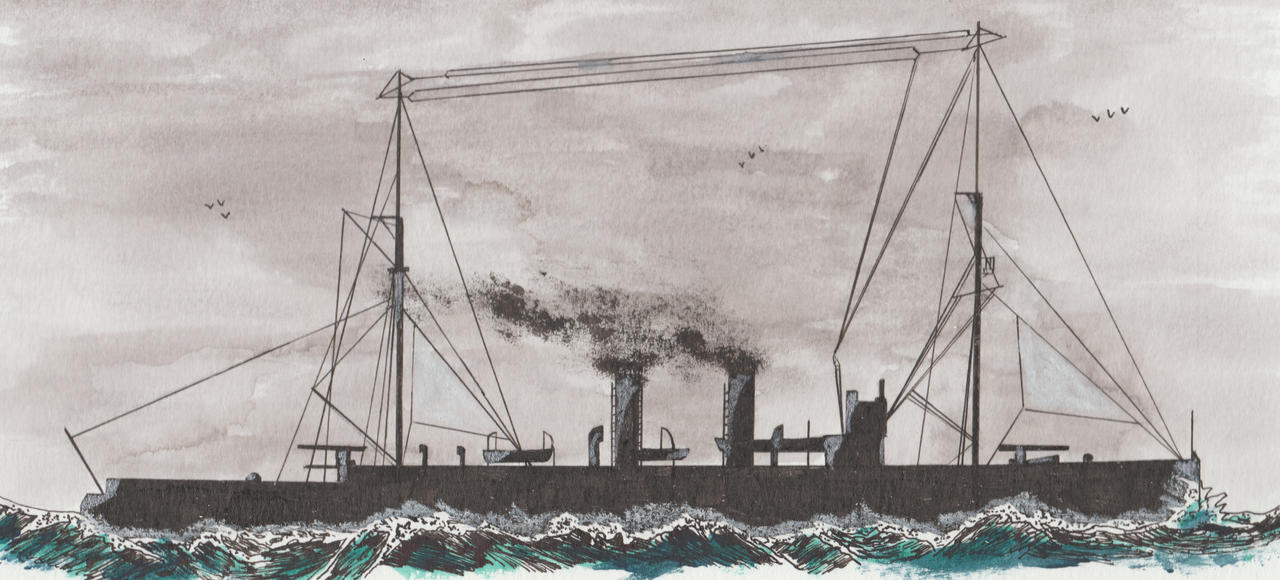
©Warshipsresearch.blogspot.com
The Arabis-class was built under the Emergency War Programme of the First World War. At the end of 1914 was the design completed and in July 1915 were 36 ships in 3 batches ordered for the British Royal Navy. British shipyards built an additional 8 vessels for the French Navy. Part of Arabis-class preceded by Azalea- and Acacia classes and preceded by Aubrietia-class. The Arabis-class was just like 4 other subclasses part of the so-called Flower-class, the later also known as Cabbage-class or the Herbaceous Borders. Ordered in January 1916. Launched by D.&W. Henderson and Company, Partick, Scotland on 29 May 1916, delivered to France in 1916 and deleted in 1933.
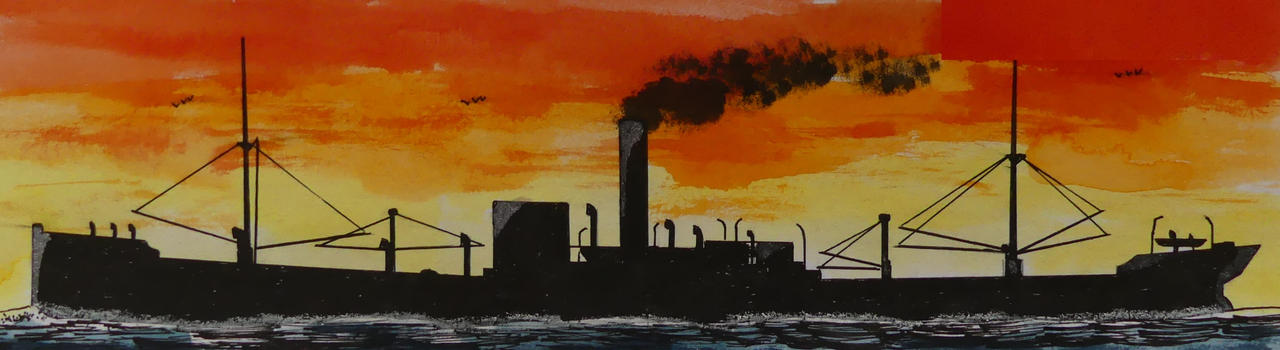
©Warshipsresearch.blogspot.com
Call sign JEGD. Homeport Osaka, Japan. Owner in 1939 Osaka Syosen K.K., Osaka. Sister ships Manila, Maru, Alabama Maru, Arizona Maru, Afrika Maru, Arabia Maru and Hawaii Maru. Homeport Osaka, Japan. Owner in 1939 Osaka Syosen K.K., Osaka. Built by Mitsubishi Zosen Kaisha, Ld. in May 1918, requisitioned by the army in 1941, served as hospital ship and transport and sunk by the American submarine USS Bluegill in the South China Sea 25 kilometres north west of Lubang, Island, Philippines on 18 October 1944. Gross tonnage9,480 tons, under deck 8,797 tons, net tonnage 5,790 tons and as dimensions 475.0 x 61.0 x 40.7 x 11 (light)-27.7 (loaded) feet. Reciprocating propulsion, horsepower 995nhp, 2 screws, 1,300 ton coal bunker capacity+2,000 ton oil bunker capacity, range 8,000 nautical miles/14 knots and speed 14 (normal cruising)-16 (maximum) knots.
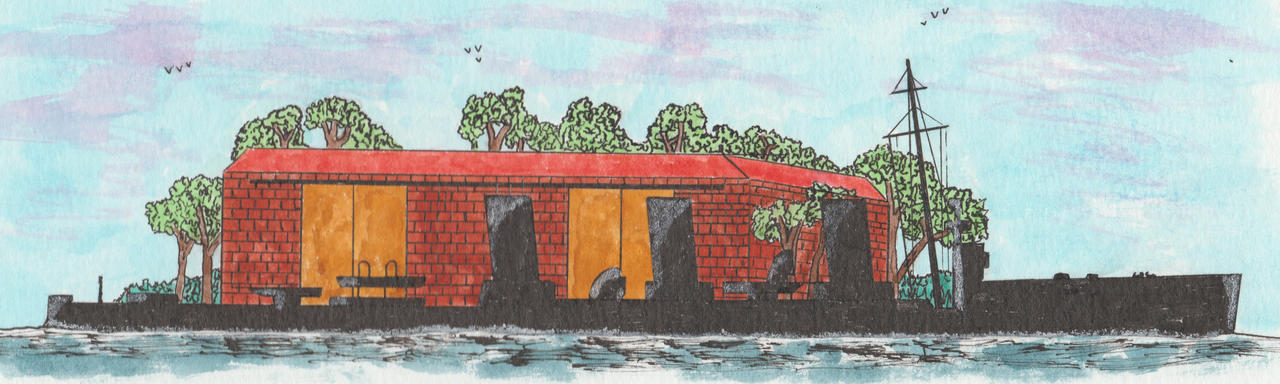
HMS Cossack, Tribal-class©Warshipsresearch.blogspot.com
Part of Tribal- or F-class preceded by River- of E-class and succeeded by Beagle- or G-class. First Sea Lord Fisher asked for a 33 knots destroyer in November 1904 and to be fitted out with oil-fuelled boilers and steam turbines. While the design details were left to the individual shipyards as common at the time the were quite what difference in details and appearance especially dealing with the number of funnels. HMS Cossack and Ghurka had three funnels but their sister ship HMS Viking even six. The class had also two masts of which a light mainmast aft. Totally 12 completed. Built under the 1905-1906 Programme. Laid down by J. Samuel White, Cowes, Wight on 1 May 1906, launched on 15 March 1907, commissioned in June 1908 and sold to be scrapped on 72 May 1919.

©Warshipsresearch.blogspot.com
International call sign GRSD. Part of T-class preceded by Ariete-class succeeded by German S-boats. Between 1912-1922 were totally 22 of the planned 24 boats built by Sociedad Española de Construcción Naval, Cartagena, Spain based on the French Bourrasque-torpedo boats class design from Chantiers et Ateliers A. Normand, Le Havre, France. Launched in 1920 and scuttled in 1939. Dimensions 50 (maximum) x 5,00 (maximum) x 3.20 x 1.47 metres. Maximum displacement 180 ton. Number of screws 3. Maximum speed 26,00 knots. Coal bunker capacity 1,000 ton. Crew numbered 31 men. Armament 3-4.7cm Vickers guns, 1x45cm and 1x2-45cm torpedo tubes.
Navypedia claims developed with support of the British firm Vickers and based on the French Cyclone-class of Norman. Building authorized under the law dated 7 January 1908. Harald Fock. Schwarze Gesellen. Torpedoboote bis 1914 also mentioned the Cyclone-class as basic design.
Sources
Lista official de los buques de Guerra y mercantes de España 1925.
©Warshipsresearch.blogspot.com
Built under the Emergency War Programme of the First World War. At the end of 1914 was the design completed and in July 1915 were 36 ships in 3 batches ordered for the British Royal Navy. British shipyards built an additional 8 vessels for the French Navy. Part of Arabis-class preceded by Azalea- and Acacia classes and preceded by Aubrietia-class. The Arabis-class was just like 4 other subclasses part of the so-called Flower-class, the later also known as Cabbage-class or the Herbaceous Borders. Launched by Greenock&Grangemouth Dockyard Company, Scotland with yard number 376 on 23 December 1915, completed in February 1916 and lost after hitting a mine in the Gulf of Finland on 16 July 1919.
An item reported that between 19-20 August arrived at Gibraltar 1 Italian steamship, 1 Dutch steamship, 1 British destroyer, 1 British steam transport, 4 British steamships, 1 French passenger steamship, 1 Italian steam passenger ship and 1 Norwegian steamship.
Source
Bundesarchiv RM-40-622
An item reported that between 19-20 August arrived at Gibraltar 1 Italian passenger ship, 1 Norwegian steamship, 1 British steamship, 1 American passenger steamship and 1 American steamship.
Source
Bundesarchiv RM-40-622
An item referred to a reconnaissance in the North Aegean Sea on 98 August reporting a 2,000 tons transport coming from the Nort East heading towards Stavros, Greece.
Source
Bundesarchiv RM-40-622
An item referred to a reconnaissance in the North Aegean Sea on 8 August reporting a transport coming from Lima heading to the west, a larger transport coming from the east towards Thasos and a transport off Stavros.
Source
Bundesarchiv RM-40-622
An item referred to an agent reporting the intended departure on 26 July of a troop transport from Marseille, France towards Saloniki, Greece staying as far as Genoa close to the coastline.
Source
Bundesarchiv RM-40-622
©Warshipsresearch.blogspot.com
International call sign GRSD. Part of T-class preceded by Ariete-class succeeded by German S-boats. Between 1912-1922 were totally 22 of the planned 24 boats built by Sociedad Española de Construcción Naval, Cartagena, Spain based on the French Bourrasque-torpedo boats class design from Chantiers et Ateliers A. Normand, Le Havre, France. Launched in 1912 and lost in 1936. Dimensions 50 (maximum) x 5,00 (maximum) x 3.20 x 1.47 metres. Maximum displacement 180 ton. Number of screws 3. Maximum speed 26,00 knots. Coal bunker capacity 1,000 ton. Crew numbered 31 men. Armament 3-4.7cm Vickers guns, 1x45cm and 1x2-45cm torpedo tubes.
Navypedia claims developed with support of the British firm Vickers and based on the French Cyclone-class of Norman. Building authorized under the law dated 7 January 1908. Harald Fock. Schwarze Gesellen. Torpedoboote bis 1914 also mentioned the Cyclone-class as basic design.
Sources
Lista official de los buques de Guerra y mercantes de España 1925.

