Translate

Showing posts with label West-Germany. Show all posts

Sunday, 10 May 2026

German light ship Elbe 3 1908-

Bremerhaven, Germany 7 May 2026

Built by Eiderwerft AG, Tönning, Germany for account of the Königliche Wasserbau-Inspektion as Eider for the Eider estuary between 1908-1909, light in the North Sea during the First World War, as the Bürgermeister Anbendroth owned by the Cuxhaven Water and Shipping Authority stationed during the Second World War in the Baltic Sea, as beacon and Pilot station Elbe 3 positioned in the German Bight until 1966, finally decommissioned and became a museum ship. 

Tuesday, 3 January 2023

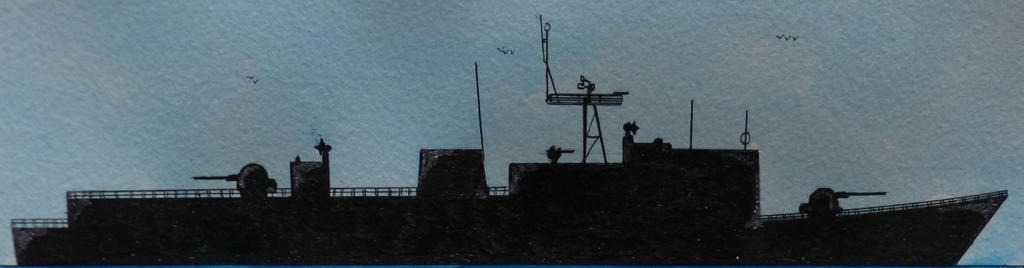
German 1,000 tons corvette design dated mid 1970s

Designed by the Entwickelingsburö Poseidon Kiel GmbH and to be built by Howaldtswerke-Deutsche Werft AG (HDW) for the German navy to be used as a control ship for a force consisting of fast missile boats and helicopters. When the German navy was not more interested lacking a need for such a ship was the intention to sell the design abroad especially to the Greek navy for her fast missile boats. Greece planned to purchase 10 French built La Combattante-III class missile boats in the second half of the 1970s. In fact the Greek navy acquired from the West-German navy on 6 July 1986 the depot ship Weser and renamed as Aegeon (D-03)she served until 1982. (1)

Displacement was to be 1,075 tons. The armament was to consist of 4x2 Exocet missile launchers, 2-7.6cm/3” OTO Melara guns and 2-2cm Rheinmetall guns. The propulsion was a Codeleg type with 2x22,000 hp gas turbines an 2-3 pahse Siemens 1,350 kW electric motors and 2x19,250 kW turbo-generators allowing a maximum speed of 40 knots and a range of 2,500 nautical miles/18knots. Endurance 5 days at sea. Crew numbered 62 men (including 8 officers).

Note

1. Part of the Rhein-class tenders, laid down as the Weser (A62) by the Elsflether Werft on 1 August 1959, launched on 11 June 1960, commissioned on 14 July 1962, decommissioned on 25 July 1972. Displacement 2,370 tons and originally armed with 2x1-10cm cal 45 guns, 4x1-4cm cal 70 guns and 2 depth charge racks. Served in the Greek navy as frigate and as mother ship for motor torpedo boats and guided missile boats.

Sources

Jane’s Fighting Ships

Marine Rundschau

Brassey’s Naval Annuals

Combat Fleets of the World 1947-1982

Tuesday, 22 November 2022

Dutch general cargo ship (ex-Ransel 1938-1940, June 1940-1961) Jokurma 1951-1958 (Heige 1958-1965)

On the Schelde, Netherlands

Launched by N.V. Scheepswerf Voortuitgang (L.J. Mulder&J. Suurmeijer, Foxhol, Groningen, Netherlands with yard number 103 on 14 July 1938, delivered on 8 September 1938, West-German owner since 1958. Sunk underway from Skutskär, Sweden towards Leer, Germany on 22 January 1965. Gross tonnage 400.00 tons, net tonnage 250.00 tons, deadweight 560.00 tons, grain cargo capacity 29,000 cubic feet, bale cargo capacity 27,400 cubic feet and as dimensions 44.55 (between perpendiculars)-48.40 (over all) x 7.97 (muilded) x 3.04 (moulded depth) x 3.20 (maximum draught) metres. 

Sunday, 22 August 2021

West Germany building submarines for Argentina according to the Dutch newspaper Het vrije volk dated 22 March 1969

An item reported that West Germany intended to built two submarines for Argentina each 200 tons larger as allowed by the agreement between West Germany and the allies. This could influenced the limited permission the German arms industry as recorded in the treaty of Brussels of 1953. However the treaty did not made clear that West Germany was not allowed to built submarines in parts. It was feared that in this manner Germany could again participate in the international arms market.

Friday, 25 September 2020

German training ships Trave and Eilder

City Archive Rotterdam

Parkkade, Rotterdam, Netherlands 16 December 1957

Photographer Ary Groeneveld

Of the Eider-class type 139 patrol trawlers, in fact former British Isles-class trawlers and which consisted of the Eider (A50) which was the former British HMS Flint (T287) and the Trave (A51) which was the former British HMS Dochet (T286). and built by G.T. Davie&Sons shipyard, Lauzon, Quebec, Canada in 1942 for anti submarine warfare. Both sold in 1947 for merchant shipping purposes but acquired by the Federal German Navy in 1956. Displacement 545 tons and ass dimensions 50,0 (between perpendiculars) x 8,4 x 3,4 (mean) metres or 164 x 27.8 x 11.1 feet. The machinery consisted of 1-850ihp/630kW triple expansion steam engine allowing a speed of 12 knots. Crew numbered 40 men. Armament consisted of light guns. Both ships were used as training ships and fishery protection vessels in the German navy and sold mid1970s to be broken up.

HMS Flint, building ordered on 8 August 1941. Laid down on 29 October 1941, launched on 14 July 1942, commissioned on 11 December 1942 and sold in 1947.

 HMS Dochet, building ordered on 8 August 1941. Laid down on 29 October 1941, launched on 26 June 1942, commissioned on 13 November 1942 and sold in 1947.

The Dutch newspaper De waarheid dated 17 December 1957 reported that it was a non-official visit to Rotterdam, Netherlands. Commanding officer was corvette captain Karl T Räder. On board were midshipmen. Another Dutch newspaper Het vrije volk dated 2 December reported the intended visit between Monday 16-Wednesday 18 December calling the ships former minesweepers each with a crew of 65 men including 4 officers and 28 midshipmen. It was a training voyage and another planned visit was Saint Malo, France. The edition dated Monday 16th reported that after their naval service both ships first were Belgian property before being resold to Germany. On board were 14 midshipmen between 18-23 years and the voyage was part of their 3 years training. Stationed at Kiel, Germany was a voyage of 4 weeks made around the United Kingdom an several foreign harbours visited. Via Cherbourg, France was Rotterdam visited before their return at Kiel coming Friday. It was the first visit of German warships at Rotterdam since the end of the Second World War.

Monday, 13 July 2020

USA transferred warships and perhaps naval base at Bremen to West Germany according to the Dutch newspaper Nieuwsblad van het Noorden dated 21 January 1957

An item reported that the USA intended to give in spring 1958 over their naval base at Bremerhaven back to the West German government. That day were seven smaller units handed over to the West German navy, which since June was increased with 42 ships.

Thursday, 11 June 2020

Former German Schnellboote sold to be broken up according to the Dutch newspaper Nieuwsblad voor het Noorden dated 19 February 1957

An item reported that the German tug Vorwärts arrived at Delfzijl while towing two old German Schnellboote coming from Bremerhaven. The vessels were bought to be broken up and were to towed via inland waterways to Amsterdam. They were complete dismantles and showed overdue maintenance.

Thursday, 19 December 2019

West Germany asked United Kingdom to sell frigates according to the Dutch newspaper Amigoe di Curacao dated 2 February 1956

According to reliable sources asked West Germany (Federal Republic of Germany) the United Kingdom to sell 7 frigates necessary for training the crews of the future West German coast guard. Thee frigates were to be used until West Germany could provide in her own needs. London considered the request as a normal merchant transaction.

Sunday, 13 October 2019

The harbour of Svishtov, Bulgaria according to a CIA report dated 16 December 1954

An item dealing with the harbours along the river Danube reported that the quite large and well equipped harbour of Svishtov, Bulgaria possessed over 2 large storehouse and 2 electric rotors for storing and handling of the cargoes. For meat transport towards Russia was a large packing plant and a slaughter house available. There is a radio and telegraph office for communication. Towards Russia was mainly cement and ores and further more bread grains shipped. Incidentally when there was a good harvest of a satisfactory quantity of grain were Austria, Czechoslovakia and West Germany export destinations. Food destined for Dobruja was unloaded at Svishtov.

Source
The report was published on www.archive.org, document number CIA-RDP80-00926A007500480005-4

Thursday, 3 October 2019

Polish general cargo ship (ex-Kargit Bagenkop 1967-1974, Seines 1974-1990, Lars Arild 1990-1993, Myrgrunn 1993-2004) Tanais 2004-


Kiel Canal, Germany, second half 2016

Poland-flagged, homeport Gdansk, IMO 6721008, MMSI 261006820 and call sign SPG2714. Owned and managed by Tanais SP.Z.O.O.O., Gdansk, Poland. Ex Kargit Bagenkop renamed 1974, Seines renamed 1990, Lars Arild renamed 1993, Myrgrunn renamed 2004. Built by Martin Jansen Schiffswerft GmbH&Co, KG, Leer, Germany in 1967. 

Friday, 9 August 2019

West Germany wanted to built larger submarines as permitted according to the Dutch newspaper Het vrije volk dated 25 July 1969

An item reported that the Dutch cabinet refused to support a German request to change the protocol which forbade West German to built submarines larger as 350 tons. The Greek cabinet had asked West Germany to built four 1.000 ton submarines. Another newspaper Limburgsch dagblad dated the 9th published an item that the building of the four submarines already started lacking the permission of the Western European Union (WEU).(1)

Note
1. This organisation was responsible for executing the Modified Treaty of Brussels and which is defunct since 30 June 2011.

Monday, 15 July 2019

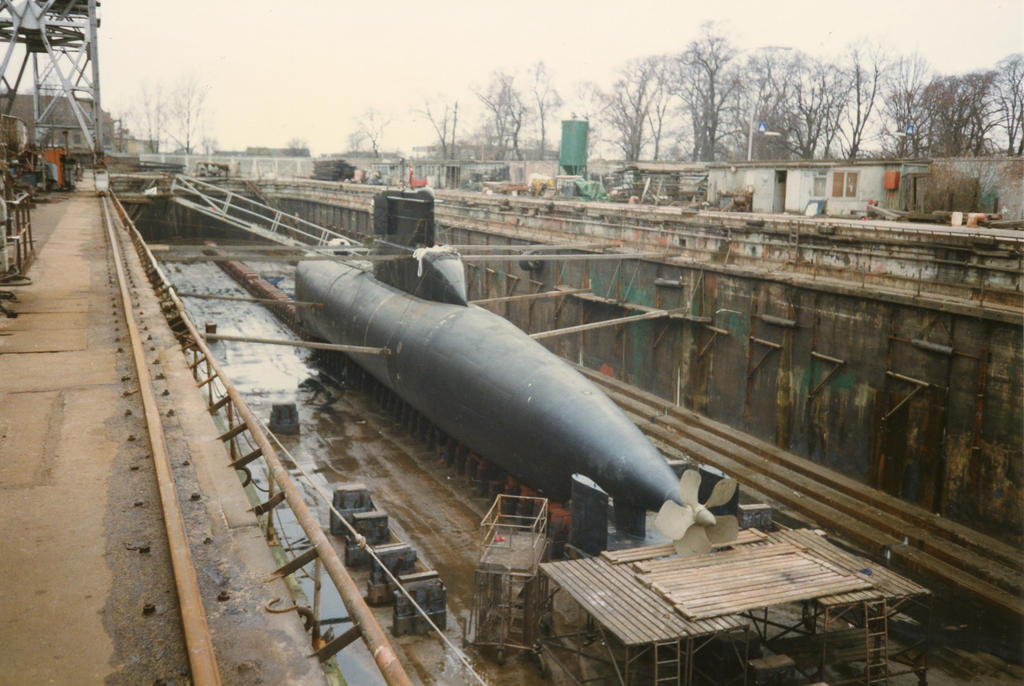
Danish submarine HDMS Nordkaperen (S321) 1966-2004

Helsingør Shipyard, winter 1989-1990
M/S Museet for Søfart, Elsinore, Denmark. photo 34.600. Source

Of the Nordkaperen ort Narhvalen-class. Based on the German Type 205 design. Laid down at the Navy Yard, Copnehagen, Denmark on 4 March 1966, launched on 18 December 1969, commissioned on 22 December 1970, modified in 1994, decommissioned on 2 February 2004 and broken up. Sister ship Narhvalen. Displacement 457 (surfaced)-508 (submerged) tons and as dimensions 4,9 x 4,6 x 4,3 metres or 144 x 15.1 x 14.1 feet. The machinery consisted of 2x600hp Mercedes Benz 4 stroke V4 diesel (each connected to a BBC generator and) 1-1.300hp SSW electric motor allowing a speed of 10 (surfaced)-17 (submerged) knots and a range of 4.200 nautical miles with a speed of 5 knots while surfaced and 228 nautical miles with a speed of 4 knots while submerged. Test depth 100 metres/330 feet. Crew numbered 22 men including 4 officers. Armament consisted of 8-53,3cm/21” torpedo tubes and naval mines. 

Tuesday, 4 June 2019

West Germany interested in building submarines for Chile, Indonesia, Iran, Argentina, Peru and India according to the Dutch newspaper De Telegraaf dated 23 December 1980

An item reported that despite protest within the Parliament the West German cabinet allowed the delivery of submarines by German shipyards to Chile, Indonesia, Argentina. Peru and India. In 1979 was the delivery of submarines to Persia (Iran) cancelled when the reign of the sjah ended. The social democratic parliament members were particularly against the delivery to Chile (1) which country was involved in border conflicts with Argentina. The labourers at the shipyards however were more interested in keeping their jobs than political protests.

Note
1. Chile had a military regime (junta) between 11 September 1973 and 1990 with as president/dictator Augusto José Ramón Pinochet Ugarte (25 November 1915 Valparaiso-10 December 2006 Santiago) and notorious for the violently suppression of the opposition.

Venezuelan navy strengthened with new submarines according to the Dutch newspaper Amigoe di Curacao dated 10 July 1973

An item reported that at the end of July the Venezuelan navy was strengthened with two new West German manufactured submarines.

West Germany financing an own new navy according to the Dutch newspaper Amigoe di Curacao dated 24 February 1956

An item reported that the parliament of West Germany allowed the cabinet to order the first ships for the navy consisting of 8 destroyers and 145 smaller units to be build by German shipyards. The commission for defence and finances approved the first budget of 336.000.000 mark for the navy. The treaties signed at Paris forbade the building of ships larger as 3,000 tons and there were also yet none submarines included in the new building. The department of defence wanted 6,2 billion for the navy included 2,31 billion for the building of ships by German shipyards excluded the ships which would be bought abroad. The commission decreased the latter budget to 1,931 billion mark.

Saturday, 25 May 2019

West German naval strength according to the Dutch newspaper Amigoe di Curacao dated 27 July 1964

An item reported that the navy of West Germany responsible for the defence of the Baltic on that moment possessed 17 destroyers, 10 frigates, 120 minesweepers, 12 submarines, 50 MTB’s and further more landing craft, patrol vessels and so on. The naval air forces consisted of 115 planes including Seahawks and Starfighters. The Soviet Union forces with they are dealing with numbered probably 5 cruisers, 4 destroyers, 35 frigates, 40 MTB’s, 100 landing crafts, 150 submarine chasers, 70 submarines and another 90 small vessels.

Thursday, 10 January 2019

German sailing vessel (ex-W43) Nordwind (Y834) (1944) 1956-


Wilhelmshaven, Germany October 2019

Germany-flagged, MMSI 211450410 and call sign DMNJ. Displacement 100-110 (full load) tons and as d21,48 (between perpendiculars)-24,00 (hull)-27,00 x 6,39 x 2,94 metres. Built as a Kriegsfischkutter in 1944. In 1945 captured by the US Navy and converted into a 2-mast Bermuda ketch. Property of the marine museum since November 2008. Training ship Y834 of the German navy between 1 July 1956-2006.

Friday, 23 February 2018

East Germany obtaining former German Kriegsmarine submarines according to a CIA report dated 7 January 1955

An item reported the possible transfer by the Soviet Union to East Germany of 10 submarines dating from the Second World War belonging to the former German Kriegsmarine seemed to be actually occurred. This transport was probably to get a parity in naval strength between East Germany and West Germany. On the other hand was reported that the East German navy possessed no submarines.

Source
The report was published on www.archive.org, document number CIA-RDP91T01172R000200020001-8

Friday, 26 January 2018

Egypt interested in purchasing torpedo boats in 1955

In 1955 was Egypt interested in purchasing six 1.000 tons torpedo boats. | In two preserved monthly reports of the Nevesbu (1) is referred to this interest. In May was on the 17th a tender discussed and permission asked for sending this tender including budget called Project 2102.
Nevesbu received on 1 May a telegram from Mr. Seekatz, Stuttgart, Germany asking a tender for building torpedo boats on behalf of the Egyptian navy. On 10 May was at Köln, Germany a meeting with Mr. Seekarz en Mr. Hassan Mahmoud, the latter being technical attaché at the Egyptian embassies at Bonn (West Germany), Bern (Switzerland) and Rome (Italy). After permission of the Chief of the Dutch Naval Staff at The Hague, Netherlands and all participating shipyards was on the 13th a letter sent to Mr. Mahmoud informing that at the end of the same month he could expect a temporarily design including budget. The Kon. Mij. De Schelde, Rotterdamsche Droogdok Maatschappij and Werkspoor discussed on 17th and 23rd May the budget followed by sending on the 27th a general plan including a fire control system of H.S.A. towards Cairo, Egypt and on the 31th the estimation of the building costs. The order seemed never to be acquired.

Note
1. Nevesbu=N.V. Nederlandsche Scheepsbouw Bureaux at The Hague, an organisation in which the major Dutch shipyard participated: Rotterdamsche Droogdok Maatschappij (RDM) at Rotterdam, Kon.Mij. De Schelde (K.M.S.) at Vlissingen, Nederlandsche Dok en Scheepsbouw Maatschappij (N.D.S.M.) at Amsterdam, Wilton-Fijenoord at Schiedam and Werkspoor N.V. at Amsterdam, Netherlands.

Source
Archief Kon. Mij. De Schelde 1875-1970 (T214) inventory number 1686.

Saturday, 9 December 2017

Royal British Navy building Black Swan-class sloops according to the Dutch Newspaper Marineblad dated 1939 no. 10

An item referred to the magazine Marine Rundschau dated August 1939 reported that the 1.250 ton Black Swan-class escort vessels had an armament of 8-10,2cm//3.97” anti aircraft guns. Their speed was 19 knots.(1)

Note
1. The Black Swan-class built between 1939-1943 and the Modified Black Swan-class built between 1942-1945. Of the originally planned 42 were 37 built of which 25 of the modified type. The displacement was 1.250 (original design)-1.350 (modified design) tons. Six were built for the Royal Indian Navy. After the Second War served (Modified) Black Swan -class sloops in the navies of Egypt, India, Pakistan and West-Germany.