An item referred to the Telegraph in which her correspondent in Berlin a new German naval invention described. He mentioned a serious interest of the German naval authorities in a patent of the German naval engineer Hollman who claimed to be able to destroy any enemy fleet blockading or attacking German harbors. For this purpose were magnet stations erected along the coast and at the mouth of rivers where shallow and deep waters alternated. Each station was to be fitted out with the strongest electric magnets available. The magnets attracted the ironclads an other protecting warships deviating from their course and drawing them into shallow water where they grounded and became helpless and a target for the guns mounted on the forts.

Showing posts with label Coastal Defence. Show all posts
Showing posts with label Coastal Defence. Show all posts
Friday, 23 October 2026


Monday, 28 September 2026
Proposal for a floating dock annex battery in 1868

The (re-)introduction of steam power in the navies, first as auxiliary propulsion next to sailing, but later replacing it, new weapons like the torpedo, ancient weapons like the ram, armoring ships etc. resulted in a tsunami of ideas, patents, (never realized) designs from officers and constructors within the navies and merchant shipping and by private persons like inventors or just those interested in naval affairs. Partly to be trace in newspapers and (scientific) magazines. A nice example is the idea of a certain Mr. John W. Winton living at 13, Gladstone-street who sent 15 May a small letter with sketch to the editors. His idea: dual purpose of the large iron made floating docks. How this is realized he explained in the next text, as far as I can trace (at the moment) nothing is done with thus suggestion.
“The middle compartment of such a structure [floating dock] is merely tot unite the basement with the top chamber, the water simply flowing into the middle chamber, and flowing out again; no pumping, as erroneously supposed, is require to fill or empty this - so I have utilized this space, by forming it into a powerful battery, the great base on platform of the dock enabling me to place therein guns of the heaviest calibre. The dock has a semicircular front, and at the back a caisson is fitted, so as to insure great stability for docking ironclads, the form of the battery resembling an elongated horse-shoe with intended embrasures, so as to be able to fire right ahead, when the dock is securely moored. The design being simply to protect our harbours and mouths of rivers, and as the guns would be heavier that what van possibly be carried ou board ship, I would merely armour-plate the top and sides of mid-chamber, and the top of basement, to protect it from vertical fire, depending on the heavy guns to keep without reach of the enemy’s shot. When the dock is used for docking purposes, the ports would be filled with suitable water-tight doors.”
Source
The Mechanics’ Magazine and Journal of Engineering, Agricultural Machinery, Manufactures and Shipbuilding, dated 22 May 1868, page 396.
Thursday, 16 April 2026
Japanese floating fort invented according to the Australian newspaper Victorian express dated Saturday 30 March 1889
An item reported that the Japanese admiral Akamatsu (1) invented afloating fort for coast defence purposes. It was built on a steel made vesselwith a length of 150 feet. The thickness of the armour was 12” with the bridge especially protected by a steel bulwark thick 3”. With a double screw and 200hp horsepower was a speed of 3 mile spossinle. On the first bridge were 12-15cm guns and on the second bridge 8-26 cm guns. The crew numbered 250 men. Building costs 400,000 pound sterling, the reporter wrote that must be a mistake and that the actual building costs were 40,000 pound sterling.(2)
Notes
1. Identical to vice admiral baron Akamatsu Noriyoshi (13 December 1841 Edo, Japan-23 September 1920 Mitsukecho, Seto, Acichi, Japan), in 1889 commander-in-chief of the Sasebo Naval Division. Studied shipbuilding and science in the Netherlands between 1862-1868.
2. The Mechanics, volume XI, dated January 1889 added that the vessel had a length of 150 feet and a draught o 5.5 feet. The deck of this vessel was covered by 3” steel, her sides with 2” armour and the fort with 12” armour. One engine. In stead of two bridges this magazine said decks. Building costs for one fort was 2,000,000 US dollars.
Sources
Sunday, 22 March 2026
German minesweepers active in the North and Baltic Sea according to a report of the American Naval Attaché at Berlin, Germany Nr. R562 dated 15 September 1939
Diary note dated Friday 8 September 1939. An item reported that the German navy was sweeping mines in the North and Baltic Seas and that a Polish coastal battery, presumably at Gdynia, was shooting at the minesweepers although with no success.
Source
National Archives. FDR Presidential Library&Museum Roosevelt PSFC000175. War diary Naval Attaché Berlin, volume 1 (1 September 1939-26 May 1940)
Monday, 1 December 2025
Finnish coastal battery at Koivisto battling with Russian warships in December 1939
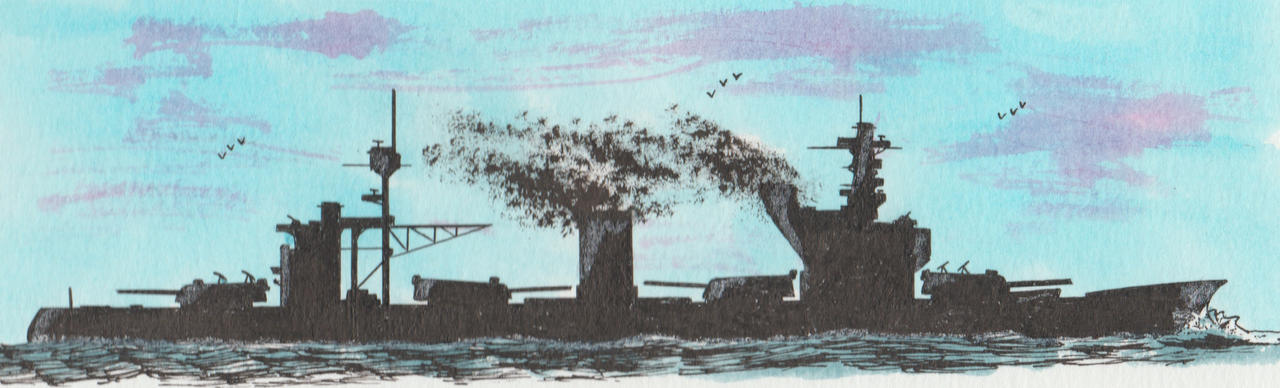
Oktyabrskaya Revolutsiya. ©Warshipsresearch.blogspot.com
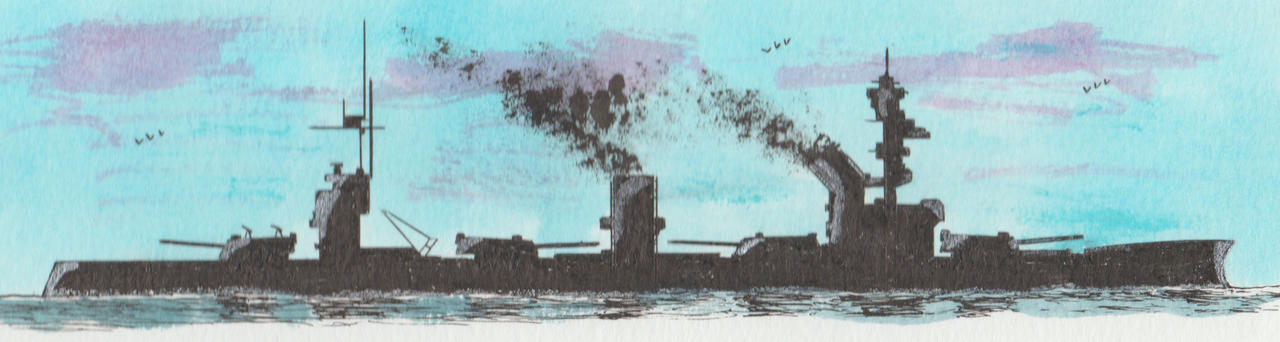
Marat. ©Warshipsresearch.blogspot.com
An item reported that the Finnish coastal battery at Koivisto [Fort Saarenpäär, Koivisto archipelago, now Russian territory Viipuri Bay] battled with Russian warships and after an explosion at sea the Finnish believed that a Russian ship was damaged.(1)
Note
1. Winter War between Finland and the Soviet Union between 30 November 1939-13 March 1940. The battery seemed to have damaged a Russian ship. The Russian battleship Oktyabrskaya Revolutsiya was involved in attacking the Saarenpää fort; apparently also the Marat.
Source
The National Archives, Kew Gardens, England CAB-66-4-13 Weekly Résumé (No. 15) of the naval, military and air situation from 0700 7 December to 0700 14 December 1939.
Friday, 28 November 2025
New Portuguese coastal defence battery to defend area Capellas-Santa Elia, Sao Miguel, Azores realized in September 1941
In his letter No. 1317 dated Lisbon 26 September 1941 reported the German naval attaché in Portugal to the Oberkommando der Kriegsmarine at Berlin that according to an Italian source in the afternoon of 23 September was the acceptance of a new coastal battery to be realized on the wooded sloops north of Pico de Enforcada of the the island Sao Miguel, Azores. The battery was to control the sector between Capellas and de harbour of Santa Elia. The transmission of further messages remains cautious.
Thursday, 27 November 2025
Portuguese garrison on the Azores increased in September 1941
In his letter No. 13057 dated Lisbon 25 September 1941 reported the German naval attaché in Portugal to the Oberkommando der Kriegsmarine at Berlin that according to a tiding from Horta dated 18 September the garrison was increased to nearly 4,000 men. There were also more machine gun bunkers on the mole on the sea and port sides completed or under construction. At the moment was the setting up from net barriers trained.
Source
Bundesarchive. RM 11-17. German naval attaché in Portugal.
Sunday, 18 May 2025

Thursday, 31 October 2024
Canadian coastal defence vessel HMCS Shawinigan MM 704 1996-
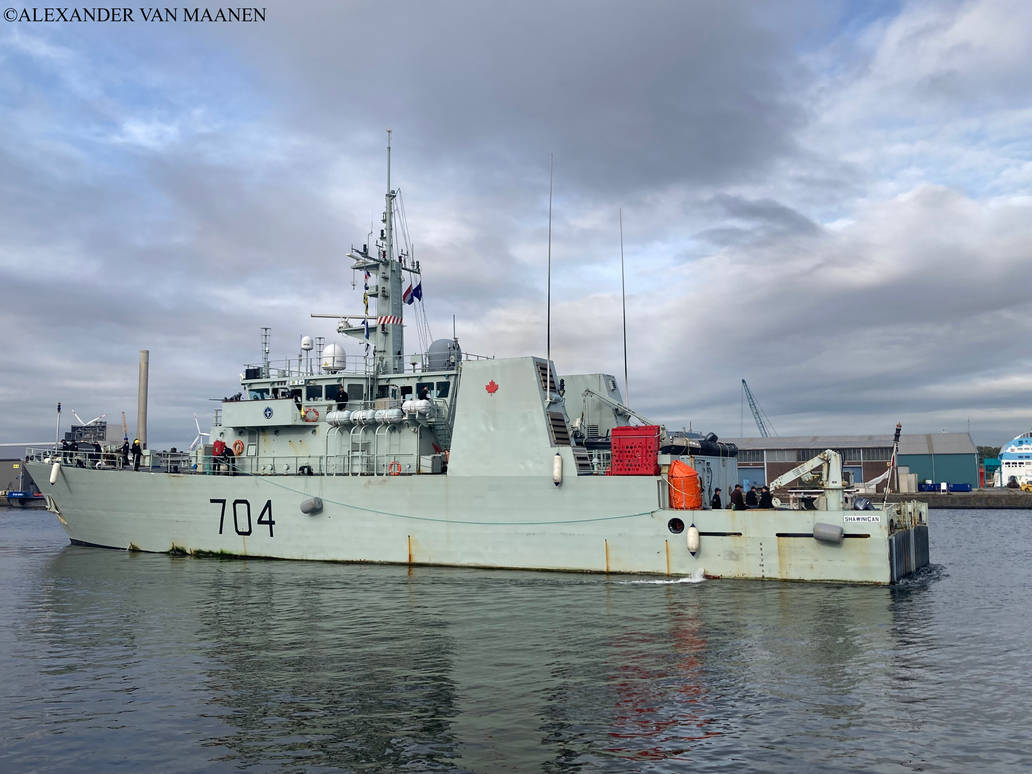
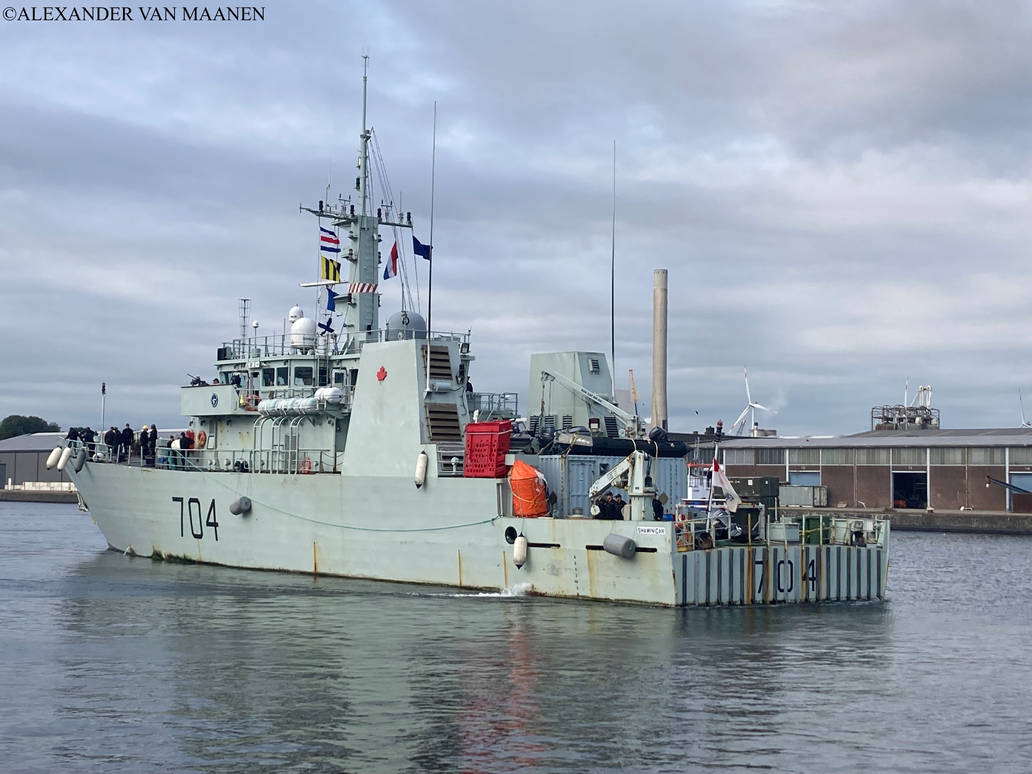
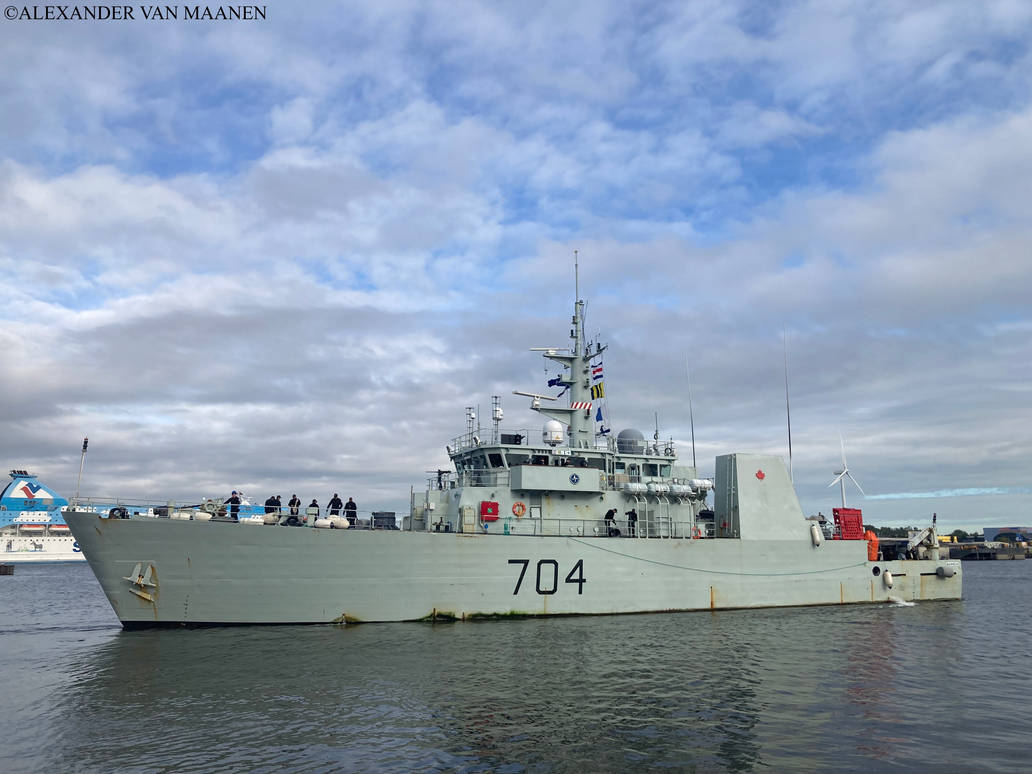
Amsterdam, Netherlands 30 September 2023
HMCS Shawinigan (MM711). Canada-flagged, homeport CFB Halifax, MMSI 316295000 and call sign CGJJ. Laid down by Halifax Shipyards Ltd., Halifax, Nova Scotia, Canada on 26 April 1996, launched on 15 November 1996 and commissioned on 14 June 1997. Part of Kingston-class preceded by Anticosti-class.
Wednesday, 18 September 2024
The strength of the Russian naval fortifications according to the Weekly Intelligence Summary (W.I.S.) No. 44 dated 5 November 1921
An item reported that the fortresses of Kronstadt and Sevastopol were to subordinated to the Military, areas in the rear necessary to the Fleet were subordinated to the Officer Commanding Naval Forces. All forts were manned by young and inexperienced personnel. Guns of the forts Krasnaya Gorka and Reef and islands forts were replaced by new guns, namely 8-30.48cm/12” guns at Krasnaya Gorka, 2-30.48cm/12” guns and 2-25.4cm/10” guns and the island forts with guns varying with a calibre of 15.24cm/6”-30.48cm/12”.
Source
The National Archives, Kew Gardens, England CAB-24-129-73
Saturday, 27 July 2024
Australian harbour Port Darwin offering meager facilities for US forces according to the U.S. Joint Intelligence Committee. Daily summary dated 18 December 1941
An item referred to SPENAVO London reporting that Port Darwin, Australia possessed just very meager port facilities to be used by US forces. Water supply was adequate but docking and unlading facilities poor and scarce labour. The coastal defence consisted of old 15,24cm/6” guns and an unfinished net protection. Availability of fighters was doubtful. The anti aircraft guns were made in Australia but without fire control gear,
Source
Map Room Papers (Roosevelt Administration) mr0422a. U.S. Joint Intelligence Committee. Daily summary No. 8 dated 18 December 1941.
Monday, 12 February 2024
The North Vietnamese coastal defence according to the Australia Station Intelligence Summary dated 1 February 1956
An item reported that the North Vietnamese coastline north of the 17th parallel between 21.11 North-107.32 East Port Wallut and 17.29 North-106.36 East Doing Hoi was divided in 5 command areas with headquarters as Port Wallut, Hongay, Cac Ba (on Ile de la Cac Ba), Sam Son and Dong Hai. It was strongely believed that Cac Ba would become the major naval base. Naval training school directed by Chinese naval officers were to be established at Campha (21.01 North-107.21 East) and Vinh (18.40 North-105.38 East).
Source
Website Royal Australian Navy, Sea Power Centre.
Thursday, 28 December 2023
Japanese Kure Naval Station in 1937
Formerly known as the Hiro Naval Air Station. The station was only commissioned in 1935 but the original Hiro Avation Corps was established around 1920-1921. Primary a coast defence unit where two squadrons were stationed. One with scouting seaplanes and one with torpedo bombing land based planes.
Source
National Archives USA. Record Group 38: Records of the Office of the Chief of Naval Operations. Series: Secret Naval Attaches Reports. Report of the Naval Attache Tokyo dated 6 August 1937 No. 219 dealing with the Expansion Program of the Naval Aviation Shore Establishment. M975-002.
Friday, 22 December 2023
Russian coastal batteries in the Arctic area in 1943
The American Assistent Naval Attache at Murmansk, Russia referred in his report on 14 June 1943 to the staff of the Soviet Nothern Fleet when he described the coastal batteries east of Cape Teriberski and in the White Sea and aproaches. The information which him was supplied lacked many details. Th reason that he got is was to inform merchant and waships seeking protection under the batteries in case the encountered superior enemy forces. The number and caliber of the guns was unknown.
1. Geographical location-North 69.06-East 36.17, 1 battery
2. Geographical location-North 68.50-East 37.11, 1 battery
3. Geographical location-North 68.05-East 39.30, 1 battery, 1 anti aircraft battery
4. Geographical location-North 68.08-East 39.48, 1 battery
5. Geographical location-North 67.12-East 41.17, 1 battery
6. Geographical location-North 67.06-East 41.21, 1 battery
7. Geographical location-North 67.00-East 41.20, 1 battery
8. Geographical location-North 66.46-East 42.30, 1 battery
9. Geographical location-North 66.41 -East 42.34, 1 battery
10. Geographical location-North 64.56-East 40.14, 1 battery
11. Geographical location-North 64.37-East 39.50, 1 battery, 1 anti aircraft battery
Source
National Archives USA. Record Group 38: Records of the Office of the Chief of Naval Operations. Series: Secret Naval Attaches Reports. Report Assistent Naval Attache at Murmansk, Russia dated 14 June 1943 S-43/No. 603. M975-002.
Saturday, 19 August 2023
Russian cruiser Kirov arrived at Tallinn, Estonia according to the Dutch newspaper Bredasche courant dated 4 December 1939

An item reported the arrival of the Russian cruiser Kirow at Tallinn, Estonia probably to be repaired of the damage caused by a Finish costal battery. Several of her crewmembers were wounded.(1)
Note
1. Part of Kirov-class (Project 26) preceded by Admiral Nakhimov-class succeeded by Chapayev-class, laid down by Ordzhonikidze Yard, Leningrad [nowadays St. Petersburg, Russia] with yard number 269 on 22 October 1935, launched on 30 November 1936, commissioned on 26 September 1938, training ship since 2 August 196, sold to be broken up on 22 February 1974 and stricken in December 1974. Damaged in the so-called Winter War between the Soviet Union and Finland by Finnish coastal batteries at Russarö on 30 November or 1 December 1939.
Monday, 19 December 2022
American rear admiral N.A. McCully appointed as chief-in-commander of the Scouting Fleet according to the Weekly Intelligence Summary No. 43 dated 29 October 1921

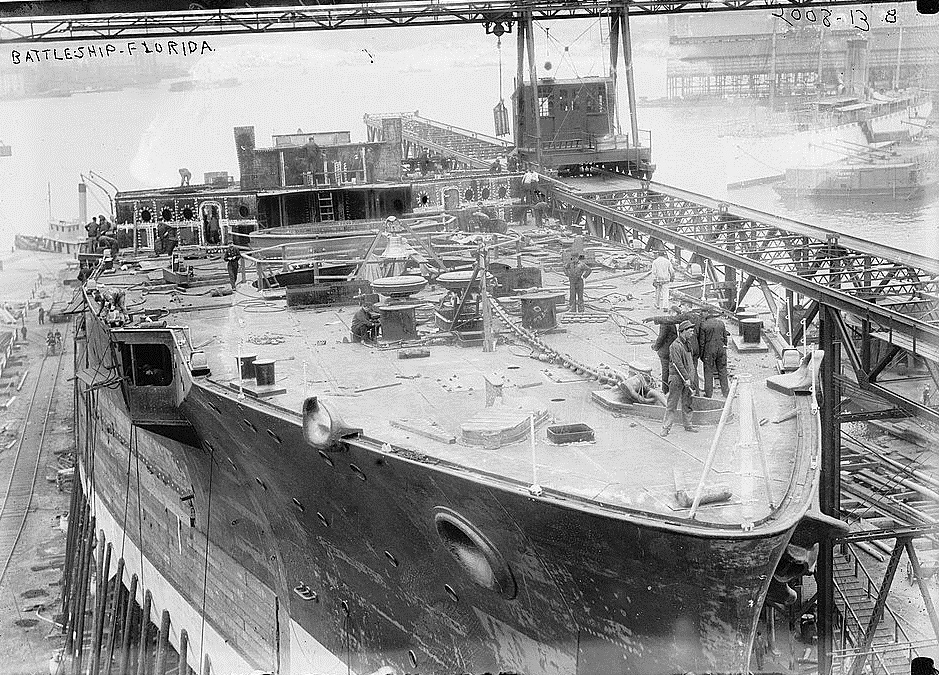
An item reported that the American rear admiral N.A. McCully (1) was recently appointed as commander-in-chief of the Atlantic Fleet Control Force [the Scouting Fleet created in 1922]. This force consisted of old ships laid up in reserve but still suitable to be used for coast defence purposes. His flagship was the battleship USS Florida.(2)
Notes
1. Newton Alexander McCully (19 June 1867 Anderson, South Carolina, USA-14 June 1951 St. Augustine, Florida, USA) served in the US navy between 1887-1931, ending his career in the rank of vice-admiral.
2. Part of Florida-class battleships, preceded by Delaware-class, succeeded by Wyoming-class, building ordered on 13 May 1908, laid down by New York Naval Shipyard on 8 March 1909, launched on 12 May 1910, commissioned on 15 September 1911, decommissioned and sold to be broken up on 16 February 1931 and stricken on 6 April 1931.
Source
The National Archives, Kew Gardens, England CAB-24-129-57
Friday, 23 September 2022
Germany strengthening coastal defence of Norway according to the U.S. Joint Intelligence Committee. Daily summary dated 14 March 1942
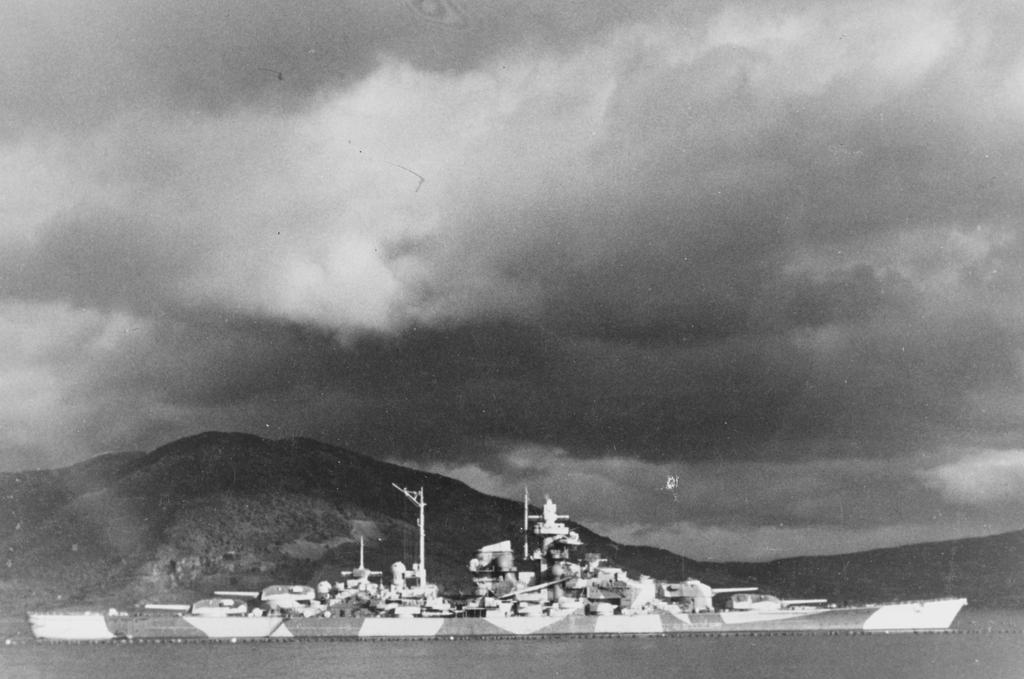
An item reported that the Norwegian coastal defence was strengthened with around 150 new coastal batteries, soldiers transferred from Germany to man the batteries, further more 16 infantry battalions and a small scale reorganization of the German troops already present in Norway. At Trondheim seemed the existing naval facilities to be increased on a large scale and the naval forces stationed at Norway included 2 battleships and a heavy cruiser.(1)
Note
1. The German battleship Tirpitz and probably the pocket battleship Admiral Scheer and the heavy cruiser Admiral Hipper.
Source
Map Room Papers (Roosevelt Administration), 1942 - 1945. U.S. Joint Intelligence Committee. Daily summary No. 94 dated 14 March 1942.
Coastal defence at Talara, Peru strengthened according to the U.S. Joint Intelligence Committee. Daily summary dated 14 March 1942
An item reported that the Peruvian forces which defended Talara, Peru were on 10 March strengthened by a 15,cm gun battery from the Caribbean Defense Command.
Source
Map Room Papers (Roosevelt Administration), 1942 - 1945. U.S. Joint Intelligence Committee. Daily summary No. 94 dated 14 March 1942.
Sunday, 21 August 2022
German warships stationed in Norway according to the U.S. Joint Intelligence Committee. Daily summary dated 14 March 1942

Admiral Scheer. Source
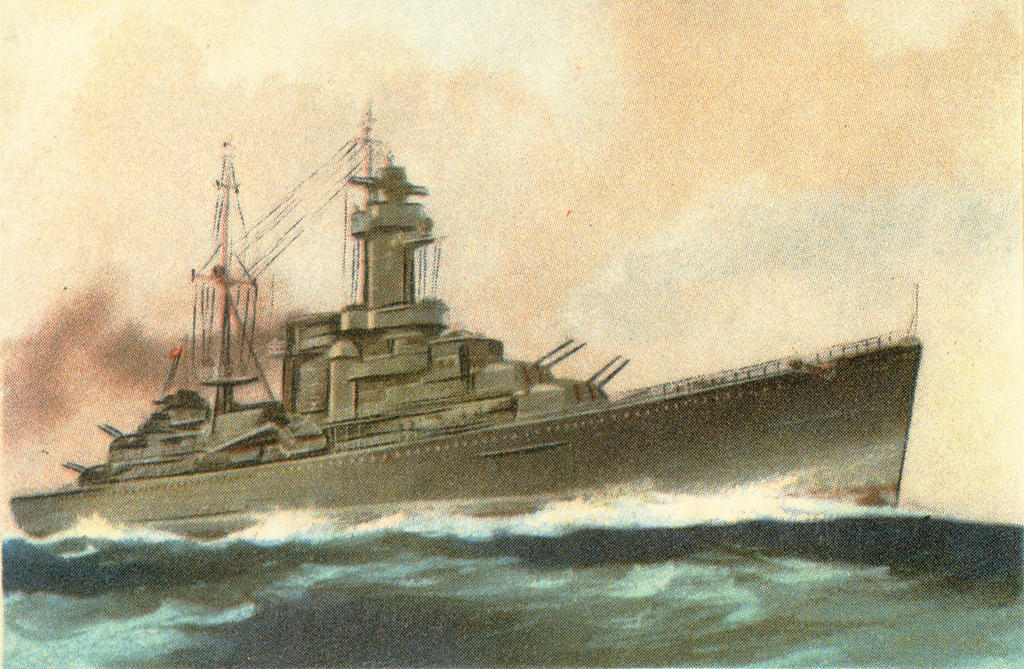
Admiral Hipper
Drawing of G.J. Frans Naerebout, earlier published in Op de lange deining
An item reported that the Norwegian coastal defence was strengthened with around 150 new coastal batteries, soldiers transferred from Germany to man the batteries, further more 16 infantry battalions and a small scale reorganization of the German troops already present in Norway. At Trondheim seemed the existing naval facilities to be increased on a large scale and the naval forces stationed at Norway included 2 battleships and a heavy cruiser.(1)
Note
1. The German battleship Tirpitz and probably the pocket battleship Admiral Scheer and the heavy cruiser Admiral Hipper.
Source
Map Room Papers (Roosevelt Administration), 1942 - 1945. U.S. Joint Intelligence Committee. Daily summary No. 94 dated 14 March 1942.
Wednesday, 15 June 2022
Russian coastal defence of Murmansk district was to be investigated according to the Weekly Intelligence Summary No. 2 dated 15 January 1921
An item reported that in the end of December 1920 a commission of specialists was sent to North Russia ordered by the government to work out plans for the coastal defence of the Murmansk district.
Source
The National Archives, Kew Gardens, England CAB/24/118/69
Subscribe to:
Posts (Atom)