Translate

Showing posts with label Adriatic Sea. Show all posts

Sunday, 15 March 2026

British Mediterranean Fleet returned to Malta on 30 October 1930

The American Consulate at Valetta, Malta wrote the US State of Secretary on 31 October 1928 No. 30973 that the British Mediterranean Fleet commanded by admiral Sir Frederick Field (1) returned to Malta on 30 October after an absence of nearly two months. She had left Malta on Friday 7 September for the second half of the summer cruise and was after a series of exercises split in divisions which visited Turkish, Greek and Yugoslavian harbors in the Aegean and Eastern Mediterranean, Italian harbors in the Adriatic and furthermore Egyptian harbors.

Note

1. Sir Frederick Laurence Field (18 April 1871 Killarnet, County Kerry, Ireland-24 October 1945 Escrick, England), served in the Royal Navy between 1884-1933 ending in the rank of Admiral of the Fleet. First Sea Lord 1930-1933.

Source

National Archives. Record Group 64: Records of the National Archives and Records Administration Series: Records of the Department of State Relating to Internal Affairs of Great Britain. Naval Affairs, Navy, Navy Vessels: 841.315 THRU 841.31553 THRU Naval Affairs, Navy, Navy Vessels: Movement of Naval Vessels: 841.33 - 841.3311/64. Microcopy 580 roll 92.

Wednesday, 10 December 2025

German tanker Ossag available for naval service in September 1942

In an attachment of a letter dated Berlin, Germany 5 November No. 2308/42 was the tanker capacity of Gruppe Süd on 29 September 1942 described. Reported in the work area was the German tanker Ossag. Gross register tonnage 2,793 tons, ready for service. Marinegruppenkommando Süd (MGK Süd) was the operational office for the Balkan, Black Sea, Adriatic and Aegean areas. Established on 24 February 1941 as Dienstelle Admiral Z renamed Admiral Südost on 4 April 1941 and Marinegruppenkommando  Süd on 30 June 1941. The staff was located in June 1941 at Sofia, Bulgaria, in Vienna, Austria in September 1944 and since November 1944 at Kammer at Attersee, Austria and all uncompleted activities were taken over by Admiral z.b.V. Südost since 11 December 1944.

Note

1. Call sign DIEF. Gros register tonnage 2,793 tons, udner deck 2,331 tons, net register tonnage 1,515 tons and as dimensions 309.7 x 45.5 x 22.5 feet. Carried petroleum in bulk. Built by Deutsche Werft A.G., Hamburg, Germanny. Owner in 1939 Tankdampfer Ges. Ossag m.b.H., Hamburg. 

Source

Bundesarchiv RM 7/223Band 2 Jan. 1942 - Dez. 1943

Thursday, 21 September 2023

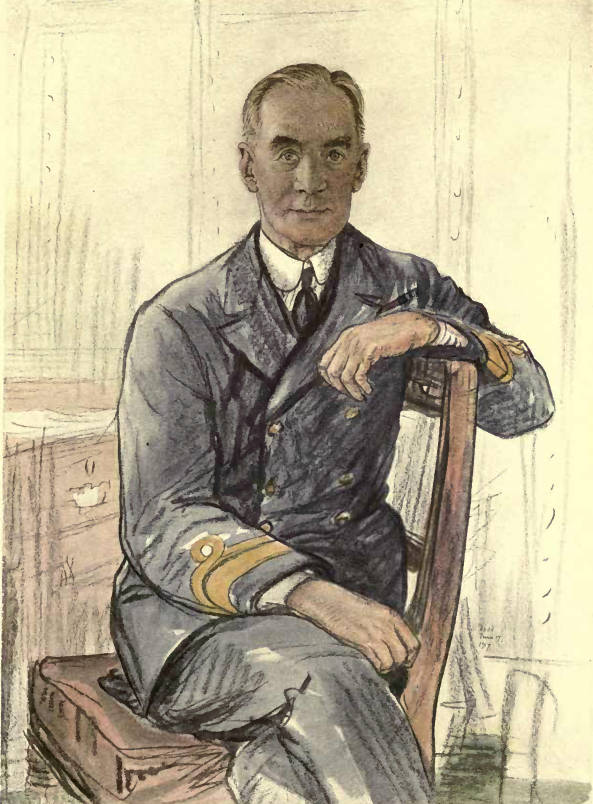
British rear admiral Sinclair appointed as commander-in-chief of the British Adriatic Force according to the Weekly Intelligence Summary No. 15 for the week ending 29 March 1919

Sinclair. By Francis Dodd (1874-1949)
Admirals of the British Navy' by Francis Dodd. A collection of Admirals with sketch portraits and a brief biography. Published 1917

An item reported that the British rear admiral Sinclair (1) who commanded the 3rd Light Cruiser Squadron took over the duties of the British Adriatic Force from commodore Kelly (2)on 24 March.

Notes

1. Sir Edwyn Alexander Sinclair (12 December 1865 Malta-13 November 1945 Cathness, Scotland), served in the British Royal Navy between 1879-1930, ended his career in the rank of admiral, commanded the 3rd Light Cruiser Squadron between 1 Februray-15 August 1919.

2. Sir William Archibald Howard Kelly (6 September 1873-14 September 1952), served in the British Royal Navy 1886-1944, ended his career with the rank of admiral.

Source

The National Archives, Kew Gardens, England CAB-24-77-68

Monday, 11 September 2023

Italian blockade of the Adriatic was to be raised immediately according to the Weekly Intelligence Summary No. 15 for the week ending 29 March 1919

An item reported that the Admirals’ Committee advices to raise immediately the Adriatic blockade and which the Italian government agreed from 30 March on. A new list of contraband was made and the right of search and prohibition of change of flag of ships of the enemy remained in force. The advice was a result of evidences now known during the enquiry at Spalato.

Source

The National Archives, Kew Gardens, England CAB-24-77-68 

Tuesday, 6 June 2023

Adriatic situation unchanged according to the Weekly appreciation of matters of naval interest No.13 week ended 15 March 1919

An item reported that the Adriatic situation was unchanged. At Pola [nowadays Pula, Croatia] everything was calm and the taking of the inventory proceeded slowly. Lacking a large staff for supervising, the Allies accepted the Italian figures as correct.

Source

The National Archives, Kew Gardens, England CAB-23-76-100

Friday, 21 April 2023

American naval aviation force in Europe during the First World War

An item reported that in the First World War the US Navy admiral Sims established an own naval aviation force abroad with a personal strength of around 20,000 men and 5,000 officers stationed along the European coastline between the North Sea and the Adriatic Sea. There were 16 seaplane stations, 4 digibile stations, 3 kite balloon stations, 2 large assembly and repair bases and in northern France a strong bombing group. Nucleus of the force was a group op 5 officers and 100 men.

Source

Information concerning the U.S. Navy and other navies. Office of Naval Intelligence July, 1919 

Wednesday, 12 April 2023

US Navy stationing large number of submarine chasers in European waters during First World War

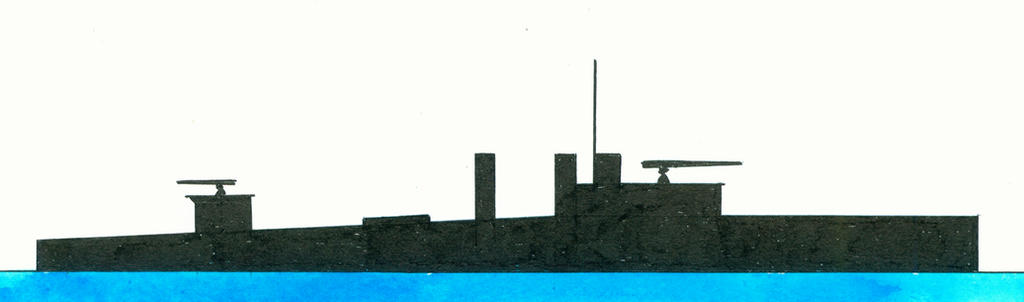
Preliminary design no. 186 for an American submarine chaser dated 22-11-1917

An item reported that in the First World War the US Navy stationed 120 submarine chasers in the Irish Sea, British Channel and the Adriatic Sea to support the Allies against enemy submarine activities. For that purpose were 5 special and 3 auxiliary bases established. The submarine chasers operated in groups with crews trained in using listening devices to track submarines. There wre numerous contacts made and attacks executed.  

Source

Information concerning the U.S. Navy and other navies. Office of Naval Intelligence July, 1919