Translate

Showing posts with label Caspian Sea. Show all posts

Sunday, 11 October 2026

The Persian gunboat Chalcheleh or Chachela in 1930

Document No. 146 referred to an extract from the Bushire Residency Diary (Persian) No. 11 of 1930 reporting the departure on 26 November of the Persian officials captain Ibrahim and Mr. Salim Pio via the overland route towards Port Said. There they intended to pick up the Persian boat Chalcheleh recently bought from Germany for 20,000 Ts. However it was doubtful if the boat was able to reach Bushire [Bushehr, Iran] on its own. A telegram No. 71 sent by the Political Agent Muscat on 16 March 1931 No. 71 to the Political Resident Bushire reported that a letter sent from Bushire for her captain arrived and if her movements were known. On 26 March sent the Political Agency&H.B.M.’s Consulate at Muscat a letter D.O. No. 91-C to lieutenant colonel H.V. Biscoe, Polical resident in the Persian Gulf referring to the telegram. He wrote that the arrival of Persian gunboats on the Gulf if that ever would happen would cause some awkward questions. The Muscat State was not pleased that such ships got free entry to Oman harbours. The Arabs disliked the Persians and (violent) incidents were to be expected. To his knowledge was Persia still claiming Muscat including demanding travel papers from travelers going to Muscat similar to the papers needed when going form one part to another within Persia. He suggested that the Muscat State did not permit Persian gunboats enter Oman waters as long as the claim existed and after giving up that claim only after week’s notice before visiting or what ever were the requirements for British sloops. On 21 March he was informed that the movements of the Chachela were unknown except for leaving Port Said 22 days earlier. A letter from Karachi dated 3 April D.O. No. 21 by Biscoe to the Political Agent Muscat (major T.C.W. Fowle) denied that Persia still hold on to the claims but Persia did not recognize the Muscat government and for this reason refused documents issued by this government. Dealing with the Chalcheleh the story complete differs. It was not a Persian gunboat at all but a launch with a length of about 50 feet bought by the Persian government from German to be used on the Caspian. Russia refused permission to go via the Volga to her destination so was chosen for Bushire. It was not a vessel of the projected Persian navy and he was not familiar with her future tasks , but he could imagine a conversion into a coastal patrol boat for the customs but regarded her size he doubted if she would visit the Arabian coast.

Source

Quatar Digital Library. File 9/21 Naval&Shipping: Persian Navy-activities&visits to Arab ports. Original British Library: India Office Records and Private Papers. IOR/R/15/6/319. 

Sunday, 4 October 2026

Old Soviet submarines of Black Sea Fleet under repair in 1925

An item referred to a source which was considered to be doubtful and confirmation needed reporting that the old Soviet submarines A.G. 21 (Trotsky), Krasnopovornik (old name?), Makrel, Orun and Minoga. The American MA believed that except for the A.G. 21 all repairs were quite useless, unless the boats were to be sent to the Far East or to the Caspian Sea. The Soviet Navy Program mentioned that two submarines were to be sent to the Caspian Sea.

Source

National Archive. Record Group 165: Records of the War Department General and Special Staffs Series: Security Classified Correspondence and Reports. File Unit. Russia: Navy - MID 2503-16 THRU 2503-265. Roll 1443.

Friday, 25 September 2026

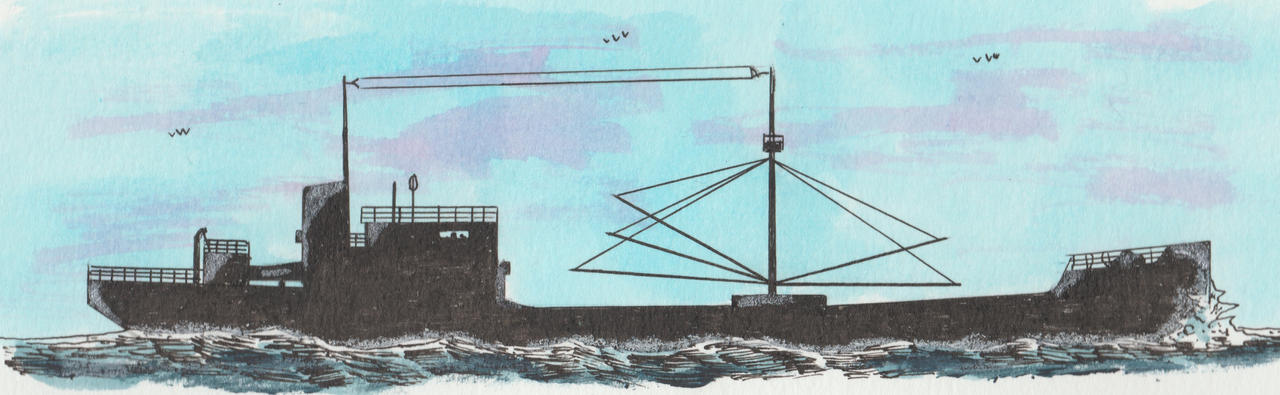
Russian dry cargo carrier Baksovet 1923-

©Warshipsresearch.blogspot.com

Sister ships Baksovet and Kazahstan. Built in Germany in 1923. Owner Caspian Steamship Company. Principal dimensions 66,69 (between perpendiculars)-70,40 (over all) x 9,67 (moulded) x 4.19 (depth to main deck) x 18.00 height of mast acorn above main deck) feet. Deadweight 1,180 tons, gross register tonnage 968 tons, net register tonnage 618 tons. 

Monday, 2 March 2026

Condition of the Russian submarine division of the Baltic Fleet in 1922

The Commissioner of the United States at Riga, Latvia supplied the Secretary of State at Washington, USA on 23 February 1922 more details about the condition of Russian warships. The division consisted of the repair and supply ships Polkov (salvage), Tosno, Voin, Voiny, Aneta and Timernick (supply) and the following submarines:

-Tiger. Her forward cistern was badly damaged, de rudder protection demolished, propeller shafts out of alignment, accumaltors out of oder and her propulsion needed a complete overhauling.When she dived to a depth of 70 feet or more gave her hull plates way on seams. She was now dry-deocked but lacking repair material all work stopped.

-Panther was general spoken in bad condition and not fit for sea.

-Rys, was fit for sea as soon as the minor repairs were completed.

-Iorsh, a special submarine minelayer was indefinitely out of commission.

-Yaguar, fit for the sea.

-Tur and Volk were practically entirely out of commission.

-Leopard and Zmeya were in good condition and fir for the sea.

-Kagur, Vepr, Kaz, Parel and Ugor were laid up indefinitely and no attempts were made to repair them.

-Minoga, Makerel, Kasatka, Okim and Keta served between 1918-1919 on the Caspian Sea but were now all lying at Astrachan, completely out of commission.

-Keta was under repair at the Baltic Shipyard, Petrograd and was to be commissioned in May or at the latets in June this year.

Source

Records of the Department of State Relating to Internal Affairs of Russia and the Soviet Union, 1910-29. Naval Affairs, Navy, Navy Vessels: 861.30 .(861.31 Naval Maneuvers; 851.32 Personnel); 861.33 Movements of Navy Vessels; 861.34 Equipment and Supplies): 861.39 - 861.345. Micro film 316 roll 92. 

Thursday, 19 February 2026

Portuguese gunboat Zaire visited Las Palmas, Canary Islands in 1928

The American consulate at Las Palmas, Canary Islands reported on 9 August 1928 to the Secretary of State that the Portuguese gunboat Zaire arrived on 30 July 1928 9:00 A.M. at Las Palmas coming from Portuguese gunboat Zaire leaving on 8 August. She ran short of coals some distance away of the Canary Islands and made a call for help and was towed in safety to the shore line of Gran Canaria before arriving in the harbour under own steam. Customary salutes exchanged between the vessel and the fort.

Source

Record Group 64: Records of the National Archives and Records Administration Series: Records of the Department of State Relating to Internal Affairs of Portugal. Military Affairs and the Army: 853.20 - 853.206/7 THRU Naval Affairs, Navy, Naval Vessels: Equipment and Supplies: 853.34 - 853.348. Microcopy 705 roll 13

Saturday, 7 February 2026

The Russian Caspian Flotilla in 1924

The Commissioner of the United States at Riga, Latvia wrote on 21 May 1924 to the Secretary of State at Washington that the Russian Caspian Flotilla consisted of 4 gunboats, 11 torpedo boats old type called Storezhevoi, 5 trawlers and 2 submarines. Further more were 4 guard boats transferred from Lake Ladoga via the Baltic. The staff of the flotilla moved from Baku to Petrovsk.

Source

Records of the Department of State Relating to Internal Affairs of Russia and the Soviet Union, 1910-29. Naval Affairs, Navy, Navy Vessels: 861.30 .(861.31 Naval Maneuvers; 851.32 Personnel); 861.33 Movements of Navy Vessels; 861.34 Equipment and Supplies): 861.39 - 861.345. Micro film 316 roll 92. 

Monday, 28 July 2025

The Russian Caspian Flotilla on 1 July 1890

Consisted of 8 armed and 2 unarmed steamships, 2 sailing ships and 6 small craft.

Source

The Statesman’s Year Book 1892. Twenty-ninth annual publication. London, 1892, p. 885. 

Wednesday, 25 June 2025

Soviet Astrakkhan-Caspian Flotilla in 1919

An item reported that begin 1919 a revolutionary militiary council was instituted in the Astrakkhan-Caspian Flotilla. At the sametime were ship committees abolished transferring all authority on board of a warship to the captain and commissar.

Source

S.A. Tyushkevich. The Soviet Armed Forces: A History of Their Organizational Development. A Soviet View. Moscow, 1978. 

Saturday, 14 September 2024

Personnel strength of Russian Caspian Sea to be increased according to the Weekly Intelligence Summary (W.I.S.) No. 44 dated 5 November 1921

An item reported that was proposed to increase the personnel strength of the Caspian Sea Fleet from 1,800 up to 2,300 men at the expense of the other fleets and that military and polical equipage in the countries adjacent to the Caspian Sea was to be increased.

Source

The National Archives, Kew Gardens, England CAB-24-129-73

Saturday, 20 April 2024

The Russian Caspian Sea Flotilla in June 1942

American naval attaché at Moscow, Russia reported in June 1942 referred to a British officer who recently stayed at Baku [Azerbaijan] and sighted 4 small Russian destroyers around 700 tons each. Other British observers reported that the Caspian Sea Flotilla included 12 sloops, around 3 gunboats and at least 1 submarine.

Source

National Archives USA. Record Group 38: Records of the Office of the Chief of Naval Operations. Series: Secret Naval Attaches Reports. Estimate of potential military strength (pt.). Summaries. Reports from London, Paris, Brussels, Rome and Berlin. Roll M975-001.

Friday, 6 October 2023

British naval forces in the Caspian Sea according to the Weekly appreciation of matters of naval interest No.13 week ended 15 March 1919

An item reported that the rear admiral hoisted on 7 March his flag on board of the British HMS Asia (1) lying in the Caspian Sea. The Bolshevik members part of the crews of the Russian flotilla were in the meantime detained, the other crew members released. The rear admiral suggested to take the former Russian ships Lieutenant Schmidt, Orlionok and Jupiter into service and seek crews for them. The Kars, Ardagan and Astrabad were not to be taken into service probably due to the problems with the ammunition supply. The Lieutenant Schmidt had a crew of 65 men, a speed of 5 knots, armament of 5-4.5” guns and 2-4” guns and was fitted out with W/T equipment. The Orlionok was armed with 3-3” high angle guns and capable of horizon fire. The Jupiter was just armed with 1-12pd guns but it was assumed that she and the Orlionok were to be rearmed. Totally 160 officers and sailors were needed.

Note

1. Auxiliary cruiser part of the British Caspian Flotilla between 1918-1919. Coastal freighter amed with 4-10.16cm/4”guns?

Source

The National Archives, Kew Gardens, England CAB-23-76-100

Friday, 7 April 2023

British rear admiral in the Caspian Sea area proposed to set up a regular patrol according to the Weekly appreciation of matters of naval interest No.13 week ended 15 March 1919

An item reported that the British rear admiral in the Caspian Sea area proposed to establish a patrol consisting of 3 ships and seaplanes on the line Chechen Island-Alexandrovsk with the other ships as backup at Petrovsk. They were to stop raiders and observe the Bolshevik fleet.

Source

The National Archives, Kew Gardens, England CAB-23-76-100

Friday, 1 July 2022

British aircraft attacked Russian Bolshevik ships according to the Weekly Intelligence Summary No. 20 for the week ending 20 November 1920

An item reported that British aircraft attacked on 18 November Russian Bolshevik ships at Enzile, Persia and Kazian which responded with ineffective anti aircraft gunfire.

Source

The National Archives, Kew Gardens, England CAB-24-115-34

British Naval Mission to Teheran called back according to the Weekly Intelligence Summary No. 20 for the week ending 20 November 1920

An item reported that commodore Norris (1) and the Naval Mission to Teheran were ordered to come back.(2)

Notes

1. Commodore David Norris (27 Octber 1875-19 July 1937), established the British Caspian Flotilla and head of he naval mission to Persia 1920-1921. In October 1933 he was promoted to the rank of admiral, already retired since October 1929. The British Caspian Flotilla 1918-1920 was to support anti-Bolshevik forces.

2. The 1920 Royal Navy Mission sent to Enzeli was a failure when the members were detained for a half year at Baku, Azerbaijan. She had to assist with the interned White Russian ships (former British armed merchant cruisers?).

Source

The National Archives, Kew Gardens, England CAB-24-115-34

Tuesday, 1 February 2022

Warships of Soviet Republic of Azerbaijan attacking Persian troops according to the Weekly Intelligence Summary Nr. 8 dated 28 August 1920

An item reported that Persian Cossacks under command of Starosselski (1) recaptured Resht [or Rasht, along the Iranian Caspian Sea coast] on 21 August but since then driven out by naval and military Bolshevik forces. (2) Captured papers pointed our that the advance on Tehran was organized by the Soviet Republic of Azerbaijan. This republic sent the ships which fired on the cossacks.

Notes

1. Vsevolod Dimitrievich Strarosselski (7 March 1875 Baku, Azerbaijan-29 June 1935, USA), commanded the Persian Cossacks Brigade between 1918-1920.

2. Between 1920-1921 capital of the Gilian Soviet Socialist Republic.

Source

The National Archives CAB 24-111-18

Saturday, 8 January 2022

New ships of the Soviet Caspian Sea Flotilla fitted out with radar according to a CIA report published 26 February 1953

In a report published 26 February 1953 supplied an anonymous source information about the Soviet Caspian Flotilla; the source left the region in 1951. According to him were all new naval vessels and 2-3 of the old vessels fitted out with radar which was officially as radio lokator operated by the lokatorshchik (radar operator). While he was never been able a sufficient close look on the antenna he could not supply more details.

Source

CIA-RDP82-00047R000200460002-6

The maneuvres of the Soviet Caspian Flotilla according to a CIA report published 26 February 1953

In a report published 26 February 1953 supplied an anonymous source information about the Soviet Caspian Flotilla; the source left the region in 1951. According to him were in and before 1951 maneuvres held in the areas between Derbent [Dagestan, Russia] and Kuli-Mayak [Turkmenistan] which was north of Krasnovosk [since 1993 Türkmenbaşy, Turkmenistan]. He believed that except for the common firing and tactics there was especially attention for training in landing operations.

Source

CIA-RDP82-00047R000200460002-6

Thursday, 6 January 2022

Soviet merchant ships serving on the Caspian Sea were fitted out with anti mine defenses according to a CIA report published 26 February 1953

In a report published 26 February 1953 supplied an anonymous source information about the Soviet Caspian Flotilla; the source left the region in 1951. According to him were all the ships owned by the Ministry of the Merchant Fleet fitted out with anti mine defenses. He gave the names of ships fitted out with a [must be a degaussing] cable around their hulls as protection against magnetic mines. From Kasptanker the Beriya, Kaganovich, Profintern, Stalin, Molotov, VKP (B), Zhdanov, Lenin, Agamali Ogly, Komintern, Rabochiy, KrestÝanin, Tretiy Internatsional, Vallery Chkalov and Kiliya and from Kaspflot the Azerbaydzhan, Bagirov, Azerbaydzhanskiy, Dagestan, Kuybyshev, Tel’Man, Kafur Mamedov, Katun’ and the Chorok. Further planned Reydtanker to fit out her Akadmik Vil’Yams, Bagration, Sormovets, Akademik Zhukovskiy, Kapitan Krasnov and Metallist in 1951 with so-called anti mine belts.

Source

Report CIA-RDP82-00047R000200460002-6

Wednesday, 5 January 2022

The organization of the Soviet Caspian Flotilla according to a CIA report published 26 February 1953

In a report published 26 February 1953 supplied an anonymous source information about the Soviet Caspian Flotilla; the source left the region in 1951. This flotilla possessed two bases, namely at at Baku [nowadays capital of Azerbaijan] in the Bailovo section between the Morskoy Bul’Var and the ship repair yard Zavod i/n Parizhskaya Kommina and in the area of Bukjta Ilícha. At Ulitsa Sverdlova No. 2 Astrakhan [Russia] was a unit of the marines stationed further ore a branch of the Hydrographic Department of the navy and since 1950 the gunboat Krasnyy Azerbaydzhan (1) lying at the left bank of the river Volga in the area of pier No. 13.

Note

1. Of the Kars-class, laid down at the New Admiralty Shipyard, St. Petersburg, Russia as Ardagan in December 1908, launched on 25 September 1909, completed in December 1920, captured by the White Russian forces on 31 July 1918, captured by the Red forces in April 1920, in May renamed Trotskiy, renamed Krasnuyy Azerbaydzhan in February 1927, became an accommodation ship in December 1954 and broken up between 1958-1959. Originally built using the design of the Gilyak for police and fishery protection purposes on the Caspian Sea.

Source

Report CIA-RDP82-00047R000200460002-6

Friday, 24 December 2021

Russian gunboats Kars and Ardahan arrived at Enzeli, North Persia according to the Secret Admiralty Weekly Intelligence Summary Nr. 31 for the week ending 6 August 1921

An item reported that on 18 July the Russian gunboats Kars (1) and Ardahan (2) arrived at Enzeli, North Persia at the Caspian Sea.

Notes

1. The gunboat Kars laid down in December 1908 at the New Admiralty Yard, St. Petersburg, launched on 4 September 1909, completed in December 1910, between 31 July 1918 and April April 1920 of the White forces then captured by the Bolshevik forces, renamed Lenin and existing until 1954?

2. The Ardagan sister ship of the Kars, laid down in December 1908 at the New Admiralty Yard, St. Petersburg, launched on 25 September 1909, completed in December 1910, between 31 July 1918 and April April 1920 of the White forces then captured by the Bolshevik forces, renamed Trotskiy and in 1927 Krasnyy Azerbaydzhan and existing until 1954?

Source

The National Archives CAB-24-127-7. No.31. Weekly appreciation of matters of naval interest for the week ended 6 August 1921