An item reported that British shipyards were at the moment three M.G.B.’s and 2 M.T.B.’s building for the Royal Thai Navy to be completed between August 1955-February 1956.
Source
Website Royal Australian Navy, Sea Power Centre.
An item reported that British shipyards were at the moment three M.G.B.’s and 2 M.T.B.’s building for the Royal Thai Navy to be completed between August 1955-February 1956.
Source
Website Royal Australian Navy, Sea Power Centre.
Drawing by Logan U. Reavis (1887, Saint Louis, USA, 1 June 1958 (Hempstead, USA).
Especially suitable for fast night attacks hit and run close inshore. The type hardly changes faste and heavier armed but keeping a frail hull.
Note
1. He was an industrial and marine working as illustrator and writers for newspapers but also for the United States Lines and other shipbuilding related industry. In the 1950s he made promotional maps and brochures to celebrate the passenger ship ss United States which won the Blue Riband in 1932.
Source
‘The shape of ships to come’ in: The navy of the Future, The Collier’s, 13 March 1943.
An item reported that the destroyer flotilla consisted of the destroyer Georgi Dimitrov and around 20 motor torpedo boats of various designs divided over two squadrons with a planned third squadron. The first squadron was divided into three companies totally numbering 18 boats and the second squadron numbering 3 boats.
Source
C.I.A. report no. CIA-RDP83-00415RO12700120006-1
An item reported four Gusto type motor torpedo boats built in 1942. Displacement 65 tons, armament consisting of 1-4cm machine guns and 2 torpedo tubes. Fitted out with 3 Mercedes Benz engines, 2,850 hp horsepower and a speed of 30 knots. Crew numbered 25 men.
Note
1. Gusto was a Dutch shipyard at Schiedam and some boats were still incomplete when Germany invaded the Netherlands and were captured by the Germans. Jane’s Fighting Ships 1958-1959 mentioned the No. 3 (ex-S201) and 4 (ex-S202). displacement 35 tons, dimensions 70 x 20 x 4 feet. Armament 1-20mm gun and 3-21” torpedo tubes. Three sets Rolls Royce petrol motors and a speed of 45 knots/3,000 bhp. Crew numbered 9 men.
Source
C.I.A. report no. CIA-RDP83-00415RO12700120006-1
An item reported three Lürssen type motor torpedo boats built between 1938-1942. Displacement 60 tons and as dimensions 28 x 4.3 x 1.6 metres. With three Mercedes-Benz engines and 3,150hp horsepower was the speed 30 knots. Crew numbered 18 men. Armament consisted of 1 anti aircraft machine gun and 2-53.3cm torpedo tubes.
Note
1. Jane’s Fighting Ships 1958-1959 mentioned the No. 2 built by Lürssen, Vegesack, Germany in 1938.
Source
C.I.A. report no. CIA-RDP83-00415RO12700120006-1
An item reported six Soviet TM-200 class motor torpedo boats handed over by the Soviet Union in 1950. Built at Ochakov, Soviet Union (=Ukraine). Displacement 45 tons. Fotted out with 3x1,200 hp engines and a speed of 30 knots. Armament consisted of 1-40mm machine gun, some anti aircraft machine guns, side torpedo tubes with 2 reserve torpedoes and 6 small and 2 large depth charges. Crew numbered 12 men. There could be another ten boats of this type handed over by the Soviet Union and normally stationed at the military harbour of Ochakov, Soviet Union (Ukraine).
Source
C.I.A. report no. CIA-RDP83-00415RO12700120006-1
An item reported that the photos made during a aerial reconnaissance of Ghelenjik [Circassian Black Sea coast] were yet not finally evaluated. Acording to a roughly evaluation there were 20 motor minesweepers, 10 motor torpedo boats, 64 personel landing craft, 8 coastal vessels totally 2,500 tons and around 40 boats.
Source
German War Diary of Admiral, Black Sea 1-30 September 1943. Published by Department of the Navy. Washington, 1955.
According to a letter dated Zagreb 4 November 1943 of the German embassy at Zagreb to the Department of an independent Croatia possessed the Royal Yugoslav Navy in 1941 8 motor torpedo boats or S-boats of the German 60 tons type named Orjen, Triglav, Durmitor, Kajmakcalan, Rudnik, Suvobor, Velebit and Dinara. All boats were lying in the Bay of Kotor in 1941. The Kajmakcalan and Durmitor escaped to the Mediterranean, the remaining six were taken by the Italian navy
Note
1. The Independent State of Croatia was established after Yugoslavia was captured by Italy and Germany on 10 April 1941. This state was first an Italian Protectorate between 1941-1943 and then a German puppet state between 1943-1945.
Source
Bundesarchiv TM-12-II/4
According to a letter dated Zagreb 4 November 1943 of the German embassy at Zagreb to the Department of an independent Croatia mentioned the Yugoslavian vessels lying at Sibenik and Split in April 1941. After 10 April Croatian-flagged and owner than taken over by the Italian navy, those at Split after 21 April.
The 250 tons torpedo boats T 3 and T 5-7 at Split Divulje.
The 500 ton minesweepers Labud (at Split-Divulje), Orao (at Split Yard), Sokol (ar Split Yard), Galeb (ar Split-Divulje) and the hevaily damaged Kobac (at Sibenik).
The 15 tons torpedo motor boats Cetjik (at Split-Divulje) and Uskok (at Sibenik).
The 2,000 tons auxiliary ship annex minelayer Zmaj, left for the German navy.
The 1,000 tons salvage vessel Spasilac at Split Yard.
The small 125 tons minelayers Mosor and Marjan (at Sibenik).
The small tankers Uljesura (at Split) abd Kit (at Sibenik).
The 260 tons water tender Lovcen (at Split-Divulje)m some harbour tenders, several lighters, 3 hulks (accommodation ships), motor boats, boats, 1 sailing cutter at Sibenik, 1 harbour tender and some lighters at Split and Divulju.
Note
1. The Independent State of Croatia was established after Yugoslavia was captured by Italy and Germany on 10 April 1941. This state was first an Italian Protectorate between 1941-1943 and then a German puppet state between 1943-1945.
Source
Bundesarchiv TM-12-II/4
An item reported that on 26 October 1954 six Communist Chinese M.T.B.’s and a target were sighted at the Yangtze Estuary, Shanghai, China underway to the sea. At the same time were five twin-jet aircraft seen but it was unknown if co-operating with the M.T.B.’s.
Source
Website Royal Australian Navy, Sea Power Centre.
An item reported that on the 7th August M.T.B.s based at Morotai, Moluccas, Dutch East Indies (1) shelled Japanese positions on Halmahera, Moluccas. Others based at Balikpapan, Borneo, Dutch East Indies shelled Japanese coastal defence positions on the east coast of Borneo.
Note
1. The island used by the Japanese as air force base was recaptured by the US Army between 15-20 September 1944.
Source
The National Archives, Kew Gardens, England CAB-129-1-20. Weekly Résumé (No. 311) of the naval, military and air situation from 0700 9th August to 0700 16th August 1945.
American naval attaché at Moscow, Russia reported in September 1942 that according to information given by Russian official to the Astalusna, Moscow the Russian Pacific Fleet consisted of 6 minelayers, 9 destroyers, 2 net layers, 63 submarines, 12 patrol vessels of about 400 tons, 40 minesweepers, 99 coastal motor boats and 61 motor torpedo boats. “Alusna was told by the Soviets that the above data was give to no other nation. Alusna asked that this information be kept in strict secrecy.”
Source
National Archives USA. Record Group 38: Records of the Office of the Chief of Naval Operations. Series: Secret Naval Attaches Reports. Estimate of potential military strength (pt.). Summaries. Reports from London, Paris, Brussels, Rome and Berlin. Roll M975-001
©Warshipsresearch.blogspot.com
Call sign DOMH. Homeport Bremen, Germany. Owner Deutsche Dampfschiffahrt. Gessellschaft, Hamburg, Germany. Ordered on 1 September 1923. Launched by Vulcanwerke AG, Hamburg with yard number 684 on 6 May 1925, delivered on 8 September 1925 and torpedoed by Norwegian motor torpedo boats MTB 620 and MTB 626 south of Bergen, Norway on 5 June 1943. Gross tonnage 8,132 tons, under deck 7,508 tons, net tonnage 5,041 tons and as dimensions 469.1 x 60.4 x 32.5 feet.
An item reported that the American patrol boat No. 34 commanded by lieutenant Buckeley U.S.N.R. with success torpedoed a Japanese 5,000 ton ship in Subic Bay, south west coast of Luzon, Philippines.(1)
Note
1. Motor Torpedo Boat (PT) 34, laid down by Electric Launch Company, Bayonne, New Jersey, USA on 29 March 1941, launched on 14 June 1941, completed on 12 July 1941 and sunk on 9 April 1942 during an attack of Japanese F1M so-called Pete float planes of the seaplane tender Sanuki Maru. PT-20 class.type Elco-77 foot PT. John Duncan Bulkeley (19 August 1911-6 April 1996) ended his career as vice admiral and commanded Motor Torpedo Boat Squadron Three.
Source
Map Room Papers (Roosevelt Administration), 1942 - 1945. U.S. Joint Intelligence Committee. Daily summary No. 42 dated 21 January 1942
In his letter No. XVII dated 21 January 1939 answered admiral R. Oliva (1)head cabinet of the Italian Naval Department the confidential letter dated 14 January of the German naval attaché in Italy captain Werner Lange.(2) Oliva wrote that some Italian shipyards in the past few years several times negotiated with the Polish government for the delivery of M.A.S. or motor torpedo boats although without success. The displacement of the M.A.S. was smaller than the one mentioned by Lange.
Notes
1. Romeo Oliva (1 January 1889 Vallo della Luciana-17 May 1975) Rome, head of the Cabinet of the Minister of the Navy 1939-1939, since January 1939 rear admiral.
2. Werner Lange (18 July 1893 Altenburg-19 November 1965 Eutin), ending his career in the rank of vice admiral. Naval Attaché at Rome between 22 September 1936-2 April 1939.
Source
Bundesarchive. RM 12-II/195. German naval attaché in Italy.
In his letter No. 108/39 dated 2 February 1939 to the Oberkommando der Kriegsmarine reported the German naval attaché in Italy that on 15 January the Italian M.A.S. 212 (motor torpedo boat) of the M.A.S. Flotilla at Leros was stricken from the navy list.
Source
Bundesarchive. RM 12-II/195. German naval attaché in Italy.
Sister ship SMS Gazelle. ©Warshipsresearch.blogspot.com
Part of Gazelle-class light cruisers preceded by SMS Hela succeeded by Bremen-class. Ordered under the contract name “B”. Laid down by AG Weser on 30 August 1898, launched on 18 July 1899, commissioned on 25 June 1900, sold to Yugolavia on 26 June 1925, renamed Dalmacija, captured by Italy om 25 April 1941, renamed Cattaro, captured by Germany on 11 September 1943, renamed Niobe, run aground on Silba in December 1943, destroyed by British motor torpedo boats, afterwards salvaged and broken up between 1947-1952.
A table mentioned some types of Italian warships under construction, repair or fitting out which were suitable for establishing a Croatian navy.
Minesweepers of 94 ton: at Monfalcone 4 under construction and 4 fiting
Corvettes of 660 ton: at the yard St, Marco, Trieste 1 under construction, at Monfalcone 2 under construction and 1 fitting out
Motor torpedoboats of 60 ton: at Monfalcone 3 under construction, 1 fitting and 1 under repair
Tug of 154 ton: at Monfalcone 8 under construction
Source
Bundesarchiv TM-12-II/4
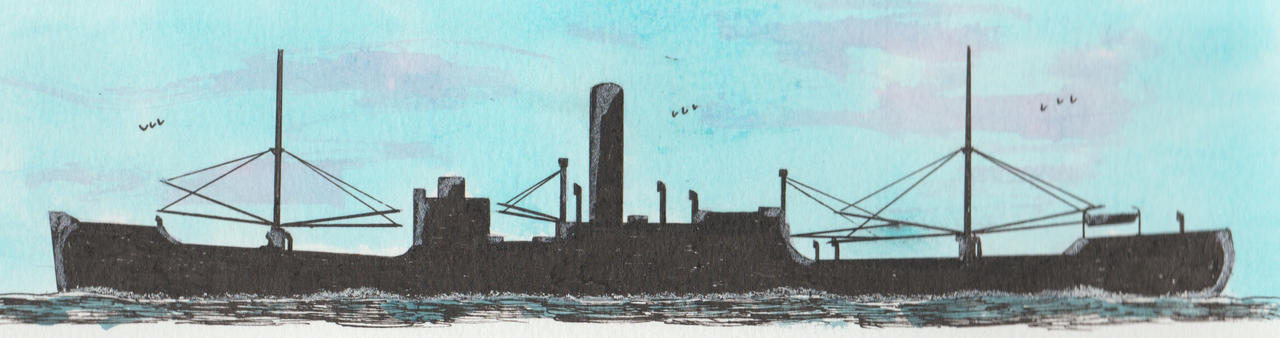
American naval attaché at Moscow, Russia reported on 1 July 1943 that the Russian Northern Fleet numbered 8 destroyers, 20 submarines, 3 minelayers, 5 patrol vessels, 30 patrol boats and 5 motor torpedo boats.
Source
National Archives USA. Record Group 38: Records of the Office of the Chief of Naval Operations. Series: Secret Naval Attaches Reports. Estimate of potential military strength (pt.). Summaries. Reports from London, Paris, Brussels, Rome and Berlin. Roll M975-001.
An item referred to N/A Stockholm, Sweden reporting that German warships including 1 battleship (probably the Tirpitz), 2 cruisers, 7 destroyers and several motoro torpedo boats entered around 25 January the Trondheim Fjord. The Tirpitz was later moved to the Ased Fjord and camouflaged. The J.I.C. commented that first was reported that the Tirpitz arrived on 19 January at Trondheim. Photographic reconnaissance confirmed. She was lying there still on noon 29 January(1)
Note
1. Laid down by Kriegsmarinewerft Wilhelmshaven, Germany on 2 November 1936, launched on 1 April 1939, commissioned on 25 February 1941 and sunk by the Royal Air Force on 12 November 1944 at Tromsø, Norway, with her wreck broken up between 1948-1957. Of the Bismarck-class as answer on the French Richelieu-class battleships preceded by Scharnhorst-class succeeded by planned H-class.
Source
Map Room Papers (Roosevelt Administration), 1942 - 1945. U.S. Joint Intelligence Committee. Daily summary No. 51 dated 30 January 1942