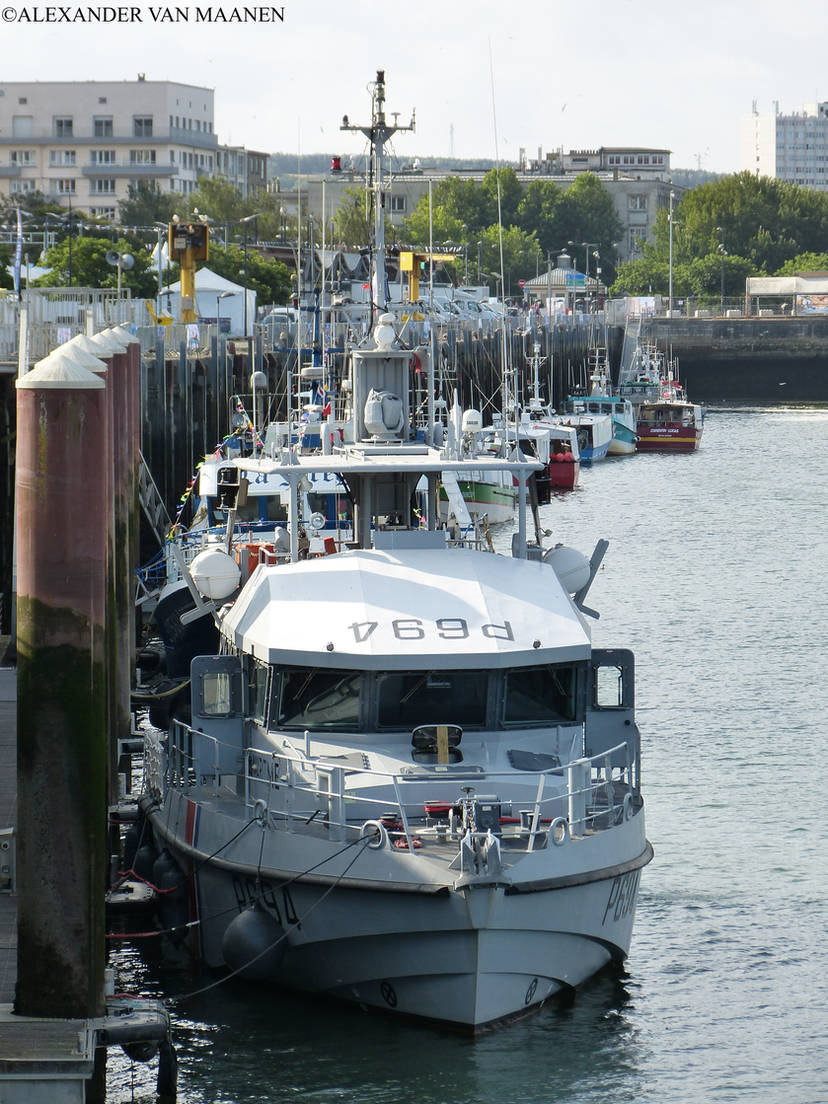
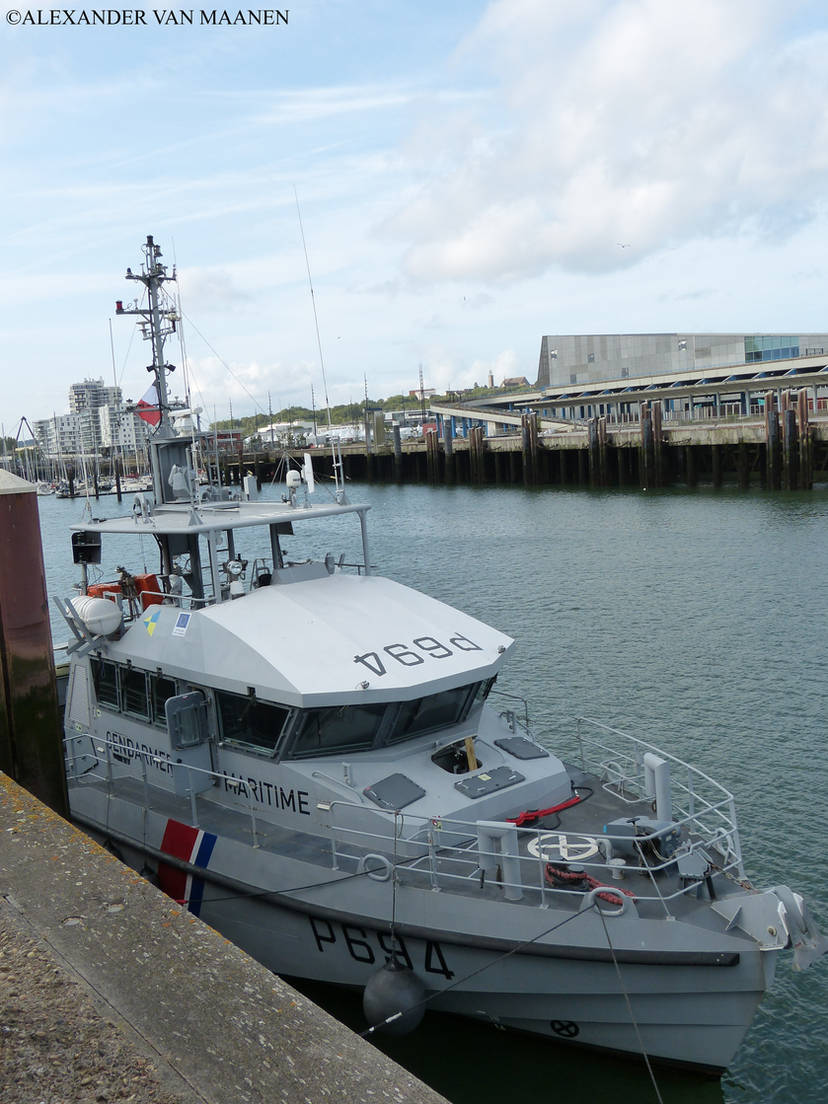
Boulogne-sur-Mer, France 19 July 2026
Of the French Maritime Gendarmerie. Coastal Maritime Surveillance Craft (VCSM NG). Commissioned in 2022. Built by Socarenam, Boulogne-sur-Mer.

Of the French Maritime Gendarmerie. Coastal Maritime Surveillance Craft (VCSM NG). Commissioned in 2022. Built by Socarenam, Boulogne-sur-Mer.


Royal Australian Navy 125 Anniversary International Fleet Review at Sydney, Australia March 2026
Clinton J Down Photography, Shellharbour, New South Wales, Australia
Thanks for allowing us to republish
Samoa-flagged, homeport Apia, IMO 4734271, MMSI 561006007 and call sign 5WDI. Of the Samoa Police Service. Promised in June 2022, ordered on 2 November 2022, acquired on 22 November 2023 and commissioned in 2024. Built by Austal Australia with yard number 542 as a Guardian-class patrol boat under the Pacific Maritime Security Program


Great Belt, Slagelse, Seeland, Denmark 19-11-2024
Germany-flagged, IMO 993497, MMSI 211869710 and call sign DBIF. Part of Potsdam-class. Laid down by Fassmer shipyard, Lemwerder, Germany on 26 September 2022 and completed in 2023.
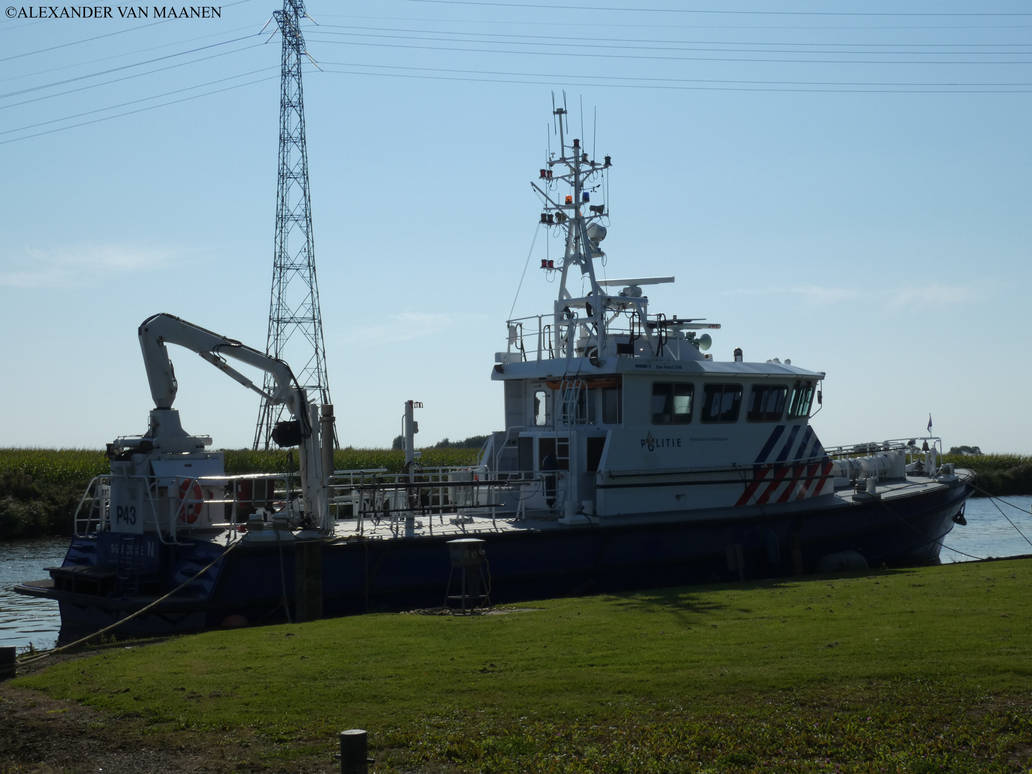
Harlingen, Netherlands 21 September 2024
Netherlands-flagged, MMSI 245212000 and call sign PGQV.
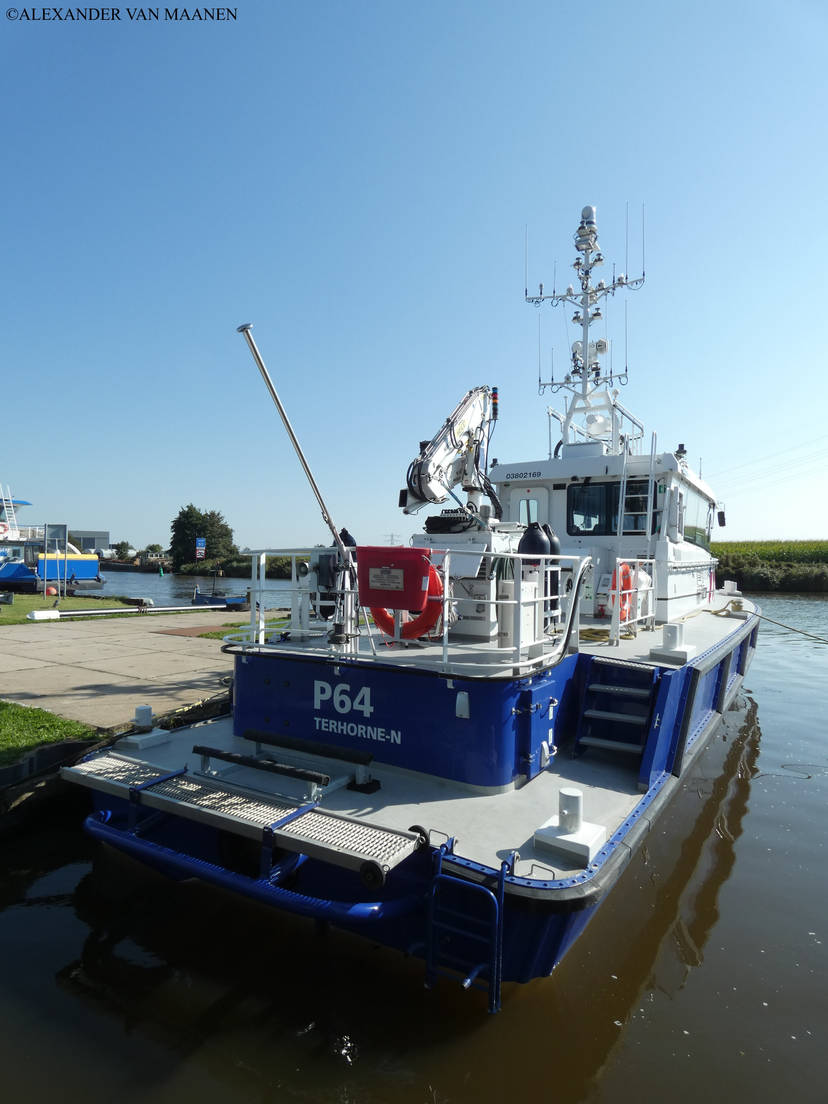
Harlingen, Netherlands 21 September 2024
Netherlands-flagged, homeport Terhorne, 03802169, registration number 1040-00 and MMSI 244820847. Built by Damen Shipyard, Gorinchem, Netherlands with yard number 548901 in 2000.
Dimensions 17 x 3.5 x 1.6 metres. Displacement 45 tons. Horsepower 100 hp. Speed 8.5 knots. Armament 1 machine gun. Crew numbers 25 men. Launched in 1882. (1)
Note
1. Alexandrescu called her Smirdan, summer 1916 a police chaloupe.
Sources
“Die Donauflotillen”, in Die Flagge. Organ des Vereines zur Förderung der österreichischen Schiffahrt, nr. 11, 1908.
Vasile Alexandrescu. “Kämpfe der rumänischen Kriegsmarine im Ersten Weltkrieg”, Marine-Rundschau, July 1980.
Dimensions 17 x 3.5 x 1.6 metres. Displacement 45 tons. Horsepower 100 hp. Speed 8.5 knots. Armament 1 machine gun. Crew numbers 25 men. Launched in 1882.(1)
Note
1. Alexandrescu, summer 1916 a police chaloupe.
Sources
“Die Donauflotillen”, in Die Flagge. Organ des Vereines zur Förderung der österreichischen Schiffahrt, nr. 11, 1908.
Vasile Alexandrescu. “Kämpfe der rumänischen Kriegsmarine im Ersten Weltkrieg”, Marine-Rundschau, July 1980.
Dimensions 17 x 3.5 x 1.6 metres. Displacement 45 tons. Horsepower 100 hp. Speed 8.5 knots. Armament 1 machine gun. Crew numbers 25 men. Launched in 1882.(1)
Note
1. Alexandrescu, summer 1916 a police chaloupe.
Sources
“Die Donauflotillen”, in Die Flagge. Organ des Vereines zur Förderung der österreichischen Schiffahrt, nr. 11, 1908.
Vasile Alexandrescu. “Kämpfe der rumänischen Kriegsmarine im Ersten Weltkrieg”, Marine-Rundschau, July 1980.
Dimensions 23 x 4.6 x 1.8 metres. Displacement 104 tons. Horsepower 150 hp. Speed 9 knots. Armament 2 machine guns. Crew numbers 60 men. Launched in 1882. Remarks double screws.(1)
Note
1. Alexandrescu, summer 1916 a police boat.
Sources
“Die Donauflotillen”, in Die Flagge. Organ des Vereines zur Förderung der österreichischen Schiffahrt, nr. 11, 1908.
Vasile Alexandrescu. “Kämpfe der rumänischen Kriegsmarine im Ersten Weltkrieg”, Marine-Rundschau, July 1980.


Korsør, Denmark 27 March 2023
Bulgaria-flagged, IMO 9940980 and MMSI 276014020 and call sign LZCB. Built by Baltic Workboats in Estonia in 2023. Of aluminium. Dimensions 44.6 x 8.8 x 2.6 metres.
The German embassy at Tokyo, Japan wrote on 28 October 1935 to the Chef der Marineleitung at Berlin referring to the Japanese monthly magazine Yushu that the water policevessel Kab was built in 1906, tonnage 710 tons, draught 4.6 (metres?), speed 10.6miles and armed with 2-8cm guns.
Source
Bundesarchiv RM-11-70
The German embassy at Tokyo, Japan wrote on 28 October 1935 to the Chef der Marineleitung at Berlin referring to the Japanese monthly magazine Yushu that the water policevessel Kaiho was built in 1933, tonnage 200 tons, speed 14.0 miles, draught 1.5 (metres?) and armed with 208 cm guns, 2 machine guns.
Source
Bundesarchiv RM-11-70
The German embassy at Tokyo, Japan wrote on 28 October 1935 to the Chef der Marineleitung at Berlin referring to the Japanese monthly magazine Yushu that the water policevessel Kairyu was built in 1933, tonnage 200 tons, speed 14.0 miles, draught 1.5 (metres?) and armed with 2-8cm guns, 2 machine guns.
Source
Bundesarchiv RM-11-70
The German embassy at Tokyo, Japan wrote on 28 October 1935 to the Chef der Marineleitung at Berlin referring to the Japanese monthly magazine Yushu that the water policevessel Se-ikai was built in 1934, tonnage150 tons, speed 8.0 miles, draught 2.4 (metres?) and armed with 1-5cmgun 3 machine guns.
Source
Bundesarchiv RM-11-70
The German embassy at Tokyo, Japan wrote on 28 October 1935 to the Chef der Marineleitung at Berlin referring to the Japanese monthly magazine Yushu that the water policevessel Kwaima was built in 1893, tonnage 140 tons, speed 6.0 miles, draught 2.1 (metres?) and armed with 1-3.4cm gun 2 machine guns.
Source
Bundesarchiv RM-11-70
The German embassy at Tokyo, Japan wrote on 28 October 1935 to the Chef der Marineleitung at Berlin referring to the Japanese monthly magazine Yushu that the water policevessel E-ikai was built in 1907, tonnage 126 tons, speed 7.0 miles, draught 2.1 (metres?) and armed with 1-5cm gun 1 machine gun.
Source
Bundesarchiv RM-11-70
The German embassy at Tokyo, Japan wrote on 28 October 1935 to the Chef der Marineleitung at Berlin that the Japanese monthly magazine Yushu described the Manchurian navy. It consisted of 3 parts namely a riverine flotilla, water police and a land based naval force. The riverine flotilla was active on the rivers Amur, Usuri, Argun, Non and Murren and on the Lake Khanka. It protected the inland merchant shipping, against piracy activities and survey tasks. The water police is a specialized part of the common police supporting the department of internal affairs to act against piracy and smuggling. It was stationed at E-iko with detachments at Bokkai and Ryoka and Oryoko rivers. The Manchurian navy depends heavily on the Japanese navy. Crews are trained on location by Japanese naval officers. Manchurian officers were during 2 years educated at Japanese naval high schools and during one year at the torpedo-, artillery- and intelligence school. The petty officers and sailors were practically trainex at the naval stations Yokosuka and Ryojun. The commander in chief of the riverine flotilla rear admiral Li? was also educated on a Japanese high school.
Source
Bundesarchiv RM-11-70


Netherlands-flagged, homeport Roelofarendsveen, Netherlands. Built by De Vries Lentsch ‘t Fort, Nieuwendam, Netherlands in 1924. Dimensions 15.45 x 3.25 x 1.45 metres. Owner 1924-1949 Havenpolitie, Amsterdam, Netherlands and 1957-1971 Korps Rijkspolitie.
An item reported that the Conference of Ambassadors informed Czecho-Slovakia that it was not possible to hand over Austro-Hungarian ships part of the Danube War Flotilla as they requested. The vessels suitable for police tasks were under the Treaty of Peace handed over to Austria and Hungary.
Source
The National Archives, Kew Gardens, England CAB-24-119-53


Built by De Vries Lentsch ‘t Fort, Nieuwendam, Netherlands in 1924 of iron. Dimensions 15.45 x 3.25 x 1.45 metres. Built as Haven Politie 2 for the Gemeentelijke Havenpolitie, Amsterdam, Netherlands in 1924, since 21 February 1949 RP 72 of Korps Rijkspolitie, since 1957 RP 17 of Rijkspolitie and sold in 1971. Became Wilhelmina in 1972 and De Wilhelmina RP 17 in 1991.

