Translate

Showing posts with label Net layers. Show all posts

Saturday, 18 July 2026

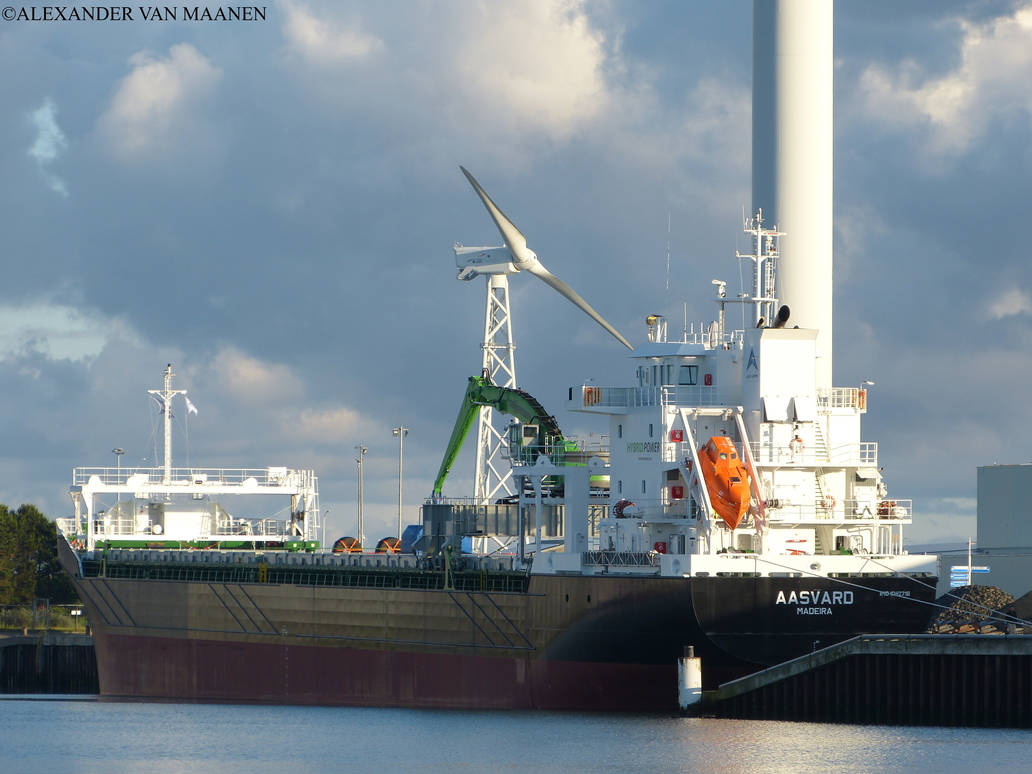
Norwegian aggregates carrier (ex-Bodewes Hoogezand 781 2026) Aasvard 2026-

Eemshaven, Netherlands 11 June 2026

Madeira/Portugal-flagged, homeport Madeira, IMO 1042718, MMSI 255916026 and call sign CQ2455. Ordered in November 2023, launched by Royal Bodewes Shipyards, Hoogezand, Netherlands on 17 March 2026, planned delivery on 18 July 2026.. Owner Aasen Bulk, Mosterhamn, Norway. 

Sunday, 19 April 2026

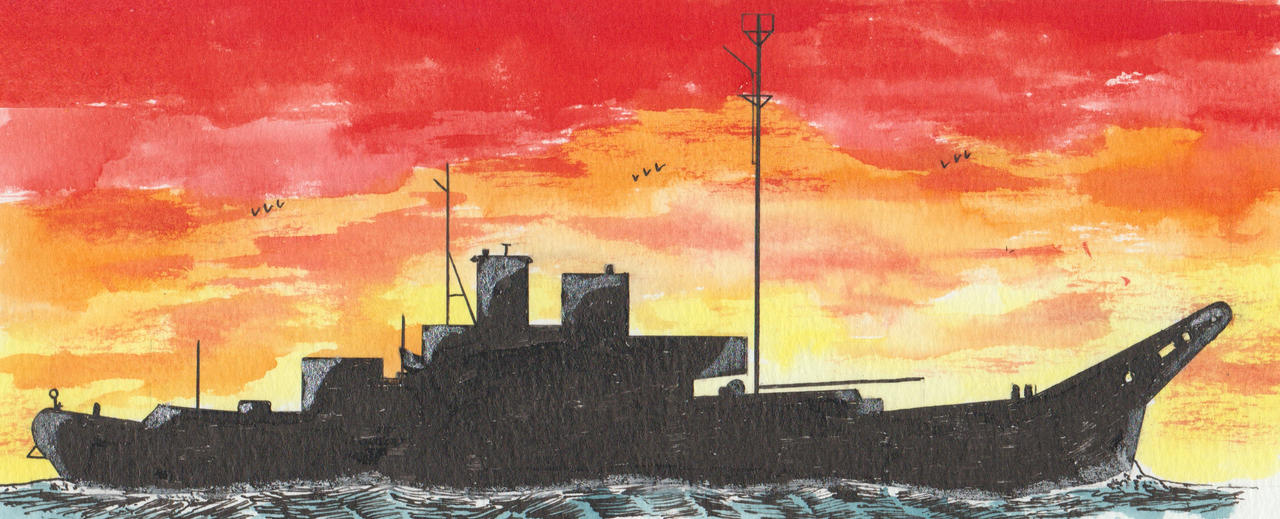
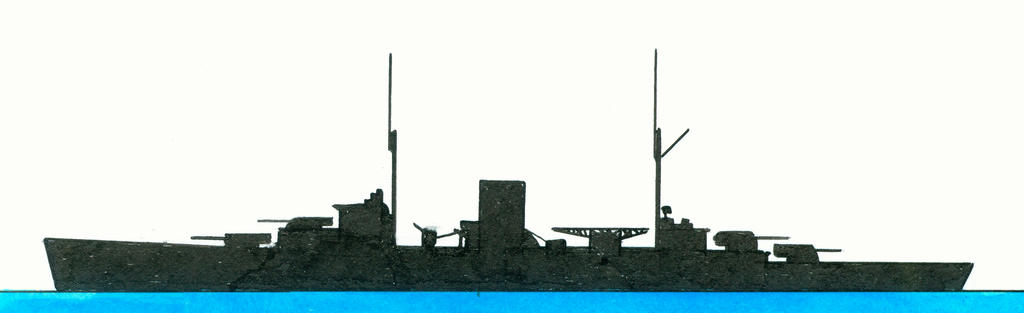
Nationalist Chinese net layer Fu Hsing 1950s

©Warshipsresearch.blogspot.com

Of the Nationalist Chinese Maritime Customs Service. Probably an Ailanthus-class net laying ships or net tenders preceded by Aloe-class succeeeded by Cohoes-class of which six in 1946-1947 were handed over by the USA to Nationalist China namely the Cliffrose, Cinnamon, Silverbell, Torchwood, Catclay and Shellbark. 

Thursday, 10 July 2025

Strength of the Russian Pacific Fleet in September 1942

 American naval attaché at Moscow, Russia reported in September 1942 that according to information given by Russian official to the Astalusna, Moscow the Russian Pacific Fleet consisted of 6 minelayers, 9 destroyers, 2 net layers, 63 submarines, 12 patrol vessels of about 400 tons, 40 minesweepers, 99 coastal motor boats and 61 motor torpedo boats. “Alusna was told by the Soviets that the above data was give to no other nation. Alusna asked that this information be kept in strict secrecy.”

Source

National Archives USA. Record Group 38: Records of the Office of the Chief of Naval Operations. Series: Secret Naval Attaches Reports. Estimate of potential military strength (pt.). Summaries. Reports from London, Paris, Brussels, Rome and Berlin. Roll M975-001

Monday, 14 April 2025

Dutch cargo ship Brastagi 1936-1947

©Warshipsresearch.blogspot.com

Laaid down by Kon.Mij. De Schelde, Vlissingen, Netherlands with yard number 203 on 19 February 1936, launched on 6 February 1937, delivered to manager Firma Wm Ruys & Zonen, owner N.V. Rotterdamsche Lloyd, both at Rotterdam, Netherlands on 6 April 1937, converted into a troop transport in the Second World War, reconverted into a cargo ship in 1947, grounded underway from Lourenco Marques to Dar es Salaam on 31 October 1947, fire broke out on 20 November 1947 and total loss.

According to the list and supplements 1-2 on 13 September 1945 BDZ No. 673sent by the office of armament the Royal Netherlands Navy located at 41 East 42nd Street, New York 17, USA. There were no complete records available, so there were several sources used to compile the list. Sometimes the kind of guns gave indirect information regarding the origin such as 4”/BL and 12 pounder guns were British mostly supplied in the United Kingdom, Canada or Curacao. The 4.7” guns were old Japanese guns placed on some vessels in the begin of the war at Singapore and some 4” guns in the same period at Surabaya, Dutch East Indies. The trade in which the ship was used gave also an indication were the guns were supplied, for example involved in the Pacific trade means supplied at the West Coast.

Armed with 2-2cm guns supplied at Norfolk on 25 March 1942

Armed with 2-2cm guns supplied at New York.

Armed with 4-2cm guns supplied at San Francisco on 22 March 1943

Armed with 1-10,16cm/4” 50 Mk.9 gun

Armed with 3-7,62cm/3” 50 dual purpose guns.

Source

Archieven van hoofd handelsbescherming en diverse handelsbeschermingsofficieren 1941-1946 inv.no. 53 (Nationaal Archief, The Hague, Netherlands.

Wednesday, 27 November 2024

The decimated British 1929 Naval Estimates building program

HMS Leander. ©Warshipsresearch.blogspot.com

The British Royal Navy was under the 1929 Naval Estimates allowed to built 1 ‘A’-cruiser and 2-’B’ cruisers. However announced MacDonald (1) on 24 July 1929 that the building of the cruisers was not to begun before the need was discussed. The First Lord of the Admiralty (2) informed the Parliament on 29 January 1930 that the building programme was decreased. One 6”-cruiser and the 8” cruisers were deleted just like 4 destroyers, 1 net-layer and target-towing vessel, 2 sloops and 3 submarines. The fate of the other three submarines was unknown until after the Naval Conference. The 6” cruiser to be built was the HMS Leander(3), named in April 1930. Earlier was allready decided that the new to be built ‘B” cruisers would be of a smaller type, armed with 6”guns. The costs of the programmes 1928 and 1929 were in this manner officially limited with 1,000,000 pound sterling.

Notes

1. James Ramsay MacDonald (12 October 1866 Lossiemouth, Scotland-9 November 1937 North Atlantic Ocean), politician and statesman, Prime Minister in 1924 and 1929-1935.

2. Admiral of the Fleet Sir Charles Edward Madden (5 September 1862 Gillingham, England-5 June 1935 London, England), First Sea Lord 30 July 1927-30 July 1930.

3. Pennant 75. Part of Leander-class light cruisers preceded by Emerald-class succeeded by Arethusa-class. Ordered on 18 February 1930, laid down by HMNB Devonport on 8 September 1930, launched on 24 September 1931, commissioned on 24 March 1933, loaned to Royal New Zealand Navy on 30 April 1937, returned on 27 August 1945, decommissionedin February 1948, sold to be broken up on 15 December 1949 starting on 15 January 1950.

Source

Brassey’s Naval and Shipping Annual 1931. London, England. 

Monday, 11 March 2024

Japanese net layers on 1 January 1937

Completed (e): Shirataka, Tsubame and Kamome.

Building none.

Authorized none.

Source

National Archives USA. Record Group 38: Records of the Office of the Chief of Naval Operations. Series: Secret Naval Attaches Reports. Report of the Naval Attache Tokyo dated 21 January 1937 No. 12 subject Japanese Navy Vessels Built, Building or Authorized. Information of 1 January. M975-002.

Saturday, 8 October 2022

Japanese cargo ship Sansui Maru 1934-

Call sign JXFH. Gross tonnage 812 tons, net tonnage 455 tons and as dimensions 190.0 (waterline) x 31.0 x 15.0 feet. The oil fuelled propulsion delivered 164 nhp allowing a maximum speed of 12 knots. Government requisitioned. Net tender/layer. Built by Mitsubushi Jukogyo K.K., Kobe, Japan for Setsuyo Syosen K.K., Osaka, Japan in 1934.

Saturday, 18 June 2022

Dutch crew tender NSI Servant

Vlissingen, Netherlands 18 March 2022

Netherlands-flagged, MMSI  246488000 and call sign PEPE. Part of the fleet of Nautical Service Int BV.-Diving and Marine Contractors.

Tuesday, 26 November 2019

US Navy testing demands for a net layer according to the Dutch magazine Marineblad dated 1939 no. 6

An item referred to the magazine R.M. dated April 1939 reporting that minesweepers stationed at Honolulu were testing the protection of the naval base there by laying nets. These tests were needed to determine the demands to which a net layer had to meet.

Sunday, 21 January 2018

The British naval shipbuilding program according to the Dutch magazine Marineblad dated 1935 no. 4

An item reported that there were 28 warships for the British Royal Navy to be laid down, a decrease compared with the 30 a year earlier. The new building consisted of 3-9.000 ton light cruisers, 1 submarine depot ship, 1 flotilla leader, 8-1.385 ton destroyers, 1-1.500 ton submarine, 1-1.080 ton submarine and 1-670 ton submarine, 1-1.170 ton escort vessel, 3-875 ton minesweepers, 2-575 ton coastal flotilla vessels, 1 survey vessel, 1 small minelayer, 2 net layers and 2 fishing vessels. 

Saturday, 20 January 2018

British net layer HMS Protector under construction according to the Dutch magazine Marineblad dated 1935 no. 4

An item referred to the magazine Schiffbau dated 15 April 1935 reported that at Yarrow, England the net layer Protector was under construction which was to large part similar with the Guardian. She was to be fitted put with the necessary equipment for photographing [of assaults?]. (1)

Note
1. :Laid down by Yarrow, Glasgow, Scotland in August 1935, launched on 20 August 1936, commissioned on 30 December 1936, reclassified as an Arctic patrol ship in 1957 and finally sold to be broken up on 10 February 1970. The A 146.