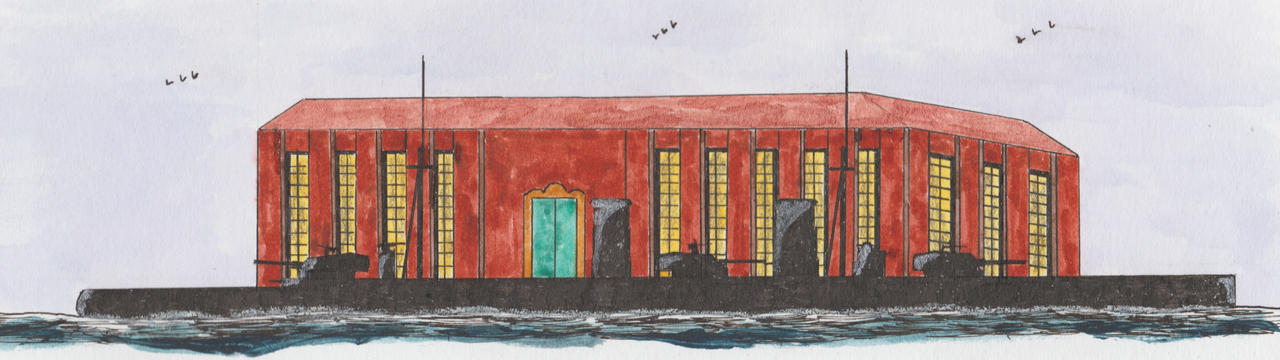
Displacement 30,000 tons with an armament of 2x3-38 cm guns L/45 guns, her secondary armament included 18x1-15cm L/50 guns. Speed 30 knots. Designed by Marinetechnisches Komitee (MTK). Never realized.

Displacement 30,000 tons with an armament of 2x3-38 cm guns L/45 guns, her secondary armament included 18x1-15cm L/50 guns. Speed 30 knots. Designed by Marinetechnisches Komitee (MTK). Never realized.

Illustrated London News dated 13 January 185
Within the last weeks were a large number of huts (made by Cilli, Steiermark) sent from Trieste to Crimea just like huts sent from Southampton. Lloyds steamships transported hundreds bales of fur to Constantinople. The British government contracted the house of Weikersheim and Co., Vienna, Austria for immediately delivering of furs and winter clothing and a house at Berne, Switzerland delivered also winter clothing especially shoes. All for the Allied forces in the Crimea. The Crimean War found place between 16 October 1853-30 March 1856 between Ottoman Empire, France, United Kingdom and Sardinia at one side and Russia and Greece on the other side.
©Warshipsresearch.blogspot.com
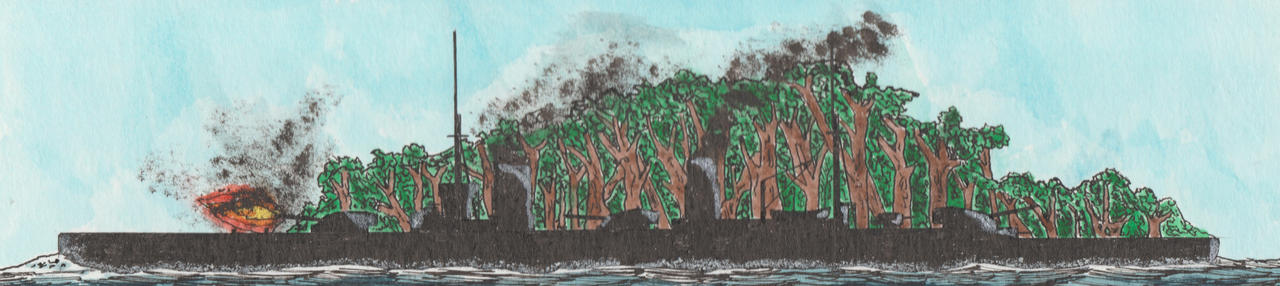
Displacement between 32,600-34,000 tons with an armament of 3x2-38 cm guns L/45 guns, 18x1-15cm L/50 guns, 4-15cm L/50 dual purpose guns and 6 submerged 53cm torpedo tubes. Speed 30 knots. Horsepowe 112,000hp. Range 8,000 nautical miles/15 knots. Designed by Marinetechnisches Komitee (MTK). Never realized.

Chang Feng-class©Warshipsresearch.blogspot.com
Part of the Chang Feng-class consisting of the Yu Chang (ex-Chang Feng), Chien Kang and Tung An preceded by Hai Lung-class succeeded by Ching Po (delivered to Italy) and Lung Tuan (delivered to Austro-Hungarian navy). Launched by Schichau-Werke, Elbing, Germany on 5 July 1912, commissioned on 7 November 1912, scuttled as blockship on 18 December 1937, salvaged by the Japanese in December 1939, renamed Tung Chun and handed over to the ROC-Nanjing Navy, abandoned when personnel of the ROC-Nanjing Navy was involved in an uprising and what became of her is unknown.
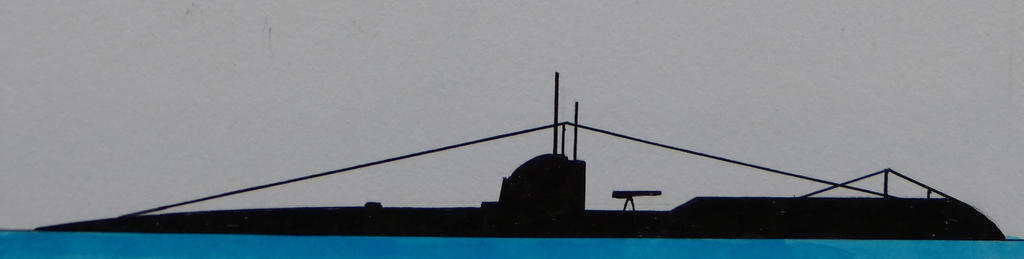
German submarines UC 16-79©Warshipsresearch.blogspot.com
An item reported that the German submarine SM UC 53 commanding officer Kapitänleutnant Albrech had torpedoed and sunk in August 5 sailing vessels loaded with sulfur and phosphate.(1)
Note
1. Ordered on 12 January 1916, launched by Germaniawerft, Kiel, Germany with yard number 269 on 27 February 1917, commissioned on 5 April 1917 and scuttled at Pola [nowadays Pula, Croatia] on 28 October 1918.
Source
Bundesarchiv RM-40-622
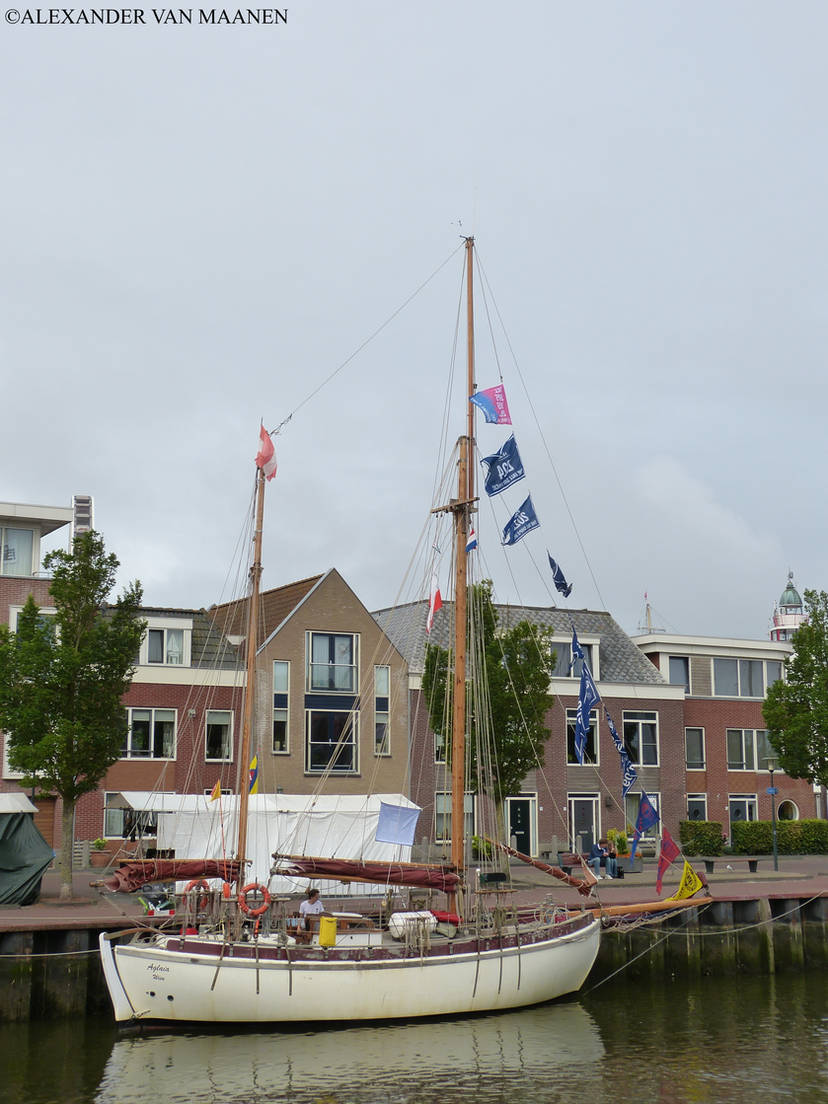
Harlingen, Netherlands 5 July 2026
Austria-flagged, homeport Vienna, MMSI 203274200 and call sign OEX6140. Hull built at Stockholm, Sweden using a Norwegian rescue vessel-design, sold to somebody at Hamburg, Germany, uncompleted sold after 19 years and finally launched in 1997.
An item reported the merchant ship Monte Bianco, loaded with skins, Italy-flagged, tonnage 6,968 tons, date departure 2 July from South America and bound for Italy. Former Austrian Nimrod.
Source
Bundesarchiv RM-40-622
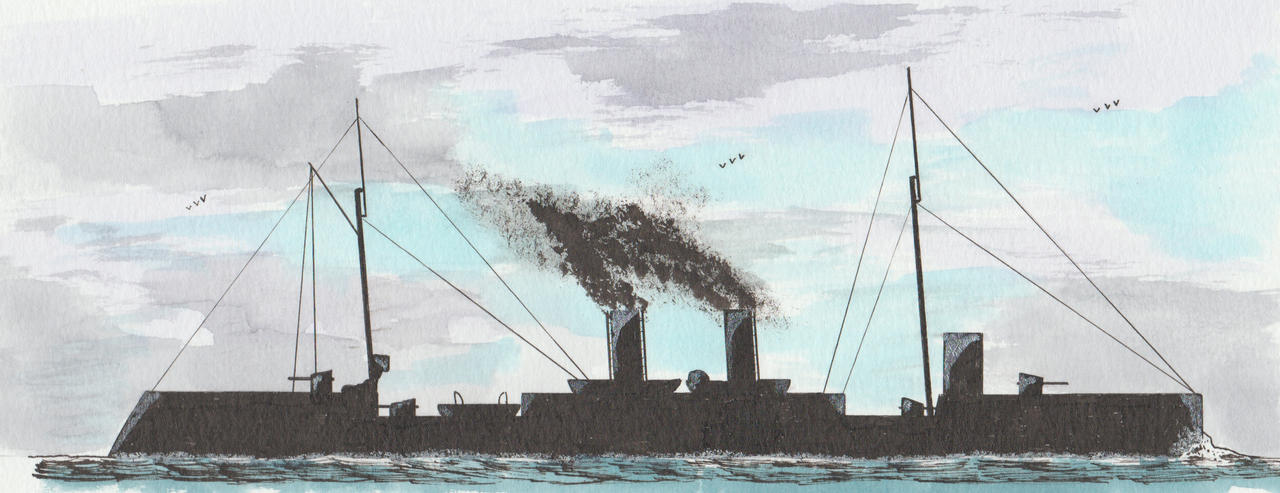
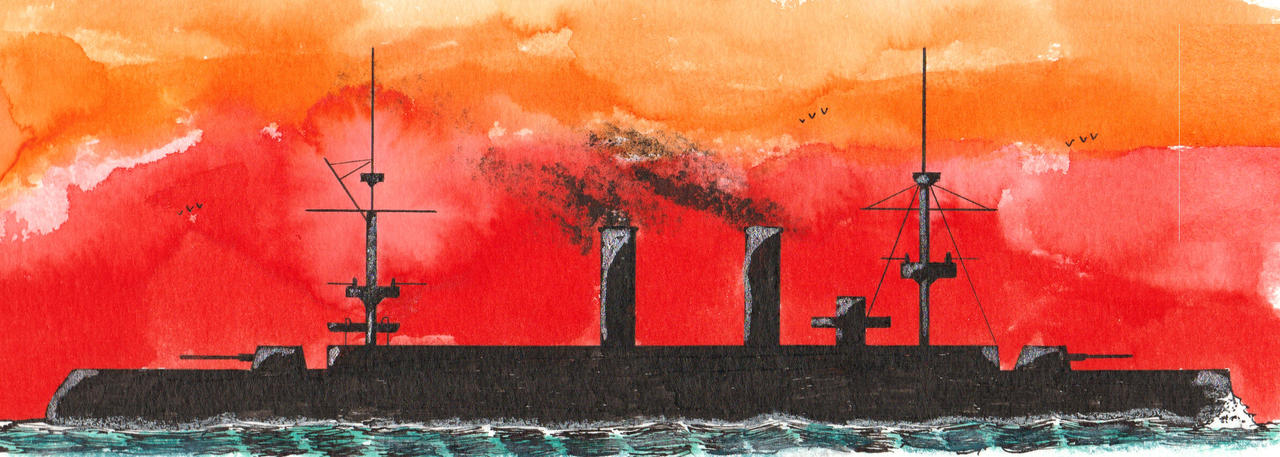
Hai Chi or Hai Qi-class. ©Warshipsresearch.blogspot.com
Also spelled as Tchao-Houo. Part of Chao Ho-class consisting of the Chao Ho, Ying Rui and Fei Hong preceded by Hai Chi-class succeeded by Ning Hai-class and the planned Number 64-class (also known as the Monfalcone light cruisers to be built between 1914-1915 by Cantiere Navale Triestino, Montfalcone, Austria-Hungary). Laid down by Vickers Limited on 12 December 1910, launched on 13 July 1911,completed on 2 December 1911, disarmed on 24 October 1937 and sunk in a Japanese air attack on 25 October 1937.
Chang Feng-class. ©Warshipsresearch.blogspot.com
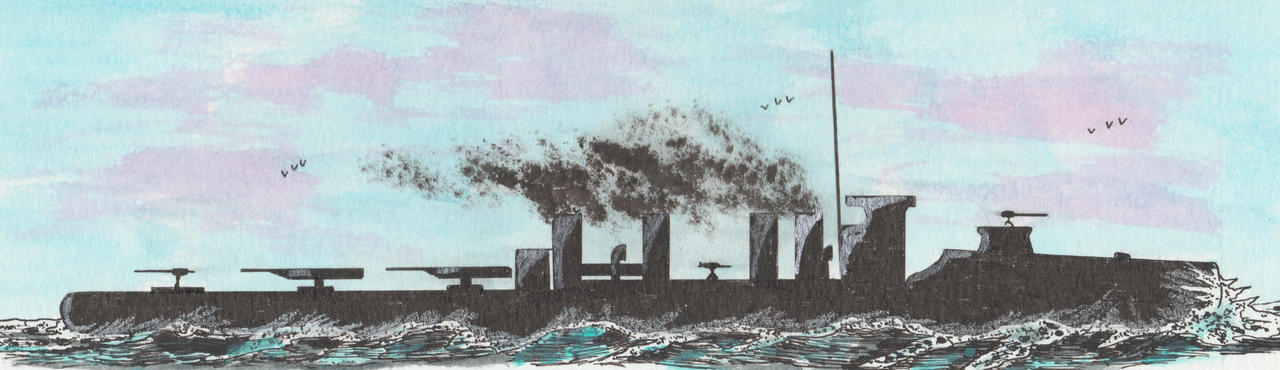
Lung Tuang-class. ©Warshipsresearch.blogspot.com
Preceded by Chang Feng-class. Ordered by Stabilimento Tecnico Triestino (STT) of Trieste , Austria [nowadays Italy] in 1912, launched in 1913, seized by Austria-Hungary on 1 August 1914, completed on 10 September 1914, commissioned as SMS Warasdiner, ceded to Italy in 1920 and broken up. Her design was derived from that of the Austro-Hungarian Huszár-class destroyer commissioned between 1905-1911.


Netherlands-flagged, IMO 9136371 as Pride of Veere. Delivered by Santierul Naval Braila S.A., Braila, Romania with yard number 1381 in 1998 to Pride of Veere B.V., Veere, Netherlands, owner Pride of Veere B.V., Wien, Austria since January 2004, owner Pride of Veere Schiffahrtsgeselschaft m.b.H., Duisburg, Germany, Antigua&Barbuda-flagged, homeport St. John’s, call sign V2EH7 since April 2009, owner Nino Trading&Corp., manager Midway Shipping&Chartering Ltd., Istanbul, Turkey, Panama-flagged, cal sign HPWG since June 2014, owner/manager Ukrrichflot JSC, Kiev, Ukraine, MMSI 272771000, call sign UUBA2 since 21 February 2017.
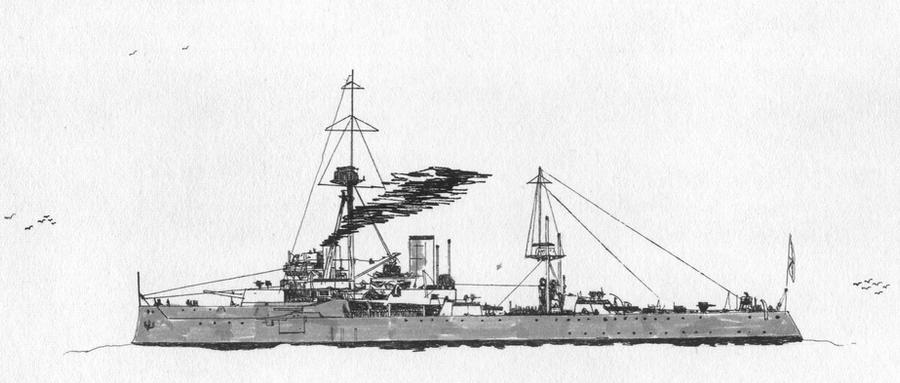
British HMS Dreadnought ©Warshipsresearch.blogspot.com
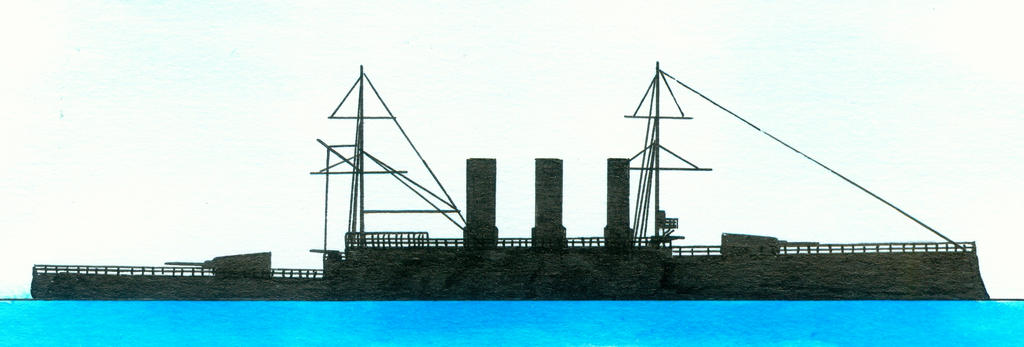
Italian Regina Elena-class©Warshipsresearch.blogspot.com
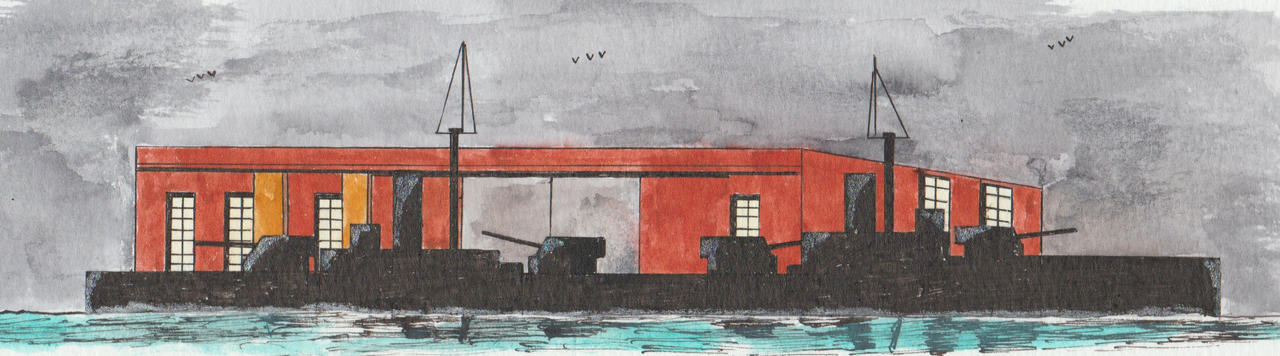
Proposal of Bernotti©Warshipsresearch.blogspot.com
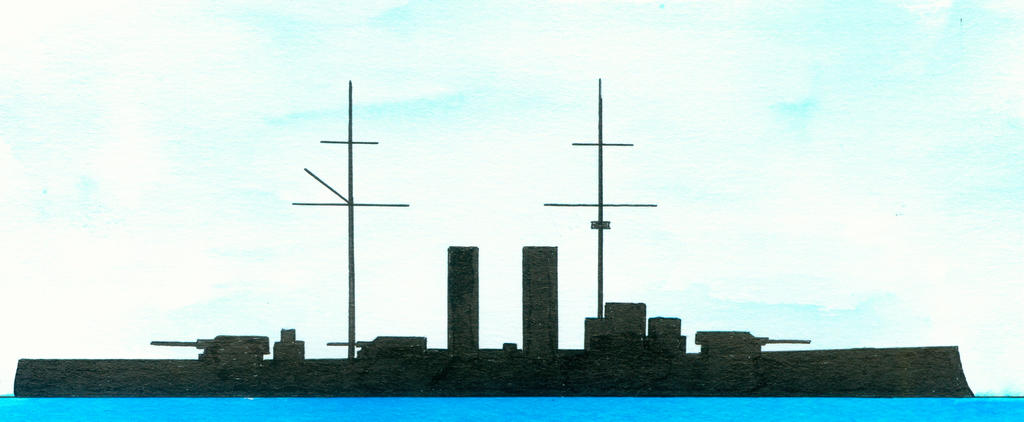
Austrian Radetzky-class©Warshipsresearch.blogspot.com
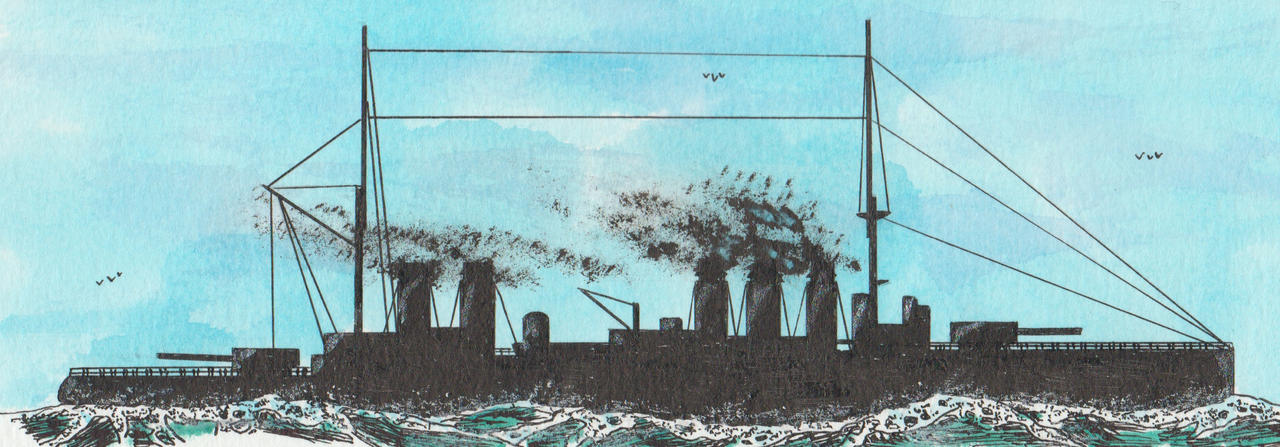
French Danton-class©Warshipsresearch.blogspot.com
Lieutenant Bernotti (1) published his vision of a battleship in the Italian magazine Rivista Marittima, supplement to No. VI, 1908, as part of a Naval Prize Essay. A translation was published in The Proceedings dated March 1909. At that moment was in England HMS Dreadnought (2) commissioned, the first steam turbine powered battleship with an uniform main battery instead of a mix of some large guns and a heavy secondary armament. The newest Italian battleships were the Regina Elena-class designed by Cuniberti, the man of the all-big gun concept qualifing his own design as obsolete.(3). The Dante Alighieri was the first built Italian dreadnought.(4) Bernotti wrote that the latest plans of battleships principally showed gins of one caliber and a high speed. The tonnage was between that of a single turreted monitor and a battleship with a large number of heavy guns. He wondered of the all-big-gun-concept the ultimate solution was regarding the lessons of the recent war between Japan and Russia (1904-1905). He choose for a battle caliber of 30,5cm mounted in four two-gun turrets (total weight 1,881 tons). He made some sketches of configurations of the positions of the gun turrets. For the secondary armament he choose for 8-15,2cm cal 500cm guns (total weight 789 tons) to which 12-7,6cm guns (total weight 57 tons) and torpedo tubes (total weight 20 tons) were to be added. A ram was not be added. The speed which had strategical importance was the one which could be maintained for a long time. This strategic speed was 3 knots below the maximum speed of 22 knots meaning that minus 3 knots would be 19 knots which was equal to the maximum speed of the French Danton-class pre dreadnoughts (19.25 knots) and a little less than that of the Austrian Radetzky-class semi-dreadnoughts(20.5 knots). Total fuel supply 1,731-1,750 ton. Armour with a thickness of 10-20cm, total weight 3,275 tons. Total weight of engines and boilers 1,952 tons. Calculated displacement 15,950 tons.
Notes
1. Bernotti (24 February 1877 Marciana Marina, Italy-19 March 1974 Rome, Italy) ended his naval career (started in 1889) in the rank of admiral (promoted 2 June 1934) in 1939 becoming a senator in the kingdom of Italy and raised to the rank of Fleet Admiral in June 1940. Expert in naval doctrine an leading theoretical theorist with the navy was also a proponent of naval aviation including aircraft carriers. His publicatuin His Fondamenti di tattica navale was translated in the English publication Fundaments of Naval tactics. In the Rivista Marittima dated July-August 1920 he published another article dealing with the future of the battleship as the lessons learned from the First World War had made clear. The ideal maximum armament was 4x3-minimum 38cm guns, a secondary armament of 15,2cm guns, 6-about 10cm anti aircraft guns, a number of machineguns and 7-12 surfaced torpedo tubus (triple or twins).
2. Ordered in 1905, laid down by HM Dockyard Portsmouth on 2 Otcober 1905, launched on 10 February 1906, commissioned on 2 December 1906, decommissioned in February 1919 and sold to be broken up on 9 May 1921. Preceded by the Lord Nelson-class and succeeded by the Bellerophon-class. Her main armament consisted of 5x2-30,5cm/12” guns to which 27x1-7,6cm/3” guns and 5-45cm/18” torpedo tubes were added.
3. The Regina Elena consisted of the 4 battleships Regina Elena, Vittorio Emanuele, Roma and Napoli, built between 1901-1908 preceded by the Regina Margehrita-class and an armament of 2-30,5cm/12” cal 40 guns and 12-20,3cm/8” cal 45 guns. In fact was this class based on a concept of a 8,000 tons warship armed with 12-8” guns dating from 1899 but which design approved. This must be the Bettolo-Cuniberti type.
4. The Dante Alighiere was designed by rear admiral Edoardo Masdea replacing the Regina Elena-class designed by by Vittorio Cuniberti succeeded by the Conte di Cavour-class. Laid down by Regio Cantiere di Castellammare di Stabia, Castellammare di Stabia, Italy on 6 June 1909, launched on 20 August 1910, completed on 15 January 1913, stricken on 1 July 1928 and broken up the same year. Main armament 4x3-30,5cm/12" guns.
Sources
https://en.wikipedia.org/wiki/Romeo_Bernotti dated 13 April 2026 11:26 o’clock
‘requisites of the battleship best adepted to the Italian Navy and consideration of its tactical employment’ in: The Proceedings of the United States Naval Institute dated March 1909 vol.35, No., Whole No. 129.
Warshipsresearch.blogspot.com
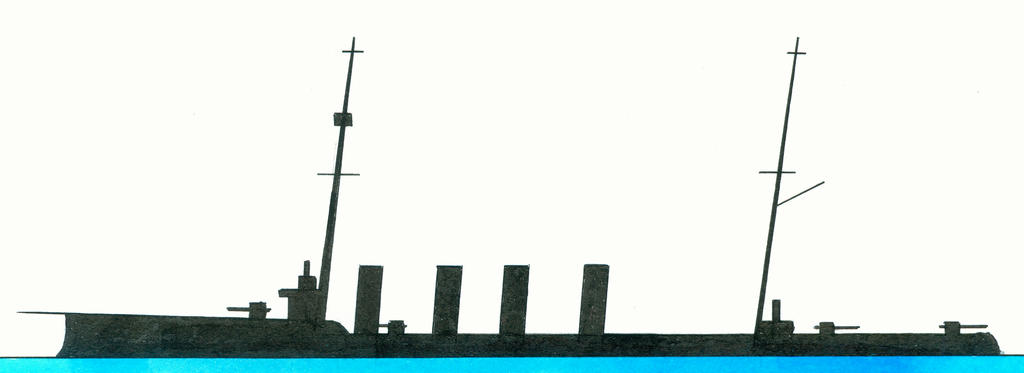
Austro-Hungarian scout cruiser Admiral Spaun. ©Warshipsresearch.blogspot.com
With a letter of the US Legation at Lisbon dated 18 December 1911 received the Secretary of State a translation of a proposal of the Portuguese Minister of Navy dealing with increasing the fleet as published in the Diaro de Noticias. The plan could only be realized with a foreign loan so interested bankers needed active support of their governments. It included the building of three scouts of 3,500 tons each, maximum horsepower 22,000 hp and a speed of 27 knots. The armour was to consist of about 6cm at the sides and a 2cm thick protected deck.Armament 4-12cm cal 50 guns, 4-7.6cm cal 50 guns and 2 torpedo tubes. Cost of each scout 1,600,000.000 dollars, total cost 4,800,000.00 dollars. Scouts were to be of the Admiral Spaun type with slight alterations.
Note
1. Austro-Hungarian scout cruiser SMS Admiral Spaun, laiud down by Pola Navy Yard, Pola [nowadays Pula, Crotia] on 30 May 1908, launched on 30 October 1909, commissioned on 15 Novemnber 1910, transferred to State of Slovenes, Croats and Serbs on 31 October 1918, seized by Italian forces on 9 November 1918, handed over to the Allied powers on 10 November 1918, ceded to the United Kingdom in 1920 and sold to be broken up in Italy executed between 1920-1921.
Source
Record Group 64: Records of the National Archives and Records Administration Series: Records of the Department of State Relating to Internal Affairs of Portugal. Military Affairs and the Army: 853.20 - 853.206/7 THRU Naval Affairs, Navy, Naval Vessels: Equipment and Supplies: 853.34 - 853.348. Microcopy 705 roll 13
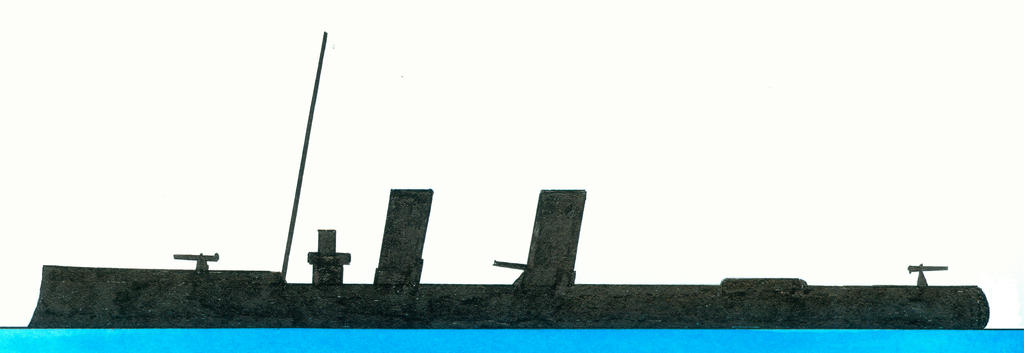
Magnet. ©Warshipsresearch.blogspot.com
In his letter dated Valona [Vlorë, Albania] 13 December 1913 informed the German member of the Kontrollkommissien für Albanien the Chief of the Naval Staff that the Austrian torpedo boat SMS Magnet (1) was replaced by the small cruiser Panther (2). The latter was of the size of the Italian stations ship Irede (not Irida) around 1,300-1,500 tons.
Notes
1. Torpedo boat destroyer, laid down by Schichau-Werke, Elbing, Germany in September 1895, launched on 21 March 1896, completed on 5 July 1896, ceded to Italy in 1920 and broken up.
2. Part of Panther class torpedo cruisers, preceded by SMS Lussin and succeeded by SMS Tiger, laid down by Armstrong, Elswick, England on 29 October 1884, launched on 13 June 1885, completed on 31 December 1885, handed over to England as war prize and sold to Italian shipbreakers to be scrapped in 1920.
Source
Bundesarchiv RM 40/574. Fremde Marinen June 1913-December 1914.
Captain Chaerlies Ploucket. Departed Ostend 22 November, returned at Ostend 4 December.
Source
The Belgian Shiplover No. 80, Mai-June 1961, Shipslist 148. O. Lemaître. Liste des Corsaires Ostendais.
In an attachment of a letter dated Berlin, Germany 5 November No. 2308/42 was the tanker capacity of Gruppe Süd on 29 September 1942 described. Reported in the work area was the German tanker Ossag. Gross register tonnage 2,793 tons, ready for service. Marinegruppenkommando Süd (MGK Süd) was the operational office for the Balkan, Black Sea, Adriatic and Aegean areas. Established on 24 February 1941 as Dienstelle Admiral Z renamed Admiral Südost on 4 April 1941 and Marinegruppenkommando Süd on 30 June 1941. The staff was located in June 1941 at Sofia, Bulgaria, in Vienna, Austria in September 1944 and since November 1944 at Kammer at Attersee, Austria and all uncompleted activities were taken over by Admiral z.b.V. Südost since 11 December 1944.
Note
1. Call sign DIEF. Gros register tonnage 2,793 tons, udner deck 2,331 tons, net register tonnage 1,515 tons and as dimensions 309.7 x 45.5 x 22.5 feet. Carried petroleum in bulk. Built by Deutsche Werft A.G., Hamburg, Germanny. Owner in 1939 Tankdampfer Ges. Ossag m.b.H., Hamburg.
Source
Bundesarchiv RM 7/223Band 2 Jan. 1942 - Dez. 1943
Captain Chaerlies Ploucket. Departed Ostend 15 November, returned at Ostend 17 November. Demi galley.
Source
The Belgian Shiplover No. 80, Mai-June 1961, Shipslist 148. O. Lemaître. Liste des Corsaires Ostendais.
Captain Andries Vlaenderlinck. Departed Ostend 24 August, returned at Ostend 20 September.
Source
The Belgian Shiplover No. 80, Mai-June 1961, Shipslist 148. O. Lemaître. Liste des Corsaires Ostendais.
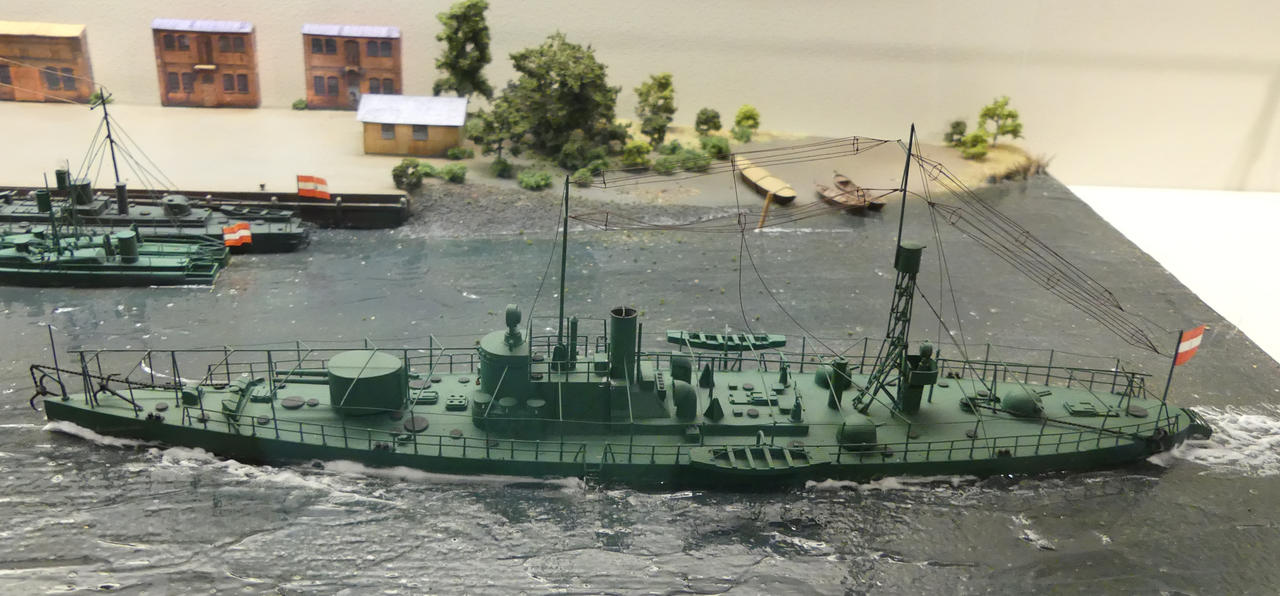
Maritiem Museum Hamburg, Germany
Built by Stabilimento Tecnico Triestino Werft Linz. Commissioned on 15 September 1915, seized by the Allies and transferred to Serbia on 8 December 1918, handed over to Romania on 14 April 1920, handed over to Russia in 1944 and returned to Romania in 1950. Tonnage 600 ton and as dimensions 61 x 10.5 x 1.3 metres. Crew numbered 91 men. Armament consisted of 4-12cm guns, 2-7cm guns, 2-4.7cm guns and 6-8mm guns. Speed 13,4 knots.
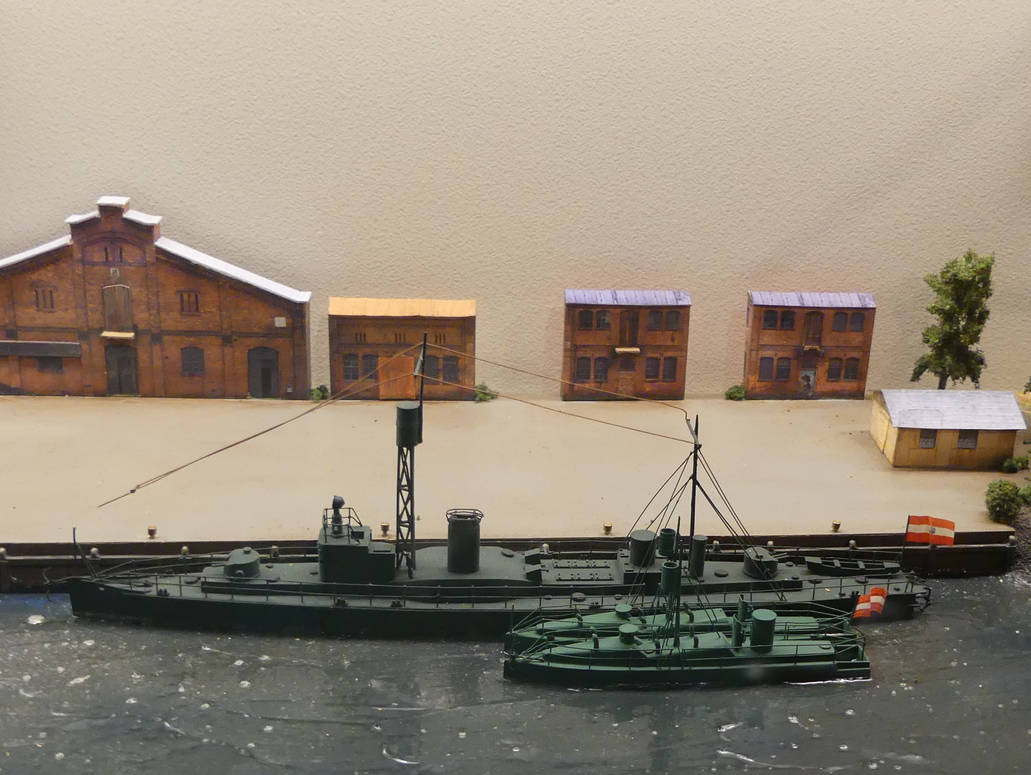
Maritime Museum Hamburg, Germany
Austro-Hungarian river patrol boat Wels
Built by Ganz, Danibius&Co., Budapest, Hungaria. Commissioned on 14 March 1916, handed over to Serbia in December 1918 and to Hungaria in November 1920 and broken up in 1949. After Romania and Russia surrendered was part of the Danube-flotilla including the Wels stationed at the Russian Black Sea coast operating from Odessa, Ukraine on the rivers Bug and Dnepr. Tonnage 133 ton and as dimensions 44 x 6 x 1 metres. Speed 15 knots. Crew numbered 40 men. Armament consisted of 3/4-76 mm guns.
Austro-Hungarian river patrol boat E 1912-1913
Built at Glasgow, Scotland. Commissioned on 29 March 1912, within some weeks decommissioned, to expensive to be refitted by Ganz&Co. Danubius Werft, Budapest, Hungary, stricken in June 1913 and sold to a private at Budapest on 20 August 1913. Tonnage 12 ton and as dimensions 18 x 2.7 x 0.4 metres. Speed 22 knots. Crew numbered 15 men. Armed with 2 machine guns.
Captain Jean-Bapte Teste. Departed Ostend 2 November, returned at Ostend 16 November. French privateer. Armed with 4 guns and 8 swivels.
Source
The Belgian Shiplover No. 80, Mai-June 1961, Shipslist 148. O. Lemaître. Liste des Corsaires Ostendais.

