Translate

Showing posts with label Dutch West Indies. Show all posts

Sunday, 4 October 2026

Enemy submarines harassing Aruba-Curacao area, Dutch West Indies according to the U.S. Joint Intelligence Committee. Daily summary dated 20 February 1942

An item reported that the J.I.C. denied reports that Aruba was shelled on 19 February and ships torpedoed in the vicinity of Aruba. Air and sea measures were taken to secure all traffic within the Aruba-Curacao area, Dutch West Indies.

Note

1. In the night of 15-16 February attacked the German submarine U-156 with gunfire and torpedoes the oil refineries at Aruba and oil tankers lying off the coast. 

Source

Map Room Papers (Roosevelt Administration), 1942 - 1945. MR0423. U.S. Joint Intelligence Committee. Daily summary No. 72 dated 20 February 1942

Thursday, 1 October 2026

USA stationing bombers on Aruba, Dutch West Indies for hunting Axis submarines according to the U.S. Joint Intelligence Committee. Daily summary dated 19 February 1942

An item reported that the Caribbean Defence Commanded established an air base on the island Aruba, Dutch West Indies and where light and heavy bombers were stationed for hunting Axis submarines. The American U.S.A.T. Gibbens was waiting in the harbour for a naval convoy coming from Puerto Rico.

Source

Map Room Papers (Roosevelt Administration), 1942 - 1945. MR0423. U.S. Joint Intelligence Committee. Daily summary No. 71 dated 19 February 1942

Saturday, 19 September 2026

The armament of the Dutch merchant ship Bonaire in the Second World War

Surinamekade/Afgesloten IJ. Stadsarchief Amsterdam. OSIM00004005164

According to the list and supplements 1-2 on 13 September 1945 BDZ No. 673sent by the office of armament the Royal Netherlands Navy located at 41 East 42nd Street, New York 17, USA. There were no complete records available, so there were several sources used to compile the list. Sometimes the kind of guns gave indirect information regarding the origin such as 4”/BL and 12 pounder guns were British mostly supplied in the United Kingdom, Canada or Curacao. The 4.7” guns were old Japanese guns placed on some vessels in the begin of the war at Singapore and some 4” guns in the same period at Surabaya, Dutch East Indies. The trade in which the ship was used gave also an indication were the guns were supplied, for example involved in the Pacific trade means supplied at the West Coast.

Passenger-cargo ship launched by Reiherstieg Schiffswerft&Maschinenfabrik A.G., Hamburg, Germany with yard number 578 on 14 January 1927, delivered to H.C. Horn, Hamburg as Waltraut Horn on 17 April 1926, renamed Presidente Gomez on 16 January 1936, renamed Henry Horn on 12 November 1936, arrived in the Dutch West Indies van Hamburg and interned in the Fuikbaai/Nieuwpoort, Curacao on 30 August 1939, manager/owner Westindisches Schiffahrtskontor G.m.b.H. Hamburg and renamed Henry on 11 September 1939, detained at Nieuwpoort while a valuable cargo sugar was not delivered on 11 January 1940, seized by the Royal Netherlands Navy when her crew failed to scuttle her on 10 May 1940, renamed Bonaire manager Koninklijke Nederlandsche Stoomboot Maatschappij, Amsterdam, Netherlands/owner Staat der Nederlanden, owner/manager Koninklijke Nederlandsche Stoomboot Maatschappij, Amsterdam since August 1946, sold to be broken up by N.V. Holland, Hendrik-Ido-Ambacht, Netherlands arriving on 27 November 1957.

The Dutch newspaper De residentiebode dated 11 May 1940 reported that in the morning of 10 May the crews of the German ships Patricia, Alemania and Henry  tried to scuttle their ships. The hatches of the Henry were opened but again all closed. All three crews were interned.

Armed with 2-2cm guns,at New York on 19 March 1943 supplied with 2-2cm guns and later with 1-3? gun.

Source

Archieven van hoofd handelsbescherming en diverse handelsbeschermingsofficieren 1941-1946 inv.no. 53 (Nationaal Archief, The Hague, Netherlands. 

Wednesday, 16 September 2026

Oil tanker route Lake Maracaibo-Dutch West Indies vulnerable according to the U.S. Joint Intelligence Committee. Daily summary dated 22 February 1942

An item reported that the local authorities in the Dutch West Indies were worried about the vulnerability of the oil tanker route Lake Maracaibo, Venezuela-Aruba-Curacao, Dutch West Indies. The special built shallow draught tankers could not be replaced and until now was 10% lost. The refineries on Aruba and Curacao depended for 100% on the these tankers transporting the needed crude oil.

Source

Map Room Papers (Roosevelt Administration), 1942 - 1945. MR0423. U.S. Joint Intelligence Committee. Daily summary No. 74 dated 22 February 1942

Saturday, 18 April 2026

Venezuelan oil export was to be reduced due to convoy-system according to the U.S. Joint Intelligence Committee. Daily summary dated 24 February 1942

An item reported that the Venezuelan oil export was to be reduced about 40% due to conveying shallow-draught tankers to Aruba and Curacao, Netherlands Antilles.

Source

Map Room Papers (Roosevelt Administration), 1942 - 1945. MR0423. U.S. Joint Intelligence Committee. Daily summary No. 76 dated 24 February 1942

Sunday, 15 March 2026

German blockade runner Nordmeer in 1940-1941

In a letter dated 13 April 1942 No. 1329 to the O.K.M./1 Abteilung Skl. was the so-called ‘Etappen’-organisation of the navy described. In the attachment were the blockade runners decribed used for this purpose. Motor tanker Nordmeer. Loaded with 7,000 ton heating oil. Left Curacao in December 1940. Arrived at Vigo, Spain on 5 January 1941. Seized by the German navy, not allowed and released.

Source

Bundesarchive RM 7-223. 

Sunday, 15 February 2026

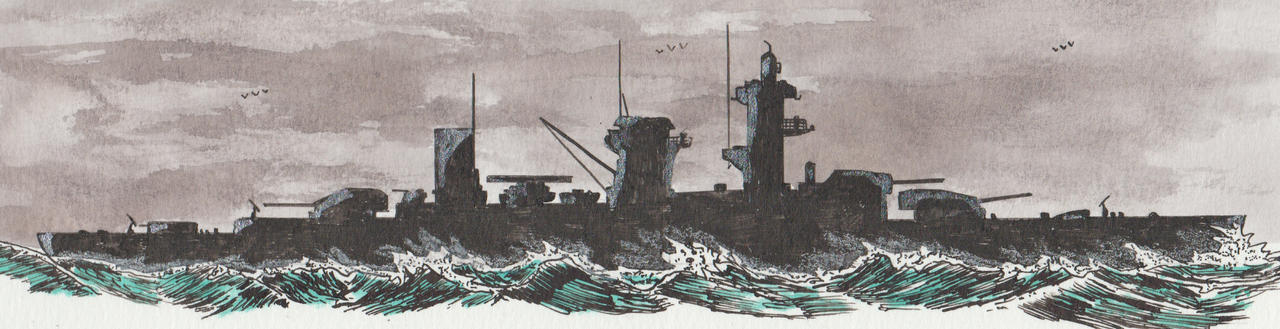
Unknown ship attacked by German pocket battleship Admiral Graf Spee in November 1939


German Admiral Graf Spee original appearance. ©Warshipsresearch.blogspot.com

German Admiral Graf Spee disguised appearance. ©Warshipsresearch.blogspot.com

An item reported that an unknown ship (possible the British oil refinery 13,640 tons ss Tafelberg) which left Aruba, Dutch West Indies bound for Capetown, South Africa on 16 November 1939 reported on 3 December 5 A.M. that she was gunned by the Admiral Scheer and (1) nothing was heard of her since. Her signal came from a postion around 170 miles south west of where the ss Doric Star was gunned.

Notes

1. She was attacked by the German pocket battleship Admiral Graf Spee and not by her sister ship Admiral Scheer. Part of Of the Deutschland-class panzerschiffe, nicknamed pocket battleships by the Allied forces, later classified as heavy cruisers preceded by the Admiral Hipper-class. Main armament 2x3-28cm/11” guns, on fore and aft ship one turret. Building ordered as the Ersatz Braunschweig. Laid down on the Reichmarinewerft, Wilhelmshaven, Germany with yard number 125 on 1 October 1932, launched on 30 June 1934, commissioned on 6 January 1936, successful in destroying 50.089 gross tonnage of merchant ships, participated in the Battle of the Rio de La Plata on 13 December 1939 and finally scuttled to prevent capture on 17 December1939. Her captain was mislead believing that a large Allied naval force was approaching which was not true. Despite being damaged in the battle was she still superior to the Allied ships waiting outside Montevideo, Uruguay who were far more damaged. She was however lacking enough ammunition and had severe problems while the oil purification and desalination plants destroyed.

Sources

The National Archives, Kew Gardens, England CAB-66-4-1 Weekly Résumé (No. 14) of the naval, military and air situation from 12 noon 30 November to 12 noon 7 December 1939.

Lloyd’s Register 1939-1940. 

Saturday, 14 February 2026

British tanker ss San Calisto sunk on 2 December 1939

An item reported that the British 8.010 tons tanker ss San Calisto in ballast strike a German mine and sunk off the Tongue light vessel as part of a convoy underway from Hull, England to Curacao, Dutch West Indies. Of her crew of 43 mn were 2 killed, 5 missing and 9 wounded.(1)

Note

1. Wreck dispersed with explosives. Sunk on 2 December.

Sources

The National Archives, Kew Gardens, England CAB-66-4-1 Weekly Résumé (No. 14) of the naval, military and air situation from 12 noon 30 November to 12 noon 7 December 1939.

Lloyd’s Register 1939-1940. 

Monday, 27 October 2025

Dutch schooner Zr.Ms. De Vos arrived at Curacao according to the Dutch newspaper De Curacaosche courant dated 24 April 1847

An item reported the arrival on Saturday the 17th April of the Dutch schooner Zr.Ms. De Vos lieutenant 1st class J. de Haan coming from Surinam.(1)

Note

1. Laid down at navy yard at Rotterdam, Netherlands in 1843, launched on 29 July 1844, stricken and broken up in 1852-1853, displacement 27,00 x 8,30 x 3,20 metres, a displacement of 198 tons and an armament of 3 guns. 

Sunday, 9 March 2025

Portuguese naval tanker San Bras commissioned in 1942

In his letter dated Lisbon dated 26 October 1942 No. 1930 to the Oberkommando der Kriegsmarine wrote the German Marineattaché Portugal that he was informed that the Portuguese navy commissioned the tanker San Bras built in the Arsenal of Alfeite. She was crewed by Portuguese naval personnel: 1 commanding officer, 4 officers, 12 petty officers and 24 sailors. Her first voyage would be the harbours of Curacao and Aruba. Dimensions 102,50 (between perpendiculars) x 15,50 (maximum) x 6,68 (depth below deck) x 5,50 (loaded) meteres and laoded displacement 7,000 tons. Diesel propulsion without compressor, 2,700ihp/2,500 bhp, maximum speed 12 knots and range 12 knots/12,000 nautical miles.

Source

Bundesarchiv. German Marineattaché Portugal. RM 11-18

Tuesday, 30 July 2024

Unknown submarine sighted 100 miles southeast of Curacao according to the U.S. Joint Intelligence Committee. Daily summary dated 21 December 1941

An item referred to OPNAV reporting that around noon 19 December an aircraft sighted an unknown submarine 100 miles southeast of Curacao, Netherlands Antilles.

Source

Map Room Papers (Roosevelt Administration), 1942 - 1945. U.S. Joint Intelligence Committee. Daily summary No. 11 dated 21 December 1941.

Monday, 17 October 2022

The positions of the German and Italian submarines according to the U.S. Joint Intelligence Committee. Daily summary dated 6 March 1942

An item reported that the German (unless otherwise mentioned submarines) were believed to be positioned as follows: around 4 in the area off the North American coastline north of latitude 37 North (which is the entrance to the Chesapeake Bay and west of Longitude 50 North (around 100 miles east of Newfoundland; 2-3 in the Chesapeake Bay-Charleston area-Bermuda, 1-2 near the Bahamas or to the eastward; 1 westward of the Florida Straits; 2-5 (included 2 Italian submarines) in the Caribbean (1 near Aruba, Dutch West Indies, 1 near the Virgin Islands); 2 eastbound well east of Nova Scotia; 3 eastbound well off Bermuda; 3-4 south west of Rockall [islet in the North Atlantic Ocean; 2 off Lisbon, Portugal and finally 2 near Freetown, Sierra Leone. Estimated total 34-40 submarines.

Source

Map Room Papers (Roosevelt Administration), 1942 - 1945. U.S. Joint Intelligence Committee. Daily summary No. 86 dated 6 March 1942.

Wednesday, 8 December 2021

British light cruiser HMS Sheffield visited Curaçao according to the Dutch newspaper Amigoe die Curacao dated 7 January 1948

An reported the intended 4 days visit of the British 12.00 tons cruiser HMS Sheffield with a crew of 700 men on 21st February at Curaçao.(1)

Note

1. C24. Part of the Town-class Southampton sub-class cruisers, preceded by Arethusa-class and succeeded by Crown Colony and Dido-classes, laid down by Vickers Armstrong, United Kingdom, on 31 January 1935, launched on 23 July 1936, commissioned on 25 August 1937 and broken up at Faslane, Scotland in 1967.

Sunday, 7 November 2021

British sloop HMS Valerian visiting Caribbean ports according to the Secret Admiralty Weekly Intelligence Summary Nr. 35 for the week ending 3 September 1921

An item reported that the British sloop HMS Valerian (1) was to visit Puerto Cabello,Venezuela on 22 October, Curacao on 25 October, Santa Marta Colombia on 2 November, Cartagena, Colombia on 4 November, Colon, Panama on 11 November, St. Thomas’ Bight (Gulf of Honduras) on 24 November, Belize on 27 November, Progresso [Progreso, Mexico?] on 3 December, Havanna, Cuba on 7 December and Bermuda on 17 December.

Notes

1. Launched by Charles Rennoldson and Company, South Shields, United Kingdom on 21 February 1916 and lost on 22 October 1926 off Bermuda in a hurricane. Of the Arabis-class minesweeping sloops, preceded by Azalea-class and succeeded by Aubrietia-class.

2. The Dutch newspaper Amigoe di Curacao dated Saturday 29 October 1921 reported her arrival on Wednesday and described her as a light cruiser. Crew members of her played three football matches. The edition dated Saturday 5 November reported her departure on Monday morning towards Santa Marta.

Source

The National Archives CAB-24-129-42. Secret Admiralty Weekly Intelligence Summary Nr. 42 for the week ending 22 October 1921.

Tuesday, 12 October 2021

French spar deck corvette l’Embuscade visited Willemstad, Curacao according to the Dutch newspaper De Curacaosche courant dated 27 January 1849

An item reported the arrival at Willemstad, Curacao on 29 December 1848 of the French corvette l’Embuscade commanded by Pénanrose coming from Puerto Cabello.(1)

Note
1. Spar deck corvette of the Arian-class. General specifications: a displacement of 1.015 tons and as dimensions 42,00 (waterline)-42,28 (deck) x 10,70 (moulded)-10,96 (maximum) x 15’6”(mean-16’3” (maximum) x 4,28 (depth) metres. A crew numbering 229 men and a main armament of 30pd carronades. Laid down at Saint Servan on 1 September 1832, launched on 20 May 1837, commissioned on 11 August 1840, stricken on 21 February 1861, guard hulk, renamed l’Emulation 1865 and broken up in 1883.

The loss of the Dutch corvette Zr.Ms. Sumatra in 1853


Computer line drawing by Alexander van Maanen


There is one standard work dealing with the ships of the Dutch Royal Navy and the navy of the government in the Dutch East Indies in the period 1814-1962. This book was published with the title De schepen van de Koninklijke Marine en die der Gouvernementsmarine 1814-1962 and written by A.J. Vermeulen. There is never an improved edition published, despite serious efforts in the eighties-nineties of the past century. Since 1962 are books published dealing with for instance the aircraft carriers, or the standard frigates. The results of (new) research in the topic 1814-1962 are not available for a wide public, neither electronically or on paper. So naval researchers still have to deal with Vermeulens' book despite the errors. To give one example is the story of the corvette Sumatra.

Vermeulen wrote that she was a so-called ‘kuilkorvette‘, on stocks at the naval yard at Rotterdam 26 October 1843, launched 18 May 1848, transported 28 August 1848 towards the naval base at Hellevoetsluis and commissioned 1 May 1949. She was armed with 26 guns, displacement of 943 ton and with the dimensions 40.00 x 12.30m. She left Flushing towards West Indies 20 November 1849 and returned at Flushing 7 June 1850. She departed for the coast of Guinea 20 April 1851, returning again at Flushing 3 August. She wasn't mentioned any longer since the naval list of 1 January 1855.

At Hellevoetsluis was a dry dock available, where for instance the ships were coppered. According to the archive of this dockyard she was called Sumatraan. She entered the keel dock 9 October 1848 to be coppered and left the dock 23 October.

But what happened to the Sumatra? Jacob Swart published in annual publication a short note dealing with the burning of the ship. He used as source the Staats-Courant (the official Governments’ paper) dated 15 August 1854. Captain-lieutenant H. Wipff commanded the ship while patrolling in the waters of the Moluccas. She anchored off Kema 14 May, forced by the many sick crewmembers due to fever and to load medicines and victuals. In the night of 15-16 May 3.30 o'clock a fire was discovered in the store-room, spreading so rapidly that all ready round 6 o'clock, the crew feared she was lost. Despite all efforts it was 8.00 o'clock clear that she couldn't be saved and all men left her, loosing almost everything the possessed. Of the inventory of the ship were some stores saved. A beacon was placed where the ship sunk, to warn passing ships.

Sources
Archief Hellevoetsluis inv.no. 507 (National Archive at The Hague).
Jacob Swart. Verhandelingen en Berigten betrekkelijk het Zeewezen en de Zeevaartkunde. Amsterdam, 1854, 2nd part, p. 287.
A.J. Vermeulen. De schepen van de Koninklijke Marine en die der Gouvernementsmarine 1814-1962, p. 20.

Friday, 1 October 2021

USA interested in establishing a coal bunker station on Curacao, Dutch West Indies according to the Dutch newspaper De Sumatra post dated 27 June 1901

An item referred to the British weekly magazine Review which reported that the USA was busy with negotiating with others countries with as purpose the establishing of coal bunker stations. From the Netherlands tried the USA to get a part of the island Curacao in the Dutch West Indies.

Monday, 27 September 2021

Dutch paddle steamship 1st class Zr.Ms. Gedeh examined in dry dock at the navy yard at Vlissingen, Netherlands according to the Dutch newspaper De Curacaosche courant dated 26 June 1852


An item dated Vlissingen, Netherlands 16th May reported that the Dutch steamship Zr.Ms. Gedeh lying in the dry dock was examined what the damage was after hitting the reef at Curacao. There were no main problems except that the copper had to be retightened.(1)

Note
1. Paddle steamship 1st class, first called steam warship, on stocks at the navy yard at Rotterdam, Netherlands 25 October 1846, launched 26 April 1850, commissioned 16 April 1851, docked at the navy yard at Hellevoetsluis, Netherlands 13-30 January 1857, in worse condition laid up at Surabaya and sold at the navy establishment on Saturday 29 November 1862 to be broken up, dimensions 56.00 (between perpendiculars) x 10.70 x 4.80 metres, displacement of 1.486 tons, an armament of 8 guns and 300 hp horsepower.

Sunday, 2 August 2020

Venezuelan steam warship La Federacion and schooner of war Libertad visited Willemstad, Curacao according to the Dutch newspaper De Curacaosche courant dated 2 October 1869

An item reported the arrival at Willemstad, Curacao on Monday 27th September of the Venezuelan steam warship La Federacion commanded by M.J. Armas coming from Vela de Coro. She left on Thursday 30th September of the Venezuelan steam warship Federacion commanded by M.J. Armas together with the schooner of war Libertad commanded by M. Guerra.

Monday, 20 July 2020