Translate

Showing posts with label Goa. Show all posts

Friday, 30 May 2025

Portuguese galleon São José 1653-1654

Launched in 1653, broke the Dutch blockade of Colombo coming from Goa, homeward bound battled with the Dutch during 8 hours of Salcete, set in fire by her own crew with most crewmembers fled to the shore 1654, armament of 30 guns.

Sources

A. Marques Esparteira. Catalogo dos navios brigantinos (1640-1901). Lisboa, 1976.

Quirino da Fonseca. Os Portugueses no mar, vol 1, 1926

J.A. Ramos. The Portuguese Navy, The Belgian Shiplover 84.

G.D. Winius. The Fatal History of Portuguese Ceylon

Portuguese galleon Santa Helena 1650-1654

Built in India in 1650, wrecked off Goa in 1654. 

Sources

A. Marques Esparteira. Catalogo dos navios brigantinos (1640-1901). Lisboa, 1976.

J.A. Ramos. The Portuguese Navy, The Belgian Shiplover 84

Friday, 9 August 2019

British E.I.C. cruiser Sylph left Bombay towards Goa ac cording to the Dutch newspaper Java Government Gazette dated 27 July 1816

An item reported the departure from Bombay, British Indies on 27th April by the British E.I.C. cruiser Sylph lieutenant James Arthur towards Goa.

Sunday, 2 June 2019

Naval operations of the Dutch East Company at Ceylon according to the Generale Missive dated 30 November 1729

At Ceylon there were quite a lot of problems with the Portuguese and men was afraid for a conspiracy. 2 January arrived off Colombo the merchant Louis Sanche de Castris with his ship Nossa Senhora De Bon Voyagie asking for aid. He was forced to cut down in a heavy storm his main and mizzen mast. However, except giving a pump and some rope aid was refused, while they didn’t trust him! He was suspected to bring a contract towards Goa in which was offered to hand over Ceylon in Portuguese possession. A fleet should come from Goa and realise this transfer. It was all a fake. De Castris had not been since 3 years in that part of India and stayed since 4 April 1728 coming back from Macao at Colombo until his departure 25 October. Conforming available information there was at that time just one ship lying at Goa, destined towards Mombasa. The Noorderkwartier was sent 27 May towards Ceylon ordered to load 4.500.000 lb areka nuts and at Nagapattinam as much as possible to purchased silver ropia’s from Bengal. The fluyt Vis was to load rope at Ceylon and at Tuticorin chanco’s. She transported 360 last rice towards Ceylon. Due to the storms it wasn’t allowed that ships departed after 25 August until May of the next year towards Bengal. The complaints dealing with the long lasting voyage of the Anna Maria from Galle towards Colombo were investigated. There were 200 European and 125 inland soldiers and 34 guns transported to Ceylon. The requested 50 sailors weren’t available, suggested to take them out of the Moorish sailors of the crews of the ships for Ceylon. Lacking of heavy guns caused the sending of smaller ones. Despite a surplus of pepper, Nagapattinam had to wait six months due just being 2 inland vessels available for the transport of 120.000 lb. The 's Graveland transported 456.000 lb pepper of Malambar towards Batavia. The personnel was ordered to let go the near Mannar stranded British 3-master George, despite her transporting guns and shots as ballast. The British merchants at Madras were quite angry when she was seized.

Source
J. van Goor. Generale Missiven van Gouverneurs-Generaal en Raden aan Heren XVII der Verenigde Oostindische Compagnie. Deel IX: 1727-1737. The Hague, 1988, p. 46-50.

Friday, 24 May 2019

Portuguese ships visiting Malacca in 1765

The names were written in Dutch spelling and I didn’t try to translate these into Portuguese.
The Portuguese captain Jolse de Costa arrived 1 January with his ship Nossa Sinhora de St. Anna, which measured 40 last, armed with 7 guns and a crew of 65 men, sailed in 18 days from Macao towards Malacca and was destined towards the coast of Mallabar. He gave no information dealing with his cargo.
The Portuguese captain Joan Franciscoe Bellem arrived 11 January with his ship Nossa Sinhora de Carma, which measured 80 last, armed with 16 guns and a crew of 90 man, sailed in 12 days from Macao towards Malacca and was destined towards Goa. On board were some picols ‘spiauter’, sugar and small stuff.

Source
Archive VOC (Dutch EIC) no. 8678 (National Archive at the Hague)

Wednesday, 19 December 2018

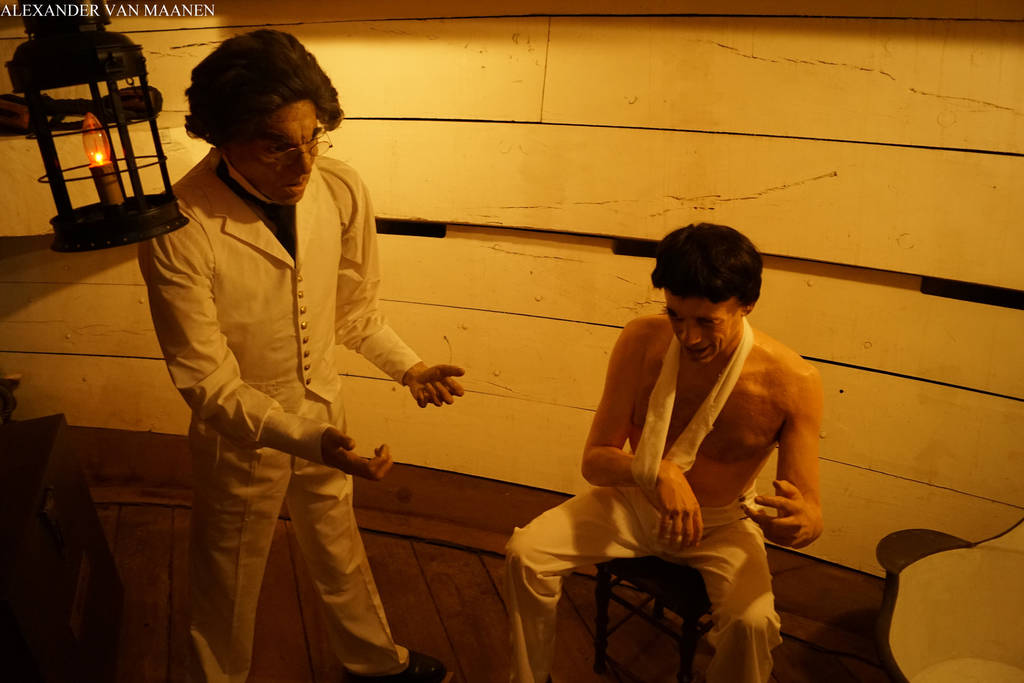
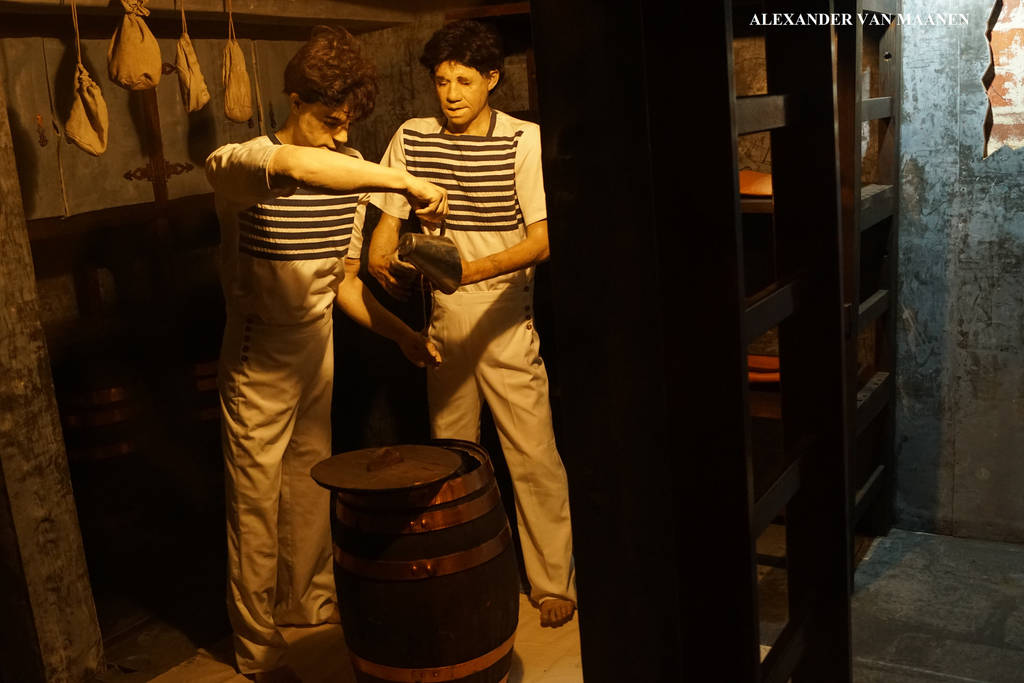
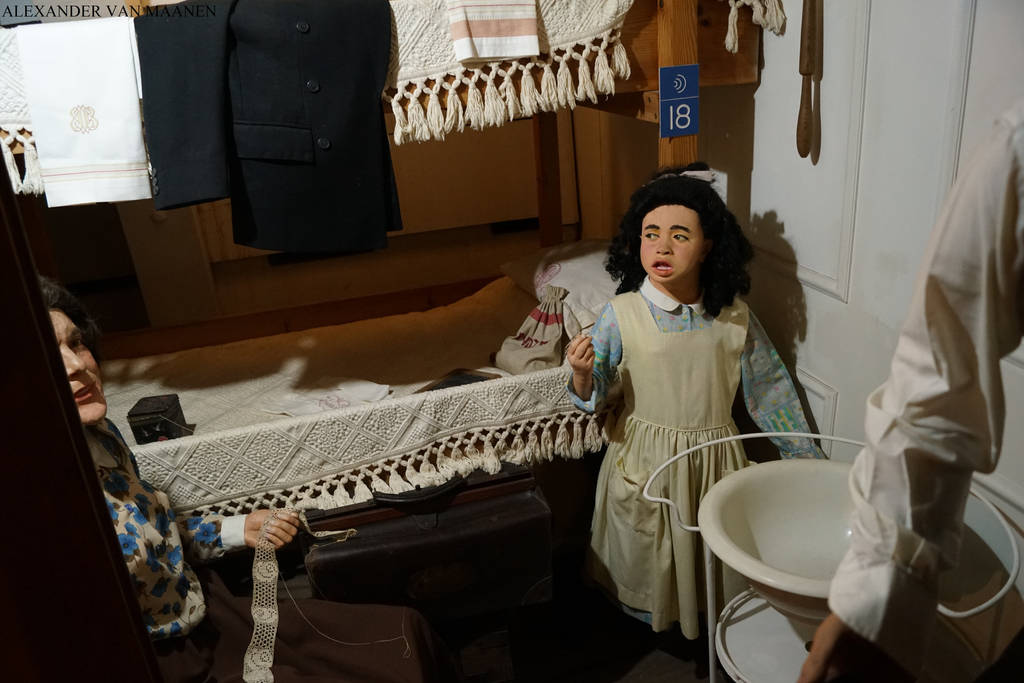
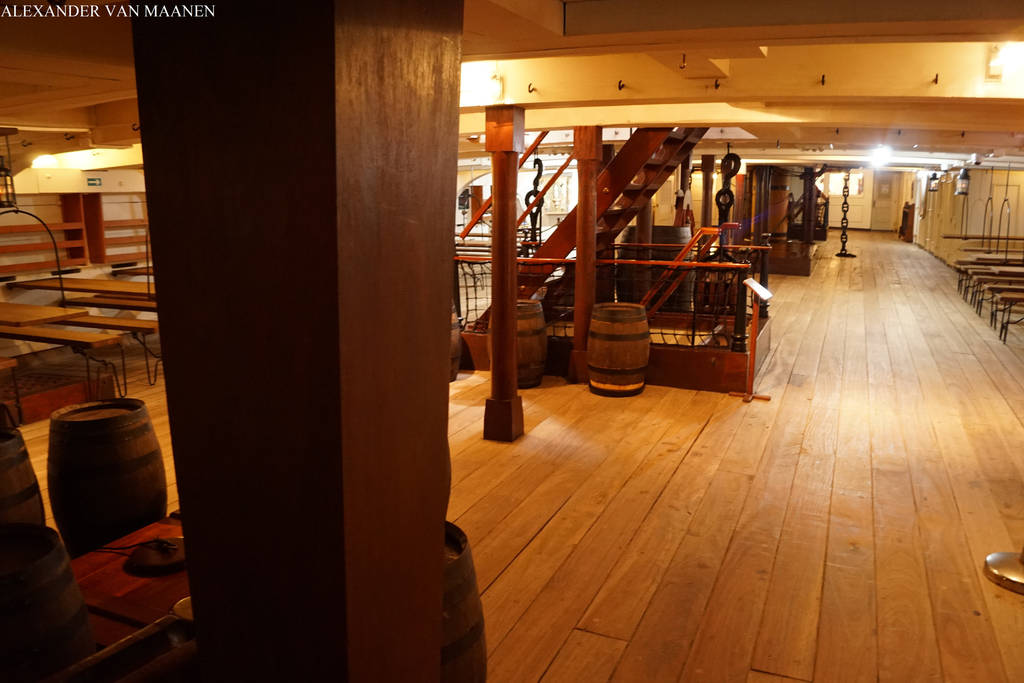
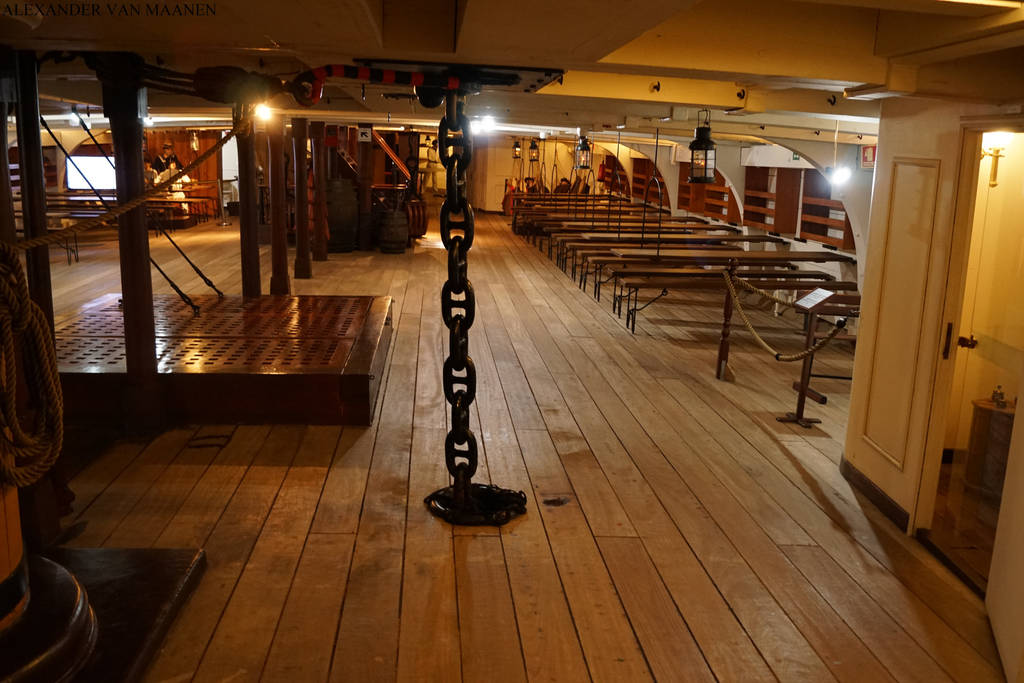
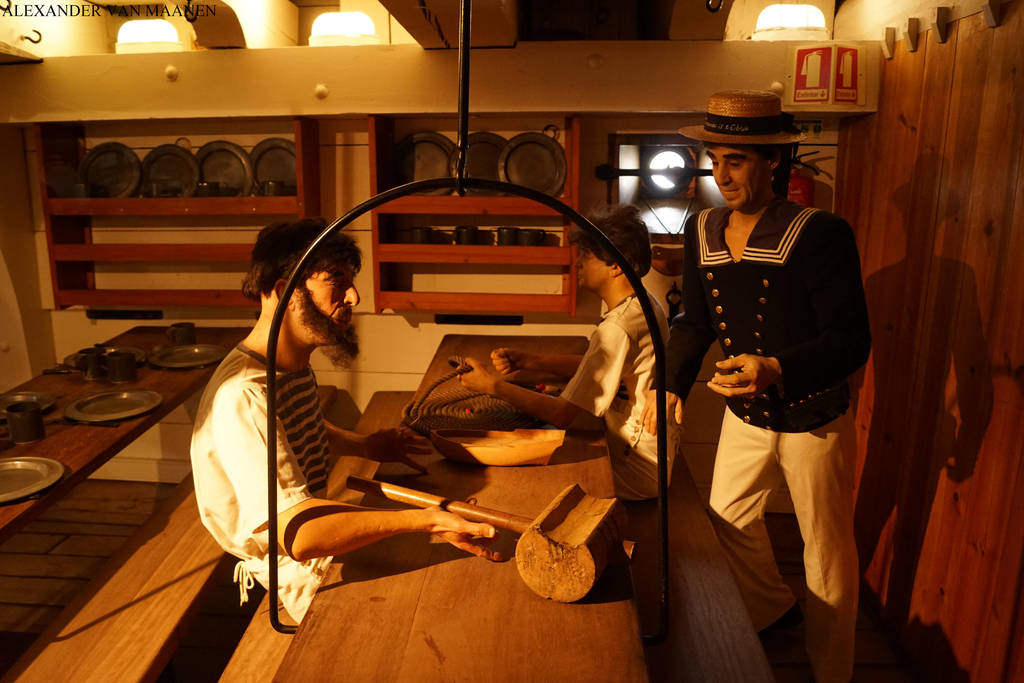
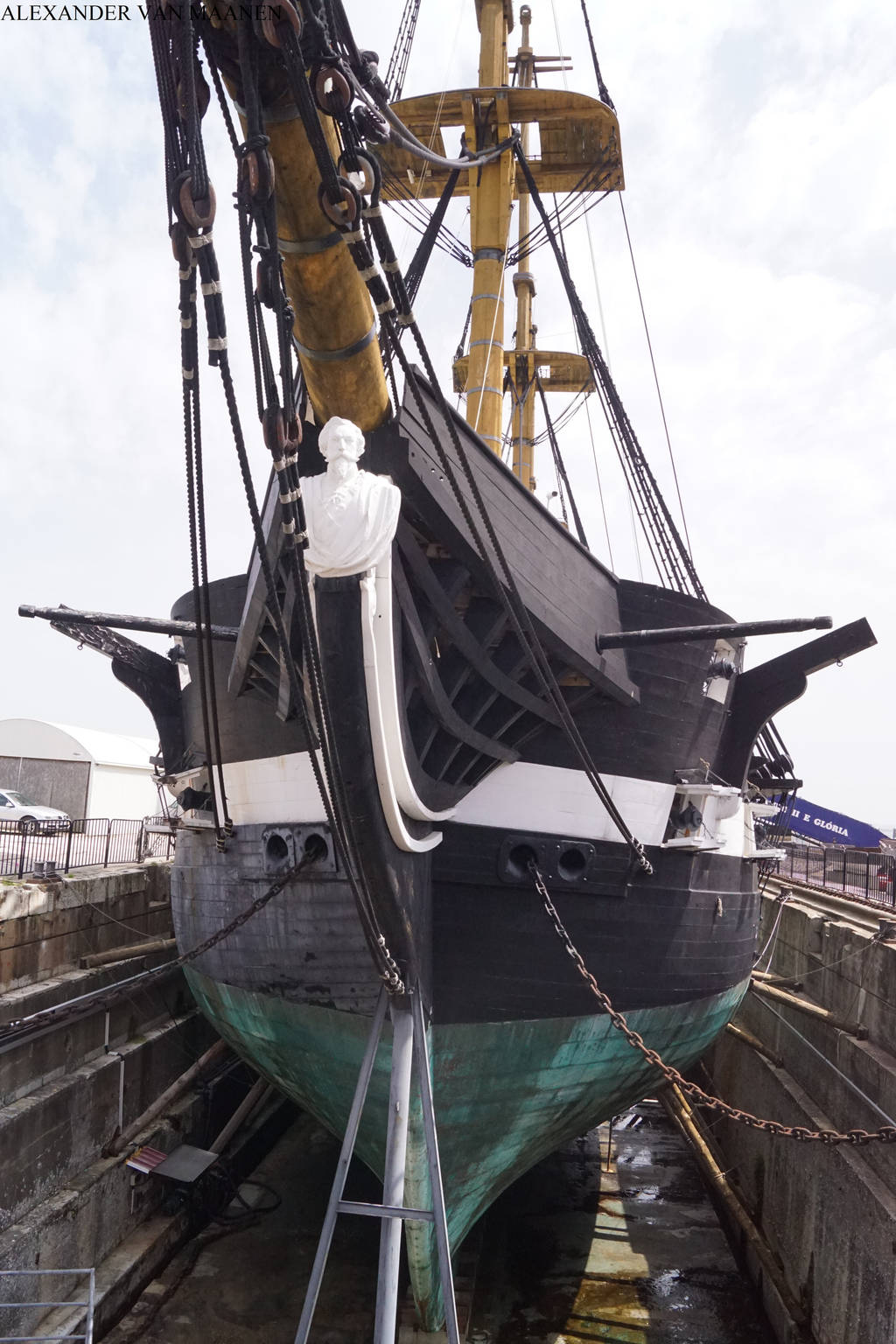
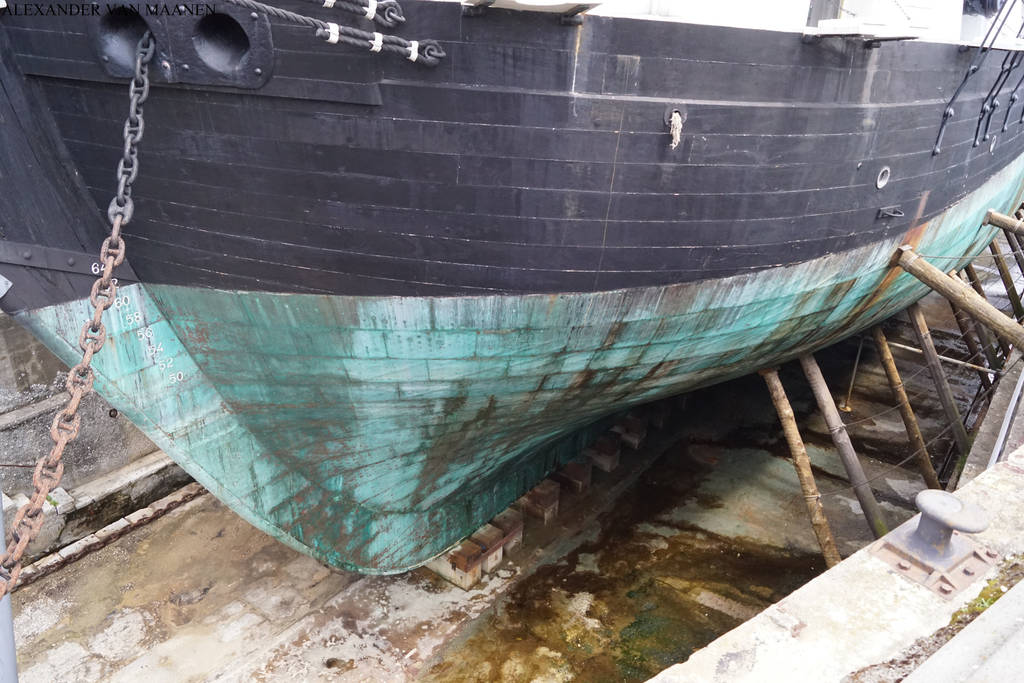
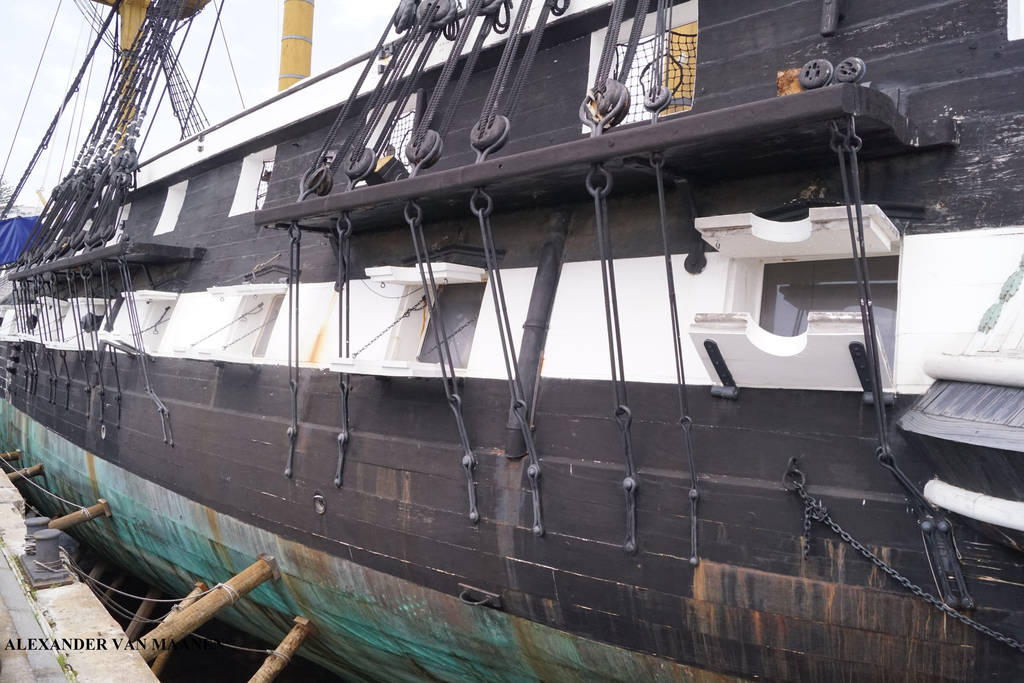
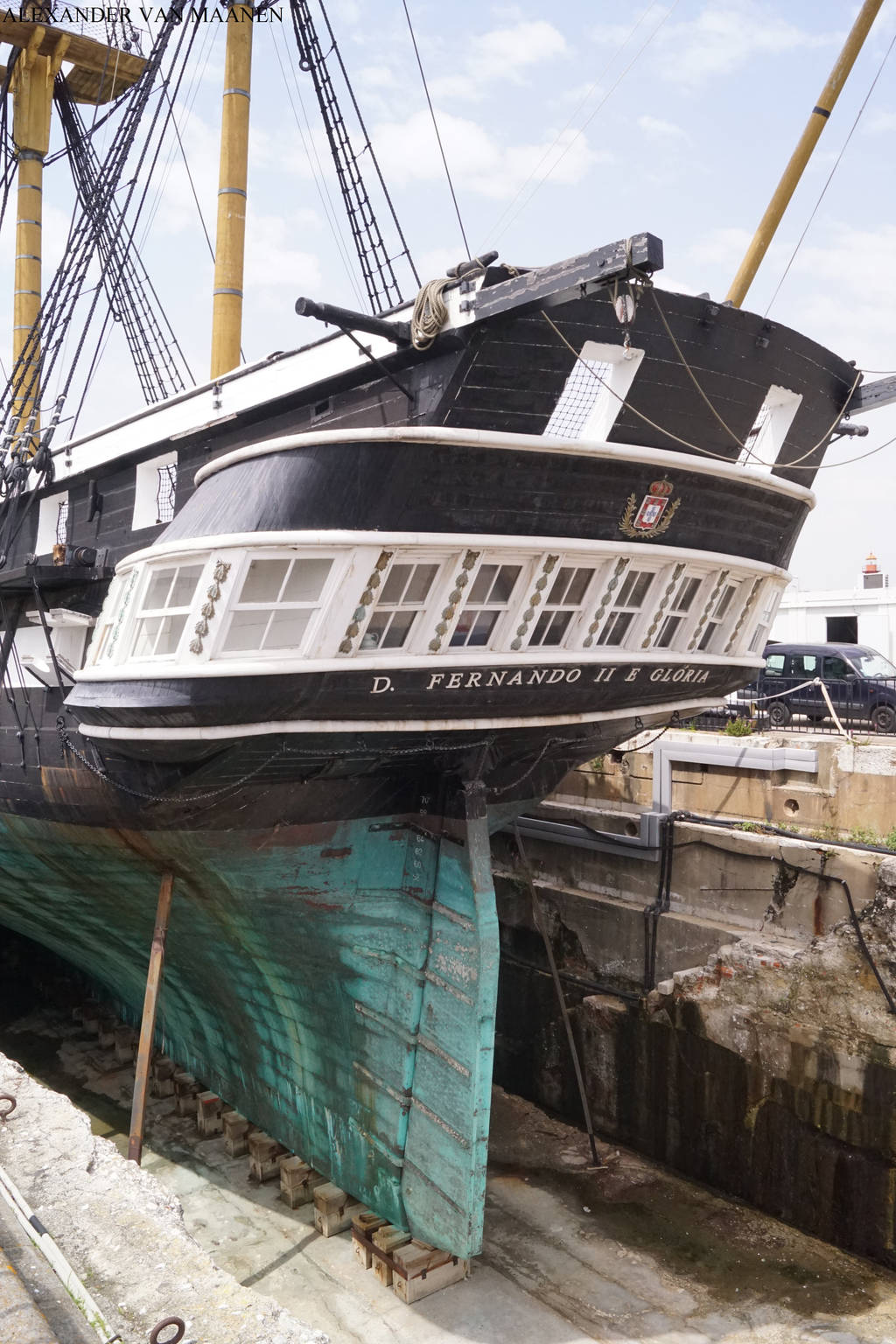
Portuguese frigate Dom Fernando II e Glória 1843-

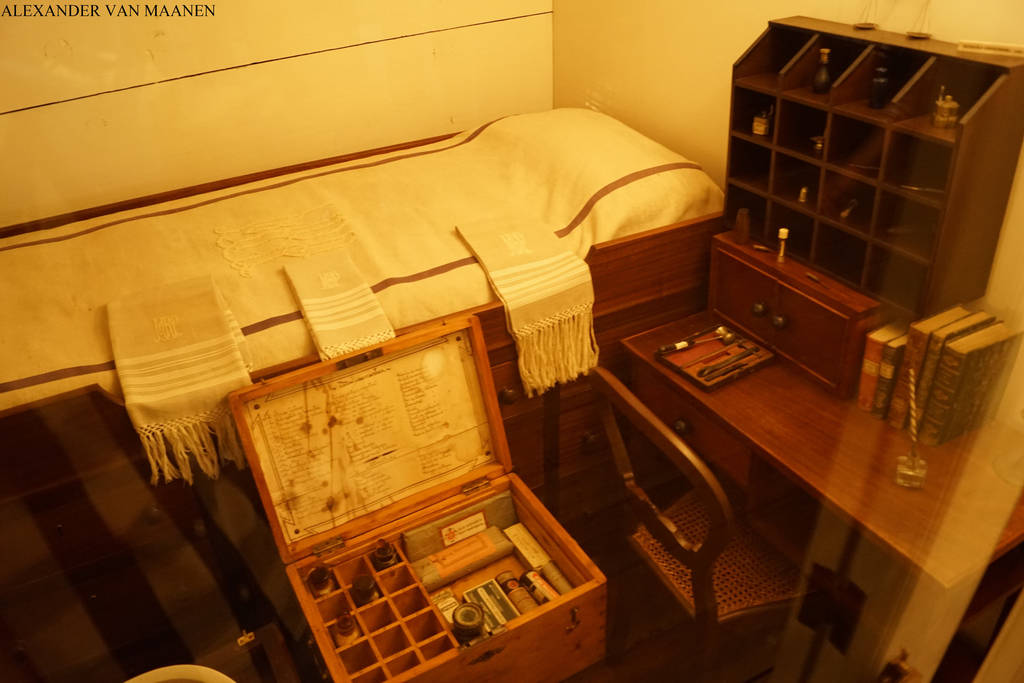
Sick Bay

Powder room

Passengers accommodation


Almada, Portugal April 2018

Ordered to be built in 1824 although not earlier launched as on 22 October 1843 at the Royal Naval Arsenal, Damão, Portuguese India and departed on 2 February 1845 Goa arriving on 4th July at Lisbon, Portugal. Burned on 3 April 1963 and what was left was towed to a place along the Tagus to prevent that the shipping was disturbed. The wreck was on 22 January 1992 brought to the Arsenal of Alfeite and in 1992 to the Ria-Marine shipyards at Aveiro and there restored. On 27 April reinstalled in the navy as an auxiliary ship and the same year handed over to the Naval Museum.

Dimensions 87 x 13 x 6,4 metres or 284 x 32 x 21 feet and a displacement of 1.849,16 tons. 4-Decker. Armament consisted of 50 guns gundeck 28-19pd gun, deck 20-32pd carronades and forecastle 2-12pd bow chasers). Sail area 2.052,2 square metres/22.190 square feet. Crew numbered 146-379 men and 270 passengers. 

Portuguese frigate Dom Fernando II e Glória 1843-


Almada, Portugal April 2018

Ordered to be built in 1824 although not earlier launched as on 22 October 1843 at the Royal Naval Arsenal, Damão, Portuguese India and departed on 2 February 1845 Goa arriving on 4th July at Lisbon, Portugal. Burned on 3 April 1963 and what was left was towed to a place along the Tagus to prevent that the shipping was disturbed. The wreck was on 22 January 1992 brought to the Arsenal of Alfeite and in 1992 to the Ria-Marine shipyards at Aveiro and there restored. On 27 April reinstalled in the navy as an auxiliary ship and the same year handed over to the Naval Museum.

Dimensions 87 x 13 x 6,4 metres or 284 x 32 x 21 feet and a displacement of 1.849,16 tons. 4-Decker. Armament consisted of 50 guns gundeck 28-19pd gun, deck 20-32pd carronades and forecastle 2-12pd bow chasers). Sail area 2.052,2 square metres/22.190 square feet. Crew numbered 146-379 men and 270 passengers. 

Friday, 13 April 2018

Portuguese carrack Algarvia 1561

Part of the fleet commanded by vice rei Conde do Redoncio D. Francisco Coutinho, departed Lisbon, Portugal on 9 March 1561, arrived at Mozambique on 15 July 1561, departed on 6 August 1561 and arrived at Goa, Portuguese India on 7 September 1561. Captain Pedro Alvares Vogado

Sources
-Annaes da Marinha Portugueza por Ignacio da Costa Quintella,yice-Almirante da Armada Real Conselheiro d'Estado Honorário y Conselheiro do Real Conselho da Marinha y e Sócio Honorário da Academia Real das Sciencias. Tomo 1. Lisboa, Na Tipografia da mesma Academia. 1839.
-Armadas da Índia, https://pt.wikipedia.org/wiki/Armadas_da_%C3%8Dndia#1561. 3 April 2018
-Livro de Lisuarte de Abreu. https://pt.wikipedia.org/wiki/Livro_de_Lisuarte_de_Abreu. 3 April 2018.
-India Route Project: Armadas que partiram para a Índia (1509-1640), World Wide Web, URL, http://nautarch.tamu.edu/shiplab/01guifrulopes/Pguinote-naubn2.htm, Nautical Archaeology Program, Texas A&M University. 3 April 2018
-Os Portugueses no mar: memórias históricas e arqueológicas das naus de Portugal. Henrique Quirino da Fonseca. 1926.

Portuguese carrack Garça 1561

Part of the fleet commanded by vice rei Conde do Redoncio D. Francisco Coutinho, departed Lisbon, Portugal on 9 March 1561, arrived at Mozambique on 15 July 1561, departed on 6 August 1561 and arrived at Goa, Portuguese India on 7 September 1561. Captain Francisco Figueira de Azevedo

Sources
-Annaes da Marinha Portugueza por Ignacio da Costa Quintella,yice-Almirante da Armada Real Conselheiro d'Estado Honorário y Conselheiro do Real Conselho da Marinha y e Sócio Honorário da Academia Real das Sciencias. Tomo 1. Lisboa, Na Tipografia da mesma Academia. 1839.
-Armadas da Índia, https://pt.wikipedia.org/wiki/Armadas_da_%C3%8Dndia#1561. 3 April 2018
-Livro de Lisuarte de Abreu. https://pt.wikipedia.org/wiki/Livro_de_Lisuarte_de_Abreu. 3 April 2018.
-India Route Project: Armadas que partiram para a Índia (1509-1640), World Wide Web, URL, http://nautarch.tamu.edu/shiplab/01guifrulopes/Pguinote-naubn2.htm, Nautical Archaeology Program, Texas A&M University. 3 April 2018
-Os Portugueses no mar: memórias históricas e arqueológicas das naus de Portugal. Henrique Quirino da Fonseca. 1926.

Portuguese carrack Santo António 1561

Part of the fleet commanded by vice rei Conde do Redoncio D. Francisco Coutinho, departed Lisbon, Portugal on 9 March 1561, arrived at Mozambique on 15 July 1561, departed on 6 August 1561 and arrived at Goa, Portuguese India on 7 September 1561. Captain Manoel Jaques.

Sources
-Annaes da Marinha Portugueza por Ignacio da Costa Quintella,yice-Almirante da Armada Real Conselheiro d'Estado Honorário y Conselheiro do Real Conselho da Marinha y e Sócio Honorário da Academia Real das Sciencias. Tomo 1. Lisboa, Na Tipografia da mesma Academia. 1839.
-Armadas da Índia, https://pt.wikipedia.org/wiki/Armadas_da_%C3%8Dndia#1561. 3 April 2018
-Livro de Lisuarte de Abreu. https://pt.wikipedia.org/wiki/Livro_de_Lisuarte_de_Abreu. 3 April 2018.
-India Route Project: Armadas que partiram para a Índia (1509-1640), World Wide Web, URL, http://nautarch.tamu.edu/shiplab/01guifrulopes/Pguinote-naubn2.htm, Nautical Archaeology Program, Texas A&M University. 3 April 2018
-Os Portugueses no mar: memórias históricas e arqueológicas das naus de Portugal. Henrique Quirino da Fonseca. 1926.

Portuguese carrack Flor de la Mar 1561

Part of the fleet commanded by vice rei Conde do Redoncio D. Francisco Coutinho, departed Lisbon, Portugal on 9 March 1561, arrived at Mozambique on 15 July 1561, departed on 6 August 1561 and arrived at Goa, Portuguese India on 7 September 1561. Captain Gonçalo Corrêa

Sources
-Annaes da Marinha Portugueza por Ignacio da Costa Quintella,yice-Almirante da Armada Real Conselheiro d'Estado Honorário y Conselheiro do Real Conselho da Marinha y e Sócio Honorário da Academia Real das Sciencias. Tomo 1. Lisboa, Na Tipografia da mesma Academia. 1839.
-Armadas da Índia, https://pt.wikipedia.org/wiki/Armadas_da_%C3%8Dndia#1561. 3 April 2018
-Livro de Lisuarte de Abreu. https://pt.wikipedia.org/wiki/Livro_de_Lisuarte_de_Abreu. 3 April 2018.
-India Route Project: Armadas que partiram para a Índia (1509-1640), World Wide Web, URL, http://nautarch.tamu.edu/shiplab/01guifrulopes/Pguinote-naubn2.htm, Nautical Archaeology Program, Texas A&M University. 3 April 2018
-Os Portugueses no mar: memórias históricas e arqueológicas das naus de Portugal. Henrique Quirino da Fonseca. 1926.

Portuguese carrack Sao Tiago 1561

Part of the fleet commanded by vice rei Conde do Redoncio D. Francisco Coutinho, departed Lisbon, Portugal on 9 March 1561, arrived at Mozambique on 15 July 1561, departed on 6 August 1561 and arrived at Goa, Portuguese India on 7 September 1561.

Sources
-Annaes da Marinha Portugueza por Ignacio da Costa Quintella,yice-Almirante da Armada Real Conselheiro d'Estado Honorário y Conselheiro do Real Conselho da Marinha y e Sócio Honorário da Academia Real das Sciencias. Tomo 1. Lisboa, Na Tipografia da mesma Academia. 1839.
-Armadas da Índia, https://pt.wikipedia.org/wiki/Armadas_da_%C3%8Dndia#1561. 3 April 2018
-Livro de Lisuarte de Abreu. https://pt.wikipedia.org/wiki/Livro_de_Lisuarte_de_Abreu. 3 April 2018.
-India Route Project: Armadas que partiram para a Índia (1509-1640), World Wide Web, URL, http://nautarch.tamu.edu/shiplab/01guifrulopes/Pguinote-naubn2.htm, Nautical Archaeology Program, Texas A&M University. 3 April 2018
-Os Portugueses no mar: memórias históricas e arqueológicas das naus de Portugal. Henrique Quirino da Fonseca. 1926.

Saturday, 22 July 2017

Dutch general cargo ship (ex-JRS Aquarius 2009) IJjsseldijk 2009-

Locks Kieler Canal, July 2017

Netherlands-flagged, homeport Groningen, IMO 9514913, MMSI 246626000 and call sign PBUY. Ex-Aquarius renamed November 2009. Built by Chowgule, Goa, India in 2009. Owned and managed by Navigia Shipmanagement, Groningen, Netherlands. 

Saturday, 5 November 2016

Dutch general cargo ship Damsterdijk 2005-


Netherlands-flagged, homeport Groningen, Netherlands, IMO 9346665, MMSI 244683000 and call sign PHKS. Last time dry docked at Santander, Spain in December 2012. Delivered in October 2007 and laid down at Chowgule Shipyard, Loutulim, Goa, India on 21November 2005. Gross tonnage 2.984 tons, net tonnage 1.598 tons, deadweight on summer draft 4.891 tons, displacement 6.426 tons and as dimensions 84,94 (between perpendiculars)-89,95 (over all) x 14,40 (maximum) x 6,22 (summer draught) x 7,85 (depth moulded to upper deck) metres. Owned by Beheermaatschappij m.s. Damsterdijk II B.V., Groningen, Netherlands. P&I club NNPC-Noord Nederlandsche P@I club/ Managed by Navigia.

Wednesday, 21 January 2015

Portuguese merchant ship el Principe de Brazil returning from Goa with the officers of HMS Superb according to the Dutch newspaper Hollandsche historische courant dated Saturday 15 September 1781

An item dated Lisbon, Portugal 21 August reported the arrival of the Portuguese merchant ship el Principe de Brazil returning from Goa. On board were the captain and other officers of the British 74 gun ship of the line HMS Superb, flagship of admiral sir Edward Hughes. It was believed that the Superb (1) sunk regarded the presence of the officers on board of the merchant ship. At the same time it became clear that due to contrary wind admiral Hughes had not been able to support Madras which was besieged by a French squadron commanded by d’Orves and the troops commanded by Hyder-Ali. In the port of Madras were lying at that moment 5 British East Indiamen and large number of small vessels. The abovementioned British officers all stated that the British affairs in the East Indies were in a desolate state.

Note
1. The date of this newspaper is curious although seemed to be correct. The 74-gun HMS Superb flagship of admiral Edward Hughes in India however sunk in 1783.

Monday, 30 September 2013

The Portuguese navy according to Simmonds colonial magazine in 1842

Thanks to the fact that nowadays more and more books are digitized we are able to read books that are some times for decades no longer available for the public for several reasons. That's quite a pity while these books contains useful information while the archives are destroyed, incomplete or nor accessible.

P. 333: “
ships Don Joao VI, 74 guns. 631 men, in ordinary, ship Vasco da Gama, 74 guns, 631 men, in ordinary,
frigates Duchess of Braganza, 50 guns, 402 men, stationed at Belem, Diana, 50 guns, 402 men, at the Sailor’s Depot, Raina, 46 guns, 383 men, being repaired, Don Pedro, 56 guns, 404 men, in ordinary, Donna Maria II, 42 guns, 160 men, on her way to Goa
corvettes 8 de Julho, 24 guns, 150 men, stationed at Angola, Don Joao I, 24 guns, 177 men, in Brazil, Urania, 24 guns, 170m men, in Algarve, Isabel Maria, 24 guns, being repaired, Infante Regente, 24 guns, in Goa where she belonged, Iris, in the docks

brigs Audar, 20 guns, 130 men, in Angola, Villa Flor, 16 guns, 89 men, in the Azores, Don Pedro, 16 guns, 100 men, in the Tagus, Tejo, 20 guns, 130 men, being repaired,
East Indiamen Cinco de Julho, 48 guns, 200 men, being repaired, Magnanimo, 26 guns, 160 men, returning from Macao, Princese Real, 26 guns, 160 men, in ordinary, Principe Real, 2 guns, 80 men, underway to Angola, Liberal, 13 guns, 60 men, in the Azores
schooners Liberal, 13 guns, 60 men, underway to Algarve, Amelia, 10 guns, 60 men, in the Azores, Esperanza, 8 guns, 45 men, in Madeira, Fayal, 6 guns, 40 men, in the Cape de Verde islands , Faro, 8 guns, 60 men, in ordinary, Boavista, 1 gun, at the Prince Island where she belonged, Cabo Verde, 1 gun, at the Cape de Verde islands where she belonged, Ninfa, 1 gun, at Angola where she belonged
steamship Terceira, 2 guns, 50 men, being repaired
packet brig S. Boa Ventura, 2 guns, 39 men, returning from Bisac
cutter Andorinha, 6 guns, 20 men, in the Tagus.”

Source
Peter Lund Simmons. Simmond’s colonial magazine and foreign miscellany, volume 1, January-April 1844, London.

Friday, 9 September 2011

Portuguese gunboat Afonso de Albuquerque 1934-1961

Drawing by: WhyMe. We are obliged to him.


Goa lying South West India have been for 4½ centuries a Portuguese colony with an own naval shipbuilding industry. Afonso de Albuquerque defeated the king of the Bijapur dynasty in 1510 and Goa became a colony playing an important rule in the Carreira da India, the shipping route between Portugal and India as being like Cochin an end or start point. Despite several efforts in the 17th century didn’t ‘succeed the Dutch East India Company in capturing Goa. When the former British colony India became in 1947 an independent state Goa wasn’t transferred but remained Portuguese. The result was a ‘war’ in 1961 between both countries ending an occupying of Goa by India. In advance a territory Goa got in 198 the status of a state within India.

In 1961 was a Portuguese warship destroyed which was name after the original conqueror of Goa! She was an aviso coloniais de 1a class also referred to as a gunboat and after the Second World War even as frigates of the Afonso de Albuquerque-class. This class was mainly designed for supporting the landing of troops or troops all ready operating on land. In the morning of 18 December 1961 she was attacked by the Indian frigates Betwa and Beas which entered the harbour of Goa. When her engines and boilers were destroyed she was deliberately set aground near Dona Paula by her own crew which keep on fighting until 14.10 using her as a battery. The next day was the crew taken prisoner. Five Portuguese crewmembers were killed in the ‘battle’ and 13 including her commanding officer captain Cunha Aragão were wounded. A year later was the wreck towed to Bombay and since then some parts of her are exhibited while the remains were sold to be broken up.

She was launched in 1934 at Hawthorn-Leslie and commissioned 28 May of the same year.
With a displacement of 1,811 tons standard, 2,100 tons normal load and 2,435 tons full load with as dimensions 99,6 x 13,49 x 3,81 metres. The two Parsons geared turbines combined with oil-fired four Yarrow boilers supplied 8,000 ship allowing a speed of 21 knots. The fuel capacity of 600 tons made with a speed of 10 knots a range of 7,000 nautical miles possible. Her crew numbered 191 men. The armament consisted of 4-120mm guns, 4-76mm of which two used as anti aircraft guns and 2 depth charger launchers. She was able to carry 40 mines and an aircraft with her.