Translate

Showing posts with label German West Africa. Show all posts

Wednesday, 13 November 2024

Colliers to run the blockade of Port Arthur lying ready at Tsingtao acccording to the Dutch newspaper Soerabaijasch handelsblad dated 24 September 1904

An item referred to a telegram from Tsingtao [then theGerman leased Kiautschou Bay Leased Territory, nowadays Qingdao, China] reporting that there some colliers were fitted out with the purpose to run through the Japanese blockade of Port Arthur.

Note

1. Russo-Japanese War 8 February 1904-5 September 1905

Wednesday, 9 October 2024

Polish sailing training ship Iskra captured by German forces in September 1939

A list dated 17 November 1939 was dealing with ships and floating equipment captured by the Germans in the Polish coastal area. With the German ship breaking company Gemeinschaft Bremerhaven was negotiated about scrapping the ships and equipment not wanted by the military leader of the salvage group. Captured ships not owned by the Polish government were due to the war considered as war prizes and could be used for service. Ships not used for military purposed could be returned for economic reasons to their owners. An item reported the Polish sailing training ship Iskra with a displacement of 560 ton and a speed of 7,5 miles. She was still afloat. The navy yard at Kiel, Germany was to examine her and to discuss with Station Ost what to do with her.

Source

High Command of the Kriegsmarine. Case 110.

Monday, 19 August 2024

Basic characteristics of a 500 feet 40 knots speed general cargo nuclear propelled submarine calculated around 1962

Speed 40 knots. Dimensions 504 (overall) x 100.8 (breadth of hull) x 50.4 (depth of hull) feet, 51,374 tons displacement total (T) in long tons of 2,240 pounds, leightweight included lead ballast 30,959 tons,  lead ballast 9,134 tons, liquid ballast 8,540 tons, free flooding water 380 tons, less liquid ballast deadweight 20,629 tons, less ballast deadweight 11,495 tons, deadweight cargo 11,200 tons, measurement 23,050 tons of cargo c 40 square feet/ton, bale cubic x 10cubicfeet cubic 922, 14,200 tons gross tonnage, 10,340 tons net tonnage, Horsepower 150,000 shp.Crew 64 men. Deadweight-displacement ratio 0.218.

Voyage costs excluding stevedoring and agency fees

Sea costs -dollars per day x days 653,500

Port costs-dollars per day x days 466,300

Total cost per voyage 1,119,800

There were two possible routes between the east coast of the USA-Canada and Europe.

Polar route7,425 miles, Los Angeles -San Francisco- Seattle-Vancouver(BC)-Unimak Pass-Bering Straight -North Pole- North Sea-United Kingdom-France-Denmark-Germany and return.

Canal route 8,920 miles, Vancouver (BC)-Seattle-San Francisco-Los Angeles-Panama Canal-Southampton-United Kingdom-France-Denmark-Germany and return.

Details of vessel capital costs in thousands of dollars

Hull 9,400

Hull engineering 2,840

Outfitting 3,770

Machinery (1) 64,020

Inspections&owners outfit 1,600

Engineering (8%) 6,410

Lead 3,480

Total 91,520

(1) “Although reactor costs per shaft horsepower declines in the larger sizes, this is largely offset by rising costs of propulsion machinery, reduction gears, etc.”

Manning requirement

Deck 22

Engineering 27

Stewards 15

Total 64

Source

M. Guralnick a.o. “Potential applications of nuclear energy in unusual ocean cargo carriers” in: E.E. Duckstad. Potential applications of nuclear energy in a marine environment. Washington, August 1959. 

Thursday, 15 August 2024

Basic characteristics of a 500 feet 50 knots speed general cargo nuclear propelled submarine calculated around 1962

Speed 50 knots. Dimensions 504(overall) x 100.8 (breadth of hull) x 50.4 (depth of hull) feet, displacement total 51,734 (T) in long tons of 2,240 pounds,  leightweight included lead ballast 32,327 tons, lead ballast5,688  tons, liquid ballast 8,540tons,  free flooding water 380 tons, less liquid ballast deadweight 39,422 tons, deadweight cargo 18,687 tons, less ballast deadweight 19,021 tons, measurement 20,225 tons of cargo c 40 square feet/ton, 809 bale cubic x 10cubicfeet cubic, 14,200 tons gross tonnage, 7,850 tons net tonnage. Horsepower 285,000 shp. Crew 72 men. Deadweight-displacement ratio 0.191.

Voyage costs excluding stevedoring and agency fees

Sea costs -dollars per day x days 903,200

Port costs-dollars per day x days 745,700

Total cost per voyage 1,648,900

There were two possible routes between the east coast of the USA-Canada and Europe.

Polar route7,425 miles, Los Angeles -San Francisco- Seattle-Vancouver(BC)-Unimak Pass-Bering Straight -North Pole- North Sea-United Kingdom-France-Denmark-Germany and return.

Canal route 8,920 miles, Vancouver (BC)-Seattle-San Francisco-Los Angeles-Panama Canal-Southampton-United Kingdom-France-Denmark-Germany and return.

Details of vessel capital costs in thousands of dollars

Hull 9,400

Hull engineering 2,840

Outfitting 3,770

Machinery (1) 120,910

Inspections&owners outfit 2,740

Engineering (8%) 10,950

Lead 2,170

Total 152,780

(1) “Although reactor costs per shaft horsepower declines in the larger sizes, this is largely offset by rising costs of propulsion machinery, reduction gears, etc.”

Manning requirement

Deck 22

Engineering 33

Stewards 17

Total 72

Source

M. Guralnick a.o. “Potential applications of nuclear energy in unusual ocean cargo carriers” in: E.E. Duckstad. Potential applications of nuclear energy in a marine environment. Washington, August 1959. 

Wednesday, 14 August 2024

Basic characteristics of a 500 feet 30 knots speed general cargo nuclear propelled submarine calculated around 1962

Speed 30 knots. Dimensions 504 (overall) x 100.8 (breadth of hull) x 50.4 (depth of hull) feet, 51,374 tons displacement total (T) in long tons of 2,240 pounds, leightweight included lead ballast 30,077 tons, lead ballast 11,216 tons, liquid ballast 8,540 tons, free flooding water 380 tons, less liquid ballast deadweight 23,593 tons, less ballast deadweight 12,377 tons, deadweight cargo 12,070 tons, measurement 24,850 tons of cargo c 40 square feet/ton, bale cubic x 10 cubic feet cubic 994, 14,200 tons gross tonnage, 11,920 tons net tonnage, Horsepower 65,000 shp.Crew 59 men. Deadweight-displacement ratio 0.235.

Voyage costs excluding stevedoring and agency fees

Sea costs -dollars per day x days 476,100

Port costs-dollars per day x days 289,300

Total cost per voyage 765,400

There were two possible routes between the east coast of the USA-Canada and Europe.

Polar route7,425 miles, Los Angeles -San Francisco- Seattle-Vancouver(BC)-Unimak Pass-Bering Straight -North Pole- North Sea-United Kingdom-France-Denmark-Germany and return.

Canal route 8,920 miles, Vancouver (BC)-Seattle-San Francisco-Los Angeles-Panama Canal-Southampton-United Kingdom-France-Denmark-Germany and return.

Details of vessel capital costs in thousands of dollars

Hull 9,400

Hull engineering 2,840

Outfitting 3,770

Machinery (1) 28,370

Inspections&owners outfit 890

Engineering (8%) 3,550

Lead 4,270

Total 53,090

(1) “Although reactor costs per shaft horsepower declines in the larger sizes, this is largely offset by rising costs of propulsion machinery, reduction gears, etc”.

Manning requirement

Deck 22

Engineering 23

Stewards 14

Total 59

Source

M. Guralnick a.o. “Potential applications of nuclear energy in unusual ocean cargo carriers” in: E.E. Duckstad. Potential applications of nuclear energy in a marine environment. Washington, August 1959. 

Tuesday, 13 August 2024

Basic characteristics of a 400 feet 50 knots speed general cargo nuclear propelled submarine calculated around 1962

Speed 50 knots. Dimensions 400 (overall) x 80 (breadth of hull) x 40 (depth of hull) feet, 25,687 displacement total (T) in long tons of 2,240 pounds, 17,790  leightweight included lead ballast tons, none lead ballast tons, 3,398 liquid ballast tons, 190 free flooding water tons, 4,309 less liquid ballast deadweight tons, 4,309 less ballast deadweight tons, 4,040 deadweight cargo tons, 8,325 measurement tons of cargo c 40 square feet/ton, 333 bale cubic x 10cubic feet cubic, 7,100 gross tonnage, 2,680 net tonnage, Horsepower 184,000 shp. Crew 66. Deadweight-displacement ratio 0.157.

Voyage costs excluding stevedoring and agency fees

Sea costs -dollars per day x days 587,500

Port costs-dollars per day x days 348,800

Total cost per voyage 936,300

There were two possible routes between the east coast of the USA-Canada and Europe.

Polar route7,425 miles, Los Angeles -San Francisco- Seattle-Vancouver(BC)-Unimak Pass-Bering Straight -North Pole- North Sea-United Kingdom-France-Denmark-Germany and return.

Canal route 8,920 miles, Vancouver (BC)-Seattle-San Francisco-Los Angeles-Panama Canal-Southampton-United Kingdom-France-Denmark-Germany and return.

Details of vessel capital costs in thousands of dollars

Hull 6,330

Hull engineering 2,180

Outfitting 2,600

Machinery (1) 78,300

Inspections&owners outfit 1,790

Engineering (8%) 7,150

Lead 0

Total 98,350

(1) “Although reactor costs per shaft horsepower declines in the larger sizes, this is largely offset by rising costs of propulsion machinery, reduction gears, etc.”

 Manning requirement

Deck 22

Engineering 29

Stewards 15

Total 66

Source

M. Guralnick a.o. “Potential applications of nuclear energy in unusual ocean cargo carriers” in: E.E. Duckstad. Potential applications of nuclear energy in a marine environment. Washington, August 1959. 
Sunday, 11 August 2024

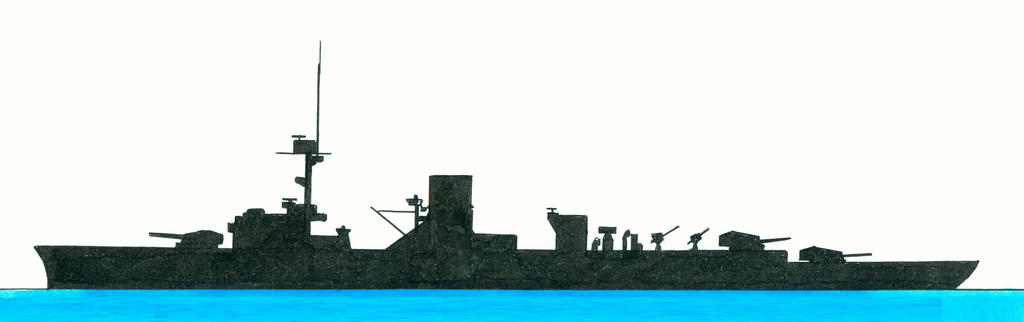
Basic characteristics of a 400 feet 40 knots speed general cargo nuclear propelled submarine calculated around 1962

Speed 40 knots. Dimensions 400 (overall) x 80 (breadth of hull) x 40 (depth of hull) feet, 25,687 displacement total (T) in long tons of 2,240 pounds, 16,011 leightweight included lead ballast tons, 1,120 lead ballast tons, 4,270  liquid ballast tons, 190 free flooding water tons, 6,336less liquid ballast deadweight tons, 5,216 less ballast deadweight tons, 4,950 deadweight cargo tons, 10,175measurement tons of cargo c 40 square feet/ton, 407 bale cubic x 10cubic feet cubic, 7,100 gross tonnage, 3,730 net tonnage, Horsepower 97,000 shp. Crew 60 men. Deadweight-displacement ratio 0.193.

Voyage costs excluding stevedoring and agency fees

Sea costs -dollars per day x days 425,600

Port costs-dollars per day x days 218,600

Total cost per voyage 644,200

There were two possible routes between the east coast of the USA-Canada and Europe.

Polar route7,425 miles, Los Angeles -San Francisco- Seattle-Vancouver(BC)-Unimak Pass-Bering Straight -North Pole- North Sea-United Kingdom-France-Denmark-Germany and return.

Canal route 8,920 miles, Vancouver (BC)-Seattle-San Francisco-Los Angeles-Panama Canal-Southampton-United Kingdom-France-Denmark-Germany and return.

Details of vessel capital costs in thousands of dollars

Hull 6,330

Hull engineering 2,180

Outfitting 2,600

Machinery (1) 41,490

Inspections&owners outfit 1,050

Engineering (8%) 4,200

Lead 430

Total 58,280

(1) “Although reactor costs per shaft horsepower declines in the larger sizes, this is largely offset by rising costs of propulsion machinery, reduction gears, etc.”

Manning requirement

Deck 22

Engineering 24

Stewards 14

Total 60

Source

M. Guralnick a.o. “Potential applications of nuclear energy in unusual ocean cargo carriers” in: E.E. Duckstad. Potential applications of nuclear energy in a marine environment. Washington, August 1959. 

Saturday, 10 August 2024

Basic characteristics of a 400 feet 30 knots speed general cargo nuclear propelled submarine calculated around 1962

Speed 30 knots. Dimensions 400 (overall) x 80 (breadth of hull) x 40 (depth of hull) feet, 25,687 displacement total (T) in long tons of 2,240 pounds, 15,447 leightweight included lead ballast tons, 2,555 lead ballast tons, 4,270 liquid ballast tons, 190 free flooding water tons, 8,335 less liquid ballast deadweight tons, 5,780 less ballast deadweight tons, 5,500 deadweight cargo tons, 11,375 measurement tons of cargo c 40 square feet/ton, 455 bale cubic x 10cubic feet cubic, 7,100 gross tonnage, 3,330 net tonnage. Horsepower 42,000 shp. Crew 56. Deadweight-displacement ratio 02.14.

Voyage costs excluding stevedoring and agency fees

Sea costs -dollars per day x days 315,400

Port costs-dollars per day x days 148,400

Total cost per voyage 463,800

There were two possible routes between the east coast of the USA-Canada and Europe.

Polar route7,425 miles, Los Angeles -San Francisco- Seattle-Vancouver(BC)-Unimak Pass-Bering Straight -North Pole- North Sea-United Kingdom-France-Denmark-Germany and return.

Canal route 8,920 miles, Vancouver (BC)-Seattle-San Francisco-Los Angeles-Panama Canal-Southampton-United Kingdom-France-Denmark-Germany and return.

Details of vessel capital costs in thousands of dollars

Hull 6,330

Hull engineering 2,180

Outfitting 2,600

Machinery (1) 18,960

Inspections&owners outfit 600

Engineering (8%) 2,410

Lead 970

Total 34,050

(1) “Although reactor costs per shaft horsepower declines in the larger size, this is largely offset by rising costs of propulsion machinery, reduction gears, etc”.

Manning requirement

Deck 22

Engineering 21

Stewards 13

Total 56

Source

M. Guralnick a.o. “Potential applications of nuclear energy in unusual ocean cargo carriers” in: E.E. Duckstad. Potential applications of nuclear energy in a marine environment. Washington, August 1959. 
Friday, 26 April 2024

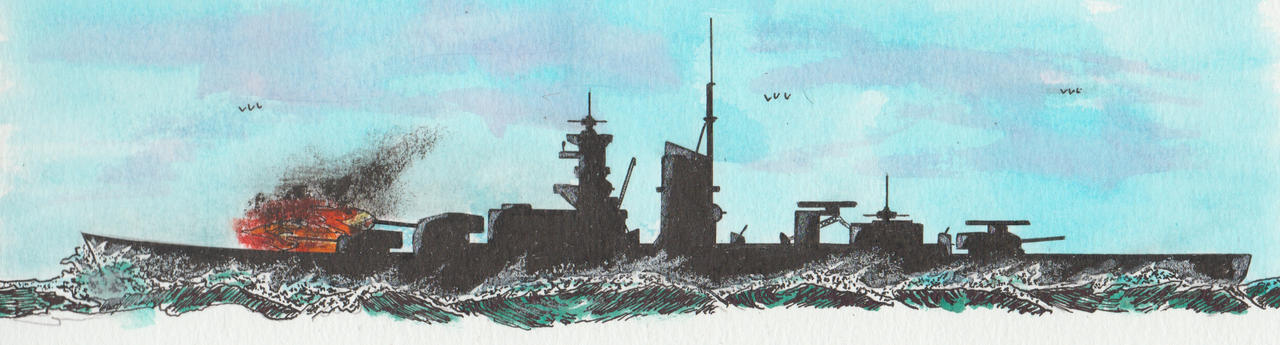
German battleships Gneisenau and Schlesien seemed to be in the eastern Baltic area according to the U.S. Joint Intelligence Committee. Daily summary dated 16 April 1942

Leipzig. Warshipsresearch.blogspot.com

Schlesien. Warshipsresearch.blogspot.com

German battleship Gneisenau. Warshipsresearch.blogspot.com

An item reported that the German battleship Gneisenau (1) which left Kiel, Germany between 29 March-12 April with an unknown destination was gone to the eastern Baltic area. The aged battleship Schlesien (2) and the light cruiser Leipzig (3) seemed to be there also.

Notes

1. Of Scharnhorst-class preceded by planned L20e α-class and realized Bayern-class preceded by Bismarck-class, laid down by Deutsche Werke, Kiel, Germany on 6 May 1935, launched on 8 December 1936, commissioned on 21 May 1938, decommissioned on 1 July 1942, scuttled as block ship on 23 March 1945 and broken up in 1951.

2. Part of Deutschland-pre dreadnoughts  preceded by Braunschweig-class succeeded by Nassau-class, ordered under contract name “R” on 11 June 1904, laid down by Schichau, Danzig, Germany on 19 November 1904, launched on 28 May 1906, commissioned on 5 May 1908, decommissioned on 1 December 1918, modernized mid-1920s, recommisioned on 1 March 1927, mined off Swinemünde on 3 May 1945 and broken up between 1949-1956.

3. Part of Leipzig-class light cruisers preceded by Königsberg-class succeeed by planned M-class cruiser, laid down at Rechsmarinewerft, Wilhelmshaven, Germany on 28 April 1928, launched on 18 October 1929, commissioned on 8 October 1931, barracks for minesweepers in 1945 and scuttled in 1946.

Source

Map Room Papers (Roosevelt Administration), 1942 - 1945. U.S. Joint Intelligence Committee. Daily summary No. 127 dated 16 April 1942. 

Wednesday, 20 March 2024

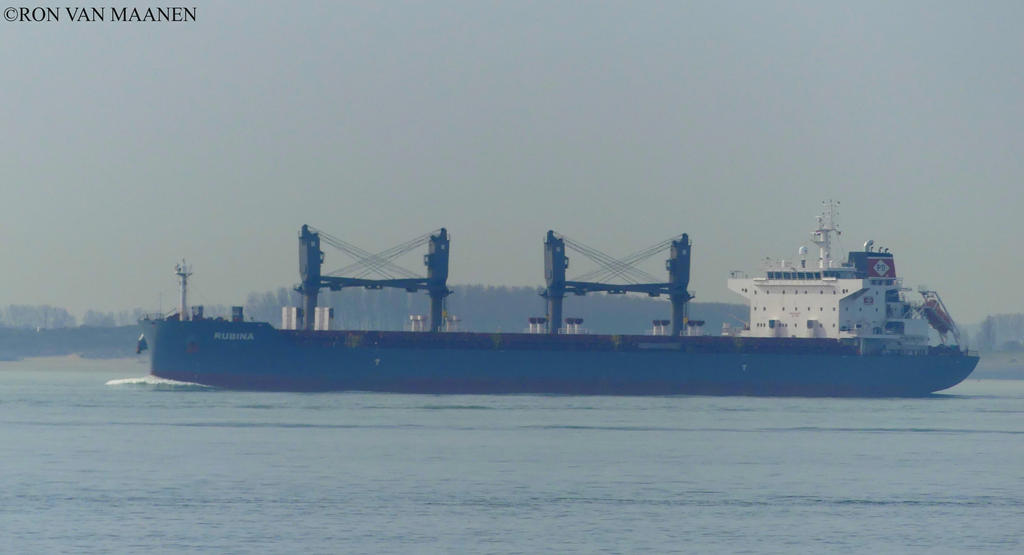
German bulk carrier Rubina 2018-

Schelde, Vlissingen, Netherlands 20 March 2024

Madeira/Portugal-flagged, IMO 9725512, MMSI 255805860 and call sign CQZG. Register owner Peter Doehle Schiffahrts-KG., Hamburg, Germany. Built by Jiangsu Hantong Ship Heavy Industry, Tongzhou, China in 2018. 

Saturday, 3 February 2024

Japanese screw steamship cargo ship (ex-Landrat Scheiff 1906-190, Edwin Reith 1917-?) Taisei Maru (Takakurasan Maru ?-1951)

Call sign JEHB. Also ex-Laen Samud? In 1917 seized by Thailand and since 1924 Japanese. Built by Schiffswerft Henry Koch, Lübeck, Germany with ayrd number 167 in 1906. Gross tonnage 1,824 tons, under deck 1,461 tons, net tonnage 1,105 tons, deadweight 2,698 tons and as dimensions 265.7 x 37.7 x 18.3 x 10.4 (light)-18 (loaded) feet. 

Wednesday, 27 December 2023

No fuel oil tanks at Marseille, France in 1942

American naval attaché at Paris, France reported in February 1942 that there were no fuel oil storage tanks under construction at Marseille, France. The already existing peanut oil storage tanks were full and additional small to medium seize tanks for peanut oil were being erected. This oil was kept for account of the Axis.

Source

National Archives USA. Record Group 38: Records of the Office of the Chief of Naval Operations. Series: Secret Naval Attaches Reports. Estimate of potential military strength (pt.). Summaries. Reports from London, Paris, Brussels, Rome and Berlin. Roll M975-001.

Monday, 25 December 2023

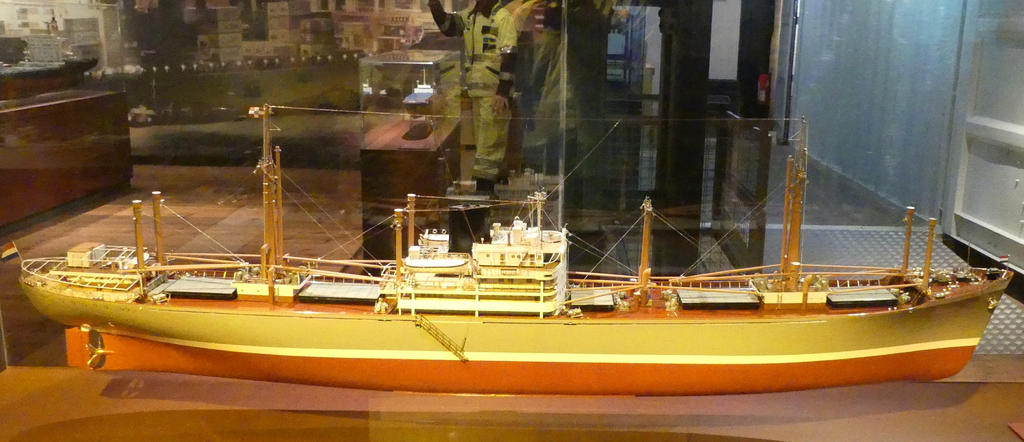
Dutch general cargo ship Wonasari 1951-1977 (Lucille 1977-1982)

Maritime Museum Hamburg, Germany

IMO 5392642. Laid down byHowaldtswerke Hamburg A.G., Hamburg, Grmany with yard number 874 on 27 August 1951, launched on 26 May 1952, delivered to N.V. Koninklijke Rotterdamsche Lloyd and manager Firma Wm. Ruys&Zonen, both Rotterdam, Netherlands on 3 September 1952, chartered by the KJCPL 1970-1972, sold to Uni-Ocean Lines Pte. Ltd., Singapore on 26 April 1977, renamed Lucille, damaged at Basrah during the war between Irak and Iran in 1980 and declared total loss in 1982. She was the first ship built for Dutch account in West-Germany since the Second World War and to serve on the line Hamburg,Germany-Indonesia. Gross tonnage 7,583 tons, net tonnage 4,210 tons, deadweight 10,882 tons, grain capacity 635,000 cubic feet, bale capacity 600,000 cubic feet and as dimensions 143.26 (between perpendiculars)-154.82 (over all) x 20.15 x 12.20 x 8.24 metres. Single screw, horsepower 8,250hp and speed 6 knots. 

Tuesday, 26 September 2023

German fishing vessel Helen Mary ROS 785 1996-

IJmuiden, Netherlands weekend 24-25 September 2023

Typisch IJmuiden

Germany-flagged, homeport Rostock, Germany, IMO 9126364, MMSI 211238930 and call sign DQLI. Built by YVC Ysselwerf, Capelle aan den IJssel, Netherlands in 1996. Owner Oderbank Hochseefischerei GmbH, Sassnitz, Germany and manager Parlevliet&Van der Plas, Valkenburg, Netherlands. 

Friday, 22 September 2023

German submarine service to be destroyed according to the Weekly Intelligence Summary No. 15 for the week ending 29 March 1919

An item reported the in carrying out of the Naval Terms of Armistice by Germany the present position dealing with the 375 submarines. On the 3rd would an inspection started of the progress in the destruction.

-165 already surrendered of which 55 sold to be scrapped

-9 still to be surrendered, of which 1 in a German harbour, 4 underway (3 broken adrift and now in the Netherlands, 1 probably sunk) and 4 in neutral harbours

-201 under construction (85 already considered to be cut to pieces, 61 existing in name only, 55 in process of being cut to pieces or dismantled)

19 Sets of submarine engines and motors were sent in lieu of submarines sunk while underway to England or previously named to be surrendered.

Source

The National Archives, Kew Gardens, England CAB-24-77-68

Thursday, 6 July 2023

German armoured cruiser SMS Friedrich Karl 1901-1914

Source Bundesarchive RM 3/22928 French photo album 1900

Built under the Second Naval Law. Part of Prinz Adalbert-class cruisers, preceded by Prinz Heinrich succeeded by Roon, laid down with contractname Ersatz König Wilhelm by Blohm&Voss, Hamburg, Germany with yard number 155 in August 1901, launched on 21 June 1902, commissioned on 12 December and due to striking Russian naval mines sunk off Memel [Klaipeda]. Lithuania underway towards Libau [Liepaja], Latvia on 17 November 1914.

Saturday, 17 June 2023

British trawler (ex-Elisabeth 1988-2022) Elisabeth of Ladram (PZ-19) 2022-


Vlissingen, Netherlands 1 May 2023

United Kingdom-flagged, homeport Penzance, IMO 8807820, MMSI 232040373 and call sign MKLV7. Built by Van der Molen&Zonen, Zaandam, Netherlands in 1988. Ex-German NG 19 Elisabeth, call sign DCGA2 and MMSI 232040373. Of Waterdance Ltd.

Thursday, 8 June 2023

Dutch inland passenger ship Prins van Oranje 1908-1951, Jaffre 1 1951-1957, Lady Margret 1957-1972. Moezelstar II 1972-1979) Prins van Oranje 1979-

Amsterdam, Netherlands 26 April 2023

Netherlands-flagged, ENI 2009515, MMSI 244700934 and call sign P14. Built by Nederlandsche Scheepsbouw Mij., Amsterdam, Netherlands with yard number 87 in 1908. As Lady Margret homeport London, England active on Dutch rivers and the Rhine, in 1958 between London, England-Basel, Switzerland. 

Wednesday, 7 June 2023

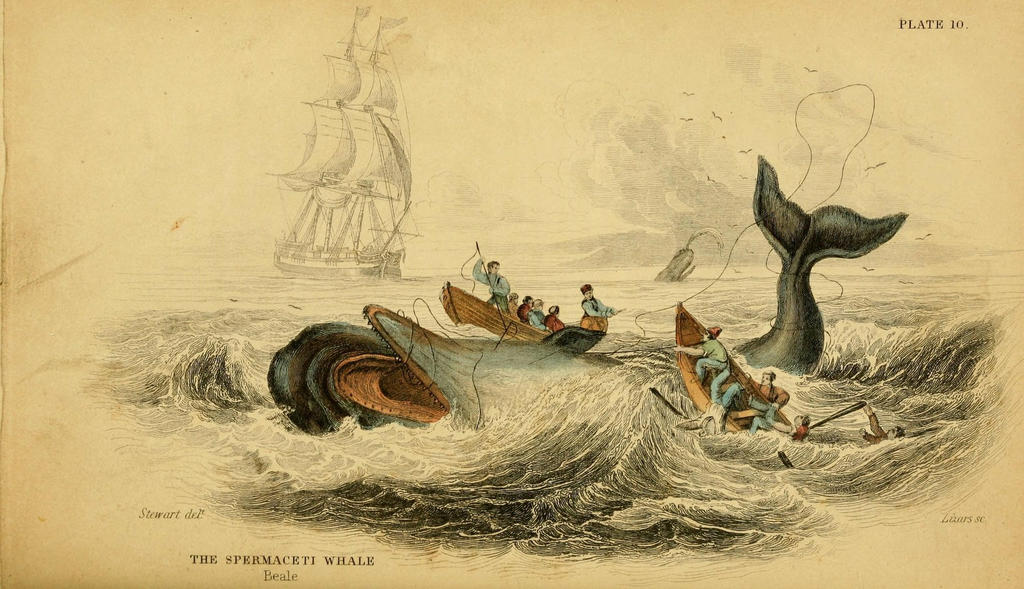
German whaler Otaheite visited Honolulu, Hawaii according to the newspaper The Polynesian dated 11 October 1851

An item reported the arrival at Honolulu, Hawaii on 7 October of the German whaler Otaheite master Weiting of Bremen coming from the Arctic 15 months out 100 barrels sperm oil 600 barrels whale oil 10.000 lbs bone.

Tuesday, 6 June 2023

German rear admiral Von Hintze arrived in Finland according to the Weekly Intelligence Summary No. 19 for the week ending19 March 1921

An item reported that the German admiral von Hintze arrived in Finland on 16 March which was the candidate of the pro German Finnish party to be appointed as instructor for the Finnish navy.

Note

1. Paul von Hintze (13 February 1864 Schwedt/Oder, Germany-19 August 1941 Meran, Italy), naval officer (rear admiral), diplomat and politican, foreign minister between July-October 1918.

Source

The National Archives, Kew Gardens, England CAB-24-121-62