Translate

Showing posts with label Ram turrets. Show all posts

Tuesday, 28 October 2025

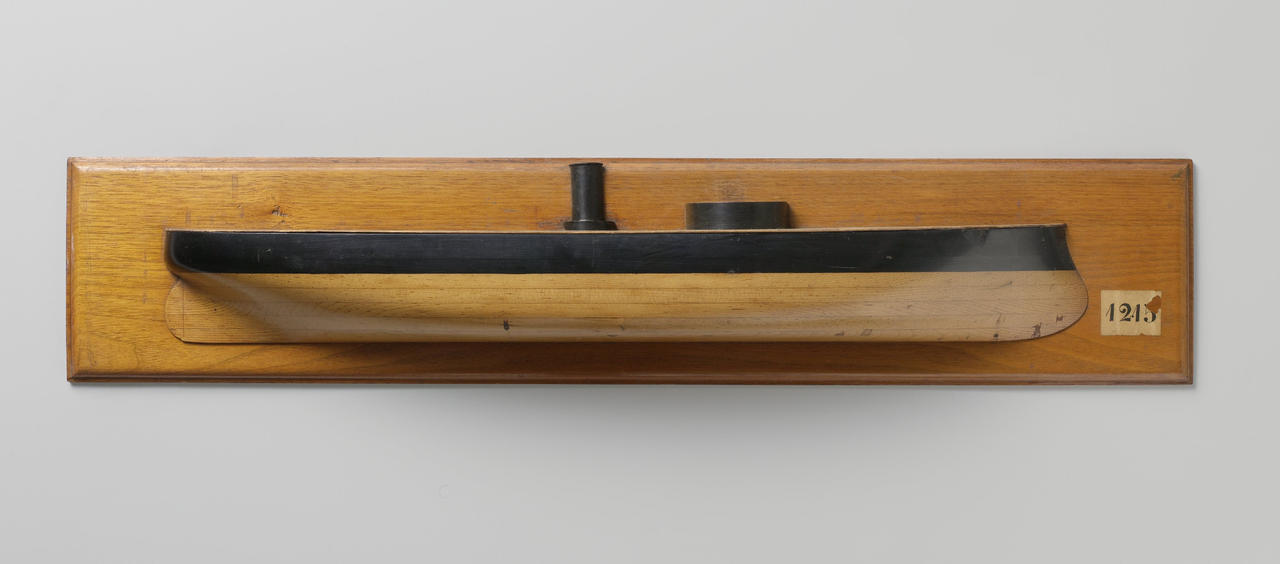
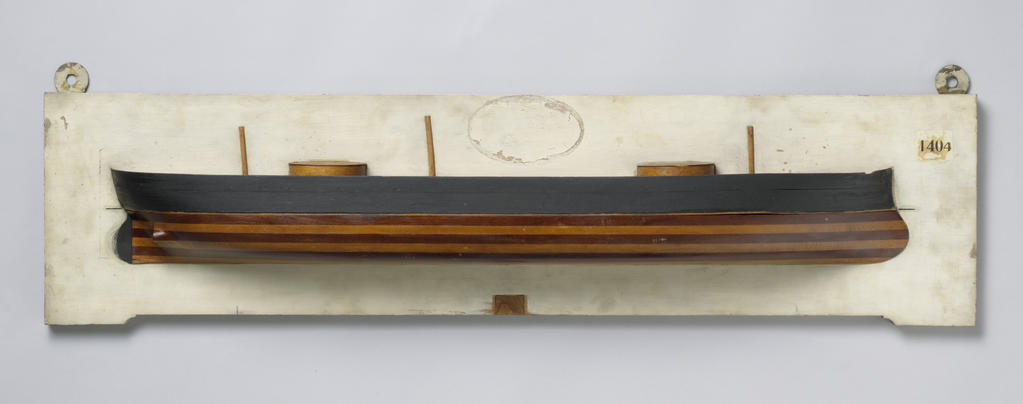
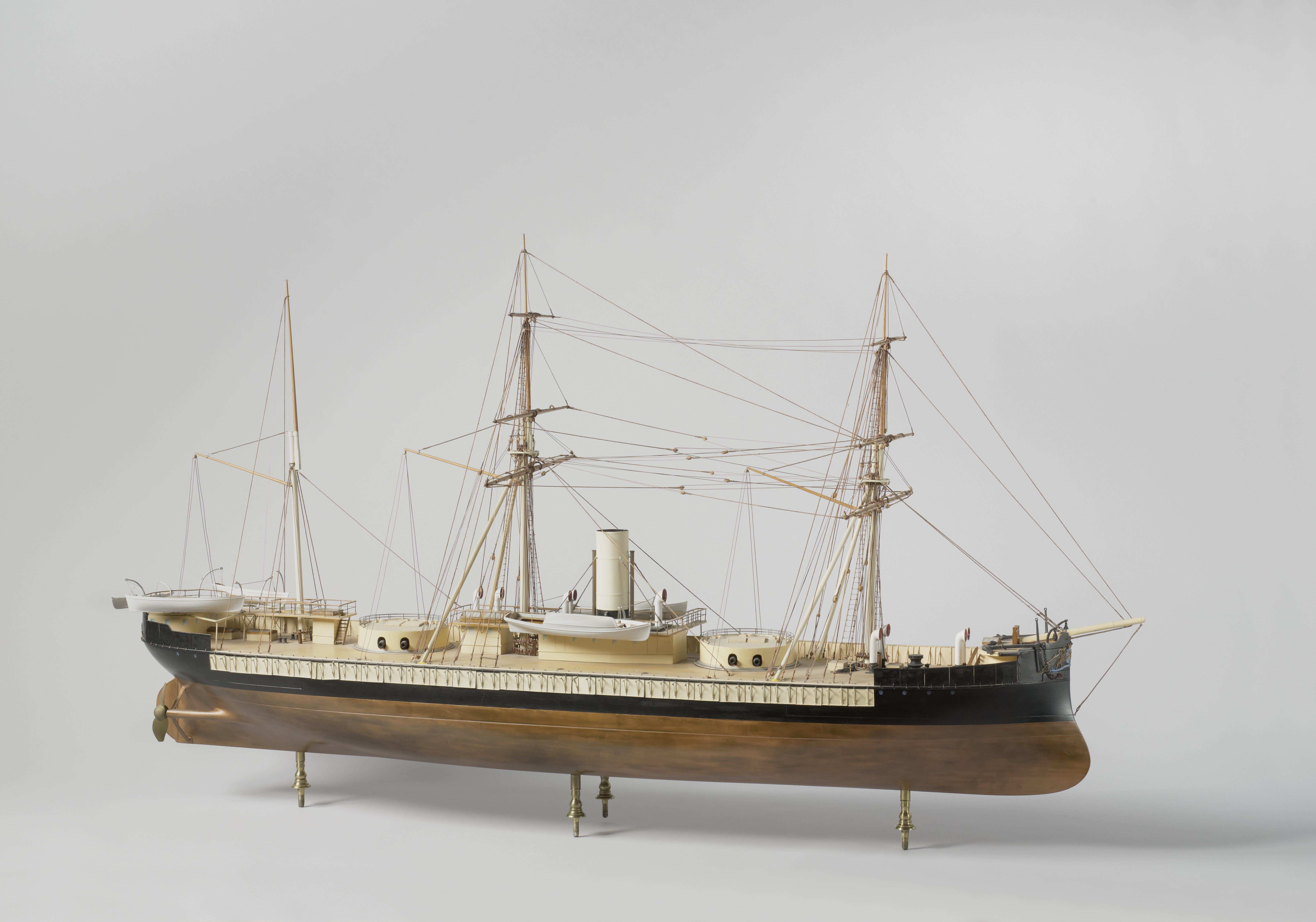
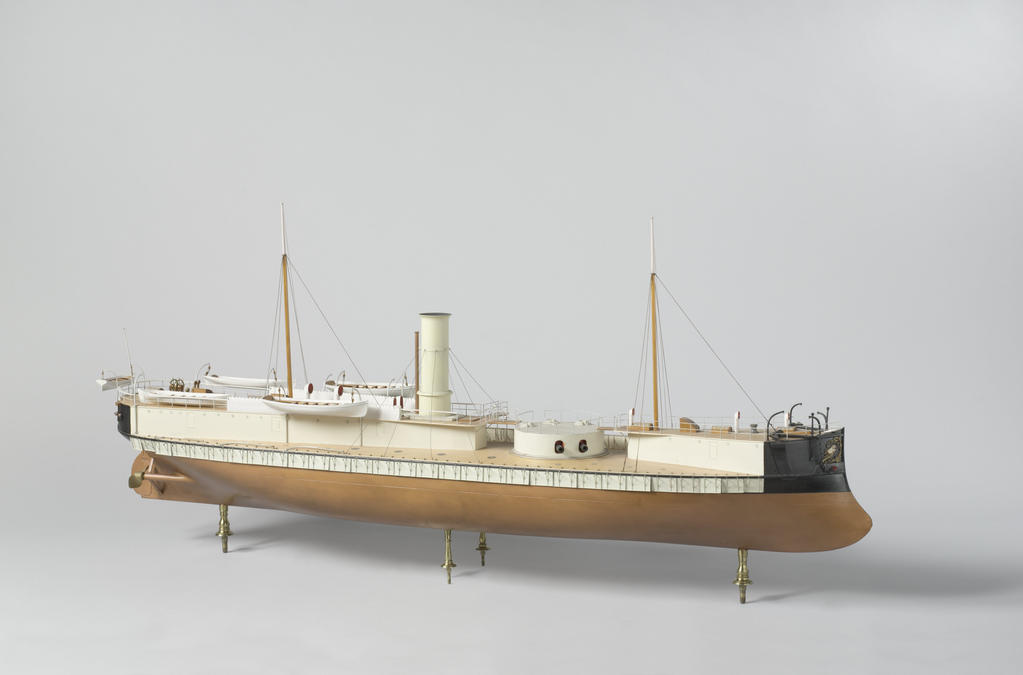
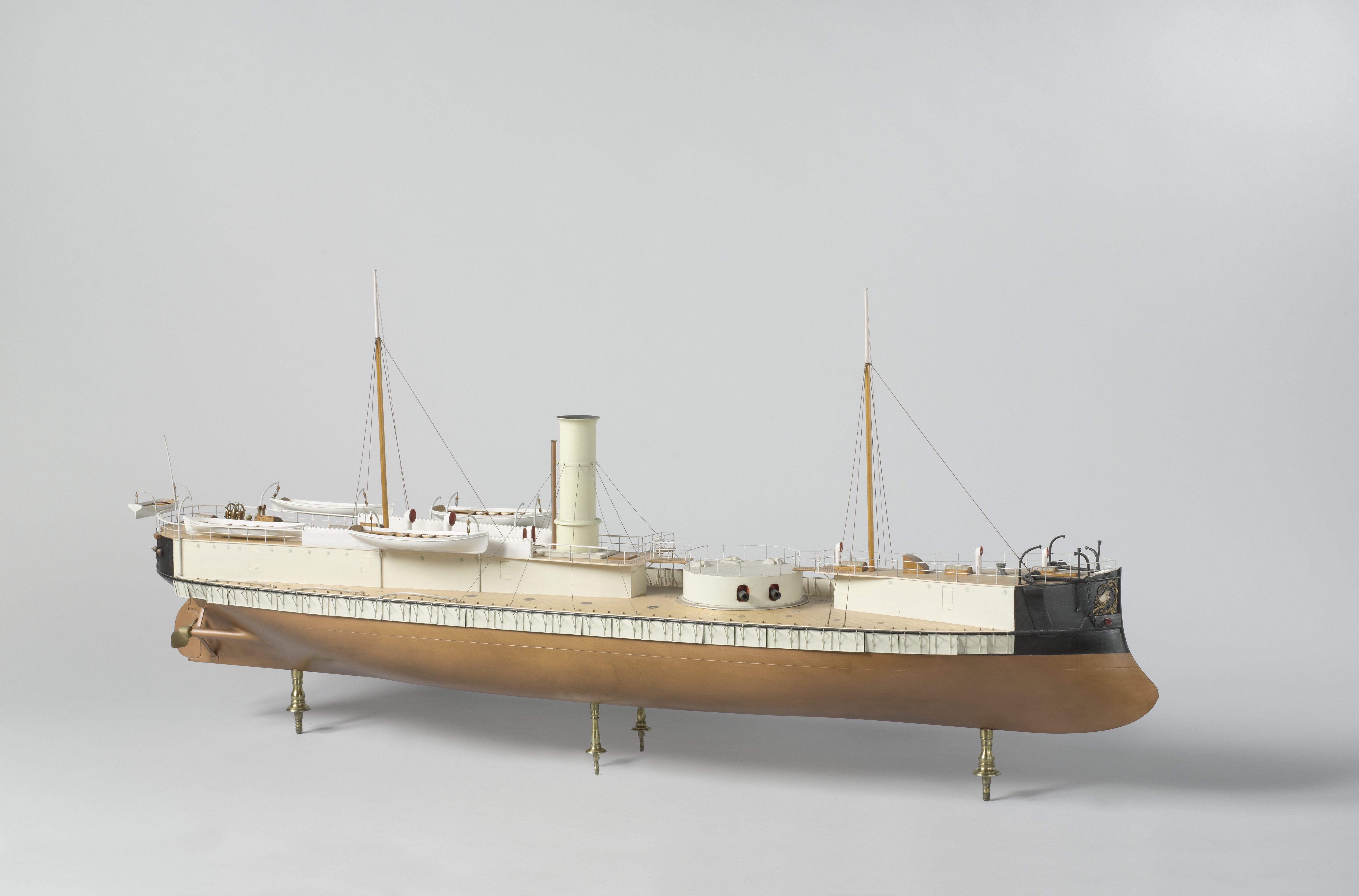
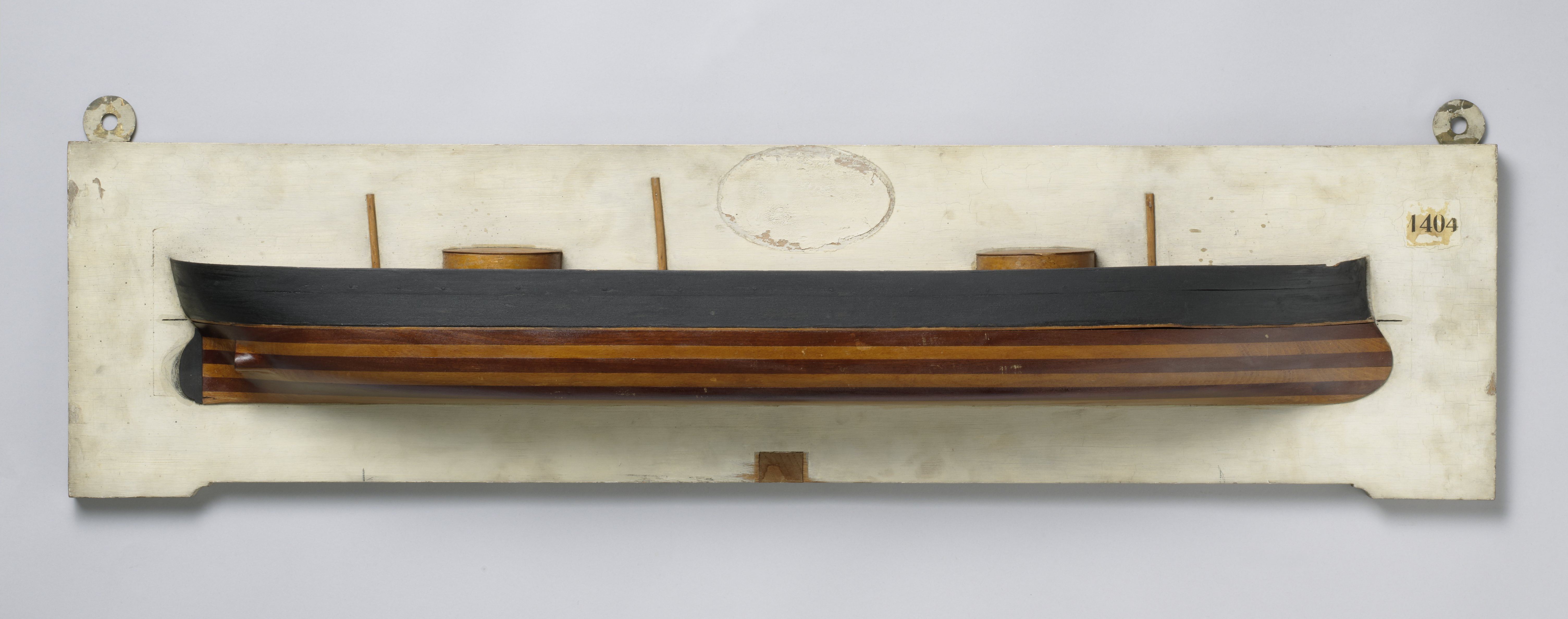
Halfmodel of a design for a Dutch ram turret dated 1865


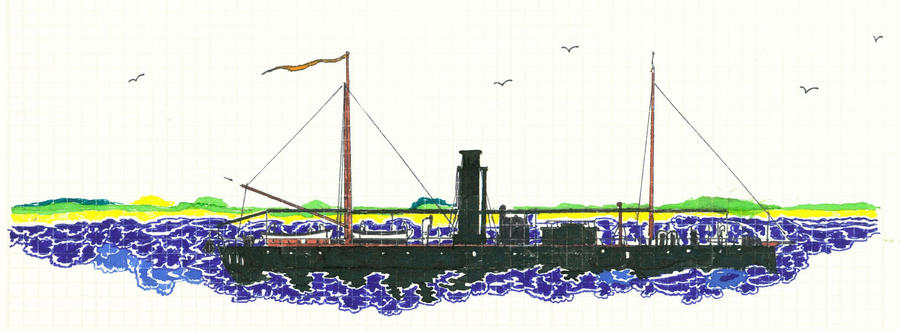
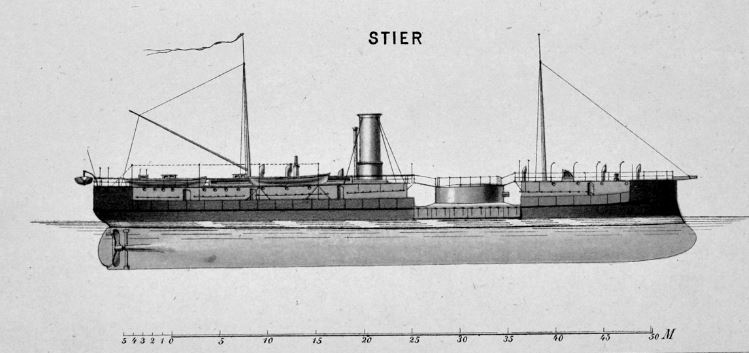
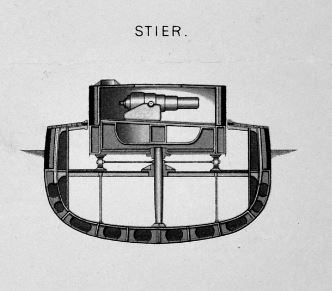
Zr.Ms. Stier. ©Warshipsresearch.blogspot.com

Schorpioen. Damen Naval, Vlissingen, spring 1985. Photo ©Warshipsresearch.blogspot.com

Made by Laird Brothers, Birkenhead in 1865 and presented to the Dutch Minister of Navy together with a model of a monitor as pre designs for the first generation of armoured ships of the Royal Netherlands Navy. The model is used for building the Stier by Laird Brothers in 1868 and in a slightly modified version the Schorpioen in France in 1868. 

Monday, 27 October 2025

Halfmodel of a design for a Dutch ram turret dated 1865-1866

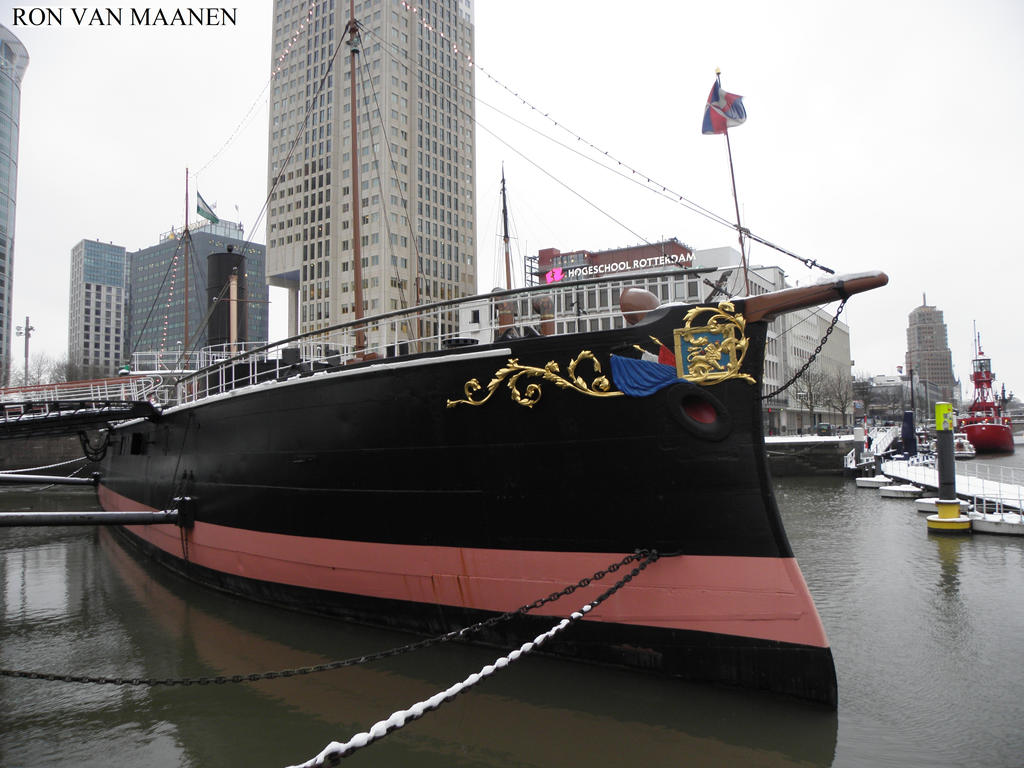
Buffel, Rotterdam, Netherlands 23-12-2012

Guinea

Built by R. Napier&Sons, Glasgow, Scotland between 1865-1866 and presented with a model of a monitor to the Dutch Minister of Navy as pre designs for the first generation of armoured ships of the Royal Netherlands Navy. The model is used for building the Zr.Ms. Buffel by Napier and the Matador (renamed) Guinea at Amsterdam, Netherlands. 

Friday, 11 April 2025

Dutch ram turret Zr.Ms. Schorpioen 1867-still existing

Den Helder, Netherlands 1 April 2025

Call sign GQTM, on stocks at the Soc. des forges et Chantiers at Toulon, France in August 1867, launched 18 January 1868, commissioned at Toulon on 17 May 1868, trial on 16 September 1868, decommissioned on 14 February 1903, stricken but laid up at Willemsoord, Netherlands on 28 November 1906, rebuilt at the Maatschappij Fijenoord, Rotterdam, Netherlands as accommodation ship 1907-1908, commissioned on 1 9 April 1909 as accommodation ship and used until she was stricken on 17 January 1982, sold in 1982, transferred to Vlissingen, Netherlands, later towards Middelburg, Netherlands and nowadays lying as museum ship at Den Helder.

Tuesday, 6 February 2024

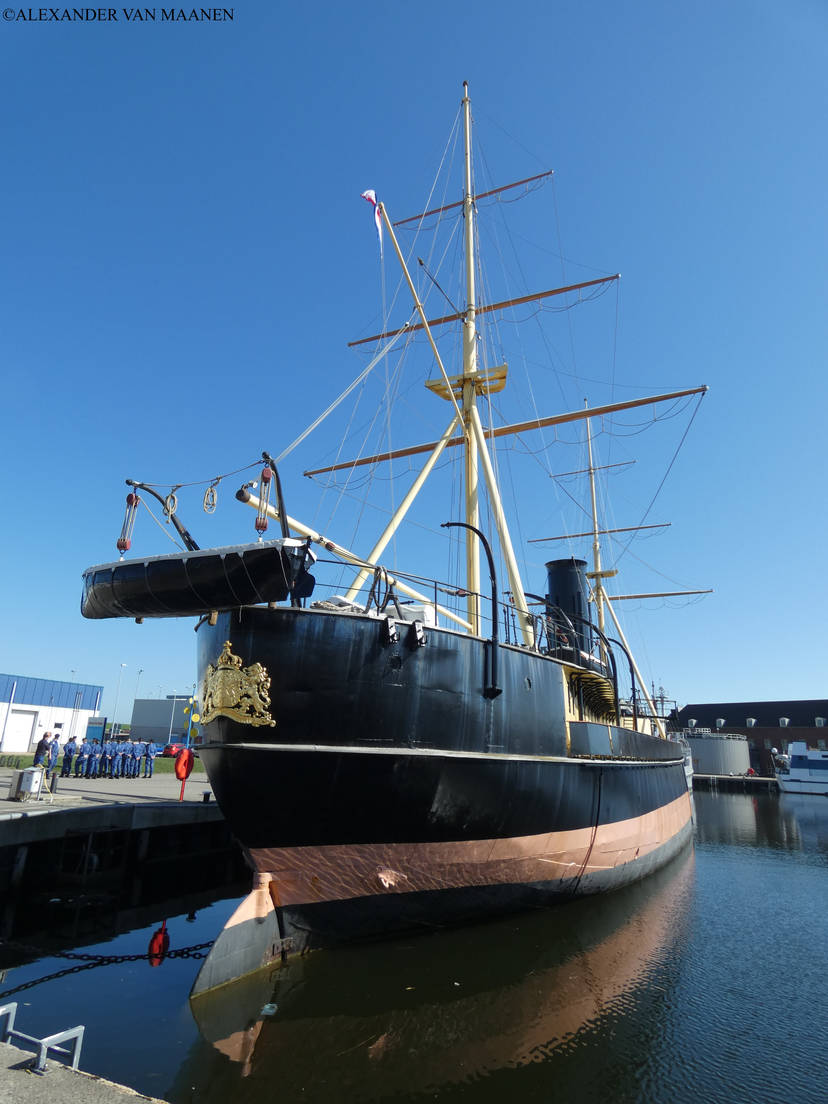
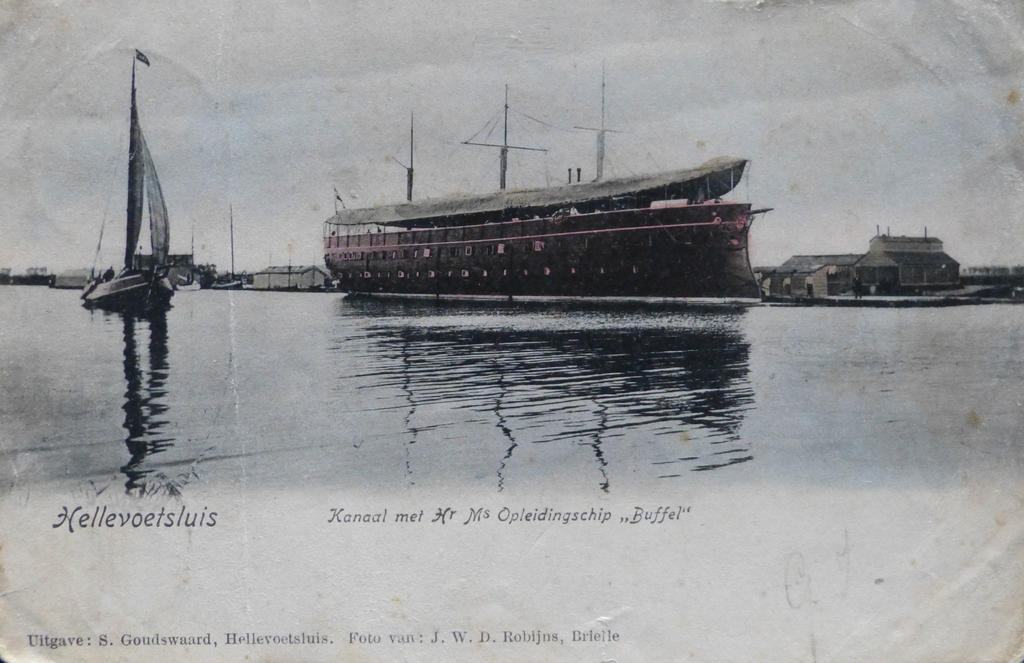
Dutch ram turret Hr.Ms. Buffel 1867-

Classified as ironclad in 1893, Design of Napier&Sons but modified by the Dutch chief engineer B.J. Tideman, call sign GQDV, on stocks at the shipyard of Robert Napier&Sons, Glasgow, Scotland on 10 June 1867, launched on 10 March 1868, commissioned on 23 July 1868, main repairs at the shipyard of the Nederlandsche Stoomboot Maatschappij, Rotterdam, Netherlands in 1892, decommissioned and converted into temporarily accommodation ship for the graduation training of sailors 1st class for the rank of quartermaster and the training of boys as sailors, commissioned as accommodation ship and added to the Hr. Ms. Van Galen at Hellevoetsluis, Netherlands on 1 April 1894, stricken, armour, engines and guns removed and now officially accommodation ship, rebuilt as guard ship at the navy yard at Hellevoetsluis in 1920, guard ship at Vlissingen 1920-1926, accommodation ship at Willemsoord, Netherlands, fallen in German hands and towed to Amsterdam, Netherlands to be used as accommodation ship in May 1940. After the war used as accommodation ship at several locations, finally decommissioned on 18 January 1974, handed over to the town Rotterdam, Netherlands and since then museum ship there until she moved in 2013 towards Hellevoetsluis. 

Sunday, 5 September 2021

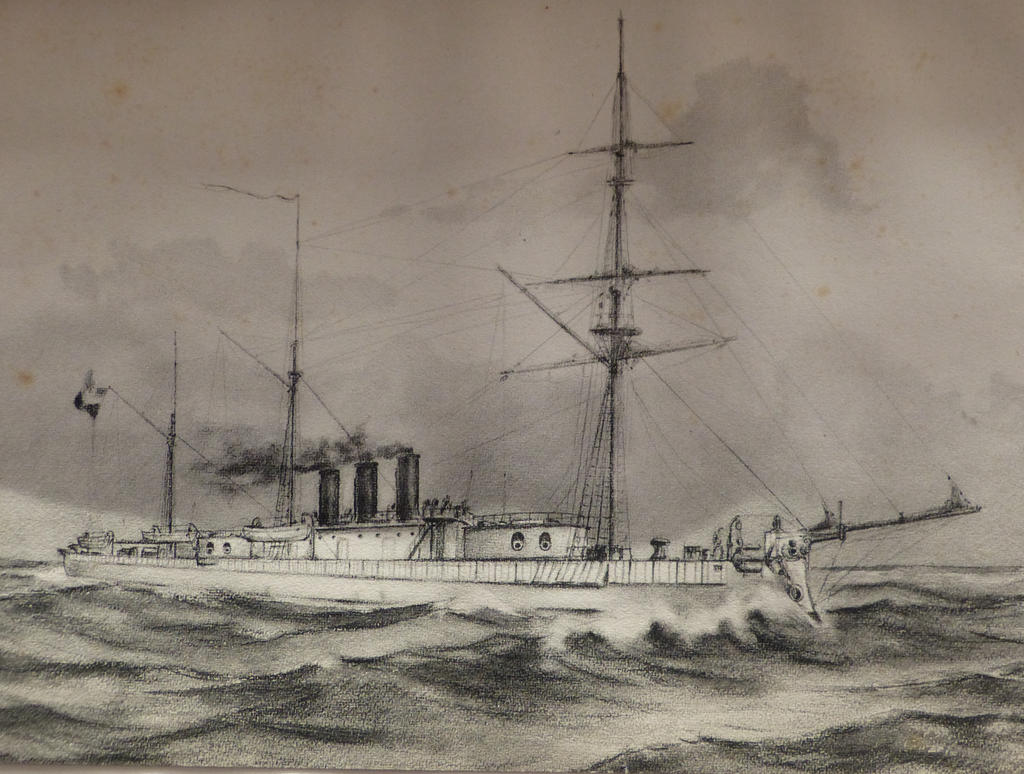
Dutch ram turret Zr.Ms. Prins Hendrik der Nederlanden 1865->1905

Vice admiraal Norman MacLeod. Chapter VI. De Marine, published in Eene Halve Eeuw [1848-1898]

Laid down at Laird, Birkenhead, England 1865 and launched 9 October 1866. Dimensions 70,14 x 13,32 x 5,70 metres and a displacement of 3.375 tons. Her 2 engines and 4 boilers delivered 2.426 ihp which made with 2 screws a speed of 12,09 miles possible. Also fitted out with 3 masts and a sail area of 1.554m2, but sailed worse. Armed with 4-23cm rifled guns and 4-12cm guns. Armour sides was 115mm. Her crew numbered 230 men. In 1901 transferred to the Department of Colonies. In 1905 given back and used as ammunition ship.

Dutch ram turret Zr.Ms. Koning der Nederlanden 1871-1942

Vice admiraal Norman MacLeod. Chapter VI. De Marine, published in Eene Halve Eeuw [1848-1898].


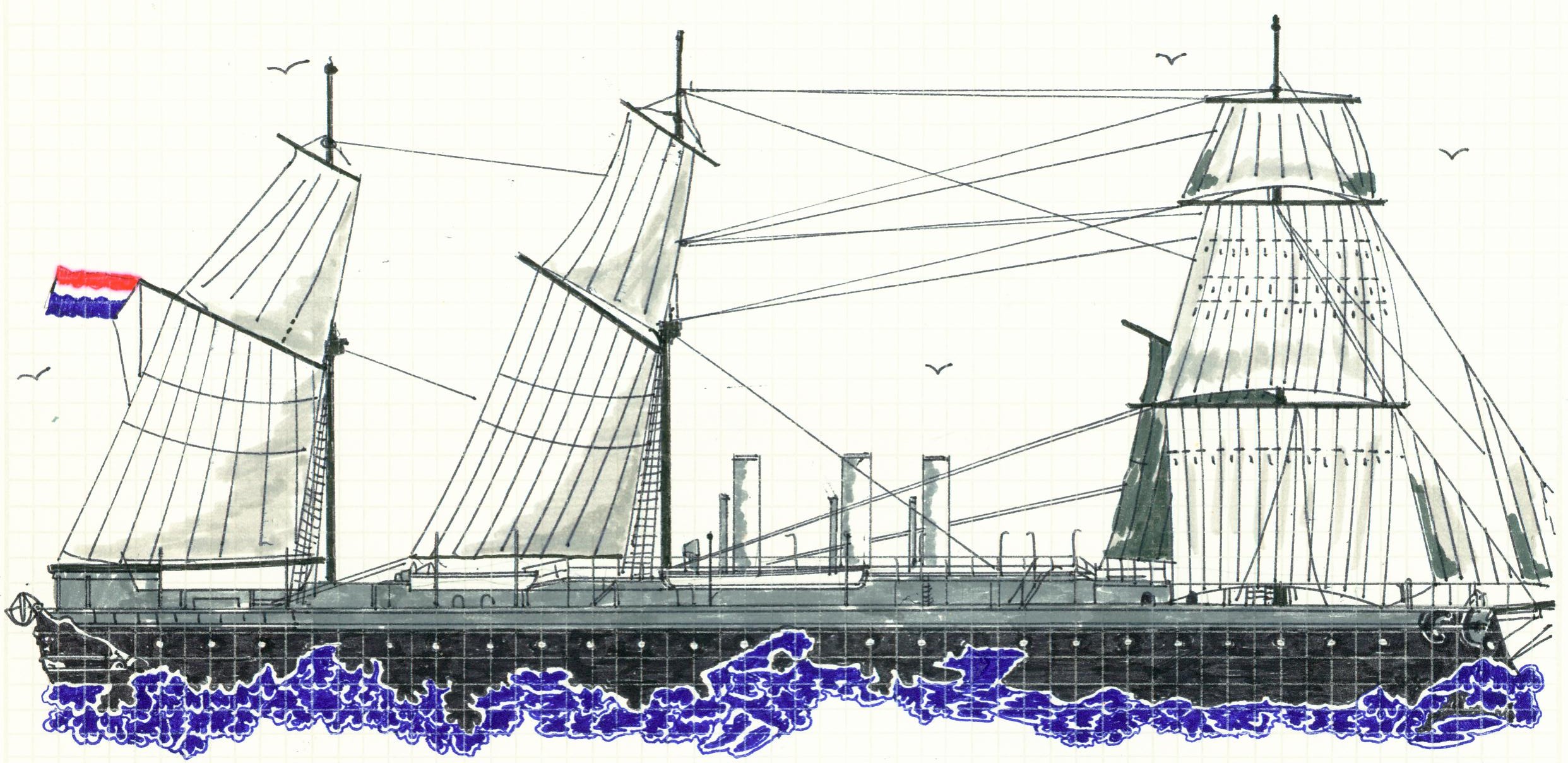
The ship was designed before the Noordzeekanaal was available, so it was a comprise between armour, artillery and horsepower. The result was a stern which was to 'full' and forced shaped. Originaly she was to be named Matador, but 24 February 1872 (other source 24 April 1874) renamed Koning der Nederlanden. On stocks at the naval yard at Amsterdam, Netherlands 28 November 1871, launched 28 October 1874.

Dimensions 81.78/85.24 (over all) x 15.20 x 5.83/8.93 metres, 5.400 ton displacement , 2 engines with totally 7 boilers supplied 4630 ihp, 2 screws, speed 12 knots, coal capacity 620 ton, armed with 4-28cm guns and 4-12 cm guns. The crew numbered 250 men. Fitted out with 3 masts. Trial off Texel 26 July 1877. Total costs while being prepared to depart for the first time to sea  fl. 3.220,170,00. Commissioned 16 February 1877 (other source 15 August 1876). Served mainly in the Dutch East Indies. In 1894 transferred to the Indische Militaire Marine and decommissioned 1 April 1895. August 1896 started the rebuilding at the naval yard at Soerabaja as a guard ship and 1 December 1899 there commissioned. Stricken 1914 and became accommodation ship for the crew of the ships which were repaired and later for the submarine force. 2 March 1942 by Dutch navy personnel at Soerabaja set on fire and sunk to prevent capture by the Japanese forces. 


Monday, 20 July 2020

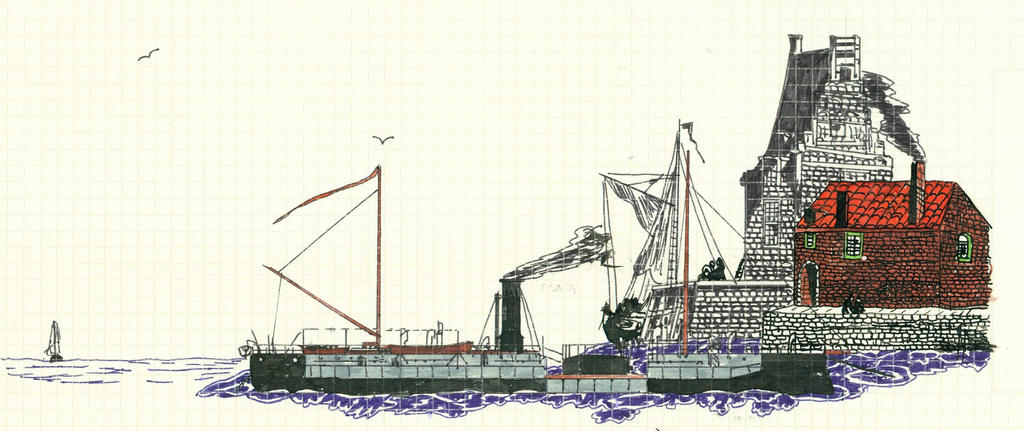
Dutch ram turret Zr. Ms, Koning der Nederlanden departed Batavia, Dutch East Indies according to the Dutch newspaper Bataviaasch handeldsblad dated 21 February 1880


An item dated Batavia, Dutch East Indies 20th reported the departure of the Dutch ram turret Zr. Ms, Koning der Nederlanden towards the North.(1)

Note
1. The ship was designed by B.J. Tideman before the Noordzeekanaal was available, so it was a comprise between armour, artillery and horsepower. The result was a stern which was to 'full' and forced shaped. Ram turret, call sign GQMB, originally she was to be named Matador, on stocks at the naval yard at Amsterdam, Netherlands 28 November 1871, renamed Koning der Nederlanden on 24 February 1872 (other source claims even 24 April 1874), launched on 28 October 1874, commissioned on 16 February 1877 (other source claims 15 August 1876), transferred to the Indische Militaire Marine in 1894, decommissioned 1 April 1895, in August 1896 started the rebuilding at the naval yard at Surabaya, Dutch East Indies as a guard ship, commissioned on 1 December 1899, stricken in 1914 and became accommodation ship for the crew of the ships which were repaired and later for the submarine force, by Dutch navy personnel at Surabaya set on fire and sunk to prevent capture by the Japanese on 2 March 1942. Dimensions 81.78/85.24 (over all) x 15.20 x 5.83/8.93m, 5400 ton displacement , 2 engines with totally 7 boilers supplied 4630 ihp, 2 screws, speed 12 knots, coal capacity 620 ton, armed with 4-28cm guns and 4-12 cm guns. The crew numbered 250 men. Fitted out with 3 masts. Trial off Texel 26 July 1877. Total costs while being prepared to depart for the first time to sea  fl. 3.220,170,00.

Saturday, 4 July 2020

Dutch ram turret Zr. Ms. Koning der Nederlanden underway from Batavia towards Onrust, Dutch East Indies according to the Dutch newspaper Bataviaasch handelsblad dated 25 July 1881


An item dated Batavia, Dutch East Indies 25th reported the departure of the Dutch ram turret Zr. Ms. Koning der Nederlanden commanded by Smith towards Onrust, Dutch East Indies.(1)

Note
1. The ship was designed by B.J. Tideman before the Noordzeekanaal was available, so it was a comprise between armour, artillery and horsepower. The result was a stern which was to 'full' and forced shaped. Ram turret, call sign GQMB, originally she was to be named Matador, on stocks at the naval yard at Amsterdam, Netherlands 28 November 1871, renamed Koning der Nederlanden on 24 February 1872 (other source claims even 24 April 1874), launched on 28 October 1874, commissioned on 16 February 1877 (other source claims 15 August 1876), transferred to the Indische Militaire Marine in 1894, decommissioned 1 April 1895, in August 1896 started the rebuilding at the naval yard at Surabaya, Dutch East Indies as a guard ship, commissioned on 1 December 1899, stricken in 1914 and became accommodation ship for the crew of the ships which were repaired and later for the submarine force, by Dutch navy personnel at Surabaya set on fire and sunk to prevent capture by the Japanese on 2 March 1942. Dimensions 81.78/85.24 (over all) x 15.20 x 5.83/8.93m, 5400 ton displacement , 2 engines with totally 7 boilers supplied 4630 ihp, 2 screws, speed 12 knots, coal capacity 620 ton, armed with 4-28cm guns and 4-12 cm guns. The crew numbered 250 men. Fitted out with 3 masts. Trial off Texel 26 July 1877. Total costs while being prepared to depart for the first time to sea  fl. 3.220,170,00.

Dutch ram turret Hr. Ms. Guinea used for fishery protection according to the Dutch newspaper De standaard dated 13 April 1876


An item reported that the Dutch ram turret Zr. Ms. Guinea was ready for departure towards sea with as task fishery protection and to prevent problems between the Dutch and British fishermen.(1)

Note
1. Call sign GQJR, ex-Matador, on stocks at the navy yard at Amsterdam, Netherlands in 1867, launched on 5 May 1870, commissioned off Texel, Netherlands on 16 October 1873, boilers replaced in 1881, stricken in 1894, laid up at Ijmuiden, Netherlands in 1895 and sold for ƒ 36.092,26 to be broken up in 1897. Original two signalling masts, in 1889 replaced by just one battle mast. Costs when for the time fitted out ƒ 1.287.891. Displacement 2.378 tons, dimensions 59,68 (load line between perpendiculars)-62,68 (over all without rudder) x 12,25 (outside over armour) x maximum loaded with full coal bunkers and ready boilers 4,90 (fore)-5,10 (aft) x x 7,75 (hold underside keel-upside main deck amidships) metres, 2-2 cylinder engines, 4 boilers, horsepower 2.200 hp, a speed (trial) of 9,5 miles, an armament of 2 rifled 23cm guns en 4-30 pd, replaced in 1887 by 1-28cm gun, 2-7,5cm guns, 4-3,7cm guns and 2-3,7cm revolver guns and a crew numbering 117 (original)-159 men. The armour consisted of a 7,6-15,2cm thick belt, a 1,9-2,5cm thick deck while the gun turret was protected by 20,3-28cm thick armour and the coning tower by 11,4cm.

Sunday, 14 June 2020

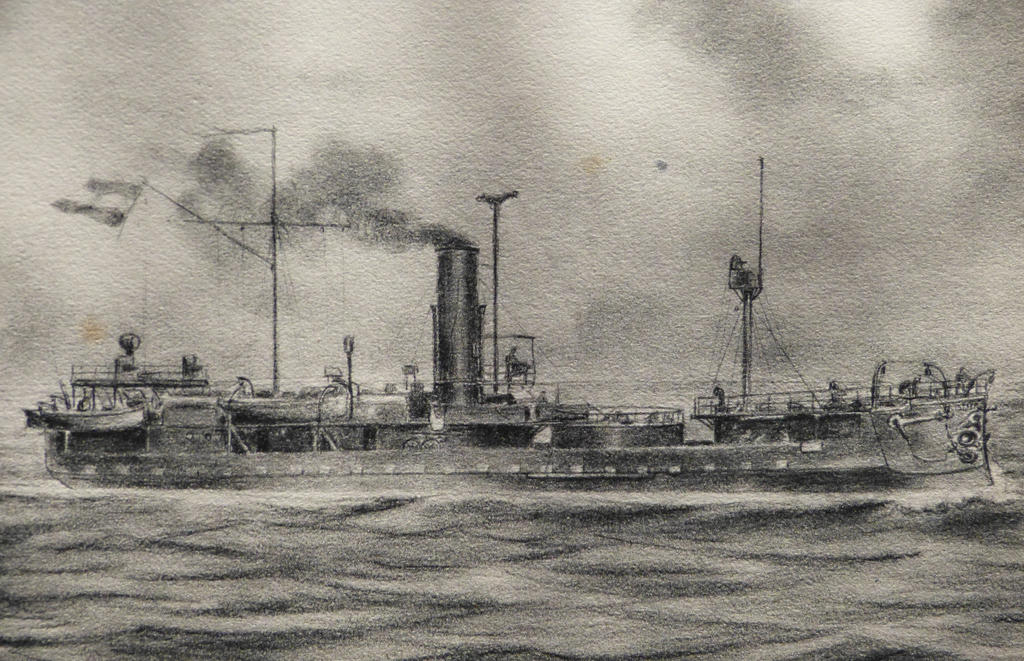
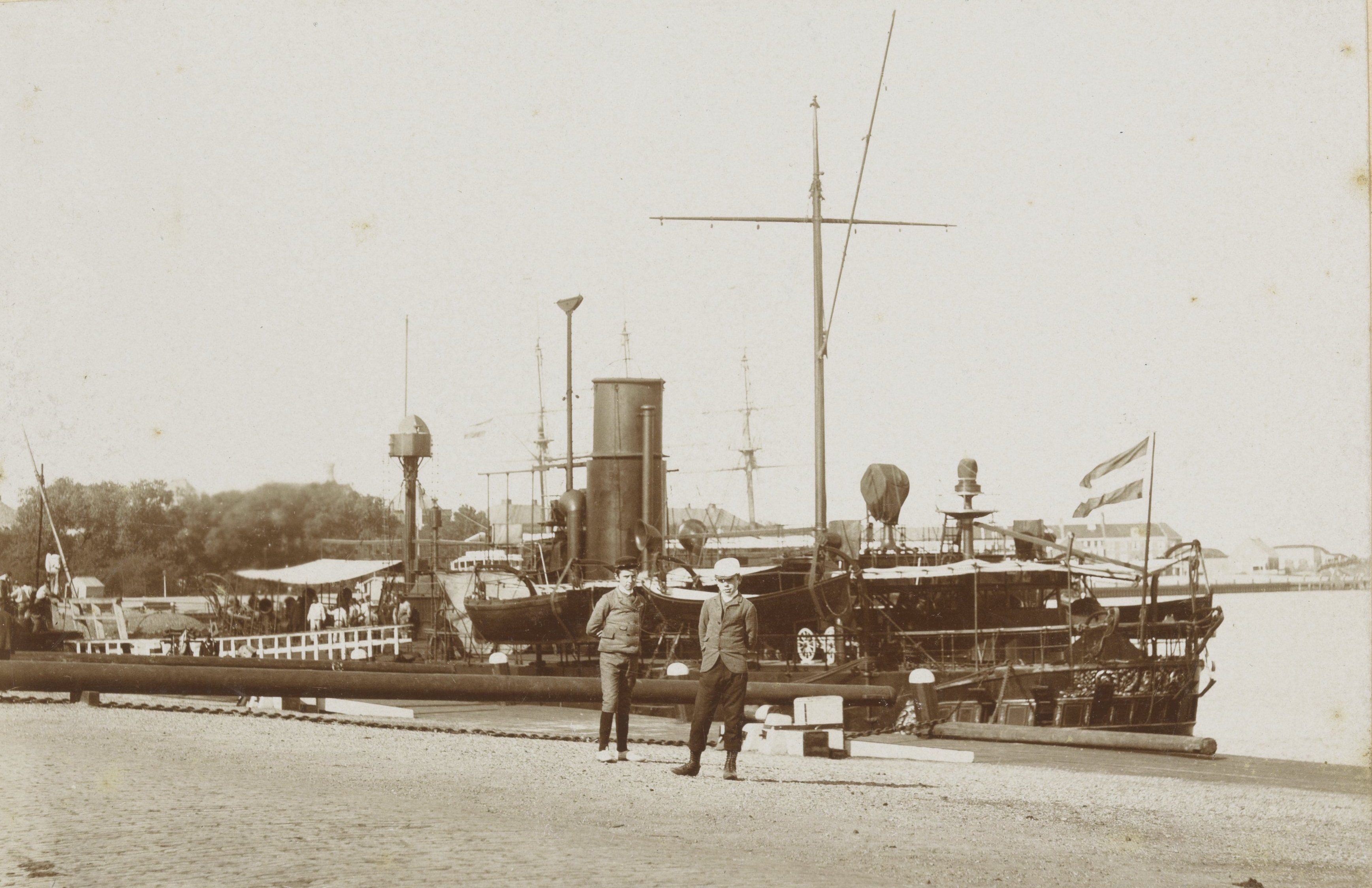
Dutch ram turret Zr. Ms. Stier stranded off the Westgat, Netherlands according to the Dutch newspaper Rotterdamsch nieuwsblad dated 6 July 1889


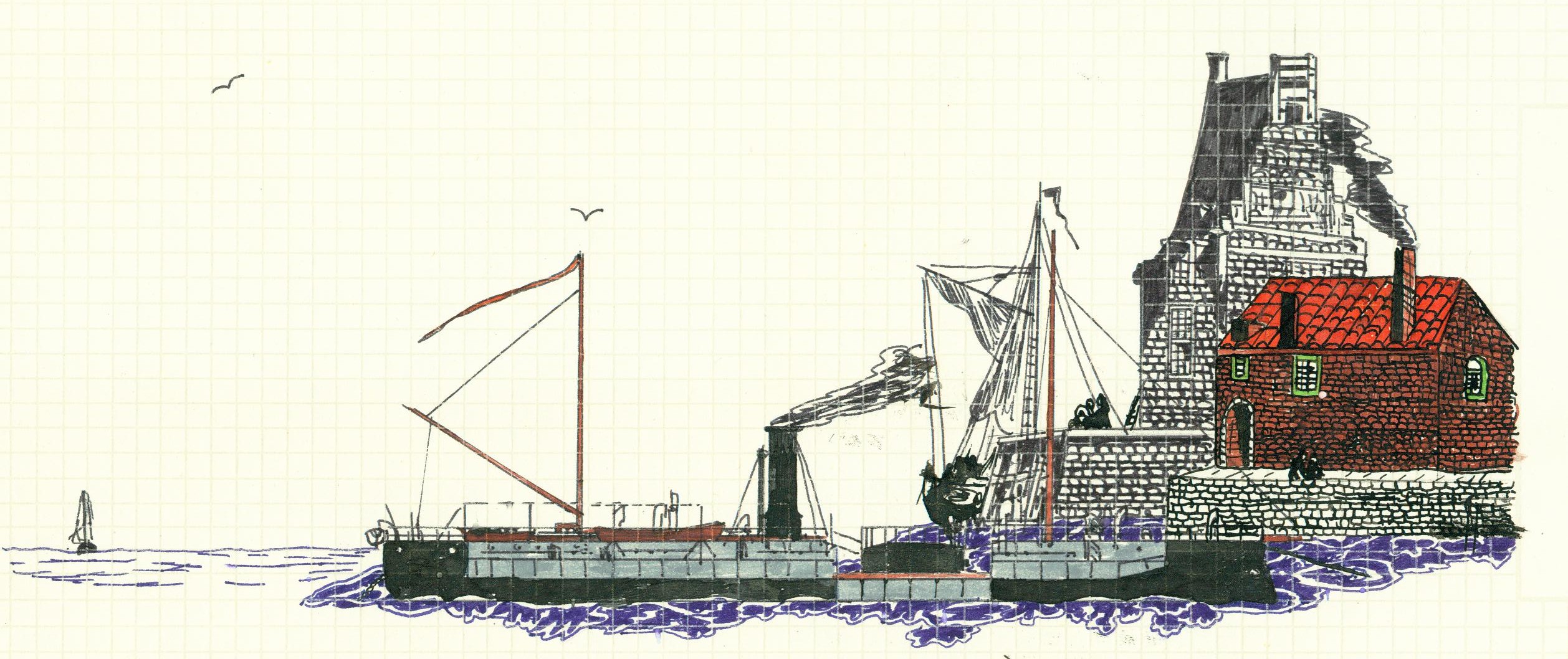
Harbour of Den Helder, Willem Frederik Boelsums, 1895-1915


An item dated Nieuwediep, Netherlands 4th reported that the Dutch ram turret Zr. Ms. Stier was grounded near the third white buoy off the Westgat. A later tiding reporting that tugs failed to salvage. Anchors were now set out by the tugs for new efforts.(1)

Note
1. Call sign GQVL, on stocks at Brothers Laird, Birkenhead, England 7 June 1867, launched 9 April 1868. Trial 18 August 1868. Commissioned 18 August 1869. Dimensions 59.43 x 11.58 x 4.87m, displacement 2112 tons, speed 12.46 knots, 2257 ihp. Armed with 2-23cm guns, 1882 rearmed with 1-28cm guns and 7-3.7cm guns. Armour belt 76-152mm, gun turrets 203-280mm, command turret 114mm, deck 19-25mm. Crew original 110, later 137 men. Fitted out with 2 engines, each with two cylinders and 4 boilers. Building costs ƒ 1.136.470. Destined for service in Dutch coastal waters and made never trips to foreign countries. In 1882 large repairs at the naval yard at Amsterdam. In 1908 disarmed and laid up. Seven years later in service as magazine at the naval yard at Willemsoord [Den Helder]. In 1925 used as target for bombs dropped by aeroplanes. August-September 1930 partly dismantled by navy divers with explosives.

Building of Dutch ram turret Zr. Ms. Prins Hendrik der Nederlanden at Birkenhead, England ordered according to the Dutch newspaper Middelburgsche courant dated 1 October 1865


Model Rijksmuseum Amsterdam Netherlands. Original url


An item reported that the Dutch cabinet ordered the building at the shipyard of the Brothers Laird at Birkenhead, England of an iron armoured ram turret. All improvements needed as a result of experience were to be employed.(1)

Note
1. Ram turret, call sign GQRS, laid down at Laird, Birkenhead, England 1865 and launched 9 October 1866. Dimensions 70,14 x 13,32 x 5,70 metres and a displacement of 3.375 tons. Her 2 engines and 4 boilers delivered 2.426 ihp which made with 2 screws a speed of 12,09 miles possible. Also fitted out with 3 masts and a sail area of 1.554m2, but sailed worse. Armed with 4-23cm rifled guns and 4-12cm guns. Armour sides was 115mm. Her crew numbered 230 men. In 1901 transferred to the Department of Colonies. In 1905 given back and used as ammunition ship.

Monday, 9 March 2020

Dutch ram turret Zr. Ms. Stier temporarily stranded off Fort Harssens, Netherlands according to the Dutch newspaper Het nieuws van den dag dated 30 September 1886


An item dated Nieuwediep, Netherlands 28th reported that the Dutch ram turret Zr. Ms. Stier when leaving that afternoon the harbour deceived by the current was stranded off the Fort Harssens but later refloated with assistance of the Dutch tug Stad Amsterdam, probably without any damage.(1)

Note
1. Call sign GQVL, on stocks at Brothers Laird, Birkenhead, England 7 June 1867, launched 9 April 1868. Trial 18 August 1868. Commissioned 18 August 1869. Dimensions 59.43 x 11.58 x 4.87m, displacement 2112 tons, speed 12.46 knots, 2257 ihp. Armed with 2-23cm guns, 1882 rearmed with 1-28cm guns and 7-3.7cm guns. Armour belt 76-152mm, gun turrets 203-280mm, command turret 114mm, deck 19-25mm. Crew original 110, later 137 men. Fitted out with 2 engines, each with two cylinders and 4 boilers. Building costs ƒ 1.136.470. Destined for service in Dutch coastal waters and made never trips to foreign countries. In 1882 large repairs at the naval yard at Amsterdam. In 1908 disarmed and laid up. Seven years later in service as magazine at the naval yard at Willemsoord [Den Helder]. In 1925 used as target for bombs dropped by aeroplanes. August-September 1930 partly dismantled by navy divers with explosives.

Saturday, 14 December 2019

Dutch ram stier Zr. Ms. 1867-1930

Source: Vice admiraal Norman MacLeod. 
Chapter VI. De Marine, published in “Eene Halve Eeuw [1848-1898]


Call sign GQVL, on stocks at Brothers Laird, Birkenhead, England 7 June 1867, launched 9 April 1868. Trial 18 August 1868. Commissioned 18 August 1869. Dimensions 59.43 x 11.58 x 4.87m, displacement 2112 tons, speed 12.46 knots, 2257 ihp. Armed with 2-23cm guns, 1882 rearmed with 1-28cm guns and 7-3.7cm guns. Armour belt 76-152mm, gun turrets 203-280mm, command turret 114mm, deck 19-25mm. Crew original 110, later 137 men. Fitted out with 2 engines, each with two cylinders and 4 boilers. Building costs ƒ 1.136.470. Destined for service in Dutch coastal waters and made never trips to foreign countries. In 1882 large repairs at the naval yard at Amsterdam. In 1908 disarmed and laid up. Seven years later in service as magazine at the naval yard at Willemsoord [Den Helder]. In 1925 used as target for bombs dropped by aeroplanes. August-September 1930 partly dismantled by navy divers with explosives. 

Tuesday, 19 November 2019

Dutch ram turret Zr. Ms. Koning der Nederlanden cruising in the Dutch East Indies according to the Dutch newspaper Bataviaasch handelsblad dated 3 August 1881


An item dated Batavia, Dutch East Indies 2nd reported the departure of the Dutch ram turret Zr. Ms. Koning der Nederlanden towards the East.(1)

Note
1. The ship was designed by B.J. Tideman before the Noordzeekanaal was available, so it was a comprise between armour, artillery and horsepower. The result was a stern which was to 'full' and forced shaped. Ram turret, call sign GQMB, originally she was to be named Matador, on stocks at the naval yard at Amsterdam, Netherlands 28 November 1871, renamed Koning der Nederlanden on 24 February 1872 (other source claims even 24 April 1874), launched on 28 October 1874, commissioned on 16 February 1877 (other source claims 15 August 1876), transferred to the Indische Militaire Marine in 1894, decommissioned 1 April 1895, in August 1896 started the rebuilding at the naval yard at Surabaya, Dutch East Indies as a guard ship, commissioned on 1 December 1899, stricken in 1914 and became accommodation ship for the crew of the ships which were repaired and later for the submarine force, by Dutch navy personnel at Suarabaya set on fire and sunk to prevent capture by the Japanese on 2 March 1942. Dimensions 81.78/85.24 (over all) x 15.20 x 5.83/8.93m, 5400 ton displacement , 2 engines with totally 7 boilers supplied 4630 ihp, 2 screws, speed 12 knots, coal capacity 620 ton, armed with 4-28cm guns and 4-12 cm guns. The crew numbered 250 men. Fitted out with 3 masts. Trial off Texel 26 July 1877. Total costs while being prepared to depart for the first time to sea  fl. 3.220,170,00.

Saturday, 7 October 2017

Dutch ram turret Zr. Ms. (ex-Matador) Guinea 1867-1897

Rijksmuseum Amsterdam, Netherlands. Original link


Call sign GQJR, ex-Matador, on stocks at the navy yard at Amsterdam, Netherlands in 1867, launched on 5 May 1870, commissioned off Texel, Netherlands on 16 October 1873, boilers replaced in 1881, stricken in 1894, laid up at Ijmuiden, Netherlands in 1895 and sold on a public auction at the navy yard at Amsterdam, Netherlands for ƒ 36.092,26 to be broken up at 10.00 o’clock on Thursday 8 April 1897 in 1897. Original two signalling masts, in 1889 replaced by just one battle mast. Costs when for the time fitted out ƒ 1.287.891. Displacement 2.378 tons, dimensions 59,68 (load line between perpendiculars)-62,68 (over all without rudder) x 12,25 (outside over armour) x maximum loaded with full coal bunkers and ready boilers 4,90 (fore)-5,10 (aft) x x 7,75 (hold underside keel-upside main deck amidships) metres, 2-2cylinder engines, 4 boilers, horsepower 2.200 hp, a speed (trial) of 9,5 miles, an armament of 2 rifles 23cm guns en 4-30 pd, replaced in 1887 by 1-28cm gun, 2-7,5cm guns, 4-3,7cm guns and 2-3,7cm revolver guns and a crew numbering 117 (original)-159 men. The armour consisted of a 7,6-15,2cm thick belt, a 1,9-2,5cm thick deck while the gun turret was protected by 20,3-28cm thick armour and the coning tower by 11,4cm. 

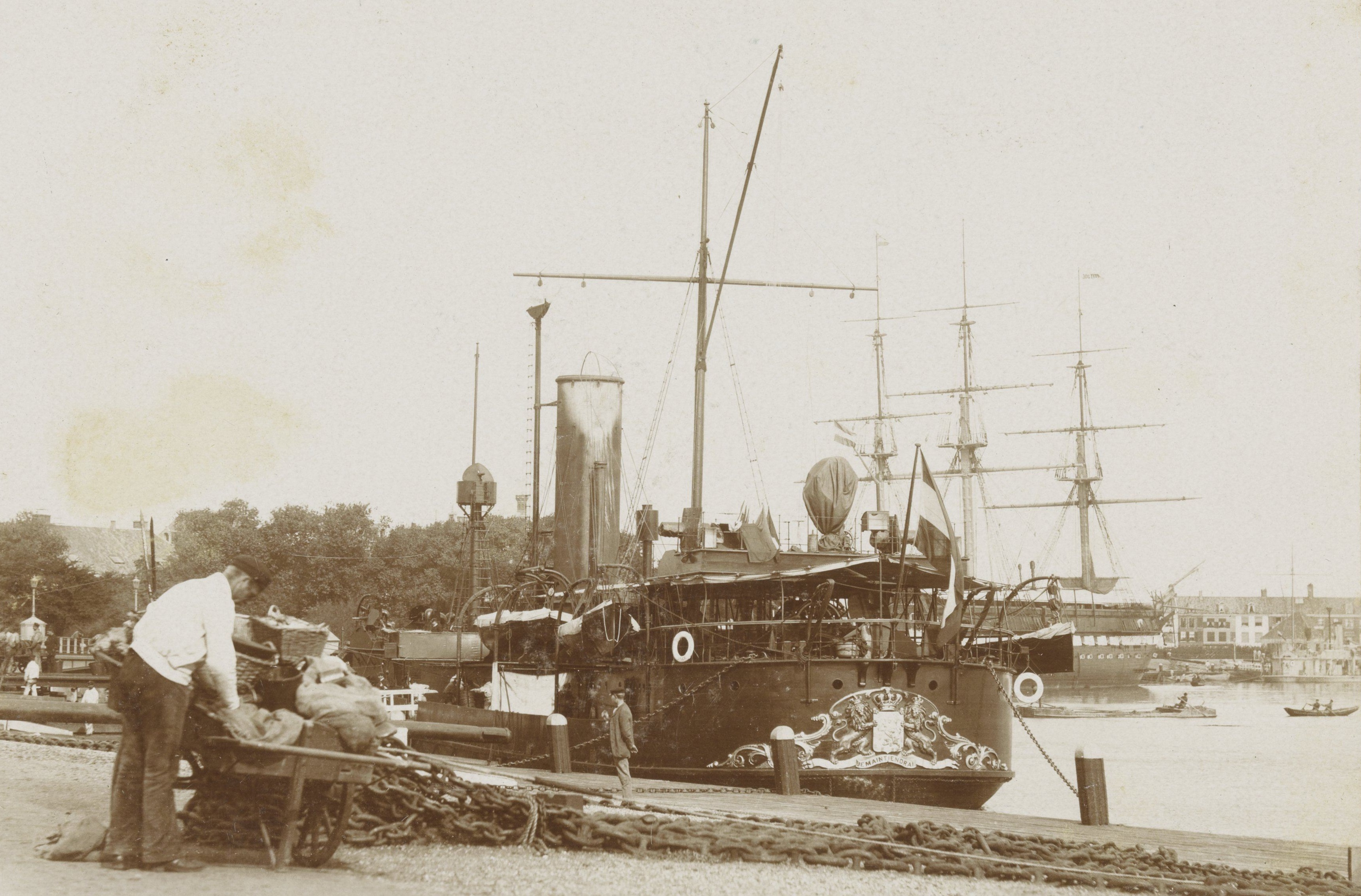
Dutch ironclad-ram Zr.Ms. Stier 1867-1930

Harbour of Den Helder, Netherlandss
Rijksmuseum Amsterdam, Netherlands. Original link

Rijksmuseum Amsterdam, Netherlands. Original link

Memoriaal der Marine

Memoriaal der Marine


Call sign GQVL. On stocks at Brothers Laird, Birkenhead, England 7 June 1867, launched 9 April 1868. Trial 18 August 1868. Commissioned 18 August 1869. Dimensions 59.43 x 11.58 x 4.87m, displacement 2112 tons, speed 12.46 knots, 2257 ihp. Armed with 2-23cm guns, 1882 rearmed with 1-28cm guns and 7-3.7cm guns. Armor belt 76-152mm, gunturrets 203-280mm, command turret 114mm, deck 19-25mm. Crew original 110, later 137 men. Fitted out with 2 engines, each with two cilinders and 4 boilers. Building costs ƒ 1.136.470. Destined for service in Dutch coastal waters and made never trips to foreign countries. In 1882 large repairs at the naval yard at Amsterdam. In 1908 disarmed and laid ip. Seven years later in service as magazine at the naval yard at Willemsoord [Den Helder]. In 1925 used as target for bombs dropped by aeroplanes. August-September 1930 partly dismantled by navy divers with explosives. 

Sunday, 6 August 2017

Dutch ironclad Zr. Ms. Koning der Nederlanden docked at Singapore according to a report of her commanding officer in 1878


Model Rijksmuseum Amsterdam, Netherlands. Original source

The Dutch ram turret Zr. Ms. Koning der Nederland (1) captain W. Enslie (2) departed on 3 March 1878 towards the Dutch East Indies where she arrived at 6 May 1878 at Atjeh and added to the auxiliary squadron in the Dutch East Indies.

On the 10th May was anchored off St. George-town and departed on the 17th towards Singapore where she arrived on the 20th anchored at one of the heads of the Tanjong Paggar-docks. With her draught of 17 British feet was decided to wait for spring-tide before docking her which occurred in 31st May at 22.00 o’clock. The same night was started with cleaning and painting her. To hurry up and to reduce the costs was the replacement of the bended screw lades done by the yard personnel. On 3rd June was she undocked. Even at Singapore was she visited by numerous visitors and some stated that’s he was the heaviest armed and strongest ship in the Far East. At 10.30 o’clock on 7 June was Singapore left arriving the same day at Riouw, Dutch East Indies.

Notes
1. This ram turret was designed by B.J. Tideman before the Noordzeekanaal was available, so it was a comprise between armour, artillery and horsepower. The result was a stern which was to 'full' and forced shaped. Ram turret, call sign GQMB, originally she was to be named Matador, on stocks at the naval yard at Amsterdam, Netherlands 28 November 1871, renamed Koning der Nederlanden on 24 February 1872 (other source claims even 24 April 1874), launched on 28 October 1874, commissioned on 16 February 1877 (other source claims 15 August 1876), transferred to the Indische Militaire Marine in 1894, decommissioned 1 April 1895, in August 1896 started the rebuilding at the naval yard at Surabaya, Dutch East Indies as a guard ship, commissioned on 1 December 1899, stricken in 1914 and became accommodation ship for the crew of the ships which were repaired and later for the submarine force, by Dutch navy personnel at Surabaya set on fire and sunk to prevent capture by the Japanese on 2 March 1942. Dimensions 81.78 (loadline between perpendiculars)-85.24 (over all) x 15.20 (over outside armour)x 5.83/8.93m, 5400 ton displacement , 2 engines with totally 7 boilers supplied 4630 ihp, 2 screws, speed 11,95 knots (on trial 26 July 1877), coal capacity 620 ton, armed with 4-28cm/11” guns , 4-12 cm/4.7” guns, 2-12cm/4.7” howitzers, 1-7cm/2.75” gun, 3-5cm/1.96” guns and 2-12cm/4.7” mortars. The sides were protected by 11,4/12,7cm (ends)-20,3cm/8” thick armour, turrets and turret bulwarks 22,9cm/9” and around the gun holes tot a maximum of 53,4cm/21” thick armour. The crew numbered 250 men. Fitted out with 3 masts. Trial off Texel 26 July 1877. Total costs while being prepared to depart for the first time to sea fl. 3.220,170,00.
2. Willem Enslie (30 June 1825 Brussels, Belgium-25 July 1898 Beek, Netherlands),
ending his career in the rank of rear admiral on 1 August 1886. 

Friday, 4 August 2017

Dutch ironclad Zr. Ms. Koning der Nederlanden visited Egypt and Yemen according to a report of her commanding officer in 1878


Model Rijksmuseum Amsterdam, Netherlands. Original source

The Dutch ram turret Zr. Ms. Koning der Nederland (1) captain W. Enslie (2) departed on 3 March 1878 towards the Dutch East Indies where she arrived at 6 May 1878 at Atjeh and added to the auxiliary squadron in the Dutch East Indies.

On 30th March she arrived at Suez, Egypt where was discovered that of both screws a blade was bended. Still the next day she departed arriving on 7 April in the Bay of Aden. There was coal and 10.000 litres fresh water bunkered while the 8 days earlier distilled water sill was to warm to be used as fresh water. She was forced to stay until the 11th at Aden before the boilers could be inside cleaned from oil and grease. The heat forced to wait for 3 days after the boilers were empty drained. Several officers of British and French of warships lying in the roads visited her and usually admired her strength. Several British officers were fond of her turret system and especially when them was told that even on the North Sea with a very wagging ship the 28cm guns still could be due to the hydraulic handling. A British senior officer of one of the two wood built warships in the roads even said “You will blow us out of the water in 10 minutes”.

Notes
1. This ram turret was designed by B.J. Tideman before the Noordzeekanaal was available, so it was a comprise between armour, artillery and horsepower. The result was a stern which was to 'full' and forced shaped. Ram turret, call sign GQMB, originally she was to be named Matador, on stocks at the naval yard at Amsterdam, Netherlands 28 November 1871, renamed Koning der Nederlanden on 24 February 1872 (other source claims even 24 April 1874), launched on 28 October 1874, commissioned on 16 February 1877 (other source claims 15 August 1876), transferred to the Indische Militaire Marine in 1894, decommissioned 1 April 1895, in August 1896 started the rebuilding at the naval yard at Surabaya, Dutch East Indies as a guard ship, commissioned on 1 December 1899, stricken in 1914 and became accommodation ship for the crew of the ships which were repaired and later for the submarine force, by Dutch navy personnel at Surabaya set on fire and sunk to prevent capture by the Japanese on 2 March 1942. Dimensions 81.78 (loadline between perpendiculars)-85.24 (over all) x 15.20 (over outside armour)x 5.83/8.93m, 5400 ton displacement , 2 engines with totally 7 boilers supplied 4630 ihp, 2 screws, speed 11,95 knots (on trial 26 July 1877), coal capacity 620 ton, armed with 4-28cm/11” guns , 4-12 cm/4.7” guns, 2-12cm/4.7” howitzers, 1-7cm/2.75” gun, 3-5cm/1.96” guns and 2-12cm/4.7” mortars. The sides were protected by 11,4/12,7cm (ends)-20,3cm/8” thick armour, turrets and turret bulwarks 22,9cm/9” and around the gun holes tot a maximum of 53,4cm/21” thick armour. The crew numbered 250 men. Fitted out with 3 masts. Trial off Texel 26 July 1877. Total costs while being prepared to depart for the first time to sea fl. 3.220,170,00.
2. Willem Enslie (30 June 1825 Brussels, Belgium-25 July 1898 Beek, Netherlands),
ending his career in the rank of rear admiral on 1 August 1886. 

Sunday, 30 July 2017

Dutch ironclad Zr. Ms. Koning der Nederlanden superior to contemporary British ironclads according to a report of her commanding officer in 1878

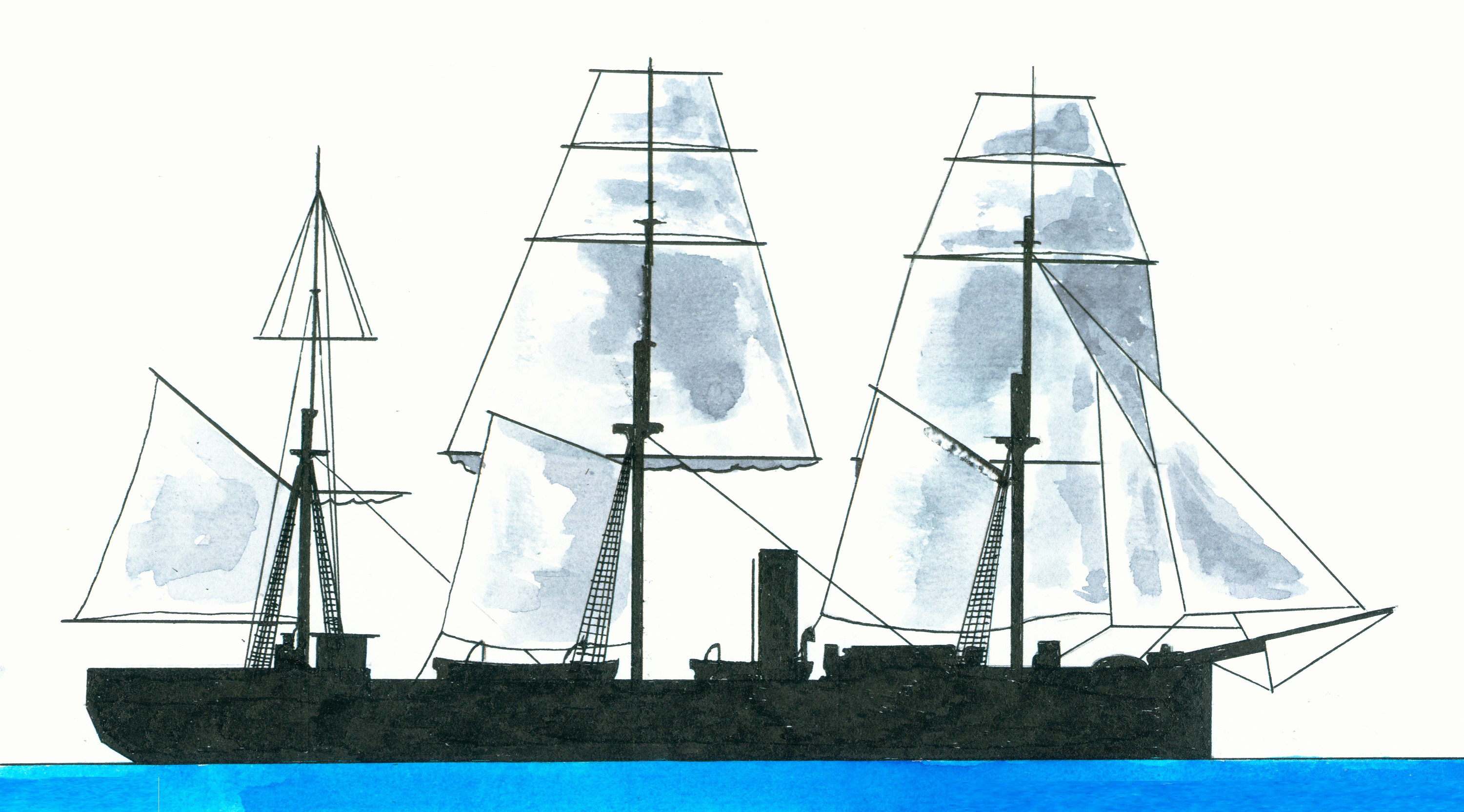
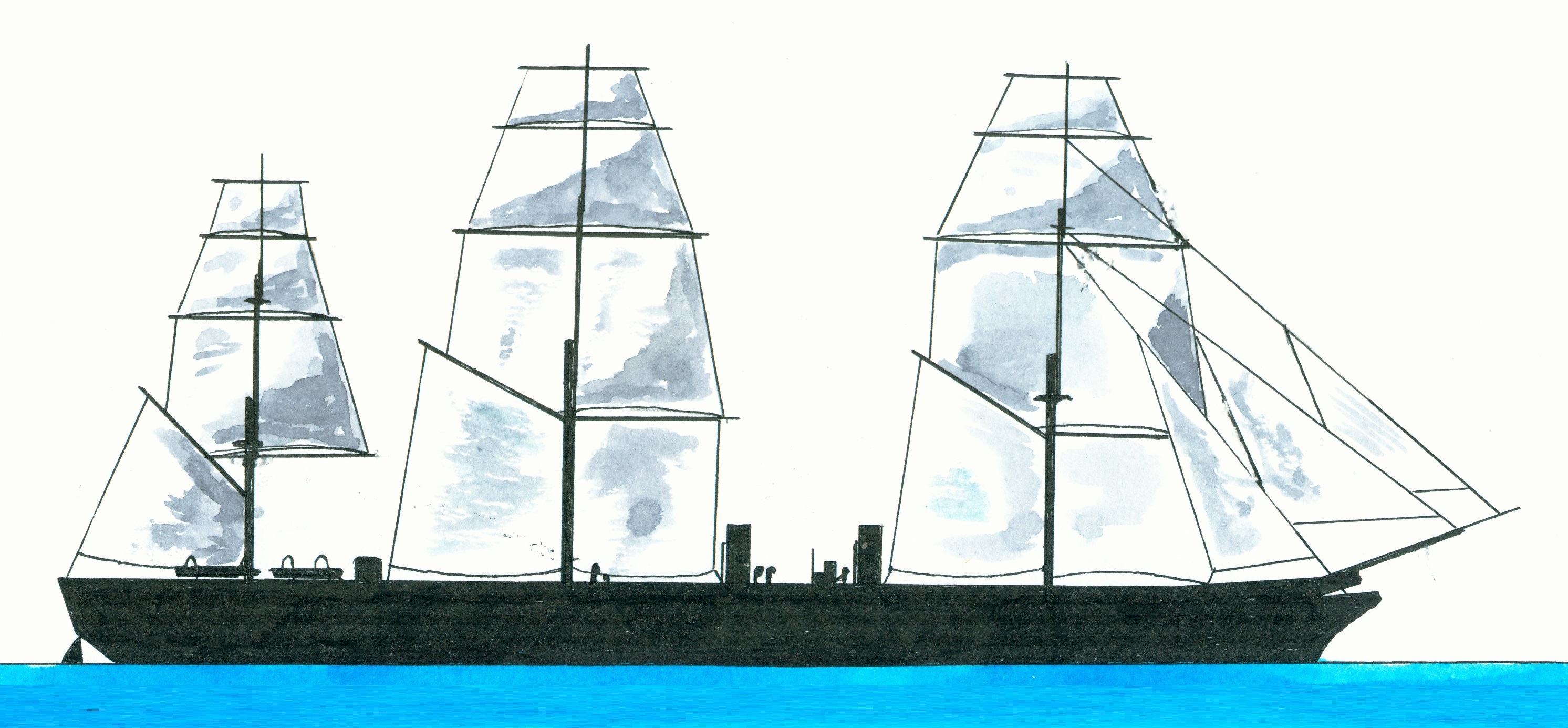
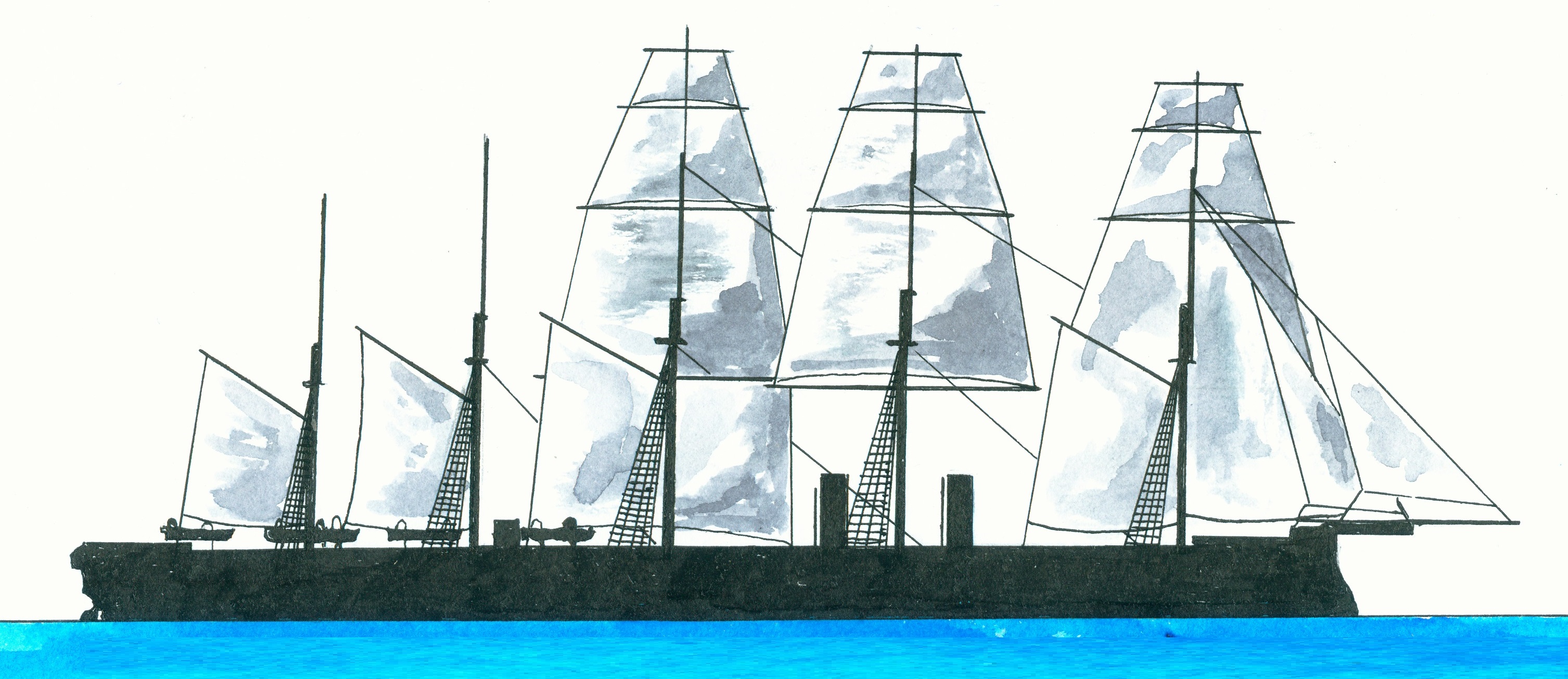
Dutch Zr. Ms. Koning der Nederlanden


British Defence-class

British HMS Shannon

British Warrior-class

British Minotaur-class

The Dutch ram turret Zr. Ms. Koning der Nederland (1) captain W. Enslie (2) departed on 3 March 1878 towards the Dutch East Indies where she arrived at 6 May 1878 at Atjeh and added to the auxiliary squadron in the Dutch East Indies. She visited between 11-14 March Gibraltar. On 20 March arrived she at Malta. There were 3 armoured British warships HMS Defence (3), Shannon (4) and Black Prince (5), all part of the Channel Fleet. Later arrived also the HMS Minotaur (6). The Dutch commanding officer reported about the first ships of the Channel Fleet vice admiral Lord John Hay (7) that they had monstrous dimensions but still very fine shaped. The neatness of ship, rigging and crews was almost perfect. But except for the Shannon were the ships outdated by lacking sufficient armour and armament. He even wrote that according to his modest opinion in a real battle the Koning der Nederlanden had a lot of chance to be the winner. The British vice admiral visited the Koning der Nederlanden asking where the commanding officer was housed during a battle. When this was pointed out he reacted saying “You are in the right, for I am killed within the first five minutes on board of the Minotaur.”

Notes
1. This ram turret was designed by B.J. Tideman before the Noordzeekanaal was available, so it was a comprise between armour, artillery and horsepower. The result was a stern which was to 'full' and forced shaped. Ram turret, call sign GQMB, originally she was to be named Matador, on stocks at the naval yard at Amsterdam, Netherlands 28 November 1871, renamed Koning der Nederlanden on 24 February 1872 (other source claims even 24 April 1874), launched on 28 October 1874, commissioned on 16 February 1877 (other source claims 15 August 1876), transferred to the Indische Militaire Marine in 1894, decommissioned 1 April 1895, in August 1896 started the rebuilding at the naval yard at Surabaya, Dutch East Indies as a guard ship, commissioned on 1 December 1899, stricken in 1914 and became accommodation ship for the crew of the ships which were repaired and later for the submarine force, by Dutch navy personnel at Surabaya set on fire and sunk to prevent capture by the Japanese on 2 March 1942. Dimensions 81.78 (loadline between perpendiculars)-85.24 (over all) x 15.20 (over outside armour)x 5.83/8.93m, 5400 ton displacement , 2 engines with totally 7 boilers supplied 4630 ihp, 2 screws, speed 11,95 knots (on trial 26 July 1877), coal capacity 620 ton, armed with 4-28cm/11” guns , 4-12 cm/4.7” guns, 2-12cm/4.7” howitzers, 1-7cm/2.75” gun, 3-5cm/1.96” guns and 2-12cm/4.7” mortars. The sides were protected by 11,4/12,7cm (ends)-20,3cm/8” thick armour, turrets and turret bulwarks 22,9cm/9” and around the gun holes tot a maximum of 53,4cm/21” thick armour. The crew numbered 250 men. Fitted out with 3 masts. Trial off Texel 26 July 1877. Total costs while being prepared to depart for the first time to sea fl. 3.220,170,00.
2. Willem Enslie (30 June 1825 Brussels, Belgium-25 July 1898 Beek, Netherlands), ending his career in the rank of rear admiral on 1 August 1886.
3. Of the Defence-class armoured frigates, building ordered on 14 December 1859, laid down by Palmers, Jarrow, England on 14 December 1859, launched on 24 April 1861, completed on 12 February 1862, commissioned on 4 December 1861, converted into a floating workshop, renamed Indus in 1898 and sold at Devonport, England to be broken up in August 1935. Displacement 6.170 tons and as dimensions 85,3 x 16,5 x 8,0 metres or 280 x 54.2. x 26.2 feet. Speed 11 knots. Original armament consisted of 8-17,8cm/7”/110pd breech loading rifled guns, 4-12,7cm/5”/40pd breech loading guns and 10-20,1cm/7.9”/68pd smoothbore guns. Armour consisted of a 11,4cm/4.5” thick belt and 11,4cm/4.5” thick bulkheads.
4. The first armoured cruiser in the British Royal Navy. Laid down by Pembroke Dockyard on 29 August 1973, launched on 11 November 1875, commissioned on 17 September 1877 and sold to be broken up on 12 December 1899. With a displacement of 5.670 tons and as dimensions 79 x 16,5 x 6,78 metres or 260 x 54 x 22.3 feet. Speed 12,25 knots. Original armament consisted of 2-25,4cm/10” muzzle loading rifled guns and 7-22,9cm/7” muzzle-loading rifled guns. The armour consisted of a 15cm/6”-23cm/9” thick belt with 25,4cm/10”-33cm/13” teak beacking, a 3,8cm/1.5”-7,6cm/3” thick deck, 20cm/8”-23cm/9” thick bulkheads while the conning tower was protected by  23cm/9” thick armour.
5. Of the Warrior-class, laid down by Napier, Glasgow, Scotland on 12 October 1859, launched on 27 February 1861, completed on 12 September 1862, converted into training ship in 1899, renamed Emerald in 1903, renamed Impregnable II in 1910 and sold to be broken up in 1923. Armour consisted of 4.5”with 18” teak backing and 4.5” bulkheads. Armament consisted of 26-20,6cm/7.9”/68pd smoothbore muzzle-loading guns, 10-17,8cm/7”/110pd breech loading rifled guns and 4-12,1cm/4.75”/40pd breech loading rifled guns. Speed 13,6 knots. Displacement 9.284 tons and as dimensions 115,9 (between perpendiculars)-128 (over all)x 18,0 x 7,92 (maximum) metres or 420 x 58.4 x 26.10 feet..
6. Armoured frigate of the Minotaur-class, building ordered on 2 September 1861, laid down by Thames Ironworks and Shipbuilding Company, England on 12 September 1861m launched on 12 December 1863, completed on 1 June 1867, commissioned in April 1867, training ship since 1893, hulked in 1905 and sold to be broken up in 1922 which was executed in 1923. Displacement 10.798 tons and as dimensions and as dimensions 121,9 (between perpendiculars)-124,05 (0ver all) x 18,1 x 8,5 metres or 400-407 x 59.6 x 27.9 feet. Speed 14 knots. Armour consisted of a 11,4cm/4.5”-14cm/5.5  thick belt and 14cm/5.5” thick bulkheads. The rearmament consisted of 4-20,3cm/9” muzzle-loading rifled guns and 24-18cm/7” muzzle-loading rifled guns.
7. Lord John Hay (23 August 1827 Geneva Switzerland-4 May 1916 Fulmer, Buckinghamshire, England), served in the British Royal Navy between 1840-1892 ending in the rank of Admiral of the Fleet. Became in November 1877 commanding officer of the Channel fleet with as flagship the HMS Minotaur. 

Saturday, 29 July 2017

Officers of Dutch ram turret Hr. Ms. Koning der Nederlanden visited the boat lift on Hog Islands, Bombay, British Indies in 1878


Rijksmuseum Amsterdam. Original source


The Dutch ram turret Zr. Ms. Koning der Nederland (1) captain W. Enslie (2) departed on 3 March 1878 towards the Dutch East Indies where she arrived at 6 May 1878 at Atjeh and added to the auxiliary squadron in the Dutch East Indies. From Aden was the next stop at Bombay, British Indies arriving there on 20th April 1878 and departing on the 25th. Accompanied by some of his officers visited the Dutch commanding officer the boat lift on Hog Island (3) where it was possible to lift within 35 minutes warships with the size of the HMS Bellerophon (4) to clean and paint. The lift was owned by the British government but hardly used anymore due to the very strong currents on the location. Building costs 35.000 pound sterling.

Notes
1. The ship was designed by B.J. Tideman before the Noordzeekanaal was available, so it was a comprise between armour, artillery and horsepower. The result was a stern which was to 'full' and forced shaped. Ram turret, call sign GQMB, originally she was to be named Matador, on stocks at the naval yard at Amsterdam, Netherlands 28 November 1871, renamed Koning der Nederlanden on 24 February 1872 (other source claims even 24 April 1874), launched on 28 October 1874, commissioned on 16 February 1877 (other source claims 15 August 1876), transferred to the Indische Militaire Marine in 1894, decommissioned 1 April 1895, in August 1896 started the rebuilding at the naval yard at Surabaya, Dutch East Indies as a guard ship, commissioned on 1 December 1899, stricken in 1914 and became accommodation ship for the crew of the ships which were repaired and later for the submarine force, by Dutch navy personnel at Surabaya set on fire and sunk to prevent capture by the Japanese on 2 March 1942. Dimensions 81.78 (loadline between perpendiculars)-85.24 (over all) x 15.20 (over outside armour)x 5.83/8.93m, 5400 ton displacement , 2 engines with totally 7 boilers supplied 4630 ihp, 2 screws, speed 11,95 knots (on trial 26 July 1877), coal capacity 620 ton, armed with 4-28cm/11” guns , 4-12 cm/4.7” guns, 2-12cm/4.7” howitzers, 1-7cm/2.75” gun, 3-5cm/1.96” guns and 2-12cm/4.7” mortars. The sides were protected by 11,4/12,7cm (ends)-20,3cm/8” thick armour, turrets and turret bulwarks 22,9cm/9” and around the gun holes tot a maximum of 53,4cm/21” thick armour. The crew numbered 250 men. Fitted out with 3 masts. Trial off Texel 26 July 1877. Total costs while being prepared to depart for the first time to sea fl. 3.220,170,00.
2. Willem Enslie (30 June 1825 Brussels, Belgium-25 July 1898 Beek, Netherlands), ending his career in the rank of rear admiral on 1 August 1886.
3. Hog Island lying in the Bombay Harbour was so-called for hogging ships there. The lift was a hydraulic lift of Mr. Edward Clark (1814-1894) of Edwin Clark, Purchard and Comapnyto compensate the lacking of sufficient dock accommodation for cleaning and repairing ships. The remark of the Dutch officer that she was no used is true. She was operated for just months in 1872-1873 for docking the HMS Wolverine, the steamship Sind of the Bombay Marine and the merchant steamships Neera and Sir Bartle Frere.
4. Building ordered n 23 July 1863, laid down at the Chatham Dockyard, England on 28 December 1863, launched on 26 April 1865m completed on 11 April 1869, commissioned in March 1866, training hulk and renamed Indus III in 1904 and sold to be broken up on 12 December 1922. Central battery ironclad designed by Sir Edward Reed. Displacement 7,672 tons and as dimensions 91,4 x 17,1 x 8,1 metres or 300 x 56.1 x 26.7 feet.