Translate

Showing posts with label Fire ships. Show all posts

Thursday, 29 May 2025

Portugese galleon São João Baptista 1642-1654

Also called Porto, São João, São João do Porto and São João Perola, built in 1642, run though the Dutch blockade of Ceylon in end March 1654, homeward bound battled she with the Dutch off Salcete in begin May and abandoned by her crew when she was hit by the Dutch fireship Zydeworm which was a former war yacht, measurement 700 tons, armament of 36 guns.

Sources

A. Marques Esparteira. Catalogo dos navios brigantinos (1640-1901). Lisboa, 1976.

Quirino da Fonseca. Os Portugueses no mar, vol 1, 1926

J.A. Ramos. The Portuguese Navy, The Belgian Shiplover 84.

G.D. Winius. The fatal history of Portuguese Ceylon. 

Saturday, 9 March 2024

Portuguese fireship Sao Pedro de Alcantara 1769-1782

Built at Damao in 1769, last mentioned in 1782, armament 14 guns. 

Source

A. Marques Esparteira. Catalogo dos navios brigantinos (1640-1901). Lisboa, 1976.

Saturday, 24 February 2024

German fire fighting vessel (ex-Oberbaurat Schmidt 1980-2019) Baurat Schmidt 2019-


Hamburg, Germany 15 September 2023

Germany-flagged, ENI 05107330, MMSI 211242850 and call sign DB902. Built with yard number 468 by Ernst Menzer Schiffswerft, Hamburg-Bergedorf, Germany in 1980.
Thursday, 10 February 2022

British whaler Swan 1776-1842

Maritime museum Hull

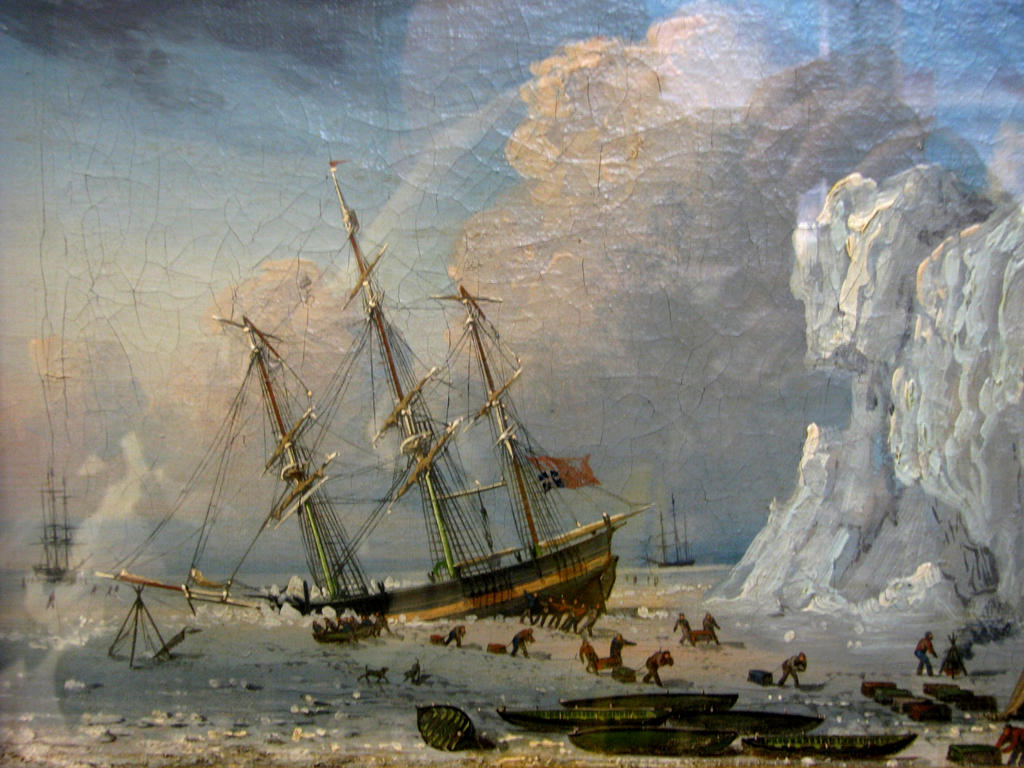
Building ordered by the British Admiralty on 8 May 1766, launched as a 16 guns sloop of 300 tons burthen an a length of 96.5 on 21 November 1767, converted into a fire ship in 1779, converted back into a sloop, sold on 1 September 1814, bought by William Gibson, shipbuilder at Hull, England in 1815, used as a whaler in the northern fishery, sold to Samuel and William Spyvee&Cooper in 1823, still active in the fishery until 1840 and then sold at Aberdeen, Scotland to be broken up in 1842.

Tuesday, 7 December 2021

Tuesday, 28 September 2021

The Greek and Turkish navies in the Levant according to the Nederlandsche Staatscourant dated 18 August 1825

Vienna, 5 August. The Greek fleet commanded by Sachtury and Miaulis consisting of 64 ships which was stationed since 11 June off the harbour of Suda to destroy or at least blockade the Turkish fleet disappeared since 21 June. The fleets of the Captain Pasha and Hussen-bey, the latter transported the Albanian troops to Morea, with a total strength of 80 ships and vessels departed 23 June without any problems. However they were discovered 18 (?) June off the island Cerigo by the Greek fleets which tried to become between the Reala-Bey and the transports in the middle. A 3-mast fire ship and a brig in front followed the galliot Tombasi, which were joined by 4 brigs and a corvette and finally the admirals’ ship of Miaulis. From some distanced followed the remaining ships of Miaulis’ squadron and behind these the squadron commanded by Sachturi. Around 16.00 o’clock Miaulis signalled to the Tombasi to let pass the fire ships which was followed by his own brig and another fire ship joined by a brig coming from the second line. The Reala-Bey approached with his corvettes and 10 frigates and the Greeks set their fire ships in fire as they were of no use while manoeuvring for the Turkish frigates which made a line for the transports. When the Algerian admirals’ ship made a manoeuvre the squadron of Sachturi left the battle scene without any further participation. Miaulis attacked with 6 brigs a Turkish brig that left his battle line. Fiercely fighting she escaped back to the battle line and 7.00 o’clock all Greek ships were leaving the scene. The Turkish fleets were 2 July off Navarino and anchored without any problems despite 23 Greek ships. What the reason was that the Greeks do nothing was unknown. The Captain Pasha left 7 July with 7 frigates, 10 corvettes, 12 brigs and some galliots Navarino towards Patras and Missolunghi where he arrived 10 July.

Monday, 20 September 2021

The Greek and the Turkish navies according to the Nederlandsche Staatscourant dated 26 August 1824

Trieste, 10 August. According to tidings of Syra dated 16 July was the Turkish fleet commanded by the Captain Pasha off Anti Ipsara defeated. Fire ships of Hydra used between Ipsara and the small island Anti Ipsara seemed to have caused large losses at Turkish side burning partly of their fleet and causing the remaining being in disorder to retreat to Mitylene.

Tuesday, 15 June 2021

The Egyptian and Greek navies in the Levant according to the Nederlandsche Staatscourant dated 4 February 1824

Trieste, 14 January. From Chio was 6 January written that an Egyptian frigate coming from Patras some days earlier Chip approached when she sighted 8 vessels flying Turkish colours which were signalling to her. Believing that it were allies she approached further and was without any fight captured by the Greeks. It was a beautiful vessel armed with 28 guns. Ships from Ipsara captured near the island Patmos a small Algerian corvette and brought it to Paros. At Ipsara were all ships placed under embargo. There were all ready 24 fire ships of a new design fitted out and more were to be built. It were light almost flat vessel and more suitable for their purpose as their predecessors. Transports were fitted out to transport troops. It seemed if the Greeks planned somewhere a landing.

Trieste, 16 January. After the Greek capture of Chio sailed the Greek fleet partly to Tenedos and partly to Smyrna.

Friday, 5 February 2021

Maltese and Tuscan navy being strengthened according to the Dutch newspaper Oprechte Haerlemsche courant dated 27 July 1684

An item dated Venice 8th July reported that since the departure of general Molino with 13 warships, a fire ship and 3 warships of Malta towards Corfu 4 galleys of the Duke of Tuscany and the 2 ships bought by this republic from the duke of Savoy had arrived. The arrival of Maltese galleys was also expected. In the arsenal were 4 warships and 12 galleys under construction of 8 could be already be armed.

Sunday, 15 November 2020

Irish steam merchant ship Irish Elm (1910) 1942-

National Maritime Museum of Ireland, Dublin, Ireland April 2019

Part of a painting of Kenneth King

Stopped by a German submarine was she allowed to continue when her first mate conformed that a famous strike in a Dun Laoghaire pub (Downeys) still was not finished.(1)

Note

1. Ex-Collingham, Duba renamed 1941 Leda and in 1942 Irish Elm owned by Irish Shipping Ltd., Dubline, Eire. Built by J.L. Thompson&Sons Ltd., Sunderland, England in January 1910. Call sign EINS. Gross tonnage 4.199 tons, under deck 3.830 tons, net tonnage 2.541 tons and as dimensions 351.7 x 51.0 x 25.7 feet.

Tuesday, 21 July 2020

Movements of the Austrian and French navies in the Mediterranean accorduing to the Dutch newspaper Nederlandsche Staatscourant dated 12 November 1821

Toulon, France, 29 October extracted from a private letter. The corvette la Bonite (1), which departed 1 October from Smirna arrived at Toulon. Rear-admiral Halgan was at Smirna with his vessels when the la Bonite left this port. After the feasts (Courban-Beyram) of 7-9 September problems between the Turkish and Greeks again raised and many Greeks were killed, mainly due to the fact that the commanding officer of the Janitsars returned back to Constantinople. The French ships repeatedly saved Greeks. If the French ships were prepared to protect the merchant ships of all European countries and to defend the honour of the French flag, the Austrian and British squadrons will do the same. Master Lientaud of Marseille was for instance saved by two Austrian warships from the anger of the Turkish commanding officer of the port of Siger (the Disdar). The Turkish officer thought he was dealing with a Russian ship ignoring the white flag. Her crew was threatened with the death and the ship to be plundered. Thanks to the Austrian commanding officer peace was restored, while the French representative at Metelin succeeded in proving she was a French and not a Russian ship. The same Austrian officer departed towards Smirna, leaving his frigate at Metelin to inform ear-admiral Halgan of the events. Almost at the same time arrived the brig l’Olivier (2) and the goelette l’Estafette (3) from Siger. The knight Begon de la Ronzière, commanding officer of the brig, argued with the Pasha dealing with the Disdar, and after complaining asking for mediation to prevent immediate strangling op the accused. The squadron didn’t have a moment rest. The vessels just stayed long enough at the anchorage to give the commanding officers the opportunity to consult the French representatives and to fulfil their orders with the Archipelago from one end to another and to the Syrian and Egyptian coasts if necessary. The frigate Jeanne d’Arc (4) sailed in September towards Alexandria. The squadron lost recently captain Serval, commanding officer of the la Bonite and 23 September died lieutenant Gay, commanding officer of the corvette la Coevrette (5), caused by a fever. The brig la Ruse (6)brought the French representative of Saint-Jean d’Acre no this town.

The Greek squadrons fitted out by Hydra, Ipsera and Spezia constantly threaten the Turkish ships using fire ships. Until now the Turkish were able to avoid the fire ships simple by manoeuvring, but the coming season will force to go to their anchorage. The number of Greek ‘warships’ at sea is estimated to be around 170. The vessels are for the larger part armed with small guns in worse condition. Another problem was that the Greeks didn’t accept a supreme command, just only their own commanding officers.

Sources
J. Vichot. Repertoire des navires de guerre français. Paris, 1967.
www. subscribe.com/marvap/classes.html

Notes
1. Corvette de charge La Bonité, launched at La Ciotat 1810 ex-Le Lybio renamed 1835, and last mentioned 1842.
2. Launched at Nantes 1810, ex- le Mameluck renamed 1814 and last mentioned 1824.
3. On stocks at Toulon 1809, launched 1810, lost at sea 1836.
4. On stocks at Brest 1819, launched 1820, last mentioned 1833 according to Vichot. According to www.subscribe.com laid down 17 February 1819, launched 5 August 1820, commissioned 9 January 1921 and stricken 26 October 1833, but still existing as training ship for sailors at Brest in 1850 but not longer mentioned on the Navy List in 1865. A 2nd class 58-gun frigate, designed by Simon, with as sister ship the Amazone.
5. The gabare la Chevrette launched at Toulon 1811 and wrecked 20 March 1830?
6. On stocks and laid down 1814 and last mentioned 1835.

Saturday, 11 July 2020

The Egyptian, Greek and Turkish navies in the Mediterranean according to the Nederlandsche Staatscourant dated 27 October 1824

Frankfurt, 21 October. Tidings from Smyrna dated 17 September supplied more details dealing with the sea battle between the Egyptian and Greek navies. In the waters of Stanchio fought the Greek navy with a division of the Egyptian and Turkish navies between 9 and 11 September. The Greek burned one Turkish frigate but lost 5 or 6 fire ships and one or two brigs. The Turkish made preparations to return towards Samos.

Augsburg, 20 October. The newspaper Allgemeine Zeitung published a news item dated Constantinople 25 September that according to two couriers not the Turkish but the Greeks lost the battle in the waters of Samos while losing 30 ships.

Trieste, 10 October. Tidings from several ships reported that after the Turkish and Egyptian fleets joined each other several fights found place in favour of the Greeks. So was the ship of the capudan pasha exploded and was the ship of the captain pasha set in fire and exploded after the two squadrons were separated again and which happened between Patmos and Samos.

Monday, 6 July 2020

Movements of the Turkish and Greek navies in the Mediterranean according to the Nederlandsche Staatscourant dated 11 August 1827

France, 7 August. Tidings from Alexandria dated 19 June mentioned the appearance of Lord Cochrane in the afternoon with 23 ships [Greek navy] off Alexandria. A Turkish brig cruising off the port, tried hasty to enter the harbour but was grounded. The first fireship failed in burning her, the second one however was more successfully.

In the morning of the 17th departed the Pasha with 13 ships the harbour to attack the Greeks, which were out of sight. After 2 or 3 hours the Pasha went back into the harbour and soon were appeared the Greeks however on a large distance. Some of the frigates and corvettes of the Pasha which were the 17th not ready for duty, were a day ready and the 18th departed the Pasha for the second time the harbour. The Greeks were again out of sight. The Pasha decided to return alone while ordering his fleet to persecute the Greeks as far as Rhodes.

Thursday, 2 July 2020

The Greek and the Turkish navies in the Levant according to the Nederlandsche Staatscourant dated 28 March 1822

Livorno, 12 March. A vessel coming from Idra reported that the Turkish fleet of 23 warships and 40 transports sailed towards sea. The Greek fleet departed some days later and consisted of 25 vessels of Ipsara, 40 of Hydra and 35 of Spezia with a large amount of fire ships and gun launches. All crews were full of courage. At Hydra was a conspiracy discovered according to which the wife of a certain Greek in Turkish naval service called Geniusto planned to set the ships collected at Hydra in fire, to spike the guns of coastal batteries and when the Turkish fleet entered the harbour take possession of the island. Thanks to the patriotic captain Saculovisch handed over the letter of the wife for her husband to the government. All traitors were taken prisoner and the Turkish fleet passed Hydra after waiting there for some time without acting.

Friday, 13 March 2020

Colombian, Greek, Russian and Turkish navies according to the Nederlandsche Staatscourant dated 11 November 1822

Livorno, 25 October. The Greeks at Livorno got tidings that there were fights at sea with the Turkish 20, 22 and 26 September without large success for the Greeks due to the contrary wind and attacks with fire ships not possible were. Although one fire ship did reach an Algerian frigate, there wasn’t a success to report because the fire extinguished. The admirals’ ship of the Greeks became unfortunately between two Turkish ships, which fired both one broadside, but fearing she was a fire ship sailed away. This is the main reason that the Turkish seldom attacked Greek ships.

London, 5 November. A messenger from the capital city of Colombia brought a proclamation signed by Sant Andero and a bill worth 40.000 British pounds which Mr. Zea could spend for the buying of 2 warships.

Petersburg, 18 October. The Russian admiralty now possessed 5 navy yards. The building of 60-120 gun ship lasted 2 years. When a ship was actually launched, received the ships builder from the emperor for each gun porthole 3 silver roubles on a plate. The first voyage of each ship was on the East Sea.

Thursday, 6 February 2020

The American, Egyptian, Greek, and Turkish navies in the Levant according to the Nederlandsche Staatscourant dated 3 October 1825

Augsburg, 27 September. According to tidings published in the newspaper Allgemeine Zeitung dated Constantinople 25 August were the rumours dealing with the American squadron finally cleared. The squadron stayed nearly a short time off Hydra and Paros but went straight on towards Smyrna where a negotiator was landed. His mission was to secure a unlimited admission to the Black Sea for American merchant shipping.

Frankfurt, 28 September. According to tidings from Trieste coming from an Austrian brig which arrived coming from Alexandria entered 10 August 3 Greek fire ships Alexandria while flying British and Austrian flags. Their intention was to set fire to the Egyptian fleet which lay there anchored. One fire ship was set in fire when she approached a frigate loaded with war stores in fire but which was rescued by the rainy wind. The two other fire ships fled when they saw that their attack was a failure. The first fire ship sailed directly towards the Egyptian line and the crews of these ships were forced to cut their cables to give her free passage and to prevent any damage. A French frigate which was also in the frigate was forced to shoot the fire ship in the ground. The crew of the fire ships was forced to swim for their lives. Immediately went Behy-aga on board of a Turkish frigate and left with two other warships the harbour to pursue the fire ships. When he saw in the distance a large Greek fleet he returned to the harbour. It’s believed that the Egyptian himself left with one of his frigates and some other ships to find the Greeks. Although he sailed towards Cyprus he couldn’t find them and while returning to Constantinople he found there the Turkish fleet from Constantinople.

According to the latest tidings published in the newspaper of Missolunghi and Austrian newspapers tried the Greek fleet to blockaded the Gulf of Corinthe.

Thursday, 19 December 2019

The Brazilian navy according to the Nederlandsche Staatscourant dated 23 June 1823

London. 17 June. Letters from Rio Janeiro dated 17 April reported the arrival of lord Cochrane there and taking over the command of the Brazilian fleet. He departed 1 April towards Bahia with a 78-gun ship of the line, 1 frigate, 2 corvettes and a brig. While Bahia received reinforcements Cochrane just intended to blockade the city waiting with an attack until another frigate and 2 fire ships reinforced him.

Friday, 6 December 2019

Greek fire ships according to the Nederlandsche Staatscourant dated 29 July 1825

Frankfurt, 24 July. German newspapers republished tidings from the newspaper Spectateur Oriental of Smyrna. One item dated Syra 4 June referred to what happened with the crew of a Turkish corvette, which pursued by 8 Greek ships stranded. Even the bodies were not respected by the Greeks. The Captain Pasha was still in the waters of Negroponte doing nothing. The burning of one of his frigates by Greek fire ships while she was helpless when she lost her masts due to a wind gust, the stranded corvette and the capture of 6 each independently sailing transports including 5 Austrians caused many rumours. Al the money the Greeks at Morea received coming form the last loan was spent. Their last hope was the fire ships for which all efforts were done to multiply and improve these. The merchants of Syra presented their government 2 merchant ships bought for 50.000 piasters and tot be fitted out as fire ship. The government bought lately 4 ships for 25.000-30.000 piasters each. In the past the government all ready bought a large amount of foreign ships at Ipsara to be fitted out as fire ships. Whatever the costs were every opportunity offered to buy a ship this was done and the ships were send to Hydra where they were within 2 days fitted out as a fire ship. The government also ordered the building of fire ships of a new model at the islands Coulori and Poro. In stead of using iron nails or bolts were just pins of wood used. This model was long, small and an extra ordinary fast sailer. Two were all ready completed and one was to commanded by the famous Canaris. The fire ships were all fitted out with a boat at the stern to allow her crew to escape when the moment was there. When the Turkish ship was ‘entered’ a large pot containing a burning material was thrown into the fire ships, which immediately set fire caused by the fuel on board, and the fire was intended to go forwards to the bow. As soon as the fire was set the sailors went on board of the boat escaping while rowing to a so-called scampavia with around 40 palicaris on board which was waiting for them on a certain distance.

Friday, 29 November 2019

The Greek and Turkish navies in the Levant according to the Nederlandsche Staatscourant dated 7 August 1823

Trieste, 21 July. From Ipsara arrived tidings dated 27 May that all preparations were made for defending the island against the expected Turkish fleet. In the port were 15 war vessels (including 3 3-masters) and 10 brigs waiting, each armed with 10 guns and well armed and fitted out. Another 15 ships and 4 fire ships were expected making the division of Hydra complete. The inhabitants of Ipsara fitted out 18 brigs and 3 fire ships and a same number came from Spezzia. Cassia promised 15 armed ships. Altogether were 30 fire ships available. The Greek flotillas continuously watched the movements of the Turkish fleet of the Captain Pasha. The presence of this fleet in the Archipelago would prevent Greek landings at the Asian coast. It was suspected that the Turkish expedition was mainly destined towards Morea.

Friday, 22 November 2019

Dutch fireship Appelka 1672

Of the admirality Amsterdam, mentioned in 1672 with an armament of 4 guns.