Translate

Showing posts with label Block ships. Show all posts

Thursday, 6 August 2026

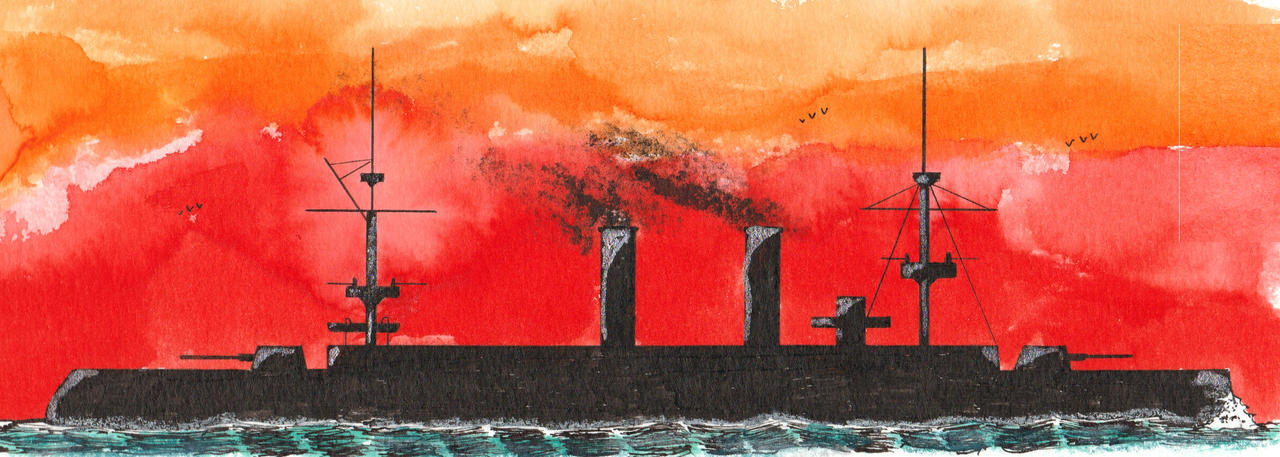
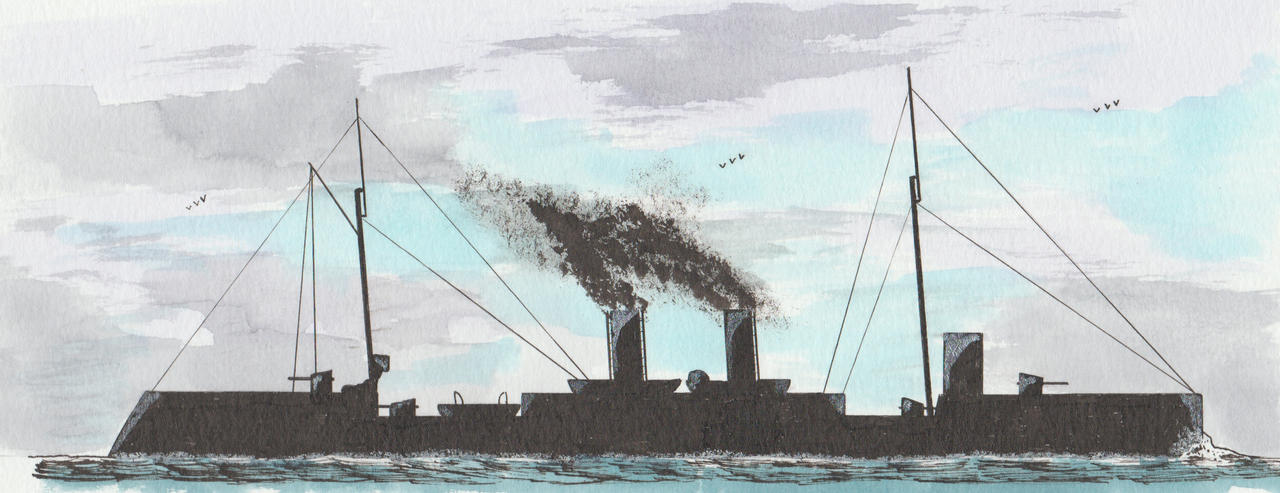
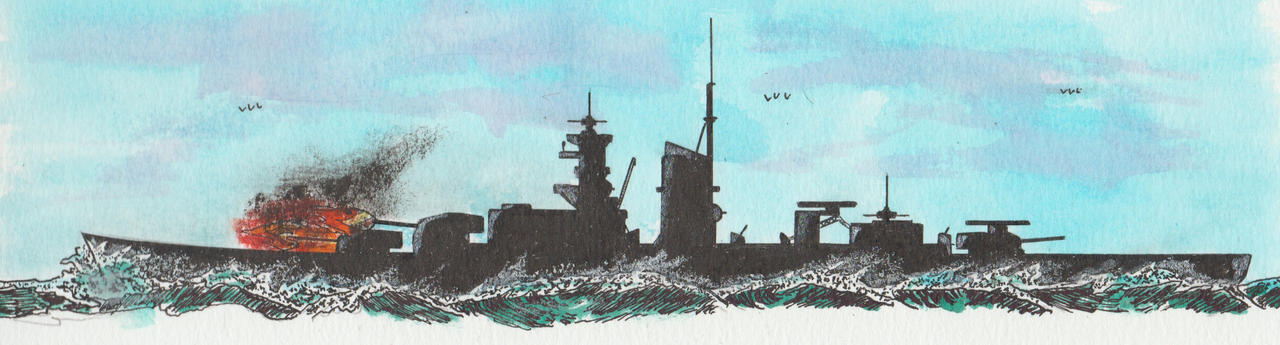
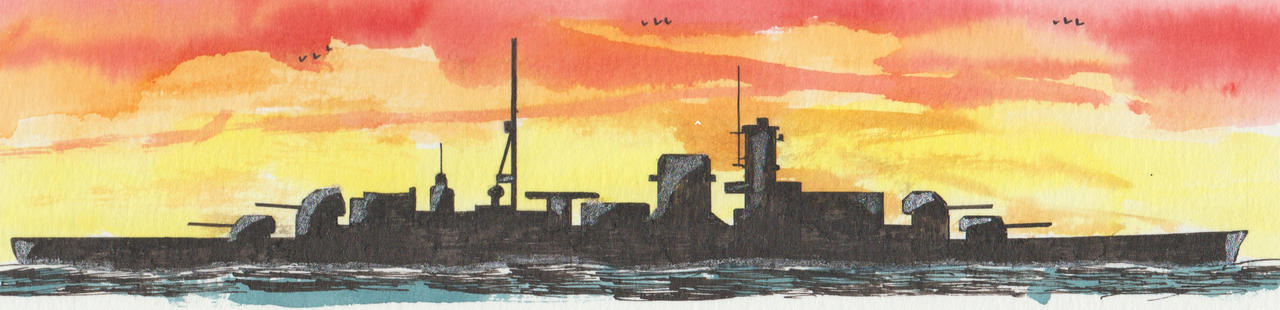
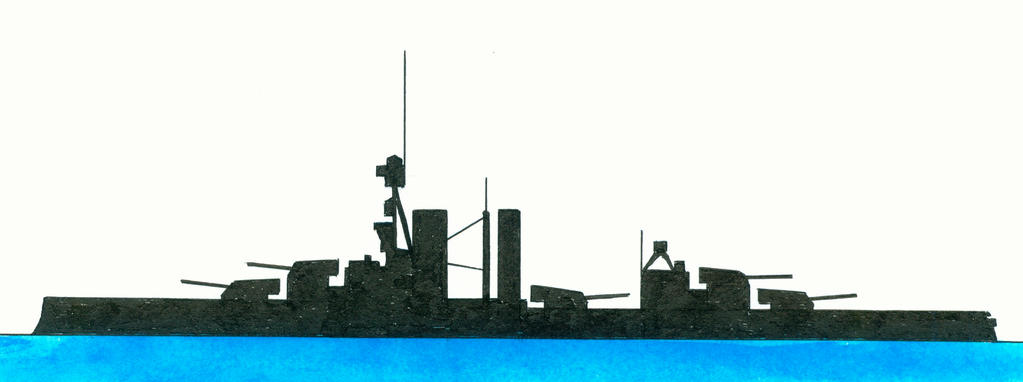
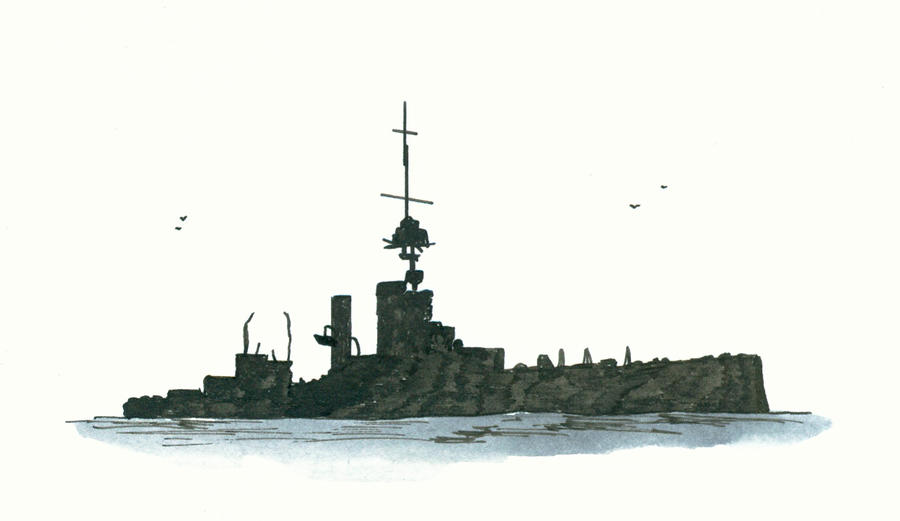
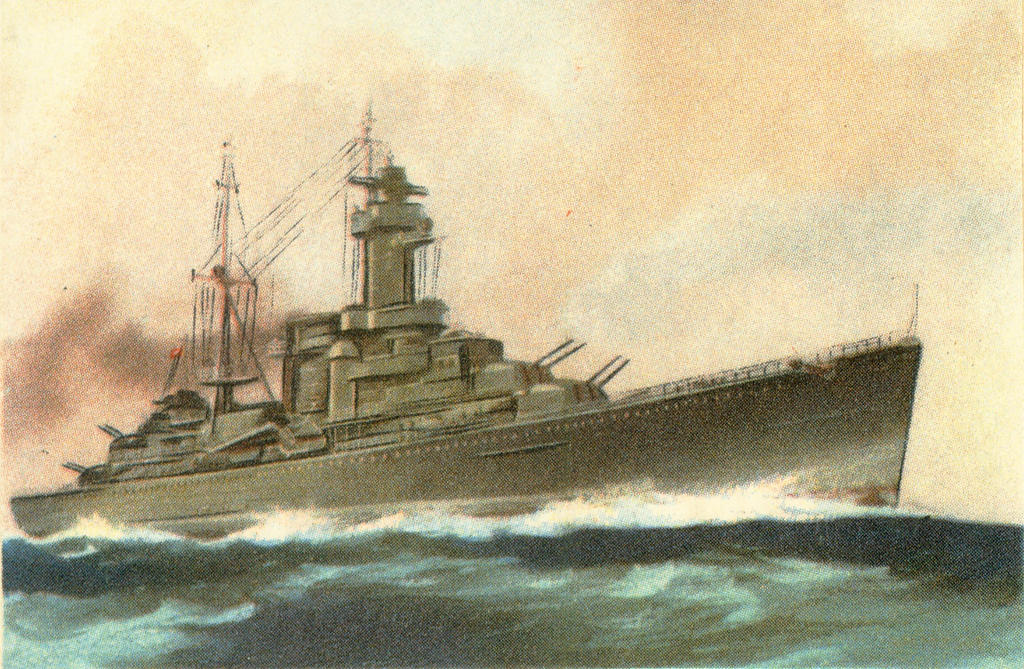
Chinese protected cruiser Hai-Chi or Hai-Ki 1896-1937

Hai Yung-class. ©Warshipsresearch.blogspot.com

Hai Chi-class. ©Warshipsresearch.blogspot.com

Chao-Ho class. ©Warshipsresearch.blogspot.com

Part of Hai Chi or Hai Qi-class preceded by Hai Yung-class succeeded by Chao Ho-class. Laid down by Armstrong Whitworth, United Kingdom on 11 November 1896, launched on 24 January 1898, completed on 10 May 1899 and scuttled at Jiangyin as block ship on 11 August 1937

German blockade runner Kulmerland outward bound in 1943

Transport Number -. Name ship Kurmerland. Company Hamburg-Amerika Linie, Hamburg, Germany. Date departure (further prescribed) 15 September 1943. Harbour which was left Bordeaux, France. Destination Far East. Hit by a bomb and sunk on 23 September 1943, salvaged and under repair.(1)

Note

1. Launched by Deutsche Werft, Hamburg, Germany with yard number 109 on 1 August 1928, completed on 16 March 1929, scuttled as block ship in the Loire by retreating German forces in 1945 salvaged in 1945 and broken up in 1950.

Source

Bundesarchiv RM 7/1419 Ausarbeitung "Wirtschaftsfahrten im Zweiten Weltkrieg" (Zusammenstellung der Fahrten von Blockadebrechern nach Ostasien, 1941-1945). 

Friday, 31 July 2026

Chinese destroyer (ex-Fei Yuen, Fei Hung and Yen Yung) Tung An or Tong Ngan 1912-1939 and Tung Chun 1939-after 1944

Chang Feng-class©Warshipsresearch.blogspot.com

Part of the Chang Feng-class consisting of the Yu Chang (ex-Chang Feng), Chien Kang and Tung An preceded by Hai Lung-class succeeded by Ching Po (delivered to Italy) and Lung Tuan (delivered to Austro-Hungarian navy). Launched by Schichau-Werke, Elbing, Germany on 5 July 1912, commissioned on 7 November 1912, scuttled as blockship on 18 December 1937, salvaged by the Japanese in December 1939, renamed Tung Chun and handed over to the ROC-Nanjing Navy, abandoned when personnel of the ROC-Nanjing Navy was involved in an uprising and what became of her is unknown. 

Saturday, 18 October 2025

Harbours at Gdynia, Poland hardly open for shipping in August 1945

Gneisenau. ©Warshipsresearch.blogspot.com

An item reported that the wreck of the German battleship Gneisena (1) still blocked the entrance to the merchant port at Gdynia, Poland. The naval harbour was open via a small entrance. All cranes and warehouses were either destroyed or heavily damaged. The main breakwater was almost completely destroyed by the German forces and what remained of the rubble above water was mined just like all the wharves. A minesweeping operation was yet to start.(2)

Notes

1. Scharnhorst-class preceded by planned L20e α-class and realized Bayern-class preceded by Bismarck-class, laid down by Deutsche Werke, Kiel, Germany on 6 May 1935, launched on 8 December 1936, commissioned on 21 May 1938, decommissioned on 1 July 1942, scuttled as block ship on 23 March 1945 and broken up in 1951.

2. Germany invaded Poland in September 1939 and occupied it until 1945 transferring Gdynia into a naval base.

Source

The National Archives, Kew Gardens, England CAB-129-1-20. Weekly Résumé (No. 311) of the naval, military and air situation from 0700 9th August to 0700 16th August 1945. 

Thursday, 24 July 2025

British battleship HMS Hood 1889-1914

Trafalgar-class. ©Warshipsresearch.blogspot.com

Hood. ©Warshipsresearch.blogspot.comCenturion-class. 

Royal Sovereign-class. ©Warshipsresearch.blogspot.com

Centurion-class. ©Warshipsresearch.blogspot.com

Part of Royal Sovereign-class preceded by Trafalgar-class succeeded by Centurion-class. Designed by Director of Naval Construction Sir William Henry White 2 February 1845 Plymouth, England-27 February 1913 London, England). In fact an enlarged and modified Admiral-class design. Ordered in 1889. Laid down by Chatham Dockyard On 12 August 1889, launched on 30 July 1891, commissioned on 1 June 1893, decommissioned in March 1911 and sunk as a blockship in Portland Harbour on 4 November 1914. 

Saturday, 29 March 2025

The positions of the German capital ships according to the U.S. Joint Intelligence Committee. Daily summary dated 21 January 1942


Scharnhorst. ©Warshipsresearch.blogspot.com

German battleship Gneisenau. Warshipsresearch.blogspot.com

German heavy cruiser Admiral Hipper. ©Warshipsresearch.blogspot.com

An item referred to a reliable source reporting the German battleship Tirpitz (1) lying on 19 January at Trondheim, Norway. The German battle cruiser Scharnhorst (2) and heavy cruiser Prinz Eugen (3) were on 20 January lying at their usual berths at Brest. France. Where the German battle cruiser Gneisenau (4) was, could not be reported due the atmospheric conditions.

Notes

1. Laid down by Kriegsmarinewerft Wilhelmshaven, Germany on 2 November 1936, launched on 1 April 1939, commissioned on 25 February 1941 and sunk by the Royal Air Force on 12 November 1944 at Tromsø, Norway, with her wreck broken up between 1948-1957. Of the Bismarck-class as answer on the French Richelieu-class battleships preceded by Scharnhorst-class succeeded by planned H-class.

2. Scharnhorst-class preceded by planned L20e a-class and realized Bayern-class succeeded by Bismarch-class, laid down at the Kriegsmarinewerft Wilhemshaven, Germany on 15 June 1935, launched on 3 October 1936, commissioned on 7 January 1939 and sunk while in battle off the North Cape on 26 December 1943 by the British battleship HMS Duke of York with just 36 survivors of a crew of 1,968 men. Her sister ship was the Gneisenau. The Scharnhorst was to replace the old dreadnought Elsass and so she became first know in official documents and newspaper as the Ersatz Elsass and in the contracts as “D”.

3. Of the Admiral Hipper-class heavy cruisers, preceded by Deutschland-class. Laid down by Germaniawerft, Kiel on 23 April 1936, launched on 22 August 1938, commissioned on 1 August 1940, decommissioned on 7 May 1945, surrendered on 8 May 1945, handed over to the USA and sunk on 22 December 1946 during nuclear tests.

4. Scharnhorst-class preceded by planned L20e α-class and realized Bayern-class preceded by Bismarck-class, laid down by Deutsche Werke, Kiel, Germany on 6 May 1935, launched on 8 December 1936, commissioned on 21 May 1938, decommissioned on 1 July 1942, scuttled as block ship on 23 March 1945 and broken up in 1951.

Source

Map Room Papers (Roosevelt Administration), 1942 - 1945. U.S. Joint Intelligence Committee. Daily summary No. 42 dated 21 January 1942 

Thursday, 27 February 2025

British battleship HMS Centurion collided with small merchant ship Osprey according to the Dutch newspaper Het nieuws van den dag voor Nederlandsch-Indië dated 13 December 1912

King George V-class. ©Warshipsresearch.blogspot.com

as target. ©Warshipsresearch.blogspot.com

An item reported that the steamship Osprey which collided with the British battleship HMS Centurion arrived at Portland-bill.(1) The Bataviaasch nieuwsblad dated 12 December reported that the HMS Centurion was executing her trials and that her bow was damaged with the Osprey sunk.

Note

1. Part of the King George V-class consisting of the King George V (ex-Royal George), Audacious, Centurion and Ajax, preceded by the Orion-class and succeeded by the Iron Duke-class. Laid down at the navy yard Portsmouth, England on 16 January 1911, launched in 18 November 1911, completed in May 1913, converted into a target ship in 1924, ideas to used her as block ship in the harbour of Tripoli, Libya declined in April 1941, converted with a false superstructure into a decoy for the HMS Anson in April 1941-1942 and finally sunk as a breakwater off Normandy, France in June 1944. 

Thursday, 13 February 2025

Chinese protected cruiser Hai Chen 1896-1937

Hai Yung. ©Warshipsresearch.blogspot.com

Part of Hai Yung-class preceded by Tung Chi-class succeeded by Hai Qi-class. Laid down by AG Vulcan Stettin, Stettin, Germany in 1896, launched on 12 Feburary 1898, completed on 21 September 1898 and scuttled as a blockship at Jiangyin, China on 11 August 1937

Sunday, 2 February 2025

Chinese protected cruiser Hai Yung 1896-1937

Hai Yung. ©Warshipsresearch.blogspot.com

Part of Hai Yung-class preceded by Tung Chi-class succeeded by Hai Qi-class. Laid down by AG Vulcan Stettin, Stettin, Germany in 1896, launched on 15 September 1897, completed on 27 July 1898 and scuttled as a blockship at Jiangyin, China on 11 August 1937

Tuesday, 14 January 2025

The armament of the Dutch merchant ship Parkhaven in the Second World War

According to the list and supplements 1-2 on 13 September 1945 BDZ No. 673sent by the office of armament the Royal Netherlands Navy located at 41 East 42nd Street, New York 17, USA. There were no complete records available, so there were several sources used to compile the list. Sometimes the kind of guns gave indirect information regarding the origin such as 4”/BL and 12 pounder guns were British mostly supplied in the United Kingdom, Canada or Curacao. The 4.7” guns were old Japanese guns placed on some vessels in the begin of the war at Singapore and some 4” guns in the same period at Surabaya, Dutch East Indies. The trade in which the ship was used gave also an indication were the guns were supplied, for example involved in the Pacific trade means supplied at the West Coast.

Armed with 3-2cm guns supplied at New York on 11 August 1942

Armed with 1-2cm gun supplied at New York on 11 February 1943.

Armed with 1-10,16cm/4” LA gun.

Launched by William Dobson&Co. Ltd., Newcastle on Tyne, England with yard number 215 in 1920, handed over to manager Firma Gebr. van Uden and owner N.V. Maatschappij s.s. ‘Parkhaven’, both at Rotterdam, Netherlands in June 1920, handed over to the British Ministry of War Transport in June 1944, scuttled as block ship off Quistreham, France as part of a never completed artificial harbour on 10 July 1944, salvaged in July 1945 and broken up.

Source

Archieven van hoofd handelsbescherming en diverse handelsbeschermingsofficieren 1941-1946 inv.no. 53 (Nationaal Archief, The Hague, Netherlands.

Sunday, 12 January 2025

Chinese 2nd class cruiser Hai Tschen visited Dutch East Indies in 1911

Hai Yung. ©Warshipsresearch.blogspot.com

The Jaarboek van de Koninklijke Nederlandsche Zeemacht 1910-1911 reported that the Chinese 2nd class cruiser Hai Tschen visited Belawan-Deli between 28-30 March, Tandjong Priok between 8-16 April and Semarang between 17-25 April 1911.

The Dutch newspaper De Sumatra Post dated 28 March 1911 reported her arrival at Belawan of the Chinese cruiser Hai Shen coming from Penang. Commanding officer captain Yang. She measured 2,950 tons comparable with the Dutch coastal defence ship HMS Tromp. Several Chinese authorities like the major Chinese and captain Chinese immediately went on board.The Het nieuws van den dag voor Nederlandsch-Indië dated 8 april April reported her arrival at Tandjong Priok at 10.30 o’clock. The Chinese council was not aware of celebrations and the visit was not officially announced.

Note

1. The Hai Shen. Part of Hai Yung-class protected cruisers preceded by Tung Chi-class succeeded by Hai Qi-class, laid down by AG Vulcan, Stettin, Germany in 1896, launched on 12 February 1898, completed on 21 September 1898 and scuttled as a block ship at Jiangyin on 11 August 1937, displacement 2,680 (standard)-2,950 (full load) tons, dimensions 99.97 (over all) x 12.42 x 5.79 metres, armament 3x1-15cm/6” cal 70 guns, 8x1-10.5cm/4” cal 40 guns, 6x1-5cm/2” cal 40 guns and 3x1-35.6cm/14” torpedo tubes. 

Sunday, 14 July 2024

French warship Gueydon camouflaged as a German Hipper-class cruiser according to the U.S. Joint Intelligence Committee. Daily summary dated 21 December 1941

Admiral Hipper. 
Drawing of G.J. Frans Naerebout, earlier published in Op de lange deining
German heavy cruiser Admiral Hipper. ©Warshipsresearch.blogspot.com

Dupetit-Thouars of the Gueydon-class. Warshipsresearch.blogstpot.com

An item referred to ALUSNA, London, England 19 December reporting that the French warship Gueydon camouflaged as a German Hipper-class cruiser was being towed in southeast direction off/northsoutheast De Poulmic in the harbour of Brest, France. The J.I.C. commented that a so-called warship was built in 1897, measured 8,189 tons, in 1926 converted into a fire control ship and condemned in 1935. The Germans seemed to be used it as a decoy ship. [is was the Prinz Eugen](1)

Note

1. Part of the Gueydon-class armoured cruisers consisting of the Gueydon, Dupetit-Thouars and Montcalm, preceded by Jeanne d'Arc succeeded by Dupleix-class, designed by naval architect Emile Bertin (23 March 1840 Nancy, France-22 October 1924 La Glacerie, Manche, France), launched by Arsenal de Toulon, France on 20 September 1899, commissioned on 1 September 1903 and sunk in an air attack by the British RAF on 13 and 14 August 1944 to prevent her being used as a blockship. Her hull together with 2 aged French sloops was indeed used by the Germans as a deco-dummy for the German Admiral Hipper-class heavy cruiser Prinz Eugen. The latter was lying docked in Brest. Her displacement was 9,548 tonnes.

Source

Map Room Papers (Roosevelt Administration), 1942 - 1945. U.S. Joint Intelligence Committee. Daily summary No. 11 dated 21 December 1941.

Tuesday, 25 June 2024

German battle cruiser Gneisenau probably disabled for long period according to the U.S. Joint Intelligence Committee. Daily summary dated 5 August 1942

German battleship Gneisenau. Warshipsresearch.blogspot.com

An item reported that the German battle cruiser Gneisenau lying at Gdynia, Poland seemed for a long period out of service.(1)

Note

1. Of Scharnhorst-class preceded by planned L20e α-class and realized Bayern-class preceded by Bismarck-class, laid down by Deutsche Werke, Kiel, Germany on 6 May 1935, launched on 8 December 1936, commissioned on 21 May 1938, decommissioned on 1 July 1942, scuttled as block ship on 23 March 1945 and broken up in 1951.

Source

Map Room Papers (Roosevelt Administration), 1942 - 1945. U.S. Joint Intelligence Committee. Daily summary No. 238 dated 5 August 1942.

Friday, 23 June 2023

British battleship HMS Centurion bound homeward according to the Weekly Intelligence Summary No. 19 for the week ending19 March 1921

King George V-class

Centurion as target ship


An item reported that the British battleship HMS Centurion (1) would return on relief by the British battleship HMS Iron Duke.(2)

Notes

1. Part of the King George V-class consisting of the King George V (ex-Royal George), Audacious, Centurion and Ajax, preceded by the Orion-class and succeeded by the Iron Duke-class. Laid down at the navy yard Portsmouth, England on 16 January 1911, launched in 18 November 1911, completed in May 1913, converted into a target ship in 1924, ideas to used her as block ship in the harbour of Tripoli, Libya declined in April 1941, converted with a false superstructure into a decoy for the HMS Anson in April 1941-1942 and finally sunk as a breakwater off Normandy in June 1944.

2. Of the Iron Duke-class consisting of the Iron Duke, Marlborough, Benbow and Emperor of India. Preceded by the King George V-class and succeeded by the Queen Elizabeth-class. Laid down at the Portsmouth Dockyard on 12 January 1912, launched on 12 October 1912, completed in March 1914, removed from active service becoming a training ship in 1929, depot ship at Scapa Flow since 1939, damaged during an German air attack on 17 October 1939, after repairs beached still in service, sold to the Metal Industries be broken up in 1946. Resold in September 1948 brought towards Glasgow, Scotland and arrived there on 30 November 1948.

Source

The National Archives, Kew Gardens, England CAB-24-121-62

Wednesday, 21 June 2023

British battleship HMS Ajax bound for Constantinople, Turkey according to the Weekly Intelligence Summary No. 19 for the week ending19 March 1921

King George V-class


HMS Centurion

An item reported that the British battleship HMS Ajax (1) would leave for Constantinople, Turkey after the British battleship HMS Iron Duke (2) returned at Malta.

Notes

1. Part of the King George V-class consisting of the King George V (ex-Royal George), Audacious, Centurion and Ajax, preceded by the Orion-class and succeeded by the Iron Duke-class. Laid down by Scotts Shipbuilding&Engineering, Greenock on 27 February 1911, launched on 21 March 1912, completed in May 1913, commissioned on 31 October 1913, decommissioned in April 1924, out of service in October and sold to be broken up on 10 December 1926.

2. Of the Iron Duke-class consisting of the Iron Duke, Marlborough, Benbow and Emperor of India. Preceded by the King George V-class and succeeded by the Queen Elizabeth-class. Laid down at the Portsmouth Dockyard on 12 January 1912, launched on 12 October 1912, completed in March 1914, removed from active service becoming a training ship in 1929, depot ship at Scapa Flow since 1939, damaged during an German air attack on 17 October 1939, after repairs beached still in service, sold to the Metal Industries be broken up in 1946. Resold in September 1948 brought towards Glasgow, Scotland and arrived there on 30 November 1948.

Source

The National Archives, Kew Gardens, England CAB-24-121-62 


Saturday, 11 June 2022

British battleships HMS Ajax and Centurion bound for Turkey according to the Weekly Intelligence Summary No. 2 dated 15 January 1921

HMS Centurion
A selection of Ships' Badges of His Majesty's Royal Navies. Gutta Percha&Rubber Limited, 1942


King George V-class

An item reported that the British battleships HMS Ajax (1) and Centurion (2) would leave Malta on 31 January bound for Smyrna [Izmir, Turkey] and Constantinople, Turkey. The Ajax was to return to Malta on 18 February.

Notes

1. Part of the King George V-class consisting of the King George V (ex-Royal George), Audacious, Centurion and Ajax, preceded by the Orion-class and succeeded by the Iron Duke-class. Ordered under the 1910 construction program. Laid down by Scotts Shipbuilding and Engineering Company, Greenock, Scotland on 27 February 1911, launched on 21 March 1912, completed on 31 October 1913, decommissioned in 1924, part of the reserve at Devonport and sold to the Alloa Shipbreaking Company be broken up om 10 December 1926 which started at Rosyth, Scotland from 14 December 1926 on.

2. Part of the King George V-class consisting of the King George V (ex-Royal George), Audacious, Centurion and Ajax, preceded by the Orion-class and succeeded by the Iron Duke-class. Laid down at the navy yard Portsmouth, England on 16 January 1911, launched in 18 November 1911, completed in May 1913, converted into a target ship in 1924, ideas to used her as block ship in the harbour of Tripoli, Libya declined in April 1941, converted with a false superstructure into a decoy for the HMS Anson in April 1941-1942 and finally sunk as a breakwater off Normandy in June 1944.

Source

The National Archives, Kew Gardens, England CAB/24/118/69

Tuesday, 18 May 2021

Dutch screw steam passenger ship Jan Pieterszoon Coen 1913-1940

Building ordered on 27 December 1912, laid down with yard number 130 by Nederlandsche Scheepsbouw Mij. N.V., Amsterdam, Netherlands for account of the Stoomvaart Maatschappij Nederland on 14 October 1913, launched and christened on 30 September 1914, completed and handed over on 17 June 1915, maiden voyage started on 11 September 1915, scuttled in the port of IJmuiden, Netherlands on 14 May 1940, 1940 partly broken up , May-June 1945 with explosives further destroyed and the remains in 1968 removed. Gross register tonnage 11.140 tons, under deck 6.352 tons,deadweight 6.950 tons, displacement 15.600 tons and as dimensions 153.44 (registered)-159.26 (over all) x 18.4 x 11.89 (molded to shelter deck) x 8.05 metres or 503.5-522.6 x 60.4 x 39.0 x 26.5 feet. Speed 15 knots.

Monday, 15 March 2021

Cargo ship G 60l in German service lost in the Black Sea in 1943

In a letter dated 15 December 1943 reported the Marine-Gruppenkommando Süd the Bevollmächtigten für die deutsche Seeschiffahrt im Swarzen Meer at Bucharest, Romania that the cargo ship G 60l was sunk as block ship on 28 September 1943 was she could not more be repaired.

Source

High Command of the Kriegsmarine (OKM). Case 204. Website

Wednesday, 10 February 2021

German merchant ships Ilsenstein and Königstein in 1936


Vlissingen, Netherlands 1936

In 1936 broke a strike out in the harbour of Antwerp, Belgium. The result was an increase of the activities in the harbours of Vlissingen, Netherlands. The photo shows the Buitenhaven and the German merchant ships Ilsenstein (1) and Königstein (2) of the Arnold Bernstein Line/Red Star Line GmbH, Hamburg, Germany. On the foreground is the bunker vessel visible. The Königstein arrived in the morning of 18 June coming from New York, USA with stores and 284 passengers, the latter taking an extraordinary train towards Antwerp, Belgium and the Ilsenstein arrived on 20 June coming from Hamburg, for embarking passengers and further more stores with as destination New York.

Notes

1. Built by Workman Clark Co., Belfast, Ireland in 1904 as Matua, 1929 bought from Shaw, Savill &Albion Co. In 1929, renamed Ilsenstein, sold in 1939 to be broken up at Blyth ,however used as an blockship at Scapa Flow, Orkney Islands, Scotland and in 1951 were her remains broken up.

2. Built by Swan Hunter&Wigham Richardson Ltd., Newcastle, England for Shaw, Savill &Albion Co.’s New Zealand service in 1906, sold to the Arnold Bernstein Line in 1928, used as auto carrier until rebuilt into a passenger ship in 1931, sold to be broken up by Van Heyghen Frèin 1939, purchased by the Belgian company Compagnie Maritime Belge (CMB) property and renamed Gandia and sunk by a German submarine on 22 January 1942.

Tuesday, 6 November 2018

Dutch steam ferry R. van Hasselt 1915-broken up

Railway station Enkhuizen, Netherlands 2 August 2008

Purchased by the Royal Netherlands Navy as block ship. Scuttled on 14 May 1940 in the entrance Buiten Haven to prevent German forces to capture Enkhuizen, Netherlands. Ferry between Enkhuizen-Stavoren. Dimensions 67,06 x 9,88 x 2,32 metres. Built by J.&K. Smit, Kinderdijk, Netherlands for account of the Nederlandsche Spoorwegen NV., Utrecht, Netherlands. ENI 31110262.