Translate

Showing posts with label Storeships. Show all posts

Thursday, 7 August 2025

Dutch transport Nieuw Rotterdam 1672-1674

Of the Admiralty of the Maze, first mentioned 1672, stricken in1 674, 30 guns, victualler.

Source

Warshipsresearch.blogspot.com

Saturday, 4 May 2024

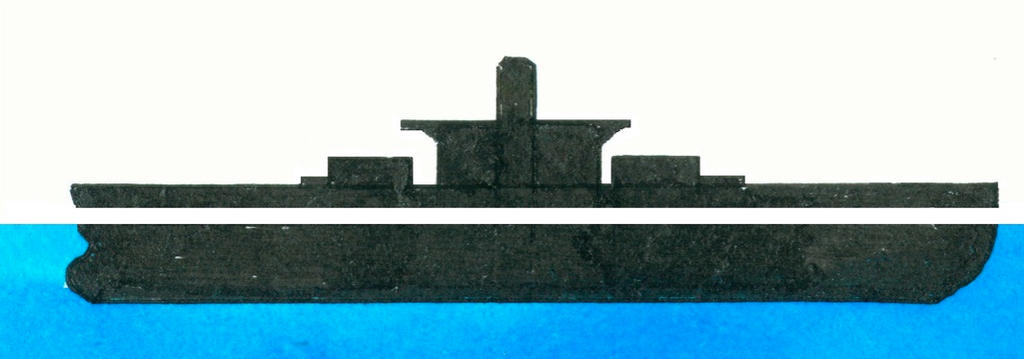
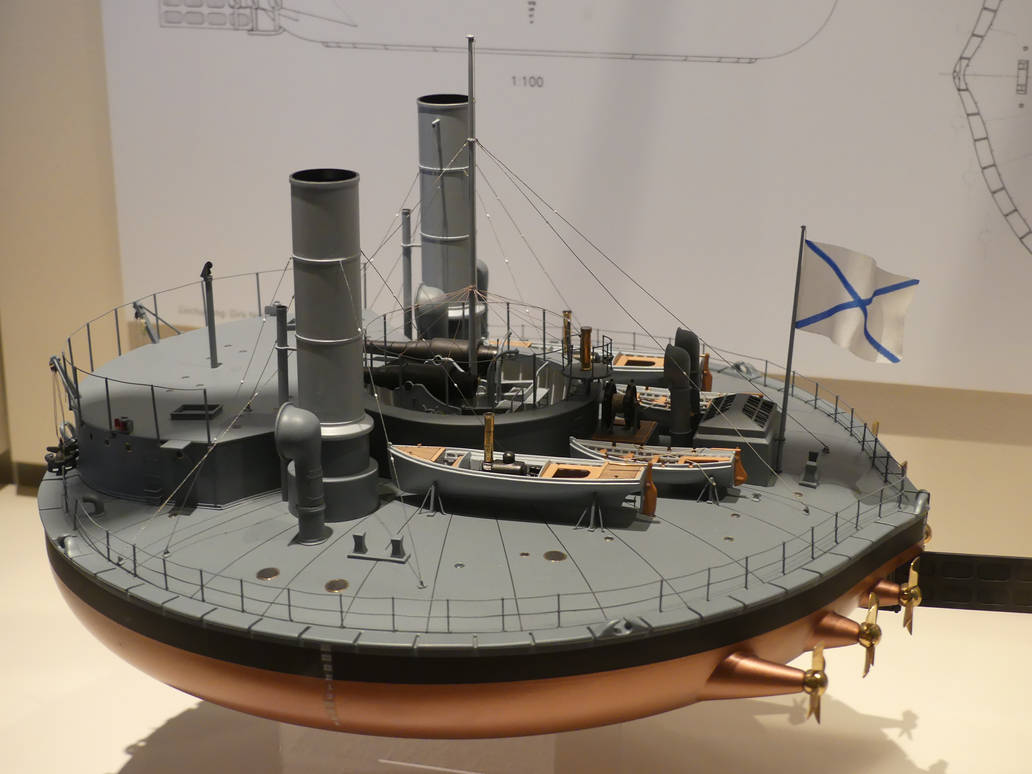
Russian monitor Novgorod 1871-1911

Turret ship Petr Veliky(y). Warshipsresearch.blogspot.com

Vitse-admiral Popov

Novgorod. Maritime Museum Hamburg, Germany. Model D. Nottelmann.

Preceded by Petr Veliky(y), succeeded by Vitse-admiral Popov, laid down by New Admiralty Shipyard, St. Petersburg, Russia on 29 December 1871, launched on 2 June 1873, completed in 1874, coast-defence ironclad since 13 February 1892, decommissioned on 3 July 1903, became a storeship and sold to be broken up December in 1911. 
Tuesday, 23 April 2024

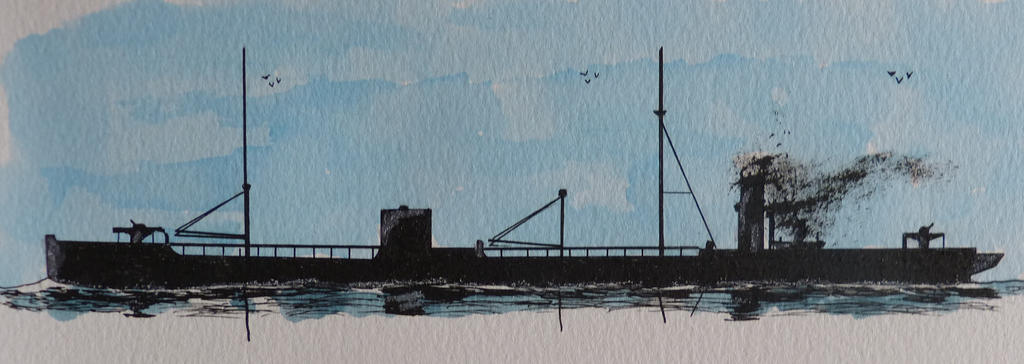
Japanese cargo ship (ex-Chichibu Maru 1923-1938) Titibu Maru 1938-1942

Call sign JNVA. Laid down by Yokohama Dock Co., Yokohama, Japan 0n 12 February 1923, launched on 23 May 923, completed on 20 August 1923, active in the fishery, in service of the navy 3 July-31 December 1937, requisitioned by the navy end July 1938, returned to owners first half of 1939, again requisitioned by the navy in second half 1939, returned to owners in 1940, rerequisitioned by the navy on 18 September 1940, classified as auxiliary storeship on 15 October 1941, torpedoed by the American submarine USS Gar (SS-206), sunk on 14 March 1942 and stricken on 1 April 1942. Gross tonnage 1,521 tons, under deck 1,159 tons, net tonnage 824 tons, deadweight 1,682 tons and as dimensions 250.0 x 37.0 x 19.0 x 9 (light)-17 (loaded) feet. Reciprocating propulsion, single screw, 126 nhp, coal bunker capacity 350 tons, fuel oil capacity 289 tons, range 11,000 nautical miles/10 knots and speed 10 (normal cruising)-11 (maximum) knots. Refrigerating ship. 


Sunday, 21 April 2024

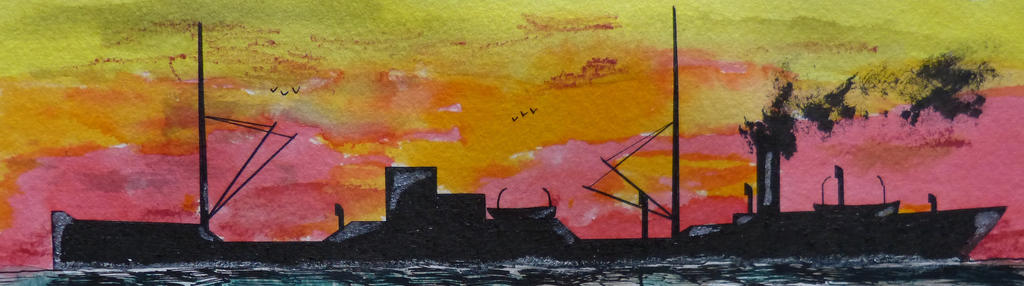
Japanese cargo ship Manko Maru 1922-1943

Call sign JHZA. Laid down by Yokohama Dock Co., Yokohama, Japan on 1 November 1922, launched on 10 Februay 1923, completed on 14 March 1923, active in the fishery, requisitioned by the army as transport AA No. 755 on 12 December 1941, returned to owners on 31 July 1942, registered and chartered by the navy as storeship on 5 November 1942 and sunk in an USAAF air attack on Simpson Harbor, Rabual, New Guinea on 2 Noveber 1943. Gross tonnage 1,503 tons, under deck 1,159 tons, net tonnage 802 tons, deadweight 1,682 tons and as dimensions 250.0 x 37.0 x 19.0 x 9 (light)-17 (loaded) feet. Reciprocating propulsion, single screw, 126 nhp, coal bunker capacity 350 tons, fuel oil capacity 289 tons, range 11,000 nautical miles/10 knots and speed 10 (normal cruising)-11 (maximum) knots. Refrigerating ship.

Thursday, 11 April 2024

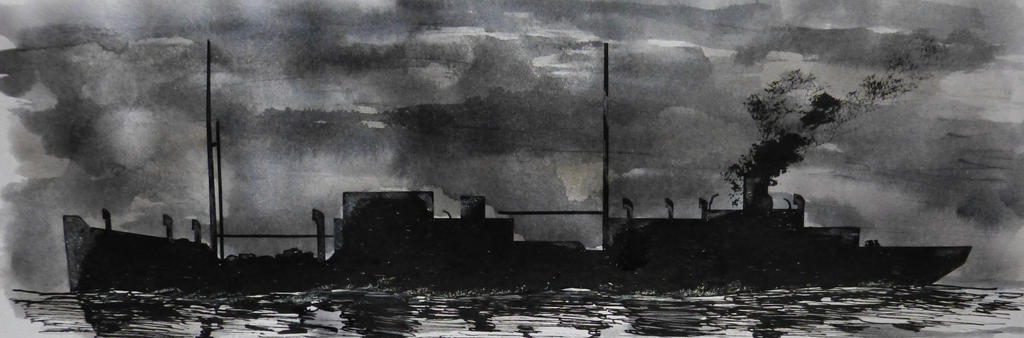
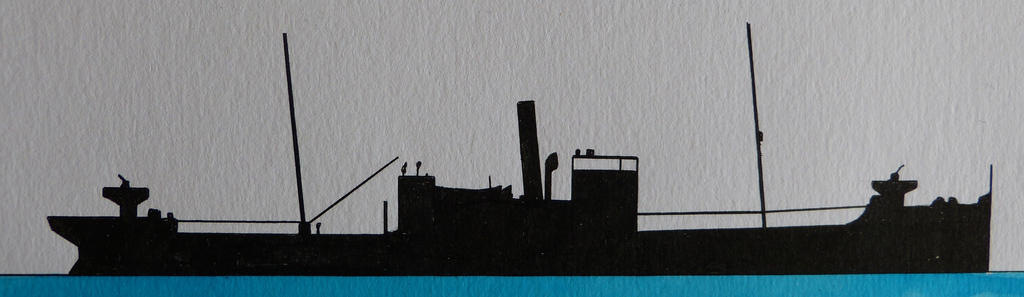
Japanese cargo ship Haruna Maru 1922-1944

Warshipsresearch.blogspot.com

Call sign JNWA. Laid down by Yokohama Dock Co., Yokohama, Japan on 16 December 1922, launched on 7 May 1923, completed on 20 June 1923, requsitioned by the navy as general transport in September 1938, returned to owners in April 1939, rerequisitioned by the navy in October 1939, returned to owners in April 1940, rerequistioned by the navy in September 1940, returned to owners in 1941, rerequistioned by the navy as general transport on 19 September 1941, clasified as special transport/stores ship on 15 October 1941, sunk after a collision around 68 nautical miles southwest of Palau bound for Balikpapan, Borneo, Dutch East Indies on 16 January 1944 and stricken on 10 March 1944. Active in the interbellum in the fishery. Gross tonnage 1,549 tons, under deck 1,200 tons, net tonnage 845 tons, deadweight 1,682 tons and as dimensions 250.0 x 37.0 x 19.0 x 9 (light)-17 (loaded) feet. Reciprocating propulsion, single screw, 126 nhp, coal bunker capacity 350 tons, fuel oil capacity 289 tons, range 11,000 nautical miles/10 knots and speed 10 (normal cruising)-11 (maximum) knots. Refrigerating ship.

British expedition ship HMS (ex-Bloodhound 1872-1874) Discovery 1874-1902 (Bloodhound 1902-1917)

Built as the sealing ship Bloodhound by Alexander Stephen&Sons, Panmure shipyard, Dundee, Scotland with yard number 53 as the screw steam barque Bloodhound to be used as a sealer off Newfoundland on 2 Augusts1872, registered at St. Johns on 12 March 1873, purchased for the British Arctic Expedition on 5 December 1874, commissioned 13/15 April 1875, storeship since 1880, sold in February 1902, retaining original name and purpose and wrecked in 1917.

Source

Francis Elgar. The Royal Navy 1872-1880 in a series of illustrations. Lithographed in colours. From original drawings by W.F. Mitchell, esquire. Portsmouth, December 1880. 
Saturday, 2 March 2024

Japanese store ships on 1 January 1937

colliers Muroto, Nojima

Notoro or Shiretoko-class navy oilers

Completed (3):Muroto, Nojima and Shiretoko.

Building none.

Authorized none.

Source

National Archives USA. Record Group 38: Records of the Office of the Chief of Naval Operations. Series: Secret Naval Attaches Reports. Report of the Naval Attache Tokyo dated 21 January 1937 No. 12 subject Japanese Navy Vessels Built, Building or Authorized. Information of 1 January. M975-002.
Saturday, 28 January 2023

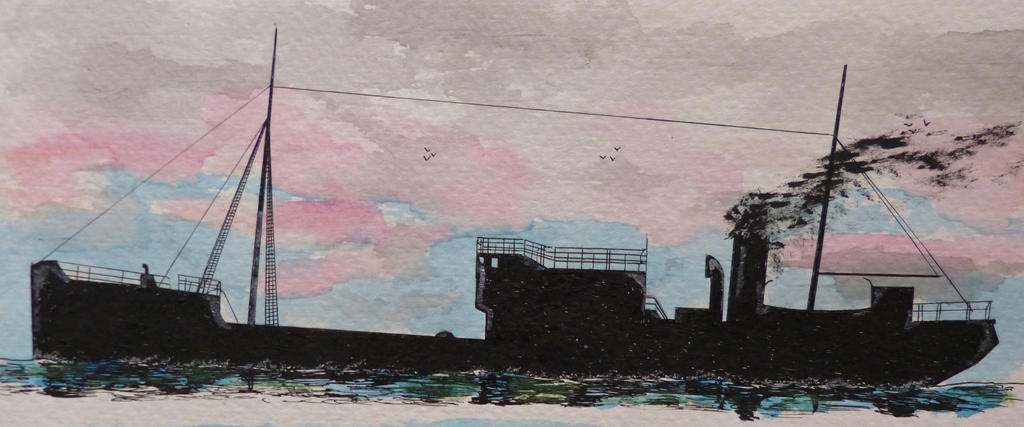
Japanese deep-sea screw steam trawler Kitami Maru 1930-1942


Call sign JHHC. Gross tonnage 361-397 tons, under deck 280 tons, net tonnage 153-198 tons and as dimensions 145.0 x 24.0 x 14.0 metres. Laid down by Mitsubsihi Zohensko K.K., Hiroshima, Japan on 9 September 1930, launched on 8 November 1930, completed on 15 December 1930, owned by Nippon Suisan K.K., Tobata. Japan since 7 May 1937, requisitioned by the Imperial Japanese Navy between 10 April-28 September 1938 and between 19 October 1938-1 January 1939, purchased by the Yokosuka Naval District on 26 May 1940, became an auxiliary store ship and sunk by the American submarine USS Tambor (SS-98) 50 miles south east of Kavieng, New Ireland [Papua New Guinea] on 17 April 1942. 

Monday, 21 November 2022

Japanese deep-sea trawler Azuchi Maru 1930-1943

Call sign JHEC. Gross tonnage 398 tons, under deck 280 tons, net tonnage 198 tons and as dimensions 145.0 x 24.0 x 14.0 metres. Laid down by Mitsubsihi Zohensko K.K., Hiroshima, Japan for Kyodo Gyogyo K.K. on 28 June 1930, launched on 22 September 1930, since 1937 owned by Nippon Suisan K.K., Tobata. Japan, requisitioned by the Japanese Imperial Navy on 29 June 1939, became a store ship, disappeared after leaving Kusai [Kosrae earlier known as Kusaie or Strong’s Island, Micronesia] on 25 September 1943 bound for Nauru [Micronesia] without leaving any trace and stricken from the Navy List on 1 February 1944.

Saturday, 22 October 2022

Allied supplying ships arriving at Malta according to the U.S. Joint Intelligence Committee. Daily summary dated 16 August 1942

An item reported that on 14 and 15 August 2 supplying ships with a total tonnage of 22,500 tons arrived at Malta. Two other supply ships of a previous convoy arrived at Gibraltar coming from Malta, which harbour she presumably departed while the new convoy was approaching.

Source

Map Room Papers (Roosevelt Administration), 1942 - 1945. U.S. Joint Intelligence Committee. Daily summary No. 249 dated 16 August 1942.

Wednesday, 7 September 2022

Japanese deep-sea trawler Mamiya Maru 1930-

Call sign JHHC. Gross tonnage 398 tons, under deck 280 tons, net tonnage 197 tons and as dimensions 145.0 x 24.0 x 14.0 metres. Laid down by Mitsubsihi Zohensko K.K., Hiroshima, Japan on 10 April 1930, launched on 28 June 1930, completed on 23 August 1930, since 1937 owned by Nippon Suisan K.K., Tobata. Japan, converted for military purposes at the Kawasaki K.K. Shipyard  including a gun and 2 machine guns, requisitioned by the Imperial Japanese Navy on 6 November 1937, became an auxiliary minesweeper, returned to owners in 1938, again requisitioned by the navy on 4 April 1940, became a storeship, sunk by American aircraft carrier based planes near Iwo Jima on 15 June 1944 and stricken on 10 September 1944.

Tuesday, 24 August 2021

The naval establishment at Cherbourg, France according to Andrew Valentine Kirwan in 1840

Book in published letters to the editor of The Times describing his visits tot the navy bases in France in 1840. At that moments the relations between France and Great-Britain were apparently somewhat troubled and in France preparations were made to equip the fleet. See for more descriptions of the dockyards at Cherbourg other notes on this weblog.(1) In his letter dated 15 September 1840 wrote Kirwan wrote
p. 30: “You are aware that the designation ports militaires is applicable only to five French ports - namely, Cherbourg, Brest, L’Orient, Rochefort, and Toulon; and that the words are equivalent to our arsenals and dockyards, as the towns may be taken to be the French counterparts of Portsmouth, Plymouth, Sheerness, and Woolwich. My first effort on arriving here was, of
p. 31: course, to see the docks and arsenal; but during the last eight days all strangers are prohibited from entering, unless a formal demand in writing is made by the consul of the nation to which the individual applicant belongs. Nor is this rigour extended alone to strangers. Native Frenchmen are not permitted to enter, unless they come provided with a recommendation signed by two inhabitants of the town. I will not trouble you with the difficulties I had in obtaining an entree; suffice it to say, I gained my object, in acceding to the condition that I should be accompanied by a gendarme - a condition, by the way, which several Englishmen have, more punctiliously than praiseworthily, rejected during the past week. You are aware that the works on a grand scale commenced at this port under the reign of Louis XVI., to whom, as I in a former letter remarked, the French navy are so much indebted, and which were continued under the Imperial Government, were in a great degree suspended during the Restoration. The Revolution of 1830, however, gave an impetus to the French navy, which the prudent and sagacious monarch who now “reigns and governs”, was not slow to second.(2) I had not been here since the year 1827, when the Henry IV (3), of 110 guns, was placed on the stocks, and the progress which has been made in the last ten or twelve years asto-
p. 32: nished me not a little. Cherbourg is now a town of first-rate importance as a place de guerre and port militaire. With an open channel at the embouchure of the Divelle, it incloses within the circle of its vast bay Cape Levi on the east, and Cape La Hogue on the west. The two ports, the one for the military, the other for the mercantile, marine, are entirely separated from each other. They are defended by an intrenched camp, composed of eight redoubts. The government dock and arsenal, opened in 1813, is situated to the north-west of the town, and is defended by a bastion and fosse, partially dry, dug out of a rock, called the Galet. Here, even at low water, vessels find twenty-five feet water, and thirty sail of the line may ride in safety. In 1833, several cales de construction, or slips or stocks for first-rate men-of-war, were finished, and in one of these now lies the Friedland (4), three-decker, of 120 guns; two others are occupied by two frigates, one the Calypso (5), of 84, and the other of 64 guns, while in the fourth lies a gabarre, or store-ship. All these vessels will be ready for sea, and in commission, by the 15th of October. It is therefore no marvel that the marine artillery has been augmented from 1367 to 2014 men, giving an increase of 647 men; or that the effective force of the marine is raised from 10,963 to 15,809,
p. 33: giving an increase of 4846 men. Nor is this all; for I believe a plan is now in contemplation, and may be possibly in execution before the end of the week, to extend what is called the “Inscription Maritime”, not only to the mariniers des rivieres, or watermen, but to the marins caboteurs, or those engaged in the coasting trade. By another ordinance of the 31st of August, fifty new companies are ordered to be formed for ships of war, which are to be thus distributed: - twelve at Cherbourg, nine at Brest, six at L’Orient, five at Rochefort, and eighteen at Toulon. In consequence of this augmentation, the number of permanent men-of-war’s companies, which was altogether 120, giving an effective of 12,360 men, will henceforth be 170, presenting an effective of 20,400 men. It is also quite true, as you have been, perhaps, by your Paris correspondent already informed, that the naval contingent of the class of 1839 are ordered to join their corps from this very 15th of September on which I write. When I tell you that the rigging of one of the frigates which I saw yesterday (the Calypso) is finished, and the rigging of the Friedland, of 120 guns, has actually commenced? you, as well as your readers, will judge whether these are mere demonstrations, “full of sound and fury, and signifying nothing”; or whether they are but the prelude to that most dreadful of all
p. 34: calamities, which we all deprecate, and which sane men will do their utmost to prevent. Meantime is it not right to inquire what the Elliot and Minto clique are doing about our navy? Is
“The flag that’s braved a thousand years
The battle and the breeze”
to he trailed in the dust by hungry Scotch adventurers ? It will not do to say the French fleet is a mere “pasteboard fleet”, as was truly but unwisely said of the Russian, for the ships which I have seen are as well built, and will be nearly, I will not say as well, manoeuvred as though they were manned by those “hearts of oak” formerly the pride and glory of England, now the stepchildren of Admiralty officials.”
p. 37: “To return, however, to the description of the Port Militaire. The dockyard is surrounded, as in our country, with magazines, storehouses, and buildings, all dedicated to the service of the state. The basin, as I before stated, is capable of containing thirty sail of the line, and vessels can come in and go out either at ebb or flow, there being sufficient water to keep them perpetually afloat. Nor is the commercial port, frequented by coasting vessels, less admirable, for it offers almost in every respect similar advantages. The roadstead affords capital anchorage in the offing. It is protected by three forts - the Fort Royal, that of the Island of Pelée, and Fort Artois, and is enclosed by a dike of 1933 toises in length, and at 2000 toises from the mouth of the harbour. On this part of the subject I shall have to enter more at length in subsequent letters; but to-day the imperious necessity of making you acquainted with the cales de construction, or stocks, and the ateliers ces forges, des machines fonderie et corderie, or forges, machine workshops, founderies, and ropewalks, compels me to abandon all other
p. 38: subjects. The cales are four in number, and each of 117 metres in length; their height 26 metres. The building of each cost 520,000f. In addition to the vessels preparing for commission, of which I made mention in a former part of this letter, there are the Diomed (6), of 90 guns; the Ajax (7), of 100; and the Henry IV, on which the carpenters for the moment have ceased to work, in order to prepare with greater promptitude the Friedland, the Calypso, and the smaller frigate, already rigged. There is also a stock for repairing, careening, and thorough careening, which in nautical terms means heaving the ship's keel out, as parliament heeling or boot-topping means half careening. The equivalent French term for this Attic of the ocean is cale de redoub et de carenage. This latter doek is of the form of a ship, and vessels come into it at full tide. It is then shut by a bateau porte, or water-wicket, and pumped dry by a steam pumping-machine, when the redoub, or in Jack-Tar phrase the repair, and speaking of the ship's timbers and planks, commences. This dock is 74 metres long, 28 in breadth, and is 8 metres deep. It was commenced in 1811, and finished in 1813, and cost 571,100 francs. The forges and founderies of Cherbourg are the children of the July revolution. They were
p. 39: commenced in 1831, and finished in 1832 and 1833; and here it was, as well as in the ropewalk, that I traced, certainly with surprise though without dread, the astonishing progress which this persevering, ingenious, industrious, excitable, and most valiant people, have made since 1830. If the English nation needed any stimulus to exertion, here it lies in the fiery bosom of these forges. If they are to maintain, as they ever have maintained, and as I pray to God they ever may maintain, the dominion of the seas - if they are to “ride on the whirlwind” and to “direct the storm” of the ocean - if they are to protect the weak and to chastise the strong—if they are to guard their own firesides, their “lares el penates”, as they have hitherto guarded them, against foreign foes - if they are to maintain, as they ought, the “right of search”, for which they fought and bled bravely and profusely - if they are to sustain, as they ought and must, the mare clausum of the great and learned John Selden, they will take heed in time, and not "sleep the slumber of the sluggard." Above all things, they will cast away from them those men who sacrifice the “wooden walls of old England” to miserable savings of cheese-parings and candle-ends; for this is a time and season when the French marine strides on rapidly - ay, a pas de geant - and if we
p. 40: stand still, most assuredly we are undone. Here in these ateliers are 12 double fires, and what is called “un grand feu avec martinet”, which signifies an immense hammer and anvil, moved by steam machinery, as perfect and as regular as any thing one could see in the manufactories of Leeds, Birmingham, or Manchester. Here I must break off for the present; but permit me in conclusion to say, that the ropewalk for the manufactory of cables exceeds in length and in the number of workmen any thing I have seen in England. I should say, at a rough guess there were at this moment close upon 500 men and boys employed in this, the greater part at from 40 sous to 3 francs per day.”

Sources
Hans Busk. The Navies of the world. London, 1859. Digitized by Google.
Andrew Valentine Kirwan. The ports, arsenal and dockyards of France. London, 1841.
Jacques Vichot. Répertoire des navires de guerre français. Paris, 1967.

Notes
1. “The French naval base Cherbourg” and the “The French dockyard of Cherbourg as described in the Army and Navy Chronicle of 13 September 1838” on this web log.
2. “The age of the French sailing ships of the line still on stocks in 1846” on this web log.
3. l’Henri IV, laid down at Cherbourg, France 1829, launched 1848, wrecked 14 November 1854 off Eupatoria.
4. Le Friedland, on stocks at Cherbourg,France 1 May 1812, launched 4 April 1840, ex-l’Inflexible renamed 1821, ex-le Duc de Bordeaux renamed 1830, renamed as pontoon le Colosse 1865, last mentioned 1879. Homeport Toulon. Finished out as screw steamship of the line 1st class, wood-built, armed with 114 guns, 600 hp with engines built at Marseilles, France.
5. La Calypso, frigate, on stocks at Toulon, France 1820, launched 1823, ex-la Cérès renamed 1823, ex-la Marie-Thérèse renamed 1830, last mentioned 1885.
6. The Le Diomède, laid down at Cherbourg, France 2 March 1832, launched 30 March 1854, renamed le Tilsitt 1839, last mentioned 1887. Finished as s screw steamship of the line 3rd class, wood-built, armed with 80 guns, 500 hp with engines made at Brest, fitted out March 1859.
7. The l’Ajax, laid down at Cherbourg, France 17 August1832, launched September1852, renamed l’Austerlitz 1839, 1876 training ship for boys, last mentioned 1895. Finished as screw steamship of the line 2nd class, wood-built, armed with 90 guns, 500 hp with engines from Indret.

Thursday, 20 May 2021

Japanese screw steam refrigerated cargo ship (ex-Choko Maru 1923-1938) Tyoko Maru 1938-1944

Laid down by Mitsubushi Zosen Kaisha Ltd., Nagasaki, Japan on 15 September 1923, launched on 2 December as Choko Maru, requisitioned by the navy om 29 August 1941, registered as an auxiliary store ship, converted for military purposes, sunk by the American submarine USS Tang (SS-306) around 97 miles west north west of Saipan on 25 February 1944 and removed from the Navy list on 31 March 1944. Call sign JOSA. Oil fuelled reciprocating steam machinery, 126 nhp, fuel oil bunker capacity 473 tons and a range of 9.120 nautical miles with a speed of 9,5 knots. Speed 9,5 (cruising)-11 (maximum). Gross register tonnage 1.794 tons, under deck 1.187 tons, net tonnage 943 tons, deadweight 1.633 tons and as dimensions 250.0 x 39.0 x 19.0 x 8.9 (light)-16 (loaded) feet. In 1939 owned by Nichiro Gyogyo K.K., Shinagawa, Japan.

Saturday, 15 February 2020

Dutch transport Berkhout 1707

Of the admiralty Noorderkwartier, fluyt used as victualler, hired in 1707.

Thursday, 2 January 2020

The Spanish squadron commanded by don Caldaeno Balder being fitted out at Ferrol 3 September 1804

Thanks to the by T.C. Hansard published The Parliamentary Debates from the year 1803 with the discussed papers, it's possible to get an impression on what's going in the Spanish navy at that moment an ally of the French empire and an enemy of the British empire. An published extract of a letter, dated 3 September 1804, written by rear admiral Cochrane while being off Ferrol to admiral Cornwallis gives the names and guns of the Spanish ships which were fitted out at Ferrol. The squadron, commanded by don Caerano Balder, existed of the ships of the line Neptune, 74 guns, San Augustin, 74 guns, Monarcha, 74 guns, frigates Vengeance, 36 guns, Fruesbo, 40 guns, storeship Brugula, corvette Urguiso, 24 guns and a anonymous brig, all ships provisioned for 3 months.

Source
T.C. Hansard. The Parliamentary Debates from the year 1803 to the present time. vol III comprising the period from the fifteenth day of January to the twelfth day of March 1805. London, 1812. Parliamentary Debates, January 24, 1805, Second Additonal Papers relative to the war with Spain, p. 122-123. Digitized by Google.com.

Friday, 25 October 2019

British 3rd rate HMS Minden arrived at Madras, British Indies according to the Dutch newspaper Java Government Gazette dated 1 July 1815

An item reported the arrival on 12 February of the British ship HMS Minden captain D.H. Mackay at Madras, British Indies.(1)

Note
1. 3rd rate ship of the line, ordered on 9 July 1801, laid down at the Bombay Dockyard, British Indies on28 March 1807, building commenced on 10 December 1807, Silver Nail Ceremony on 1 January 1808, launched on 19 June 1910, hospital ship at Hong Kong in 1842-1846, store ship at Hong Kong since 1846 and finally sold to be broken up on 1861. Armament consisted of 74 guns.

Tuesday, 30 July 2019

Dutch store ship Keurvorst van Brandenburg 1689-1697

Of the admiralty Noorderkwartier, mentioned 1689-1697 with a crew numbering 20-30 men. In October 1688 was a fireship mentioned as part of the squadron of C. Evertsen the younger and in 1689 a storeship victualler hired in 1689 and between 1690-1697 again a fireship with this name. In 1696 part of the fleet of lieutenant admiral Van Almonde, Two different ships with the same name or one ship used for several purposes?

Saturday, 6 April 2019

Dutch transport Magazijn 1696

Of the admiralty Amsterdam, mentioned as storeship/victualler part of fleet lieutenant admiral Van Almonde in 1696. 

Sunday, 23 December 2018

Dutch transport Wapen van Haemstede 1665

Of the admiralty Zealand, victualler, fluyt ship, hired in 1665, measured 100 last. 

Wednesday, 2 May 2018

Dutch transport Jonge Willem 1693

Of the admiralty Zeeland, victualler, mentioned 1693.