Translate

Showing posts with label Escorteurs. Show all posts

Wednesday, 24 June 2026

British and French warships ordered to open at once fire on unsufficiently escorted submarines according to the Kriegsnachrichten of the Chef des Admiralstabes der Marine dated Berlin 16 August 1917

An item referred to a message of the German navy attache at Madrid, Spain dated 13 August reporting that a Spanish captain was informed by a French navy officer that all British and French warships were ordered to fire immediately at each submarine which was not escorted by at least two escort vessels.

Source

Bundesarchiv RM-40-622

Saturday, 30 May 2026

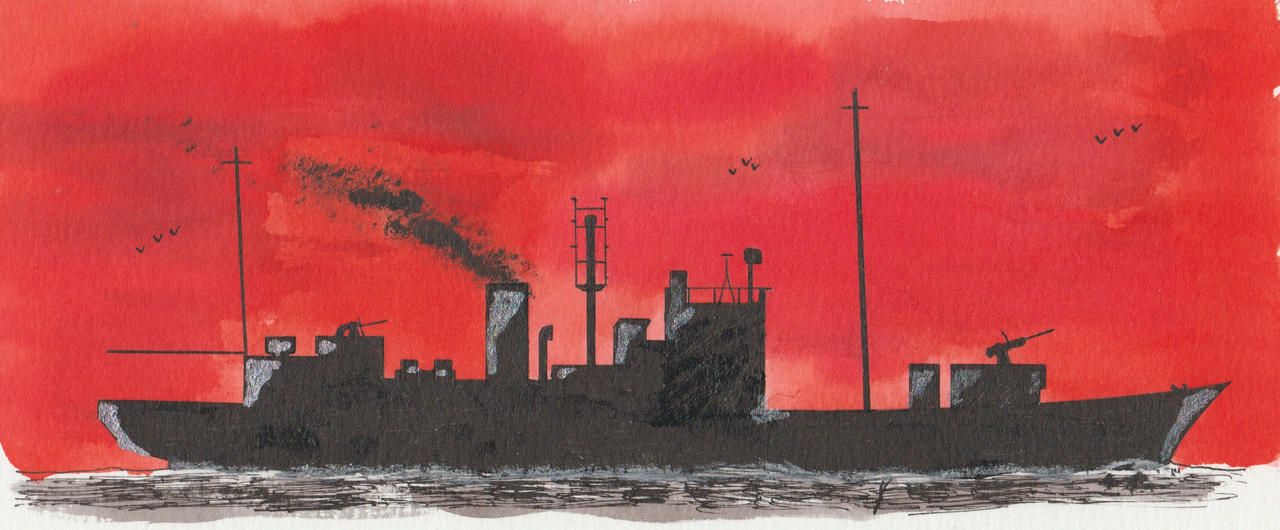
Japanese auxiliary patrol boat No. 135 1945-1948 and MS 21 1948-

©Warshipsresearch.blogspot.com

Type B ordered under the 1943-1944 Programme to be part of the coastal forces. Of the 280 ordered were just 56 laid down and even a less number finally completed when the Second World War ended. To serve as convoy escorts were the boats also fitted out with minesweeping gears. Based on a traditional wood built fishing boat. With a displacement of 238 tons and as dimensions 93.5 (between perpendiculars)-105. 3/4 (over all) x 20.2 x 7.75 feet. Geared diesel propulsion with 400bhp via one shaft and speed 9 knots. Crew numbered 26 men. Armament consisted of 2/4x1-2.5cm guns and 8-12 depth charges. Built by Shikoku. Completed on 23 May 1945, handed over to the Japan Maritime Safety Agency and renamed MS 21 on 1 May 1948. 

Thursday, 8 January 2026

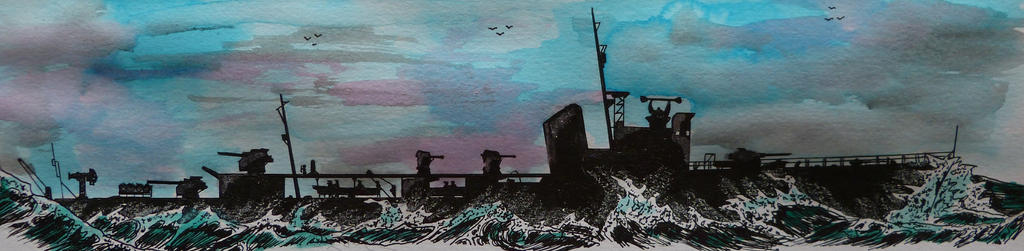
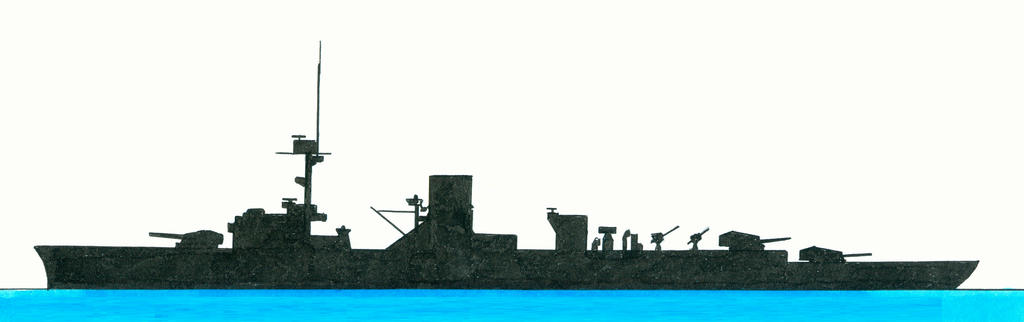
French fast escort design E 43 No. 2 dated January-February 1944

©Warshipsresearch.blogspot.com

Displacement 2,585 (light)-3,080 (trial-3,575 (light) tons. Length 122 metres. Number of funnels 2. Armament guns 6-13cm guns (2x2 aft, 1x2 fore).

Wednesday, 28 September 2022

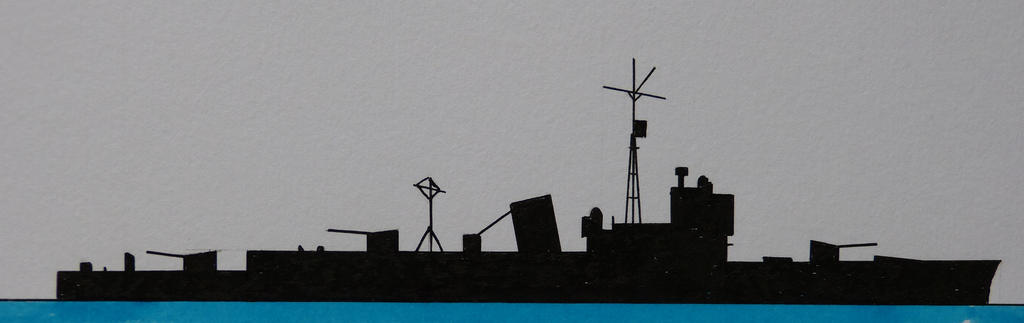
Japanese escort destroyer Hatsuume 1944-1947 and Taiwanese destroyer ROCS Hsin Yang 1947-1960’s

Modified Japanese Matsu-class Tachibana sub-classescort destroyer Tsuta, preceded by the Otori-class torpedo boats and the Akizuki-class destroyers. Pennant 15 since 1955 82. Building ordered in 1944, laid down by Maizuru Naval Arsenal on 8 December 1944, launched on 25 April 1945, completed on 18 June 1945, stricken on 5 October 1945, handed over to Taiwan on 6 July 1947, stricken in December 1961 and broken up in the 1960’s. Dimensions 302.5 (between perpendiculars)-321.5 (waterline)-328 (over all) x 30 2/3 x 11 feet. Armament 2-4.7” guns, 3-2.5” guns, 2-4cm anti aircraft guns and 4-2cm anti aircraft guns. Turbine propulsion with 2 Kampon boilers supplying 19,000 ship allowing a speed of 27.8 knots. Crew numbered 210 men. Displacement 1,580 tons and as dimensions 302.5 (between perpendiculars)-321.5 (waterline)-328 (over all) x 30 2/3 x 11 feet.

Thursday, 19 May 2022

Several enemy submarines rammed and sunk by Allied escort vessels according to the U.S. Joint Intelligence Committee. Daily summary dated 29 August 1942

An item referred to the Summary 261 dated 28 August reporting that an enemy submarine torpedoed and sunk 2 tankers 13,000 respectively 9,000 gross tons part of a convoy south of the Windward Passage. The submarine was also ill-fated being rammed and sunk. In the current month were 5 submarines in this manner destroyed during attacking convoys. Four time by a British and one by a Canadian escort vessel.

Source

Map Room Papers (Roosevelt Administration), 1942 - 1945. U.S. Joint Intelligence Committee. Daily summary No. 262 dated 29 August 1942.

Thursday, 13 January 2022

Italian torpedo boat Calliope 1937-1958

Laid down by Ansaldo Sestri, Italy on 26 May 1937. Launched on 16 April 1938. Commissioned on 28 October 1938. Modernized in 1953. Described as Libra-class frigate but officially rated as coastal escort vessel (F 551). Stricken on 1 August 1958.  Spica-class sub-class Alcione, preceded by Curtatone-class, succeeded by Ariete-class. Displacement 679 (standard)-975-1.050 (full load) tons and as dimensions 81.42 x 7.92 x 2.41-3.09 metres. Crew numbered 99 men. Two Tosi turbines and 2 Yarrow type boilers with 19.000 hp, 215 tons fuel bunker capacity and 34 knots speed. Range 1.910 nautical miles/15 knots, 1.623 nautical miles/24 knots and 690 nautical miles/30 knots.

Sources

AMM. Paolo M. Pollina. Le Torpediniere Italiane. Officio Storico della Marina Militare. Rome, 1964.

Several editions of Jane’s Fighting Ships

The Naval Annual 1913

http://warshipsresearch.blogspot.com/

Saturday, 18 December 2021

Memel to become an important German naval base according to the Dutch newspaper Het nieuws van den dag voor Nederlandsch-Indië dated 24 March 1939

Admiral Graf Spee

Leipzig

An item dated Memel [nowaday Klaipeda, Lithuania] 23 March reported that this was to became a German fortified naval base with her commanding officer all ready arriving. There was a large squadron lying there consisting of the heavy cruisers Deutschland, Admiral Von Scheer and Graf Von Spee, the cruisers Köln, Nürnberg and Leipzig, 8 destroyers, 9 torpedo boats, 5 escorteurs and several minesweepers and minelayers.

Friday, 17 December 2021

Italian torpedo boat Aretusa 1936-1958

Laid down by Ansaldo Sestri, Italy on 29 October 1936. Launched on 6 February 1938 Commissioned on 1 August 1938. Modernized 1952-1953. Described as Libra-class frigate but officially rated as coastal escort vessel (F 556). Stricken on 1 August 1958. Spica-class sub-class Alcione, preceded by Curtatone-class, succeeded by Ariete-class. Displacement 679 (standard)-975-1.050 (full load) tons and as dimensions 81.42 x 7.92 x 2.41-3.09 metres. Crew numbered 99 men. Two Tosi turbines and 2 Yarrow type boilers with 19.000 hp, 215 tons fuel bunker capacity and 34 knots speed. Range 1.910 nautical miles/15 knots, 1.623 nautical miles/24 knots and 690 nautical miles/30 knots.

Sources

AMM. Paolo M. Pollina. Le Torpediniere Italiane. Officio Storico della Marina Militare. Rome, 1964.

Several editions of Jane’s Fighting Ships

The Naval Annual 1913

http://warshipsresearch.blogspot.com/

Saturday, 27 November 2021

The Chinese warships built by the Kuang Chou Shipyard Tung Lang according to a CIA report dated November 1969

An item reported that the Chinese Kuang Chou Shipyard Tung Lang was now the largest yard in the so-called South Sea Fleet region and where except for merchant ships for the navy the destroyer escort Kiangnan (1) and the fleet oiler Fuchou (2) were built.

Notes

1. The Type 065 Jiangnan or Kiangnan-class frigates also described as destroyer escorts built by using a modified Russian Riga-clas. The redesigning started in 1962 by the No. 701 Insitute.

2. The Type 626 tankers called by NATO the Fuzhou-class built between 1964-1970 at the Guangzhou Shipyard as the Bey-You 560, 563. 573, Dong-Shui 643-644, Dong-You 606, 626, 629, Nan-Shui 928 and Nan-You 940-941.

Source

The report was published on www.archive.org, document number CIA-RDP78T04759A009500010030-0

Monday, 22 November 2021

American destroyer escort USS Stern (DE-187) 1943-1951 and Dutch frigate Hr.Ms. Van Zijll (F811) 1951-1968


Part of the Cannon-class destroyer escorts, preceded by Buckley-class, succeeded by Edsall-class. Laid down by Federal Shipbuilding&Dry Dock Co., Port Newark, USA on 12 August 1943, launched on 31 October 1943, commissioned in the US Navy as USS Stern (DE-187) on 1 December 1943, part of the Reserve fleet since 26 April 1946, prepared for transfer on 1 March 1951, stricken from the Naval List on 7 March 1951, commissioned in the Royal Netherlands Navy as Hr.Ms. Van Zijll (F811) on 3 May 1951, decommissioned on 1 October 1963, part of the reserve towed on 2 November 1966 towards Vlissingen, Netherlands to be used as accommodation ship, towed to Den Helder, Netherlands on 9 September 1967, stricken on 24 October 1967 and sold in February 1968 to be broken up by Simon’s Scheepssloperij Fijenoord, Rotterdam, Netherlands.

Displacement  1.250 tons and as dimensions 93.30 x 11.20 x 3.30 metres. With a diesel electric propulsion, 6.000 ahp horsepower and 2 screws was her speed 19 miles. Her crew numbered 209 men. Armament consisted of 3-7.6cm guns, 3x2-4cm machine guns and 9x2-2cm machine guns.


American destroyer-escort USS Burrows (DE-105) 1943- 1950 and Dutch frigate Hr.Ms. Van Amstel (F 806) 1950-1967


Part of the Cannon-class destroyer escorts, preceded by Buckley-class, succeeded by Edsall-class. Laid down by Dravo Corporation, Wilmington, Delaware, USA on 20 March 1943, launched on 2 October 1943, commissioned on 19 December 1943, decommissioned on 26 April 1946, transferred to the Royal Netherlands Navy on 1 June 1950, stricken from the US Navy List on 26 September 1950, decommissioned in February 1968 and sold to be broken up by Simon’s Scheepssloperij Fijenoord, Rotterdam, Netherlands.

Displacement 1.250 tons and as dimensions 93.30 x 11.20 x 3.30 metres. With a diesel electric propulsion, 6.000 ahp horsepower and 2 screws was her speed 19 miles. Her crew numbered 209 men. Armament consisted of 3-7.6cm guns, 3x2-4cm machine guns and 9x2-2cm machine guns.

Tuesday, 12 October 2021

Italian torpedo boat Libra 1936-1964

Laid down by Cantieri Navali del Quarnaro, Fiume. Italy (nowadays Rijeka, Croatia] on 7 December 1936. Launched on 3 October 1937. Commissioned on 19 January 1938. Modernized 1950-1951. Described as Libra-class frigate but officially rated as coastal escort vessel (F 552). Stricken on 1 April 1964. Spica-class sub-class Alcione, preceded by Curtatone-class, succeeded by Ariete-class. Displacement 679 (standard)-975-1.050 (full load) tons and as dimensions 81.42 x 7.92 x 2.41-3.09 metres. Crew numbered 99 men. Two Tosi turbines and 2 Yarrow type boilers with 19.000 hp, 215 tons fuel bunker capacity and 34 knots speed. Range 1.910 nautical miles/15 knots, 1.623 nautical miles/24 knots and 690 nautical miles/30 knots.

Sources

AMM. Paolo M. Pollina. Le Torpediniere Italiane. Officio Storico della Marina Militare. Rome, 1964.

Several editions of Jane’s Fighting Ships

The Naval Annual 1913

http://warshipsresearch.blogspot.com/

Saturday, 4 September 2021

Japanese escort ship Hachijo 1939-1948

Laid down by Sasebo Naval Arsenal on 3 August 1939, launched on 10 April 1940, completed on 31 March 1941, decommissioned on 30 November 1945 and broken up on 30 April 1948. Part of the Shimushu-class escort ships, succeeded by Etorofu-class. The kaibokan is comparable with the American destroyer escorts and British frigates. Her design was limited by the limitations under the 1930 London Naval Treaty and to be financed under the 1937 3rd Naval Armaments Supplement Program. The intention of the Japanese Imperial Navy was a simple design suitable for prefabrication or mass production. After the outbreak of the war in the Pacific this was a necessity. The ships were to be used as patrol and fishery protection vessels in the Kurilen Islands, furthermore as minesweepers and just on the third place as convoy escorts. Instead of those demands developed Mitsbubishi a vessel with double-curved bow and forecastle deck, well suited for rough northern waters and cold weather conditions but to complex for prefabrication or mass production building. General technical specifications are a standard displacement of 874 tons and as dimensions 77.7 x 9.1 x 3.05 metres or 255 x 29.10 x 10 feet. A speed of 19.7 knots and with oil fuel bunker capacity of 150 tons and 16 knots speed a range of 6.017 nautical miles. Their crew numbered 150 men. Armament consisted of 3x1-12cm/4.7” /45 cal dual purpose guns, maximum 15-2.5cm/0.98” Type 96 anti aircraft guns, 6 depth charge throwers (with maximum 60 depth charges) and 1-8.1cm/3.2”Type 87 trench mortar.

Friday, 3 September 2021

Japanese escort ship Ishigaki 1939-1944

Laid down by Mitsui-Tamano Shipyards on 15 August 1939, launched on 10 April 1940, completed on 15 February 1941, sunk by the American submarine USS Herring on 31 May 1944 and stricken on 10 July 1944. Part of the Shimushu-class escort ships, succeeded by Etorofu-class. The kaibokan is comparable with the American destroyer escorts and British frigates. Her design was limited by the limitations under the 1930 London Naval Treaty and to be financed under the 1937 3rd Naval Armaments Supplement Program. The intention of the Japanese Imperial Navy was a simple design suitable for prefabrication or mass production. After the outbreak of the war in the Pacific this was a necessity. The ships were to be used as patrol and fishery protection vessels in the Kurilen Islands, furthermore as minesweepers and just on the third place as convoy escorts. Instead of those demands developed Mitsbubishi a vessel with double-curved bow and forecastle deck, well suited for rough northern waters and cold weather conditions but to complex for prefabrication or mass production building. General technical specifications are a standard displacement of 874 tons and as dimensions 77.7 x 9.1 x 3.05 metres or 255 x 29.10 x 10 feet. A speed of 19.7 knots and with oil fuel bunker capacity of 150 tons and 16 knots speed a range of 6.017 nautical miles. Their crew numbered 150 men. Armament consisted of 3x1-12cm/4.7” /45 cal dual purpose guns, maximum 15-2.5cm/0.98” Type 96 anti aircraft guns, 6 depth charge throwers (with maximum 60 depth charges) and 1-8.1cm/3.2”Type 87 trench mortar. 

Wednesday, 1 September 2021

Japanese escort ship Kunashiri 1939-1946

Laid down by NKK-Tsurumi Shipyards on 1 March 1939, launched on 6 May 1940, completed on 3 October 1940, after the Second World War used by the Allied Repatriation Service and wrecked underway to Uraga on 4 June 1946 and afterwards abandoned. Part of the Shimushu-class escort ships, succeeded by Etorofu-class. The kaibokan is comparable with the American destroyer escorts and British frigates. Her design was limited by the limitations under the 1930 London Naval Treaty and to be financed under the 1937 3rd Naval Armaments Supplement Program. The intention of the Japanese Imperial Navy was a simple design suitable for prefabrication or mass production. After the outbreak of the war in the Pacific this was a necessity. The ships were to be used as patrol and fishery protection vessels in the Kurilen Islands, furthermore as minesweepers and just on the third place as convoy escorts. Instead of those demands developed Mitsbubishi a vessel with double-curved bow and forecastle deck, wel suited for rough northern waters and cold weather conditions but to complex for prefabricaton or mass production building. General technical specifications are a standard displacement of 874 tons and as dimensions 77.7 x 9.1 x 3.05 metres or 255 x 29.10 x 10 feet. A speed of 19.7 knots and with oil fuel bunker capacity of 150 tons and 16 knots speed a range of 6.017 nautical miles. Their crew numbered 150 men. Armament consisted of 3x1-12cm/4.7” /45 cal dual purpose guns, maximum 15-2.5cm/0.98” Type 96 anti aircraft guns, 6 depth charge throwers (with maximum 60 depth charges) and 1-8.1cm/3.2”Type 87 trench mortar.

Monday, 30 August 2021

Japanese escort ship Shimushu 1938-1947 and Russian patrol vessel EK-31 (1947-1948), dispatch vessel PS-25 (1898-1957) and repair ship PM-74 1957-1959)

Laid down by Mitsui-Tamano Shipyards on 29 November 1938, launched on 14 December 1938, completed on 30 June 1940 and handed over to the Soviet Union on 5 July 1947, added to the Soviet Pacific Fleet as patrol vessel EK-31, dispatch vessel PS-25 and repair ship PM-74 and finally decommissioned on 16 May 1959. Part of the Shimushu-class escort ships, succeeded by Etorofu-class.The kaibokan is comparable with the Amerian destroyer escorts and British frigates. Her design was limited by the limitations under the 1930 London Naval Treaty and to be financed under the 1937 3rd Naval Armaments Supplement Program. The intention of the Japanese Imperial Navy was a simple design suitable for prefabrication or mass production. After the outbreak of the war in the Pacific this was a necessity. The ships were to be used as patrol and fishery protection vessels in the Kurilen Islands, furthermore as minesweepers and just on the third place as convoy escorts. Instead of those demands developed Mitsubishi a vessel with double-curved bow and forecastle deck, well suited for rough northern waters and cold weather conditions but to complex for prefabricaton or mass production building. General technical specifications are a standard displacement of 874 tons and as dimensions 77.7 x 9.1 x 3.05 metres or 255 x 29.10 x 10 feet. A speed of 19.7 knots and with oil fuel bunker capacity of 150 tons and 16 knots speed a range of 6.017 nautical miles. Their crew numbered 150 men. Armament consisted of 3x1-12cm/4.7” /45 cal dual purpose guns, maximum 15-2.5cm/0.98” Type 96 anti aircraft guns, 6 depth charge throwers (with maximum 60 depth charges) and 1-8.1cm/3.2”Type 87 trench mortar.

Monday, 19 July 2021

Italian navy requisitioning merchant ships according to the Dutch magazine Marineblad No. 4 dated April 1940

An item referred to the Le Yacht dated February 1940 reporting that the Italian navy requisitioned 116 merchant motor vessels of which 31 were to be used as escort vessels, the remaining as minesweepers and mine layers.

Saturday, 17 October 2020

Japanese D-class escort No. No. 204 1945-1948

Laid down by the Nagasaki Shipyard of Mitsubishi Heavy Industries Ltd. on 27 February 1945, launched on 14 April 1945, completed on 11 July 1945, decommissioned on 20 November 1945 and broken up on 31 January 1948. Under the Programme 1943-1944 was the building of 143 ships ordered and under the Programme 1944-1945 were another 57 planned of the Type D escort or coast defence ships. Yet there were just 67 actually completed, the others were cancelled. Originally the ships were to be used for anti-aircraft and submarine warfare after the Navy asked on 22 April 1943 for a basic 800 tons escort design. The Type D design was in fact a simplified Ukuru design. Except for the Japanese navy used by the navies of Russia, China and Taiwan until 1987. General technical details of the Type D escort vessel had a standard displacement of 752 tons and as dimensions 69,5 x 8,6 x 3,05 metres or 228 x 28.3 x 10 feet. The geared turbine machinery supplied via one shaft 2,500 hp allowing a speed of 17,5 knots and a range of 4.500 nautical miles with a speed of 16 knots. The crew numbered 160 men. The original armament consisted of 2-12cm/4.7” 45 cal dual purpose guns, 2x3-2,5cm/0.98” Type 96 anti aircraft machine guns, 12 Type 3 depth charge throwers and 1 depth charge chute for which 120 depth charges were carried. From 1944 on was 1-8,1cm/3.2” mortar added to the armament.

Saturday, 12 September 2020

Japanese D-class escort No. 200 1945-1948


Laid down by the Nagasaki Shipyard of Mitsubishi Heavy Industries Ltd. on 31 January 1945, launched on 19 March 1945, completed on 20 April 1945, decommissioned on 30 November 1945 and broken up on 1 July 1948. Under the Programme 1943-1944 was the building of 143 ships ordered and under the Programme 1944-1945 were another 57 planned of the Type D escort or coast defence ships. Yet there were just 67 actually completed, the others were cancelled. Originally the ships were to be used for anti-aircraft and submarine warfare after the Navy asked on 22 April 1943 for a basic 800 tons escort design. The Type D design was in fact a simplified Ukuru design. Except for the Japanese navy used by the navies of Russia, China and Taiwan until 1987. General technical details of the Type D escort vessel had a standard displacement of 752 tons and as dimensions 69,5 x 8,6 x 3,05 metres or 228 x 28.3 x 10 feet. The geared turbine machinery supplied via one shaft 2,500 hp allowing a speed of 17,5 knots and a range of 4.500 nautical miles with a speed of 16 knots. The crew numbered 160 men. The original armament consisted of 2-12cm/4.7” 45 cal dual purpose guns, 2x3-2,5cm/0.98” Type 96 anti aircraft machine guns, 12 Type 3 depth charge throwers and 1 depth charge chute for which 120 depth charges were carried. From 1944 on was 1-8,1cm/3.2” mortar added to the armament.

Friday, 4 September 2020

Japanese D-class escort No. 198 1945-1982


Laid down by the Nagasaki Shipyard of Mitsubishi Heavy Industries Ltd. on 17 January 1946, launched on 26 February 1945, completed on 31 March 1945, decommissioned on 5 October 1945, handed over to the Republic of China on 31 July 1947, captured by the People’s Libertion Army in May 1949 and renamed Sian (220) was she finally decommissioned in 1982. Under the Programme 1943-1944 was the building of 143 ships ordered and under the Programme 1944-1945 were another 57 planned of the Type D escort or coast defence ships. Yet there were just 67 actually completed, the others were cancelled. Originally the ships were to be used for anti-aircraft and submarine warfare after the Navy asked on 22 April 1943 for a basic 800 tons escort design. The Type D design was in fact a simplified Ukuru design. Except for the Japanese navy used by the navies of Russia, China and Taiwan until 1987. General technical details of the Type D escort vessel had a standard displacement of 752 tons and as dimensions 69,5 x 8,6 x 3,05 metres or 228 x 28.3 x 10 feet. The geared turbine machinery supplied via one shaft 2,500 hp allowing a speed of 17,5 knots and a range of 4.500 nautical miles with a speed of 16 knots. The crew numbered 160 men. The original armament consisted of 2-12cm/4.7” 45 cal dual purpose guns, 2x3-2,5cm/0.98” Type 96 anti aircraft machine guns, 12 Type 3 depth charge throwers and 1 depth charge chute for which 120 depth charges were carried. From 1944 on was 1-8,1cm/3.2” mortar added to the armament.