Translate

Showing posts with label Guadalcanal. Show all posts

Sunday, 24 May 2026

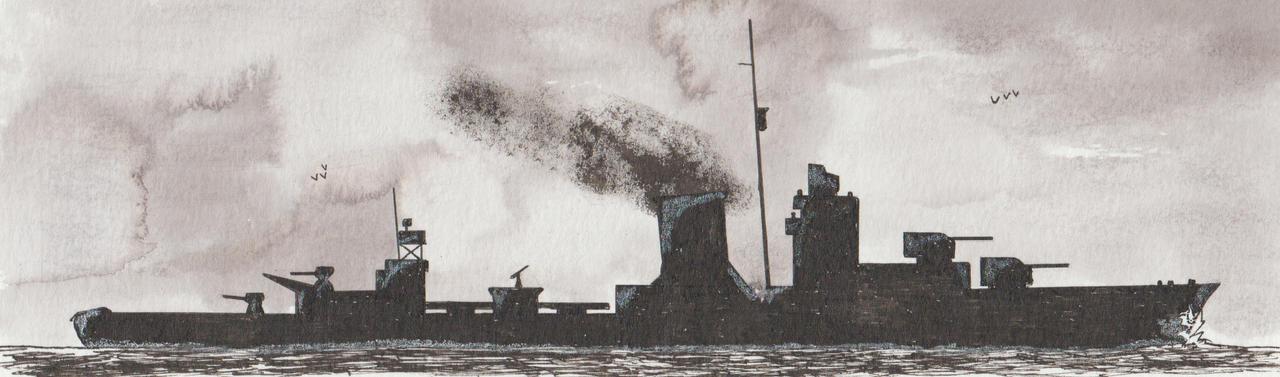
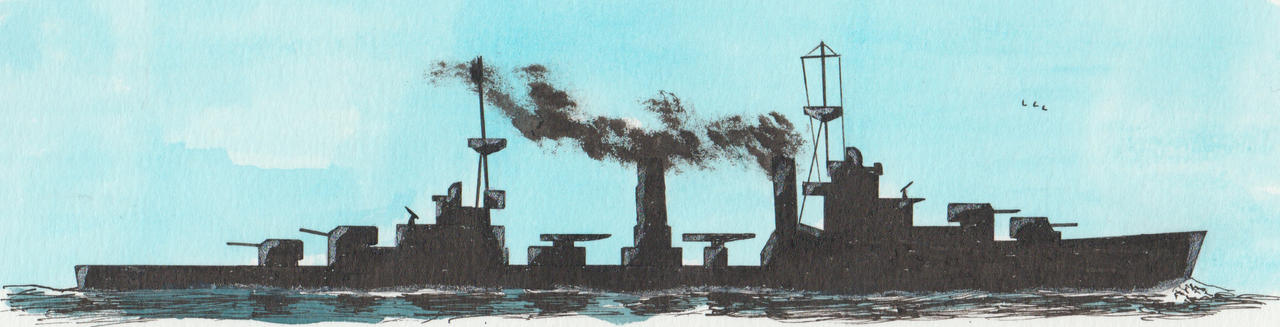
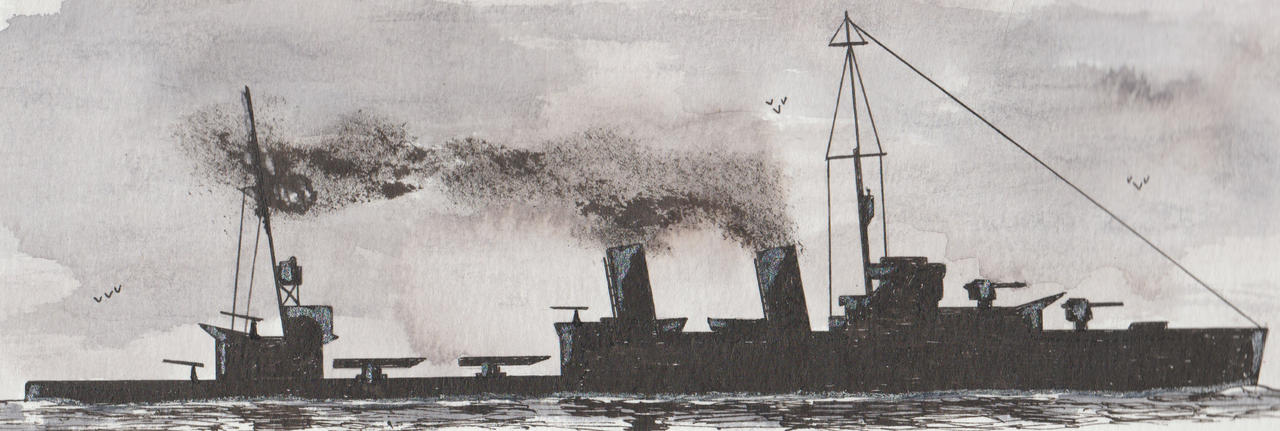
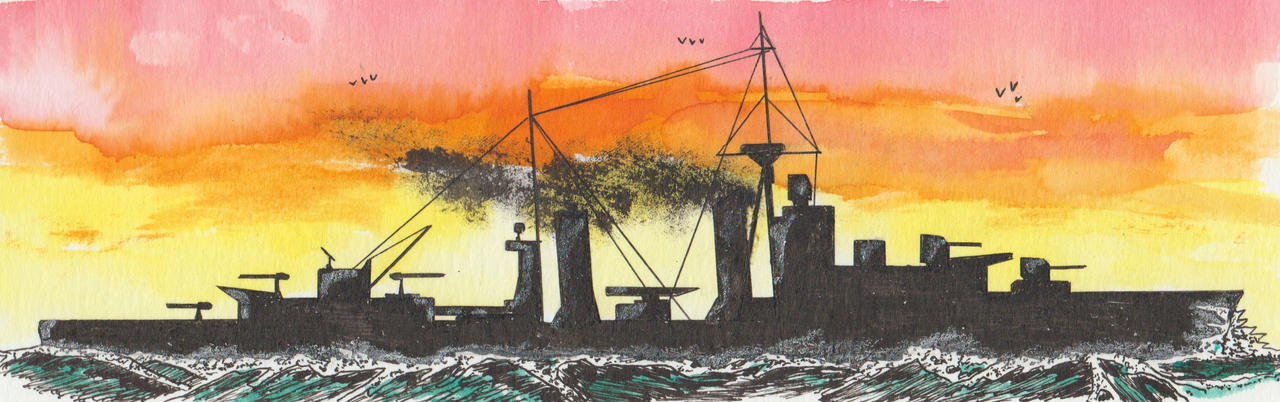
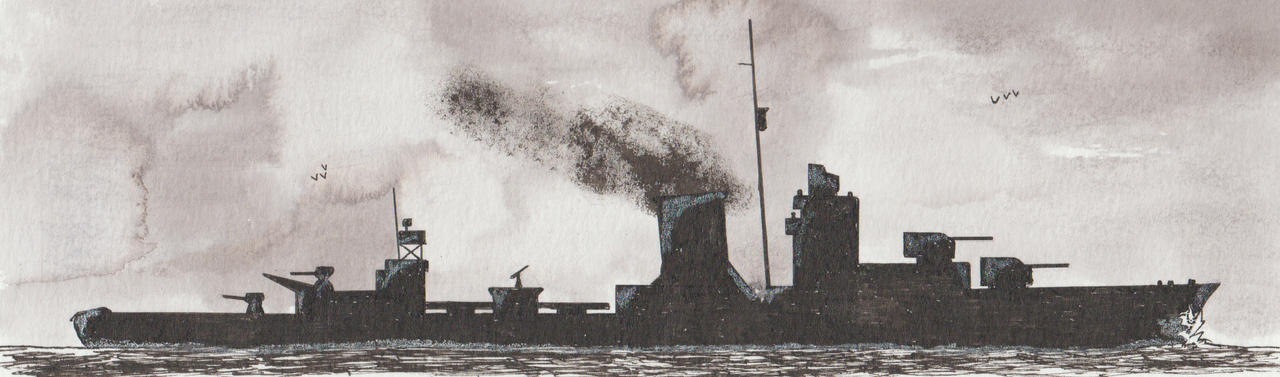
American destroyer USS Jarvis DD-393 1935-1942

Gridley-class. ©Warshipsresearch.blogspot.com

Bagley-class. ©Warshipsresearch.blogspot.com

Somers-class. ©Warshipsresearch.blogspot.com

Part of Bagley-class preceded by Gridley-class succeeded by Somers-class. Totally eight built between 1935-1937. Laid down by Puget Sound Navy Yard on 21 August 1935, launched on 6 May 1937, commissioned on 27 October 1937 and sunk in a Japanese air attack off Guadalcanal on 9 August 1942. 

Sunday, 17 May 2026

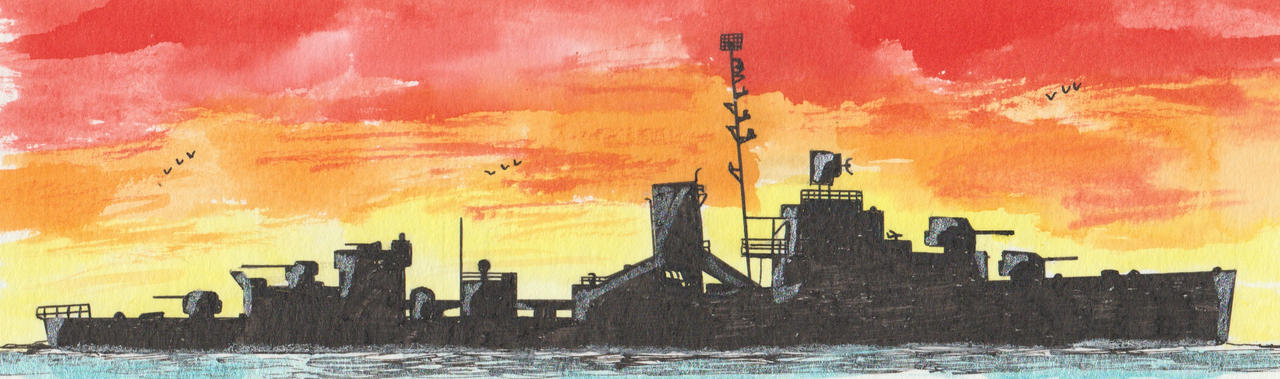
American destroyer USS Blue DD-387 1935-1942

Gridley-class. ©Warshipsresearch.blogspot.com

Bagley-class. ©Warshipsresearch.blogspot.com

Somers-class. ©Warshipsresearch.blogspot.com

Part of Bagley-class preceded by Gridley-class succeeded by Somers-class. Totally eight built between 1935-1937. Laid down by Norfolk Navy Yard on 25 September 1935, launched on 27 May 1937, commissioned on 14 August 1937, decommissioned and sunk by the Japanese in the Battle of Guadalcanal on 22 August 1942. 

Tuesday, 12 May 2026

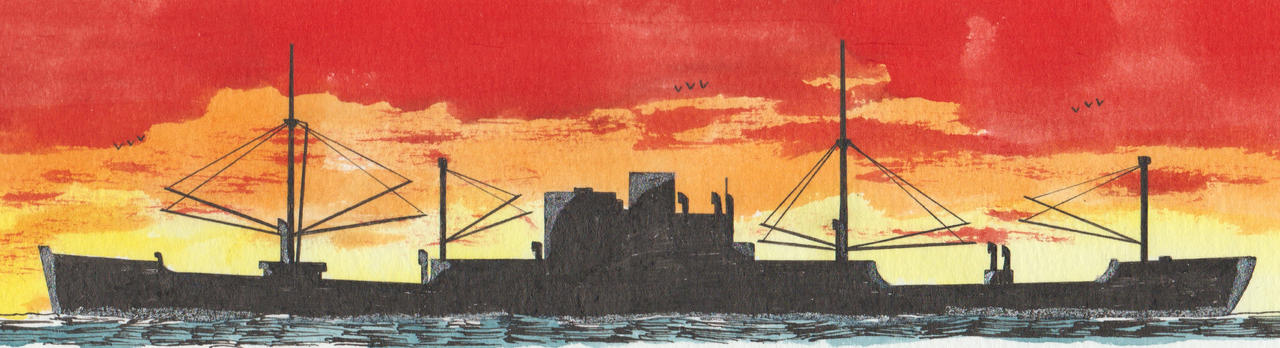
Japanese cargo ship (ex-Sangetsu Maru 1937) Yamazuki Maru, Yamasuki Maru or Yamatsuki Maru 1937-1942

©Warshipsresearch.blogspot.com

Similar Kamogawa Maru (1938), Keiyo Maru (1937), Sinko Maru (1935), Tamagawa Maru (1938), Yamagiri Maru (1938), Yamazuki Maru (1937), Yodogawa Maru (1938) and Zenyo Maru (1937). Call sign JYXL. Owner in 1939 Yamashita Kisen K.K., Tokyo, Japan. Laid down by Mitsubishi Jukogyo K.K., Yokohama, Japan on 15 July 1937, launched on 3 December 1937, completed on 19 February 1938, requistioned by the army on 15 November 1941, became troop transport Alloted IJA No. 892, deliberately beached at Tassafaronga, Guadalcanalon 15 November 1942, wreck broken up in the 1950s. Gross tonnage 6,349 tons, under deck 5,757 tons, net tonnage 4,223 tons and as dimensions 439.4 x 58.3 x 32.0 x 9.6 (light)-26 (loaded) feet. Horsepower 1,165nhp/4,700 bhp, one screw, 110rpm=14 knots, 1333rpm=17 knots, fuel oil bunker capacity including deep tanks 2,700 tons, range 47,000 nautical miles/14 knots and speed 14/15(normal cruising)-17-19 (maximum) knots. 

Tuesday, 3 March 2026

Japanese cargo ship Hirokawa Maru 1939-1942

Kamikawa Maru original appareance. ©Warshipsresearch.blogspot.com

Part of the Kamikawa Maru-class consisting of the Kamikaze Maru, Kiyokawa Maru, Kimikawa Maru, Kunikawa Maru and Hirokawa Maru. Owner in 1939 Kawasaki Line. Laid down by Kawasaki Dockyard Co. Ltd., Kobe, Japan on 6 April 1939, launched on 10 May 1940, completed on 12 October 1940, acquired by the army on 8 February 1941, classified as nucleus anti-aricraft vessel, damaged by US aircraft and artillery was she sunk by the American destroyer USS Meady at Tassafaronga Point, Guadalcanal, Solomon Island on 15 October 1942. Dimensions around 479.5 x 62.x 20.3 x 12 (light)-27 (loaded) feet. Diesel propulsion. Range 35,000 nautical miles/16 knots. Oil fuel bunker capacity 2,800 tons. Single screw. Horsepower 1,850 nhp/7,500 bhp. Rpm 101/16 knots and 119 rpm/19 knots. Speed 16 (normal cruising)-21 (maximum) knots. Strengthened for 5” or 6” guns armament. 

Thursday, 15 January 2026

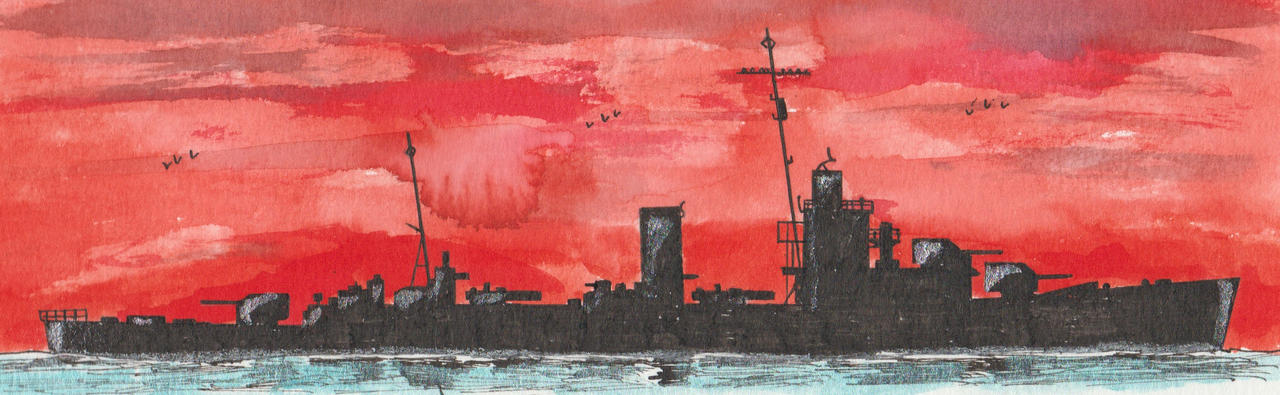
American destroyer USS Cushing DD-376 1934-1942

USS Porter. ©Warshipsresearch.blogspot.com

USS Aylwin of the Farragut-class. ©Warshipsresearch.blogspot.com

USS Mahan. ©Warshipsresearch.blogspot.com

Gridley-class. ©Warshipsresearch.blogspot.com

Part of Mahan-class (18 completed) preceded by Porter-class succeeded by Gridley-class. Improved version of the Farragut-class. Laid down by Puget Sound Navy Yard on 15 August 1934, launched on 31 December 1935, commissioned on 28 August 1936 and sunk durign the Naval Battle of Guadalcanal against the Japanese fleet on 13 November 1942. 

Sunday, 19 October 2025

American light cruiser USS Juneau CL-52 1940-1942

Brooklyn-class. ©Warshipsresearch.blogspot.com

Atlanta-class. ©Warshipsresearch.blogspot.com

Cleveland-class. ©Warshipsresearch.blogspot.com

Part of Atlanta-class Atlanta-subclass preceded by Brooklyn-class succeeded by Cleveland-class. Laid down by Federal Shipbuilding and Drydock Company, Kearny, New Jersey, USA on 27 May 1940, launched on 25 October 1941, commissioned on 14 February 1942 and torpedoed and sunk by the Japanese submarine I-26 during the Battle of Guadalcanal on 13 November 1942. Her wreck was on 17 March 2018 found back. 

Monday, 13 October 2025

Japanese cargo ship Kinugawa Maru 1938-1942

©Warshipsresearch.blogspot.com

Similar Akiura Maru, Huzikawa Maru, Kazuura Maru, Kinugawa Maru, Kumagawa Maru, Mogamigawa Maru, Sinanogawa Maru and Tenyo Maru. Call sign JURM. Laid down by Mitsubishi Jukoygo K.K., Nagasaki, Japan with yard number 722 on 31 March 1938, launched on 24 August 1938, completed on 30 November 1938, requisiitoned by the army in 1941, converted into an armed transport, beached near Bobegi, Guadalcanal on 15 November 1942. Gross tonnage 6,937 tons, netto tonnage 4,978 tons and as dimensions 437.4 x 58.5 x 32.8 x 9 (light)-26 (loaded) feet. Diesel propulsion, single screw, horsepower 840 nhp, oil bunker capacity 2,400 tons, range 50,000 nautical miles/13.5 knots and speed 13.5 (normal cruising)-16 (maximum) knots. 

Saturday, 24 August 2024

Japanese passenger-cargo ship Canberra Maru 1935-1942

©Warshipsresearch.blogspot.com

Call sign JPLK. Homeport Osaka, Japan. Sister ships Canberra Maru and Tokyo Maru. Laid down by Mitsui Bussan Kaisha Ld., Tama, Japan in end 1935, launched in 1936, completed on 30 May 1936, requisitioned by the army as the A-AK type cargo ship IJA No. 682 and sunk in an American air attack off Guadalcanal on 14 November 1942. Gross tonnage 6,477 tons, under deck 5,837 tons, netto tonnage 3,858 tons and as dimensions 424.7 x 57.4 x 361. x 12 (light)-25.6 (loaded) feet. Diesel propulsion, single screw, horsepower 1,231 nhp, oil bunker capacity 962 tons and speed 16.5 (normal cruising)-19 (maximum) knots. 

Thursday, 27 June 2024

Japanese cargo ship Azumasan Maru 1932-1943

Warshipsresearch.blogspot.com

Call sign JPUN. Laid down by Mitsui Bussan Kaisha Ld., Tama, Japan on 18 November 1932, launched on 28 May 1933, completed on 31 July 1933, conversion into an auxiliary transport 15 October 1941-12 December 1941, registered on 20 November 1941, heavy damaged in air attacks at Tassafaronga, Guadacanal between 14-16 October 1942, beached and stricken on 1 Feburary 1943. Gross tonnage 7,623 tons, under deck 6,836 tons, net tonnage 4,655 tonsand as dimensions 454.0 x 60.0 x 37.0 x 12 (light)-27.6 (loaded) feet. Diesel propulsion, single screw, speed 16 (normal cruising)-18.5 (maximum) knots, 1230 nhp/700 bhp, 112 rpm/16.2 knots, oil bunker capacity included deep tanks 2,400 tons and range 33,000 nautical miles/16 knots. 

Sunday, 23 June 2024

Japanese light aircraft carrier Ryujo lost in American air attack according to the U.S. Joint Intelligence Committee. Daily summary dated 26 August 1942

An item reported that in the morning of 24 August US aircraft sighted a large Japanese naval force on a distance of 200-300 miles north of Guadalcanal Island. The force consisted of 2 carrier groups, each accompanied by cruisers and destroyers. The carriers were probably the small Ryujo (1) and the larger Shokaku (2) and Zuikaku (3). In an air attack was the Ryujo set on fire and other ships were damaged. In another attack about 100 miles north of Tulagi were a heavy cruiser and a large transport set afire. These actions found place in the Solomon Islands area.

Notes

1. Preceded by Kaga succeeded by Soryu, laid down by Mitsubishi, Yokohama on 26 November 1929, launched on 2 April 1931, commissioned on 9 May 1933, sunk in the Battle of the Eastern Solomons on 24 August 1942 and stricken on 10 November 1942.

2. Part of Shokaku-class preceded by Hiryu and succeeded by Hiyo-class, laid down by Yokosuka Naval Arsenal on 12 December 1937, launched on 1 June 1939, commissioned on 8 August 1941 and torpedoed and sunk by the American submarine USS Cavalla (SS-244) in the Battle of the Philippine Sea on 19 June 1944.

3. Part of Shokaku-class preceded by Hiryu and succeeded by Hiyo-class, laid down by Kawasaki Shipyards on 25 May 1938, launched on 27 November 1939, commissioned on 25 September 1941, sunk during an air attack in the Battle of Leyte Gulf on 25 October 1944 and stricken on 26 August 1945.

Source

Map Room Papers (Roosevelt Administration), 1942 - 1945. U.S. Joint Intelligence Committee. Daily summary No. 259 dated 26 August 1942.

Monday, 16 January 2023

Japanese passenger-cargo ship Kinryu Maru 1937-1942

Laid down by Kawasaki Shipyard Co. Ltd., Kobe, Japan on 18 November 1937, launched on 16 June 1938, completed on 31 August 1938, requisitioned by the Japanese Imperial Navy on 1 September 1938, scuttled by the Japanese destroyer Mutsuki after she was heavily damaged in an American air attack 40 miles north east of. Santa Isabel Island underway to Guadalcanal on 25 August 1942 and strickenon 1 October 1942. Call sign JGQM. Gross tonnage 9,310 tons, net tonnage 5,545 tons and as dimensions 475.7 x 62.3 x 40.2 x 12.6 (light)-28 (loaded) feet. Diesel propulsion, 1 screw, 9,200 bhp, 2,115 nhp, oil bunker capacity 2,840 ton, range 35,000 nautical miles/18 knots and speed 18 (cruising)-22 (maximum) knots. 

Wednesday, 28 September 2022

Japanese destroyers shelled the US position in Tulagi and Guadalcanal according to the U.S. Joint Intelligence Committee. Daily summary dated 21 August 1942

An item reported that on 18 August 2 Japanese destroyers shelled the US position in Tulagi and Guadalcanal. A heavy bomber scored a direct hit on one of the destroyers setting her into fire.

Source

Map Room Papers (Roosevelt Administration), 1942 - 1945. U.S. Joint Intelligence Committee. Daily summary No. 254 dated 21 August 1942.

Saturday, 24 September 2022

Japanese destroyers were sighted north of Guadalcanal according to the U.S. Joint Intelligence Committee. Daily summary dated 20 August 1942

An item reported that two Japanese destroyers were sighted north of Lunga Roads, Guadalcanal, Solomon Islands.

Source

Map Room Papers (Roosevelt Administration), 1942 - 1945. U.S. Joint Intelligence Committee. Daily summary No. 253 dated 20 August 1942.

Monday, 15 August 2022

Japanese potential troop transport Arizona Maru in December 1921

On 22 May 1922 (!) received the Dutch naval staff at The Hague, Netherlands from the Dutch embassy at Tokyo, Japan a detailed specification of Japanese merchant ships of minimum 1.500 tons tonnage usable for troop transport over sea on 13 December 1921. If the transport was over a short distance for instance Japan-Philippines or Japan-Chinese harbours was the transport capacity increased with 10% and on a distance within 24 hours even doubled. The figures were supplied by non-Japanese experts, partly based on the troop transports between Japan-China and Japan-Siberia. The transports were kept secret. At that moment was Japan already considered as a potential enemy. For each ship was mentioned how many troops included equipment could be transported over a longer distance, for instance to an island belonging to the Dutch East Indies. In February-March 1942 invaded Japan indeed the Dutch East Indies.

Speed probably less then 10 miles, net tonnage 6,068 tons, gross tonnage 9,595 tons, transport capacity 3,200 men and owned by Osaka Shosen Kaisha. Coal-fuelled.

Laid down as cargo ship for account of the Osaka Shosen (OSK Line) K.K., Tokyo, Japan by Mitsubishi Zosensho, Nagasaki, Japan in 1919, launched in 1920, completed on 20 June 1920, temporarily requisitioned during the war with China by the Japanese Imperial Navy and converted into a hospital ship in 1937, in October 1941 at the Kure Naval Arsenal fitted out with crew accommodation, stables for horses and armed with 6-7.5cm Type 88 anti aircraft guns and 10-x1-2cm or 2.5cm anti aircraft machine guns, again (officially) requisitioned by the army on 26 November 1941 and became troopship No. 830, participated in the invasion of Java, Dutch East Indies in February-March 1942, Army Air Defense Ship since 14 November 1942 and sunk in an Allied air attack the same day down the “Slot” bound for Guadalcanal? Call sign JDZD. Gross register tonnage 9.684 ton, tonnage under deck 8.797 ton, net register tonnage 5.993 ton, deadweight 11.100 ton and as dimensions 475 (between perpendiculars) x 61 x 40.7 x 11 (light)-28 (loaded) feet. Reciprocating 995 nhp machinery with 1.300 ton oil and 2.000 ton coal bunker capacity allowing a range of 8.000 nautical miles/14 knots and a speed of 14 (cruising)-16 (maximum) knots.

Sources

Archive Dutch Naval Staff 1886-1942 inventory number 137 (National Archive at The Hague, Netherlands

Warshipsresearch

Saturday, 18 June 2022

Japan maintained several naval bases in the Solomon Islands according to the U.S. Joint Intelligence Committee. Daily summary dated 25 August 1942

An item reported that the Japanese forces used Tonolei Harbor (S.E. Bougainville Island), Buin (Bougainville Island) and Faisi (Shortland Island) all in the Solomon Islands. On 23 August were at least in the area sighted 2 Japanese heavy cruisers, 1 seaplane tender, 5 destroyers, 1 large tanker and 3 other ships. Further more 2-3 heavy cruisers, at least one small aircraft carrier and several destroyers seen 250 miles of Guadalcanal Island. The J.I.C. commented that the Japanese used the Faisi-Buin-Tonolei area as an advance base for the Solomon Islands.

Source

Map Room Papers (Roosevelt Administration), 1942 - 1945. U.S. Joint Intelligence Committee. Daily summary No. 258 dated 25 August 1942.

Wednesday, 25 May 2022

Japanese force redrawn from Guadalcanal according to the U.S. Joint Intelligence Committee. Daily summary dated 27 August 1942

An item reported that on 23-24 August the Allied forces at Guadalcanal (Solomon Islands) managed to hold their positions despite the shelling. Allied dive bombers damaged a Japanese destroyer. From the north came a Japanese naval force of which was earlier reported a cruiser set on fire, 1 destroyer and 4 additional ships left burning and the transport earlier reported as being hit was left abandoned when the Japanese left the scene.

Source

Map Room Papers (Roosevelt Administration), 1942 - 1945. U.S. Joint Intelligence Committee. Daily summary No. 260 dated 27 August 1942.

Wednesday, 11 May 2022

Allied aircraft successfully attacked Japanese destroyers in the Solomon Islands-area according to the U.S. Joint Intelligence Committee. Daily summary dated 30 August 1942

An item reported that US aircraft stationed on Guadalcanal sighted on 27 August in the Solomon Islands 1 small and 3 large Japanese destroyers scoring one hit on the small one which was left behind crippling and set on fire. American dive bombers later attacked the large destroyers sinking one certainly and damaging a second which probably also sunk.

Source

Map Room Papers (Roosevelt Administration), 1942 - 1945. U.S. Joint Intelligence Committee. Daily summary No. 263 dated 30 August 1942

Sunday, 27 March 2022

Japanese organizing a naval force in the occupied Dutch East Indies according to the U.S. Joint Intelligence Committee. Daily summary dated 11 March 1942

An item reported that the organization of a Japanese naval defence force in the Dutch East Indies was started, Flagship was to be the battleship Hiyei (1) and the Staring Bay, south east Celebes [Sulawesi] the fueling and supply base.

Note

1. The Hiei, part of the Kongo-class battle cruisers, preceded by Ibuki-class, succeeded by the planned Amagi-class, building ordered in 191, laid down by Yokosuka Naval Arsenal on 4 November 1911, launched on 21 November 1912, commissioned on 4 August 1914 and sunk scuttled after the Naval Battle of Guadalcanal on 13 November 1942 against American warships and aircraft-borne aircraft, main armament 4x2-35,6cm/14” cal 45 guns.

Source

Map Room Papers (Roosevelt Administration), 1942 - 1945. U.S. Joint Intelligence Committee. Daily summary No. 91 dated 11 March 1942.

Wednesday, 29 December 2021

Japanese army anti aircraft transport Arizona Maru 1919-

Laid down as cargo ship for account of the Osaka Shosen (OSK Line) K.K., Tokyo, Japan by Mitsubishi Zosensho, Nagasaki, Japan in 1919, launched in 1920, completed on 20 June 1920, temporarily requisitioned during the war with China by the Japanese Imperial Navy and converted into a hospital ship in 1937, in October 1941 at the Kure Naval Arsenal fitted out with crew accommodation, stables for horses and armed with 6-7.5cm Type 88 anti aircraft guns and 10-x1-2cm or 2.5cm anti aircraft machine guns, again (officially) requisitioned by the army on 26 November 1941 and became troopship No. 830, participated in the invasion of Java, Dutch East Indies in February-March 1942, Army Air Defense Ship since 14 November 1942 and sunk in an Allied air attack the same day down the “Slot” bound for Guadalcanal. Call sign JDZD. Gross register tonnage 9.684 ton, tonnage under deck 8.797 ton, net register tonnage 5.993 ton, deadweight 11.100 ton and as dimensions 475 (between perpendiculars) x 61 x 40.7 x 11 (light)-28 (loaded) feet. Reciprocating 995 nhp machinery with 1.300 ton oil and 2.000 ton coal bunker capacity allowing a range of 8.000 nautical miles/14 knots and a speed of 14 (cruising)-16 (maximum) knots.

Saturday, 27 May 2017

Japanese heavy cruiser Kinugasa 1924-1942

Aoba

Part of the Aoba-class consisting of the Aoba and Kinugasa, which originally were to be part of the Furutaka-class heavy cruisers, but both ships were of a modified design although with stability problems. Built under the 1923 Fiscal Year, laid down by Kawasaki Heavy Industries, Kobe, Japan on 24 October 1924, launched on 24 October 1926, commissioned on 30 September 1927, added to the reserve in September 1937, modernized at the Sasebo navy Yard, decommissioned end 1940 and sunk off Rendova Island by US navy aircraft during the Naval Battle of Guadalcanal on 13 November 1942.

Displacement 8.300 (standard)-9.000 (at last) tons and as dimensions 185,17 x 15.83 (original)-17,56 (at last) x 5,71 (original)-5,66 (at last) metres or 607.6 x 51.11-57.7 x 18.9 x 18.7 feet. The machinery consisted of 4-shaft Brown Curtis geared turbines and 12 Kampong boilers supplying 102.000 shp allowing a speed of 33,43 knots and a range with a speed of 14 knots of 7.000 (original)-8.223 (at last) nautical miles. Crew numbered 643-657 men. The armour consisted of 7,6cm/3” thick belt, 3,5cm/1.4“ thick decks, 4,8cm/1.9“ thick upper decks, magazine protected by 5,1cm/2“ thick armour and the gun turrets by 2,54cm/1“ thick armour. The conning tower was not protected! The original armament consisted of 3x2-20cm/7.9” 50 cal guns, 4x1-12cm/4.7” 45 cal guns, 6x2-61cm/24” torpedo tubes. Final armament consisted after 1940 3x2-20,3cm/8” 50 cal guns, 4x1-12cm/4.7” 45 cal guns, 2x4-61cm/24” torpedo tubes and 50-2,5cm/1” anti aircraft guns. Could carry 1 (original)-2 (after 1940t) floatplanes with her and was in a later stadium fitted out with  a catapult.