Translate

Showing posts with label Trinidad. Show all posts

Saturday, 7 February 2026

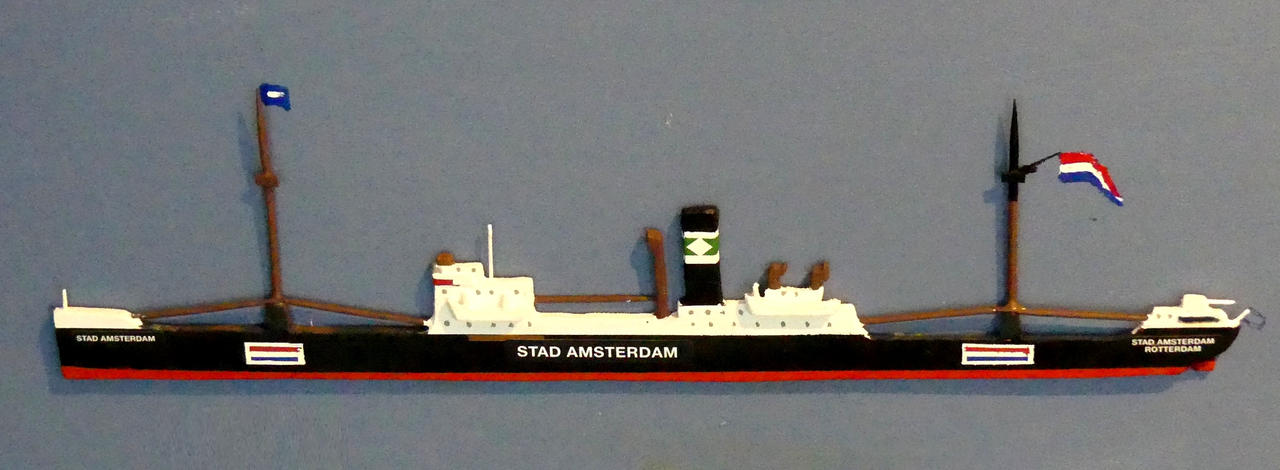
Dutch cargo ship Stad Amsterdam 1917-1942

Exhibition Varen voor Vrijheid. Museum Katwijk

Launched by Scheepswerf ‘Dordrecht’ N.V., Dordrecht, Netherlands with yard number 28 on 29 September 1917, delivered to manager N.V. Handels- & Transport Maatschappij Vulcaan, owner N.V. Stoomvaart Maatschappij Amsterdam, both at Rotterdam, Netherlands on 7 June 1920, manager Halcyon Lijn N.V., owner N.V. Stoomvaart Maatschappij Amsterdam, both at Rotterdam, Netherlands since 4 July 1920 and torpedoed and sunk by the German submarine U 164 off Haïti on 14 August 1942. She was underway from New York, USA to Trinidad due to engine problems forced to leave convoy TAW 15 on 19 August 1942.

According to the list and supplements 1-2 on 13 September 1945 BDZ No. 673 sent by the office of armament the Royal Netherlands Navy located at 41 East 42nd Street, New York 17, USA. There were no complete records available, so there were several sources used to compile the list. Sometimes the kind of guns gave indirect information regarding the origin such as 4”/BL and 12 pounder guns were British mostly supplied in the United Kingdom, Canada or Curacao. The 4.7” guns were old Japanese guns placed on some vessels in the begin of the war at Singapore and some 4” guns in the same period at Surabaya, Dutch East Indies. The trade in which the ship was used gave also an indication were the guns were supplied, for example involved in the Pacific trade means supplied at the West Coast.

Armed with 2-2cm guns supplied at New York on 28 July 1942

Source

Archieven van hoofd handelsbescherming en diverse handelsbeschermingsofficieren 1941-1946 inv.no. 53 (Nationaal Archief, The Hague, Netherlands. 

Sunday, 28 December 2025

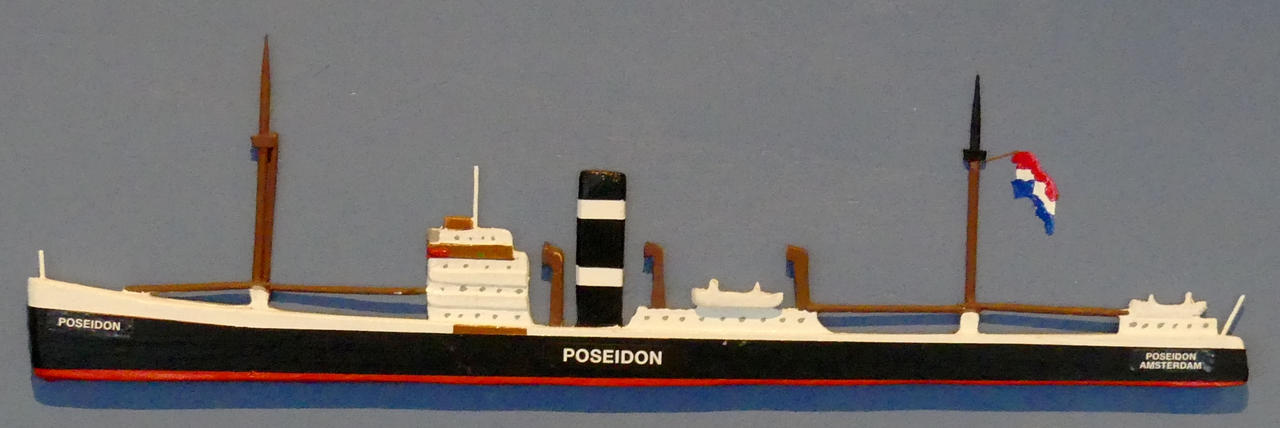
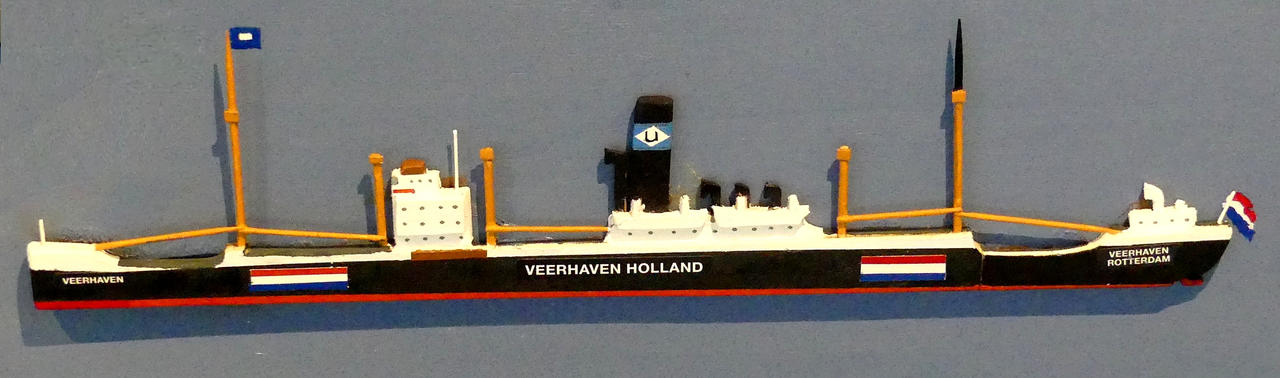
Dutch general cargo ship Veerhaven 1929-1942

Exhibition Varen voor Vrijheid. Museum Katwijk, Scheveningen

Launched by Wm. Gray&Co. Ltd., West Hartlepool, England with yard number 1032 on 18 December 1929, delivered to Manager N.V. Gebr. van Uden's Scheepvaart- en Agentuur Maatschappij, Rotterdam, Netherlands and owner N.V. Stoomvaart Maatschappij 'Noordzee', Amsterdam, Netherlands in February 1930 and attacked with gunfire by the Italian submarine Leonardo da Vincion 11 November 1942 while loaded with flax seed underway from Buenos Aires, Argentina towards Trinidad around 300 miles east of Natal, Brazil, after she was abandoned probably sunk on 13 or 14 November. 

Friday, 5 September 2025

Positions of German submarines in the Western Atlantic according to the U.S. Joint Intelligence Committee. Daily summary dated 28 February 1942

An item reported that in the Western Atlantic were 31 German submarines present:

1 in the area Paramaibo-Trinidad-Barbados

1 on 300 miles east of Barbados

5 in the Caribbean of which 2 in the Aruba area and 1 north west of Trinidad

1 leaving the Windward Passage

1 in the Mona Passage returning home

2 between Florida, USA and Cuba or the Bahamas

2 within 150 miles of Cape Henry

1 on 60 miles south east of New York

1 near Bermuda

2 off Nova Scotia

4 to southward of Newfoundland

10 in the mid Atlantic

Source

Map Room Papers (Roosevelt Administration), 1942 - 1945. MR0423. U.S. Joint Intelligence Committee. Daily summary No. 80 dated 28 February 1942

Sunday, 29 September 2024

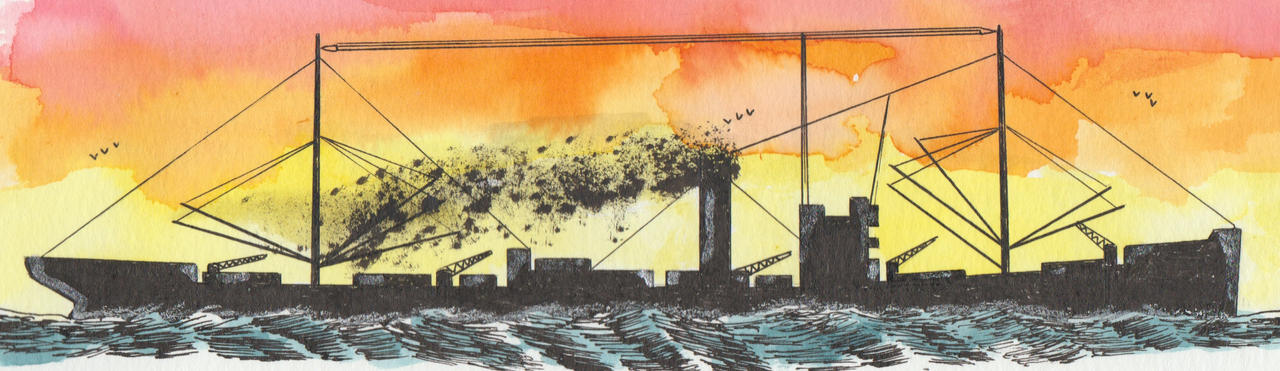
Dutch cargo ship Moena 1922-1942

©Warshipsresearch.blogspot.com

Call sign PGAO. Laid down bySir Laing&Sons Ltd., Sunderland, England with yard number 684 on 5 December 1922, delivered in May 1923 to owner/manager N.V. Stoomvaart Maatschappij 'Nederland', Amsterdam, Netherlands and sunk and torpedoed by German submarine U-162 while underway from Bombay, India via Trinidad to the USA on 24 August 1942. Gross tonnage 9,286-9,373 tons, under deck 8,711 tons, net tonnage 5,730-5.788 tons , deadweight 13,590 tons, grain capacity 683,900 cubic feet, bale capacity 596,830 cubic feet and as dimensions 480.5 x 60.4 x 37.4 feet. knots. 

Thursday, 12 September 2024

Sunday, 23 June 2024

Less enemy submarines active in the western part of the Atlantic Ocean according to the U.S. Joint Intelligence Committee. Daily summary dated 2 August 1942

An item reported that recently the number of enemy submarines in the western part of the Atlantic Ocean seemed to be reduced from the 54 on 27 July were on 1 August 42 locations known, The J.I.C. believed not that was a permanent reduction not of the number of submarines on pasage (the main reduction) either of the submarines patrolling. Largest numbers were in the vicinity of Novo Scotia 6, in the Cape Henry-Cape Lookout area 3, Jacksonville-Miami area 4 and eastern vicinity of Trinidad 5. In the Atlantic to the eastward of the longitude of the Azores on 1 August 14 submarines divided over Rockall area 4, westward of European coast 5, vicinity of Canary Islands 3 and vicinity of Freetown [Sierra Leone?] 2. Despite the sighting reported on 31 July it was uncertain if there was a submarine in the vicinity of Ascension Island.

Source

Map Room Papers (Roosevelt Administration), 1942 - 1945. U.S. Joint Intelligence Committee. Daily summary No.235 dated 2 August 1942.

Saturday, 22 June 2024

Enemy submarines attacking merchant ships in the eastern vicinity of Trinidad according to the U.S. Joint Intelligence Committee. Daily summary dated 3 August 1942

An item reported that in the past few days most of the time cargo vessels in the eastern vicinity of Trinidad were attacked, especially when unescorted by the 6 enemy submarines which seemed to be active in this area.

Source

Map Room Papers (Roosevelt Administration), 1942 - 1945. U.S. Joint Intelligence Committee. Daily summary No. 236 dated 3 August 1942.

Monday, 3 June 2024

Caribbean forces prepared for action against Martinique according to the U.S. Joint Intelligence Committee. Daily summary dated 23 December 1941

An item referred to COM 10 reporting that the navy and Caribbean air force observed the situation at Martinique. Two destroyers were present off Fort de France with naval patrol planes and the Caribbean Bomber Command standby at Antigua, St. Lucia and Trinidad. The J.I.C. commented that the Caribbean forces were ready for action despite the agreement with admiral Robert.(1)

Note

1. Georges Achille Marie Joseph Robert (31 January 1875 Courseulles-2 March 1965 Paris), High Commissary to Martinique, Guadeloupe and French Guiana 1939-1943.

Source

Map Room Papers (Roosevelt Administration), 1942 - 1945. U.S. Joint Intelligence Committee. Daily summary No. 13 dated 23 December 1941.

Saturday, 6 April 2024

The locations of enemy submarines in the Western Atlantic according to the U.S. Joint Intelligence Committee. Daily summary dated 28 February 1942

An item reported that according to estimates 31 u-boats were active in the Western Atlantic on the locations:

1 area Paramaribo, Surinam-Trinidad-Barbados

1 300 miles east of Barbados

5 in Caribbean (2 Aruba area 1 north west of Trinidad)

1 leaving Windward passage

1 in Mona Passage returning home

2 between Florida, USA and Cuba or Bahamas

2 within 150 miles of Cape Henry, Usa

1 60 miles south east of New York, Usa

1 near Bermuda

2 off Nova Scotia, Canada

4 to southward of Newfoundland

10 in mid Atlantic

Source

Map Room Papers (Roosevelt Administration), 1942 - 1945. U.S. Joint Intelligence Committee. Daily summary No. 80 dated 28 February 1942

Sunday, 24 March 2024

Norwegian shark fishery along US east coast, in the Gulf of Mexico and in the Caribbean in 1966

Since leaving Norway in June 1965, a Norwegian shark fleet of four vessels (each equipped with radar, depth recorder, and direction finder) has been fishing off the eastern and southeastern coasts of the United States in the Atlantic Ocean, the Gulf of Mexico, and the Caribbean Sea. In early 1966, the fleet sailed down the Central American coast to Trinidad, and then to Charleston, S. C., where supplies were taken on in March and April. The fleets total catch ( mainly brown and mackerel sharks with small quantities of dolphin and swordfish) probably did not exceed 450 tons after about 10 months of fishing. Long lines from 20 to 35 miles in length and equipped with radar buoys are reported to be the gear used. The catch is frozen for further processing in Norway or Germany. Italy is the intended market.

Source

Commercial Fisheries Review dated June 1966, p. 96. 

Sunday, 17 March 2024

Small number of enemy submarines active in the Caribbean according to the U.S. Joint Intelligence Committee. Daily summary dated 17 April 1942

An item reported that on 16 April was a ship torpedoed 160 miles north west of Trinidad and on 14 April by daglight a north bound bauxite ship between St. Vincent and Barbados. It was believed that there were just 3 enemy submarines active in the Caribbean area.

Source

Map Room Papers (Roosevelt Administration), 1942 - 1945. U.S. Joint Intelligence Committee. Daily summary No. 128 dated 17 April 1942

Wednesday, 30 August 2023

Enemy submarines active in the Trinidad vicinity according to the U.S. Joint Intelligence Committee. Daily summary dated 7 August 1942

An item reported that most of the attacks by enemy submarines in July were in Trinidad vicinity mostly to the eastward. Most of the other attacks were scattered over a greater part of the area westward the longitude of the Azores and northward about the latitude of Paramaribo, Surinam. It was believed that on 6 August 8 enemy submarines (including 3 Italian) were present within a radius of around 800 nautical mils to the eastward of Trinidad. This was the largest concentration.

Source

Map Room Papers (Roosevelt Administration), 1942 - 1945. U.S. Joint Intelligence Committee. Daily summary No. 240 dated 7 August 1942.

Sunday, 6 August 2023

British sloop HMS Valerian cruising in the Caribbean according to the Weekly Intelligence Summary No. 19 for the week ending 27 August 1921

Arabis-class©Warshipsresearch.blogspot.com

An item reported that the British sloop HMS Valerian was to visit Dominica on 1 September, Barbados on 8 September, Demerara on 22 September and Trinidad on 6 October.(1)

Note

1. Arabis-class minesweeping sloops preceded by Azalea-class succeeded by Aubrieta-class. Laid down by Charles Rennoldson and Company, South Shields in 1915, launched on 21 February 1916, stationed at Royal Navy Dockyard, Bermuda and lost in the Havana-Bermuda hurricane on 22 October 1926.

Source

The National Archives, Kew Gardens, England CAB-24-127-74

Thursday, 1 June 2023

Enemy submarines unchanged active on the Atlantic Ocean according to the U.S. Joint Intelligence Committee. Daily summary dated 5 August 1942

An item reported that the activities of enemy submarines on the Atlantic Ocean hardly changed. Especially unescorted freighters east of Trinidad were victim of attacks.

Source

Map Room Papers (Roosevelt Administration), 1942 - 1945. U.S. Joint Intelligence Committee. Daily summary No. 238 dated 5 August 1942.

Monday, 28 November 2022

Locations of enemy submarines in the Western Atlantic Ocean according to the U.S. Joint Intelligence Committee. Daily summary dated 11 August 1942

An item reported that by 10 August there seemed to be around 48 enemy submarines present in the western part of the Atlantic ocean from the longitude of the Azores westward: 18 on passage 16 east- and 2 westbound positioned:

-latitude of Southern England 7 northward included 1 on passage to the west

-latitudes between Southern England and New York, USA 14 of which 5 on passage, 4 east- and 1 westbound)

-latitudes between New York and Jacksonville, Florida, USA 8 of which 6 on passaga to the east

-latitudes between Jacksonville, Florida, USA and Southern Cuba 7 of which 4 on passage to the east

-latitudes between Southern Cuba and the Canal Zone 8 of which 2 on passage to the east

-latitudes south of the Canal Zone 4

Main numbers were in the northern-Trans-Atlantic shipping routes and to the east and southeastward of Trinidad, the latter presumably for intercepting ships coming or going from South America and South Africa. The J.I.C. commented that the fact that were more submarines going to the east and not to the west had an important meaning. Except for above mentioned 48 submarines there seemed to be another one about 900 miles west of Freetown and a second one 150 miles southwest of Ascension Island. The J.I.C. commented that this second submarine was well to the southward of areas where in the past submarines were active.

Source

Map Room Papers (Roosevelt Administration), 1942 - 1945. U.S. Joint Intelligence Committee. Daily summary No. 244 dated 11 August 1942.

Tuesday, 22 November 2022

Enemy submarines very active in east-south east vicinity of Trinidad according to the U.S. Joint Intelligence Committee. Daily summary dated 12 August 1942

An item reported that enemy submarines were especially active in the area to the east- and southeastward of Trinidad with just occasionally attacking convoys. However the area seemed to increase to the east- and southward. In the western part of the Atlantic Ocean was just a limited number of submarine s present recently attacking ships.But at the same time were all submarines prepared for action and their crews trained and seasoned. Off the east coast Florida, USA exploded a mine probably laid by a submarine. The J.I.C. commented that an increase of mine laying by submarines along the American east coast was to be expected. In the week ending by 5 August were 17 attacks against submarines carried out by 10 British, 2 Canadian and 5 US surface vessels and another 27 attacks by US and British aircraft of which 17 in the Eastern and 10 in the Western Atlantic.

Source

Map Room Papers (Roosevelt Administration), 1942 - 1945. U.S. Joint Intelligence Committee. Daily summary No. 245 dated 12 August 1942.

Friday, 18 November 2022

Enemy submarines especially active near Trinidad according to the U.S. Joint Intelligence Committee. Daily summary dated 12 August 1942

An item reported that enemy submarines were especially active in the area to the east- and southeastward of Trinidad with just occasionally attacking convoys. However the area seemed to increase to the east- and southward. In the western part of the Atlantic Ocean was just a limited number of submarine s present recently attacking ships.But at the same time were all submarines prepared for action and their crews trained and seasoned. Off the east coast Florida, USA exploded a mine probably laid by a submarine. The J.I.C. commented that an increase of mine laying by submarines along the American east coast was to be expected. In the week ending by 5 August were 17 attacks against submarines carried out by 10 British, 2 Canadian and 5 US surface vessels and another 27 attacks by US and British aircraft of which 17 in the Eastern and 10 in the Western Atlantic.

Source

Map Room Papers (Roosevelt Administration), 1942 - 1945. U.S. Joint Intelligence Committee. Daily summary No. 245 dated 12 August 1942.

Sunday, 6 November 2022

Activities of enemy submarines on the Atlantic Ocean and in the Caribbean according to the U.S. Joint Intelligence Committee. Daily summary dated 16 August 1942

An item reported that on 15 August 58 enemy submarines were to be active in the western part of the Atlantic Ocean longitude of the Azores westward: north of the latitude of the Scilly Islands on the eastern part 7, between the latitudes of these islands and New York, USA 20, mostly in the eastern part of which 7 on passage east- and 7 westbound, between the latitudes of New York, USA and Jacksonville (Florida), USA 9 including 5 on passage east- and 3 westbound, between the latitudes of Jacksonville (Florida), USA and Guantonamo, Cuba and the Canal Zone 10 all eastward of Guantanamo including 2 on passage westbound, in the latitudes south of the Canal Zone 4. Most of the enemy submarines were actidve in the ares of the northern Trans-Atlantic shipping and on the shipping between Key West-Trinidad an West Indies-South America and South Africa. The J.I.C. commented that although the number of 58 submarines was the largest ever, she expected a continual increase.

Source

Map Room Papers (Roosevelt Administration), 1942 - 1945. U.S. Joint Intelligence Committee. Daily summary No. 249 dated 16 August 1942.

Wednesday, 2 November 2022

Enemy submarines operating with success in the Florida Straits-Caribbean area according to the U.S. Joint Intelligence Committee. Daily summary dated 18 August 1942

An item reported that not one but three ships of a convoy were torpedoed in the night of 16-17 August south of Guantanamo, Cuba (zie report No. 250). In the current month were 12 ships part of a convoy torpedoed in the Florida Straits-Caribbean area. Enemy submarines were still active in the area east- and southeastward of Trinidad.

Source

Map Room Papers (Roosevelt Administration), 1942 - 1945. U.S. Joint Intelligence Committee. Daily summary No. 251 dated 18 August 1942.

Saturday, 24 September 2022

Merchant ships harassed by enemy submarines on the Atlantic Ocean according to the U.S. Joint Intelligence Committee. Daily summary dated 21 August 1942

An item reported that enemy submarines attacked non-escorted ships in the west part of the Atlantic Ocean in the current month mostly within an around 600 miles radius to the east- and southeastward of Trinidad. In the longitudes west of Trinidad were 4 such attacks reported.

Source

Map Room Papers (Roosevelt Administration), 1942 - 1945. U.S. Joint Intelligence Committee. Daily summary No. 254 dated 21 August 1942