Translate

Showing posts with label Papua New Guinea. Show all posts

Sunday, 27 September 2026

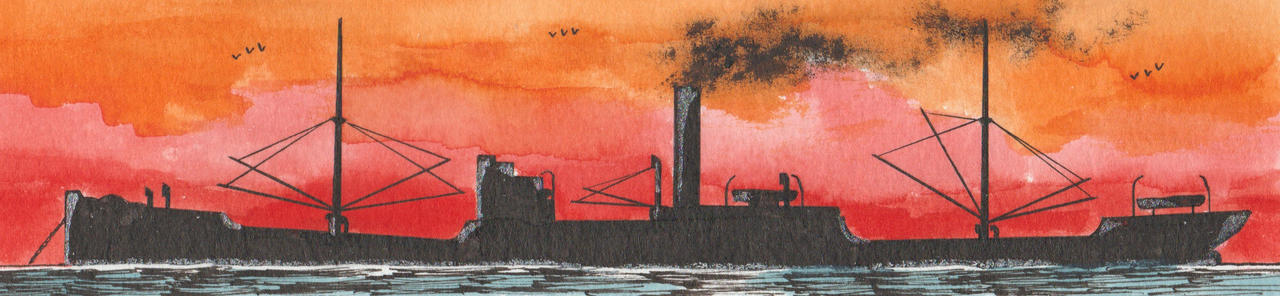
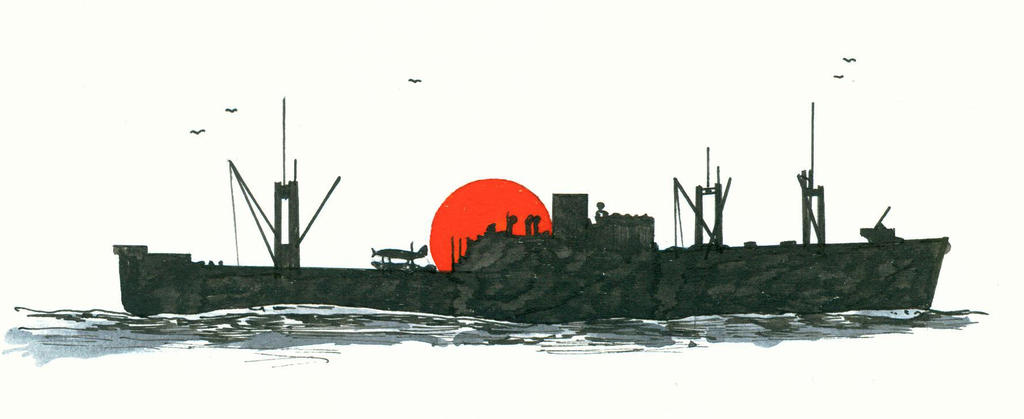
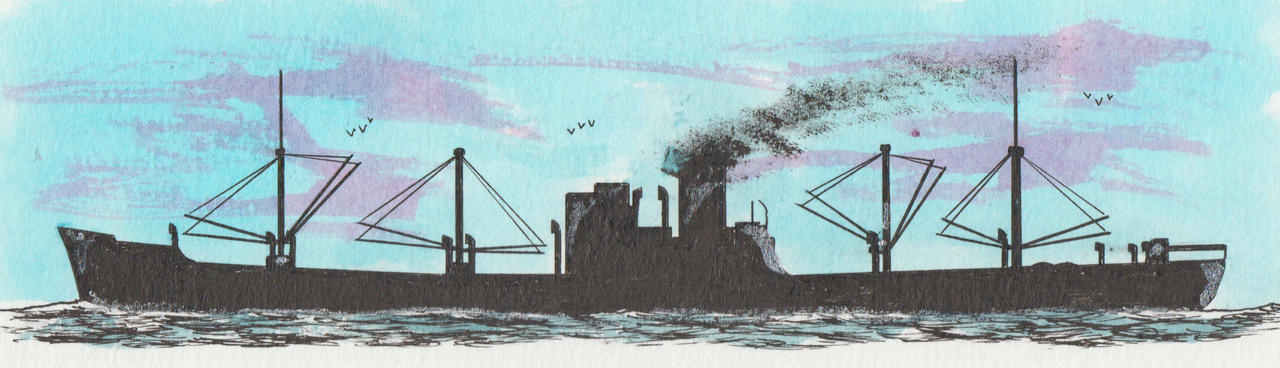
Japanese cargo ship (ex-Strabo 1913-1932, Pauline 1932-1934, Pavlina 1934-1935, Brightvega 1935-1936, Shou Sing 1936-1938) Yamayuri Maru 1938-1944

Tonegawa Maru©Warshipsresearch.blogspot.com

Sister ships Tonegawa Maru and Yamayuri Maru identical similar Ryunan Maru. Call sign ZYYL. Owner in 1939 Yamashita Kisen K.K., Kobe, Japan. Launched by A.McMillan&Son Ld., Dumbarton, Scotland with yard number 451 on 15 September 1913, in October 1913, owners Liverpool, Brazil&River Plate S.N. Co. Ltd., Liverpool, England in 1913, Maurice Olivier, Panama/Algiers in 1932, Soc. Anom. Marit.&Commerciale Olivier, M. Olivier, Salonica, Greece in 1934, Bright Navigation Co. Ltd., London, England in 1935, H.C. Wan, Tsingtao, China in 1936 and sunk by American aircraft off Rabaul, New Britain on 24 January 1944. Gross tonnage 5,028tons, net tonnage 3,099 tons , deadweight 8,130 tons and as dimensions 400.0 x 52.1 x 27.3 x 7.9 (light)-24.9 (loaded) feet. Reciprocating propulsion, one screw, horsepower 458 nhp, coal bunker capacity 1,334 ton, range 10,500 nautical miles/10.5 knots and speed 10.5 (normal cruising)-12 (maximum) knots. 

Sunday, 20 September 2026

Number of Japanese ships at Rabaul, New Guinea increased according to the U.S. Joint Intelligence Committee. Daily summary dated 22 February 1942

An item reported that reconnaissance above Rabaul on 18 February pointed out that there were more Japanese ships were lying than earlier reported. Now were there 4 light cruisers, 1 air craft carrier, 1 oiler, 1 minelayer and 12 merchant ships.

Source

Map Room Papers (Roosevelt Administration), 1942 - 1945. MR0423. U.S. Joint Intelligence Committee. Daily summary No. 74 dated 22 February 1942

Saturday, 19 September 2026

Japanese activities in the Truk-Marshalls Islands-New Britain area increasing according to the U.S. Joint Intelligence Committee. Daily summary dated 23 February 1942

An item reported that the Japanese activities in the Truk-Marshall Islands-New Britain area was increasing especially by aircraft and submarines. Naval units were seen in the St. George’s Channel (between New Britain and New Ireland) and at Gasmata [New Britain, Papua New Guinea] where the large force was joined which was earlier at Rabaul.

Source

Map Room Papers (Roosevelt Administration), 1942 - 1945. MR0423. U.S. Joint Intelligence Committee. Daily summary No. 75 dated 23 February 1942

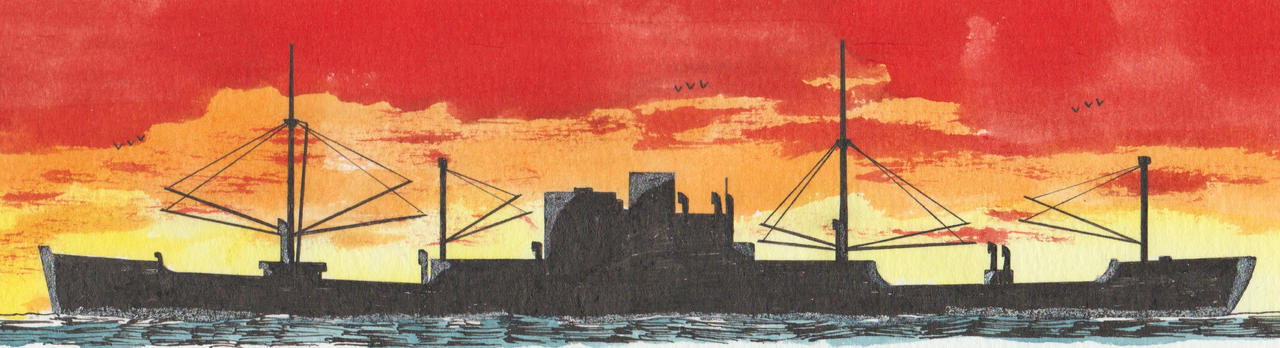
Japanese cargo ship Yodogawa Maru 1938-1943

©Warshipsresearch.blogspot.com

Similar Kamogawa Maru (1938), Keiyo Maru (1937), Sinko Maru (1935), Tamagawa Maru (1938), Yamagiri Maru (1938), Yamazuki Maru (1937), Yodogawa Maru (1938) and Zenyo Maru (1937). Owner in 1939 Toyo Kaiun Maru K.K., Tokyo, Japan. Laid down by Mitsubishi Jukogyo K.K., Yokohama, Japan on 27 September 1938, launched on 16 February 1939, completed on 5 April 1939, requistioned by the navy on 2 September 1941, converted into a collier annex oiler by the Mukojima Dock K.K. shipyard between 2 September-15 October 1941, torpedoed and sunk by the American submarine USS Grayback (SS-208) north east of Manus, Admiralties on 11 May 1942 and stricken on 15 July 1943. Gross tonnage 6,441 tons, under deck 5,757 tons, net tonnage 4,832 and as dimensions 436/4 x 58.3 x 32.0 x 9.6 (light)-26 (loaded) feet. Horsepower 1,165nhp/4,700 bhp, one screw, 110rpm=14 knots, 1333rpm=17 knots, fuel oil bunker capacity including deep tanks 2,700 tons, range 47,000 nautical miles/14 knots and speed 14/15(normal cruising)-17-19 (maximum) knots. 

Saturday, 22 August 2026

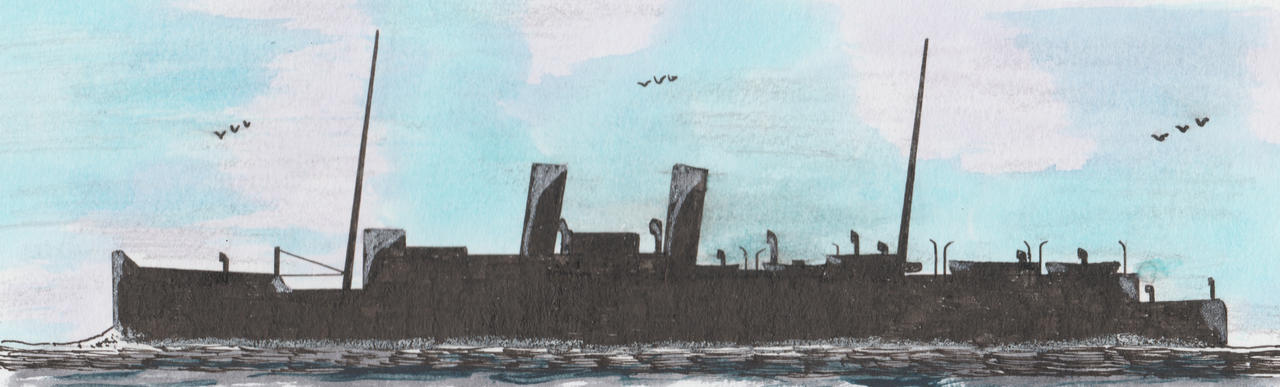
Japanese cargo ship (ex-Keifuku Maru 1921-1938) Keihuku Maru or Keifuku Maru 1938-1943

©Warshipsresearch.blogspot.com

Similar Keihuku Maru, Syokei Maru and Tokozyu Maru. Call sign JPHD. Homeport Tokyo, Japan. Owner in 1939 Department of Railways. Built by Mitsubishi Zosen Kaisha Ltd., Kobe, Japan in 1921, requisitioned by the army as transport and sunk at Rabaul, (Papua) New Guinea during an Allied air attack on 5 January 1943. Gross tonnage 3,620 tons, under deck 2,943 tons, net tonnage 1,382 tons, deadweight 690 tons and as dimensions 360.0 x 46.0 x 28.0 x 15 (loaded) feet. Steam turbine propulsion, 2 screws and speed 17 (normal cruising)-18.5 (maximum) knots. Designed for near seas ferry service. 

Friday, 24 April 2026

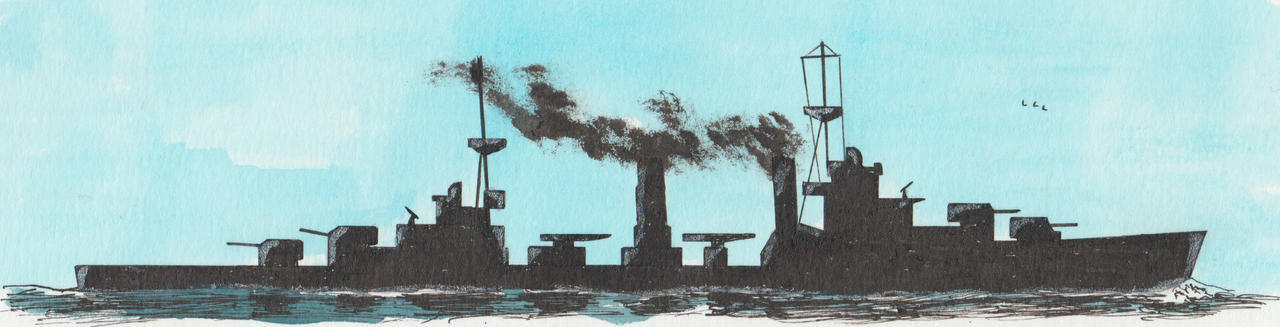
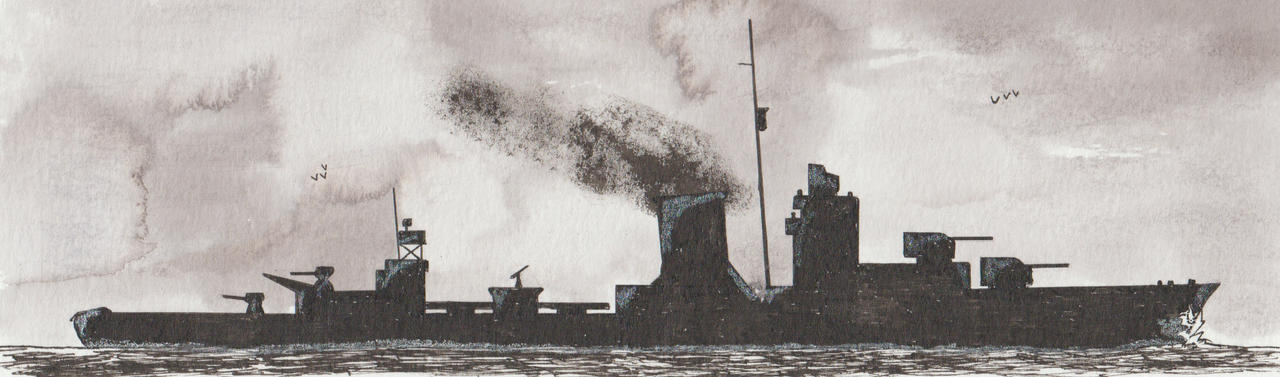
Japanese minelayer Natsushima 1931-1944

Natsushima. ©Warshipsresearch.blogspot.com

Part of Natshima-class consisting of the Nasami, Natsushima both Project H5 and Sarushima Project H5B. Ordered under the 1931 Programme. Designed was based on that of preceding Tsubama-class succeeded by Sokuten-class. Laid down by Tokyo Ishikawajima Zosen on 24 December 1931, launched on 24 March 1933, completed on 31 July 1933, sunk by the American Fletcher-class destroyers USS Stanly, Charles Ausburne and Dyson off Kavieng, New Ireland, Papua New Guinea on 22 February 1944 and stricken on 30 April 1944.

Thursday, 9 April 2026

Japanese cargo ship Kamikawa Maru 1936-1943

Kamikawa Maru as seaplane tender. ©Warshipsresearch.blogspot.com

Kamikawa Maru original appareance. ©Warshipsresearch.blogspot.com

Part of the Kamikawa Maru-class consisting of the Kamikaze Maru, Kiyokawa Maru, Kimikawa Maru, Kunikawa Maru and Hirokawa Maru. Call sign JNJL. Owner in 1939 Kawasaki Line. Laid down by Kawasaki Dockyard Co. Ltd., Kobe, Japan on 5 August 1936, launched on 13 December 1936, completed on 15 March 1937, acquired by the navy on 18 September 1937, classified as an auxilary seaplane tender on 19 September 1937, sunk by the American submarine USS Scamp off Kavieng off Papaua New Guinea and stricken on 15 July 1943. Gross tonnage 6,853tons, net tonnage 3,956 tons and as dimensions 479.4 x 62.3 x 30.3 x 12 (light)-27 (loaded) feet. Diesel propulsion. Range 35,000 nautical miles/16 knots. Oil fuel bunker capacity 2,800 tons. Single screw. Horsepower 1,850 nhp/7,500 bhp. Rpm 101/16 knots and 119 rpm/19 knots. Speed 16 (normal cruising)-21 (maximum) knots. Strengthened for 5” or 6” guns armament. 

Monday, 30 March 2026

Papua New Guinea patrol vessel HMPNGS Francis Agwi 403 2021-


Royal Australian Navy International Fleet Review at Sydney, Australia March 2026

Clinton J Down Photography, Shellharbour, New South Wales, Australia

Thanks for us allowing to republish

Papua New Guinea-flagged, IMO 4734221, MMSI 553111887 and call sign P2DS. Built by Austal Australia as a Guardian-class patrol boat under the Pacific Maritime Security Program in 2021.

Wednesday, 28 January 2026

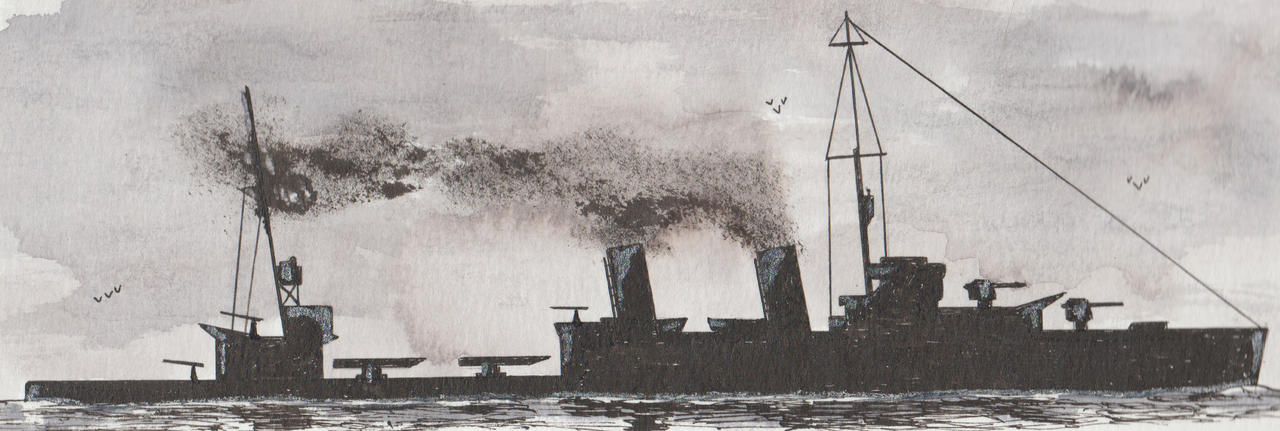
Japanese minelayer Nasami 1933-1944

Natsushima. ©Warshipsresearch.blogspot.com

Part of Natshima-class consisting of the Nasami, Natsushima both Project H5 and Sarushima Project H5B. Ordered under the 1931 Programme. Design was based on that of preceding Tsubama-class succeeded by Sokuten-class. Laid down by Harima Zosen on 19 January 1933, launched on 26 March 1934, completed on 20 September 1934, sunk during an Allied air atttack at Rabaul, East New Britian, Papua New Guinea on 1 April 1944 and stricken on 10 April 1944. 

Tuesday, 27 January 2026

American destroyer USS Perkins DD-377 1934-1943

USS Porter. ©Warshipsresearch.blogspot.com

USS Aylwin of the Farragut-class. ©Warshipsresearch.blogspot.com

USS Mahan. ©Warshipsresearch.blogspot.com

Gridley-class. ©Warshipsresearch.blogspot.com

Part of Mahan-class (18 completed) preceded by Porter-class succeeded by Gridley-class. Improved version of the Farragut-class. Laid down by Puget Sound Yard on 15 November 1934, launched on 31 December 1935, commissioned on18 September 9136 an sunk about 2 miles off Ipoteto Island after she was rammed by the Australian troop transport Duntroon after she left Milne Bay, Papua New Guinea for Buna on 29 November 1943. 

Friday, 7 March 2025

Japanese aircraft attacked Rabaul, New Britain according to the U.S. Joint Intelligence Committee. Daily summary dated 21 January 1942

An item reported that Rabaul, New Britain Island [Papua New Guinea] was attacked by at least 100 Japanese aircraft damaging the airdrome with her installations heavily. A carrier division early positioned in the Truk area, Caroline Islands probably supported the attack.

Source

Map Room Papers (Roosevelt Administration), 1942 - 1945. U.S. Joint Intelligence Committee. Daily summary No. 42 dated 21 January 1942

Monday, 10 February 2025

The positions of the Japanese aircraft carriers according to the U.S. Joint Intelligence Committee. Daily summary dated 22 January 1942

An item reported the estimated positions of the Japanese aircraft carriers: Cardiv 1 and 5 near Rabaul, New Guinea, Cardiv 2 east of the Philippines, Cardiv 3 between Japan and the Phulippines and the Cardiv 4 between the Mandates and Yokosuka.

Source

Map Room Papers (Roosevelt Administration), 1942 - 1945. U.S. Joint Intelligence Committee. Daily summary No. 43 dated 22 January 1942

Tuesday, 4 February 2025

Australian bombers attacked Japanese warships at Rabaul, New Guinea according to the U.S. Joint Intelligence Committee. Daily summary dated 28 January 1942

An item reported that Australian R.A.A.F. bombers attacked Rabaul, New Guinea possible hitting two Japanese warships starting fires. Despite heavy anti aircraft fire the bombers returned safely.

Source

Map Room Papers (Roosevelt Administration), 1942 - 1945. U.S. Joint Intelligence Committee. Daily summary No. 49 dated 28 January 1942

Sunday, 26 January 2025

Japanese battleship Niss(h)in under construction in 1941

An item reported that there was hardly any new information available about the Japanese battleships now being build.There were at least five under construction of which one at the Kure Naval Dockyard, one at the Mitsubishi Company yard, Nagasaki and one at Maiduru or at the Kawasaki shipyard at Kobe. Of those latter third ships two were to be named Kii and Owari. What the value of this assumption of those names was, could not be said. Two battleships projected in 1921 with the same name were cancelled as a result of the Washington Naval Conference. A fourth ship seemed to be the Nissin (1) launched at Kure, Japan on 30 November 1939 and the fifth seemed to be the Takamatu under construction at Yokosuka.

Note

1. In 1942 identified as possible being the seaplane carrier/tender Nisshin of the Nisshin-class, ordered in 1937, laid down by Kure Naval Arsenal on 2 November 1938, launched on 30 November 1939, commissioned on 27 February 1942, lost on an American air attack 40 nautical miles south west of Buin, Papua New Guinea and stricken on 10 September 1943.

Source

Brassey’s Naval Annual 1941

Monday, 6 January 2025

Japanese battleship Nisshin under construction in 1942

An item reported that Japan was building two battleships called Nisin (?) and Takamatu with a displacement of 40,000-43,000 tons, a length of 240 metres, a speed of 27 knots and a main armament of 8-40,cm guns. The Nisin was laid down at Kure in March 1937, launched on 30 November 1939 and in service in October 1941.(1)

Note

1. Another source identified her in 1942 as possible being the seaplane carrier/tender Nisshin of the Nisshin-class, ordered in 1937, laid down by Kure Naval Arsenal on 2 November 1938, launched on 30 November 1939, commissioned on 27 February 1942, lost on an American air attack 40 nautical miles south west of Buin, Papua New Guinea and stricken on 10 September 1943.

Source

Les Flottes de combat 1940-1942.

Tuesday, 31 December 2024

Japanese battleships under construction in 1941


An item reported that is was believed that three, possible even four, Japanese batteships were under construction but official information was still not available. It was quite certain to assume that the ships were over 40,000 tons and armed with 40.46cm/16” guns.(10 Regarded the Japanese shipbuilding facilities it was presumed that the ships were to be built by the navy shipyards at Kure and Yokosuka and further more by the private shipyards of Mitsubishi and Kawasaki at Nagasaki and Kobe. There were three ships launched in 1939 which could be identified although with doubt as being one of the battleships namely the Nisshin (2) launched at Kure on 30 November, the Zuikaku (3) launched at Kobe on 27 November 1939 and the Kadekuru (4) launched at Yokosuka on 1 June 1939. A French report however suggested that the Kadekuru was a 16,000 tons battle cruiser and not a battleship but this could also be doubted. A third possibility identified the Kadekuru as an aircraft carrier.

Notes

1. Under construction were the Shinano laid down by Yokosuka Naval Arsenal on 4 May 1940, completed as an aircraft carrier and the No. 111 laid down by Kure Naval Arsenal on 7 July 1940, both of the Yamato-class with a main armament of 3x3-46cm/18.1” guns and a displacement of 71,111 (trials)-72,809 (full load) tons.

2. In 1942 identified as possible being the seaplane carrier/tender Nisshin of the Nisshin-class, ordered in 1937, laid down by Kure Naval Arsenal on 2 November 1938, launched on 30 November 1939, commissioned on 27 February 1942, lost on an American air attack 40 nautical miles south west of Buin, Papua New Guinea and stricken on 10 September 1943.

3. A Shōkaku-class aircraft carrier, laid down by Kawasaki Shipyards on 20 May 1939, launched on 27 November 1939, commissioned on 25 September 1941, sunk in an American air attack during the Battle of Leyte Gulf on 25 October 1944 and stricken on 26 August 1945.

4. Not existing, also called a pocket battleship, in 1942 identified as destroyer Kurukaze?

Source

Brassey’s Naval Annuals 1940-1942

Monday, 30 December 2024

Japanese battleship Nissin or Nisshin under construction in 1942

An item referred to the suggestion that the batteship Nissin launched at Kure, Japan om 30 November 1939 could be a seaplane carrier of the Misuho type.

Note

1. The seaplane carrier/tender Nisshin of the Nisshin-class was ordered in 1937, laid down by Kure Naval Arsenal on 2 November 1938, launched on 30 November 1939, commissioned on 27 February 1942, lost on an American air attack 40 nautical miles south west of Buin, Papua New Guinea and stricken on 10 September 1943. The seaplane carrier Mizuho was built between 1937-1939.

Source

Brassey’s Naval Annual 1942

Tuesday, 12 November 2024

Large number of Japanese warships and transports in harbour of Rabaul according to the U.S. Joint Intelligence Committee. Daily summary dated 25 January 1942

An item reported that aircraft sighted 3 Japanese cruisers, 1 aircraft carrier, 1 destroyer and 11 transports in the harbour of Rabaul [Papua New Guinea].

Source

Map Room Papers (Roosevelt Administration), 1942 - 194

Saturday, 7 September 2024

Japanese preparing invasion of Salamua, New Guinea according to the U.S. Joint Intelligence Committee. Daily summary dated 30 January 1942

An item reported that Japanese aircraft attacked 3 times Salamua and in the vicinity were one large and 6 small Japanese ships sighted. The J.I.C. commented that this could be preparations for an invasion. On Salamua were several excellent airfields making it a base for operations covering the Coral Sea.

Source

Map Room Papers (Roosevelt Administration), 1942 - 1945. U.S. Joint Intelligence Committee. Daily summary No. 51 dated 30 January 1942 

Monday, 26 August 2024

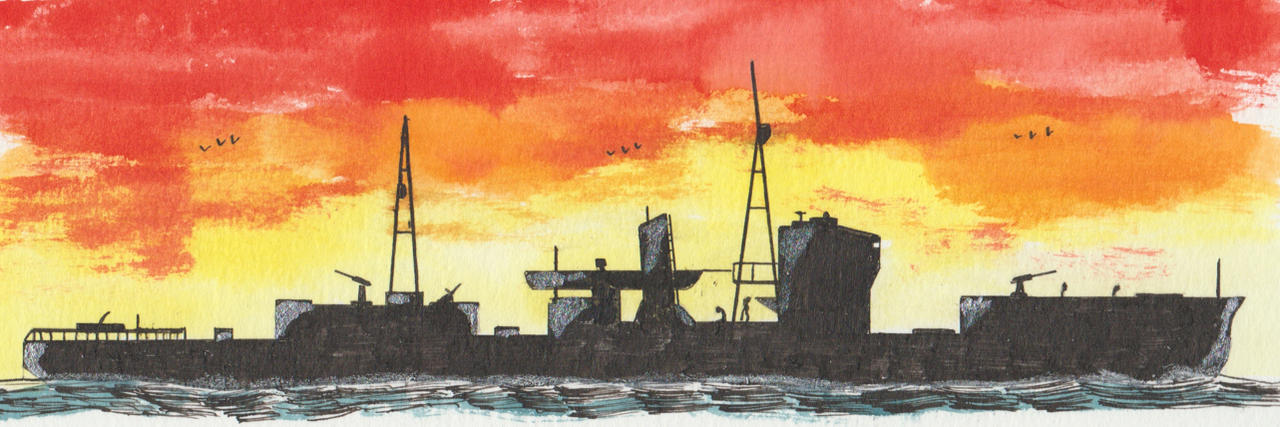
Japanese cargo ship Myoko Maru 1937-1943

©Warshipsresearch.blogspot.com

Sister ships Hakkai Maru and Myoko Maru. Call sign JXRL. Laid down by Tama Zosensho K.K., Tama, Japan on 19 May 1937, launched on 10 November 1937, completed on 24 December 1937, requsitioned as auxiliary transport by the navy on 15 October 1940, converted into a military transport between 1 November-9 December 1940, torpedoed and sunk by the American submarine USS Drum (SS-228) around 150 miles north north east of Rabaul on 17 June 1943 and stricken on 1 August 1943. Gross tonnage 5,081 tons, netto tonnage 2,945 tons and as dimensions 422.4 x 58.1 x 27.2 x 10 (light)-24.6 (loaded) feet. Diesel propulsion, single screw, horsepower 855 nhp,oil bunker capacity 1,298 tons, range nautical 25,000 miles/14 knots and speed 14 (normal cruising)-16.5 (maximum) knots. Capable of mounting 12.7cm/5”-15.,24cm/6” guns.