Translate

Showing posts with label Destroyers escorts. Show all posts

Sunday, 5 April 2026

Nationalist Chinese navy suffering losses in operations off the Tachen islands according to the Australia Station Intelligence Summary dated 1 March 1955

An item reported that the Nationalist Chinese navy suffered severely during operations off the Tachen Islands:

The destroyer escort Taiping (ex-USS Decker) was sunk on 14 November  1954 probably by MTB’s off the Tachens.(1)  

The destroyer escort Taiho (ex-USS Thomas) encountered on 10 January 1955 on starboard of the bridge a near miss by a fragmention bomb with as results 500 holes in her side and superstructure.(2)

The L.S.T. Chunghai was on 10 January 1955 hit by 3 rockets in the superstructure but just supericially damaged.

The L.S.T. Chung Chuan was lost on 10 January 1955 when her cago of coal and stores was set on fire. She burned out and sunk near the landing beach at Tachen.

The gunboat Ling Chiang (ex- USS PGM 13) lost on 10 January 1953 her stern blown off by a torpedo and sunk after 5 hours.

The repair ship Heng Shan hit three times by 250lb bombson 10 January 1955 causing extensive damage to her superstructure and living accommodations although her machinery was not damaged. Estimated was two months to be repaired.

Notes

1. Part of Everart-class destroyer escorts preceded by Buckley-class, laid down by Philadephia Navy Yard, USA as BDE-47 on 1 April 1942, launched on 24 July 1942, renamed USS Decker (DE-47) on 4 March 1943, commissioned between 3 May 1943-28 August 1945, transferred to Nationalist China/Taiwan on 28 August 1945, stricken US Navy on 12 March 1948, renamed ROCS Tai Ping (F-22) and sunk by Communist Chinese forces north off Tachen Islands on 14 November 1954.

2. Part of Cannon-class destroyer escorts preceded by Buckley-class succeeded by Edsall-class. DE-102. Laid down by Dravo Corporation, Pittsburgh, Pennsylvania, USA on 16 January 1943, launched on 31 July 1943, commissioned between 21 November 1943-March 1946, transferred to Nationalist China/Taiwan on 14 December 1948, stricken on 22 December 1948, renamed ROCS Taiho (DE-23), decommissioned, stricken and broken up in 1972.

Source

Website Royal Australian Navy, Sea Power Centre.

Thursday, 26 March 2026

Taiwanese frigate (ex-BDE-6 1942-1943, USS Wyffels DE-6 1943-1945) Tai Kang 1945-1972

US Everarts-class.  ©Warshipsresearch.blogspot.com

US Buckley-class.  ©Warshipsresearch.blogspot.com

Tai Kang. ©Warshipsresearch.blogspot.com

Former American Evarts-class destroyer escort succeeded by Buckley-class. Ordered as BDE-6, laid down by Boston Navy Yard on 17 October 1942, launched on 7 December 1942, reclassified as DE-6 on 25 January 1943, renamed Wyffels on 19 February 1943, commissioned on 15 April 1943, decommissioned and handed over to the Republic of China on 28 August 1945, renamed Tai Kang, stricken from the uS Navy List on 12 March and sold to be broken up in 1972. 

Friday, 28 November 2025

Japanese cruiser submarine I-45 1942-1944

©Warshipsresearch.blogspot.com

ProjectS37B. Cruiser submarine Type-B Modified 1-class or I-40 class/Otsu-gata Kai-1, preceded by Junsen Type A succeeded by Junsen Type B. Built under the Maru Kyu Programma as No. 375. Laid down by Sasebo Naval Arsenal on 15 July 1942, launched on 6 March 1943, completed on 28 December 1943 and sunk by the American destroyer escort USS Whitehurst east of the Philippines on 29 October 1944.

Saturday, 25 October 2025

Communist Chinese navy supported the attack on Chiang Shan according to the Australia Station Intelligence Summary dated 1 March 1955

An item reported that in the Communist Chinese attack on I Chiang Shan on 18 January around 5,000 military were landed in two waves by 4 L.S.M.’, 8 L.C.I.’s and 50 junks protected by 1 destroyer, 1 destroyer escort, 4 fast supply ships, 2 gunboats, 5 motor gunboats and 13 patrol craft. The destroyer was one of the 2 Russian Gordy-class destroyers purchased by Communist China recently. That is was possible to use her during this landing proved an not expected high level efficiency within their navy, otherwise a major part of her crew was still Soviet personnel. Both destroyers were since their arrival at Tsingtao on 12 October 1954 not seen at sea.

Source

Website Royal Australian Navy, Sea Power Centre.

Thursday, 16 October 2025

American and British fleets attacking targets on Honshu, Japan in Augsut 1945

An item reported that the American Third Fleet and the British Pacific Fleet with 9 battleships and 20 aircraft carriers shelled on 9-10 Augustindustrial and military targets including Kamaishi on the island Honshu, Japan. Aircraft carrier-borne aircraft destroyed airfield and ground installations and setting docks at fire. In two days time were 792 Japanese aircraft on the bombed airfields damaged or destroyed and 35 ships sunk including a destroyer, 2 destroyer escorts, 3 submarine chasers and a large number of cargo ships, coasters and so on. None of the Allied warships was damaged. On 13 August started both fleets again with attacks now mainly aiming at military targets in the Tokyo area.

Source

The National Archives, Kew Gardens, England CAB-129-1-20. Weekly Résumé (No. 311) of the naval, military and air situation from 0700 9th August to 0700 16th August 1945. 

Saturday, 11 October 2025

Newbuilding of Indonesian destroyers in Italy according to the Australia Station Intelligence Summary dated 8 May 1957

An item reported that for account of the Indonesian navy 2-1,300 tons light destroyers were to be built in Italy and to be armed with Squid.(2)

Note

1. The Imam Bon(d)jol and Surapati, laid down and launched in 1956 and completed in 1958 by the Ansaldo Yard, Leghorn, Italy. Similar to the Venezolan Almirante Clemente class destroyer escorts. Both were stricken in 1978.

Source

Website Royal Australian Navy, Sea Power Centre.
Tuesday, 23 September 2025

Several St. Laurent-class destroyers under construction for Royal Canadian Navyaccording to the Australia Station Intelligence Summary dated 1 February 1955

An item reported that 14 St. Laurent-class destroyers were under construction for the Royal Canadian Navy, the first seven to be completed between November 1955-September 1956. Designed speed 28 knots, Armament consisted of 1-3” cal 70 gun, 1-3” cal 50 gun, 2 Bofors, 4-21”Mark 23 torpedo tubes and 2x3 limbo projectors.(1)

Note

1. Destroyer escorts of which 14 were planned but just 7 completed. Preceded by C-class succeeded by Restigouche-class (the other 7 St. Laurents but then modified). 

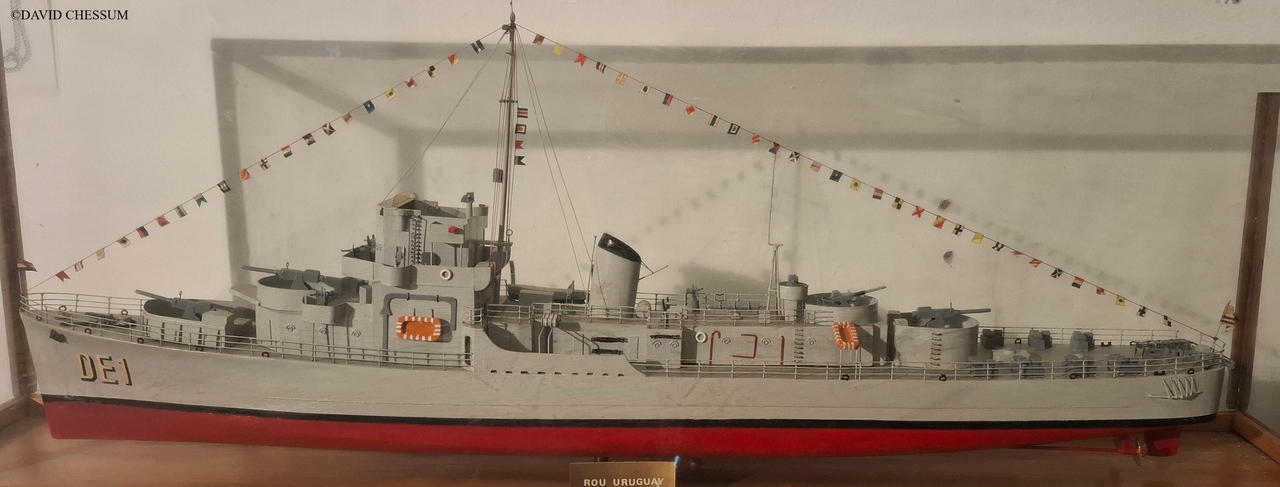
Uruguayan (ex-USS Baron) destroyer escort ROU Uruguay DE-1 1952-1995

Model Museo Naval, Montevideo, Uruguay

Laid down by Federal Shipbuilding and Drydock Company, Newark, New Jersey, USA on 30 November 1942, launched on 9 May 1943, commisioned on 5 July 1943, decommissioned on 26 April 1946, transferred to Uruguay on 3 May 1952, stricken US Navy on 14 May 1952, stricken in 1990 and sunk as a target in 1995. Part of Cannon-class destroyer escorts preceded by Buckley-class succeeded by Edsail-class.

Sunday, 21 September 2025

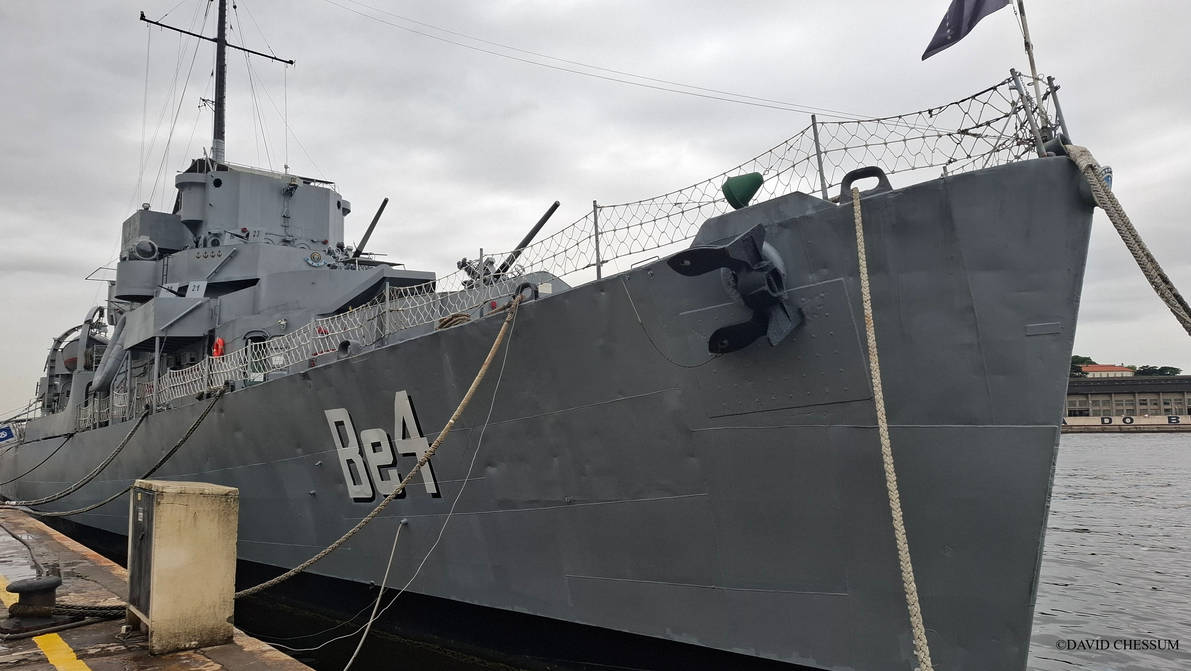
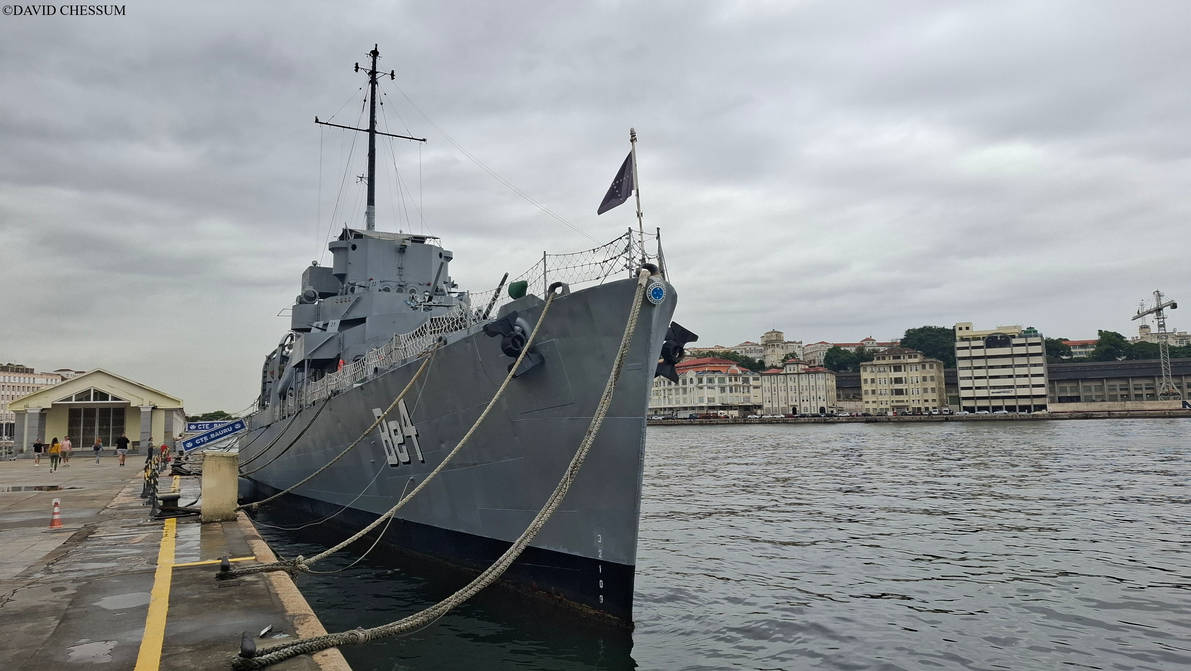
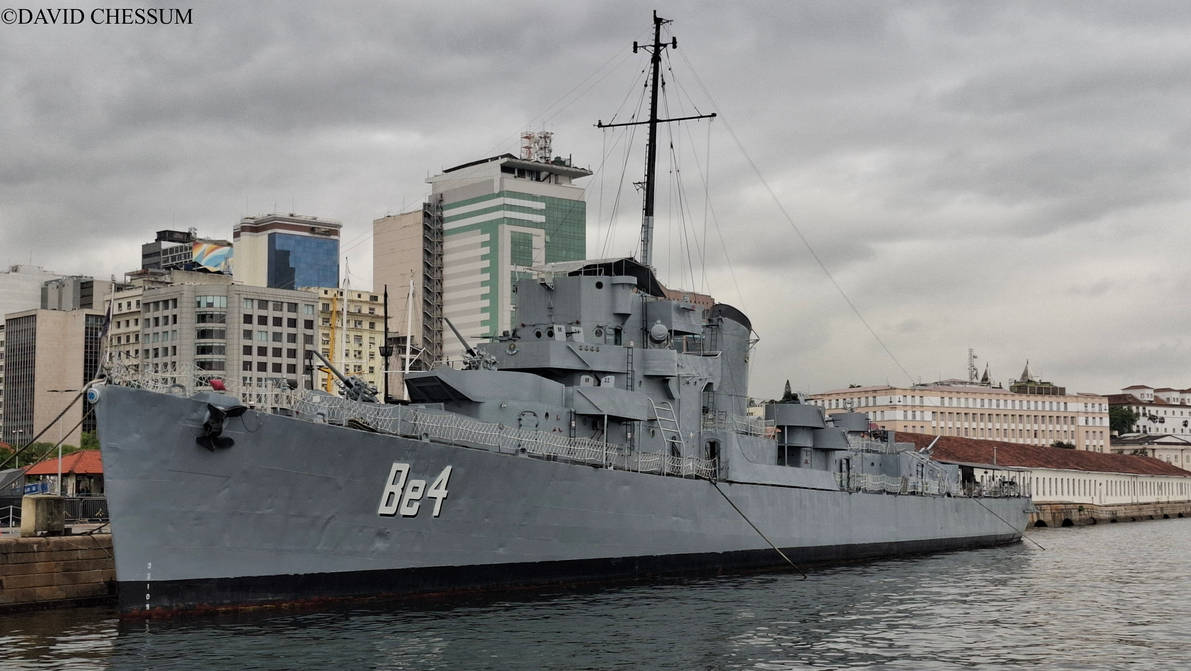
Brazilian destroyer escort Commandante Bauru Be-4 (1943) 1944-1982


Navy Cultural Centre Rio de Janeiro, April 2025

Laid down by Federal Shipbuilding and Drydock C0., Newark, New Jersey, USA on 17 May 1943, launched on 5 September 1943, commissioned as USS McAnn DE-179 on 11 October 1943, decommissioned on 15 August 1944, leased to Brazil on 15 August 1944, stricken by US Navy on 20 July 1953 and decommisioned in 1982. Part of Cannon-class destroyer escorts preceded by Buckley-class succeeded by Edall-class.

Monday, 25 August 2025

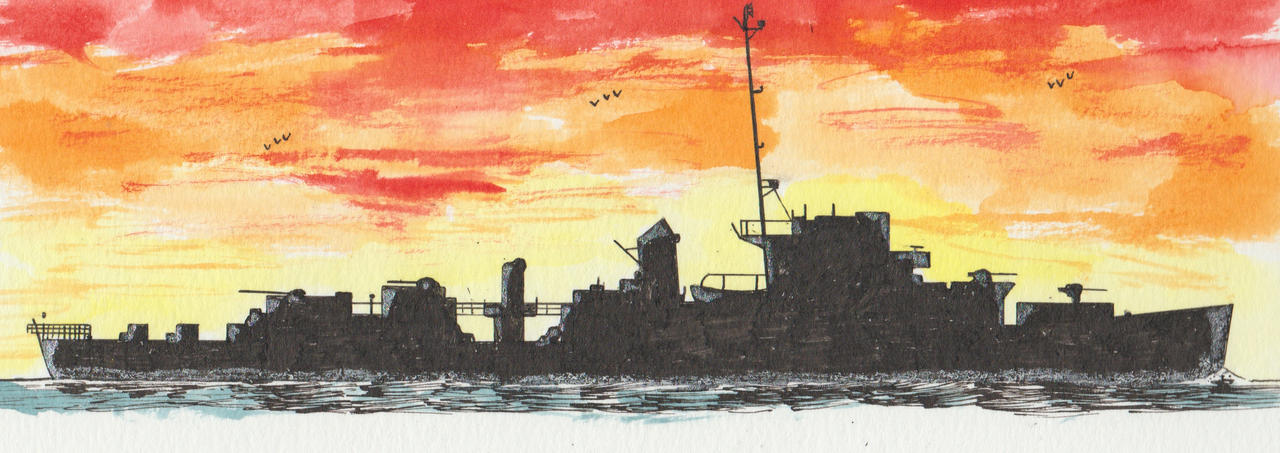
Japanese destroyer escorts Yukikaze and Harukaze launched according to the Australia Station Intelligence Summary dated 1 February 1956

An item reported the launching of the destroyer escort Yukikaze at Kobe on 20 August 1955 and the Harukaze at Nagasaki on 20 September both to be completed within the coming few months. Crew numbered 190 men. Armament 3-12.7cm/5” guns and 2x2-4cm guns. Fitted out with sonar. Built under the 1953-1954 Budget.

Source

Website Royal Australian Navy, Sea Power Centre.
Monday, 4 November 2024

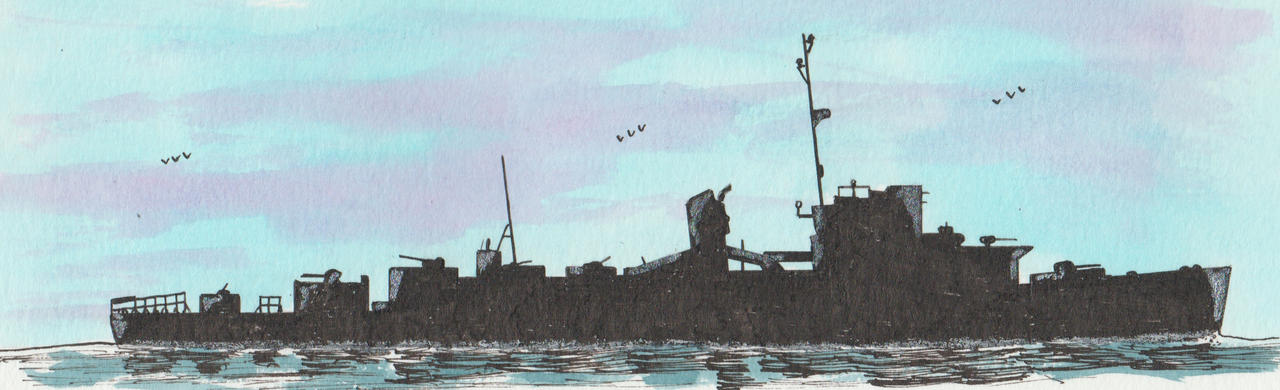
Communist China launched first Riga-class destroyer escort according to the Australia Station Intelligence Summary dated 1 December 1956

An item reported that the first Riga-class destroyer escort [the Ch’eng Tu] of Communist China was launched at Shanghai on 28 April and on 13 October sighted flying the navy ensign. With a generallly clean and efficient appearance and the presence of ratings on board indicates she should be commissioned. On 20 and 23 October she was not seen at her usual berth at Mollers Yard.(1)

Note

1. Built by Hutung Shipbuilding Factory, Shanghai. By 1963 there were four in service namely Ch’eng Tu, Kuei Lin, Kuei Yang and K’un Ming. Type 01 or Type 6601 and NATO code Chengdu/Ch'eng Tu class. Also classified as frigates. 

Sources

Website Royal Australian Navy, Sea Power Centre.
Jane’s Fighting Ships several editions.

Tuesday, 16 July 2024

Japanese naval building program according to the Australia Station Intelligence Summary dated 1 February 1956

An item reported that the Japanese 1953-1954 Budget authorized the building of 2 destroyer escorts, 3 frigates, 1 cable layer, 1 minesweeper annex mine layer, 3 large and 3 small minesweepers, 8 submarine chasers and 9-60 tons type C patrol boats.

Source

Website Royal Australian Navy, Sea Power Centre.

Friday, 17 May 2024

Theoretical performance of a CH4/H-fuelled Destroyer Escort Hydrofoil (DEH) in 1975.

Dynamic lift ship representing a heavy hydrofoil. Fuel weight 377.6 LT. Dimensions 209.2 x 42.4 x 11.0 x 20.5 (freeboard) feet. Range 3,100 (at 30 knots)-1,800 (at 50 knots) nautical miles.

Performance of a representative DFM-fuelled Destroyer Escort Hydrofoil (DEH) in 1975. Dynamic lift ship representing a heavy hydrofoil, weight 1,363 light tons, dimensions 200 (waterline) x 40.5 (waterline) x 12.0 (ship draft) x 16.0 (ship freeboard) feet. Propulsion 1 screw. Horsepower 80,000 hp. Maximum speed 52 knots. DFM fuel weight 456 LT. Cruising speed 30 knots. Range at cruising speed 3,150 nautical miles based on 10 percent fuel reserve rounded to nearest 50 nautical miles.

Destroyer Escort Hydrofoil (DEH) general applicable for the next specific warfare areas:

ASMD=self protection against anti-ship missiles

ASW (P)=force protection against subsurface threats

AAW=force attribution of airborne threats

ASUW=warfare against surface ship threats

EW=electronic warfare

CDS=combat direction systems

SURV=surveillance

AMW(L)=amhibious lift capability

NGFS=naval gunfire support

MIW=mine warfare

MLS=mobile logistic support for sea-based forces

SPW=special warfare


Principal mission characteristics

Mission: sea control defense of protected convoy lane

Duration in day: 7.2

Range in nautical miles: 5,200

Mission description: sweep of 2,600 miles protected lane both ways using sprint and draft tactic for submarine search. Sprint 45 knots.


Ship operational parameters

Days in op area:7.2

Op area day profile in hours: 16

Op area day profile in knots: 45

Op area day profile in nautical miles: 720

Total time at speed in hours: 115.4

Total time at speed in knots: 45

Source

Hydrogen. Hearings before the subcommittee of energy research, development and demonstration of the committee on science and technology U.S. House of Representatives. Ninety-fourth congress, first session June 10 and 12, 1975, p. 1027 and further

Thursday, 16 May 2024

Theoretical performance of a CH4/L-fuelled Destroyer Escort Hydrofoil (DEH) in 1975

Dynamic lift ship representing a heavy hydrofoil. Fuel weight 408.5 LT. Dimensions 206.9 x 41.9 x 11.2 x 19.3 (freeboard) feet. Range 3,350 (at 30 knots)-1,950 (at 50 knots) nautical miles.

Performance of a representative DFM-fuelled Destroyer Escort Hydrofoil (DEH) in 1975. Dynamic lift ship representing a heavy hydrofoil, weight 1,363 light tons, dimensions 200 (waterline) x 40.5 (waterline) x 12.0 (ship draft) x 16.0 (ship freeboard) feet. Propulsion 1 screw. Horsepower 80,000 hp. Maximum speed 52 knots. DFM fuel weight 456 LT. Cruising speed 30 knots. Range at cruising speed 3,150 nautical miles based on 10 percent fuel reserve rounded to nearest 50 nautical miles.

Destroyer Escort Hydrofoil (DEH) general applicable for the next specific warfare areas:

ASMD=self protection against anti-ship missiles

ASW (P)=force protection against subsurface threats

AAW=force attribution of airborne threats

ASUW=warfare against surface ship threats

EW=electronic warfare

CDS=combat direction systems

SURV=surveillance

AMW(L)=amhibious lift capability

NGFS=naval gunfire support

MIW=mine warfare

MLS=mobile logistic support for sea-based forces

SPW=special warfare


Principal mission characteristics

Mission: sea control defense of protected convoy lane

Duration in day: 7.2

Range in nautical miles: 5,200

Mission description: sweep of 2,600 miles protected lane both ways using sprint and draft tactic for submarine search. Sprint 45 knots.


Ship operational parameters

Days in op area:7.2

Op area day profile in hours: 16

Op area day profile in knots: 45

Op area day profile in nautical miles: 720

Total time at speed in hours: 115.4

Total time at speed in knots: 45

Source

Hydrogen. Hearings before the subcommittee of energy research, development and demonstration of the committee on science and technology U.S. House of Representatives. Ninety-fourth congress, first session June 10 and 12, 1975, p. 1027 and further

Wednesday, 15 May 2024

Theoretical performance of a N2H4-fuelled Destroyer Escort Hydrofoil (DEH) in 1975

Dynamic lift ship representing a heavy hydrofoil. Fuel weight 460.7 LT. Dimensions 199.5 x 40.4 x 12.1 x 158 (freeboard) feet. Range 1,250 (at 30 knots)-750 (at 50 knots) nautical miles.

Performance of a representative DFM-fuelled Destroyer Escort Hydrofoil (DEH) in 1975. Dynamic lift ship representing a heavy hydrofoil, weight 1,363 light tons, dimensions 200 (waterline) x 40.5 (waterline) x 12.0 (ship draft) x 16.0 (ship freeboard) feet. Propulsion 1 screw. Horsepower 80,000 hp. Maximum speed 52 knots. DFM fuel weight 456 LT. Cruising speed 30 knots. Range at cruising speed 3,150 nautical miles based on 10 percent fuel reserve rounded to nearest 50 nautical miles.

Destroyer Escort Hydrofoil (DEH) general applicable for the next specific warfare areas:

ASMD=self protection against anti-ship missiles

ASW (P)=force protection against subsurface threats

AAW=force attribution of airborne threats

ASUW=warfare against surface ship threats

EW=electronic warfare

CDS=combat direction systems

SURV=surveillance

AMW(L)=amhibious lift capability

NGFS=naval gunfire support

MIW=mine warfare

MLS=mobile logistic support for sea-based forces

SPW=special warfare


Principal mission characteristics

Mission: sea control defense of protected convoy lane

Duration in day: 7.2

Range in nautical miles: 5,200

Mission description: sweep of 2,600 miles protected lane both ways using sprint and draft tactic for submarine search. Sprint 45 knots.


Ship operational parameters

Days in op area:7.2

Op area day profile in hours: 16

Op area day profile in knots: 45

Op area day profile in nautical miles: 720

Total time at speed in hours: 115.4

Total time at speed in knots: 45

Source

Hydrogen. Hearings before the subcommittee of energy research, development and demonstration of the committee on science and technology U.S. House of Representatives. Ninety-fourth congress, first session June 10 and 12, 1975, p. 1027 and further

Tuesday, 14 May 2024

Theoretical performance of a NHs/H-fuelled Destroyer Escort Hydrofoil (DEH) in 1975

Dynamic lift ship representing a heavy hydrofoil. Fuel weight 418.0 LT. Dimensions 202.3 x 41.0 x 11.7 x 17.1 (freeboard) feet. Range 1,300 (at 30 knots)-750 (at 50 knots) nautical miles.

Performance of a representative DFM-fuelled Destroyer Escort Hydrofoil (DEH) in 1975. Dynamic lift ship representing a heavy hydrofoil, weight 1,363 light tons, dimensions 200 (waterline) x 40.5 (waterline) x 12.0 (ship draft) x 16.0 (ship freeboard) feet. Propulsion 1 screw. Horsepower 80,000 hp. Maximum speed 52 knots. DFM fuel weight 456 LT. Cruising speed 30 knots. Range at cruising speed 3,150 nautical miles based on 10 percent fuel reserve rounded to nearest 50 nautical miles.

Destroyer Escort Hydrofoil (DEH) general applicable for the next specific warfare areas:

ASMD=self protection against anti-ship missiles

ASW (P)=force protection against subsurface threats

AAW=force attribution of airborne threats

ASUW=warfare against surface ship threats

EW=electronic warfare

CDS=combat direction systems

SURV=surveillance

AMW(L)=amhibious lift capability

NGFS=naval gunfire support

MIW=mine warfare

MLS=mobile logistic support for sea-based forces

SPW=special warfare


Principal mission characteristics

Mission: sea control defense of protected convoy lane

Duration in day: 7.2

Range in nautical miles: 5,200

Mission description: sweep of 2,600 miles protected lane both ways using sprint and draft tactic for submarine search. Sprint 45 knots.


Ship operational parameters

Days in op area:7.2

Op area day profile in hours: 16

Op area day profile in knots: 45

Op area day profile in nautical miles: 720

Total time at speed in hours: 115.4

Total time at speed in knots: 45

Source

Hydrogen. Hearings before the subcommittee of energy research, development and demonstration of the committee on science and technology U.S. House of Representatives. Ninety-fourth congress, first session June 10 and 12, 1975, p. 1027 and further

Monday, 13 May 2024

Theoretical performance of a NH3/L-fuelled Destroyer Escort Hydrofoil (DEH) in 1975

Dynamic lift ship representing a heavy hydrofoil. Fuel weight 434.6 LT. Dimensions 203.3 x 41.2 x 11.6 x 17.5 (freeboard) feet. Range 1,350 (at 30 knots)-750 (at 50 knots) nautical miles.

Performance of a representative DFM-fuelled Destroyer Escort Hydrofoil (DEH) in 1975. Dynamic lift ship representing a heavy hydrofoil, weight 1,363 light tons, dimensions 200 (waterline) x 40.5 (waterline) x 12.0 (ship draft) x 16.0 (ship freeboard) feet. Propulsion 1 screw. Horsepower 80,000 hp. Maximum speed 52 knots. DFM fuel weight 456 LT. Cruising speed 30 knots. Range at cruising speed 3,150 nautical miles based on 10 percent fuel reserve rounded to nearest 50 nautical miles.

Destroyer Escort Hydrofoil (DEH) general applicable for the next specific warfare areas:

ASMD=self protection against anti-ship missiles

ASW (P)=force protection against subsurface threats

AAW=force attribution of airborne threats

ASUW=warfare against surface ship threats

EW=electronic warfare

CDS=combat direction systems

SURV=surveillance

AMW(L)=amhibious lift capability

NGFS=naval gunfire support

MIW=mine warfare

MLS=mobile logistic support for sea-based forces

SPW=special warfare


Principal mission characteristics

Mission: sea control defense of protected convoy lane

Duration in day: 7.2

Range in nautical miles: 5,200

Mission description: sweep of 2,600 miles protected lane both ways using sprint and draft tactic for submarine search. Sprint 45 knots.


Ship operational parameters

Days in op area:7.2

Op area day profile in hours: 16

Op area day profile in knots: 45

Op area day profile in nautical miles: 720

Total time at speed in hours: 115.4

Total time at speed in knots: 45

Source

Hydrogen. Hearings before the subcommittee of energy research, development and demonstration of the committee on science and technology U.S. House of Representatives. Ninety-fourth congress, first session June 10 and 12, 1975, p. 1027 and further

Sunday, 12 May 2024

Theoretical performance of a H2-fuelled Destroyer Escort Hydrofoil (DEH) in 1975

Dynamic lift ship representing a heavy hydrofoil. Fuel weight 228.0 LT. Dimensions 224.7 x 49.5 x 9.5 x 29.5 (freeboard) feet. Range 4,450 (at 30 knots)-2,600 (at 50 knots) nautical miles.

Performance of a representative DFM-fuelled Destroyer Escort Hydrofoil (DEH) in 1975. Dynamic lift ship representing a heavy hydrofoil, weight 1,363 light tons, dimensions 200 (waterline) x 40.5 (waterline) x 12.0 (ship draft) x 16.0 (ship freeboard) feet. Propulsion 1 screw. Horsepower 80,000 hp. Maximum speed 52 knots. DFM fuel weight 456 LT. Cruising speed 30 knots. Range at cruising speed 3,150 nautical miles based on 10 percent fuel reserve rounded to nearest 50 nautical miles.

Destroyer Escort Hydrofoil (DEH) general applicable for the next specific warfare areas:

ASMD=self protection against anti-ship missiles

ASW (P)=force protection against subsurface threats

AAW=force attribution of airborne threats

ASUW=warfare against surface ship threats

EW=electronic warfare

CDS=combat direction systems

SURV=surveillance

AMW(L)=amhibious lift capability

NGFS=naval gunfire support

MIW=mine warfare

MLS=mobile logistic support for sea-based forces

SPW=special warfare


Principal mission characteristics

Mission: sea control defense of protected convoy lane

Duration in day: 7.2

Range in nautical miles: 5,200

Mission description: sweep of 2,600 miles protected lane both ways using sprint and draft tactic for submarine search. Sprint 45 knots.


Ship operational parameters

Days in op area:7.2

Op area day profile in hours: 16

Op area day profile in knots: 45

Op area day profile in nautical miles: 720

Total time at speed in hours: 115.4

Total time at speed in knots: 45

Source

Hydrogen. Hearings before the subcommittee of energy research, development and demonstration of the committee on science and technology U.S. House of Representatives. Ninety-fourth congress, first session June 10 and 12, 1975, p. 1027 and further

Sunday, 31 March 2024

Theoretical performance of a CH3OH-fuelled Destroyer Escort Hydrofoil (DEH) in 1975. Dynamic lift ship representing a heavy hydrofoil

Fuel weight 451.2 LT. Dimensions 200.5 x 40.6 x 11.9 x 16.2 (freeboard) feet. Range 1,500 (at 30 knots)-850 (at 50 knots) nautical miles.

Performance of a representative DFM-fuelled Destroyer Escort Hydrofoil (DEH) in 1975. Dynamic lift ship representing a heavy hydrofoil, weight 1,363 light tons, dimensions 200 (waterline) x 40.5 (waterline) x 12.0 (ship draft) x 16.0 (ship freeboard) feet. Propulsion 1 screw. Horsepower 80,000 hp. Maximum speed 52 knots. DFM fuel weight 456 LT. Cruising speed 30 knots. Range at cruising speed 3,150 nautical miles based on 10 percent fuel reserve rounded to nearest 50 nautical miles.

Destroyer Escort Hydrofoil (DEH) general applicable for the next specific warfare areas:

ASMD=self protection against anti-ship missiles

ASW (P)=force protection against subsurface threats

AAW=force attribution of airborne threats

ASUW=warfare against surface ship threats

EW=electronic warfare

CDS=combat direction systems

SURV=surveillance

AMW(L)=amhibious lift capability

NGFS=naval gunfire support

MIW=mine warfare

MLS=mobile logistic support for sea-based forces

SPW=special warfare

Principal mission characteristics

Mission: sea control defense of protected convoy lane

Duration in day: 7.2

Range in nautical miles: 5,200

Mission description: sweep of 2,600 miles protected lane both ways using sprint and draft tactic for submarine search. Sprint 45 knots.

Ship operational parameters

Days in op area:7.2

Op area day profile in hours: 16

Op area day profile in knots: 45

Op area day profile in nautical miles: 720

Total time at speed in hours: 115.4

Total time at speed in knots: 45

Source

Hydrogen. Hearings before the subcommittee of energy research, development and demonstration of the committee on science and technology U.S. House of Representatives. Ninety-fourth congress, first session June 10 and 12, 1975, p. 1027 and further

Tuesday, 19 March 2024

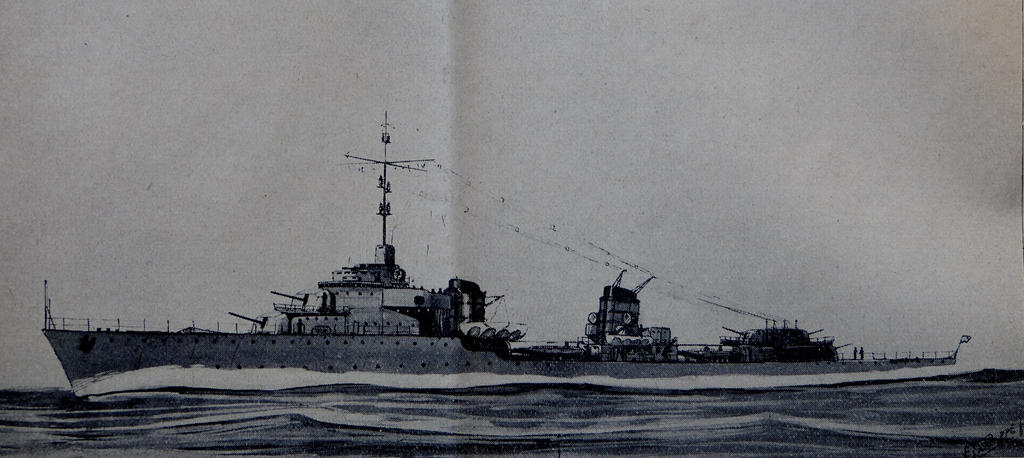
French warships George Leygues, Montcalm, Fantasque and Malin returned to Dakar, Senegal according to the U.S. Joint Intelligence Committee. Daily summary dated 20 April 1942

La Galissonnière-class cruisers George Leygues. Montcalm and Gloire

destroyer le Fantasque, source Dutch magazine Onze Vloot dated June 1936, p. 80

An item referred to the Summaries 129-130 reporting that the light cruisers George Leygues and Montcalm with the hevay destroyers Fantasque and Malin returned to Dakar, Senegal on 17 April.

Source

Map Room Papers (Roosevelt Administration), 1942 - 1945. U.S. Joint Intelligence Committee. Daily summary No. 131 dated 20 April 1942