Translate

Showing posts with label Indian Ocean. Show all posts

Thursday, 1 October 2026

Allied supply lines between Dutch East Indies Australia&Indian Ocean threatened by Japanese submarines according to the U.S. Joint Intelligence Committee. Daily summary dated 19 February 1942

An item reported that an increase of Japanese submarine activities along the supply routes between Java, Dutch East Indies and Australia&Indian Ocean was to be expected.Source

Map Room Papers (Roosevelt Administration), 1942 - 1945. MR0423. U.S. Joint Intelligence Committee. Daily summary No. 71 dated 19 February 1942

Tuesday, 15 September 2026

American sailing sealing ship Rebecca Groves in 1839-1840

Antarctic sealing ground. Rigging brig. Tonnage 129 tons. Captain Barnum, sailed from Stonington for the Indian Ocean on 15 July 1839 and arrived at home on 7 June 1840 with 650 barrels sea-elephant oil.

Source

Goode, George Brown. The fisheries and fishery industries of the United States. Section V. History and methods of the fisheries. Volume II, Washington, 1887. 

Monday, 14 September 2026

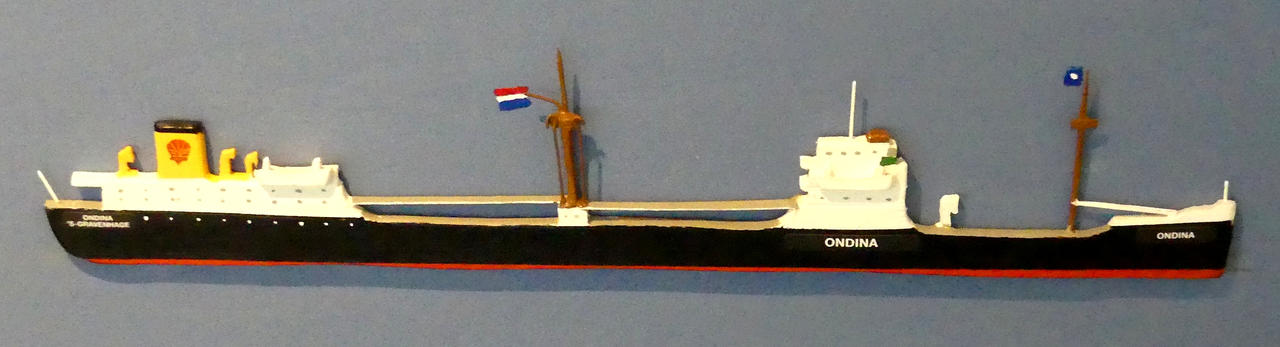
Dutch scholars corresponding in the 1950s with Dutch tanker Ondina which was a Second World War decorated survivor. She was involved in the destruction of the armed Japanese auxiliary cruiser Hokoku Maru

Een plakboek geeft zicht op het reilen en zeilen aan boord van het Nederlandse koopvaardijschip Ondina (1) in de jaren vijftig van de twintigste eeuw. Een schip dat in de Tweede Wereldoorlog zich op bijzondere wijze had onderscheiden.

In 2016 kwam het Gemeentearchief Vlissingen in het bezit van een plakalbum met daarin brieven, foto’s en prentbriefkaarten van bemanningsleden van de La Corona/Shell tanker Ondina. [1] De brieven schetsen het zeemansleven aan boord van een Nederlands koopvaardijschip in de jaren vijftig van de vorige eeuw, soms tot in de details.

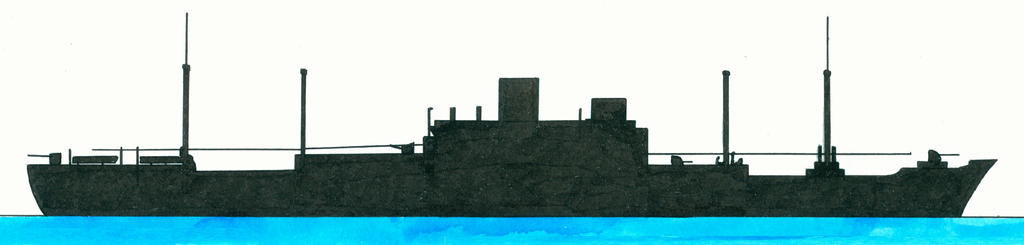
Nederlandse tanker Ordina©Warshipsresearch.blogspot.com

Adoptie van schepen door scholen

De in Schiedam gevestigde Nederlandse vereniging tot adoptie van schepen (NEVAS) streefde sinds 1946 ernaar dat scholen Nederlandse koopvaardijschepen adopteerden. De vereniging wilde de belangstelling van de jeugd voor de scheepvaartwereld bevorderen en de adoptie van een schip was hierbij een belangrijk middel. Naast een briefwisseling tussen leerlingen en bemanning kon over en weer cadeautjes worden gestuurd. Door de bemanning gekocht tijdens hun reizen en vanuit de school bijvoorbeeld met sinterklaas en kerst.

De Vlissingse RHBS adopteert de Ondina. Dat ging niet geheel vlekkeloos. In 1950 schreef haar kapitein P.J. Boudier dat vanwege allerlei omstandigheden de correspondentie is verwaarloosd. Het schip had gedurende langere tijd op de oost gevaren. Nu was het gerepareerd en met vele nieuwe officieren onderweg naar Curaçao. Dit was de gelegenheid, schreef Boudier, om zijn leven te verbeteren en te beginnen met een briefwisseling. Hij hoopte dat ook de leerlingen hier zin in hebben. Dat was inderdaad het geval. De correspondentie stokte later opnieuw maar werd toch weer opgepakt.

De laatst bewaarde brief van het schip dateert van 9 maart 1958. Kapitein C.J. van de Weijer bedankte voor de 87 brieven en het kerstpakket die eindelijk zijn aangekomen. Het schip werd in 1959 buiten dienst gesteld en vervolgens gesloopt.

Aan boord van de Ondina

De brieven zijn niet van humor ontbloot. Zo werd een ansichtkaart uit Dakar meegezonden waarop marktkooplui zijn afgebeeld met de woorden dat het gaat om de Afrikaanse versie van de patat-friteskraam staande aan de Vlissingse Vissershaven. De leerlingen kregen op elke vraag een serieus antwoord of het nu gaat om de medische zorg, de voeding of over de machinekamer.

De bemanning van de Ondina bestond deels uit Nederlandse officieren en deels uit Chinese matrozen en ander personeel. Je gaat niet dagelijks naar huis, zo schreef haar kapitein in 1957; het was gebruikelijk om 1 jaar aan boord te zijn en dan 2,5 maand verlof te krijgen.

In Terneuzen werd het gehele Chinese deel van de bemanning afgelost. Zij hadden toen bijna 2,5 jaar aan boord gewerkt! Het schip zelf begon haar leeftijd te voelen. Het voer tussen Dakar, Trinidad, Las Palmas, Curaçao en Gent heen en weer. Toch ging het weer naar het Verre Oosten toe en werden onder meer Yokohama, Nieuw Guinea en Singapore bezocht.

In het Chinees

Maar het was niet alleen de kapitein die schreef, ook bijvoorbeeld de marconist. Deze stuurde een briefje mee met daarop in het Chinees de cijfers 1-10 en vertelt en passant erbij dat dit ongeveer het enige Chinees is dat hij na 4 jaar heeft geleerd. Op zich is dat niet eens zo verwonderlijk want het dekpersoneel kwam uit Foochow, de bedienden uit Hainan en het machinekamerpersoneel uit Kanton, ieder met hun eigen dialect. Verder spraken de Chinezen vaak Maleis en pidgin Engels. Dat pidgin Engels wordt over de gehele wereld door zeelieden gesproken en de leerlingen kregen het advies het school-Engels te vergeten.

Dieren aan boord

Er waren ook dieren aan boord, sommigen gewild, andere verre van dat. Kapitein Boudier had twee honden genaamd Puck en Viezerik. Viezerik omdat zij als puppy altijd door de smerigheid heen kroop. De duiven van de eerste machinist waren weggevlogen in Maracaibo en nooit meer teruggekeerd. Ongewenste gasten zijn enige honderdduizenden kakkerlakken en verder ook wandluizen.

Onderscheiding voor de Ondina

De Ondina was niet een doorsnee tanker. Zij is het eerste Nederlandse koopvaardijschip dat een Koninklijke Vermelding bij Dagorder – op 9 november 1948 – zou krijgen. Dit is een Koninklijk Besluit verleend aan schepen van de Koninklijke Marine of onder Nederlandse vlag varende koopvaardijschepen die zich in de strijd na 10 mei 1940 een bijzondere daad heeft verricht. En dat heeft de Ondina!

In 1939 brak de Tweede Wereldoorlog uit, waarbij tussen 1940-1945 Nederland door Duitsland werd bezet. In het Verre Oosten brak de oorlog pas uit na de Japanse aanval op Pearl Harbor op 7 december 1941. Een dag later verklaarde ons land de oorlog aan Japan. Op dat moment is Nederlands-Indië (het huidige Indonesië) met de belangrijke oliebronnen nog steeds een Nederlandse kolonie. De Nederlandse koopvaardij moest op de hoede zijn voor Japanse schepen, niet alleen voor oorlogsschepen. Ook zogenaamde hulpkruisers vormden een wezenlijk gevaar. Een hulpkruiser is niet meer dan een snel varend koopvaardijschip met een (soms zware) bewapening.

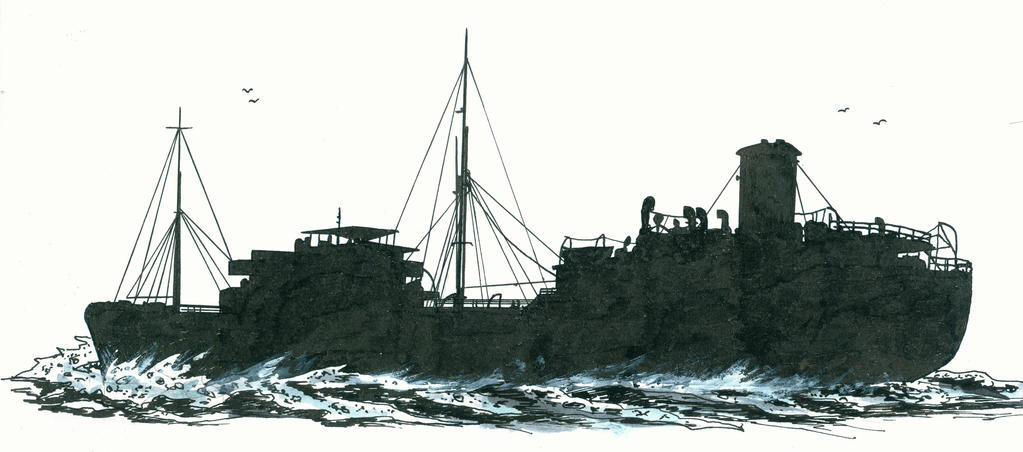
Japanse hulpkruiser, zoals Aikoku Maru and Hokoku Maru©Warshipsresearch.blogspot.com

Samen met haar escorte, de British-Indische mijnenveger H.M.I.S. Bengal, kwam midden op de Indische Oceaan de Ondina op 11 november 1942 in gevecht met de Japanse hulpkruisers Hokoku Maru en Aikoku Maru. [2] Het gevecht had een onverwachte afloop. Een (gelukkig?) schot met het 10,2cm kanon van de Ondina raakte de Hokoku Maru die vervolgens in de lucht vloog.

Nadat de munitie op was, werd de witte vlag gehesen en de Ondina door haar bemanning verlaten. De Aikoku Maru torpedeerde de Ondina en vertr0k, ervan uitgaande dat zij zinkende was. Bemanningsleden van de Ondina keerden echter terug en wisten met het zwaar beschadigde schip op 18 november Fremantle, Australië, te bereiken. Vijf opvarenden, waaronder haar kapitein Horsman, overleefden het gevecht niet. Op 16 juni 1945 kwam de Ondina als eerste tanker het inmiddels bevrijde Rotterdam binnenvaren.

Noten

Te water gelaten bij de Nederlandse Dok & Scheepsbouwmaatschappij te Amsterdam op 29 april 1939 en voltooid op 1 augustus 1939. Met een bruto tonnage of 9.070 tons waren haar afmetingen 130,49 x 16,62 x 6,40 meters. De Werkspoor 6-cilinder 2.800 pk diesel maakte een maximum snelheid van slechts 12 knopen mogelijk. Tijdens de oorlog was zij bewapend met 1-10,2cm kanon en een aantal machinegeweren.

The Hokoku Maru-klasse hulpkruisers bestond uit de Hokoku Maru, Aikoku Maru en Gokoku Maru (ex-Kokouk Maru), oorspronkelijk gebouwd als passagiersschepen voor de Osaka Mercantile Steamship Co. Ltd. maar in 1941-1942 toegevoegd aan de Japanse marine. Waterverplaatsing 7.529 tons en als afmetingen 160,8 x 20,1 x 12,5 meters. De Hokoku Maru had een snelheid van 21,1 knopen en een bewapening van 8-15cm kanons, 2-7,62cm kanons and 4-53,3cm torpedobuizen. De Aikoku Maru had een snelheid van 20,9 knopen  en een bewapening van 8-14cm kanons, 4-2,5cm anti vliegtuig kanons en 4-53,3cm torpedobuizen.

Monday, 29 September 2025

American whaling brig Inga 1846-1847

Of Wareham. Departed on 10 August 1846. Returned leaking on 23 December 1847, with 350 barrels sperm oil. Measured 160 tons. Captain Elisha G. Cudworth. Sold to New Bedford in 1848, departing from there on 9 May 1848 for the Indian Ocean. Captain Barnes. In December 1852 captured by the natives of Pleasant Island killing her captain and most of the crew members.

Source

D.Hamilton Hurd. History of the Plymouth County, Massachusetts with biographical sketsches of many of its pioneers and prominent men. Philadelphia, 1884. 

Sunday, 28 September 2025

American whaling brig Inga 1845-1846

Of Wareham. Departed on 25 March 1845. Returned on 3 June 1846, with 750 barrels sperm oie. Measured 160 tons. Captain Elisha G. Cudworth. Sold to New Bedford in 1848, departing from there on 9 May 1848 for the Indian Ocean. Captain Barnes. In December 1852 captured by the natives of Pleasant Island killing her captain and most of the crew members.

Source

D.Hamilton Hurd. History of the Plymouth County, Massachusetts with biographical sketsches of many of its pioneers and prominent men. Philadelphia, 1884. 

Saturday, 27 September 2025

American whaling brig Inga 1843-1844

Of Wareham. Departed on 26 June 1843. Returned on 24 November 1844, with 830 barrels sperm oil. Measured 160 tons. Captain Elisha G. Cudworth. Sold to New Bedford in 1848, departing from there on 9 May 1848 for the Indian Ocean. Captain Barnes. In December 1852 captured by the natives of Pleasant Island killing her captain and most of the crew members.

Source

D.Hamilton Hurd. History of the Plymouth County, Massachusetts with biographical sketsches of many of its pioneers and prominent men. Philadelphia, 1884. 

Friday, 26 September 2025

American whaling brig Inga 1842-1843

Of Wareham. Departed on 21 June 1842. Returned on 9 April 1843, with 750 barrels sperm oil. Measured 160 tons. Captain Elisha G. Cudworth. Sold to New Bedford in 1848, departing from there on 9 May 1848 for the Indian Ocean. Captain Barnes. In December 1852 captured by the natives of Plesant Island killing her captain and most of the crew members.

Source

D.Hamilton Hurd. History of the Plymouth County, Massachusetts with biographical sketsches of many of its pioneers and prominent men. Philadelphia, 1884. 

Thursday, 25 September 2025

American whaling brig Inga 1841-1842

Of Wareham. Departed on 1 June 1841. Returned on 11 April 1842. , with 816 barrels sperm oil. Measured 160 tons. Captain Elisha G. Cudworth. Sold to New Bedford in 1848, departing from there on 9 May 1848 for the Indian Ocean. Captain Barnes. In December 1852 captured by the natives of Pleasant Island killing her captain and most of the crew members.

Source

D.Hamilton Hurd. History of the Plymouth County, Massachusetts with biographical sketsches of many of its pioneers and prominent men. Philadelphia, 1884. 

Wednesday, 24 September 2025

American whaling brig Inga 1840-1841


Of Wareham. Departed in April 1840. Returned on 7 April 1841, with 696 barrels sperm oil, 12 barrels whale oil. Measured 160 tons. Captain Elisha G. Cudworth. Sold to New Bedford in 1848, departing from there on 9 May 1848 for the Indian Ocean. Captain Barnes. In December 1852 captured by the natives of Pleasant Island killing her captain and most of the crew members.

Source

D.Hamilton Hurd. History of the Plymouth County, Massachusetts with biographical sketsches of many of its pioneers and prominent men. Philadelphia, 1884. 

Tuesday, 23 September 2025

American whaling brig Inga 1839-1840


Of Wareham. Departed on 17 July 1893. Returned on 9 January 1840, with 720 barrels sperm oil. Measured 160 tons. Captain Elisha G. Cudworth. Sold to New Bedford in 1848, departing from there on 9 May 1848 for the Indian Ocean. Captain Barnes. In December 1852 captured by the natives of Pleasant Island killing her captain and most of the crew members.

Source

D.Hamilton Hurd. History of the Plymouth County, Massachusetts with biographical sketsches of many of its pioneers and prominent men. Philadelphia, 1884. 

Thursday, 18 September 2025

Trans-Siberian Railway essential for transporting strategic materials from the USSR to China and North Korea according to the Australia Station Intelligence Summary dated7 January 1955

An item reported that the Trans-Siberian Railway was of vital importance for supplying strategic materials by the USSR to China and North Korea. Altenatives were the long sea route via the Indian Ocean or the Northern Sea Route which was not only long but only 2-3 months during summer time open.

Source

Website Royal Australian Navy, Sea Power Centre.

Saturday, 6 September 2025

German naval intelligence post established on Madagascar according to the U.S. Joint Intelligence Committee. Daily summary dated 27 February 1942

An item reported that according to Swiss deplomatic sources with permission of Darlan the Germans operated a naval intelligence observation post on Madagascar. The J.I.C. commented that Madagascar was of strategic importance for operating in the Indian Ocean and uncertain what Vichy France wanted.(1)

Note

1. French Admiral of the Fleet Jean Louis Xavier François Darlan (7 August 1881 Nérac-24 December 1942 Algiers, French Algeria)

Source

Map Room Papers (Roosevelt Administration), 1942 - 1945. MR0423. U.S. Joint Intelligence Committee. Daily summary No. 79 dated 27 February 1942

Monday, 1 September 2025

Japanese aircraft attacking Andaman Islands according to the U.S. Joint Intelligence Committee. Daily summary dated 28 February 1942

An item reported that the according to the press three Japanese aircraft (on Malaya or aircraft carrier based) attacked the Andaman Islands and especially the airdrome at Port Blair. It may possible that the Japanese wanted to establish a submarine or surface base to be used fo further operations in the Bay of Bengal and the Indian Ocea.

Source

Map Room Papers (Roosevelt Administration), 1942 - 1945. MR0423. U.S. Joint Intelligence Committee. Daily summary No. 80 dated 28 February 1942

Saturday, 12 April 2025

British cargo ship Clan Buchanan 1937-1941

©Warshipsresearch.blogspot.com

Owner Clan Line Steamers Ltd., London England. Part of a sub-class of the Cameron-class ships with identical dimensions numbering 11 ships consisting of Clan Forbes, Clan Buchanan, Clan Cameron, Clan Campbell, Clan Chattan, Clan Cumming, Clan Ferguson, Clan Fraser, Clan Lamont, Clan Menzies, and HMS Engadine, the latter was to be named Clan Buchanan. Launched by Greenock Dockyard Co., River Clyde, Greenock, Scotland with yard number 431 on 21 December 1937, completed in February 1938 and sunk by the German auxiliary cruiser Pinguin in the Indian Ocean on 28 April 1941. 

Wednesday, 5 March 2025

Presence of Japanese merchant raider in Indian Ocean expected according to the U.S. Joint Intelligence Committee. Daily summary dated 16 January 1942

An item reported that the presence of a Japanese and not a German merchant raider in the Indian Ocean was suspected regarded the loss of a British ship on the Capetown, South Africa-Bombay, India route.

Source

Map Room Papers (Roosevelt Administration), 1942 - 1945. U.S. Joint Intelligence Committee. Daily summary dated 16 January 1942 No. 37

Tuesday, 4 February 2025

Merchant ships sunk in the Bay of Bengal by enemy submarine according to the U.S. Joint Intelligence Committee. Daily summary dated 28 January 1942

An item reported that according to the press at Rangoon, Burma two steamships were torpedoed in the Bay of Bengal by a submarine probably a Japanese one.

Source

Map Room Papers (Roosevelt Administration), 1942 - 1945. U.S. Joint Intelligence Committee. Daily summary No. 49 dated 28 January 1942

Tuesday, 21 January 2025

American merchant ship ss Florence Luckenbach torpedoed and sunk by an enemy submarine according to the U.S. Joint Intelligence Committee. Daily summary dated 30 January 1942

An item reported that on 27 January 1942 the ss Florence Luckenbach was torpedoed and sunk by an enemy submarine around 24 miles east south east of Madras, India. The J.I.C. commented that this was one of the two first indications of enemy submarine activities in that area.(1)

Note

1. Built by A. Stephen&Sons Ltd., Glasgow, Scotland in January 1910 as Damara, owner Luckenbach SS Co. Inc., USA and torpedoed and sunk by the Japanese submarine I-64 on 29 January 1942.

Source

Map Room Papers (Roosevelt Administration), 1942 - 1945. U.S. Joint Intelligence Committee. Daily summary No. 51 dated 30 January 1942 

Wednesday, 27 November 2024

British heavy cruisers Norfolk, Devonshire and York built under the 1926 Programme completed in 1930

HMS Dorsetshire. ©Warshipsresearch.blogspot.com

The three British cruisers allowed to be built under the 1926 Programme were completed. It were the ‘A’-cruisers of 10,000 tons HMS Norfolk (1) and Dorsetshire (2) and the 8,400 tons ‘B’’-cruiser York (3). The design of the 32.25 knots ‘A’ cruisers was similar to the County-class London sub-class design, both designs were of Sir William J. Berry (4) with the maximum Washington displacement of 10,000 tons and armed with 8-20.32cm/8” guns. Due to the London limitations of a maximum 15 cruisers with-8” guns, these were the last to be built of that kind up to 1936. Japanese and American cruisers had 1-2 8” guns more and just as fast.(5)

Notes

1. Pennant 78. Part of County-class Norfolk sub-class preceded by Hawkins-class succeeded by York-class. Laid down by Fairfield Shipbuilding&Engineering Co. Ltd., Govan, Scotland on 8 July 1927, launched on 12 December 1928, commissioned on 30 April/14 May 1930 and sold to be broken up on 3 January 1950.

2. Part of County-class Norfolk sub-class preceded by Hawkins-class succeeded by York-class. Laid down by Portsmouth Dockyard on 21 September 1927, launched on 22 January 1929, commissioned for trials on 24 June 1930, completed on 16 September 1930, commisssioned on 30 September 1930 and sunk in a Japanese air attack on the Indian Ocean bound for Colombo, Ceylon on 5 April 1942.

3. Pennant 90. Part of York-class heavy cruisers preceded by County-class. Ordered on 21 October 1926, laid down by Palmers Shipbuilding and Iron Company, Jarrow, England on 16 May 1927, launched on 17 July 1928, commissioned on 6 May 1930, sunk at Suda Bay, Crete, Greece by Italian explosive motor boats on 22 May 1941 and breaking up started on 3 March 1952.

4. Sir William John Berry KCB (1865 Dundee, Scotland-5 April 1937), Director of Naval Construction 1924-1930.

5. London Naval Treaty or Treaty for the Limitation and Reduction of Naval Armament signed on 22 April 1930 by the United Kingdom, USA, Japan, Italy and France with ratifications exchanged on 27 October 1930,to expire partially on 31 December 1936. Follow up of the Washington Naval Treaty signed on 6 February 1922.

Source

Brassey’s Naval and Shipping Annual 1931. London, England. 

Wednesday, 6 November 2024

Japanese submarines started operating in the Indian Ocean according to the U.S. Joint Intelligence Committee. Daily summary dated 26 January 1942

An item reported that a Dutch merchant ship was torpedoed by a Japanese submarine in the Indian Ocean around 550 miles west south west of Medan, Sumatra, Dutch East Indies. It was the first time that Japanese submarines operating in the Indian Ocean were definite reported.

Source

Map Room Papers (Roosevelt Administration), 1942 - 1945. U.S. Joint Intelligence Committee. Daily summary No. 47 dated 26 January 1942. 

Sunday, 1 September 2024

Enemy submarine shelled the north coast of Ceylon according to the U.S. Joint Intelligence Committee. Daily summary dated 30 January 1942

An item reported that on 28 January 1942 an enemy submarine shelled the north coast of Ceylon. The J.I.C.. commented that this was one of the two first indications of enemy submarine activities in that area.

Source

Map Room Papers (Roosevelt Administration), 1942 - 1945. U.S. Joint Intelligence Committee. Daily summary No. 51 dated 30 January 1942