Translate

Showing posts with label Iwo Jima. Show all posts

Sunday, 5 July 2026

Japanese cargo ship Sansei Maru 1930-1944

©Warshipsresearch.blogspot.com

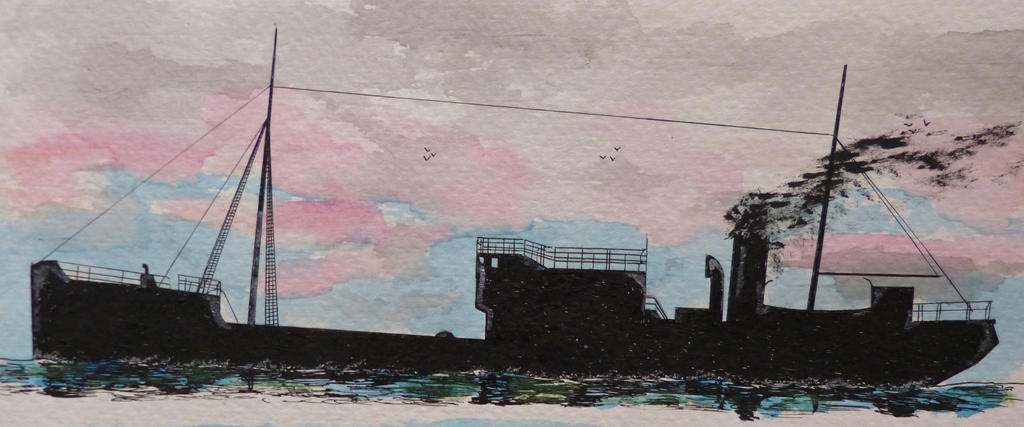
Sister ships Sansei Maru and Santo Maru. Call sign JKTA. Laid down by Mitsui Bussan Kasiha Ltd., Tama, Japan on 6 December 1930, launched on 14 May 1931, completed on 30 June 1931, requisitioned by the navy on 24 April 1941, conversion between 24 April 1941-3 June 1941, registered as auxiliary transport on 15 October 1941, torpedoed by the American submarine USS Sawfish (SS-276) around 27 nautical mile seast south eat of Iwo-Jima on 8 December 1943, damaged arrived at Chichi-Jima and repairs started on 28 December 1943, stricken on 5 February 1944 and finally broken into two parts and sunk on 12 March 1944 being still under repairs. Owner in 1939 Dairen Kisen K.K. Homeport Dairen. Gross tonnage 3,267 tons, under deck 2,724 tons, netto tonnage 1,872 tonsand as dimensions 336.2 x 48.5 x 24.0 x 7 (light)-20 (loaded) feet. Diesel propulsion, single screw, horsepower 271 nhp, oil bunker capacity 220 tons, range nautical 9,500 miles/10.5 knots and speed 10.5 (normal cruising)-13 (maximum) knots. 

Sunday, 5 April 2026

Japanese passenger ship America Maru 1897-1944

©Warshipsresearch.blogspot.com

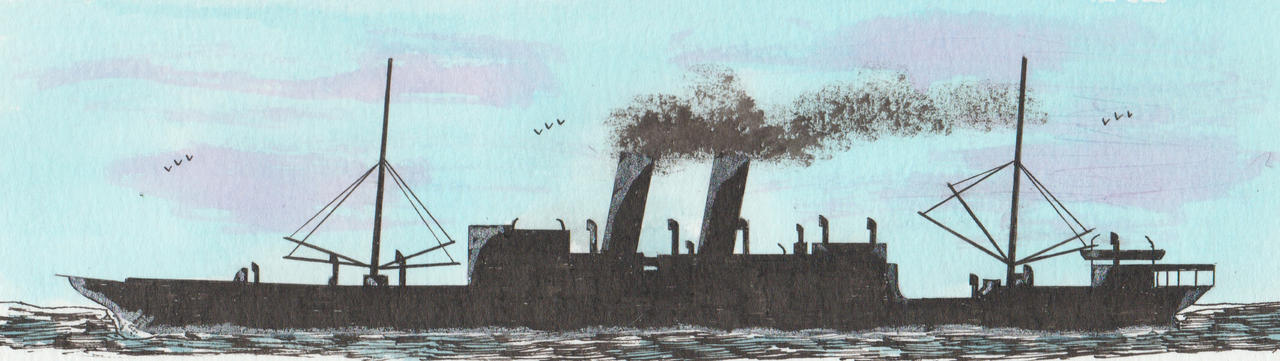
Call sign JACD. Owner in 1939 Osaka Syosen K.K., Osaka, Japan. Ordered in March 1897, launched by Wigham Richardson, Newcastle upon Tyne, Ebgland (C.S. Swan&Hunter Ld., Newcastle, England?) with yard number 229 on 9 March 1898, completed on 24 September 1898, requistioned by the navy between 1914-early 1918, requistioned by the army between 28 April-5 May 1928, requistioned by the army as hospital ship in 1937,converted into a transport in December 1943, chartered by the navy on 12 January 1944 and torpedoed and sunk by the American submarine USS Nautilus 200 miles south-southwest of Iwo Jima on 14 May 1944. Gross tonnage 6,070 tons, under deck 4,546 tons, net tonnage 3,126 tons, deadweight 5,800 tons and as dimensions 423.0 x 51.1 x 29.5 x 27 (loaded) feet. Reciprocating propulsion, 2 screws, horsepower 1,080 nhp, coal bunker capacity 1,787 tons and speed 14 (normal cruising)-15 (maximum) knots. 

Monday, 2 March 2026

Japanese minelayer Sarushima 1933-1944

Natsushima. ©Warshipsresearch.blogspot.com

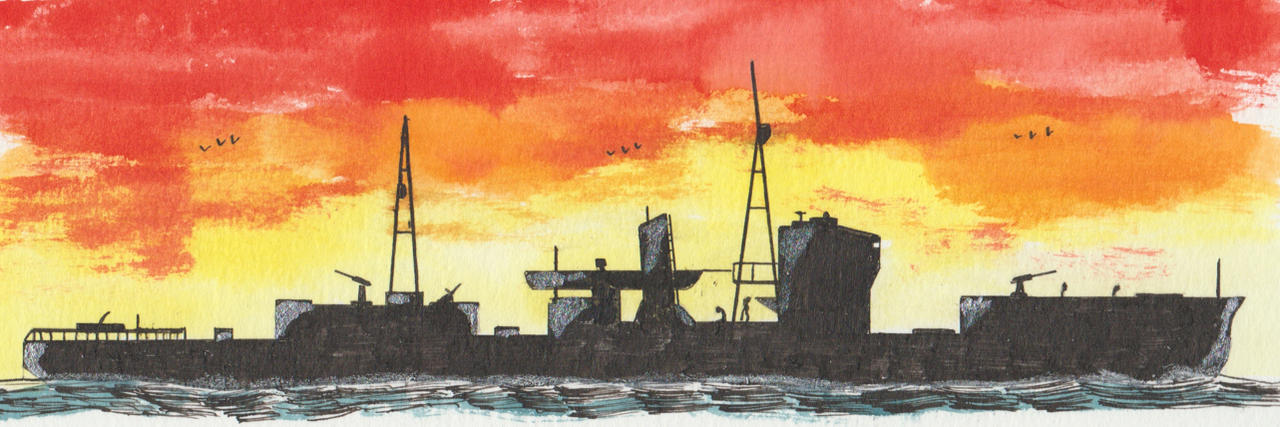
Part of Natshima-class consisting of the Nasami, Natsushima both Project H5 and Sarushima Project H5B. Ordered under the 1931 Programme. Designed was based on that of preceding Tsubama-class succeeded by Sokuten-class. Laid down by Mitsubishi, Yokohama on 28 March 1933, launched on 16 December 1933, completed on 20 July 1934, between 194e-1944 were her minerails removed for carrying 36 depth charges and since then escort, sunk during an air raid off Ototo-Jima on 4 July 1944 and stricken on 10 September 1944. 

Monday, 25 September 2023

Japanese cargo ship Tarusima Maru 1938-1944

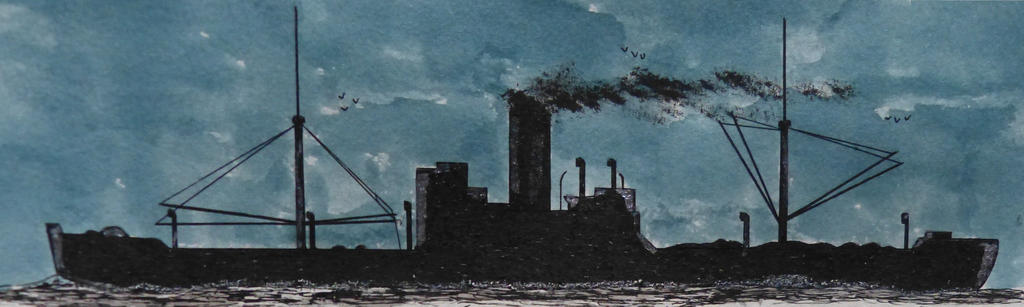
Call singn JYJL. Homeport Kobe, Japan. Built by Osaka Iron Works Ld., Osaka, Japan in 1938. Gross tonnage 4,865 tons , net tonnage 2,886 tons, deadweight 6,930 tons and as dimensions 369.8 x 54.1 x 29.2 x 9 (light)-24 (loaded) feet. Steam turbines propulsion, single screw, coal fuelled, bunker capacity 900 tons, range 9,950 nautical miles/14 knots and speed 14 (normal cruising)-16 (maximum) knots. Torpedoed and sunk by the American submarines USS Whale and Seawolf around 400 miles south west of Iwo Jima on 17 January 1944. Served as a transport.

Wednesday, 7 September 2022

Japanese deep-sea trawler Mamiya Maru 1930-

Call sign JHHC. Gross tonnage 398 tons, under deck 280 tons, net tonnage 197 tons and as dimensions 145.0 x 24.0 x 14.0 metres. Laid down by Mitsubsihi Zohensko K.K., Hiroshima, Japan on 10 April 1930, launched on 28 June 1930, completed on 23 August 1930, since 1937 owned by Nippon Suisan K.K., Tobata. Japan, converted for military purposes at the Kawasaki K.K. Shipyard  including a gun and 2 machine guns, requisitioned by the Imperial Japanese Navy on 6 November 1937, became an auxiliary minesweeper, returned to owners in 1938, again requisitioned by the navy on 4 April 1940, became a storeship, sunk by American aircraft carrier based planes near Iwo Jima on 15 June 1944 and stricken on 10 September 1944.

Sunday, 3 January 2021

Japanese refrigerated cargo-passenger ship Hakusan Maru 1922-1944

Official number 29444. Call sign JDXD. Gross tonnage 10.380 tons, tonnage under deck 8.390 tons, net tonnage 6.271 tons and as dimensions 405.0 x 62.0 x 37.0 feet. Nine watertight bulkheads. Originally strengthened for gun mounts. Coal bunker capacity 2.100 tons allowing a speed of 14,5 knots a range of 10.000 nautical miles. Laid down by Mitsubishi Zosen Kaisha Ld., Nagasaki, Japan on 30 January 1922, launched on 19 May 1923, completed pm 20 September 1923 and owned by Nippon Yusen KK, Tokyo, Japan. Requisitioned by the Japanese Imperial Navy on 17 September 1940, registered as a harbor affair vessel and start conversion on 7 October 1940 (fitted out with 2-8cm.40 HA Type 3 deck guns, 2-1,3cm Type 93 machine guns, 1-90cm searchlight and 1-2,5m rangefinder, completed on 22 October 1940, rerated as auxiliary transport on 10 March 1942 and torpedoed by the American submarine USS Flier (SS-250) and sunk om 4 June 1944 317 miles west south west of Iwo Jima.

Saturday, 20 June 2020

Japanese D-class escort No. 24 1943-1944


Laid down by the Nagasaki Shipyard of Mitsubishi Heavy Industries Ltd. on 1 November 1943, launched on 27 January 1944, completed on 28 March 1944 and sunk by the American Balao-class submarine Archer-Fish (SS-311)west off Iwo Jima on 28 June 1944. Under the Programme 1943-1944 was the building of 143 ships ordered and under the Programme 1944-1945 were another 57 planned of the Type D escort or coast defence ships. Yet there were just 67 actually completed, the others were cancelled. Originally the ships were to be used for anti-aircraft and submarine warfare after the Navy asked on 22 April 1943 for a basic 800 tons escort design. The Type D design was in fact a simplified Ukuru design. Except for the Japanese navy used by the navies of Russia, China and Taiwan until 1987. General technical details of the Type D escort vessel had a standard displacement of 752 tons and as dimensions 69,5 x 8,6 x 3,05 metres or 228 x 28.3 x 10 feet. The geared turbine machinery supplied via one shaft 2,500 hp allowing a speed of 17,5 knots and a range of 4.500 nautical miles with a speed of 16 knots. The crew numbered 160 men. The original armament consisted of 2-12cm/4.7” 45 cal dual purpose guns, 2x3-2,5cm/0.98” Type 96 anti aircraft machine guns, 12 Type 3 depth charge throwers and 1 depth charge chute for which 120 depth charges were carried. From 1944 on was 1-8,1cm/3.2” mortar added to the armament.

Monday, 18 May 2020

Japanese passenger ship Chichibu Maru 1930-1938 (Titibu Maru 1939-1939, Kamakaru Maru 1939-1943)


Launched by Yokohama Dock’s Co., Yokohama, Japan with yard number 170 for account of Nippon Yusen Kaisha in 1930, renamed Titibu Maru in 1938, renamed Kamakaru Maru in 1939, requisitioned by the Japanese Imperial Navy in 1942 as a troop transport annex hospital ship and torpedoed and sunk by the USS submarine Gudgeon on 28 April 1943 underway from Manila, Philippines towards Singapore with on board military and civilians causing the death of over 2.000 people.(1) With a gross tonnage 17.526 ton, under deck 11.586 ton, net tonnage 10.275 were her dimensions 170,7 x 22,6 x 13 metres or 560.0 x 74.2 x 42.8 feet. Official No. 35367 and call sign JFZC.

Note
1. Tambor-class. Laid down by Mare Island Naval Shipyard on 22 November 1939, launched on 25 January 1941, commissioned on 21 April 1941 and lost off the Maug Islands of south east of Iwo Jima. The last there was contact with her was 7 April and official declared a loss on 7 June.