Translate

Showing posts with label Formosa. Show all posts

Sunday, 3 May 2026

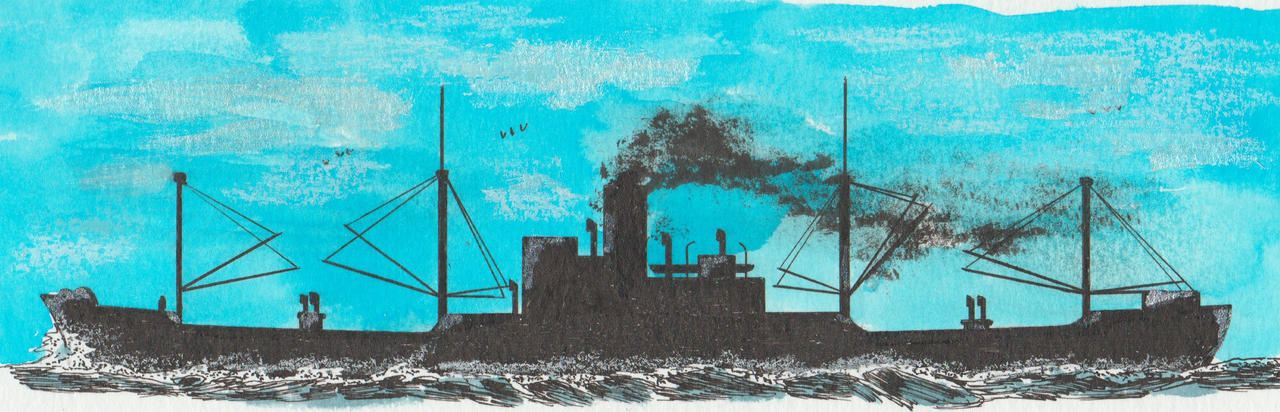
Japanese cargo ship (ex-Priam 1890-1903, ex-Shingu 1903-1938) Singu Maru 1938-1944

©Warshipsresearch.blogspot.com

Call sign JDWB. Owner in 1939 Nippon Suisan K.K., Hutyu. Passenger-cargo ship, launched by Cartsdyke East Yard, Scott&Co., Greenock, Scotland with yard number 274 on 7 April 1890, completed on 7 June 1890, delivered to the Ocean Steamship Company (Alfred Holt&Co., manager), Liverpool, England, transferred to the Nederlandse Stoomvaart Maatschappij Oceaan N.V., Amsterdam, Netherlands, sold towards Japan in 1903 and sunk by American aircraft south west of Formosa (Taiwan) on 3 May 1944. Gross tonnage 2,741-2,746 tons, under deck 2,551 tons, net tonnage 1,666 tons, deadweight 3,150 tons and as dimensions 344.7 x 37.7 x 36.3 x 11 (light)-23 (loaded) feet. Reciprocating propulsion, 1 screw, horsepower 243 nhp, coal bunker capacity 500 ton, range 6,840 nautical miles/15 knots and speed 9 (normal cruising)-11 (maximum) knots. 

Thursday, 9 April 2026

Japanese cargo ship Rakuyo Maru 1921-1944

©Warshipsresearch.blogspot.com

Call sign JAMA. Owner in 1939 Nippon Yusen Kisen Kaisha. Launched by Mitsubishi Shipbuilding, Nagasaki, Japan on 26 February 1921 and torpedoed and sunk as troop transport in the Luzon Strait as part of convoy HI-72 underway from Singapore to Formosa by American submarine USS Sealion on 12 September 1944. Gross tonnage 9,419 tons, under deck 8,544 tons, net tonnage 5,678 tons, deadweight 12,600 tons and as dimensions 460 (between perpnediculars)-477 (over all) x 60 x 12 (light)-31 (loaded) feet. Steam turbine propulsion, horsepower 1,153 nhp, 2 screws, coal and oil bunker capacity 950 ton coal/1,500 ton oil, range around 12,000 nautical miles/11.5 knots and speed 11.5 (normal cruising)-15 (trial, maximum) knots. 

Thursday, 26 March 2026

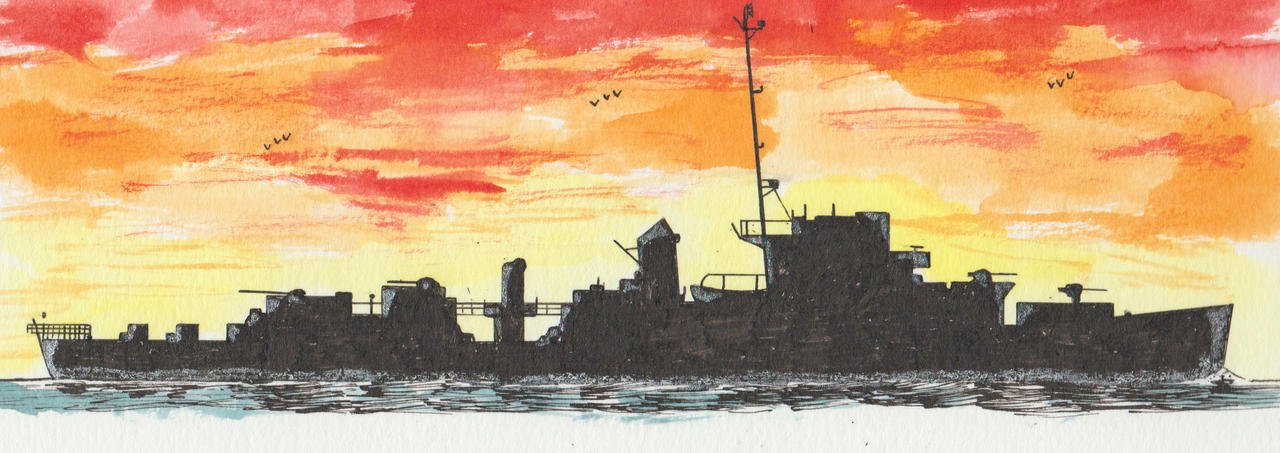
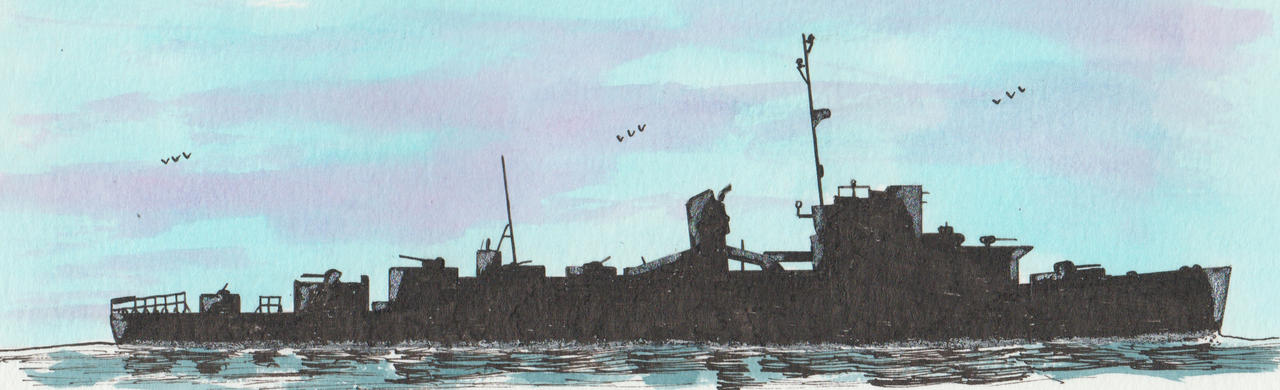
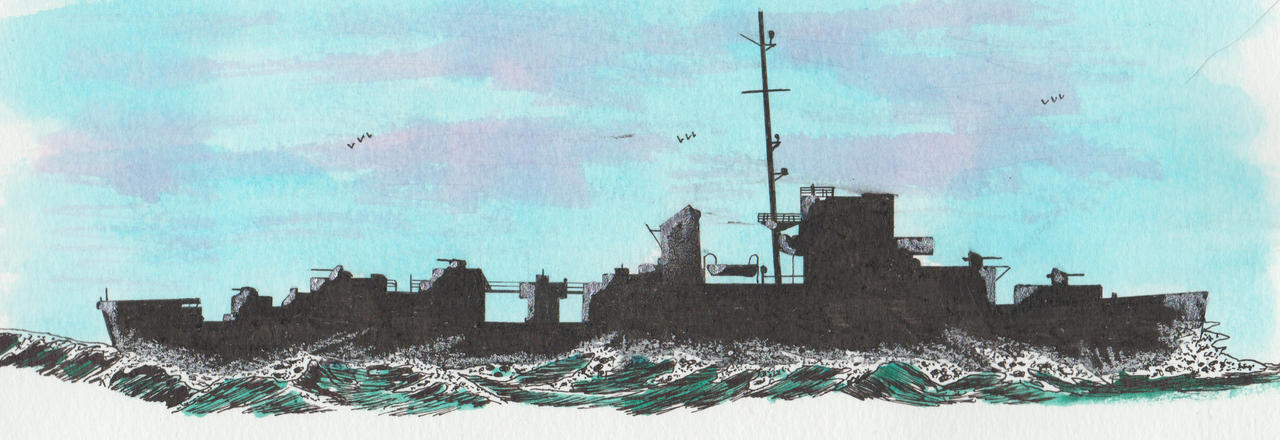
Taiwanese frigate (ex-BDE-6 1942-1943, USS Wyffels DE-6 1943-1945) Tai Kang 1945-1972

US Everarts-class.  ©Warshipsresearch.blogspot.com

US Buckley-class.  ©Warshipsresearch.blogspot.com

Tai Kang. ©Warshipsresearch.blogspot.com

Former American Evarts-class destroyer escort succeeded by Buckley-class. Ordered as BDE-6, laid down by Boston Navy Yard on 17 October 1942, launched on 7 December 1942, reclassified as DE-6 on 25 January 1943, renamed Wyffels on 19 February 1943, commissioned on 15 April 1943, decommissioned and handed over to the Republic of China on 28 August 1945, renamed Tai Kang, stricken from the uS Navy List on 12 March and sold to be broken up in 1972. 

Saturday, 21 March 2026

Japanese cargo ship (ex-Hallfried 1921-1927, Taijin Maru 1927-1938) Taizin Maru 1938-1944

©Warshipsresearch.blogspot.com

Call sign JCMC. Ordered in 1917, launched by the shipyard N.V.en Rijkeee&Co., Rotterdam, Netherlands and machinery from Werkspoor, Amsterdam, Netherlands for A/S Dampskibet, Bergen, Norway on 28 October 1921, completed in April 1922, sold to Japan in 1927. Owner in 1939 Shimomura Kisen K.K and managers Taryo Kaiun K.K. Homeport Hutyu, Japan. Gross tonnage 5,155 tons, under deck 4,885 tons, net tonnage 3,642, deadweight 7,500 tons and as dimensions 375.0 x 51.2 x 34.1 x 8.7 (light)-25.11 (loaded) feet. Diesel propulsion, oil bunker capacity 1,011 tons, range 31,000 nautical miles/9 knots, horsepower 563 nhp and speed 9 (normal cruising)-11 (maximum) knots. Torpedoed and sunk by the American submarine USS Pogy (SS-266) northeast of Formosa/Taiwan om 20 February 1944.

Saturday, 8 November 2025

Japanese cargo ship Tat(s)uho Maru 1937-1942

©Warshipsresearch.blogspot.com

Similar Tatuharu Maru, Tatuho Maru, Tatuyma Maru and Tatuwa Maru. Call sign JCTM. Laid down by Mitsubishi Jukogyo K.K., Kobe, Japan on 2 August 1937, launched on 19 January 1938, completed on 30 April 1938, requisitioned by the navy on 17 April 1941, converted into an auxiliary transport between 10 May-4 October 1941, torpedoed and sunk by the American submarine USS Haddock (SS-231) near Formosa on 22 August 1942 and stricken on 15 September 1942. Gross tonnage 6,335 tons, netto tonnage 3,792 tons and as dimensions 410.9 x 56.1 x 30.7 x 10 (light)-25.6 (loaded) feet. Steam turbine propulsion, horsepower 750 nhp/4,500 bhp, coal bunker capacity 800 tons, range 5,000 nautical miles/14 knots and speed 14 (normal cruising)-17 (maximum) knots. 

Saturday, 16 August 2025

Japanese naval task forces regrouping in the according to the U.S. Joint Intelligence Committee. Daily summary dated 2 January 1942

An item reported some regrouping and changes in the Japanese naval task forces in the Philippines-Formosa-Malay area. Jaluit, Marshall Islands (geographical position 6 north 169 east) was the center of an huge increase of units and radio traffic, especially naval auxiliaries. Some units among those some warships were active north of the Marshall Islands others north of Marcus Island. The J.I.C. commented that was a result of Japanese successes.

Source

Map Room Papers (Roosevelt Administration), 1942 - 1945. U.S. Joint Intelligence Committee. Daily summary No. 23 dated 2 January 1942 

Wednesday, 31 July 2024

Russian cargo ship (Mariners Harbor 1918-1929, Sagn 1929-1933, Sirehav 1933) Terek 1933-1945/1948

Warshipsresearch.blogspot.com

Call sign UOYC. Homeport Vladivostok. O.N. 216395. Ordered as War Post by the Shipping Controller/US Shipping Board, USA, built by Staten Island Shipbuilding Company, Staten Islands, New York, USA hull number 692 in September 1918, sold to Norway in 1939, sold to Sovtorgflot, Odessa, Ukraine in 1933, stopped by Japanese police when she tried to enter the military protected harbour of Mako, Formosa/Pescadores which was not allowed and according to Dutch newspapers was the crew arrested, the ship search and would be brought to Takao, Formosa on 16 August 1936, the Russian consul-general at Kobe, Krause was not allowed to speak the crew, in September was reported that her captain was seriously and the sailors harrassed by the Japanese police, lost in the Sea of Okhotsk in February 1945 off still existing in 1948.

Gross tonnage 2,189 tons, under deck 1,923 tons, net tonnage 1,299 tons and as dimensions 264.0 x 42.0 x 21.8 x 21 (loaded) feet. Normal cruising speed 7 knots. Many Japanese vessels of similar design. 

Saturday, 20 August 2022

American submarine sunk several Japanese ships in the vicinity of Formosa according to the U.S. Joint Intelligence Committee. Daily summary dated 12 March 1942

An item reported that a American submarine sank 3 Japanese cargo ships and 1 passenger-cargo ship in the vicinity of Formosa [Taiwan].

Source

Map Room Papers (Roosevelt Administration), 1942 - 1945. U.S. Joint Intelligence Committee. Daily summary No. 92 dated 12 March 1942

Tuesday, 24 August 2021

USA wanted military base at Formosa in exchange for torpedo boats according to the Dutch newspaper Het nieuwsblad voor Sumatra dated 4 January 1950

An item reported that the USA wanted to exchange torpedo boats with Formosa [Taiwan] to get permission to found one of more military bases.

Monday, 24 May 2021

Japanese screw steam cargo ship Sekko Maru 1917-1943

Built by Osaka Iron Works Ltd., Osaka, Japan in April 1917. Call sign JHEB. Gross register tonnage 3.183 tons, under deck 2.757 tons, net tonnage 2.013 tons and as dimensions 305.00 x 43.7 x 27.2 feet. Sunk by the American submarine USS Sculpin (SS-191) east of the northern coast of Formosa on 9 August 1943.

Friday, 21 May 2021

Japanese screw steam cargo ship Miikesan Maru 1916-1944

Built by Osaka Iron Works Ld., Innoshima, Japan in June 1916. Call sign JBID. Gross register tonnage 3.179 tons, under deck 2.757 tons, net tonnage 1.961 tons and as dimensions 305.00 x 43.7 x 27.2 feet. Lost after striking a mine laid by the US Air force off Takao, Formosa on 14 August 1944.

Tuesday, 18 May 2021

Japanese screw steam cargo ship (ex-Scharzfels 1901-1915, Araluen 1915-1924, Ohkuni Maru 1924, Daikoku Maru 1924-1925) Okuni Maru 1925-1944

Built by Wigham Richardson&Sons Ltd., Newcastl-upon-Tyne, England for account of Deutsche Dampfschiffahrts Gesellschaft Hansa, Bremen, Germany, 1915-1923 of the Australian government, 1923-924 of the Commonwealth Government Line of steamers, Sydney, Australia and became then Japanese property. Gross register tonnage 5.649 tons, net register tonnage 3.651 tons, deadweight 8.151-8.450 tons and as dimensions 420.0 x 55.1 x 20.5 x 9.8 (light)-25.3 (loaded) feet. Reciprocating machinery of 494nhp horsepower with one screw speed of 8 (cruising)-10 (maximum) knots and a range of 7.000 nautical miles with a speed of 8 knots. Sunk by the American submarine USS Barb (SS-220) on 31 August 1944 in the Luzon Strait south of Formosa. She was then used by the Japanese army.

Saturday, 2 January 2021

Japanese passenger annex cargo screw steamship Rokko Maru 1923-1944

Official number 29132 and call sign JABB. Gross tonnage tons, under deck tons, net tonnage tons and as dimensions 315.5 x 46.0 x 27.0 feet. Laid down by Mitsubishi Zosen Kaisha Ltd., Kobe, Japan for Nippon Yusen K.K., Tokyo, Japan on 3 July 1922, launched on 5 February 1923, completed on 15 March 1923, requisitioned as troop transport by the army as IJA No. 210 on 19 September 1941 and sunk while used as an Army cargo ship in an American air attack north west off Takao bound for Formosa on 5 October 1944. Also used by the army in the Second Sino-Japanese War in 1937-1938.

Monday, 8 January 2018

Japan strengthening and increasing naval interests in Formosa according to the Dutch magazine Marineblad dated 1907-1908 No. 8

An item reported that the defence of the island Formosa which was than a secondary naval base for Japan was to further strengthened. At Kolnnuy were heavy batteries to be placed and the establishing of a station for torpedo boats. 

Friday, 30 September 2016

Japanese navy intended to keep large scale manoeuvres according to the Dutch newspaper Algemeen Handelsblad dated 24 July 1908

An item reported that Japan intended to keep naval manoeuvres in the Chinese Sea and the area between Formosa and Kioesioe. The manoeuvres were to be attended by totally were 11 battleships, 13 armoured cruisers, 10 protected cruisers, 7 small cruisers, 5 ships of another kind, 119 torpedo boats, destroyers and gunboats and 7 submarines.

Saturday, 20 February 2016

Artillery tests of Japanese battle cruiser Kongo successful according to the Dutch magazine Marineblad dated 1913-1914 no. 4


An item reported that the Japanese battleship Kongo with success her artillery tests passed. The main armament consisted of 10-35,6cm guns and which each gun was 10 times fired on various elevation angles. Further more she was fitted out with 16-15,2cm guns.(1)

Note
1.Of the Kongo-class consisting of the Kongo, Haruna, Hiei and Kirishima. Laid down at Vickers, Barrow-in-Furness, United Kingdom on 17 January 1911, launched on 18 May 1912, completed on 16 August 1913, In 1924, 1927-1928 modernized and reconstructed September 1929-31 March 1931 reconstructed into a battleship, after modernizing 1 June 1935-8 January 1937 was she a classified as a fast battleship  and torpedoed and sunk by the American submarine USS Sealion around 55 nautical miles north west of Keelung after entering Formosa Strait 1 day earlier on 21 November 1944. Designed by the British naval engineer George Thurston. Sir Thomas George OwensThurston (1869-22 January 1950), studied naval architecture in Liverpool and Newcastle-on-Tyne and was in the first half of the 20th Century an import naval architect. 

Friday, 19 February 2016

Japanese battle cruiser Kongo 1911-1944


Of the Kongo-class consisting of the Kongo, Haruna, Hiei and Kirishima. Laid down at Vickers, Barrow-in-Furness, United Kingdom on 17 January 1911, launched on 18 May 1912, completed on 16 August 1913, In 1924, 1927-1928 modernized and reconstructed September 1929-31 March 1931 reconstructed into a battleship, after modernizing 1 June 1935-8 January 1937 was she a classified as a fast battleship  and torpedoed and sunk by the American submarine USS Sealion around 55 nautical miles north west of Keelung after entering Formosa Strait 1 day earlier on 21 November 1944. Designed by the British naval engineer George Thurston.(1)

General technical specifications of the Kongo-class battle cruisers before the reconstruction as fast battleships. With a displacement of 27.384 tons/26.952 long tons and as dimensions 215,58 x 28,04 x 8,22 metres ot 704.0 x 92.0 x 27.0 feet. The two Parsons direct drive steam turbine sets and 36 Yarrow boilers supplied via 4 shafts 64.000 shp allowing a speed of 27,5 knots and with a speed of 14 knots a range of 8.000 nautical miles. Her crew numbered 1.193 men. The armament consisted of a 7,6-20,3cm/3-8” thick waterline belt, a 2,54cm/1” thick deck with the gun turrets, barbettes and gun turrets protected by respectively 22,9-25,4cm/9-10”, 7,6-2,54cm/3”-10” and 22,9cm/9”. The armament consisted of 4x2-35,6cm14” Vickers guns, 16x2-15,2cm guns, 4x2-7,6cm anti aircraft guns and 8-53,3cm/2” torpedo tubes.

Note
1. Sir Thomas George OwensThurston (1869-22 January 1950), studied naval architecture in Liverpool and Newcastle-on-Tyne and was in the first half of the 20th Century an import naval architect.

Saturday, 14 April 2012

Chinese transport Chean wrecked according to the Dutch newspaper Middelburgsche Courant dated 12 September 1894

An item reported that the Chinese transport Chean was wrecked with 1,400 soldiers off Chetung Pass while underway to Formosa. Despite the panic among the soldiers were they saved.