Translate

Showing posts with label Ascension. Show all posts

Thursday, 16 July 2026

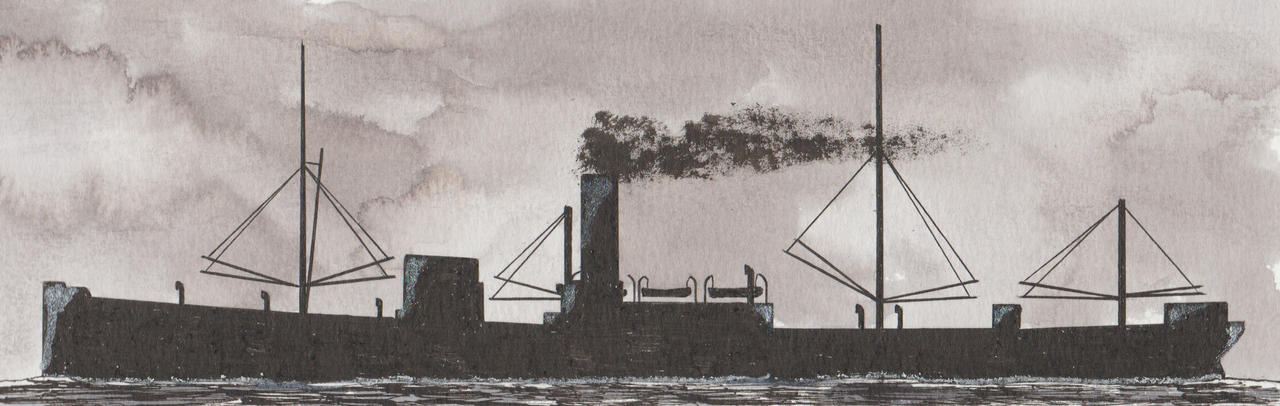
German blockade runner Weserland outward bound in 1942

As Weserland. ©Warshipsresearch.blogspot.com

Transport Number P. Name ship Weserland (ex-Ermland). Company Hamburg-Amerika Linie, Hamburg, Germany. Date departure 7 September 1942. Harbour which was left Bordeaux. Date arrival 1 December 1942. Harbour of arrival Yokohama, Japan. Deadweight 3,407 tons. Part of 2. Action “Pfastermundkoch”.(1)

Note

1. Call sign DIRJ. Launched by Blohm&Voss, Hamburg, Germany with yard number 414 on 18 February 1922, commissioned on 92 August 1922, blockade runner since 1940, rename Weserland in 191, left Yokohama, Japan on 26 October 1943 and sunk by the American destroyer USS Somers on 2 January 1944 between Ascension and the Brazilian coast. Gross tonnage 6,528 ton, under deck 6,121 ton, net tonnage 3,802 ton, deadweight 9,475 ton and as dimensions 449.1 x 58.4 x 25.6 x 28 (loaded) feet. Diesel propulsion, 2 screws, oil bunker capacity 1,420 ton, range 20,000 nautical miles and speed 11 (normal cruising)-12.5 (maximum) knots.

Source

Bundesarchiv RM 7/1419 Ausarbeitung "Wirtschaftsfahrten im Zweiten Weltkrieg" (Zusammenstellung der Fahrten von Blockadebrechern nach Ostasien, 1941-1945). 

Wednesday, 25 February 2026

German blockade runner MS Ermland arrived in Japan in 1940

As Weserland. ©Warshipsresearch.blogspot.com

In a letter dated 13 April 1942 No. 1329 to the O.K.M./1 Abteilung Skl. was the so-called ‘Etappen’-organisation of the navy described. In the attachment were the blockade runners decribed used for this purpose. Ms Ermland. Not loaded. Left Takao on 28 July 1940. Arrived at Kobe, Japan on 5 August 1940. Transfer.(1)

Note

1. Call sign DIRJ. Launched by Blohm&Voss, Hamburg, Germany with yard number 414 on 18 February 1922, commissioned on 92 August 1922, blockade runner since 1940, rename Weserland in 191, left Yokohama, Japan on 26 October 1943 and sunk by the American destroyer USS Somers on 2 January 1944 between Ascension and the Brazilian coast. Gross tonnage 6,528 ton, under deck 6,121 ton, net tonnage 3,802 ton, deadweight 9,475 ton and as dimensions 449.1 x 58.4 x 25.6 x 28 (loaded) feet. Diesel propulsion, 2 screws, oil bunker capacity 1,420 ton, range 20,000 nautical miles and speed 11 (normal cruising)-12.5 (maximum) knots.

Source

Bundesarchiv RM 7/223

Thursday, 8 May 2025

German cargo ship (ex-Ermland 1922-1941) Weserland 1941-1944

Weserland. ©Warshipsresearch.blogspot.com

Call sign DIRJ. Launched by Blohm&Voss, Hamburg, Germany with yard number 414 on 18 February 1922, commissioned on 92 August 1922, blockade runner since 1940, renamed Weserland in 1941, left Yokohama, Japan on 26 October 1943 and sunk by the American destroyer USS Somers on 2 January 1944 between Ascension and the Brazilian coast. Gross tonnage 6,528 ton, under deck 6,121 ton, net tonnage 3,802 ton, deadweight 9,475 ton and as dimensions 449.1 x 58.4 x 25.6 x 28 (loaded) feet. Diesel prropulsion, 2 screws, oil bunker capacity 1,420 ton, range 20,000 nautical miles and speed 11 (normal cruising)-12.5 (maximum) knots. 

Wednesday, 15 January 2025

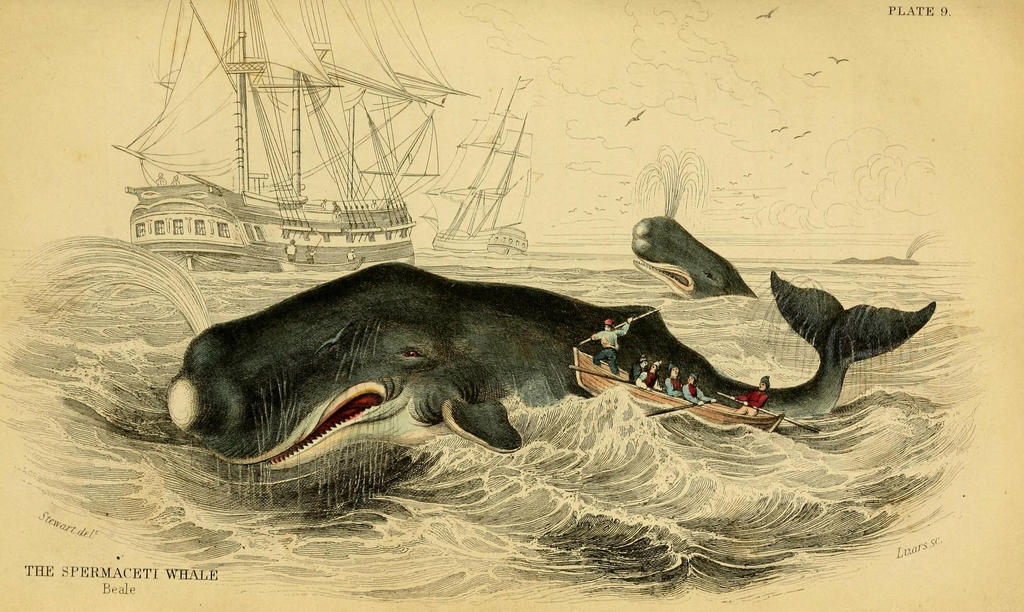
American whaler Sheffield visited Ascension Island according to the newspaper The Polynesian dated 14 May 1853

An item reported the arrival at Ascension Island on 7 November 1852 of the American whaler Sheffield master Bovee of New York 1,600 barrels whale oil 

American whaler Juga visited Ascension Island according to the newspaper The Polynesian dated 14 May 1853


An item reported the arrival at Ascension Island on 27 October 1852 of the American whaler Juga master Barnes of New Bedford 40 barrels sperm oil

American whaling barque Italy visited Ascension Island according to the newspaper The Polynesian dated 14 May 1853

An item reported the arrival at Ascension Island on 29 December 1852 of the American whaling barque Italy master Rowley of Greenport 1,600 barrels whale oil 

Sunday, 23 June 2024

Less enemy submarines active in the western part of the Atlantic Ocean according to the U.S. Joint Intelligence Committee. Daily summary dated 2 August 1942

An item reported that recently the number of enemy submarines in the western part of the Atlantic Ocean seemed to be reduced from the 54 on 27 July were on 1 August 42 locations known, The J.I.C. believed not that was a permanent reduction not of the number of submarines on pasage (the main reduction) either of the submarines patrolling. Largest numbers were in the vicinity of Novo Scotia 6, in the Cape Henry-Cape Lookout area 3, Jacksonville-Miami area 4 and eastern vicinity of Trinidad 5. In the Atlantic to the eastward of the longitude of the Azores on 1 August 14 submarines divided over Rockall area 4, westward of European coast 5, vicinity of Canary Islands 3 and vicinity of Freetown [Sierra Leone?] 2. Despite the sighting reported on 31 July it was uncertain if there was a submarine in the vicinity of Ascension Island.

Source

Map Room Papers (Roosevelt Administration), 1942 - 1945. U.S. Joint Intelligence Committee. Daily summary No.235 dated 2 August 1942.

Wednesday, 19 June 2024

Enemy submarine sighted in the vicinity of Ascension Island according to the U.S. Joint Intelligence Committee. Daily summary dated 1 August 1942

An item reported the sighting of an enemy submarine on 31 July around 130 miles northwest of Ascension Island. The J.I.C. commented that this was south of the area where usually submarines were active and feared that shipping between Cape of Good Hope, South Africa and North American harbours was to becoma a new hunting area. The number of location of enemy submarines in the Western Atlantic Ocean seemed hardly to be changed.

Source

Map Room Papers (Roosevelt Administration), 1942 - 1945. U.S. Joint Intelligence Committee. Daily summary No. 234 dated 1 August 1942.

Sunday, 25 February 2024

American whaler Mohawk visited Ascension Island according to the newspaper The Polynesian dated 14 May 1853

An item reported the arrival at Ascension Island on 20 October 1852 of the American whaler Mohawk master Swain of Nantucket 1,500 barrels sperm oil 

American whaler Milton visited Ascension Island according to the newspaper The Polynesian dated 14 May 1853

An item reported the arrival at Ascension Island on 12 October 1852 of the American whaler Milton master Jones from New Bedford 600 barrels whale oil, sailed 25 October bound for the line 

Saturday, 10 February 2024

Japanese destroyer Suzukaze 1935-1944

Hatsuharu-class

Shiratsuyu-class 

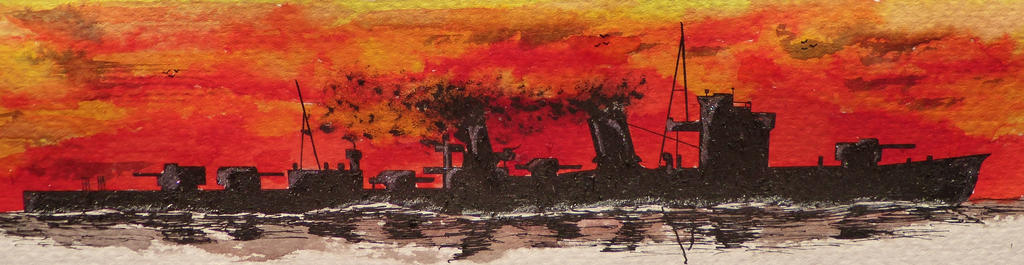
Built under the Fiscal Year 1934, laid down by Uraga Dock Company on 9 July 1935, launched on 11 March 1937, commissioned on 31 August 1937, torpedoed and sunk by the American submarine USS Skipjack 127 miles north-northwest of Pohnpei (Ponape or Ascension, Senyavin Islands) and stricken on 10 March 1944. Part of Shiratsuyu-class destroyers preceded by Hatsuharu-class, succeeded by Asashio-class. Consisted of Shiratsuyu, Shigure, Murasame, Yudachi, Harusame, Samidare, Umikaze, Yamakaze, Kawakaze and Suzukaze. Standard displacement 1,712 tons. Speed 34 knots. Armament 2x2&1x1-12.7cm/5” cal 50 Type 3 naval guns, 2x1-13.2 mm/0.52” Type 93 machine guns, 2x4-61cm/24” torpedo tubes for which 16 Type 9 3 torpedoes were carried and 16 depth charges.

Monday, 28 November 2022

Locations of enemy submarines in the Western Atlantic Ocean according to the U.S. Joint Intelligence Committee. Daily summary dated 11 August 1942

An item reported that by 10 August there seemed to be around 48 enemy submarines present in the western part of the Atlantic ocean from the longitude of the Azores westward: 18 on passage 16 east- and 2 westbound positioned:

-latitude of Southern England 7 northward included 1 on passage to the west

-latitudes between Southern England and New York, USA 14 of which 5 on passage, 4 east- and 1 westbound)

-latitudes between New York and Jacksonville, Florida, USA 8 of which 6 on passaga to the east

-latitudes between Jacksonville, Florida, USA and Southern Cuba 7 of which 4 on passage to the east

-latitudes between Southern Cuba and the Canal Zone 8 of which 2 on passage to the east

-latitudes south of the Canal Zone 4

Main numbers were in the northern-Trans-Atlantic shipping routes and to the east and southeastward of Trinidad, the latter presumably for intercepting ships coming or going from South America and South Africa. The J.I.C. commented that the fact that were more submarines going to the east and not to the west had an important meaning. Except for above mentioned 48 submarines there seemed to be another one about 900 miles west of Freetown and a second one 150 miles southwest of Ascension Island. The J.I.C. commented that this second submarine was well to the southward of areas where in the past submarines were active.

Source

Map Room Papers (Roosevelt Administration), 1942 - 1945. U.S. Joint Intelligence Committee. Daily summary No. 244 dated 11 August 1942.

Sunday, 21 November 2021

British light cruiser HMS Dublin visited several Atlantic harbours according to the Secret Admiralty Weekly Intelligence Summary Nr. 35 for the week ending 3 September 1921

An item reported that the British light cruiser HMS Dublin would leave Simonstown, South Africa on 20 September, visit St. Helena between 27 September-1 October, Ascension between 4-7 October, Bathurst between 13-16 October, Sierra Leone between 18-23 October, Monrovia, Liberia between 24-25 October, Walvis Bay, South Africa between 4-7 November, Cape Town, South Africa 10-14 November and returning at Simonstown on 14 November.

Note

1. Part of the Town-class light cruiser Chatham sub-class, succeeded by Arethusa-class, laid down by Willeam Beardmore and Company, Dalmuir, Scotland on 3 January 1911, launched on 9 November 1911, commissioned in March 1913, decommissioned in 1924 and sold to be broken up in 1926, executed in 1927.

Source

The National Archives CAB-24-127-89. Secret Admiralty Weekly Intelligence Summary Nr. 35 for the week ending 3 September 1921.

Sunday, 30 May 2021

British hospital ship HMS Gloucester Castle torpedoed according to the British War Cabinet meeting of 2 April 1917

German submarien SMS UB-32

In the meeting reported the First Sea Lord (1) that the British hospital ship HMS Gloucester Castle (2) was damaged and needed to be beached. It was unknown if she was torpedoed by a submarine or hit a mine. In the Imperial War Cabinet meeting on Tuesday 3rd April was to be discussed what the consequences for a policy or reprisals were to be. Lord Curzon would present than his report dealing with these matters.

Notes

1. John Rushworth Jellicoe, 1st Earl Jellicoe (5 December Southampton, England 1859-Kensington London, England 20 November 1935), served in the Royal Navy between 1872-1919 ending his career in the rank of Admiral of the Fleet, First Sea Lord between 30 November 1916 and 10 January 1918 and commanded the Grand Fleet at the Battle of Jutland in May 1916. Governor-General of New Zealand 27 September 1920-12 December 1924.

2. Built for the Union-Castle Line, requisitioned to be used as hospital ship, torpedoed by the German submarine UB-32 off Wight on 30 March 1917, salavaged, after the war returned to the owners and inally sunk by the German commerce raider Michel on 15 January 1942 off Ascension Island. Launched by Fairfiels Shipbuilding&Engineering, Glasgow, Scotland with yard number 478 on 13 May 1911 and completed in August 1911.

Source

The National Archives, Kew Gardens, England, CAB 23-3-7

Monday, 10 May 2021

The loss of the British hospital ship Gloucester Castle torpedoed by German submarine UB-32 in 1917

UB 18-47

In the British War Cabinet meeting of 2 May 1917 was again the loss of the hospital ship Gloucester Castle (1) discussed; see earlier War Cabinet 123 Minute 9. As reprisal for earlier attacks was the German town Freiburg bombed on 14 April. It was not clear which effects the bombing had on the German policy of attacking hospital ships while the Gloucester Castle was sunk by a submarine on 17 April. So it was possible that new German instructions were not received by the submarine on time. The French government was in the meantime asked to wait with a new attack until it became that the Freiburg raid had no effects. Since 17 April were none hospital ships attacked.

Note

1. Built for the Union-Castle Line, requisitioned to be used as hospital ship, torpedoed by the German submarine UB-32 off Wight on 30 March 1917, salvaged, after the war returned to the owners and finally sunk by the German commerce raider Michel on 15 January 1942 off Ascension Island. Launched by Fairfield Shipbuilding&Engineering, Glasgow, Scotland with yard number 478 on 13 May 1911 and completed in August 1911.

Source

The National Archives, Kew Gardens, England, CAB 23-2-48

Thursday, 28 April 2016

Dutch screw steamship 1st class Zr.Ms. Metalen Kruis arrived at Ascension underway towards the Netherlands Middelburgsche courant dated 14 May 1868


Portrait of Jan Vos. Original source

An item reported that the Dutch screw steamship 1st class Zr. Ms. Metalen Kruis (1) captain J. Vos (2) underway towards the Netherlands arrived on 15 April 1868 at Ascension [Island]. Everything was well on board.

Notes
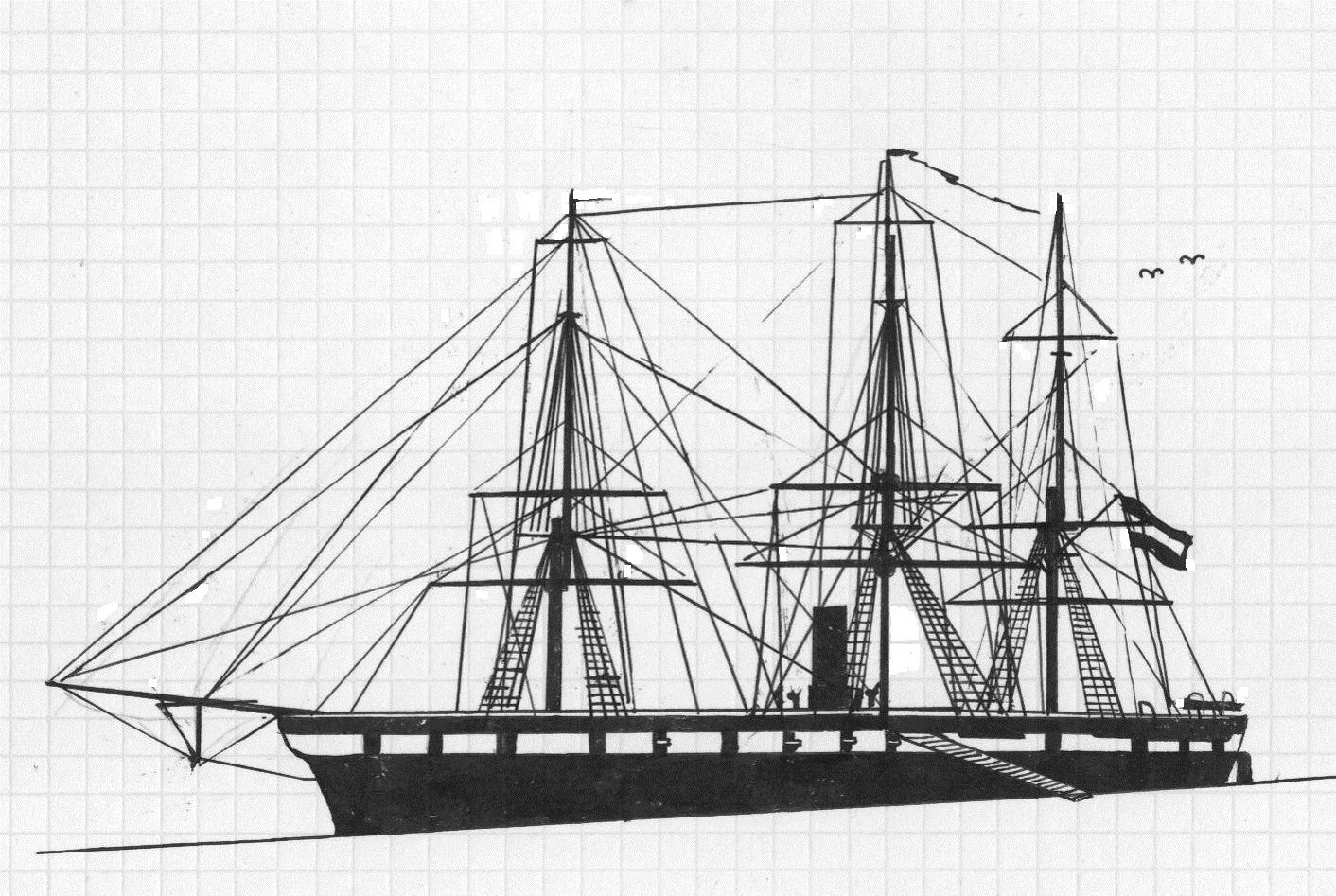
1. Screw steamship 1st class also called frigate, call sign GQNT, wood-built, laid down at the navy yard at Amsterdam on 21 March 1860, launched on 29 July 1862, ex-Soerabaja renamed in 1863, commissioned on 17 September 1863, building costs ƒ 752.588,82, decommissioned and condemned at Surabaya, Dutch East Indies on 20 September 1878, dimensions 58,00 (between perpendiculars) x 12,25 x 5,50 metres, a displacement of 2.030 tons, horsepower 700 hp, speed 8,5 knots, an armament of 16 guns (8 long 30pd, 8 rifled 16cm) and a crew numbering 225 men.
2. Jan Vos (9 October 1817 Vlissingen, Netherlands-4 August 1884 Utrecht, Netherlands), retired on 1 May 1874, promoted to the rank of rear admiral in 1878.

Wednesday, 19 August 2015

Dutch frigate Zr.Ms. Prins van Oranje arrived at Rio Janeiro, Brazil according to the Dutch newspaper Middelburgsche Courant dated 30 July 1850

Rijksmuseum at Amsterdam, Netherlands 

An item reported that the Dutch frigate Zr.Ms. Prins van Oranje arrived on 4th June at Rio Janeiro, Brazil after leaving Ascension on 22 May. The intention was to continue the voyage on 11 June.(1)

Note
1. Ex-Waal, frigate 1st class, call sign GQSB, on stocks at the navy yard at Rotterdam, Netherlands by P. Glavimans Jz.August 1828, launched 16 May 1840, renamed Prins van Oranje 1844, later guard ship, sold to be broken up 1897, dimensions 54 (load line) x 14 (inner hull) x 5,8-6,3 (aft) x 7,13 (hold below upper deck) metres, 2.481-2.485 tons displacement, 60 (peace:30-30pd guns, 30-30pd carronades, 2-12pd guns))-70 (war) guns and a sail area of 2.170m2.

Dutch frigate Zr.Ms. Prins van Oranje arrived at Ascension according to the Dutch newspaper Middelburgsche Courant dated 13 July 1850

Rijksmuseum at Amsterdam, Netherlands 

An item referred to a tiding of the commanding officer of the Dutch frigate Zr.Ms. Prins van Oranje reporting the arrival at Ascension on 22 May with the intention to continue his voyage immediately. Everything was well on board. In March and April were St. Cruz (Tenerife, Canary Islands), George d’Elmina Dutch Gold Coast/Dutch Guinea [nowadays Ghana] and Fernando Po visited.(1)

Note
1. Ex-Waal, frigate 1st class, call sign GQSB, on stocks at the navy yard at Rotterdam, Netherlands by P. Glavimans Jz.August 1828, launched 16 May 1840, renamed Prins van Oranje 1844, later guard ship, sold to be broken up 1897, dimensions 54 (load line) x 14 (inner hull) x 5,8-6,3 (aft) x 7,13 (hold below upper deck) metres, 2.481-2.485 tons displacement, 60 (peace:30-30pd guns, 30-30pd carronades, 2-12pd guns))-70 (war) guns and a sail area of 2.170m2.

Friday, 9 September 2011

British brig Heron with marines towards Ascension according to the Nederlandsche Staatscourant dated 23 July 1821

London, 17 July. The brig Heron was sent last Wednesday with major John Campbell, the lieutenants Blennerhasset and Aitcheson. The latter of the artillery of the royal navy, 2 sergeants, 2 corporals, 1 piper, 1 drummer and 18 marines to Ascension to form for a period of 3 years the garrison of that island.