Translate

Showing posts with label Russo-Japanese war. Show all posts

Sunday, 20 September 2026

Several Russian capital ships lost in the Battle of Tsushima according to the Dutch newspaper De Sumatra post dated 6 June 1905

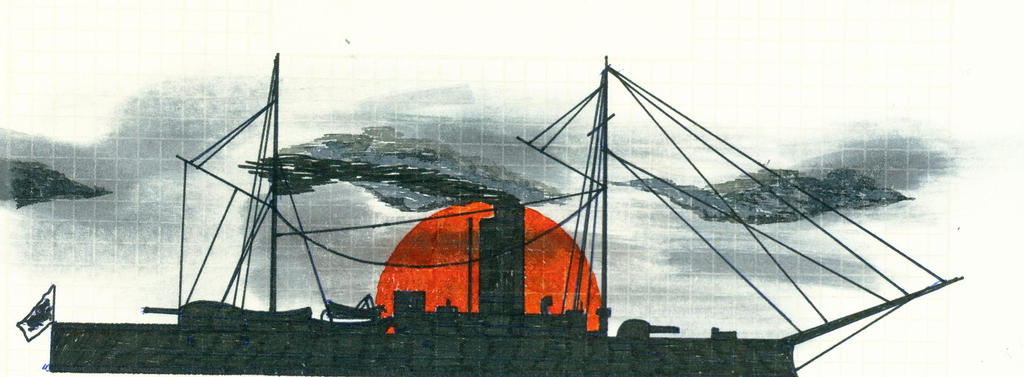
Admiral Nakhimov©Warshipsresearch.blogspot.com

An item dated London, England 2nd reported the sinking on Sunday morning off Tsushima of the Russian battleships Sissoi (1), Veliky(1), Admiral Nahkimoff (2) and Wladimir Monomach (3) after floating helpless around. Japanese cruisers and coastal vessels saved around 1.000 men. On board of the Russian ships had been around 10.000 men of which just 4.000 men were rescued and it was feared that the remaining 6.000 were killed. Already were a lot of dead bodies found along the coastline.

Notes

1. Pre-dreadnought batteship Sissoi Veliky preceded by Tri Sviatitelia and succeeded by Petropavlovsk-clas, laid down by New Admiralty Shipyard, St. Petersbyrg, Russia on 7 August 1891, launched on 2 June 1894, completed in September 1896, commissioned on 18 October 1896 and sunk at the Battle of Tsushima on 28 May 1905.

2. Armoured cruiser Admiral Nakhimov. Laid down by Baltic Works, St. Petersburg, Russia in July 1884, launched on 21 October 1885, commisioned on 9 September 1888 and sunk at the Battle of Tsushima on 28 May 1905

3. Armoured cruiser Vladimir Monomakh preceded by Minin. Laid down by Baltic Works, St. Petersburg, Russia on 22 February 1881, launched on 22 October 1882, completed on 13 July 1883, scuttled at the Battle of Tsushima on 28 May 1905 and stricken on 28 September 1905. 

Friday, 10 July 2026

Russian naval officer Vonljarljarski according to a report from the Military Observer at Riga, Latvia dated 22 July 1921

Sevastopol©Warshipsresearch.blogspot.com

The information was received from the Latvian General Staff and considered to be reliable. In fact few was known dealing with the personnel of the Central Institutions except that the majority in authority were former naval officers already officers prior to the First World War. The descriptions of the officers were supplied by a former high officer of the Imperial Russian Navy which now stayed in Latvia. Former 2nd class captain. “Commander of the reserve vessels at Petrograd in 1920; in command of the [batteship] Sebastopol up to February 1921.(1) No good as man and officer; after the Japanese war [1904-1905] he was dismissed from the service on a verdict of an Officers’ Court, for stealing a gold watch from a lady.”

Note

1.  Sevastopol 1909-1917, Parizhskaya Kommuna 1917-1943 and Sevastopol 1943-1956. Laid down by Baltic Works, St. Petersburg, Russia on 16 June 1909, launched on 10 July 1911, commissioned on 30 November 1914, In Bolshevik hands and renamed Parizhskaya Kommuna in November 1917, laid up between 1918-17 September 1925, modernized 1930s, renamed Sevastopol in 1943, training ship since 1954 and broken up 1956-1957.

Source

National Archive. Record Group 165: Records of the War Department General and Special Staffs Series: Security Classified Correspondence and Reports. File Unit. Russia: Navy - MID 2503-16 THRU 2503-265. Roll 1443.

Thursday, 18 June 2026

Russian naval officer Kitkin according to a report from the Military Observer at Riga, Latvia dated 22 July 1921

The information was received from the Latvian General Staff and considered to be reliable. In fact few was known dealing with the personnel of the Central Institutions except that the majority in authority were former naval officers already officers prior to the First World War. The descriptions of the officers were supplied by a former high officer of the Imperial Russian Navy which now stayed in Latvia. Former rear admiral. “Commander of the Mining Flotilla (April 1921); very able, a fine officer, brave and energetic; organiser of trawling operations in Russia after the Russo-Japanese war [1904-1905]; of weak health; deaf.

Source

National Archive. Record Group 165: Records of the War Department General and Special Staffs Series: Security Classified Correspondence and Reports. File Unit. Russia: Navy - MID 2503-16 THRU 2503-265. Roll 1443.

Wednesday, 27 May 2026

Russian naval officer N. Ignatjev according to a report from the Military Observer at Riga, Latvia dated 22 July 1921

The information was received from the Latvian General Staff and considered to be reliable. In fact few was known dealing with the personnel of the Central Institutions except that the majority in authority were former naval officers already officers prior to the First World War. The descriptions of the officers were supplied by a former high officer of the Imperial Russian Navy which now stayed in Latvia. Former 1st class captain N. Ignatjev. “managed the Naval Commissariat (January 1920). One of the ablest artillery officers of the Russian Navy; has tremendous organizing abilities, a great working capacity. And much energy; was since 1915, flag and gunnery officer in the Russian Navy. It was due to his energy that the entire system of naval gunnery was remodelled on lines based on the experience of the Russo-Japanese war [1904-1905]; was never interested in politics.”(1)

Note

1. Identical to Nikolia Ivanovich Ignatiev (1 May 1880-27 April 1938)?He was captain 1st rank, present at the Battle of Tsushima, gunnery officer, prisoner between 1931-1934 and executed on 27 April 1938. Appointed to head Directorate Shipbuilding on 1 June 1917.  

Sources

National Archive. Record Group 165: Records of the War Department General and Special Staffs Series: Security Classified Correspondence and Reports. File Unit. Russia: Navy - MID 2503-16 THRU 2503-265. Roll 1443.

Wikepedia dated 27 May 2026 06:43

Thursday, 16 April 2026

Russia intended to start building new battleships in 1906

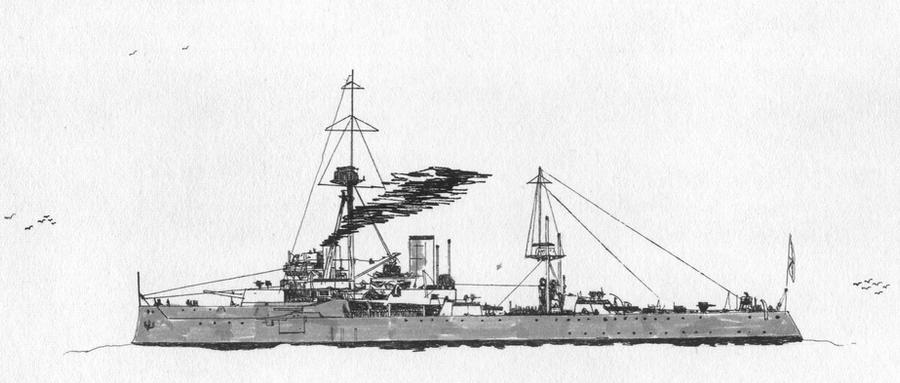
British battleship HMS Dreadnought©Warshipsresearch.blogspot.com

Russian Gangut-class dreadnoughts. ©Warshipsresearch.blogspot.com

George von Lengerke Meyer (1) informed the American president Theodore Roosevelt (2) in a memorandum dated 6 December 1906 that the Russian admiralty proposed the building of 21,000 tons displacement resembling the British battleship HMS Dreadnought.(3) Both ships were to built in Russia with a budget spread over four years. In 1906 should be 1,500,000 US dollars and in 1907 another 4,000,000 US dollars.(4) Meyer spoke a Russian admiral that although approval of the Duma [Russian parliament] was needed, the admiralty decided to start with the building. The reason was that if they waited until March the shipyards were to be closed and 20,000 labourers to ve paid off. Estimated was that average every labourer had to feed 4 persons. Paying off resulted in putting 80,000 persons on to the streets of St. Petersburg in mid-winter. The battleships would have a draught of 26 feet and an armament  of 5x2-12” guns all usable in a broadside fire. The same admiral stated that the HMS Dreadnought was built within 11 monts and had a successfull trial but that “the strain of firing her broadside had been so great that her interior would either have to be rebuilt or strenghtened”. Meyer heard the next day from another “absolute reliable” source that the Admiralty wanted to have 4 dreadnoughts of which one was to be built in the United Kingdom and one in France. Each builder was to furnish a complete set of working drawings to be used for building the other two sisterships in Russia. The English Company [no name was given presumably Vickers Ltd] offered to design and built a battleship armed with 10/12-12” guns all to be fired as a broadside and she would have a speed equal to the HMS Dreadnought.

Notes

1. (24 June 1858 Boston, USA -9 March 1918 Boston), businessman, conservative politician from Massachusetts and embassador in Russia between 12 April 1905-26 January 1907. Under president Howard Taft was Von Meyer Secretary of the Navy between 6 March 1909-4 March 1913).

2. Theodore Roosevelt Jr. (27 October 1858 New York City, USA-6 January 1919 Sagamore Hill, New York, USA), president of the USA between 14 September 1901-4 March 1909.

3. Ordered in 1905, laid down by HM Dockyard Portsmouth on 2 October 1905, launched on 10 February 1906, commissioned on 2 December 1906, decommissioned in February 1919 and sold to be broken up on 9 May 1921. Preceded by the Lord Nelson-class and succeeded by the Bellerophon-class. Her main armament consisted of 5x2-30,5cm/12” guns to which 27x1-7,6cm/3” guns and 5-45cm/18” torpedo tubes were added. Speed 21 knots.

4. The Russian Empire just lost the war (8 February 1904-5 September 1905) with the Japanese Empire and in which her battlefleet was almost completely destroyed. The first Russian dreadnoughts built were of the Gangut- or Sevastopol although not earlier ordered in 1909 and actually started building in 1911 when the Duma approved the needed budget. Vickers Ltd had already in 1907 a design submitted but thw Russian Naval Ministry was forced to open an international design contest. Finally a design of the Baltic Works was chosen. The Gangut, Petropavlosk, Sevastopol and Poltava were all laid down on 16 June 1909 with the Gangut as last one commissioned on 11 January 1915.

Sources

Meyer, George von Lengerke, 1858-1918, [1906, December 6].Memorandum from George von Lengerke Meyer. Library of Congress Manuscript Division. Theodore Roosevelt Digital Library. Dickinson State University.Retrieved from https://www.theodorerooseveltcenter.org/digital-library/o54974.

Warshipsresearch.blogspot.com

Wednesday, 15 April 2026

British cargo ship Wenchow seized by the Russians in 1904

Gross tonnage 898 tons. Seized at Port Arthur previous 11 February 1904, released around 18 February. The war between the Russian and Japanese empires was between 8 February 1904-5 September1905.

Source

Official history (Naval and Military) of the Russo-Japanese War. Vol. II. Liao Yang, the Sha Ho, Port Arthur. Prepared by the Historical Section of the Committee of Imperial Defence. London, 1912. 

Wednesday, 8 April 2026

British cargo ship Ettrickdale seized by the Russians in 1904

Gross tonnage 3,775 tons. Underway from Barry to Sabang, Dutch East Indies. Type cargo coal. Seized in the Red Sea on 19 February 1904, released on 28 February. Russia recognized laims advance and agreed to pay an indemnity. The war between the Russian and Japanese empires was between 8 February 1904-5 September1905.

Source

Official history (Naval and Military) of the Russo-Japanese War. Vol. II. Liao Yang, the Sha Ho, Port Arthur. Prepared by the Historical Section of the Committee of Imperial Defence. London, 1912. 

Friday, 3 April 2026

Japanese cargo ship Naganoura Maru seized and sunk by the Russians in 1904

Gross tonnage 1,084 tons. Seized and sunk on 11 February 1904 off Tsugaru. The war between the Russian and Japanese empires was between 8 February 1904-5 September1905.

Source

Official history (Naval and Military) of the Russo-Japanese War. Vol. II. Liao Yang, the Sha Ho, Port Arthur. Prepared by the Historical Section of the Committee of Imperial Defence. London, 1912. 

Saturday, 28 March 2026

British cargo ship Hsi-Ping seized by the Russians in 1904

Gross tonnage 1,981 tons. Underway from Ching-wang-tao to Shanghai. Type cargo? Seized off Port Arthur on 10 February 1904, ordered to Dalny, released after four days. The war between the Russian and Japanese empires was between 8 February 1904-5 September 1905.

Source

Official history (Naval and Military) of the Russo-Japanese War. Vol. II. Liao Yang, the Sha Ho, Port Arthur. Prepared by the Historical Section of the Committee of Imperial Defence. London, 1912. 

Tuesday, 24 March 2026

Norwegian cargo ship Mathilda seized by Russia in 1904

Gross tonnage 3,480 tons. Underway from Penarth to Sasebo. Type cargo coal. Seized in the Red Sea on 19 February 1904, released on 28 February. ty. The war between the Russian and Japanese empires was between 8 February 1904-5 September1905.

Source

Official history (Naval and Military) of the Russo-Japanese War. Vol. II. Liao Yang, the Sha Ho, Port Arthur. Prepared by the Historical Section of the Committee of Imperial Defence. London, 1912. 

Monday, 23 March 2026

British cargo ship Frankby seized by Russia in 1904

Gross tonnage 3,480 tons. Underway from Barry to Hong Kong Type cargo coal.Seized in the Red Sea on 19 February 1904, released on 28 February. Russian recognizedclaims advance and agreed to pay an indemnity. The war between the Russian and Japanese empires was between 8 February 1904-5 September1905.

Source

Official history (Naval and Military) of the Russo-Japanese War. Vol. II. Liao Yang, the Sha Ho, Port Arthur. Prepared by the Historical Section of the Committee of Imperial Defence. London, 1912. 

Saturday, 21 March 2026

British cargo ship Fu-Ping seized by Russia in 1904

Gross tonnage 1,393 tons. Seized at Port Arthur on previous 10 February 1904, relased on 10 February, fired on when departing te harbor and afterwards visiting Wei-hai-wei to be repaired. The war between the Russian and Japanese empires was between 8 February 1904-5 September1905.

Source

Official history (Naval and Military) of the Russo-Japanese War. Vol. II. Liao Yang, the Sha Ho, Port Arthur. Prepared by the Historical Section of the Committee of Imperial Defence. London, 1912. 

Friday, 20 March 2026

British cargo ship Foxton Hall seized by Russia 1904

Gross tonnage 4,247 tons. Type cargo coal. Seized at Port Arthur on 8 February 1904, released around 12 March. Undamaged but all loose articles like food, stores etc. and certain machinery parts were taken. Stayed at Chefoo in view of claim against the Russian government. The war between the Russian and Japanese empires was between 8 February 1904-5 September1905.

Source

Official history (Naval and Military) of the Russo-Japanese War. Vol. II. Liao Yang, the Sha Ho, Port Arthur. Prepared by the Historical Section of the Committee of Imperial Defence. London, 1912. 

Thursday, 19 March 2026

British cargo ship seized by Russia in 1904

Seized at Port Arthur on 5 February 1903, escaped around 13 February. The war between the Russian and Japanese empires was between 8 February 1904-5 September1905. Gross tonnage 3,837 tons.

Source

Official history (Naval and Military) of the Russo-Japanese War. Vol. II. Liao Yang, the Sha Ho, Port Arthur. Prepared by the Historical Section of the Committee of Imperial Defence. London, 1912. 

Friday, 13 March 2026

Norwegian cargo ship seized by the Russians in 1904

Seized at Port Arthur on 5 February 1903, released on 15 March. The war between the Russian and Japanese empires was between 8 February 1904-5 September1905. Gross tonnage 995 tons.

Source

Official history (Naval and Military) of the Russo-Japanese War. Vol. II. Liao Yang, the Sha Ho, Port Arthur. Prepared by the Historical Section of the Committee of Imperial Defence. London, 1912. 

Wednesday, 11 March 2026

Norwegian cargo ship Brand seized by Russians in 1904

Seized at Port Arthur on 5 February 1903, released on 15 March. The war between the Russian and Japanese empires was between 8 February 1904-5 September1905. Gross tonnage 2,003 tons.

Source

Official history (Naval and Military) of the Russo-Japanese War. Vol. II. Liao Yang, the Sha Ho, Port Arthur. Prepared by the Historical Section of the Committee of Imperial Defence. London, 1912. 

Sunday, 8 March 2026

Norwegian cargo ship Argo seized by Russians in 1904

Seized at Port Arthur on 5 February 1903, released on 15 March. The war between the Russian and Japanese empires was between 8 February 1904-5 September1905. Gross tonnage 1,394 tons.

Source

Official history (Naval and Military) of the Russo-Japanese War. Vol. II. Liao Yang, the Sha Ho, Port Arthur. Prepared by the Historical Section of the Committee of Imperial Defence. London, 1912. 

Saturday, 7 March 2026

The condition of the Russian cruisers Bogatyr, Bayan and Admiral Makarov in 1922

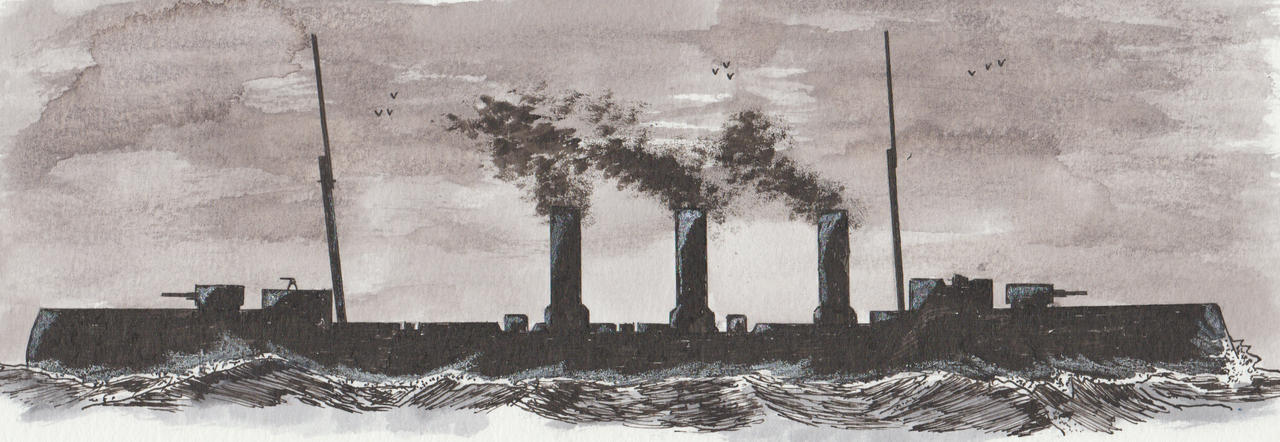
Bogatyr-class. ©Warshipsresearch.blogspot.com

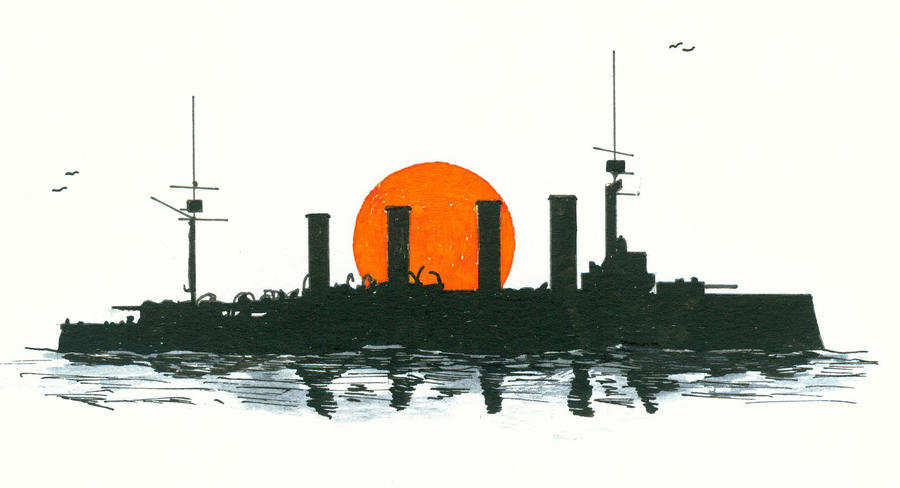
Bajan. ©Warshipsresearch.blogspot.com

Admiral Makarov. ©Warshipsresearch.blogspot.com

The Commissioner of the United States at Riga, Latvia supplied the Secretary of State at Washington, USA on 23 February 1922 more details about the condition of Russian warshipBogatyr (1), Bayan (2) and Admiral Makarov (3) were part of the Cruiser Squadron of the Baltic Fleet. Except for the main armament were all guns removed. Their boilers were in very worse condition.

Notes

1. Part of the Bogatyr-class cruiser of which were 5 planned but 4 completed preceded by Askold succeeded by Novik. Laid down by Vulcan Stettin, Germany with yard number 247 on 22 December 1899, launched on 30 July 1901, commissioned on 30 August 1902, decommissioned and stricken in 1918 and broken up in Germany in 1922.

2. Part of Bajan-class armoured cruisers preceded by Gromoboi and succceeded by Rurik. Building ordered in May 1898, laid down by Forges et Chantiers de la Méditerranée, La Seyne-sur-Mer, France in March 1899, launched on 12 June 1900, completed in December 1902, sunk at Port Arthur on 9 December 1904, captured by Japan on 1 January 1905, renamed Aso commissioned on 22 August 1905, in service as training ship in 1908, reclassified as minelayer on 1 April 1920, stricken on 1 April 1930 and sunk as a target on 4 August 1937.

3. Part of Bajan-class armoured cruisers preceded by Gromoboi and succceeded by Rurik.Laid down by Forges et Chantiers de la Méditerranée, La Seyne-sur-Mer, France in April 1905, launched on 28 May 1906, completed in April 1908, decommissioned in 1918 and sold to be broken up in 1922.

Source

Records of the Department of State Relating to Internal Affairs of Russia and the Soviet Union, 1910-29. Naval Affairs, Navy, Navy Vessels: 861.30 .(861.31 Naval Maneuvers; 851.32 Personnel); 861.33 Movements of Navy Vessels; 861.34 Equipment and Supplies): 861.39 - 861.345. Micro film 316 roll 92. 

Friday, 27 February 2026

British cargo ship Nigretia seized by the Japanese on 19 December 1904

Gross tonnage 2,368 tons. Underway from Shanghai to Vladivostok. Type cargo kerosene. Captured in the Korean Straits on 19 December 1904. Two Russian officers from Port Arthur were found on board. Appeal rejected. The war between the Russian and Japanese empires was between 8 February 1904-5 September 1905.

Source

Official history (Naval and Military) of the Russo-Japanese War. Vol. II. Liao Yang, the Sha Ho, Port Arthur. Prepared by the Historical Section of the Committee of Imperial Defence. London, 1912. 

Thursday, 26 February 2026

British cargo ship King Arthur seized by the Japanese on 19 December 1904

Gross tonnage 1,416 ton. Underway from Port Arthur to Shanghai. Type cargo none. Captured 12 miles from Chefoo on 19 December 1904. Final appeal rejected. Sold by Japanese government to Kobe owners and renamed Otowas Maru. The war between the Russian and Japanese empires was between 8 February 1904-5 September1905. .

Source

Official history (Naval and Military) of the Russo-Japanese War. Vol. II. Liao Yang, the Sha Ho, Port Arthur. Prepared by the Historical Section of the Committee of Imperial Defence. London, 1912.