Translate

Showing posts with label Muscat. Show all posts

Saturday, 14 October 2023

Belgian PBR river patrol vessel Schelde P905 1953-

Antwerpen, Belgium 23 July 2022

A so-called vedette part of the Rhine-squadron. Built by Theodor Hitzler, Regensburg, Germany in 1953. Rhine squadron abolished in 1960, transferred to Zeeburgge, Belgium, given to the Nationaal Scheepvaartmuseum at Antwerp. 

Wednesday, 28 December 2022

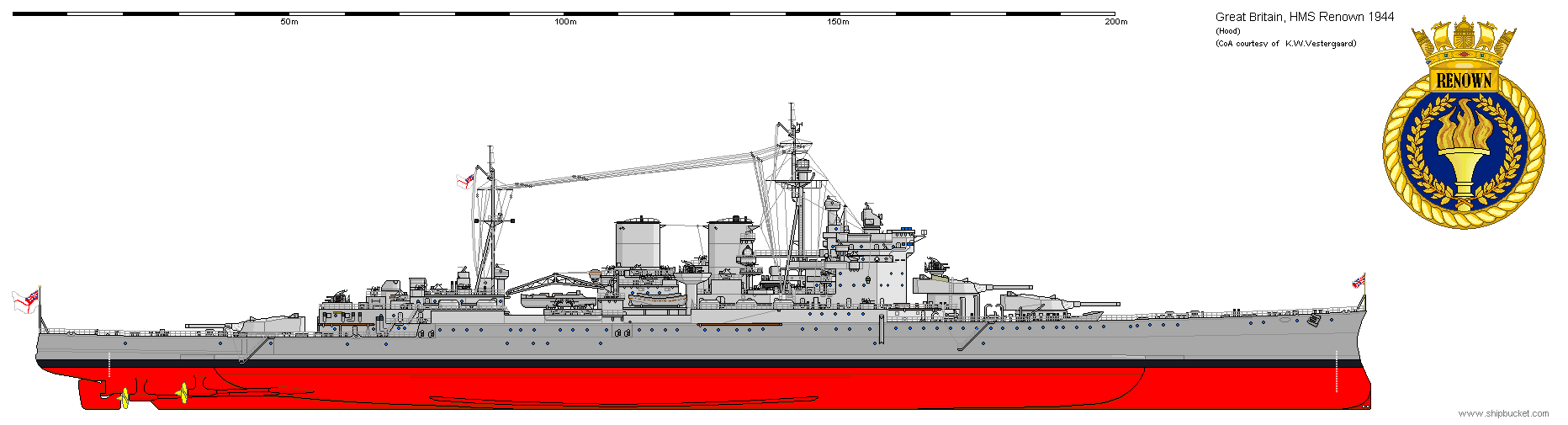
British battle cruiser HMS Renown bound for Indian Ocean according to the Weekly Intelligence Summary No. 43 dated 29 October 1921


HMS Renown
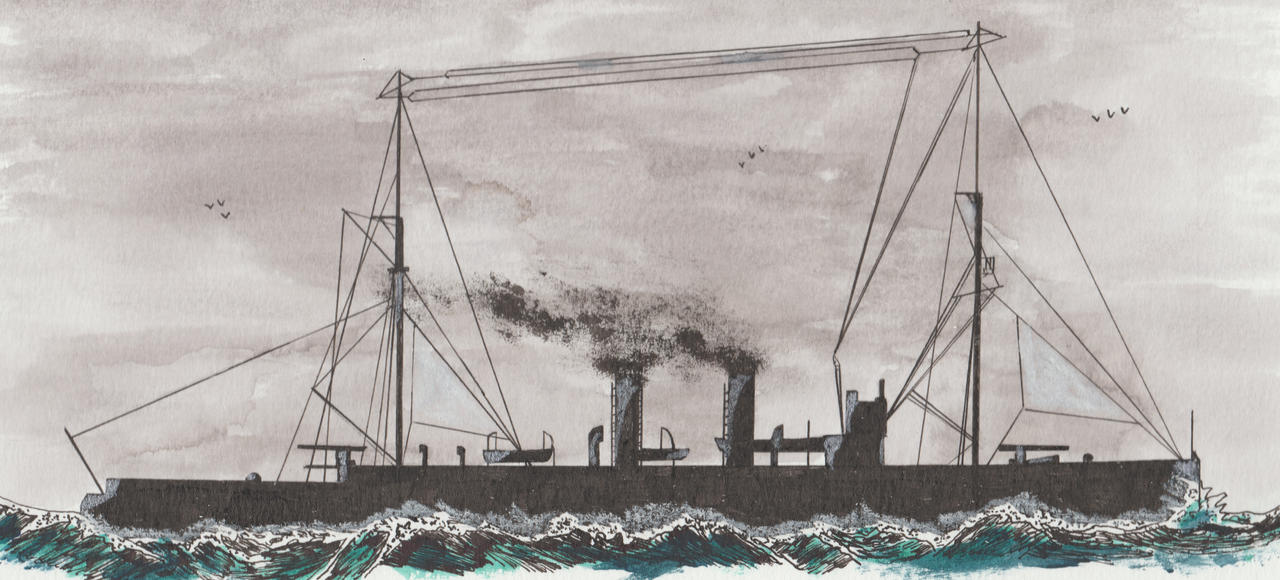
Danae-class light cruisers

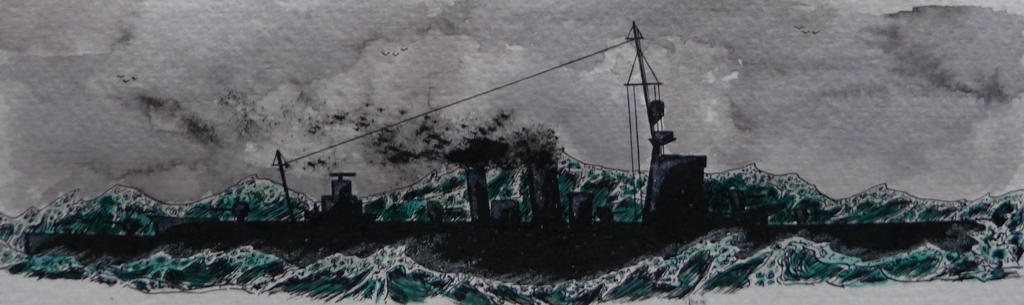
Arabis-class©Warshipsresearch.blogspot.com

An item reported that the British battle cruiser HMS Renown (1) departed on 26 October Portsmouth, England for Gibraltar. She was escorted by the British cruiser HMS Dunedin. (2) An second item reported that her voyage in the Persian Gulf was changed for sake of Sir Percy Loraine who became H.M. Minister at Teheran, Persia. The new dated were departure from Bombay 25 November, Bunder Abbas 28-30 November, Bushire 1-5 December, Kuwait 5-10 December, Muscat 12-16 December and Bombay again 19 December. Loraine was to leave the ship at Bushire on 1 December and to continue his voyage with the British minesweeping sloop HMS Crocus to (3) Mohammerah and Basra.

Notes

1. Part of Renown-class battle cruisers preceded by HMS Tiger succeeded by Courageous-class, building ordered on 30 December 1914, laid down by Fairfield, Govan, Scotland on 25 January 1915, launched on 4 March 1916, commissioned on 20 September 1916, stricken in 1948 and sold to be broken up on 19 March 1948.

2. Part of Danae-class light cruisers, preceded by C-class, succeeded by Emerald-class, laid down by Armstrong Whitworth, Newcastle-on-Tyne, England on 5 November 1917, launched on 19 November 1918, commissioned on 13 September 1919 and sunk by the German submarine U-14 east of St, Paul’s Rocks, Brazil on 24 November 1941.

3. Part of Arabis-class minesweeping sloops, preceded by Azalea-class, succeded by Aubrietia-class, launched by Lobnitz and Company, Renfrew, Scotland on 24 December 1915 and sold at Bombay, India in July 1903.

Source

The National Archives, Kew Gardens, England CAB-24-129-57

Tuesday, 4 October 2022

British battle cruiser HMS Renown cruising in the Far East according to the Weekly Intelligence Summary No. 41 dated 15 October 1921


An item reported that the British battle cruiser HMS Renown was to leave Bombay , India on 25 November, visit Muscat 28 November-2 December, Bunda Abbas 2-6 December, Bushiro 8-12 December, Koweit 12-15 December, Bombay 20 December-17 January 1922, Port Dubhol 17-20 January, Ratnagiri 20-25 January, Mangalore 27-31 January, Trincomali 3 February-2 March and again Bombay 6-8 March before arriving at Karachi on 10 March.

Note

1. Of the Renown-class with as sister ship the Repulse. Original laid down as an improved Revenge-class battleships design but when the First World War broke out was her completion delayed and afterwards completed as battle cruisers. Building ordered on 30 December 1914, laid down at Fairfield, Govan, Scotland on 25 January 1915, launched on 4 March 1916, commissioned on 20 September 1915 and sold on 19 March 1948.

Source

The National Archives, Kew Gardens, England CAB-24-129-24

Monday, 7 June 2021

German screw steam corvette SMS Arcona arrived at Muscat according to the Dutch newspaper De Sumatra Post dated 8 April 1899

An item reported the unexpected arrival of the German cruiser SMS Arcona at Muscat. She already visited other harbours in the Persian Gulf.(1)

Note 

1. Of the Alexandrine-class screw steam corvettes, preceded by Bismarck-class, succeeded by Nixe, laid down at the Kaiserliche Werft Danzig in 1881, launched on 7 May 1885, commissioned on 1 December 1886 and broken up in 1906.

Wednesday, 2 January 2013

British gunboat HMS Lapwing seized steamship of Muscat according to the Dutch newspaper Bataviaasch nieuwsblad dated 27 January 1898

An item dated London 26 January reported that the British gunboat Lapwing seized at Baluchistan a steamship of Muscat which tried to unload guns and ammunition.(1) The British consul representative confiscated the cargo.

Note
1. A composite built gunboat of the Redbreast-class of 805 tons and as dimensions 165 x 31  x 11 feet which was armed with 6-4” guns and 2-3pd guns. Launched at the Devonport dockyard on 12 April 1889 and sold on 10 November 1910 at Bombay.

Sunday, 4 December 2011

Skinners' description of the navy of Muscat in 1833

Skinner arrived in the morning of 21 June 1833 with his ship in the harbour of Muscat. Her he saw some ships of the navy of Muscat.

p. 356: "A number of fine vessels lie in the harbour, belonging to the navy of the Imaun of Muscat. They were all built at Bombay, and one of them is considered the best ever launched from those docks. She is a beautiful model, but wretched filthy and neglected; the Imaun has not lately had any occasion to use his fleet".

Source
major Skinner. Adventures during a journey over land to India, by way of Egypt, Syria, and the Holy land. Philadelphia, 1837. Digitized by Google.

The frigate built in Burma for the Imaum of Muscat 1825-1826

In Snodgrass’ account of the Burmese war is a small piece of information dealing with the (naval) shipbuilding and a remark of the frigate built for Muscat

P. 289: “Crooked teak timber for first-rate men of war, may be bought at Rangoon, at a cheapness of rate greatly below what it can be purchased for on the Malabar coast, or probably in any other part of the world…”
“The port of Rangoon is admirably adapted for ship-building. The river rises in spring tides, from twenty-five to

p. 290: twenty-eight feet; the natives are strong robust, and, with a little practice, would expert workmen. When the British army took possession of the place, they found a twenty-eight gun frigate on the stocks for the Imaum of Muscat ; it has since been launched, and is considered by judges, both as to model and workmanship, a very fine vessel. (1) she was built wholly by Burmese workmen, under the direction of an English shipbuilder, and most probably, at one-third less expense than it would have cost in any other dockyard in the world”.

Source
Snodgrass. Narrative of the Burmese war, detailing the operations of major-general Sir Archibald Campbell’s Army from it’s landing at Rangoon in May 1824, to the conclusion of a treaty of peace at Yandaboo in February 1826. London, 1828.

Note
1. See the note on this weblog titled “James Edward Alexander's notes dealing with the navy of the Imaum of Muscat in 1825-1826”. The frigate mentioned by Snodgrass must be the Bundoolah.

The Liverpool of the Imaum of Muscat broken up in 1825?

In earlier note on this weblog I referred to a description made by James Edward Alexander’s while visiting the dock yard at Bombay. Here he saw the building of a 80-gun ship for the Imaum, later to be launched that year. She was in advance called Imaum, presented as a gift to the British crown and renamed Liverpool. I found a reference in The Asiatic Journal dealing with her predecessor. “Imam of Muscat’s Marine. We are informed that the Imam has sent the Liverpool to Bombay for the purpose of being broken up, as she is rapidly decaying. His Highness, we believe, intend« requesting permission from Government to construct another vessel, in the Bombay Dock-yard, nearly after the same model, though somewhat larger. He appears very desirous of keeping up his marine force, which has become rather formidable; at least it is so in the estimation of the native tribes on the Arabian coast; and this is an object which he has been always desirous of attaining, as it gives a security to his power in the possessions held by him on the coast of Africa, from whence about one-fourth of his revenue is derived,- [Bom. Cour. Dec. 15.]”.

Source
The Asiatic Journal and monthly register for British India and its dependencies, volume 19, p. 849. London, 1825.

Wednesday, 16 November 2011

The navy of the sultan of Muscat Oman in October 1833

I found an interesting article in the American Magazine of useful and entertaining knowledge, vol. 3, no. 8, p. 327 of May 1837 an article dealing with the navy of Muscat Oman, written by a certain S. Probably this was William Sullivan. The list he gave is undated. The same article was earlier published by Edmund Roberts in his Embassy to the eastern courts of Cochin-China, Siam and Muscat in the U.S. sloop-of-war Peacock during the years 1832-1834. New York, 1837, p, 363. See also the notes on this weblog.(1) Here the list was dated October 1833. Both books are digitized by Google.

Liverpool, 74 guns, built at Bombay, stationed at Zanzibar (2)
Shah Alum, 56 guns, built at Bombay, stationed at Zanzibar (3)
Caroline, 40 guns, built at Rangoon, stationed at Muscat (1)
Prince of Wales, 36 guns, built at Demaun, stationed at Muscat
Henningshaw, 36 guns, built at Cochin, at Calcutta
Piedmontese, 32 guns, built at Muscat, stationed at Muscat
Mossapa, 24 guns, built at Cochin, stationed at Muscat
Rahmani, 22 guns, built at Bombay, stationed at Muscat
Falke, 18 guns, Demaun, stationed at Bombay
Soliman Shah, 18 guns, built at Muscat, stationed at Muscat,
Curlew, brig, 12 guns, built at Bombay, stationed at Muscat
Psyche, brig, built at Cochin, stationed at Muscat
Sage, yacht, 6 guns, built at the Malabar Coast, stationed at Zanzibar
Vestal, 6 guns, built at Muscat, stationed at Muscat
Elphinstone, 6 guns, built at Bombay, stationed at Bombay
Also 50 baghelas, carrying from 8 to 18 guns; and 10 balits, carrying from 4 to 6 guns. The baghela is a one masted vessel, of from 200 to 300 tons. The balit is also a one masted vessel, from 100 to 200 tons. Part of these vessels are used to convoy vessels to the Persian Gulf, and some are in Africa, &c. Thus it is seen that the sultan of Muscat is a powerful prince. He possesses a more efficient naval force than all the native princes combined, from the Cape of Good Hope to Japan. His possessions, in Africa, stretch from Cape Delagado to Cape Guardafur ; and from Cape Adra, in Arabia, to Ras el Haud ; and, from Ras el Haud, they extend along the northern coast of Arabia, or the coast of Aman, to the entrance to the Persian Gulf, and he claims, also, the sea coast and islands within the Persian Gulf, including the Barhein islands, and the Pearl Fishery, contiguous to them, with the northern coast of the Gulf, as low down as Scindy. The vessels of the sultan trade not only with his own ports in Africa, and the valuable islands of Monpoea, Zanzibar, Pemba, and Socotra, but also to Guzzerat, Surat, Demaun, Bombay, Bay of Bengal, Ceylon, Sumatra, Java, the Mauritis, the Comora islands, Madagascar, and the Portuguese possessions, bringing Indian, African, and European articles. About two thousand vessels are thus engaged in this trade, of which a very large proportion are small craft, to be sure. The naval force of the sultan gives him entire control over all the ports in East Africa, the Red Sea, the coast of Abyssinia, and the Persian Gulf. This force consists, it seems, of between seventy and eighty sail of vessels, carrying from seventy-four guns to four. The officers of this force practise lunar observations, and have excellent chronometers. Since our treaty with the sultan, in 1835, our vessels are beginning to push an advantageous trade there, though they encounter formidable competitors in the British, who enjoy great advantage from their Indian possessions. The exports are gum copal, aloes, gum arabic, ivory, tortoise shell, hides, beeswax, cocoa, rice, ghee, dates, raisins, and a great variety of drugs. These statements are corroborated by information which we have received from a gentleman who has seen the Liverpool and Shah Allum, and two or three sloops and brigs of war, at Zanzibar, a place which he has repeatedly visited. Zanzibar is an important port in the sultan of Muscat's dominions, and probably the town contains ten or twelve thousand inhabitants. The people are of course chiefly Arabs; but they have a great number of slaves, brought from Africa. The merchants who speak English very well, are the Banyans, a sect from Hindostan. The island itself is fertile and pleasant, and a considerable trade is carried on there by the Americans, in gum copal, ivory, &c. which are brought -from Africa. The sultan has a palace of stone, built at Zanzibar within three or four years, and quite handsome. He is a fine looking and pleasant man, and very generous and hospitable to the Americans. When our informant was lying there at anchor, a person who had been staying on board was obliged to go on shore to wait for his vessel. The sultan ordered him to be provided with a house and every thing needful.”“If any of our readers were told that the sultan of Muscat had a navy about as large as ours, they might be very incredulous, till they looked at facts. But, nevertheless, the sultan has a powerful navy. We gather, from ‘a Digest of existing Regulations for foreign countries, with which the United States have intercourse,’- a most valuable work, by the way, printed by order of Congress-the following statement of the naval force of the sultan of Muscat.

Sources
Edmund Roberts. His Embassy to the eastern courts of Cochin-China, Siam and Muscat in the U.S. sloop-of-war Peacock during the years 1832-1834. New York, 1837
Ruttonjee Ardeshir Wadia. The Bombay dockyard and the Wadia master builders. 2004.
American Magazine of useful and entertaining knowledge, vol. 3, no. 8, p. 327 of May 1837.

Notes
1. “James Edward Alexander’s notes dealing with the navy of the Imaum of Muscat in 1825-1826”, “Skinners’ description of the navy of Muscat in 1833”, “The frigate built in Burma for the Imaum of Muscat in 1825-1826”,and “The Liverpool of the Imaum of Muscat broken up in 1825?”
2. Wadia: 74-guns ship of the line, built 1826, measured 1715 tons, presented to the British king.
3. Wadia: 56-guns frigate, built 1819, dimensions 181’3” x 41’5”, measured 1111 tons.
4. Wadia: 36-guns frigate built 1814, costs Rs. 125 or £ 21:3:9 per ton, measured 575 24/95 tons.

Wednesday, 9 November 2011

James Edward Alexander's notes dealing with the navy of the Imaum of Muscat in 1825-1826

In October 1825 arrived Alexander at Rangoon, Burma. He became a volunteer for a patrol river upwards from Rangoon to Prome. The boats with a detachment soldiers departed from the Kings' wharf.

P. 25: "We passed a thirty-six gun frigate on the stocks, building for the Imaum of Muscat, and named the Bundoolah, after the celebrated generalissimo of the Burmese: she was nearly ready for launching".

Alexander arrived in the morning of 20 April 1826 at Bombay where he visited the dock yard.

p. 70: "In the evening I visited the dock-yards, the master-builders in which, as well as the shipwrights, are all Persees, the finest and most enterprizing race in India. A large eighty-gun ship was on the stocks building for the Imaum of Muscat, who is possessed at present with the ship-building mania. Our Government allow him to build as many vessels as he pleases, as it would be an easy matter

p. 71: to take them from him in the event of a war. The docks do great credit to the engineer who constructed them. The timber used in them comes from the Malabar coast."

Source
James Edward Alexander. Travels from India to England; comprehending a visit to the Burman Empire, and a journey through Persia, Asia minor, European Turkey. &c. in the years 1825-1826. London, 1827. Digitized by Google.