Translate

Showing posts with label Lighters. Show all posts

Thursday, 5 March 2026

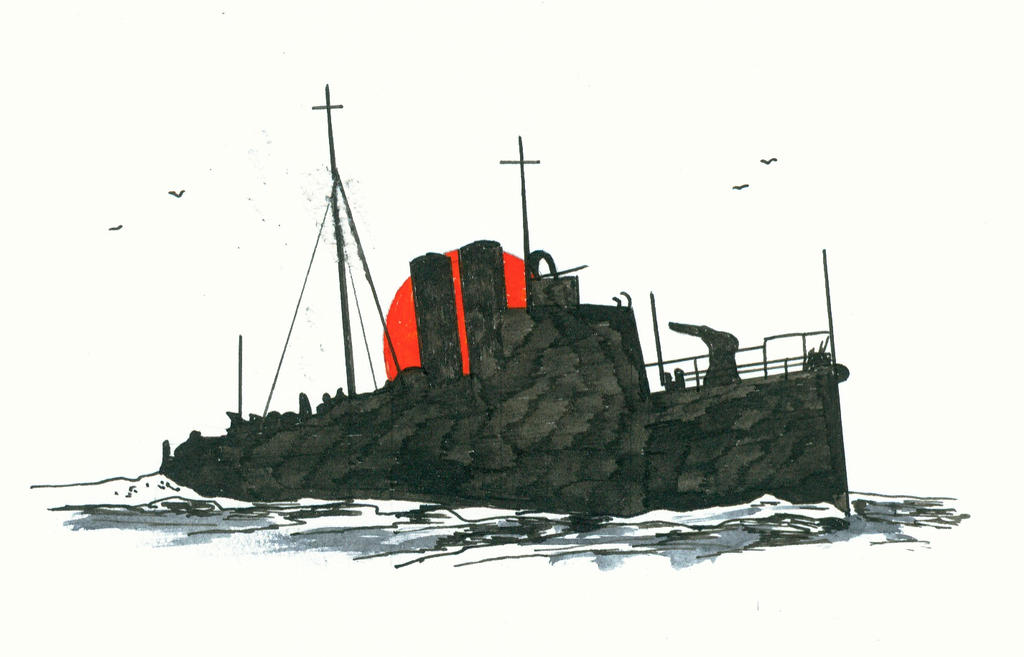
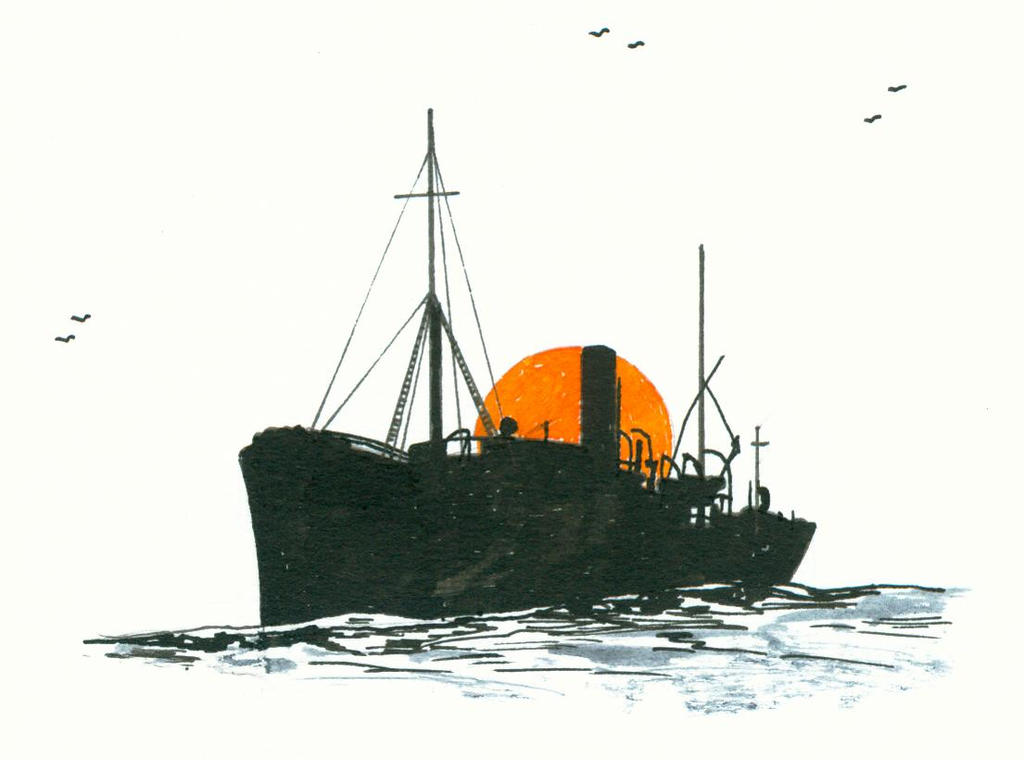
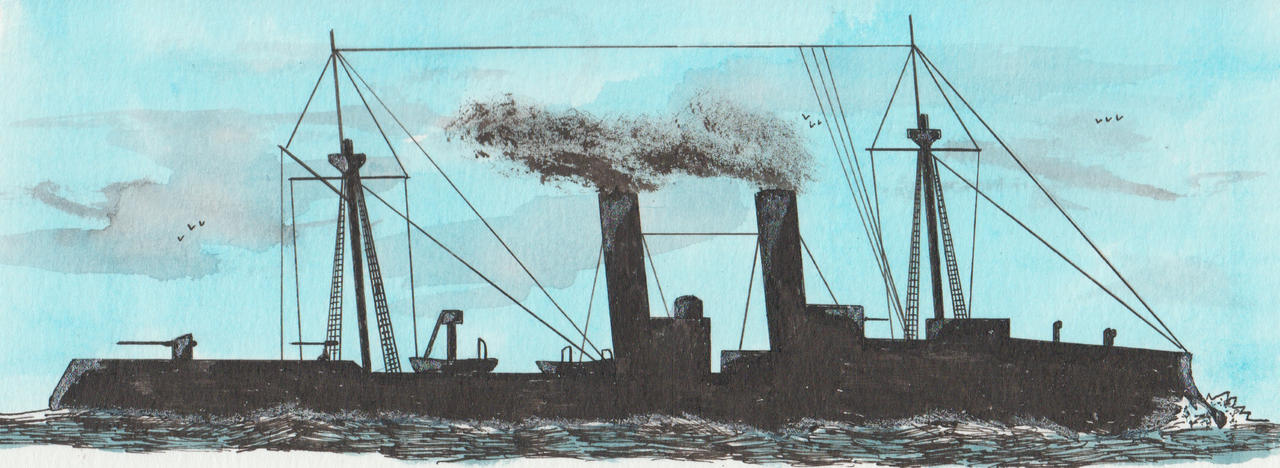
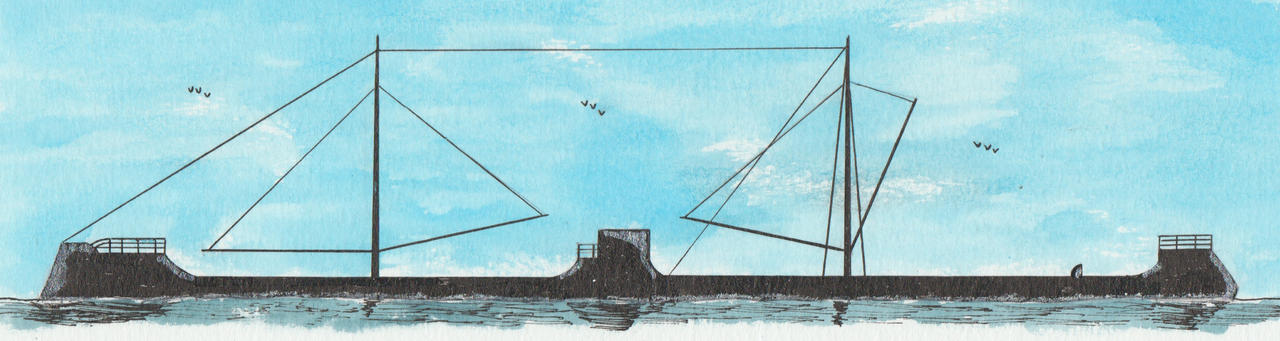
Proposal for converting German Siegfried-class coastal defence ship into an ocean going lighter after 1918


©Warshipsresearch.blogspot.com

Siegfried-class preceded by Oldenburg succeeded by Odin-class. All six ships were stricken on 17 June 1919 and sold to be broken up.

The Frithjof under her original name was rebuilt into a merchant ship by Deutsche Werke in 1923 removing armor and replacing superstructure and machinery and broken up in 1930.

The Siegfried en Heimdal as to be converted by the navy into a salvage vessel but instead sold to be broken up in 1919, respectively 1921.

The Beowulf was sold to the Norddeutsche Tiefbaugesellschaft, Berlin but broken up in 1921.

The Hildebrand was sold in 1919 to be broken up.

The Hagen was sold in 1919 to be broken up. 

Friday, 28 November 2025

Yugoslavian smaller naval (auxiliary) vessels lying at Sibenik and Split in April 1941

According to a letter dated Zagreb 4 November 1943 of the German embassy at Zagreb to the Department of an independent Croatia mentioned the Yugoslavian vessels lying at Sibenik and Split in April 1941. After 10 April Croatian-flagged and owner than taken over by the Italian navy, those at Split after 21 April.

The 250 tons torpedo boats T 3 and T 5-7 at Split Divulje.

The 500 ton minesweepers Labud (at Split-Divulje), Orao (at Split Yard), Sokol (ar Split Yard), Galeb (ar Split-Divulje) and the hevaily damaged Kobac (at Sibenik).

The 15 tons torpedo motor boats Cetjik (at Split-Divulje) and Uskok (at Sibenik).

The 2,000 tons auxiliary ship annex minelayer Zmaj, left for the German navy.

The 1,000 tons salvage vessel Spasilac at Split Yard.

The small 125 tons minelayers Mosor and Marjan (at Sibenik).

The small tankers Uljesura (at Split) abd Kit (at Sibenik).

The 260 tons water tender Lovcen (at Split-Divulje)m some harbour tenders, several lighters, 3 hulks (accommodation ships), motor boats, boats, 1 sailing cutter at Sibenik, 1 harbour tender and some lighters at Split and Divulju.

Note

1. The Independent State of Croatia was established after Yugoslavia was captured by Italy and Germany on 10 April 1941. This state was first an Italian Protectorate between 1941-1943 and then a German puppet state between 1943-1945.

Source

Bundesarchiv TM-12-II/4

Wednesday, 26 November 2025

Yugoslavian naval vessels laying in the Bay of Kotor in April 1941

Torpedoboat No. 8. ©Warshipsresearch.blogspot.com

Submarine depot ship Hvar. ©Warshipsresearch.blogspot.com

German Gazelle-class SMS Niobe which became the Dalmacija. ©Warshipsresearch.blogspot.com

According to a letter dated Zagreb 4 November 1943 of the German embassy at Zagreb to the Department of an independent Croatia possessed the Royal Yugoslav Navy in April 1941 the next vessels lying in the Bay of Kotor.

The 250 tons torpedo boats T 1 and 8 unde repair at Tivat.

The 500 tons mine boat Jastren.

The small 125 tons minelayers Miljet and Meljine.

The 2,350 tons training cruiser Dalmacija, now under Italian flag renamed Cattaro in the Northern Adriatic.

The 2,630 tons submarine mother ship Hvar, now in service of the Italian navy at Susak.

The 725 tons sail training ship Jadran, now in service of the Italian navy at Pola as the Marco Polo.

The 4,000 tons motor tanker Perun.

The 600 tons motor yacht Beli Orao, armed by the Italian navy and renamed Zagabria.

The 600 tons auxiliary ship Sitnica, unter recently in Italian service at Dalmatia.

The 260 tons steam yacht Vila, currently ar Fiume.

The tugs Jaki (300 ton), Snazni (100 tons), Ustrajni (160 tons), Marljivi (130 tos).

The 78 tons mine hunter/school ship “D”.

A large number of harbour tenders, lighters, 2 floating cranes and 2 floaitng dry docks of respectively 1,700 and 7,000 tons at Tivat.

Note

1. The Independent State of Croatia was established after Yugoslavia was captured by Italy and Germany on 10 April 1941. This state was first an Italian Protectorate between 1941-1943 and then a German puppet state between 1943-1945.

Source

Bundesarchiv TM-12-II/4
Thursday, 9 October 2025

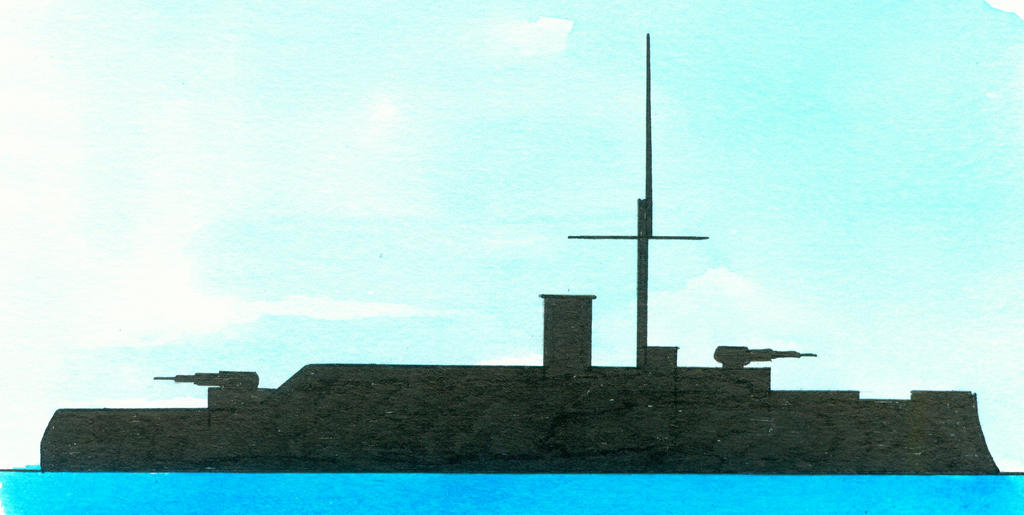
North Vietnamese shipyard at Haiphong launched 3 lighters according to the Australia Station Intelligence Summary dated 8 June 1957

An item reported that shortly after 18 March a North Vietnamese shipyard at Haiphong which employed Polish advisers and technicians launched 3 steel made lighters out of a series of 20 with a cargo capacity of 125 tons.

Source

Website Royal Australian Navy, Sea Power Centre.

Sunday, 2 March 2025

Chilean lighthouse (ex-Molda 1937-1959, Molda County 1959-1961, Molda 1961-1963, Fana 1963-1966) Captain Leonidas 1966-1968


Wreck used as light ship on Bajo Cotopaxi 27 February 2025

Geographical position 48°45.4′ South 74°28.0′ West. Marks the northern terminus of Angostura Inglesa (English Narrows). Panamanian cargo ship mv Captain Loenidas run aground on 7 April 1968. Delivered by Deschimag Werk Weser, Bremen, Germany as Molda for A/S Ludwig Mowinckels Rederi, Bergen, Norway in October1937.Since 1965 Panama owned. IMO 5427057. 

Sunday, 2 February 2025

Croatian coal lighter No. 2 in 1943

According to a letter dated Zagreb 4 November 1943 of the German embassy at Zagreb to the Department of an independent Croatia were the results represented of a investigation concerning Croatian merchant coastal shipping and navy. Belonged to the former Maritime Directorate at Split which was responsible for the harbours, buoys, harbour service and so on for the complete coastline and other maritime affairs except for the tasks of the navy. (1)

Note

1. The Independent State of Croatia was established after Yugoslavia was captured by Italy and Germany on 10 April 1941. This state was first an Italian Protectorate between 1941-1943 and then a German puppet state between 1943-1945.

Source

Bundesarchiv TM-12-II/4
Saturday, 1 February 2025

Croatian coal lighter No. 3 in 1943

According to a letter dated Zagreb 4 November 1943 of the German embassy at Zagreb to the Department of an independent Croatia were the results represented of a investigation concerning Croatian merchant coastal shipping and navy. Belonged to the former Maritime Directorate at Split which was responsible for the harbours, buoys, harbour service and so on for the complete coastline and other maritime affairs except for the tasks of the navy. (1)

Note

1. The Independent State of Croatia was established after Yugoslavia was captured by Italy and Germany on 10 April 1941. This state was first an Italian Protectorate between 1941-1943 and then a German puppet state between 1943-1945.

Source

Bundesarchiv TM-12-II/4

Friday, 24 January 2025

Croatian coal lighter No. 1 in 1943

According to a letter dated Zagreb 4 November 1943 of the German embassy at Zagreb to the Department of an independent Croatia were the results represented of a investigation concerning Croatian merchant coastal shipping and navy. Belonged to the former Maritime Directorate at Split which was responsible for the harbours, buoys, harbour service and so on for the complete coastline and other maritime affairs except for the tasks of the navy. (1)

Note

1. The Independent State of Croatia was established after Yugoslavia was captured by Italy and Germany on 10 April 1941. This state was first an Italian Protectorate between 1941-1943 and then a German puppet state between 1943-1945.

Source

Bundesarchiv TM-12-II/4

Friday, 12 January 2024

Characteristics for an American beach discharge lighter (BDL)in March 1961

Capable of receiving at sea wheeled and trackings from roll-on rolll-off ships. Speed 12 knots. Capacity 600 tons vehicular cargo and 1,000 toins general cargo. Accommodation for 204 vehicle carriers.

Source

Army forces in amphibious operations (the Army Landing Force). Department of the Army Field Manual FM 31-12. March 1961. 

Sunday, 24 December 2023

Characteristics for an American lighter, amphibious, resupply cargo (LARC-5) in March 1961

Dimensions 35 x 9 x 9.3 feet Capacity 5 tons-25 troops with combat equipment. Weight 18,000 pounds (empty). Maximum speed 10 (water)-35 (land) miles. Range 75 (water)-270 (land) miles. Largest equipment carried 0.5cm gun with crew and ammunition.

Source

Army forces in amphibious operations (the Army Landing Force). Department of the Army Field Manual FM 31-12. March 1961. 

Sunday, 8 October 2023

Dutch inland craft Supplier 2

Amsterdam, Netherlands October 2023

Netherlands-flagged, ENI 0233772. Owner De Koperen Ploeg. 

Monday, 17 July 2023

American non-self propelled catapult lighter AVC 1 in 1945

Dimensions 420.0 (waterline)-423.10 (over all) x 57.0 (extreme) x 9.9 (limiting draft) feet and limiting displacement 5,860 tons (esti,ated normal displacement and draft). Laid down by Navy Yard, Philadelphia, USA on 91 February 1940, launched on 17 August 1940 and commissioned on 17 December 1941. No armament authorized but fitted out with 4cm anti aircraft mounts.

Source

Bureau of Ship. Navy Department. Ships’ Data US Naval Vessels. Vol III. Auxiliary, district craft and unclassified vessels, 15 April 1945

Saturday, 6 May 2023

North Vietnam building lighters by herself according to the Australia Station Intelligence Summary dated 8 June 1957

An item reported that the shipyard Haiphong Co. Khi Cong Ty, North Vietnam launched on 18 March the first two steel made lighters solely built by Vietnamese with a length of around 98 feet and around 100 tons cago capacity.

Source

Website Royal Australian Navy, Sea Power Centre.

Tuesday, 3 January 2023

Hungarian inland lighter M.F.T.R. 750 on 1 November 1918

Chartered. Part of the Danube Flotilla of the former Austro-Hungarian Navy passing in Hungarian possession on 1 November 1918. Caught in Ujvidék.

Note

1. MFTR= Magyar Kirälyi Folyam- es Tengerhajözäsi Reszvenytärsasäg (Mahart)

Source

The Hungarian peace negotiations. An account of the work of the Hungarian peace delegation at Neuilly s/S from January to March, 1920, vol II. Published by the Royal Hungarian Ministry of Foreign Affairs, Budapest, 1922

Friday, 30 December 2022

Hungarian inland lighter D.G.T. 65.206 on 1 November 1918

Chartered. Part of the Danube Flotilla of the former Austro-Hungarian Navy passing in Hungarian possession on 1 November 1918. Depot for submarine mines. Removed as ordered by the Commandement du Danube.(1)

Note

1. D.G.T. (Danube Navigation Society).

Source

The Hungarian peace negotiations. An account of the work of the Hungarian peace delegation at Neuilly s/S from January to March, 1920, vol II. Published by the Royal Hungarian Ministry of Foreign Affairs, Budapest, 1922

Hungarian inland lighter D.G.T. 65.175 on 1 November 1918

Chartered. Part of the Danube Flotilla of the former Austro-Hungarian Navy passing in Hungarian possession on 1 November 1918. Caught on Kamenica. (1)

Note

1. D.G.T. (Danube Navigation Society).

Source

The Hungarian peace negotiations. An account of the work of the Hungarian peace delegation at Neuilly s/S from January to March, 1920, vol II. Published by the Royal Hungarian Ministry of Foreign Affairs, Budapest, 1922

Sunday, 18 December 2022

Hungarian inland steam boat Odessa 1920

Part of the Danube Flotilla. Actual situation: called an armed auxiliary steamship which was disarmed and the guns were carried away with the lighter S 7 following orders of the Commandement du Danube.

Source

The Hungarian peace negotiations. An account of the work of the Hungarian peace delegation at Neuilly s/S from January to March, 1920, vol II. Published by the Royal Hungarian Ministry of Foreign Affairs, Budapest, 1922

Hungarian inland anonymous work shop lighter 1920

Part of the Danube Flotilla. Actual situation: lighter is Hungarian property, established on board and fitted out on costs of Hungary. Nevertheless asked the Commandement du Danube for her delivery or another craft.

Source

The Hungarian peace negotiations. An account of the work of the Hungarian peace delegation at Neuilly s/S from January to March, 1920, vol II. Published by the Royal Hungarian Ministry of Foreign Affairs, Budapest, 1922

Sunday, 4 December 2022

Hungarian inland lighter W 5 M.F.T.R. 721 on 1 November 1918

Chartered. Part of the Danube Flotilla of the former Austro-Hungarian Navy passing in Hungarian possession on 1 November 1918. Towed from Dunapentele beyond the Line of Demarcation in November 1919 following orders of the Commandement du Danube.

Source

The Hungarian peace negotiations. An account of the work of the Hungarian peace delegation at Neuilly s/S from January to March, 1920, vol II. Published by the Royal Hungarian Ministry of Foreign Affairs, Budapest, 1922

Hungarian inland lighter 65.150 on 1 November 1918

Chartered. Part of the Danube Flotilla of the former Austro-Hungarian Navy passing in Hungarian possession on 1 November 1918. Towed from Dunapentele beyond the Line of Demarcation in November 1919 following orders of the Commandement du Danube.

Source

The Hungarian peace negotiations. An account of the work of the Hungarian peace delegation at Neuilly s/S from January to March, 1920, vol II. Published by the Royal Hungarian Ministry of Foreign Affairs, Budapest, 1922