Translate

Showing posts with label South Shetlands Islands. Show all posts

Wednesday, 29 July 2026

American sailing sealing ship Charles Adams in 1831-1833

Antarctic sealing ground South Shetlands. Rigging ship. Captain Alex. Palmer, left Stonington, USA on 1 September 1831, returned home on 2 September 1832 with 1,000 fur-seal skins, 2,100 barrels sea-elephant oil and 100 barrel sperm oil. Tender was the schooner Courier with as captain Barnard.

Source

Goode, George Brown. The fisheries and fishery industries of the United States. Section V. History and methods of the fisheries. Volume II, Washington, 1887. (1978).

Friday, 12 September 2025

Sea elephanting grounds off Desolation or Kerguelen Island since 1837

An item reported that sea elephant oil or a mix of sea elephant seal oil furnished a large part of the oil traded on the American markest during the past 80 years. After 1837 was the great bulk of the oil obtianed at Desolation or Kerguelen Island responsible for. It was a typical New London industry with ships fitted out at New London, Stonington and Mystic.

Source

George M. Bowers. U.S. Commision of fish and fisheries. Part XXVIII. Report of the commissioner for the year ending June 30, 1902. Washington, 1904. 

Tuesday, 26 August 2025

Sea elephanting off the South Shetland Islands 1820-1837

 An item reported that sea elephant oil or a mix of sea elephant seal oil furnished a large part of the oil traded on the American markest during the past 80 years. Until 1803 was the oil shipped by whalers from Nantucket active in the extreme South Atlantic and by fur sealers active off Falkland, South Georgia and the coast of Patagonia. Around 1820 the Patagonian coast was exchanged for the South Shetland Islands for the next 17 years. It was a typical New London industry with ships fitted out at New London, Stonington and Mystic.

Source

George M. Bowers. U.S. Commision of fish and fisheries. Part XXVIII. Report of the commissioner for the year ending June 30, 1902. Washington, 1904. 

Monday, 19 February 2024

Norwegian whale factory ship (ex-Europe 1891-1911, Thøger 1911-1913) ss Guvernøren 1913-1915


off Enterprise Island 18 February 2024

Gross register tonnage 5,459 tons, under deck 5,246 tons, net tonnage 3,433 tons and as dimensions 132.6 x 14.1 x 10.1 metres or 435.0 x 46.4 x 25.2 feet. Built by Palmer’s Shipbuilding&Iron Co. Ltd., Newcastle, England with yard number 651 in 1891 as a cargo ship for National Steam Navigation Co., National Line, Liverpool, England, since 1907 owner Atlantic Transport Co. Ltd., Atlantic Transport Line, London, since 1911 of Andersen Thøger, Larvik, Norway and since 1913 of Virik Haldor, Sandefjord, Norway and on 27 January 1915 underway from Cardiff, England to the South Shetlands loaded with whale oil caught fire and lost at Oddharbour, South Shetlands with 16,615 barrels oil. The Dutch newspaper De Maasbode dated 21 February 1915 reported 1,700 barrels. Hr crew was saved. Call sign MHLQ. 

Saturday, 10 September 2022

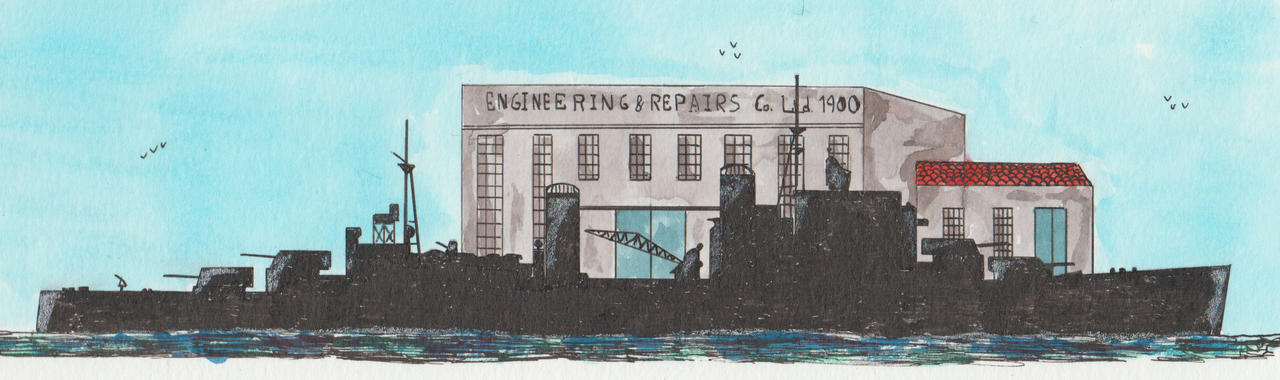
British cruiser HMS Nigeria sent to the Falkland Islands according to the Dutch newspaper Het nieuws dated 24 February 1948

Crown Colony/Fiji-class cruiser©Warshipsresearch.blogspot.com

An item dated London, England 23rd reported that the British premier Attlee declined friendly the offer from Australia to sent a warship to the Antarctic to support the United Kingdom in the difficulties with Argentina (1) and Chile (2). Attlee expected the arrival of the British cruiser HMS Nigeria on short notice at the Falkland Islands.

Notes

1. The Argentine Antarctica is part of the province of Teiira del Fuego, Antarctica and South Atlantic Islands. Argentina claims the Falklands (part of her Islas del Atlantico Sur department).

2. The Chilean president Gabriel Gonzalez Videla opened the Base General Bernardo O’Higgins as part of claiming sovereignty of what is nowadays known as the Chilean Antarctic Territory or Chilean Antarctica. Chile claimed for instance the South Shetland Islands.

3. Of the Crown Colony or Fiji-class light cruisers, preceded by Dido-class, succeeded by Minotaur-class, building ordered on 20 December 1937, laid down by Vickers Armstrong, Walker, Newcastle on Tyne, England on 8 February 1938, launched on 18 July 1939, commissioned on 23 September 1940, sold India on 29 August 1957, renamed INS Mysore (C60), decommissioned on 20 August 1985 and broken up.

Friday, 26 March 2021

American sealing brig Charity in 1821-1822 according to George Brown Goode

American sealing brig Charity captain Barnard departed New York, USA in 1821 bound towards the South Shetlands returning back home in May 1822 with 8.000 fur seal skins and some oil.

Source

The Fisheries and Fishery Industries of the United States. Section V. Vol II. George Brown Goode, Washington, 1887.

Wednesday, 24 March 2021

American sealing sloop James Munroe in 1821-1822 according to George Brown Goode

The American sealing sloop James Munroe captain Palmer departed Newport, Rhode Island in 1821 bound for the South Shetlands returning back home 20 April 1822 fully loaded with oil and fur seal skins.

Source

The Fisheries and Fishery Industries of the United States. Section V. Vol II. George Brown Goode, Washington, 1887.

Tuesday, 23 March 2021

Stonington sealers bound for the South Shetlands in 1821-1822 according to George Brown Goode

In fall 1821 departed six sealing vessels Stonington, Connecticut, USA bound for the South Shetlands returning back home in 1822. One vessel caught 404 fur seal skins, the total catch results were disappointing that season with just 1.500 fur seal skins. The Express served as tender for this fleet.

Source

The Fisheries and Fishery Industries of the United States. Section V. Vol II. George Brown Goode, Washington, 1887.

American sealing sloop Essex in 1821-1822 according to George Brown Goode


The American sealing sloop Essex captain Chester departed Stonington, USA in 1821 bound for he South Shetlands returning back home in April 1822 with some fur fur seal skins and 200 barrels sea elephant oil. She served as tender for the Stonington fleet.

Source

The Fisheries and Fishery Industries of the United States. Section V. Vol II. George Brown Goode, Washington, 1887.

Tuesday, 2 March 2021

American sealing brig General Scott in 1821-1822 according to George Brown Goode


Stripping sea-elephant blubber and rolling it in barrels to try-works southwest beach of Herd’s Island

Drawing by H.W. Elliott after captain H.C. Chester

The American sealing brig General Scott departed New London, Connecticut, USA in 1821 bound for the South Shetlands returning back home in May 1822 with 1.200 fur seal skins and 300 barrels sea elephant oil.

Source

The Fisheries and Fishery Industries of the United States. Section V. Vol II. George Brown Goode, Washington, 1887.

American sealing schooner Harmony in 1821-1822 according to George Brown Goode


Stripping sea-elephant blubber and rolling it in barrels to try-works southwest beach of Herd’s Island

Drawing by H.W. Elliott after captain H.C. Chester

The American sealing schooner Harmony captain Hodges departed Nantucket, USA in 1821 bound for the South Shetlands returning back home on 10 June 1822 with 1.000 fur seal skins and 250 barrels sea elephant oil.

Source

The Fisheries and Fishery Industries of the United States. Section V. Vol II. George Brown Goode, Washington, 1887.

American sealing ship Huron in 1821 according to George Brown Goode


Stripping sea-elephant blubber and rolling it in barrels to try-works southwest beach of Herd’s Island

Drawing by H.W. Elliott after captain H.C. Chester

The American sealing ship Huron captain Davis departed New Haven, Connecticut, USA in 1821 bound for the South Shetlands and had as catch results 12.000 fur seal skins and 700 barrels sea elephant oil.

Source

The Fisheries and Fishery Industries of the United States. Section V. Vol II. George Brown Goode, Washington, 1887.

Friday, 26 February 2021

American sealing brig Emmeline in 1820-1821 according to George Brown Goode


Stripping sea-elephant blubber and rolling it in barrels to try-works Soutwest beach, Herd’s Island. Drawing by H.W. Elliott after captan H.C. Chester. 

The American sealing brig Emmeline departed Stonington, Connecticut, USA in fall 1820 as part of a fleet bound for the South Shetlands most of the ships returning back home in 1821 with a total catch of 88.000 fur seal skins and 1.008 barrels sea elephant oil.

Source

The Fisheries and Fishery Industries of the United States. Section V. Vol II. George Brown Goode, Washington, 1887.

American sealing brig Clothier in 1820-1821 according to George Brown Goode


Stripping sea-elephant blubber and rolling it in barrels to try-works Soutwest beach, Herd’s Island. Drawing by H.W. Elliott after captan H.C. Chester. 

The American sealing brig Clothier departed Stonington, Connecticut, USA in fall 1820 as part of a fleet bound for the South Shetlands most of the ships returning back home in 1821 with a total catch of 88.000 fur seal skins and 1.008 barrels sea elephant oil. The Clothier however was wrecked in the South Shetlands.

Source

The Fisheries and Fishery Industries of the United States. Section V. Vol II. George Brown Goode, Washington, 1887.

American sealing brig Hersilia in 1820-1821 according to George Brown Goode


Stripping sea-elephant blubber and rolling it in barrels to try-works Soutwest beach, Herd’s Island. Drawing by H.W. Elliott after captan H.C. Chester. 

The American sealing brig Hersilia departed Stonington, Connecticut, USA in fall 1820 as part of a fleet bound for the South Shetlands most of the ships returning back home in 1821 with a total catch of 88.000 fur seal skins and 1.008 barrels sea elephant oil.

Source

The Fisheries and Fishery Industries of the United States. Section V. Vol II. George Brown Goode, Washington, 1887.

American sealing brig Frederick in 1820-1821 according to George Brown Goode


Stripping sea-elephant blubber and rolling it in barrels to try-works Soutwest beach, Herd’s Island. Drawing by H.W. Elliott after captan H.C. Chester. 

American sealing brig Frederick departed Stonington, Connecticut, USA in fall 1820 as part of a fleet bound for the South Shetlands most of the ships returning back home in 1821 with a total catch of 88.000 fur seal skins and 1.008 barrels sea elephant oil.

Source

The Fisheries and Fishery Industries of the United States. Section V. Vol II. George Brown Goode, Washington, 1887.

American sealing brig Catherine in 1820-1821 according to George Brown Goode


Stripping sea-elephant blubber and rolling it in barrels to try-works Soutwest beach, Herd’s Island. Drawing by H.W. Elliott after captan H.C. Chester. 

The American sealing brig Catherine departed Stonington, Connecticut, USA in fall 1820 as part of a fleet bound for the South Shetlands most of the ships returning back home in 1821 with a total catch of 88.000 fur seal skins and 1.008 barrels sea elephant oil.

Source

The Fisheries and Fishery Industries of the United States. Section V. Vol II. George Brown Goode, Washington, 1887.

American sealing schooner Free Gift in 1820-1821 according to George Brown Goode


Stripping sea-elephant blubber and rolling it in barrels to try-works Soutwest beach, Herd’s Island. Drawing by H.W. Elliott after captan H.C. Chester. 

The American sealing schooner Free Gift captain Dunbar departed Stonington, Connecticut, USA in fall 1820 as part of a fleet bound for the South Shetlands most of the ships returning back home in 1821 with a total catch of 88.000 fur seal skins and 1.008 barrels sea elephant oil.

Source

The Fisheries and Fishery Industries of the United States. Section V. Vol II. George Brown Goode, Washington, 1887.

American sealing schooner Express in 1820-1821 according to George Brown Goode


Stripping sea-elephant blubber and rolling it in barrels to try-works Soutwest beach, Herd’s Island. Drawing by H.W. Elliott after captan H.C. Chester. 

The American sealing schooner Express captain Williams departed Stonington, Connecticut, USA in fall 1820 as part of a fleet bound for the South Shetlands most of the ships returning back home in 1821 with a total catch of 88.000 fur seal skins and 1.008 barrels sea elephant oil.

Source

The Fisheries and Fishery Industries of the United States. Section V. Vol II. George Brown Goode, Washington, 1887.

American sealing sloop Hero in 1820-1821 according to George Brown Goode


Stripping sea-elephant blubber and rolling it in barrels to try-works Soutwest beach, Herd’s Island. Drawing by H.W. Elliott after captan H.C. Chester. 

The American sealing sloop Hero captain Nath. Palmer departed Stonington, Connecticut, USA in fall 1820 as part of a fleet bound for the South Shetlands most of the ships returning back home in 1821 with a total catch of 88.000 fur seal skins and 1.008 barrels sea elephant oil.

Source

The Fisheries and Fishery Industries of the United States. Section V. Vol II. George Brown Goode, Washington, 1887.